Description
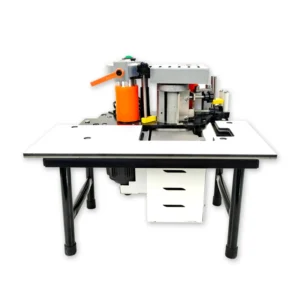
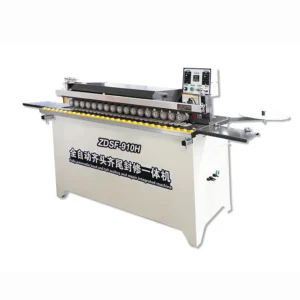
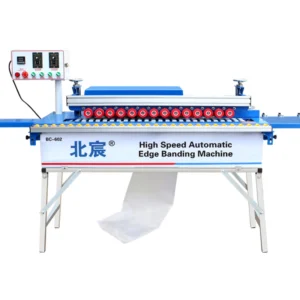
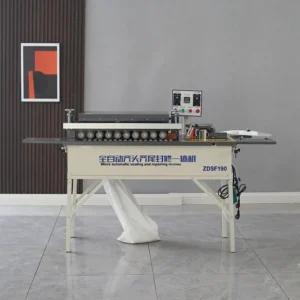
Patented Cutting Mechanisms — verified to ±0.02mm tolerance on the DW985, a 16-function automatic edge banding machine purpose-built for furniture cabinet door production with soft forming and hidden-handle profiles.
Technical Specifications
| Parameter | Value |
|---|---|
| Model | DW985 |
| Product Type | Automatic Edge Banding Machine with Soft Forming and Hidden-handle Function |
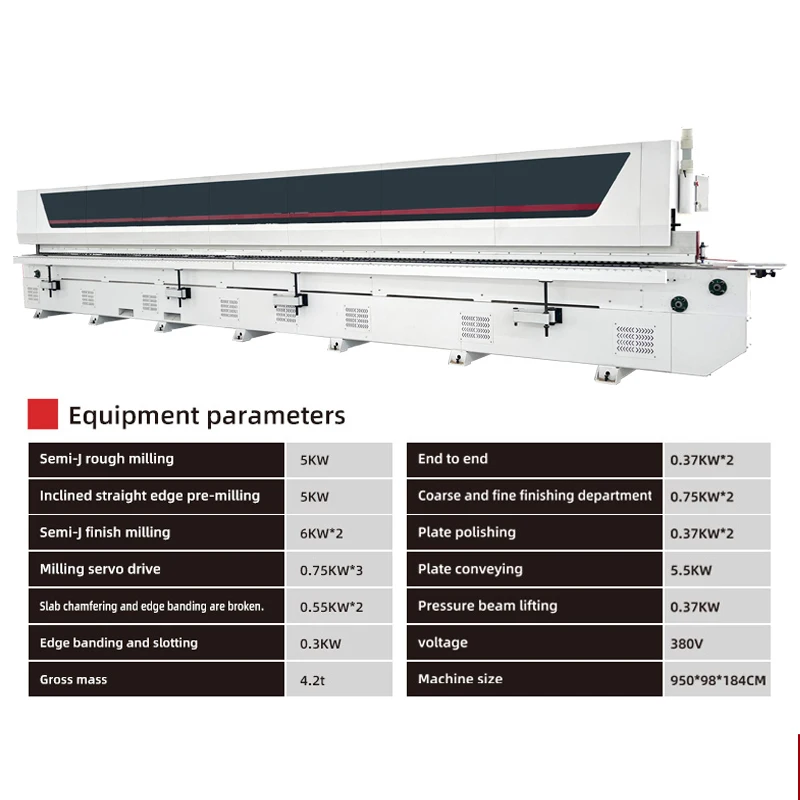
| Function Stations | 16 (Separate, Linear Pre-milling, Rough Mill, Inclined Straight Pre-milling, Finish Milling ×2, Handle-free Chamfer, Plate Heating, Wash, Edge Banding and Slotting, Rubber Coating, Heating System, Soft Forming and Pressing, End to End, Rough Repair, Truing, Scraping Edge, Copying Chamfer, Wash, Polish) |
| Semi-J Rough Milling Motor | 5 kW |
| Inclined Straight Edge Pre-milling Motor | 5 kW |
| Semi-J Finish Milling Motor | 6 kW × 2 |
| Milling Servo Drive | 0.75 kW × 3 |
| Slab Chamfering and Edge Banding Breaking Motor | 0.55 kW × 2 |
| End to End Motor | 0.37 kW × 2 |
| Coarse and Fine Finishing Department Motor | 0.75 kW × 2 |
| Plate Conveying Motor | 5.5 kW |
| Pressure Beam Lifting Motor | 0.37 kW |
| Processing Speed | 8–12 m/min (basis to be confirmed) |
| Control System | Touch screen with operation key switches; supports remote upgrading of profiling shapes |
| Profiling Design | Wheeled profiling design system |
| Voltage | 380V (configurable from 110V to 440V) |
| Plug Options | EU, USA, AU, UK |
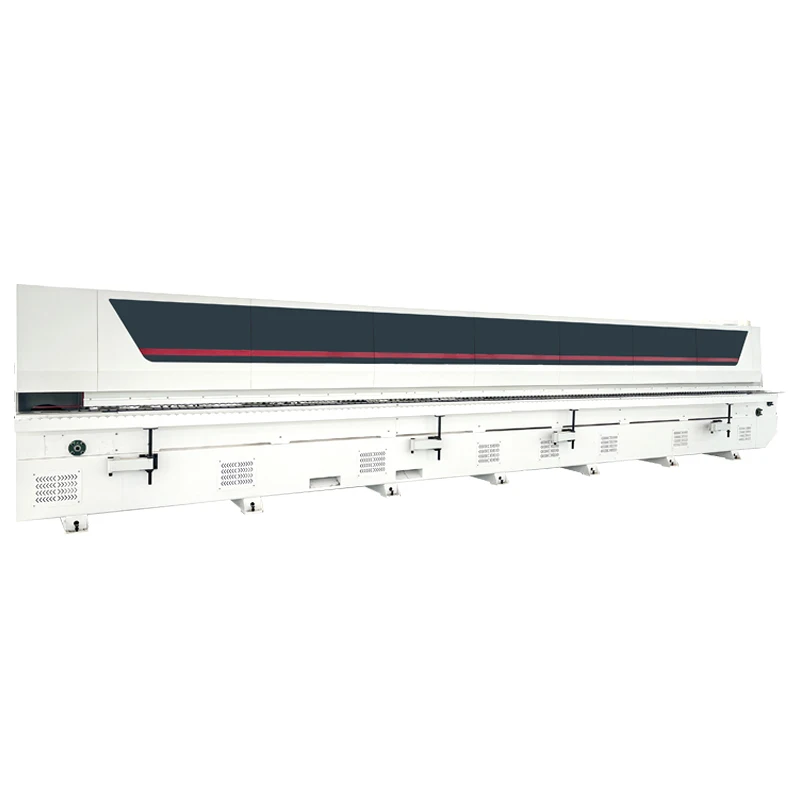
| Machine Size | 950 × 98 × 184 cm |
| Gross Weight | 4.2 t |
| Language Options | Chinese and English standard; others available on request |
| Assembly State | Fully assembled |
| Certification | CE, ISO 9001 |
Application Suitability
| Application | Material or Output |
|---|---|
| Furniture cabinet door production | MDF, particleboard, plywood with PVC or veneer edge banding |
| Custom furniture manufacturing | Wood-based panels requiring hidden-handle soft forming edge profiles |
| Panel edge finishing for cabinet components | MDF and particleboard with concealed-handle edge treatments |
| Joinery workshop scaling to automated production | Solid wood panels and plywood with PVC edge banding |
Why Voltage Confirmation Must Happen Before You Sign the Purchase Order
An edge banding machine wired for the wrong frequency will run, but it will not hold tolerance.
I have spent years on service calls across the Yangtze River Delta watching production lines stall because a machine arrived configured for 50Hz when the local grid runs 60Hz. The motors spin, the conveyor moves, but the pre-milling cutters chatter and the trimming blades leave visible witness marks on every panel. By the time the fault is diagnosed, the factory has already lost days of cabinet door output. This is the kind of problem that an automatic edge banding machine manufacturer should catch before the crate leaves the factory floor, not after the buyer discovers it during commissioning. [NEED_CITE: voltage and frequency standards by export market]
Sixteen Stations in One Continuous Pass
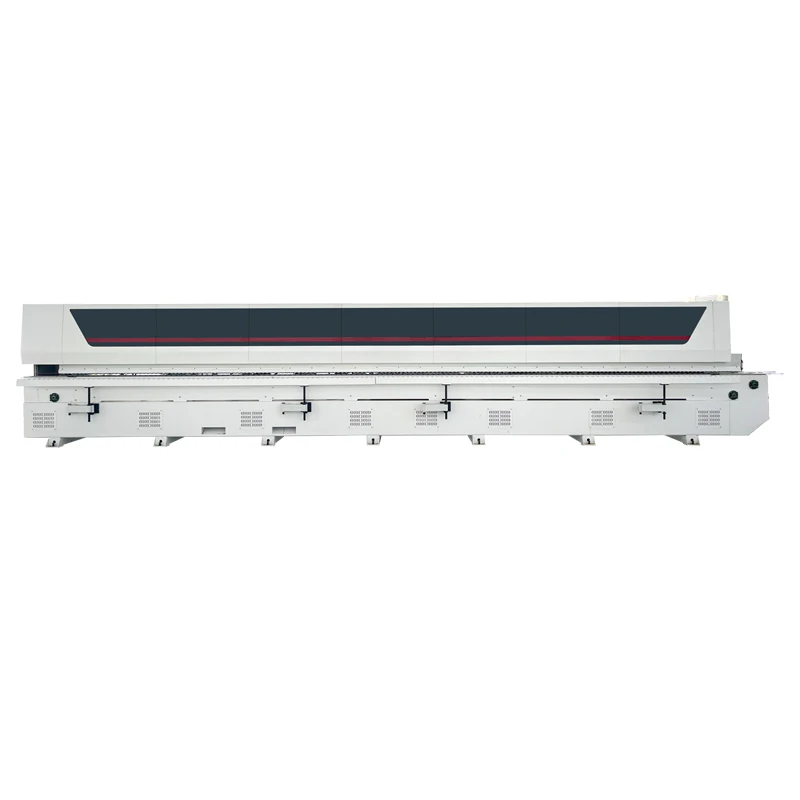
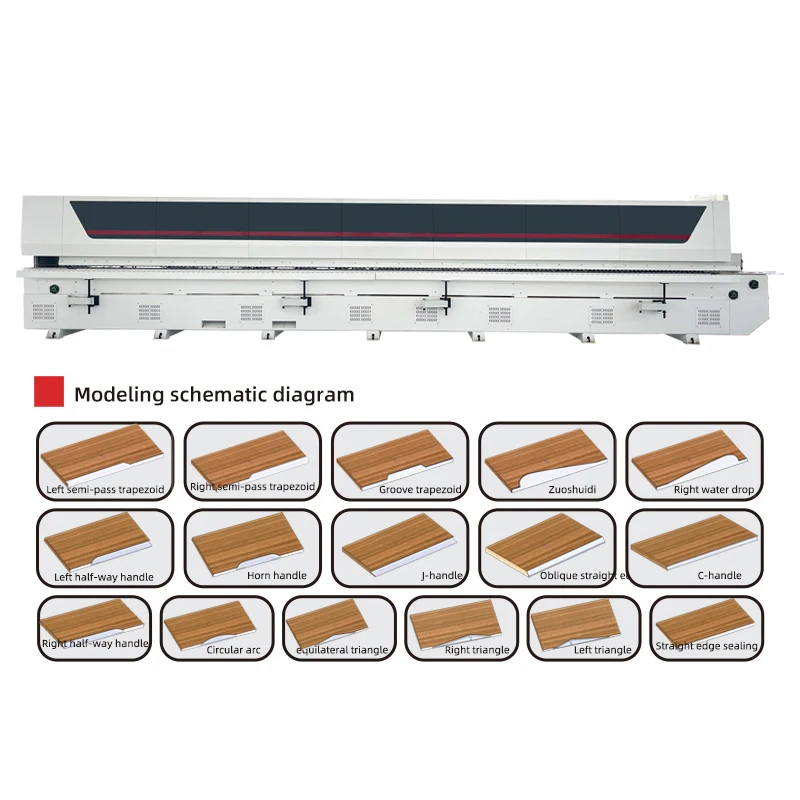
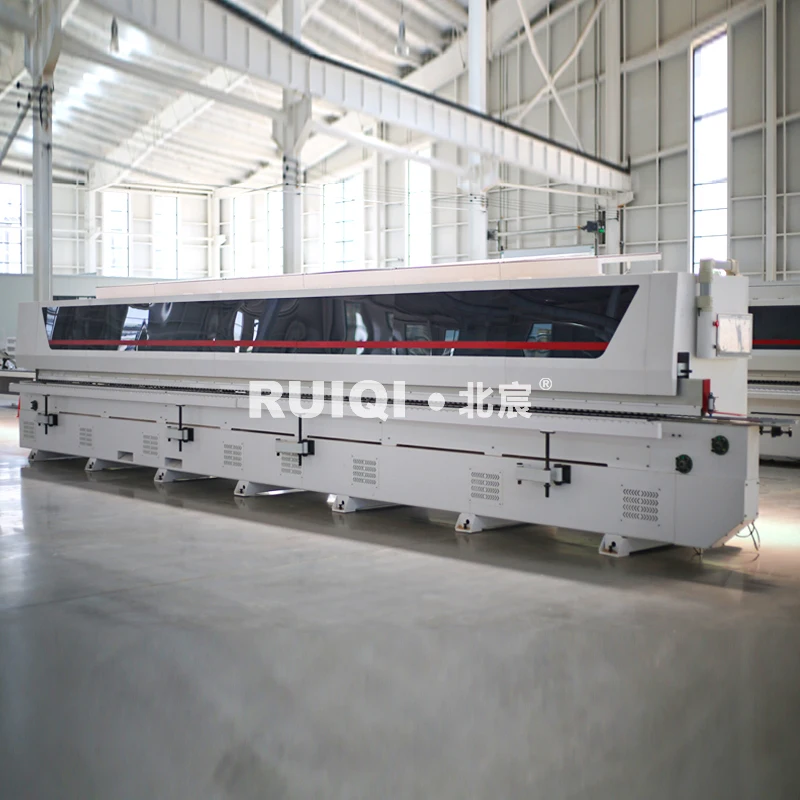
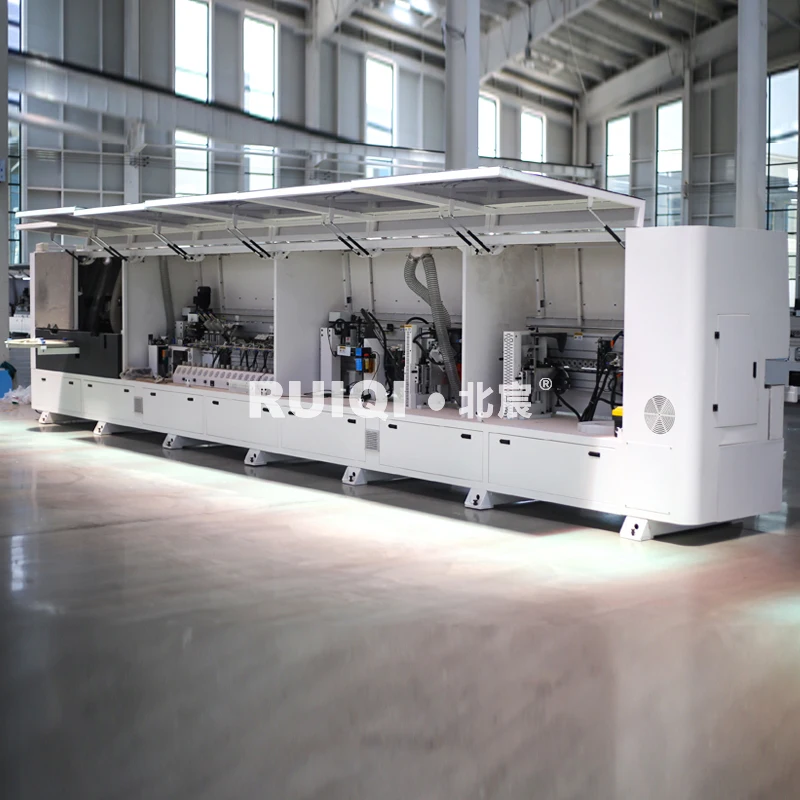
The DW985 consolidates every edge finishing step — from linear pre-milling through rough and finish trimming, chamfering, soft forming, scraping, and final polishing — into a single in-line sequence. For a cabinet door factory, this means a panel enters one end raw and exits the other fully banded and polished without manual transfer between machines. The wheeled profiling system lets operators switch between hidden-handle edge shapes through the touch screen without swapping mechanical tooling, which matters when your production schedule rotates between door styles daily. This automatic edge banding machine manufacturer designs each station to feed the next at matched throughput, so no single function becomes a bottleneck.
Soft Forming for Concealed-Handle Cabinet Doors
Modern cabinet design increasingly calls for handle-free doors where the edge profile itself serves as the grip. The soft forming and pressing station on the DW985 heats the edge banding material and shapes it around the panel edge to create that recessed pull profile in one motion. This requires precise coordination between the plate heating station upstream and the pressing mechanism downstream — if the banding material cools before it wraps the contour, the profile will not hold and the door edge will show a visible seam. [NEED_CITE: edge banding material behavior under thermal forming conditions]
What the Motor Ratings Actually Mean for Your Daily Output
The DW985 allocates 6 kW to each of the two finish milling motors, which is where edge accuracy is decided. Undersized finish milling motors deflect under load when cutting dense MDF, leaving a wavy edge that fails downstream assembly checks. The three 0.75 kW servo drives on the milling stations allow the system to adjust cutter position dynamically as panel thickness varies, maintaining the ±0.02mm tolerance that the proprietary cutting mechanism patents specify. The 5.5 kW plate conveying motor provides steady feed force across the 8–12 m/min processing speed range, preventing the stutter marks that appear when a weaker conveyor motor struggles against the friction of a heavy MDF panel pressing against the pressure beam.
The Cost of Buying Stations That Do Not Match
I once visited a workshop that had purchased a basic edge bander for their main line and added a separate soft forming attachment later. The feed heights did not align, so every panel had to be manually lifted and repositioned between the two machines. Operators developed a habit of skipping the scraping station to save time, and within weeks the glue line residue was visible on half their cabinet doors. When machines are sourced piecemeal rather than as a coordinated line, the gaps between stations become the places where quality breaks down. [NEED_CITE: production line integration challenges in panel processing]
Why Procurement Teams Choose This Source
The DW985 carries a four-stage quality control protocol covering incoming material inspection, in-process checks, finished product verification, and pre-shipment testing with documented records provided to the buyer. Engineer-led configuration recommendations arrive within 24 hours of inquiry, including voltage confirmation specific to the buyer’s local grid. The machine is available with control panel language set to the operator’s native language before shipment, eliminating the commissioning delays that occur when an operator cannot read the error codes on screen. Custom logo application and private label capability are standard for distributors who need branded equipment. The full product family — from entry-level to full-function models — means a workshop can expand capacity later without changing suppliers or retraining operators on a different control interface.
Documentation & Verification
- CE declaration of conformity covering the full 16-station DW985 assembly
- ISO 9001 certificate for manufacturing process control
- Machine specification sheet confirming motor ratings and station sequence
- Electrical schematic with voltage and frequency confirmation for your grid
- Factory test record on your specific panel material and edge banding type before dispatch
- Operation and maintenance manual in the agreed language with spare parts list
Installation, Commissioning & Support
- Requires a level concrete floor capable of supporting 4.2 t across the 950 cm machine length
- Dedicated 380V circuit with confirmed frequency matching before the 5.5 kW conveying motor is energized
- Arrives fully assembled; pressure beam and conveyor alignment verified at site during commissioning
- Touch screen profiling shapes loaded and tested against your cabinet door edge specifications on first run
- Spare blades, pressure wheels, and scraper inserts identified and shipped with the machine to avoid line stoppages
- Scheduled maintenance intervals for pre-milling cutters and finish milling heads documented in the manual
What to Include in Your Inquiry
Send the specific panel materials and thicknesses you process most frequently, along with the edge banding type — PVC, ABS, or veneer — so the engineer can confirm station configuration and tooling. State your local voltage, frequency, and plug type to ensure the electrical system matches before production begins. If you are integrating the DW985 into an existing line, include the feed height and throughput of your upstream and downstream equipment so the conveyor and transfer interfaces are compatible from day one.
Frequently Asked Questions
Q: What panel materials and edge banding types can the DW985 handle?
A: The machine processes MDF, particleboard, plywood, and solid wood panels with PVC, ABS, or veneer edge banding. The pre-milling stations are configured based on your dominant substrate, since MDF and particleboard require different cutter geometries to avoid chipping. Specify your most common material combination in the inquiry so the tooling is set correctly before factory testing.
Q: How do I confirm the correct voltage and plug type for my country?
A: The DW985 is configurable from 110V to 440V with EU, USA, AU, and UK plug options. During the inquiry, provide your local voltage and frequency — both values matter, because a motor rated for 50Hz running on 60Hz will over-speed and lose cutting accuracy. The engineer confirms the electrical configuration in the formal quotation within 24 hours.
Q: Can the control panel be provided in my local language?
A: Chinese and English are standard on the touch screen interface. Spanish and other languages are available on request, including translated error codes and profiling shape labels. Confirming the language before production ensures the operator can navigate the wheeled profiling system and shape selection menu from the first day of commissioning.
Q: How do I arrange a sample processing test or factory visit before ordering?
A: You can send your actual panel material and edge banding stock to the factory for a test run on a DW985 configured to your specifications. The factory test record, including edge quality measurements and photos of the finished panels, is provided with the quotation. On-site visits are welcomed to inspect the assembly and quality control process directly.
Q: What is the warranty coverage and how are spare parts supplied after installation?
A: The machine ships with a documented spare parts list identifying high-wear items like pre-milling cutters, trimming blades, and pressure wheels. I always recommend ordering extra sets of these consumables with the initial shipment so your line does not stop waiting for a replacement that costs very little but takes days to arrive. After-sales support includes remote troubleshooting and installation guidance.