Description
Engineer-Led Configuration — Every DW3000 quotation includes a confirmed electrical schematic and voltage match before production starts, eliminating the on-site rewiring delays that stall furniture factory commissioning.
Technical Specifications
| Parameter | Value |
|---|---|
| Model | DW3000 |
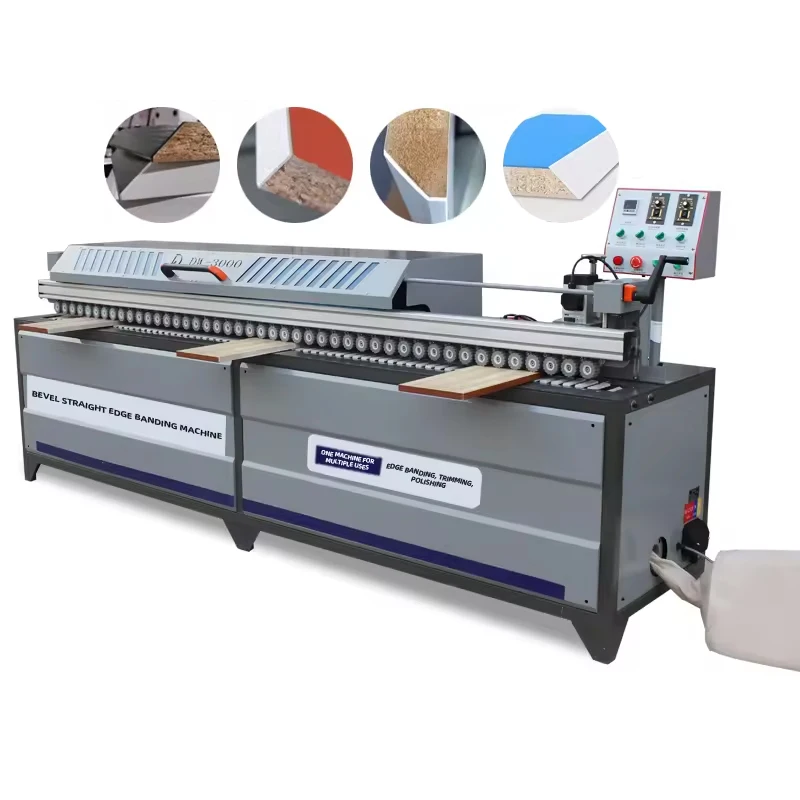
| Product Type | Automatic 45 Degree Bevel and Straight Edge Banding Machine |
| Total Power | 11 kW |
| Voltage | 380V/415V (frequency to be confirmed: 50Hz or 60Hz) |
| Feed Speed | 0–12 m/min |
| Edge Banding Height | 0–50 mm |
| Edge Banding Thickness | 0.3–3 mm |
| Minimum Sheet Length | 30 cm |
| Minimum Sheet Width | 15 cm |
| Pre-milling Motor | 2.2 kW |
| Trimming Motor | 2.2 kW × 2 (spindle type) |
| Polishing Motor | 0.4 kW × 2 |
| Vacuum Motor | 550 W |
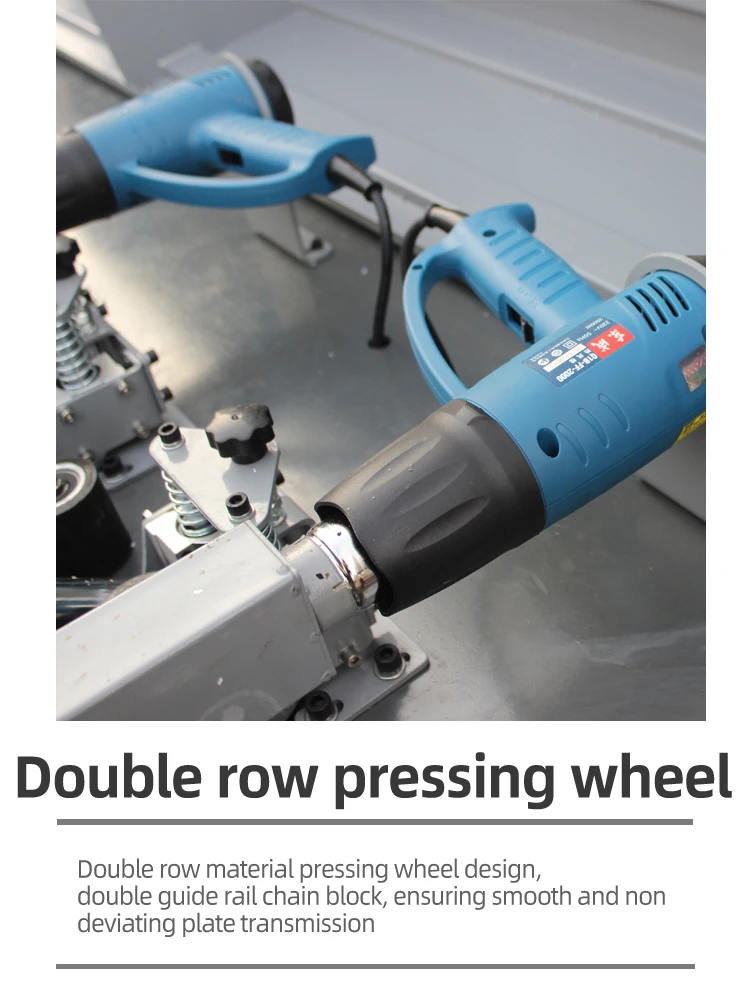
| Heating Power | 2.2 kW × 2 (double hot air gun design) |
| Edge Feed Motor | 160 W |
| Transmission Motor | 180 W |
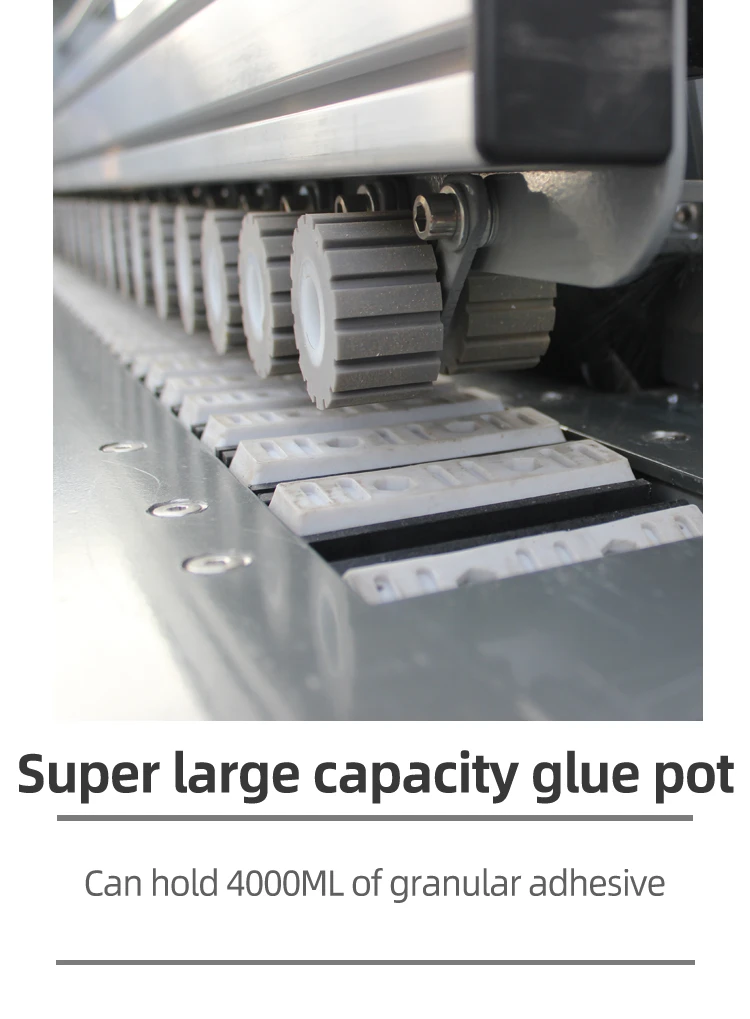
| Glue Pot Capacity | 4000 ml |
| Air Source Pressure | 0.5–0.7 MPa |
| Oblique Pressure Wheel Groups | 8 (adjustable 30°–90°) |
| Key Features | Pre-milling, 30–90° edge banding, trimming, scraping, polishing, high-power vacuuming, slotting |
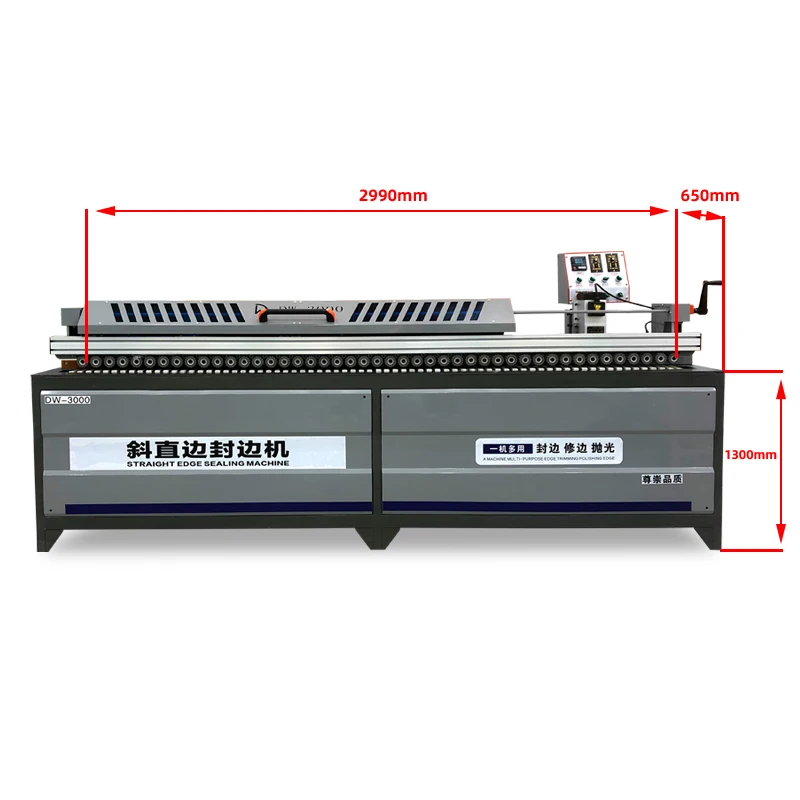
| Overall Dimensions (L×W×H) | 299 × 65 × 130 cm |
| Net Weight | 430 kg |
| Language Options | Chinese and English standard; Spanish and other languages available on request |
| Plug Options | EU, USA, AU, UK |
Application Suitability
| Application | Material or Output |
|---|---|
| Cabinet door edge finishing | MDF and particleboard with PVC or ABS banding at 0.3–3 mm |
| Custom furniture panel processing | Plywood and melamine-faced board with straight and 45° bevel profiles |
| Shelving and carcass panel edging | Solid wood panels and veneer banding on substrate up to 50 mm height |
| Mixed-profile workshop production | Alternating straight and bevel runs without tooling changeover |
Why the Voltage Question Must Come Before the Quotation
An edge banding machine that arrives with the wrong voltage is a 430 kg paperweight until an electrician rewires the entire cabinet.
I spent years on the assembly floor watching machines get built, tested, and crated — only to learn later that the buyer’s facility ran on a different supply standard than what was quoted. With the DW3000 drawing 11 kW across multiple motors and a double hot air gun heating system, a voltage mismatch does not just delay startup; it risks damaging the pre-milling and trimming spindle motors before the first panel is fed. [NEED_CITE: voltage and frequency standards by export market]
This automatic edge banding machine manufacturer now requires buyers to photograph their existing electrical panel before we confirm the order. It is a small step that prevents weeks of idle time on the workshop floor.
Where the DW3000 Sits in the Catalogue Range
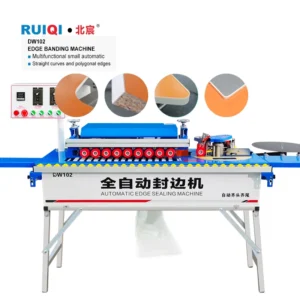
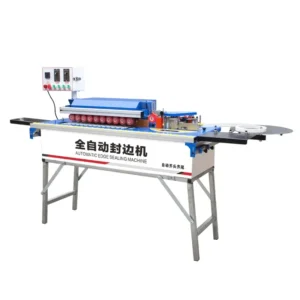
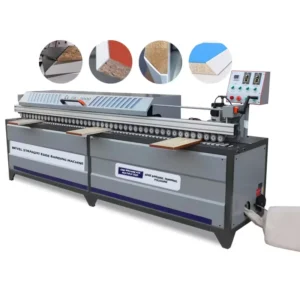
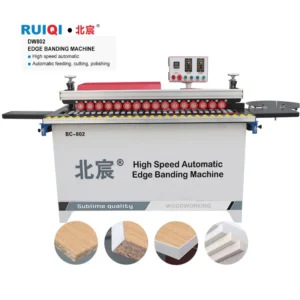
Our full edge banding catalogue spans from compact entry-level models for small joinery shops to multi-station lines with pre-milling, corner rounding, and buffing. The DW3000 occupies the full-function tier within this range, combining straight and 45° bevel capability in a single machine frame. A workshop that starts with this model can later add upstream panel saws and downstream boring stations from the same product family, keeping feed heights and throughput rates aligned across every station.
Scaling Without Changing Supplier
Furniture factories that buy machines piecemeal from different suppliers often discover that feed heights, conveyor speeds, and control interfaces do not align when they try to connect stations into a line. The DW3000 is designed as part of a unified catalogue so that a cabinet maker can phase investment across saws, banders, and borers while maintaining compatible material flow. [NEED_CITE: production line integration standards for panel processing]
How the Specs Translate to Panel Output
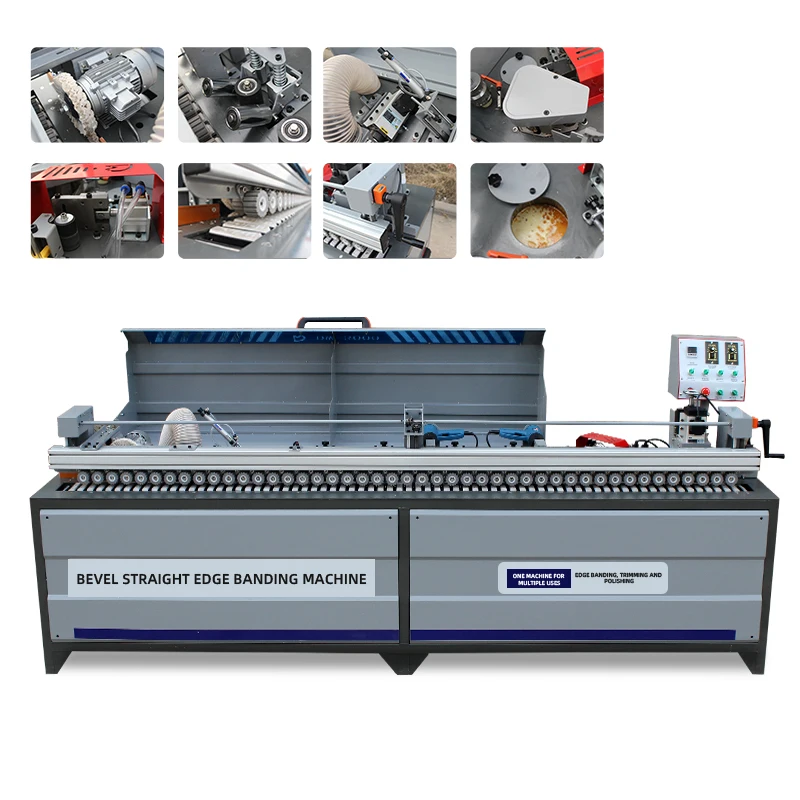
The 2.2 kW pre-milling motor removes a thin layer from the panel edge before the glue station, which is essential when working particleboard or MDF with a rough saw cut — without it, the banding follows every substrate imperfection and the glue line becomes visible. The double hot air gun heating system at 2.2 kW each maintains consistent adhesive temperature across the full 0.3–3 mm banding thickness range, which matters when switching between thin PVC and thicker ABS in the same production run.
Eight groups of oblique pressure wheels, adjustable from 30° to 90°, allow the machine to press banding firmly against bevel profiles without lifting at the leading edge. The spindle-type trimming motors at 2.2 kW each provide enough torque to cleanly remove overhang on both straight and angled cuts, and the flexible scraper that follows removes the remaining adhesive ridge before the polishing wheels finish the surface. A 4000 ml glue pot capacity supports extended runs without stopping for refill, which keeps batch consistency intact across a full set of cabinet doors.
What Happens When the Specification Sheet Gets Skipped
Buyers who order an edge bander without confirming the exact air source pressure requirement often arrive at commissioning with a compressor that cannot sustain the 0.5–0.7 MPa the machine needs, causing the pressure wheels to lose contact intermittently. The result is inconsistent banding adhesion that only shows up when the furniture reaches the customer and a door edge starts peeling. [NEED_CITE: pneumatic supply requirements for woodworking edge banding machinery]
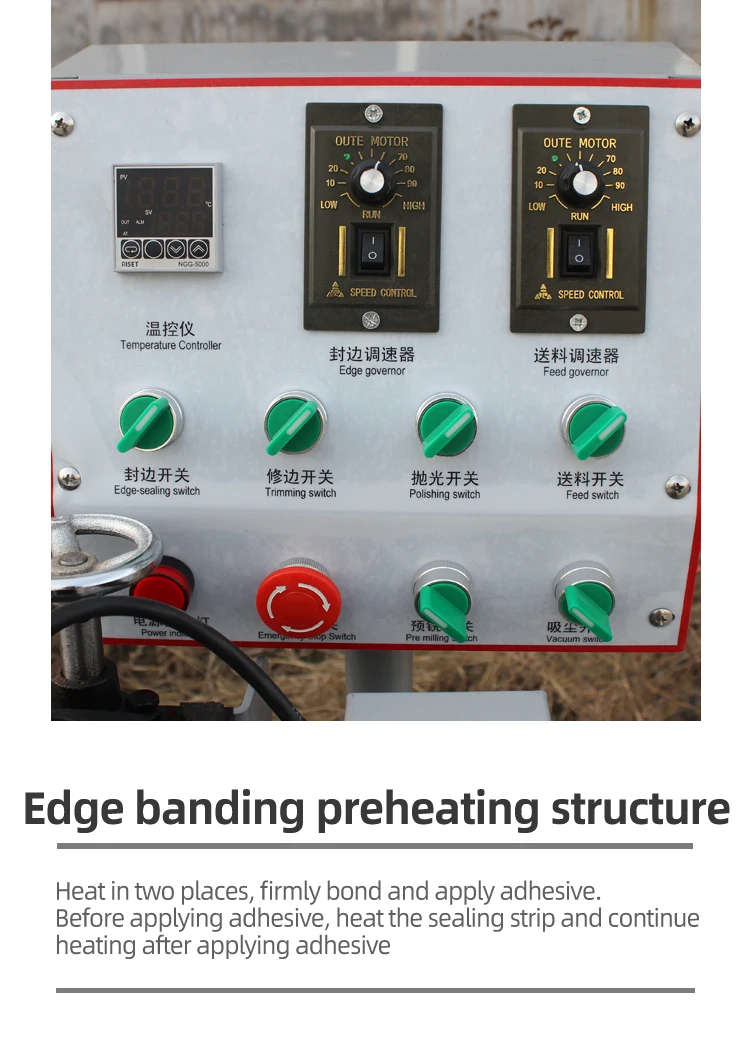
Similarly, a control panel set to a language the operator cannot read means that error codes go uninterpreted, and a minor sensor fault escalates into hours of unplanned downtime. These are not engineering failures — they are specification failures that a thorough pre-order checklist would have prevented.
Why Source This Machine Through Ruiqi Wood
Every DW3000 ships with a pre-shipment test record showing the machine running on the buyer’s specified panel thickness and banding material, not a generic factory demo. The in-house manufacturing process includes proprietary cutting mechanism patents verified to ±0.02 mm tolerance, and the four-stage QC protocol covers incoming material, in-process assembly, finished product, and final dispatch verification.
Voltage, plug type, and control panel language are confirmed as standard options before the order enters production — EU, USA, AU, and UK plugs are available, and the panel can be set to Spanish or other languages on request. Because the full catalogue from entry-level to full-function is built under one roof, an automatic edge banding machine manufacturer can support a workshop through every phase of capacity growth without the buyer managing multiple supplier relationships.
Documentation & Verification
- CE declaration of conformity matched to the DW3000 configuration and export destination
- Electrical schematic confirming voltage, frequency, and plug type before crating
- Factory test record on buyer’s specified panel material and banding thickness
- Operation and maintenance manual in the agreed operator language
- Spare parts list with part numbers for pressure wheels, trimming cutters, and glue pot seals
- Packing photographs showing crated machine and accessory boxes before dispatch
Installation, Commissioning & Support
- Allow floor space for the 299 × 65 × 130 cm footprint plus infeed and outfeed clearance
- Dedicated 380V/415V circuit rated for 11 kW total draw with confirmed frequency
- Machine ships as a single unit requiring positioning and leveling on a flat concrete floor
- First-run parameter setup covers feed speed calibration and pressure wheel angle adjustment
- Operator training on the multilingual control panel for error code recognition and reset
- Spare trimming cutters and scraper blades included for initial production runs
- Daily cleaning of the 550 W vacuum system to maintain dust extraction performance
What We Need to Configure Your Machine
To prepare an accurate quotation for the DW3000, share the panel materials you process most often, the banding thickness range you use, and the daily volume you expect to run. We also need your facility voltage and frequency, the language your operators read, and whether this machine will work standalone or connect to existing saws and borers in your line.
Frequently Asked Questions
Q: How does the DW3000 fit within the full edge banding machine catalogue?
A: The DW3000 sits at the full-function tier, offering pre-milling, straight and bevel banding, trimming, scraping, polishing, and slotting in one frame. Entry-level models in the catalogue handle straight banding only with fewer stations. A workshop can start here and add upstream saws or downstream borers from the same family as volume grows.
Q: What voltage and plug configurations are available before ordering?
A: The machine supports 380V or 415V with plug options for EU, USA, AU, and UK standards. Frequency must be confirmed as 50Hz or 60Hz depending on your local grid. We request a photo of your electrical panel to verify supply compatibility before the order enters production.
Q: Can the control panel language be customized for our operators?
A: Chinese and English are standard on the DW3000 control panel. Spanish and other languages are available on request at the quotation stage. Confirming the operator language early prevents commissioning delays caused by unreadable error codes and parameter menus on the shop floor.
Q: What documentation ships with the machine for compliance and maintenance?
A: Each DW3000 ships with a CE declaration of conformity, electrical schematic, factory test record, operation manual in the agreed language, spare parts list, and packing photographs. These documents support customs clearance, local compliance inspection, and ongoing maintenance scheduling from the first day of operation.
Q: How does this model integrate with other machines in a phased line build-out?
A: The DW3000 is designed within a unified product family where feed heights and conveyor speeds align across saws, banders, and borers. This compatibility allows a factory to add stations over time without reconfiguring material flow or adjusting panel transfer heights between machines.