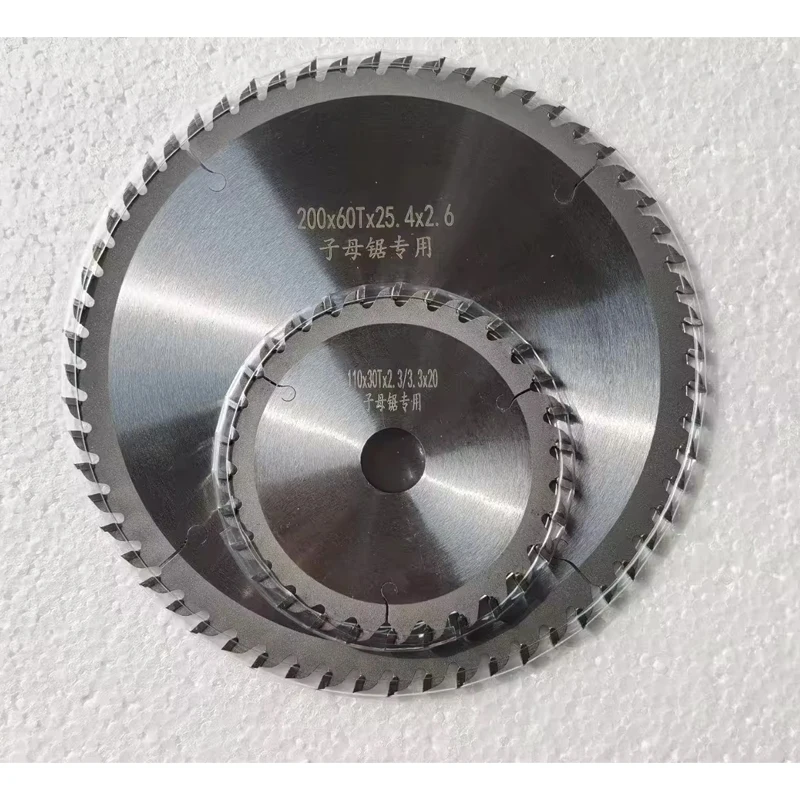
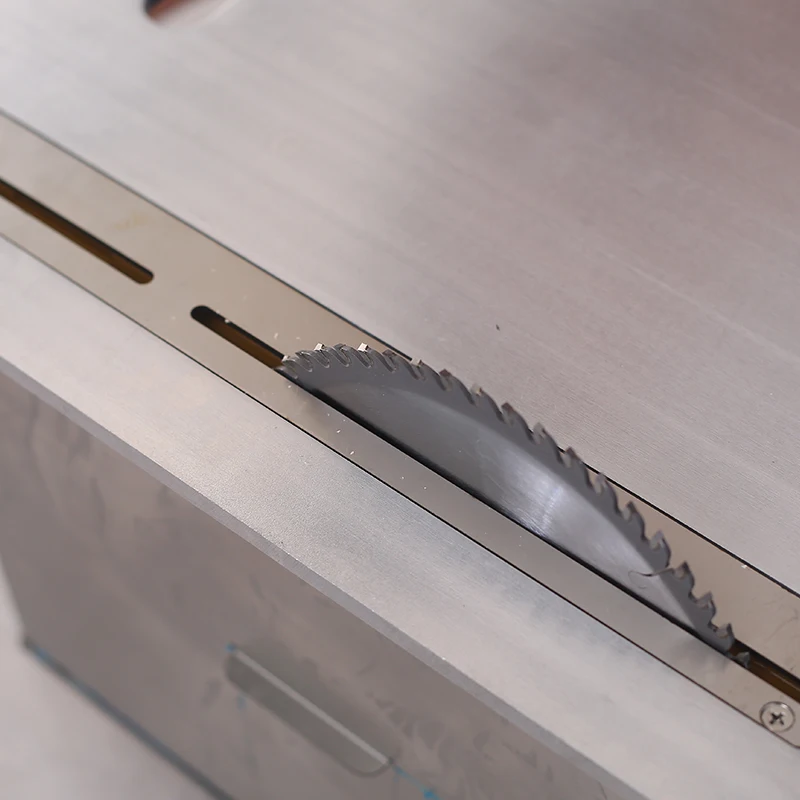
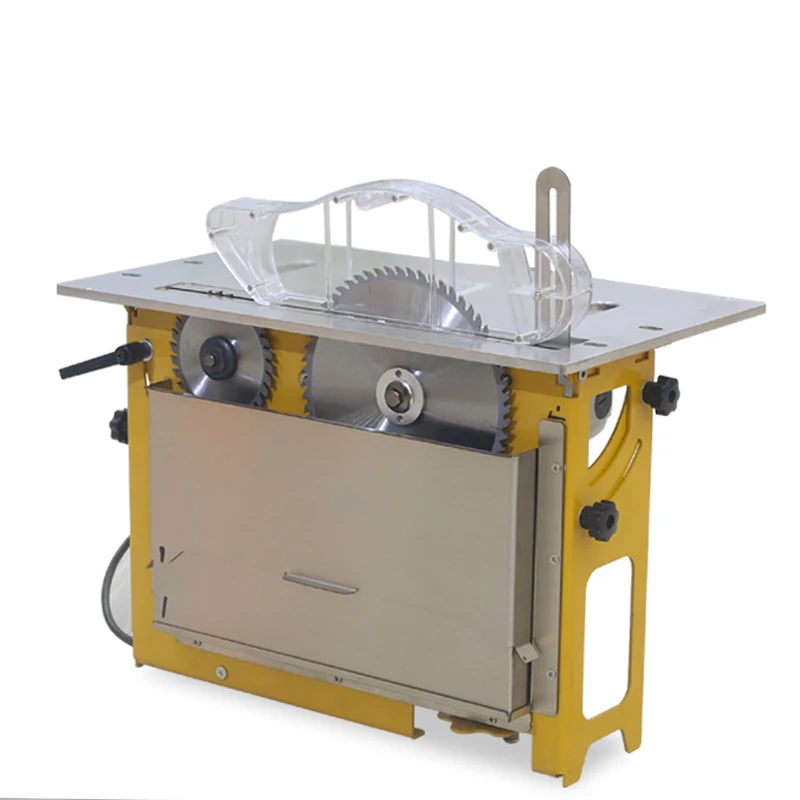
Description
Precision Ground Tooling — every dust free mother saw blade in this catalogue passes incoming material inspection under ISO 9001 before reaching your panel saw arbor.
Technical Specifications
| Parameter | Value |
|---|---|
| Product Type | Dust Free Mother Saw Blade |
| Application | Panel sizing and cutting in woodworking |
| Compatible Equipment | Panel saws, sliding table saws |
| Blade Design | Dust-reducing tooth geometry |
| Material Compatibility | MDF, particleboard, plywood (basis not stated in source — confirm substrate range) |
| Certification Scope | CE (referenced via company certification, not confirmed for this specific blade) |
Application Suitability
| Application | Material or Output |
|---|---|
| Daily panel sizing on automated panel saw lines | MDF and particleboard for custom furniture production |
| Cabinet component cutting in scaled workshop environments | Plywood and veneer-faced boards |
| Substrate preparation ahead of edge banding stations | Melamine and PVC-coated panels |
| Consumable blade inventory for machinery distributors | Mixed engineered wood substrates |
Why the Wrong Blade Geometry Quietly Slows Your Entire Line
A dust free mother saw blade matched to your actual substrate eliminates two hidden bottlenecks at once: airborne particulate buildup and edge chipping that forces rework downstream.
In my years specifying panel saw configurations across Southeast Asian workshops, I have watched factories cycle through blade brands chasing cut quality, never questioning whether the tooth geometry suits their dominant substrate. MDF behaves nothing like particleboard at the cutting edge. A blade that performs well on one will load up or chip the other within hours. The Dust Free Mother Saw Blade range addresses this by offering distinct tooth configurations across the catalogue rather than a single compromise design. Operators swapping blades between jobs should not need a different supplier each time. [NEED_CITE: substrate-specific blade geometry selection guidelines]
Tooth Configuration Across the Catalogue
The range spans multiple tooth counts and rake angles, each designed around a specific material behaviour. MDF demands a geometry that clears fine fibre without generating excessive heat, while particleboard requires harder-facing tips to handle the abrasive resin content. This is why sourcing a dust free mother saw blade from a single catalogue with differentiated options keeps your line flexible without introducing unfamiliar mounting hardware or RPM mismatches.
Dust Reduction Without Sacrificing Cut Quality
Reducing airborne particulate starts at the gullet and chip breaker design, not simply at the extraction hood. The tooth geometry across this range is shaped to direct chips downward and away from the kerf rather than allowing them to recirculate above the panel surface. Cleaner air at the cutting zone means less frequent pauses to clear dust from guide rails and fence surfaces, and it preserves visibility for operators making fine adjustments mid-shift. [NEED_CITE: OSHA guidelines on airborne wood dust in panel processing]
Reading the Spec Sheet Against Your Machine
Three parameters matter before a blade ever touches the arbor: arbor bore diameter, maximum RPM rating, and plate thickness relative to your saw’s scoring blade. A blade rated below the saw’s spindle speed risks plate warping under sustained load, which shows up as waviness in the cut face rather than an obvious safety failure. Arbor mismatch is more obvious but still catches buyers who specify blade diameter alone without confirming the bore. The machine specification sheet for your Ruiqi panel saw lists these values explicitly, and matching them takes minutes compared to the downtime of a wrong delivery.
What Happens When Blade Selection Is an Afterthought
Factories that treat saw blades as generic consumables tend to accumulate a drawer full of partially used discs, each bought to solve a single bad batch. The actual cost sits elsewhere: scoring blades wear faster when the mother blade throws inconsistent chip loads, downstream edge banding stations reject panels with micro-chips along the cut line, and operators develop a habit of reducing feed speed to compensate — quietly dropping throughput across the whole line. None of this shows up as a blade failure. It shows up as a factory that never quite hits its planned output. [NEED_CITE: hidden costs of consumable mismatch in panel processing]
Why Sourcing Blades and Machines Together Matters
Ordering blades from the same engineering team that built your panel saw eliminates the compatibility guesswork. Ruiqi maintains ISO 9001 quality processes that cover incoming inspection on blade stock, so the arbor bore and plate flatness are verified before the blade leaves the facility. The full range from entry-level to full-function panel saws sits within one product family, meaning a blade specified for today’s machine will still fit when you scale to a higher-throughput model. Voltage and language customization on the machines extends to documentation — operation manuals arrive in your operator’s language with blade change procedures already written for your specific saw model. Engineer-led configuration recommendations include blade selection as part of the formal quotation, not as an afterthought.
Documentation & Verification
- Machine specification sheet listing arbor bore, RPM range, and scoring blade pairing
- Factory test record on your panel thickness range when blades ship with a machine order
- Operation manual with blade change and alignment procedure in the agreed language
- ISO 9001 incoming material inspection covering plate flatness and bore tolerance
- CE declaration of conformity for the host panel saw referenced against blade operating limits
Installation, Commissioning & Support
- Arbor bore verification against your panel saw spindle before first mount
- RPM ceiling confirmed against the host saw’s maximum spindle speed rating
- Blade run-out checked during commissioning alongside scoring blade alignment
- Change procedure covered in operator training using the supplied manual
- Spare parts list includes blade specification for reordering without re-measurement
- Dust extraction port alignment verified during saw installation to match chip flow direction
What We Need to Specify the Right Blade
Send your panel saw model or the arbor bore and RPM figures from its nameplate, the substrates you cut most frequently, and typical panel thickness range. If you are ordering blades alongside a new machine, the configuration proposal will include matched blade recommendations in the formal quotation.
Frequently Asked Questions
Q: How do I match tooth count to the panel material I cut most often?
A: MDF generally requires a higher tooth count with a geometry that clears fine fibre cleanly, while particleboard benefits from harder-tipped teeth designed to resist abrasive resin content. Plywood sits between the two and often works well with a general-purpose configuration. Specify your dominant substrate and thickness range so the right option from the range is selected rather than a compromise blade.
Q: Will these blades fit panel saws from other manufacturers?
A: Arbor bore diameter and maximum RPM rating determine compatibility, not the machine brand. Check your saw’s nameplate or specification sheet for these two values and compare them against the blade documentation. Most standard panel saws share common arbor sizes, but confirming before ordering avoids receiving a blade that physically cannot mount or is rated below your spindle speed.
Q: How does blade lifespan differ between MDF, plywood, and particleboard?
A: Particleboard typically wears cutting edges fastest due to its abrasive resin and mineral content, followed by MDF which generates fine particulate that accelerates friction. Plywood is generally less demanding on tooth edges but can cause chipping if the geometry is not matched to the veneer layers. Lifespan varies significantly with feed speed, panel thickness, and daily cutting volume.
Q: Can I order blades as spare parts when purchasing a new panel saw?
A: Yes. Blade recommendations are included in the formal quotation when you order a machine, and spare parts lists provided at shipment include the exact blade specification for future reordering. This ensures replacement blades match the original configuration without requiring you to re-measure or re-specify.
Q: Are OEM branding and private label options available for distributor stock?
A: Custom logo and packaging arrangements are available for distributor orders. Discuss minimum quantities and branding requirements during the quotation stage so packaging artwork and lead times are confirmed before production. This applies to both standalone blade orders and blades bundled with machinery shipments.