Description
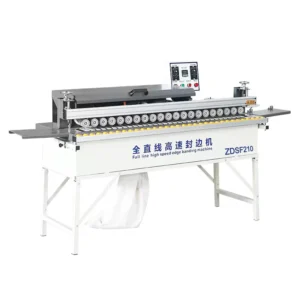
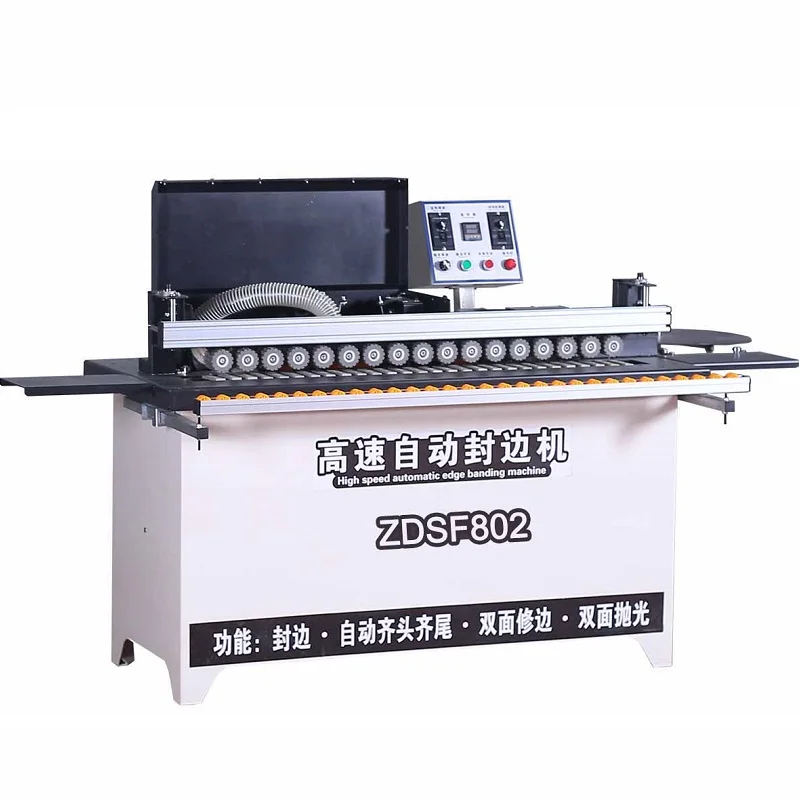
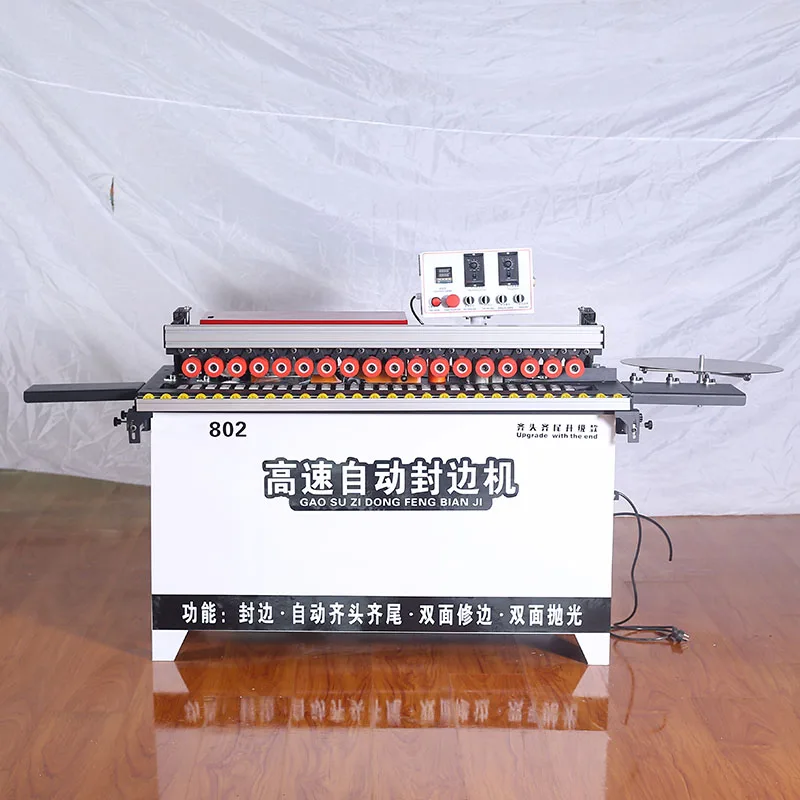
Proven Tolerance in Real Production — The ZDSF802’s patented cutting mechanisms maintain ±0.02mm edge finish on MDF and particleboard, verified through four-stage QC before any unit leaves the Ningjin facility.
Technical Specifications
| Parameter | Value |
|---|---|
| Model | ZDSF802 |
| Product Type | Automatic Edge Banding Machine |
| Rated Power | 4 kW |
| Voltage & Frequency | 220V (frequency options to be confirmed) |
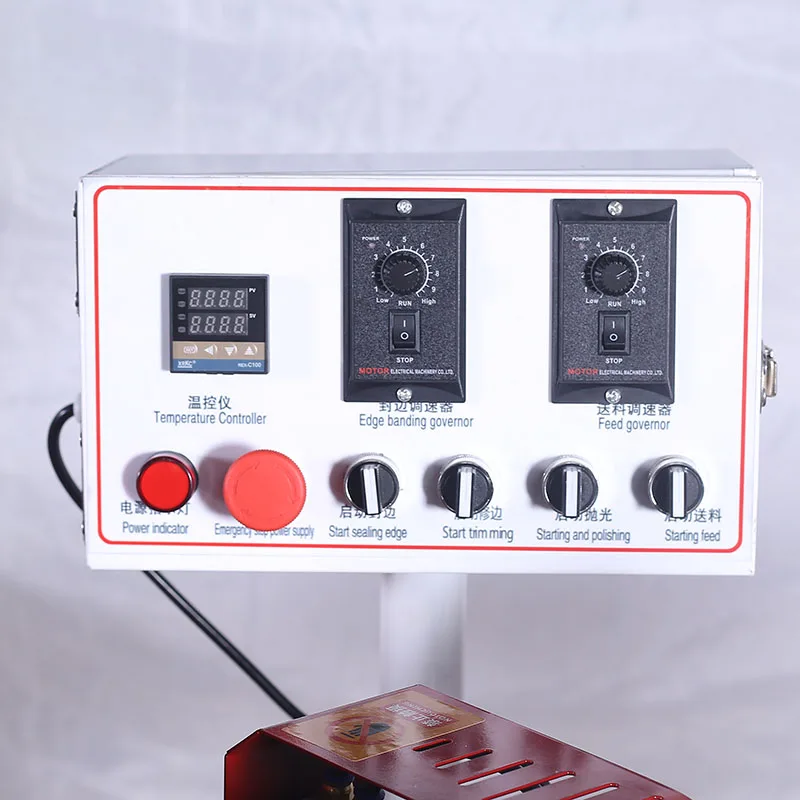
| Control System | Digital display panel with independent switches |
| Overall Dimensions (L×W×H) | 130 × 65 × 75 cm |
| Net Weight | 150 kg |
| Feed Speed | 0–10 m/min |
| Panel Thickness Range | 10–50 mm |
| Edge Strip Thickness Range | 0.5–2.5 mm |
| Edge Type | Straight line |
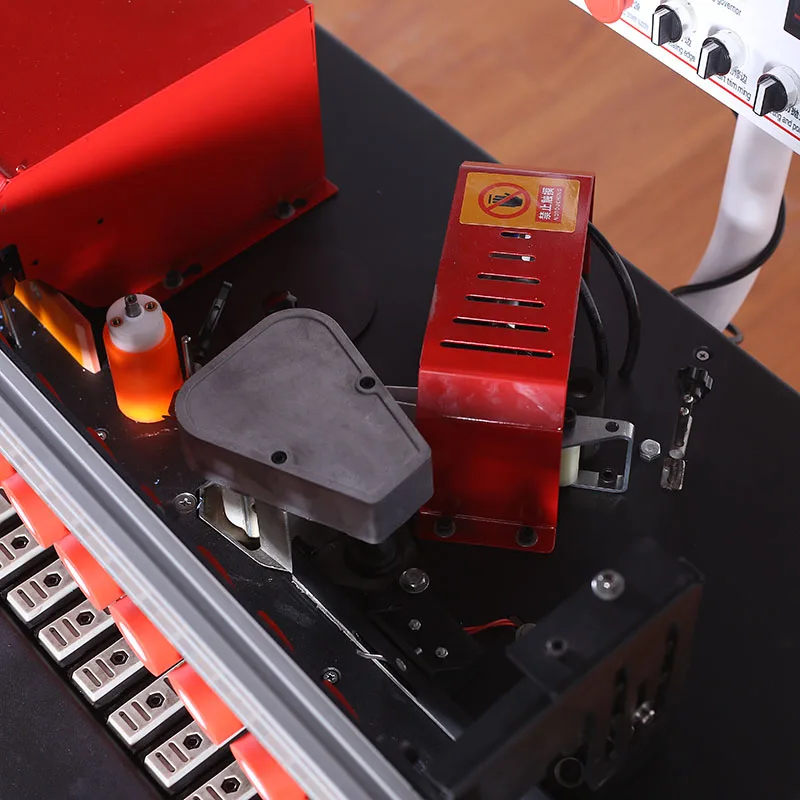
| Trimming Power | 800 W × 2 (upper and lower) |
| Polishing Power | 180 W × 2 |
| Suction Power | 1200 W (integrated dust collector) |
| Heating Power | 1000 W (heat-up 5–10 min) |
| Glue Pot Capacity | 4000 ml |
| Rated Air Pressure | 0.4–0.6 MPa |
| Conveyor Belt Material | Silicone with pneumatically controlled breaking |
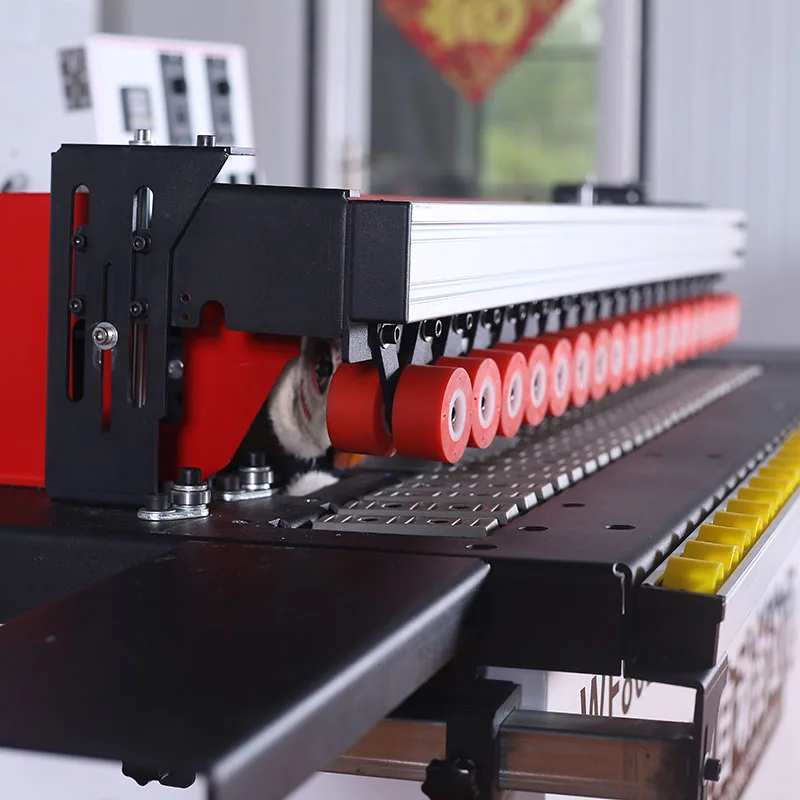
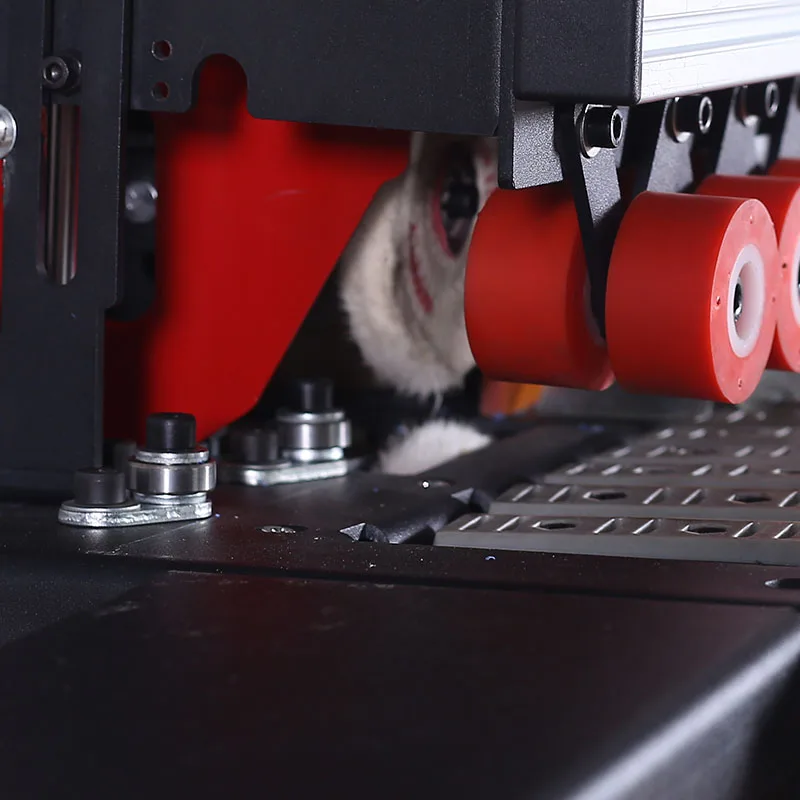
| Pressure Beam | Integrated, double-row pressure wheels |
| Support Table | Extendable fluent strips for large plates |
Application Suitability
| Application | Material or Output |
|---|---|
| Custom cabinet panel edge banding | MDF and particleboard with PVC strips |
| Wardrobe and shelving production | Plywood panels with veneer edge banding |
| Small workshop straight-edge finishing | Boards from 10 mm to 50 mm thickness |
| Joinery shop semi-automated processing | Mixed substrate batches at variable feed rates |
What "Entry-Level" Really Means When Your Volume Grows
The ZDSF802 bridges the gap between manual edge banding and full-production lines by delivering continuous-run capability in a compact footprint.
Many workshops start with a basic edge bander rated for occasional use, then push it through eight-hour shifts on mixed board stocks. The glue pot runs dry mid-batch, the single trimming motor leaves burrs on the lower edge, and the operator spends more time adjusting feed speed than running panels. The automatic edge banding machine for sale in this tier addresses that mismatch directly — a 4000 ml glue pot sustains longer runs without refill stops, while dual 800W trimming motors handle both faces in a single pass [NEED_CITE: edge banding machine duty cycle classification standards].
Where the ZDSF802 Sits in a Growing Workshop
The Ruiqi range spans from benchtop manual banders to multi-station CNC lines, and this model occupies the full-function compact tier. It is designed for workshops that have outgrown manual clamping and hand trimming but are not yet running the volume that justifies a six-station automated cell. The digital display control panel keeps setup straightforward without requiring PLC programming knowledge.
Matching the Machine to Your Actual Board Mix
A common mistake is specifying an edge bander based on the thickest panel you expect to run, then discovering the feed mechanism struggles on thinner stock. The 10–50 mm panel thickness range on the ZDSF802 covers most standard cabinet and furniture substrates. The integrated pressure beam with double-row silicone wheels applies even pressure across that full range without scratching high-gloss surfaces [NEED_CITE: pressure beam design for thin panel edge banding]. For workshops processing a mix of 16 mm particleboard and 25 mm MDF in the same shift, this flexibility reduces changeover adjustments.
How Glue Capacity and Trimming Power Affect Daily Output
The 4000 ml glue pot capacity means fewer interruptions during batch runs — a practical difference when you are edge banding forty cabinet sides in sequence. The 1000W heating element brings the pot to working temperature within five to ten minutes at shift start. Dual 800W trimming motors deliver clean cuts on both upper and lower edges simultaneously, which matters when running PVC strips that tend to leave micro-burrs on the exit side. The 180W polishing wheels then smooth the trimmed edge to a finished state in the same pass. The integrated 1200W dust collector captures trimmings and polishing residue at the source, keeping the conveyor belt and workshop floor clear without requiring a separate extraction system.
The Cost of Ignoring Substrate-Specific Setup
Glue temperature and feed speed must be matched to your actual edge strip material, not just the default settings for standard PVC.
I have seen workshops run高光 acrylic strips on settings optimized for standard PVC, only to find visible glue lines on every panel for the first two weeks. The adhesive viscosity changes significantly between strip materials, and feed speed affects how much glue transfers to the board edge. Requesting a factory test with your specific board and strip combination before order confirmation catches these mismatches before the machine ships [NEED_CITE: edge banding adhesive viscosity across strip materials].
Why Procurement Through This Range Makes Sense
The ZDSF802 is manufactured in-house with proprietary cutting mechanisms, not assembled from third-party sub-assemblies. Four-stage quality control covers incoming material inspection, in-process checks, finished product verification, and pre-shipment testing — every unit runs actual panels before crating. Voltage configuration is confirmed against your local supply before production begins, avoiding the scenario where a machine arrives wired for a frequency your grid does not support. The full product family means a workshop can add a sliding table saw or multi-boring machine later from the same supplier, keeping feed heights and throughput rates compatible across stations. Engineer-led configuration recommendations come with a formal quotation typically within one working day.
Documentation & Verification
- CE declaration of conformity for European market machinery compliance
- ISO 9001 certificate covering manufacturing quality management systems
- Factory test record run on your specific panel thickness and strip material
- Electrical schematic confirming voltage and frequency match your local supply
- Operation and maintenance manual supplied in your operator’s working language
- Spare parts list with reorder codes for wear items like trimming blades and pressure wheels
Installation, Commissioning & Support
- 130 × 65 cm footprint fits standard workshop bays without special foundation work
- 4 kW total rated power requires a dedicated 220V circuit with appropriate breaker rating
- Fully assembled delivery reduces on-site setup to positioning and utility connection
- Pneumatic system requires clean dry air supply at 0.4–0.6 MPa for belt breaking and pressure beam
- Digital display control panel allows parameter adjustment without specialized programming tools
- Silicone conveyor belt and pressure wheels inspected for alignment during commissioning
What We Need to Configure Your Machine
To provide an accurate specification, share the board materials you process most frequently, the edge strip types and thicknesses you use, and your typical daily panel count. Confirm your local voltage and frequency so the electrical system is built to match. If you are integrating this edge bander into an existing line, provide the feed height and throughput of adjacent machines to verify compatibility.
Frequently Asked Questions
Q: How does the ZDSF802 compare to entry-level and full-production edge banders in the range?
A: The ZDSF802 sits in the full-function compact tier, offering auto feeding, dual trimming, polishing, and dust collection in one unit. Entry-level models typically have single trimming and smaller glue pots. Full-production models add pre-milling, corner rounding, and higher feed speeds for continuous shift operation.
Q: What voltage configurations are available, and can the control panel language be customized?
A: Voltage is configurable from 110V to 440V depending on your local supply, confirmed before production. The digital display control panel can be supplied with multilingual interface options. Specify your operator’s preferred language during the quotation stage to ensure correct configuration.
Q: How do I verify the machine suits my daily volume and substrate mix?
A: Provide your typical panel materials, edge strip types, and daily panel count during inquiry. We run a factory test using your actual board and strip samples, documenting feed speed, glue temperature, and edge finish quality before confirming the specification.
Q: Can I visit the factory or request sample processing before ordering?
A: Factory visits are welcomed at the Ningjin facility. If travel is not practical, we process your supplied board and edge strip samples on the ZDSF802 and share video and photographs of the edge finish, along with the test record documenting all parameters used.
Q: What spare parts are included, and how are wear items reordered?
A: A spare parts list is provided with the machine documentation, covering items like trimming blades, polishing wheels, and pressure wheel replacements. Reorder lead times vary by part; confirm consumable stock recommendations during commissioning to maintain uninterrupted production.