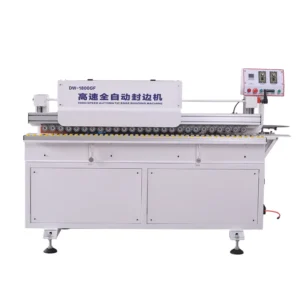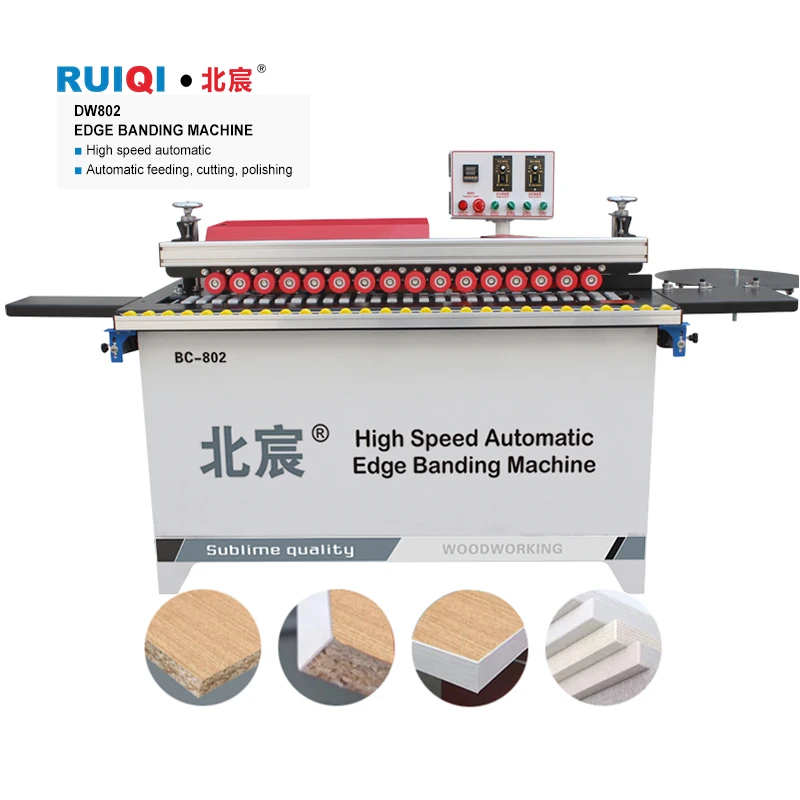
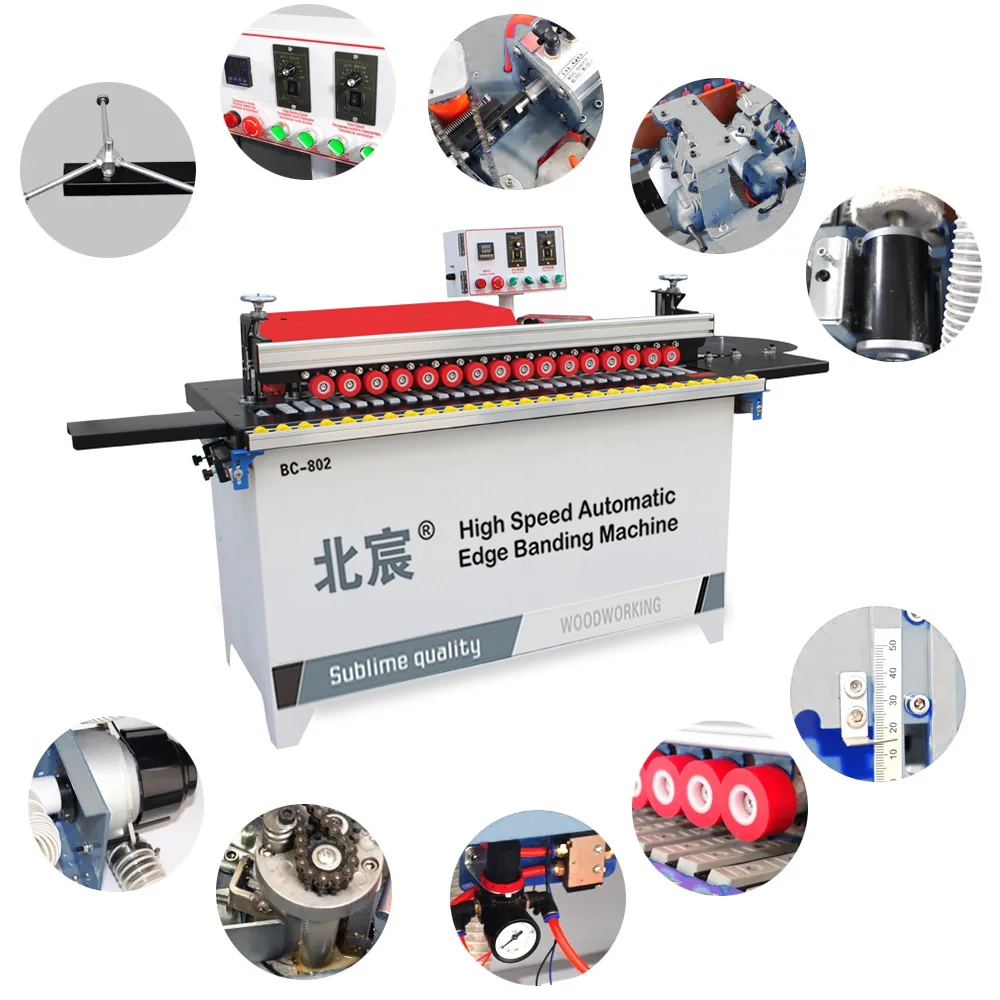
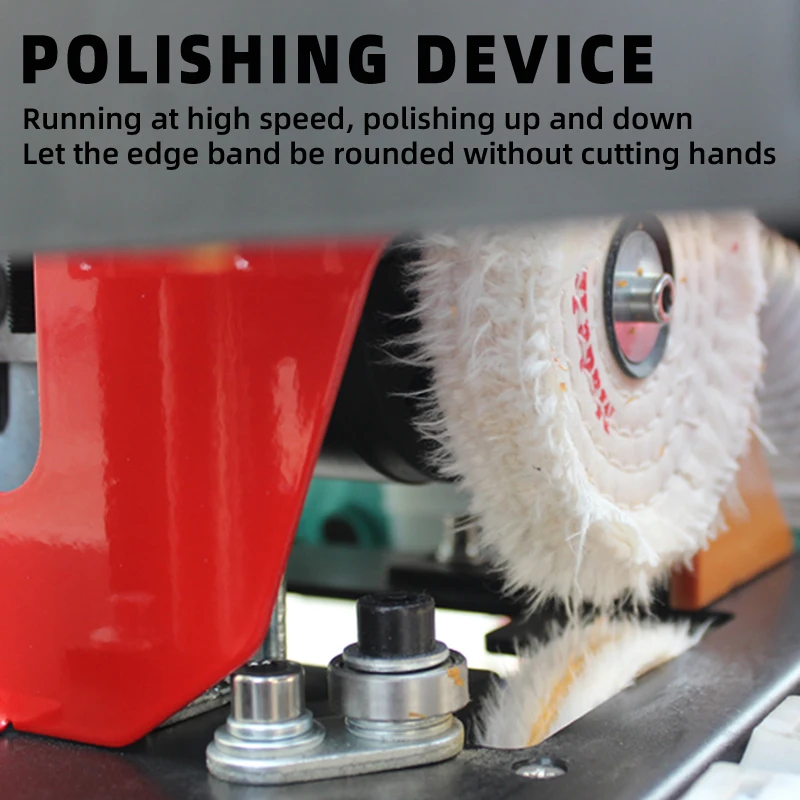
Description
Voltage-Verified Before Build — every DW802 automatic edge banding machine ships with a formal electrical schematic matching the buyer’s confirmed local supply, preventing the costly arrival of an unusable unit.
Technical Specifications
| Parameter | Value |
|---|---|
| Model | DW802 |
| Product Type | Automatic Edge Banding Machine |
| Total Installed Power | 4200 W |
| Voltage Options | 220V / 380V / customization available |
| Edge Banding Thickness Range | 0.3–3 mm |
| Edge Banding Height Range | 0–50 mm |
| Minimum Sheet Length | 250 mm |
| Minimum Sheet Width | 100 mm |
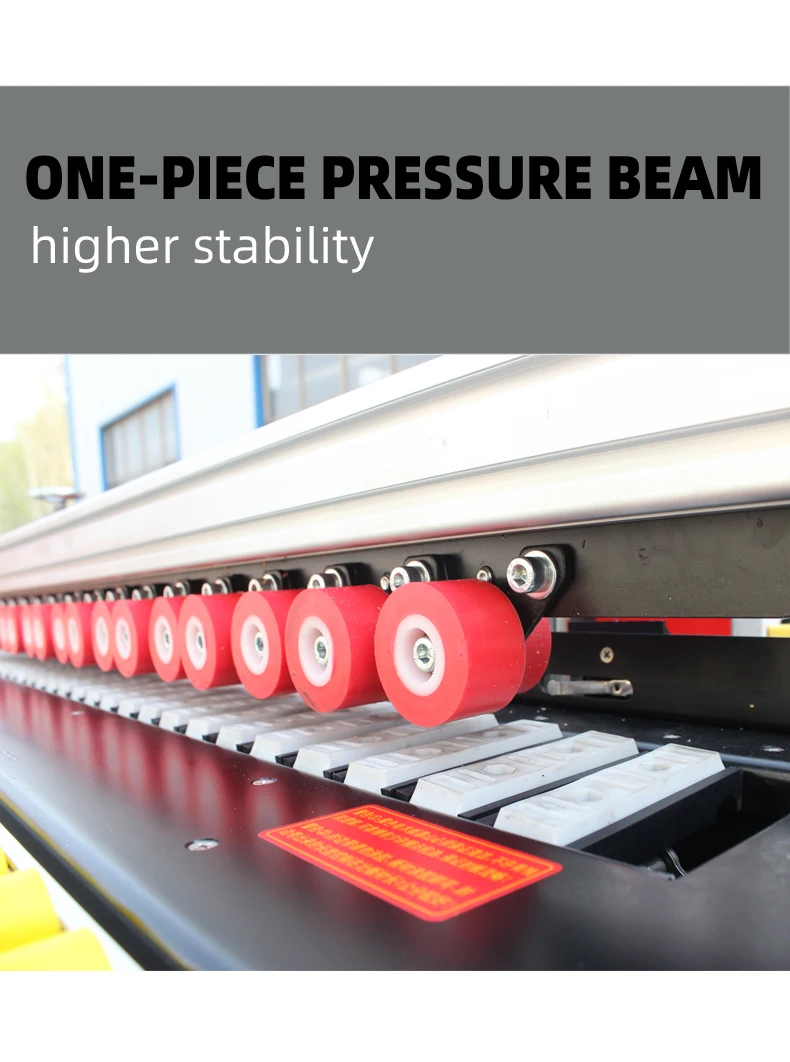
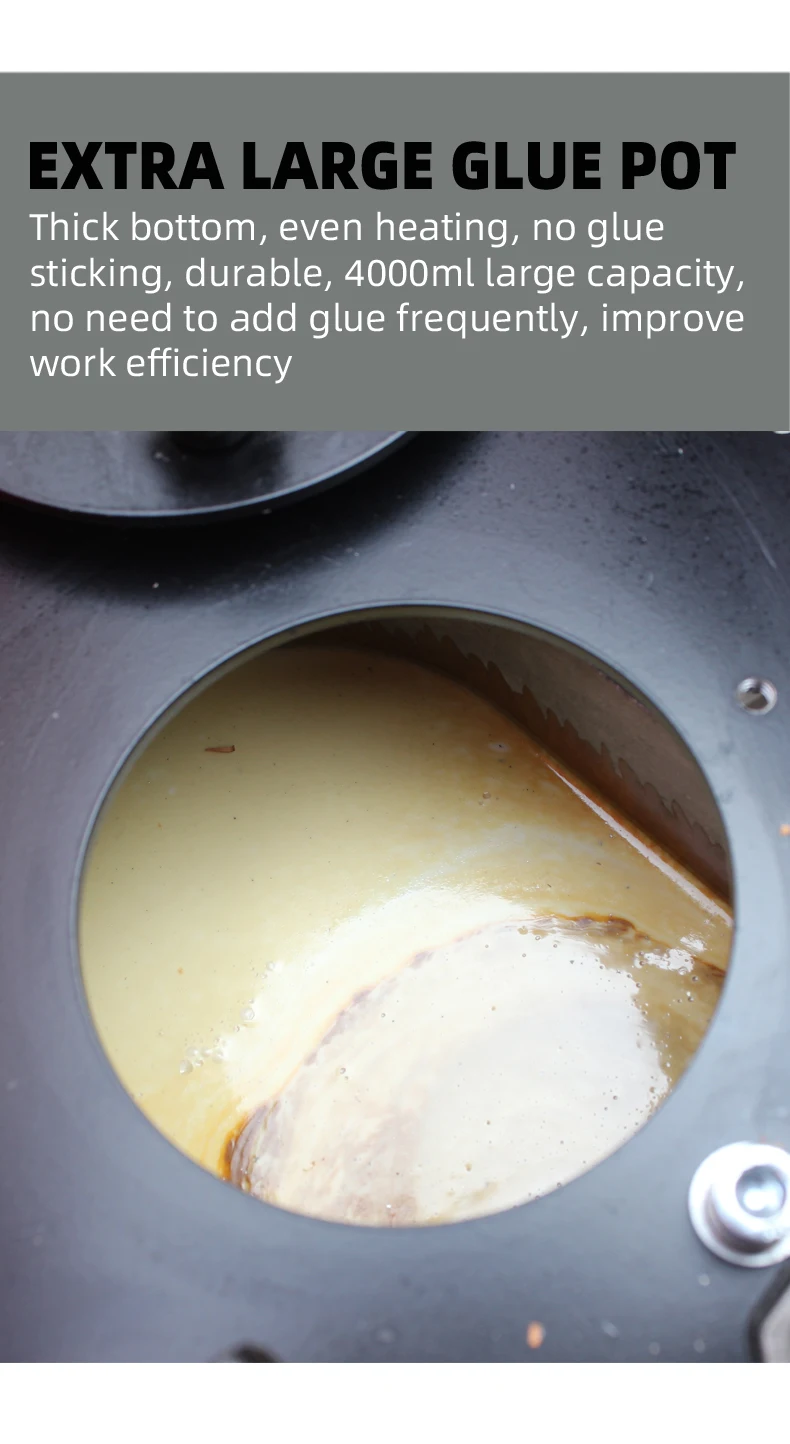
| Glue Pot Capacity | 4000 ml |
| Trimming Station Power | 800 W × 2 |
| Polishing Station Power | 180 W × 2 |
| Edge Feed Motor | 140 W |
| Conveyor Drive Motor | 140 W |
| Vacuum Extraction Motor | 1200 W |
| Required Air Pressure | 0.4–0.8 MPa |
| Control System | PLC (basis not stated in source) |
| Machine Footprint (L × W × H) | 130 × 60 × 95 cm |
| Net Weight | 135 kg |
| Feed Speed | (basis to be confirmed) |
| Operating Language | Chinese and English standard; additional languages configurable |
| Plug Types | EU, USA, AU, UK options |
Application Suitability
| Application | Material or Output |
|---|---|
| Custom cabinet door edge sealing | MDF and particleboard with PVC or melamine edge banding |
| Wardrobe panel processing | Plywood and ecological board with 0.3–3 mm banding |
| Small-batch furniture runs | Solid wood panels with veneer edge strips |
| Workshop automation transition | Board stock moving from manual iron-on to machine-applied edging |
| Office furniture component edging | Particleboard shelving and desk panels with ABS or PVC banding |
Why the Voltage Question Should Come Before the Price on Any Automatic Edge Banding Machine Manufacturer Quotation
A machine built for 380V/50Hz will not start on a 220V/60Hz shop floor, regardless of how competitive the quotation looked.
I have seen this happen more than once. A buyer receives an attractive price, signs the order, and weeks later the automatic edge banding machine manufacturer ships a unit wired for a supply that does not exist in their facility. The contactor trips immediately. The PLC throws a fault code the operator cannot read. An electrician is called in to rewire the entire cabinet, voiding the warranty on the control system before the first panel is edged [NEED_CITE: CE machinery directive requirements for industrial equipment]. The DW802 quotation process addresses this by requiring the buyer’s exact voltage, phase, and frequency before any production begins, documented in a formal electrical schematic that travels with the machine.
Where the DW802 Sits in the Complete Edge Banding Lineup
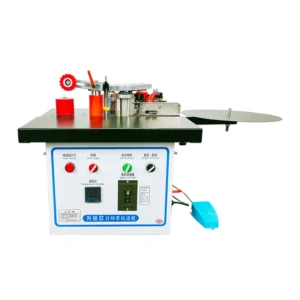
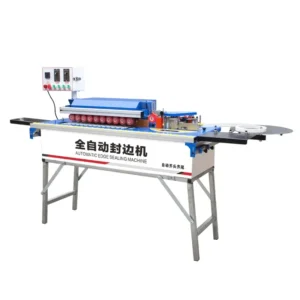
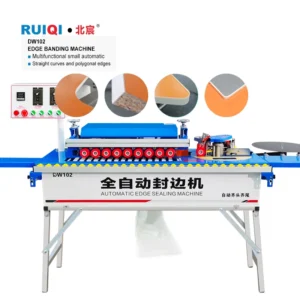
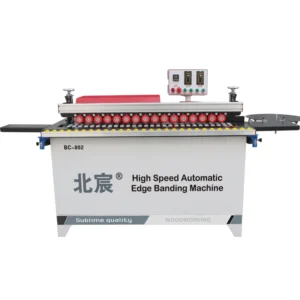
Browsing a full catalogue means understanding which model earns its place at each production stage. The DW802 occupies the compact, integrated station tier — gluing, trimming, polishing, head-and-tail cutting, and vacuum extraction in a single pass within a 130 cm footprint. For a workshop evaluating an automatic edge banding machine manufacturer range, this model answers the question of what a viable single-machine configuration looks like before scaling to pre-milling and multi-station lines.
Reading the Catalogue for Your Market Tier
Distributors surveying the complete range need to match model tiers to regional demand. The DW802 targets workshops moving from manual to automated edging, where a 4000 ml glue pot and 0.3–3 mm banding range cover most PVC and melamine work without over-specifying. Higher-tier models add pre-milling and servo-driven feed systems for continuous production volumes [NEED_CITE: edge banding machine classification by station count and automation level]. The catalogue structure lets a buyer compare what each tier adds and decide where the DW802 fits within a phased equipment plan.
What the Specification Sheet Actually Tells a Production Manager
The 800 W × 2 trimming motors indicate the machine can handle standard PVC and melamine banding cleanly, though heavier solid wood veneer strips at the upper 3 mm limit may require feed speed adjustment to prevent tear-out. The 4000 ml glue pot capacity supports continuous runs without frequent refill pauses, which matters when a small workshop is processing a batch of cabinet doors in a single morning. Panel thickness is governed by the 0–50 mm edge banding height range, meaning standard 18 mm and 25 mm furniture boards are well within scope. The 1200 W vacuum motor provides extraction at the trimming and polishing zones, though ducting diameter and external collector capacity should be confirmed against the workshop’s existing dust management setup [NEED_CITE: dust extraction requirements for woodworking machinery].
The Real Cost of Ordering Without Confirming the Full Configuration
A buyer who skips voltage confirmation or selects a control language their operators cannot read will spend days recovering from problems that should never have existed. The machine arrives, the HMI displays text the team cannot parse, and commissioning stalls while someone translates fault codes manually. In another scenario, an entry-level machine is pushed into daily production volumes it was not specified for, and bearing wear accelerates past normal service intervals [NEED_CITE: manufacturer duty cycle classification for edge banding equipment]. These are not warranty claims — they are specification mismatches that formal configuration confirmation prevents.
Why Buyers Source This Model Through the Full Catalogue
Every DW802 leaves the facility with a pre-shipment test record documenting performance on the buyer’s specified panel material, not a generic factory pass. The four-stage QC process — incoming material, in-process, finished assembly, and final verification — means the glue pot, trimming alignment, and conveyor tracking are checked before packing photographs are taken. Voltage customization is standard, not an afterthought, with the confirmed electrical schematic included in the documentation package. The PLC control system and HMI are configured to the agreed language before dispatch, so operators see instructions they can read on day one. For distributors, OEM branding and private-label capability are available across the range, allowing market-specific identity without separate tooling.
Documentation & Verification
- CE declaration of conformity covering the DW802’s electrical and mechanical safety scope
- Factory test record showing glue application and trim quality on your specified panel material
- Electrical schematic with confirmed voltage, phase, and frequency annotated for your facility
- ISO 9001 certificate covering the manufacturing and inspection process
- Spare parts list with part numbers matched to your machine’s build configuration
Installation, Commissioning & Support
- The 4200 W total load requires a dedicated circuit matching the confirmed voltage and phase
- Machine footprint of 130 × 60 × 95 cm fits through standard workshop doors fully assembled
- Air supply at 0.4–0.8 MPa must be clean and dry to protect pneumatic trim and feed cylinders
- First-run parameter tuning covers glue temperature, feed rate, and trim depth for your material
- Vacuum port connection verified against your dust collector’s airflow and static pressure
- Operation manual delivered in the agreed language with illustrated maintenance intervals
What to Include in Your Enquiry
To match the right configuration to your workshop, share the panel materials you process most frequently — MDF, particleboard, plywood, or solid wood — along with the edge banding type and thickness you run daily. Confirm your facility’s supply voltage, phase, and frequency so the electrical package is built correctly from the start. If you have upstream panel saws or downstream boring machines, note their throughput so feed speed alignment can be discussed at the quotation stage.
Frequently Asked Questions
Q: How does the DW802 compare to higher-tier edge banders in the catalogue for my production volume?
A: The DW802 integrates gluing, trimming, polishing, and head-and-tail cutting in a compact footprint suited to small and medium workshops. Higher-tier models add pre-milling stations and higher feed rates for continuous production lines. Your daily panel volume and material mix determine which tier matches your throughput requirement without overspecifying.
Q: What electrical information do you need before building my machine?
A: We require your exact supply voltage, phase configuration, and frequency in hertz before production begins. This is documented in a formal electrical schematic that accompanies your order. The confirmed specification ensures the DW802 arrives ready to connect to your existing supply without on-site rewiring.
Q: Can the control panel and manual be delivered in a language other than English?
A: Chinese and English are standard on the PLC interface, and additional languages including Spanish are configurable before dispatch. The operation and maintenance manual is produced in the agreed language, so your operators receive documentation they can reference independently during setup and daily use.
Q: How does the DW802 align with upstream and downstream equipment in a production line?
A: Feed speed and panel throughput must be balanced across your panel saw, edge bander, and boring machine to avoid bottlenecks. Share your existing equipment specifications and target daily output so the configuration can be reviewed for compatible cycle times and material flow between stations.
Q: Can I send panel samples for a test run before placing the order?
A: Yes. Send your actual panel material and preferred edge banding stock to the facility for a processing test. The resulting sample shows glue line quality, trim finish, and polishing result on your specific substrate, and a factory visit to observe the test is also arranged on request.