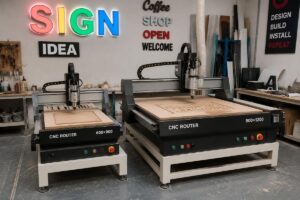
Discover the true panel saw cost in Ecuador by looking beyond the FOB price to full landed expenses. Ocean freight, import duties, and inland haulage can increase budgets by nearly forty percent. Match machine types to your production scale and leverage container-load wholesale pricing to avoid costly underbudgeting surprises.
Panel Saw Cost in Ecuador: 2026 Wholesale Price Guide
The machine invoice is only the beginning — freight, duties, voltage adaptation, and inland haulage routinely push the real landed cost well beyond the wholesale sticker price.
The wholesale panel saw cost in Ecuador typically runs significantly above the FOB machine price once ocean freight, import tariffs, value-added tax, and inland logistics to cities like Quito or Guayaquil are factored in. Buyers who compare only the supplier’s quotation without building a full landed cost model will consistently underbudget, sometimes by a margin large enough to kill a project’s profitability.
I’ve watched container loads of edge banders clear the port at Lagos and adjusted sliding table saw rails in a workshop outside Addis Ababa. I started out doing shipping docs — bills of lading, certificates of origin, you name it — before moving into sales. That’s when I learned a single missing line on a quotation can blow up in your face. An Ecuadorian furniture factory owner once came to me comparing our panel saw against a European brand’s list price. I broke it down for him: FOB, ocean freight, inland haulage to Quito, import duty. The gap between wholesale price and landed cost was nearly forty percent. He went quiet. Since then I lay out the full cost structure before anything else — saves everyone the headache later. [NEED_CITE: Ecuador tariff schedule classification for woodworking machinery under HS Chapter 84]
Understanding the panel saw cost in Ecuador requires looking past the quotation and into the full supply chain. Let me walk through each layer.
What Is the Real Landed Cost of a Panel Saw in Ecuador?
The FOB price on a quotation sheet represents only a fraction of what you will actually spend to get the machine running on your factory floor. Most first-time importers into Ecuador focus almost entirely on the machine price the supplier quotes. This is understandable — it is the largest single line item and the easiest number to compare across vendors. But it is also the most misleading number if used in isolation.
The landed cost of a panel saw in Ecuador is built from several stacked layers: the FOB machine price, ocean freight from the port of loading to Guayaquil, marine cargo insurance, Ecuadorian import duties classified under the relevant HS code, the domestic value-added tax applied on top of the CIF value plus duty, customs clearance agent fees, and finally inland trucking from the port to the factory location — which, for buyers in Quito, Cuenca, or Ambato, means a mountain haulage leg that adds meaningful cost. [NEED_CITE: Ecuador SENAE customs tariff rates for woodworking machinery imports]
I have seen buyers receive a CIF Guayaquil quote and assume that was the final number, only to discover weeks later that the inland transport to their workshop in the Andean highlands carried a separate surcharge, and that the duty calculation had been based on a higher customs valuation than the invoice showed. The result was a budget overrun that could have been predicted with a simple spreadsheet.
Here is how the layers typically stack:
| Cost Component | Typical Structure | Notes |
|---|---|---|
| FOB Machine Price | Base quotation from supplier | Varies by machine type and configuration |
| Ocean Freight | Container-based rate to Guayaquil | Fluctuates with global shipping indices |
| Marine Insurance | Percentage of CIF value | Standard coverage, relatively minor |
| Import Duty | Tariff rate under Ecuador HS classification | [NEED_CITE: Ecuador import duty rates for panel saws under HS 8465] |
| Value-Added Tax | Applied on CIF plus duty | Standard Ecuadorian IVA rate |
| Customs Clearance | Agent fees and documentation | Broker charges, port handling |
| Inland Haulage | Truck from Guayaquil to final destination | Significant for highland cities |
The critical takeaway: the panel saw cost in Ecuador cannot be accurately compared between suppliers unless both quotations are converted to the same Incoterm and all downstream costs are modeled. A cheap FOB price from a factory with no export documentation support may end up more expensive than a slightly higher CIF price from a supplier who handles customs paperwork cleanly. [NEED_CITE: Incoterm cost allocation comparison for machinery imports to South America]
How Do Panel Saw Types Compare in Wholesale Price?
Manual sliding table saws, semi-automatic panel saws, and CNC beam saws occupy entirely different price tiers — and the right choice depends on your daily output volume, not your ambition.
When buyers search for panel saw cost in Ecuador, they often treat "panel saw" as a single product category. It is not. The price spread between a basic manual sliding table saw and a fully automated CNC beam saw is enormous, and choosing the wrong type for your production scale is one of the most expensive mistakes a workshop can make — not because of the purchase price, but because of the hidden cost of underperformance or overinvestment.
| Parameter | Manual Sliding Table Saw | Semi-Auto Panel Saw | CNC Beam Saw |
|---|---|---|---|
| Daily Output Capacity | Low — operator-dependent | Moderate — assisted feeding | High — fully automated nesting |
| Operator Skill Required | Substantial experience needed | Moderate training | Basic operation after setup |
| Cutting Precision | Dependent on operator consistency | Standard industrial tolerance | High precision, repeatable |
| Suitable Factory Scale | Small workshop, custom jobs | Growing workshop, batch production | Mid-to-large panel furniture factory |
| Wholesale Price Tier | Entry-level | Mid-range | Premium |
| Consumable Cost Over Time | Noticeably higher blade wear | Standard | Controlled, optimized nesting |
A small cabinet shop in Cuenca once purchased a CNC beam saw based on a supplier’s recommendation, expecting the automation to transform their output. In reality, their daily order volume did not justify the machine’s capacity — they were running it at a fraction of its capability, and the capital tied up in that machine could have funded a complete edge banding upgrade instead. The panel saw cost in Ecuador for a CNC beam saw is a serious investment, and it only pays off when the production flow supports it.
Conversely, I have seen growing workshops try to stretch a manual sliding table saw beyond its limits, producing at volumes that exhausted their operators and generated unacceptable waste rates. The consumable cost — blades, scoring discs, and material waste from inconsistent cuts — eroded the initial savings within months. [NEED_CITE: woodworking machinery selection guide based on production volume and panel type]
The right approach is to match machine type to your current and near-future production requirements, then compare the panel saw cost in Ecuador within that specific category. Comparing a manual saw’s price to a beam saw’s price tells you nothing useful.
Chinese vs. European Panel Saws: Which Delivers Better Value in Ecuador?
Factory-direct Chinese panel saws typically sit at a substantial discount below European brands — and for standard panel furniture work, the performance gap has narrowed considerably.
This is a question I get from nearly every Ecuadorian buyer who contacts me. They have seen the European brand names — the ones displayed at trade fairs with polished booths and technical seminars — and they wonder whether the premium is worth it. The honest answer depends on what you are producing and what you need from the machine’s control system.
For standard panel furniture cutting — melamine-faced particleboard, MDF, plywood for wardrobes, cabinets, and office furniture — a properly configured Chinese factory-direct panel saw delivers comparable cutting quality to European machines at a wholesale price that is significantly lower. The savings are not marginal. They are large enough to reshape a buyer’s entire equipment budget, potentially freeing capital for a second machine, an edge bander, or a multi-boring unit that rounds out the production line.
| Factor | Chinese Factory-Direct | European Brand |
|---|---|---|
| Wholesale Machine Price | Substantially lower | Premium tier |
| Voltage Adaptation | Customizable to local grid standard | Often fixed to European spec |
| PLC Control Language | Multilingual options available | Typically European languages |
| Spare Parts Availability | Depend on supplier infrastructure | Established in some regions |
| Build Quality | Heavy-duty cast iron frames, precision-machined | Proven long-term track record |
| OEM/ODM Customization | Widely offered | Rarely available |
The voltage adaptation point deserves special attention for Ecuadorian buyers. Ecuador’s electrical grid runs at a specific voltage and frequency. European machines shipped without modification may require on-site electrical retrofitting — new transformers, rewound motors, or replacement of control components — which adds unexpected cost and downtime. Chinese manufacturers who regularly export to Latin America typically offer voltage adaptation as a standard customization option, meaning the machine arrives ready to plug into your factory’s power supply. [NEED_CITE: Ecuador electrical grid voltage and frequency standard for industrial machinery]
I worked with a distributor in Guayaquil who had previously purchased European-brand panel saws. When they sourced a container of machines directly from a Chinese factory with proper voltage configuration and Spanish-language PLC panels, their installation time dropped dramatically — no electrician needed to rewire anything, and the operators could navigate the control interface immediately. The per-unit panel saw cost in Ecuador for that container-load order, including all landed expenses, came in well below what they had been paying for single-unit European purchases.
The European brands still hold advantages in certain high-volume, high-precision applications where decades of refinement in specific cutting algorithms matter. But for the majority of panel furniture workshops operating in Ecuador, the value equation has shifted.
How to Avoid Hidden Costs When Importing Panel Saws to Ecuador
The most expensive surprises in panel saw importing are not the machine defects — they are the paperwork gaps, voltage mismatches, and Incoterm misunderstandings that surface after the container has already shipped.
Over the years I have helped resolve import complications across multiple regions, and the pattern is consistent: the problems that cost the most time and money are almost never about the machine itself. They are about the details surrounding the machine — the specifications that were not confirmed before production, the documents that were not prepared correctly, the freight terms that were not fully understood.
Here are the most common hidden cost traps for Ecuadorian buyers importing panel saws:
Voltage and frequency mismatch. Ecuador’s grid specification must be confirmed with the supplier before the machine is built. If the motor, transformers, and electrical components are manufactured for the wrong voltage, you face a costly retrofit at destination — or worse, a machine that cannot be used at all. Always specify your local voltage and frequency in the purchase contract, and require written confirmation from the supplier that the machine will be built to that standard. [NEED_CITE: industrial electrical voltage and frequency standards by country]
Incoterm confusion. FOB, CIF, and DDP allocate costs and risks differently between buyer and seller. A buyer who receives a CIF Guayaquil quote may assume it covers everything to the port — but it does not cover inland transport, customs clearance, or import duties. A buyer who receives an FOB quote must arrange and pay for ocean freight separately. Misunderstanding which costs are included in which Incoterm leads to budget gaps that only become visible when the invoice arrives.
Customs valuation disputes. Ecuadorian customs authorities may assess the import value of your panel saw differently from the invoice price shown on your commercial documentation. If the customs valuation comes in higher than your declared value, the duty and tax calculations will be based on the higher figure — and you will owe more than you budgeted. Working with an experienced customs broker who understands how Ecuadorian authorities assess machinery valuations can prevent this surprise. [NEED_CITE: Ecuador customs valuation methodology for imported machinery]
Missing or incorrect documentation. The commercial invoice, packing list, bill of lading, certificate of origin, and any required conformity certificates must all be accurate and consistent. A discrepancy — even a minor one in the product description or HS code classification — can delay clearance at Guayaquil port, incurring storage fees and demurrage charges that accumulate daily.
Inland transport planning. If your factory is not in Guayaquil, you need to arrange trucking from the port to your location. For buyers in Quito, this means transport up the Andes — a route that carries its own cost structure and scheduling considerations. Failing to arrange this in advance can leave your machine sitting at the port, accumulating charges.
The panel saw cost in Ecuador is only predictable when all of these elements are mapped out before the order is placed. A reliable supplier will help you navigate these details — providing accurate documentation, confirming voltage specifications in writing, and advising on the most appropriate Incoterm for your situation.
Wholesale Buying Strategy: Single Unit vs. Container Load
Buying a single panel saw at retail pricing and buying a container load at wholesale pricing are fundamentally different transactions — and the per-unit economics favor volume even for buyers who only need one machine today.
This is a counterintuitive point for many first-time buyers. The logic seems straightforward: I need one panel saw, so I will buy one panel saw. But the pricing structure in international machinery trade is heavily tilted toward volume. A supplier loading a full container can spread fixed costs — documentation, port handling, production setup — across multiple units, and the per-unit price drops accordingly.
For a panel furniture factory in Ecuador that is equipping a new production line, the opportunity to load a container with a panel saw, an edge bander, and a multi-boring machine from the same supplier means each machine benefits from the container-load pricing structure. The total panel saw cost in Ecuador per unit within that container is meaningfully lower than if the same buyer had purchased the panel saw individually.
| Purchasing Approach | Per-Unit Price Structure | Documentation Efficiency | Supplier Relationship |
|---|---|---|---|
| Single Unit Retail | Higher per-unit cost | Single shipment documentation | Transactional |
| Container Load Wholesale | Lower per-unit cost | Consolidated documentation | Strategic, ongoing |
| Multi-Machine Container | Lowest per-unit cost | Full line documentation | Partnership, OEM potential |
Beyond the immediate price advantage, container-load purchasing opens doors to customization that single-unit orders typically do not. Suppliers are more willing to accommodate OEM branding, custom voltage configurations, and specialized PLC language settings when the order volume justifies the production adjustment. For distributors building a machinery supply business in Ecuador, this is the pathway to establishing a differentiated local offering — machines branded with your company name, configured for your market, at a cost structure that supports competitive local pricing.
I have worked with Ecuadorian distributors who started with a single machine order, then moved to container loads within a year as they validated market demand. The shift from retail pricing to wholesale pricing transformed their margin structure and allowed them to invest in local after-sales infrastructure — spare parts inventory, technician training — which in turn strengthened their competitive position. [NEED_CITE: woodworking machinery distribution business model for emerging markets]
The panel saw cost in Ecuador for a buyer who plans ahead and structures their purchasing around container-load volumes will always be lower than the cost for a buyer who purchases reactively, one machine at a time.
Conclusion
The true panel saw cost in Ecuador extends far beyond the supplier’s quotation — it encompasses freight, duties, taxes, inland logistics, voltage adaptation, and purchasing strategy. Buyers who invest time in mapping the full landed cost structure before committing to a purchase will make better equipment decisions, avoid budget overruns, and build more sustainable supply relationships. Match your machine type to your production scale, compare quotations on a consistent Incoterm basis, confirm all technical specifications before production begins, and consider volume purchasing to unlock wholesale pricing advantages.
Tags

Written by
author
Editor covering global sourcing, supplier verification, and industrial product knowledge. Content is compiled from manufacturer specifications, industry standards, and hands-on experience with international B2B buyers. Every article is fact-checked before publishing to help procurement professionals make informed decisions.
View all posts