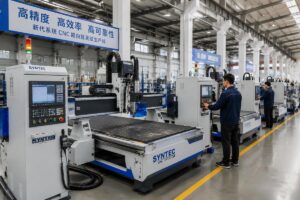
Secure your OEM sliding table saw wholesale Poland supply with verified CE compliance and heavy-duty cast iron precision. Avoid customs delays by prioritizing third-party safety data over self-declarations. Ensure long-term reliability with 400V adaptation and multilingual PLC interfaces tailored for the Polish woodworking market.
OEM Sliding Table Saw Wholesale for Poland: A 2026 Buying Guide for Distributors & Factories
Not all CE marks guarantee entry into the Polish market.
Successfully importing sliding table saws into Poland requires balancing CE-certified safety compliance with heavy-duty cast iron precision, ensuring long-term reliability for European woodworking standards.
Sourcing high-precision equipment for Central Europe involves more than just comparing price tags. The primary challenge lies in verifying that the machine meets the stringent requirements of the EU Machinery Directive while maintaining the structural integrity needed for daily industrial use. Many distributors face customs delays or operational failures because they overlook the difference between self-declared compliance and third-party verified safety data. [NEED_CITE: EU Machinery Directive compliance verification process]
Navigating these complexities requires a deep understanding of both technical specifications and regulatory frameworks. This guide breaks down the critical factors for selecting a reliable partner for OEM sliding table saw wholesale Poland projects, focusing on quality indicators that matter most to end-users in the woodworking industry.
What Are the Critical CE Compliance Requirements for Importing Saws to Poland?
Compliance is not a sticker; it is a documented proof of safety engineering.
Importing machinery into Poland, as an EU member state, demands strict adherence to European safety standards. The CE mark is often misunderstood as a quality certificate, but it is primarily a safety declaration. For a panel saw supplier for Polish market, this means providing comprehensive technical files that prove the machine meets the Low Voltage Directive and the Machinery Directive. [NEED_CITE: Low Voltage Directive and Machinery Directive requirements for woodworking machinery]
A common pitfall for buyers is accepting a self-declaration without reviewing the underlying test reports. Genuine compliance involves third-party verification of electrical safety and noise emission levels. Without this, customs authorities may detain shipments, leading to significant financial losses and project delays.
| Compliance Aspect | Basic Self-Declaration | Third-Party Verified |
|---|---|---|
| Electrical Safety | Manufacturer’s internal check | Independent lab test report |
| Noise Emission | Estimated value | Measured data per ISO standards |
| Technical File | Incomplete or generic | Detailed risk assessment & design docs |
| Customs Clearance | High risk of delay | Smooth processing |
Consider the case of a distributor in Warsaw who initially sourced machines with only basic documentation. The shipment was held at the border for weeks due to missing noise emission data. Switching to a CE certified sliding table saw manufacturer that provided full technical files resolved the issue and established a smoother supply chain for future orders. [NEED_CITE: Impact of incomplete technical files on EU customs clearance]
Ensuring that your supplier can provide these documents upfront is crucial for woodworking machinery import Poland 2026 strategies. It protects your business from regulatory risks and builds trust with your local clients who expect safe, compliant equipment.
How Does Cast Iron Quality Impact Cutting Precision and Lifespan?
Weight equals stability, and stability equals precision over time.
The core of any sliding table saw is its frame. In the humid and variable conditions of many workshops, the material choice determines the machine’s longevity and accuracy. Heavy-duty cast iron frames, typically weighing over one ton, provide the necessary mass to dampen vibrations during cutting. [NEED_CITE: Relationship between cast iron weight and vibration damping in machining tools]
Lighter alternatives, such as welded steel frames, may offer lower initial costs but often suffer from thermal distortion and vibration issues after extended use. This leads to a gradual loss of cutting precision, which is unacceptable for high-quality panel furniture production. A robust cast iron base ensures that the saw maintains ±0.1mm accuracy over many years of operation.
| Frame Material | Vibration Damping | Thermal Stability | Long-term Accuracy |
|---|---|---|---|
| Heavy-Duty Cast Iron | Robust | Resistant | Maintained |
| Welded Steel | Vulnerable | Prone to distortion | Degraded |
| Aluminum Alloy | Noticeably reduced | High sensitivity | Compromised |
A furniture factory in Krakow replaced their manual saws with automated lines featuring heavy cast iron bases. The result was a noticeable improvement in edge quality and a reduction in material waste. The durability of the cast iron frame allowed them to operate in a humid environment without significant rust issues, thanks to advanced coating technologies. [NEED_CITE: Case study on cast iron frame durability in humid woodworking environments]
When evaluating suppliers for OEM sliding table saw wholesale Poland, prioritize those who use high-grade cast iron and have rigorous quality control processes for their casting and machining operations. This investment pays off in reduced maintenance costs and higher customer satisfaction.
Which OEM Customization Options Matter Most for Polish Buyers?
Local relevance drives sales, not just generic features.
Polish buyers have specific needs that differ from other markets. Standard machines often fail to meet local expectations regarding voltage, language, and branding. Effective OEM customization goes beyond slapping a logo on the machine; it involves adapting the product to the local operational environment.
Key customization areas include voltage adaptation to 400V/50Hz, which is standard in Poland, and multilingual PLC panels supporting Polish, Russian, and English. These features reduce the learning curve for operators and minimize support calls. Additionally, private-label branding allows distributors to build their own brand equity in the regional market.
| Customization Feature | Standard Offering | OEM Adapted for Poland |
|---|---|---|
| Voltage | Fixed or limited options | 400V/50Hz optimized |
| Control Language | English only | PL/RU/EN support |
| Branding | Manufacturer brand | Private-label ready |
| Safety Guards | Basic | Enhanced for local norms |
A regional dealer in Gdansk reported increased sales after switching to a supplier who offered fully customized PLC interfaces. The ability to present machines with local language support made their products more appealing to small and medium-sized workshops that lacked English-speaking staff. This strategic alignment with local needs is a key differentiator in the competitive OEM sliding table saw wholesale Poland sector.
Suppliers who understand these nuances and offer flexible OEM solutions are better positioned to support distributors in capturing market share. Look for partners who have experience in exporting to Europe and can demonstrate their ability to handle complex customization requests efficiently.
How to Evaluate Supplier Reliability Beyond Price?
Price is a number; reliability is a track record.
While cost is a significant factor, it should not be the sole criterion for selecting a supplier. True reliability is built on a foundation of strong R&D capabilities, consistent quality control, and transparent business practices. Evaluating a supplier requires looking beyond the brochure to understand their operational depth.
Key indicators of reliability include the size and expertise of the R&D team, the number of held patents, and the rigor of pre-shipment testing protocols. A manufacturer with a dedicated engineering team is more likely to innovate and solve technical problems proactively. Similarly, a strict testing regime ensures that every unit leaving the factory meets high-quality standards.
| Reliability Indicator | Weak Signal | Strong Signal |
|---|---|---|
| R&D Team | Small or outsourced | Large, in-house engineering team |
| Patents | None or few | Multiple national/international patents |
| Testing | Sample-based | 100% pre-shipment testing |
| Certifications | Basic | ISO 9001 + CE verified |
For instance, a manufacturer with a substantial R&D department and several national patents demonstrates a commitment to product improvement and innovation. Their practice of conducting 100% pre-shipment testing on every unit provides an additional layer of assurance for buyers. This level of diligence reduces the risk of receiving defective goods and minimizes after-sales issues. [NEED_CITE: Importance of pre-shipment testing in reducing export defects]
When searching for a partner for OEM sliding table saw wholesale Poland, prioritize suppliers who can provide evidence of their R&D strength and quality control processes. This approach ensures a long-term, stable supply of high-quality machinery that meets the demanding standards of the Polish woodworking industry.
Conclusion
Quality compliance and structural integrity define successful imports.
Importing sliding table saws into Poland requires a strategic approach that balances regulatory compliance with mechanical durability. By focusing on verified CE certifications, heavy-duty cast iron construction, and relevant OEM customizations, buyers can secure reliable equipment that meets local market needs. Evaluating suppliers based on their R&D capabilities and quality control practices further ensures long-term success. This holistic strategy supports sustainable growth for distributors and manufacturers alike in the evolving European woodworking sector.
Tags

Written by
author
Editor covering global sourcing, supplier verification, and industrial product knowledge. Content is compiled from manufacturer specifications, industry standards, and hands-on experience with international B2B buyers. Every article is fact-checked before publishing to help procurement professionals make informed decisions.
View all posts