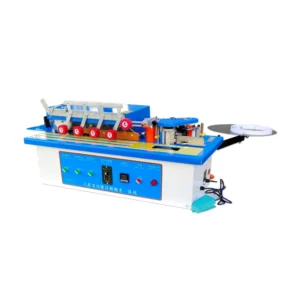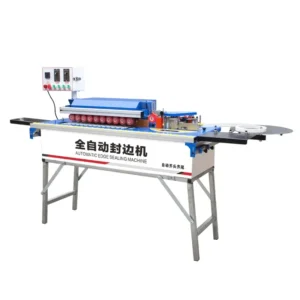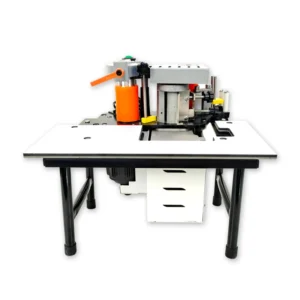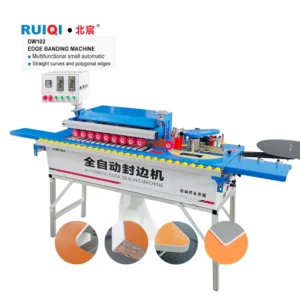
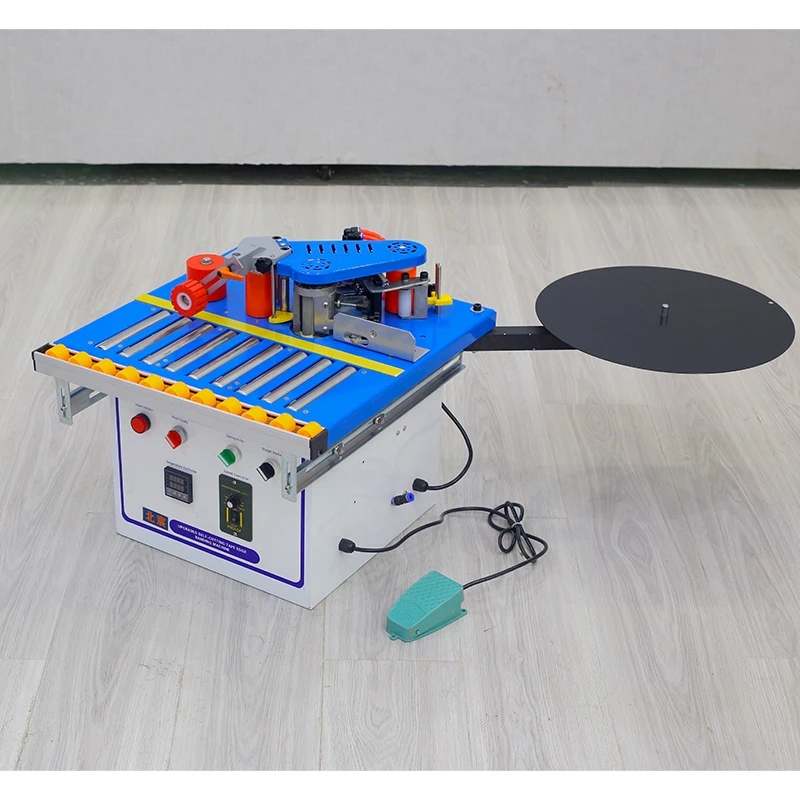
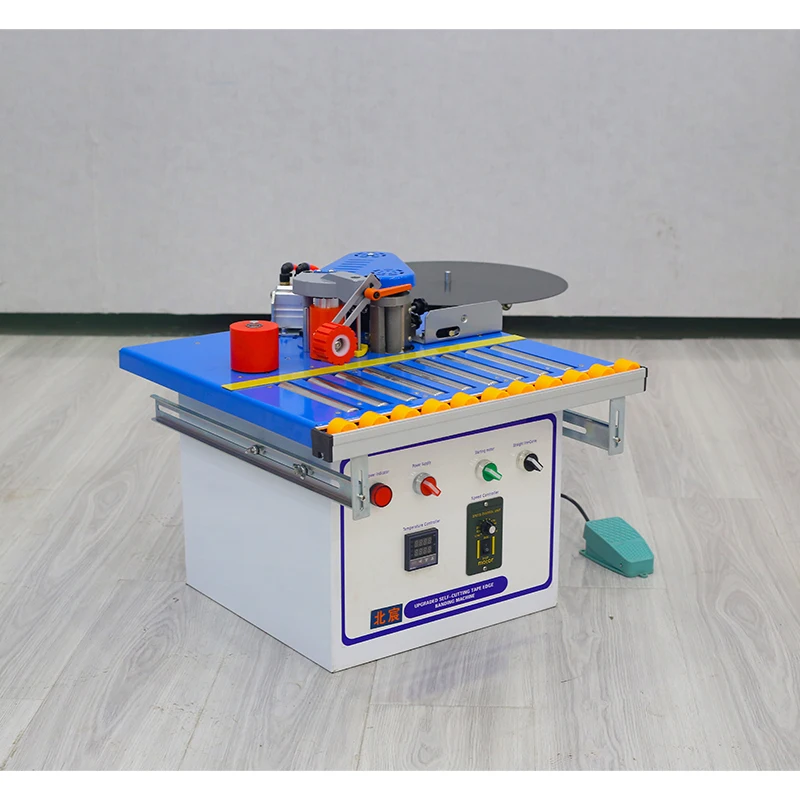
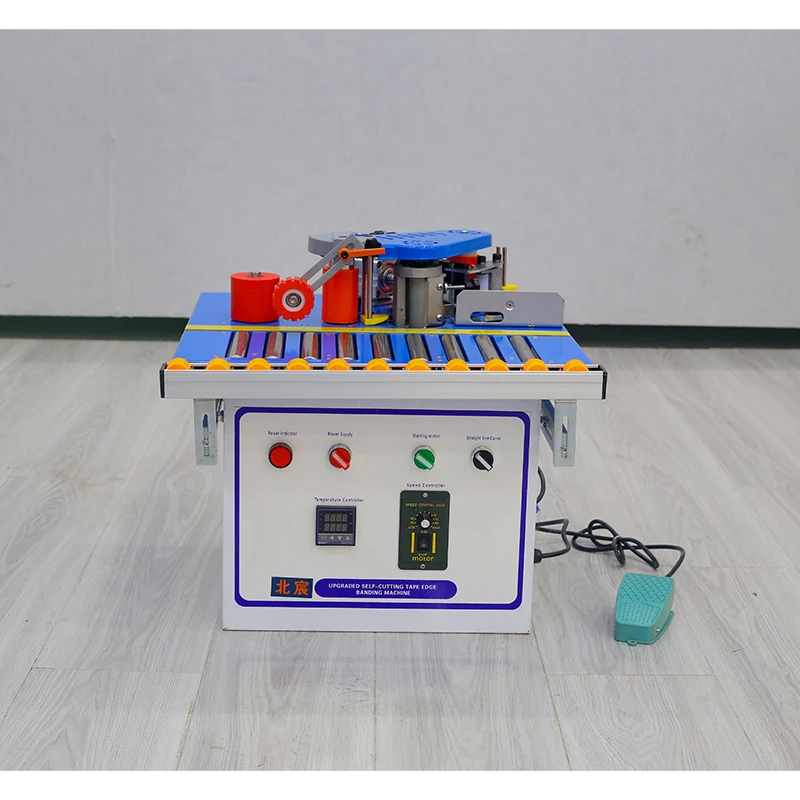
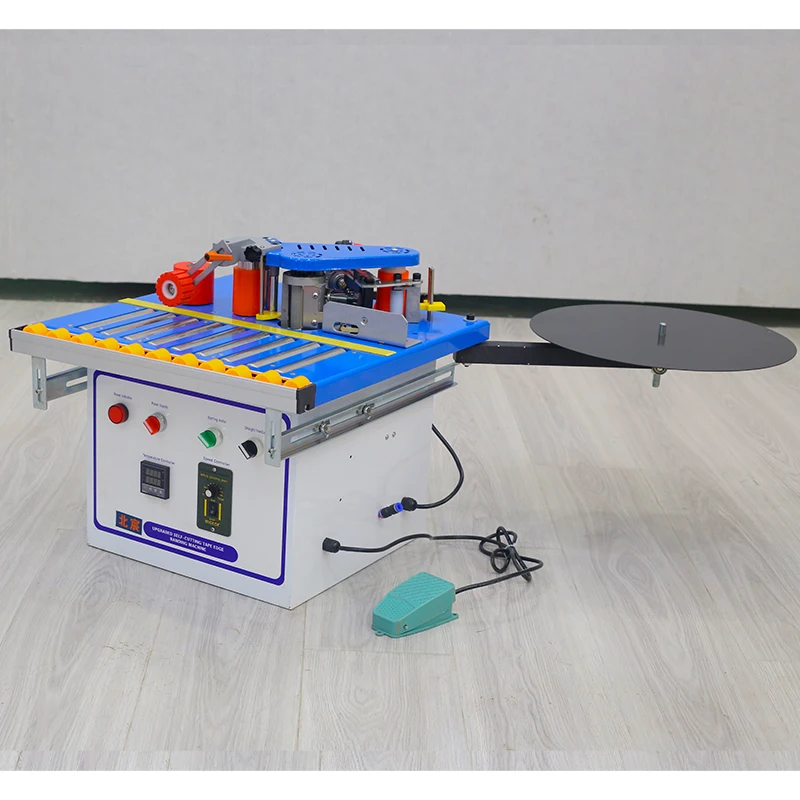

Description
Voltage-First Configuration Protocol — Every ST-70 unit ships with confirmed electrical schematics matching your local grid before the crate is sealed.
Technical Specifications
| Parameter | Value |
|---|---|
| Model | ST-70 |
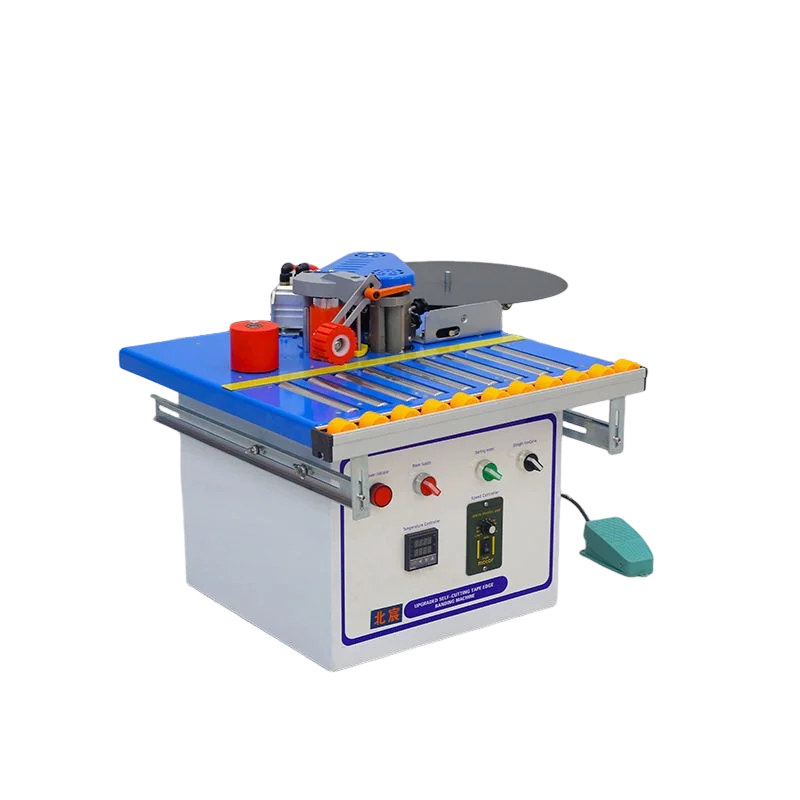
| Product Type | Portable Edge Banding Machine |
| Rated Power | 1000W |
| Voltage & Frequency | 220V / 380V / Custom Configuration |
| Edge Banding Height Range | 0–50 mm |
| Edge Banding Thickness Range | 0.3–3 mm |
| Edge Trimming Power | 20W |
| Glue Pot Capacity | 1000 ml |
| Minimum Sheet Length | 25 cm |
| Minimum Sheet Width | 3 cm |
| Overall Dimensions | 50 × 50 × 47 cm |
| Net Weight | 23 kg |
| Air Supply Requirement | 0.5–0.8 MPa |
| Control Interface | Manual operation with control panel |
| Edge Profile Capability | Curved and straight edge banding |
| Assembly State | Fully assembled, portable tabletop unit |
| Plug Options | EU / USA / AU / UK |
| Language Options | Chinese, English; customizable to other languages |
Application Suitability
| Application | Material or Output |
|---|---|
| Small furniture repair and restoration | MDF, particleboard, plywood edge sealing |
| Home decoration production runs | Ecological board and solid wood panel edge finishing |
| DIY woodworking and custom joinery | PVC and veneer edge banding on compact workpieces |
| Prototype and short-run cabinet work | Curved and straight contour edge application |
| On-site carpentry and mobile workshop use | Portable edge sealing for field installations |
Why Voltage Verification Matters More Than Any Other Spec on a Portable Edge Bander
Confirming your workshop voltage and plug type before ordering eliminates the most common reason portable machines sit idle after delivery.
I once supported a Peruvian client who purchased a 220V portable edge banding machine for sale without checking whether their workshop had the correct circuit configuration. The unit arrived, and it sat idle for three weeks while we retrofitted the electrical system. That idle time cost them far more than the machine itself. Across Latin America and parts of Southeast Asia, grid variations between 110V, 220V, and 380V are common even within the same city [NEED_CITE: voltage and frequency standards by export market]. The ST-70 addresses this directly: before production begins, your local voltage and frequency are confirmed, and the matching plug type is installed at the factory.
Mapping the ST-70 Within the Full Edge Banding Family
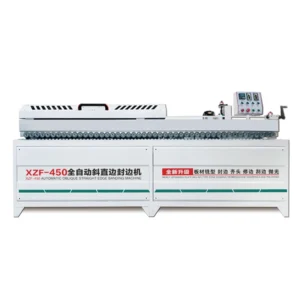
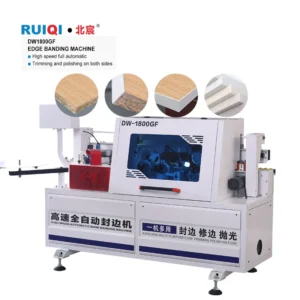
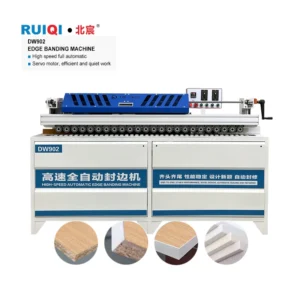
The ST-70 sits at the entry point of a complete edge banding machine manufacturer product line. For a small joinery shop moving from manual edge trimming to mechanized sealing, this portable unit handles curved and straight profiles on workpieces as narrow as 3 cm. When your order volume grows and panels move in consistent batch sizes, the same product family extends to pre-milling automatic lines. Staying within one supplier family means compatible spare parts architecture and consistent operator training logic across the range.
How Portability Changes Workshop Layout Logic
At 23 kg and a 50 × 50 × 47 cm footprint, the ST-70 operates as a tabletop unit rather than a fixed station. This means a carpentry team can relocate it between job sites or reposition it within a tight workshop based on daily workflow. For home decoration producers handling varied panel sizes, the ability to bring the machine to the material rather than feeding material through a fixed line reduces handling time on oversized boards. The 1000 ml glue pot supports extended run times between refills, reducing interruption during continuous edge banding machine for sale production sessions.
Reading the Specifications That Actually Affect Edge Quality
The 0.3–3 mm edge banding thickness range covers the PVC and veneer materials most commonly used in furniture and cabinet production. Thickness directly influences glue consumption and trimming force: thinner veneer requires precise temperature control to avoid burn-through, while 3 mm PVC demands adequate trimming power to produce a clean finish. The 0–50 mm height range accommodates standard panel thicknesses from thin shelving stock to thicker countertop substrates. The 20W edge trimming motor is calibrated for this portable class; heavier trimming loads on thick PVC belong to stationary automatic models. The 0.5–0.8 MPa air supply requirement is typical for pneumatic-assisted feeding mechanisms and should be verified against your existing compressor capacity [NEED_CITE: pneumatic supply requirements for portable edge sealing equipment].
The Hidden Cost of Buying a Portable Unit Outside Its Designed Workload
Purchasing an entry-level edge banding machine for sale into continuous high-volume production is one of the most common procurement errors in small workshops. The ST-70 is engineered for short-run, repair, and custom work cycles. When a buyer pushes this class of machine into eight-hour daily production shifts, the glue pot capacity and thermal management are not designed for that thermal duty cycle, leading to inconsistent glue viscosity and visible bond lines. The manual feeding mechanism also introduces operator fatigue over extended runs, which affects edge alignment consistency. These problems surface weeks after purchase, when the workshop blames the machine rather than the workload mismatch [NEED_CITE: common causes of edge banding failure in high-throughput environments].
Why Sourcing This Model Through Ruiqi Wood
Configuration verification happens before production starts, not after the machine arrives. Voltage, frequency, and plug type are matched to your facility’s documented electrical supply. Multilingual control panel options mean your operator can commission the ST-70 without language barriers delaying setup. The ST-70 exists within a broader edge banding machine manufacturer range, so when your workshop scales to higher throughput, the transition to a larger model stays within a single technical support relationship. Four-stage quality control covers incoming material inspection through pre-shipment verification, with factory test records available for your specific panel thickness requirements.
Documentation & Verification
- Electrical schematic confirming your voltage and plug configuration before dispatch
- Machine specification sheet detailing edge banding height and thickness ranges
- Operation and maintenance manual delivered in your agreed language
- Factory test record on your specified panel material and thickness
- Spare parts list covering consumables for the ST-70 glue pot and trimming assembly
- Packing photographs showing crate condition prior to shipment
Installation, Commissioning & Support
- Tabletop placement on a stable surface rated for at least 30 kg, given the 23 kg net weight
- Dedicated circuit matching confirmed voltage, whether 220V single-phase or 380V three-phase
- Arrives fully assembled with no field wiring required beyond plug connection
- Initial glue pot temperature calibration performed against your specific PVC or veneer material
- Pneumatic line connection verified against 0.5–0.8 MPa supply from your existing compressor
- Multilingual control panel labels applied at factory per your language selection
Preparing Your Inquiry for Accurate Configuration
To receive a precise ST-70 configuration proposal, specify your local voltage and frequency, the plug standard required, and the control panel language your operators need. Include the primary panel materials you will be processing, typical edge banding thickness, and whether your work involves curved profiles or straight runs only. This information allows the engineering team to confirm suitability and prepare a formal quotation.
Frequently Asked Questions
Q: How does the ST-70 fit within the broader edge banding range, and when should a workshop consider a larger model?
A: The ST-70 is designed for short-run, repair, and custom work on panels as narrow as 3 cm. When your daily volume shifts to consistent batch production with longer panel runs, a stationary automatic edge bander with pre-milling and multi-station trimming becomes appropriate. Staying within the same product family ensures compatible technical support and spare parts continuity.
Q: How is voltage and frequency confirmed for my market before the machine ships?
A: Your local voltage, frequency, and plug standard are documented during the inquiry stage. The factory configures the ST-70 electrical system accordingly and provides a confirmation schematic before production. This eliminates the risk of the machine arriving with an incompatible plug or voltage rating for your workshop grid.
Q: What substrate and edge banding materials work with this portable unit?
A: The ST-70 handles MDF, particleboard, solid wood, ecological board, and plywood substrates. Edge banding thickness from 0.3 to 3 mm covers standard PVC and veneer materials used in furniture and home decoration. Curved and straight edge profiles are both supported within this thickness range.
Q: Can the control panel language be customized beyond Chinese and English?
A: Yes. The control panel can be configured in Spanish or other languages upon request. Confirming the required language during the quotation stage ensures the operator receives a machine they can commission and operate independently from day one.
Q: What documentation ships with the ST-70?
A: Each unit ships with a machine specification sheet, electrical schematic confirming your voltage configuration, operation manual in the agreed language, spare parts list, factory test record, and pre-shipment packing photographs. CE documentation is available where applicable to the specific configuration ordered.