Description
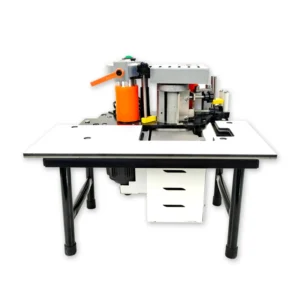
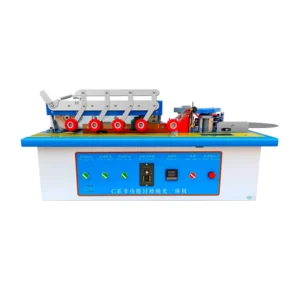
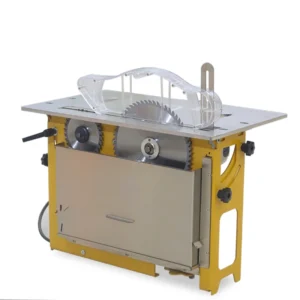
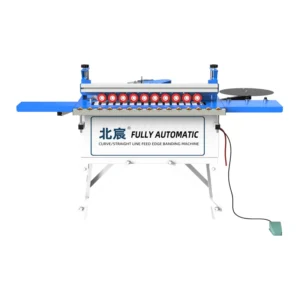
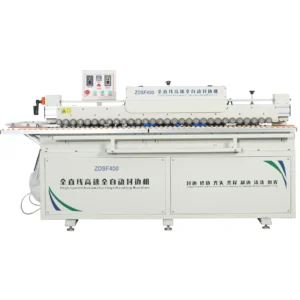
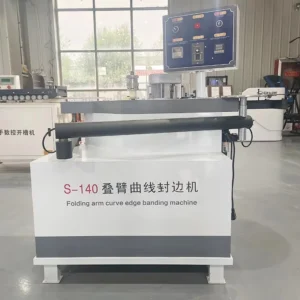
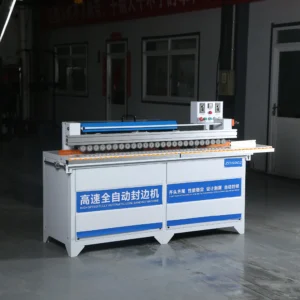
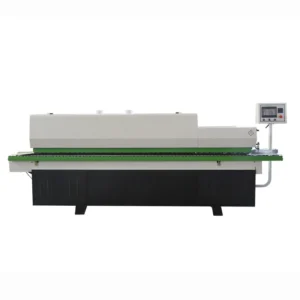
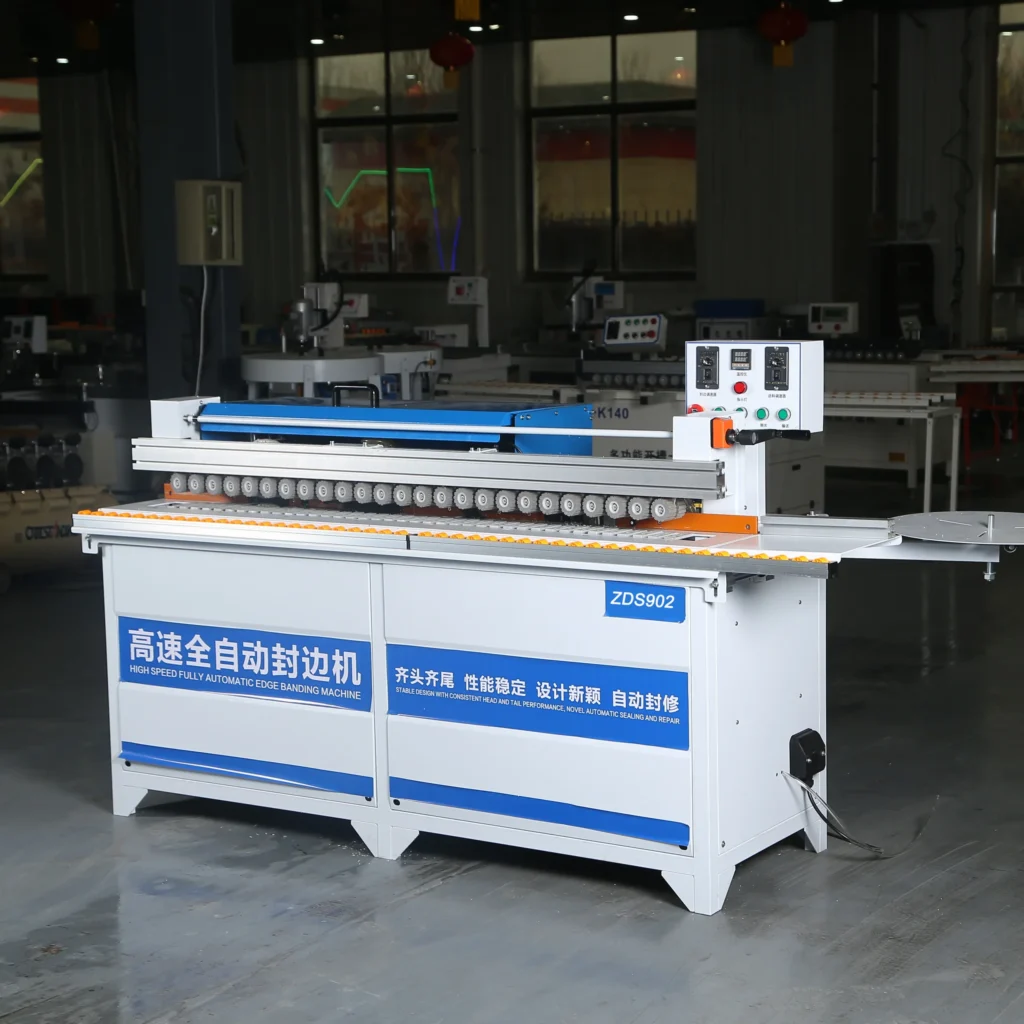
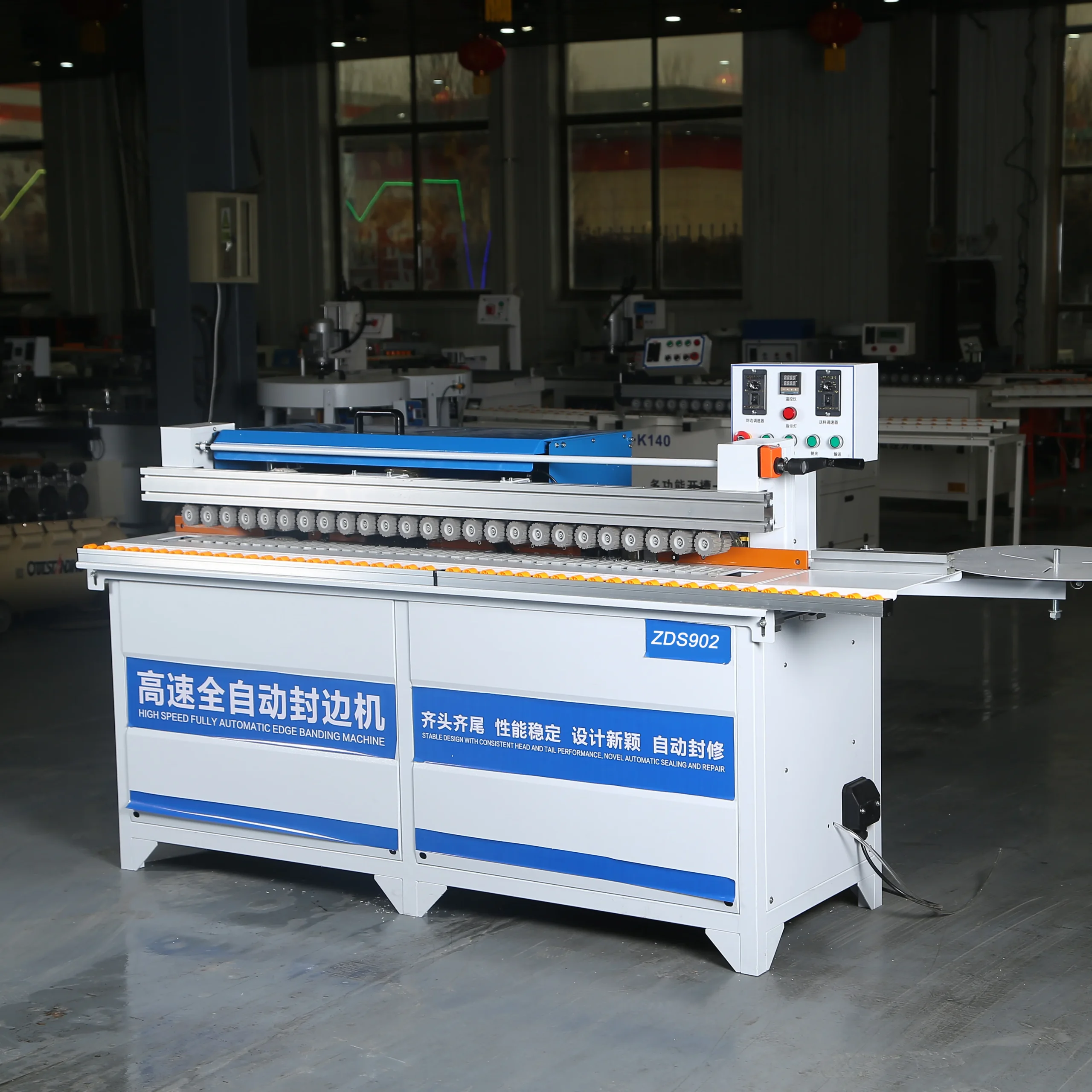
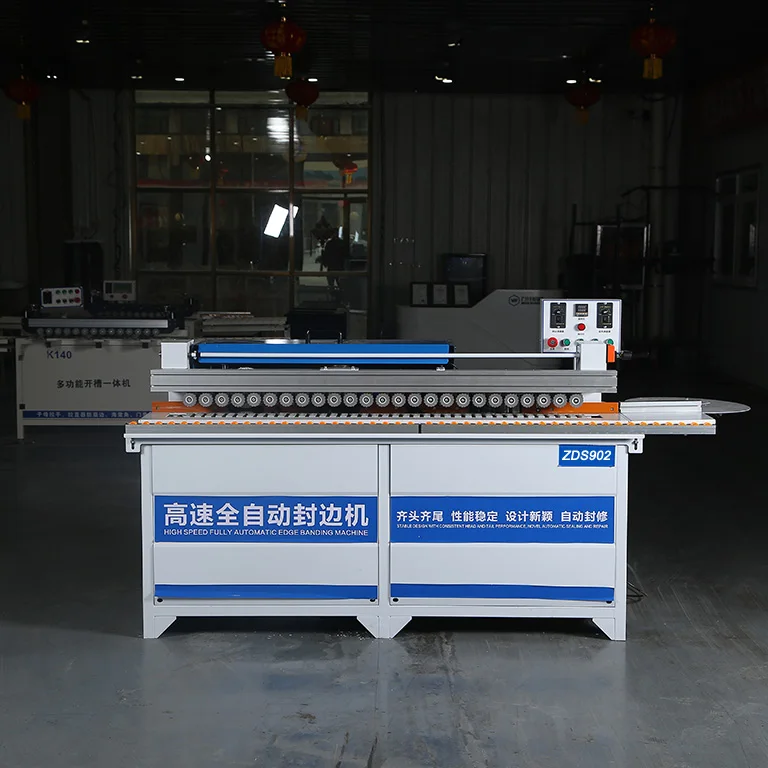
Complete Product Family — Ruiqi provides a full range of automatic edge banding machines from entry-level to full-function configurations, enabling workshops to scale production capacity within a single manufacturer ecosystem without changing suppliers.
Technical Specifications
| Parameter | Value |
|---|---|
| Product Type | Automatic Edge Banding Machine |
| Voltage | 220V (verify frequency and phase with local requirements) |
| Overall Dimensions (L×W×H) | 207×60×122 cm |
| Total Power | 4200W |
| Net Weight | 245 kg |
| Edge Banding Type | Linear Edge Banding Machine |
| Edge Band Height Range | 0–35 mm |
| Edge Band Thickness Range | 0.6–2.0 mm |
| Glue Pot Capacity | 4000 ml |
| Gluing System | Double-sided gluing |
| Temperature Control | Intelligent temperature control |
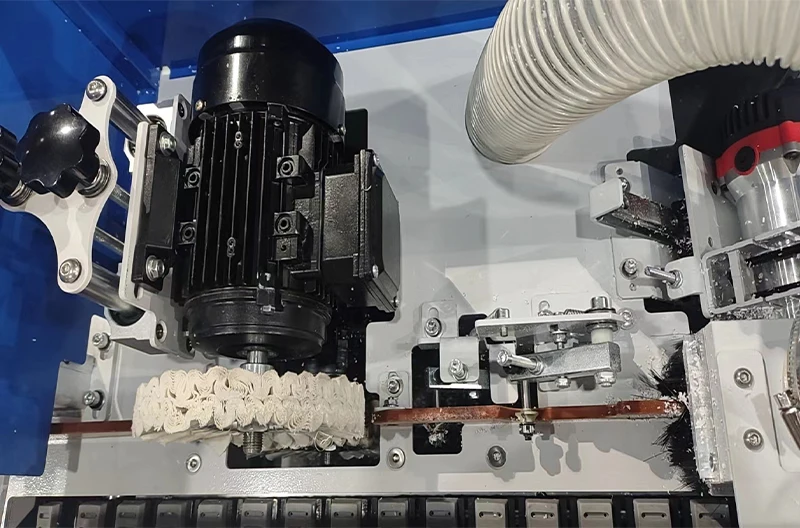
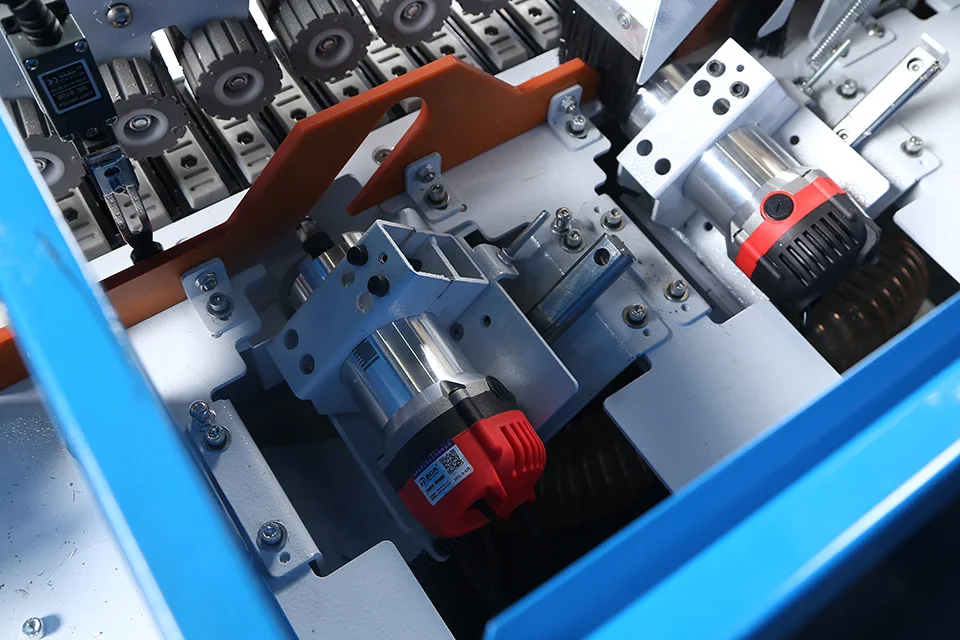
| Trimming Stations | Double high-speed trimming motors, trimming up and down |
| Polishing Stations | Up and down two polishing motors |
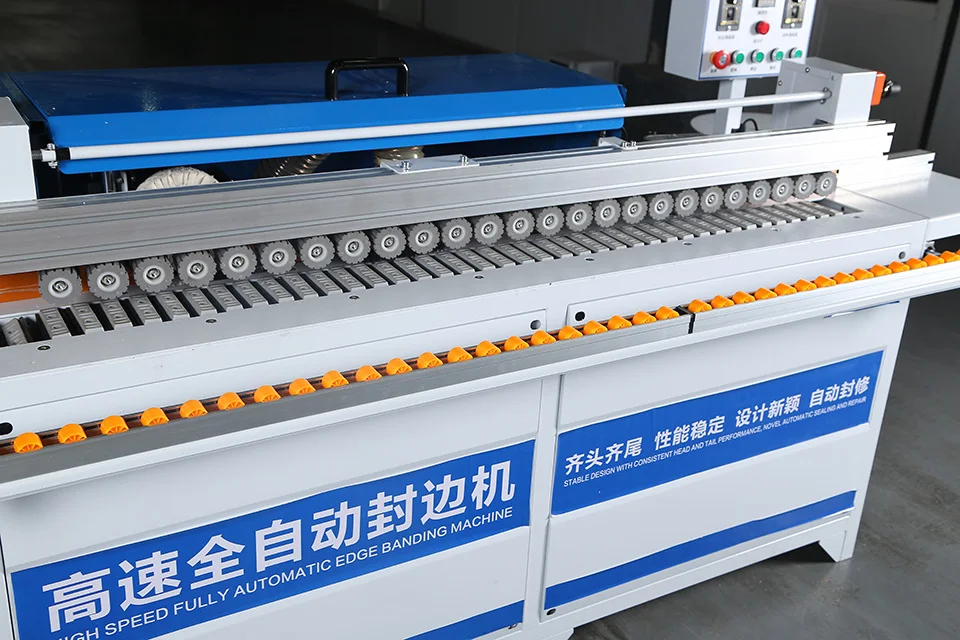
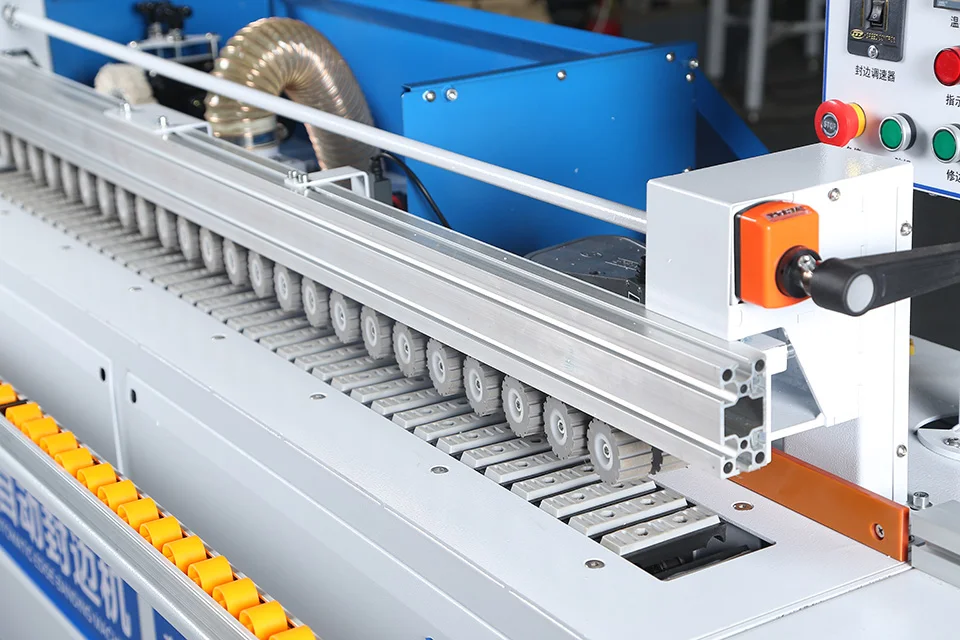
| Pressure System | Integrated pressure beam, double rows of pressure wheels |
| Conveyor Belt Material | Silicone |
| Edge Strip Cutting | Pneumatically controlled edge strip cutting device |
| Pressure Beam Adjustment | Adjustable pressure beam handle for board height |
Application Suitability
| Application | Material or Output |
|---|---|
| Custom furniture and cabinet manufacturing | MDF, particleboard, plywood panels with PVC edge banding |
| Panel processing for workshop production | Particleboard and MDF substrates with melamine edge banding |
| Small to mid-scale woodworking workshops | Plywood and solid wood panels with veneer edge banding |
| Edge finishing for assembled components | Linear edge applications on flat panel stock |
Why Voltage Compatibility Matters More Than Feed Speed Claims
Confirming local voltage and frequency before purchase prevents machines from arriving unusable.
When an automatic edge banding machine manufacturer ships equipment without verifying the destination electrical standards, the consequences are immediate and costly. I once watched a customer in North America receive a 380V machine configured for European three-phase power when their shop ran on 480V. The machine sat idle for three weeks while they sourced and installed a step-down transformer. That delay cascaded into missed delivery commitments and frustrated operators who had been scheduled for training. The transformer solution worked, but it added complexity to their electrical panel and created another failure point in the production line [NEED_CITE: voltage and frequency standards by export market].
Matching Machine Tier to Production Volume
Workshops often purchase equipment based on peak capacity projections rather than current throughput requirements. An automatic edge banding machine manufacturer should guide buyers toward models that handle today’s volume while allowing future upgrades. Entry-level configurations suit joinery shops producing custom pieces in small batches, while full-function pre-milling models serve panel processing plants running continuous production schedules. The double-sided gluing system with intelligent temperature control maintains consistent glue application across varying banding materials, reducing the need for manual touch-ups regardless of which tier you select.
Understanding Edge Quality Across Substrates
Different panel materials demand different edge banding approaches. MDF accepts PVC and melamine banding readily due to its uniform density, while particleboard requires careful pressure adjustment to prevent edge crushing. The integrated pressure beam with double rows of pressure wheels distributes force evenly across the panel edge, accommodating thickness variations without leaving compression marks. Plywood presents additional challenges because its layered structure can cause banding to lift at void points. The pneumatically controlled edge strip cutting device sheaves the banding cleanly at panel ends, preventing the frayed edges that compromise visual quality [NEED_CITE: substrate behavior during edge banding applications].
How Trimming and Polishing Stations Affect Final Edge Quality
The double high-speed trimming motors perform up-and-down trimming in a single pass, removing excess banding material from both the top and bottom edges simultaneously. This configuration prevents the tear-out that occurs when single-direction trimming encounters grain direction changes in veneer banding. The subsequent up-and-down polishing motors smooth the trimmed edges, producing a finished surface that requires no additional hand work. For shops processing multiple banding materials throughout a production day, this station arrangement reduces changeover time between PVC, melamine, and veneer applications. The 4000 ml glue pot capacity allows extended production runs without interruption for refilling, maintaining consistent temperature and viscosity throughout the batch.
The Hidden Cost of Incompatible Machine Specifications
Purchasing individual machines from different suppliers often creates integration problems that only surface during installation. An automatic edge banding machine might have a feed height that doesn’t align with your existing panel saw output table, requiring custom transfer fixtures that introduce alignment errors. Conveyor belt speed mismatches between upstream and downstream equipment create bottlenecks that reduce overall line throughput. When machines arrive with control panels in an unfamiliar language, operators struggle through commissioning without understanding parameter adjustment procedures. These compatibility issues don’t appear in specification sheets but directly impact daily production efficiency [NEED_CITE: production line integration challenges in woodworking facilities].
Why Sourcing the Complete Range Matters
Ruiqi manufactures the full spectrum of edge banding machines within one product family, so workshops can add capacity by moving to a higher-tier model without learning a new control system or retraining operators. Each machine ships with electrical schematics confirming voltage and frequency compatibility for your location, preventing the arrival of unusable equipment. The four-stage quality control process includes pre-shipment testing on actual panel stock, verifying that tolerance claims match real production conditions rather than laboratory measurements. Factory visits allow you to witness assembly procedures and test sample processing on your own materials before committing to purchase. Documentation packages include operation manuals in your preferred language, ensuring operators can read control panel instructions and maintenance procedures.
Documentation & Verification
- Machine specification sheet confirming tolerance, feed speed, and panel thickness range for each model
- Electrical schematic with voltage and frequency confirmation matching your local power supply
- Factory test record documenting performance on your specified panel materials before dispatch
- Operation and maintenance manual provided in the agreed language for operator training
- Spare parts list with part numbers for consumable components and wear items
- Packing photographs showing machine condition and accessory completeness before crating
Installation, Commissioning & Support
- Electrical connection requires dedicated circuit matching the 220V specification with proper grounding
- Machine footprint of 207×60 cm requires clear access space for panel infeed and outfeed
- Pressure beam adjustment handle must be calibrated to your typical panel thickness range during setup
- Glue pot requires initial fill and temperature stabilization period before first production run
- Silicone conveyor belt tension adjustment prevents panel slippage during high-speed feeding
- Daily cleaning of trimming and polishing stations maintains edge quality consistency
Requesting a Configuration Recommendation
Provide your typical panel materials, edge banding types, and daily production volume so we can recommend the appropriate model tier. Specify your workshop’s available voltage and phase configuration along with the control panel language your operators require. If you have existing upstream or downstream equipment, share the feed height and conveyor speed to ensure compatibility. Request sample processing tests on your own panel stock to verify edge quality meets your standards before finalizing the order.
Frequently Asked Questions
Q: How do I choose between entry-level, mid-range, and full-function edge banding models for my production volume?
A: Entry-level models suit custom furniture workshops producing small batches with varied panel sizes. Mid-range configurations handle consistent daily volumes with multiple banding material changes. Full-function pre-milling models serve panel processing plants running continuous production with strict tolerance requirements. Your current throughput and projected growth determine the appropriate tier.
Q: What voltage and frequency configurations are available, and how is local compatibility confirmed before shipment?
A: Machines configure for voltages from 110V to 440V with appropriate frequency matching. You provide your workshop’s electrical specifications during inquiry, and we supply an electrical schematic confirming compatibility. The voltage confirmation document accompanies each shipment, ensuring the machine matches your local power supply before it leaves our facility.
Q: What tolerance and edge quality can I expect across different panel substrates and banding materials?
A: Edge quality depends on substrate density, banding material type, and machine configuration. MDF and particleboard produce consistent results with PVC and melamine banding. Plywood requires careful pressure adjustment due to its layered structure. Sample processing tests on your actual materials verify achievable tolerance before purchase commitment.
Q: Can I arrange a factory visit or request sample processing tests on my own panel stock before ordering?
A: Factory visits are welcome and allow you to observe assembly procedures, quality control checkpoints, and test sample processing. You can ship your panel materials to our facility for edge banding trials, verifying that the machine configuration produces the edge quality your production requires before finalizing specifications.
Q: What documentation and certifications come with each machine, and how is pre-shipment quality verified?
A: Each machine ships with CE declaration of conformity, ISO 9001 certificate, specification sheet, electrical schematic, factory test record, operation manual in your language, spare parts list, and packing photographs. Pre-shipment verification includes running your specified panel materials through all processing stations to confirm performance matches documented specifications.