Description
Engineer-Led Configuration — the DW3000 arrives with voltage, language, and tooling verified against your production data before it leaves our Shandong floor.
Technical Specifications
| Parameter | Value |
|---|---|
| Model | DW3000 |
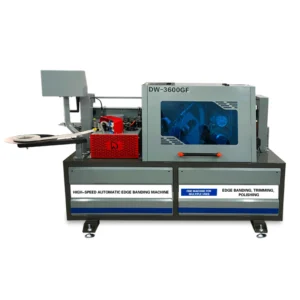
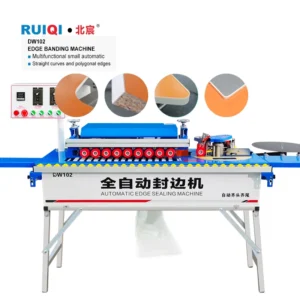
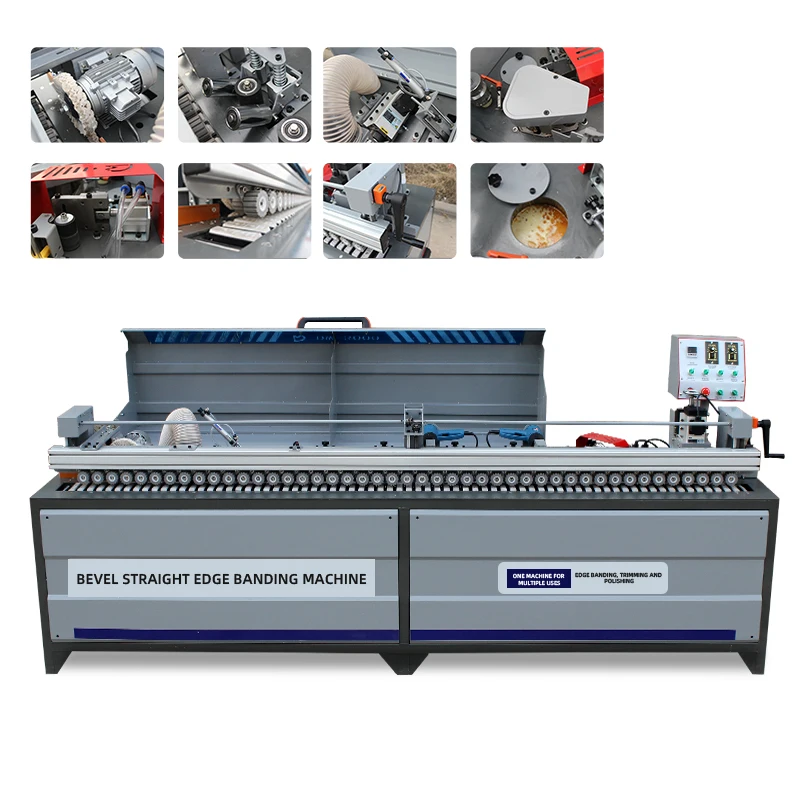
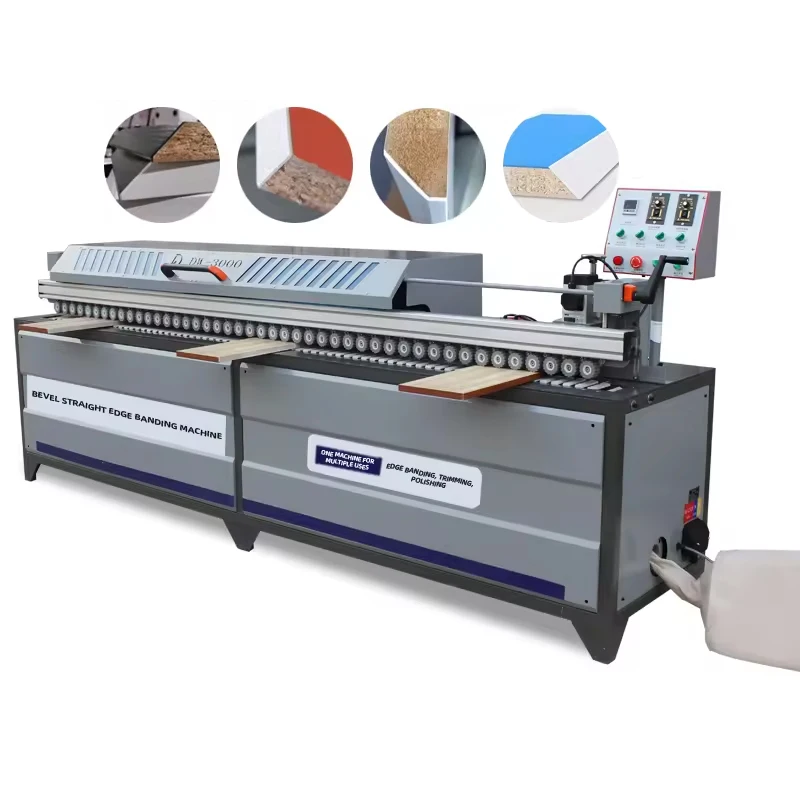
| Product Type | Fully Automatic 45 Degree Bevel and Straight Edge Banding Machine |
| Total Power | 11 kW |
| Voltage | 380V / 415V (configurable to local grid) |
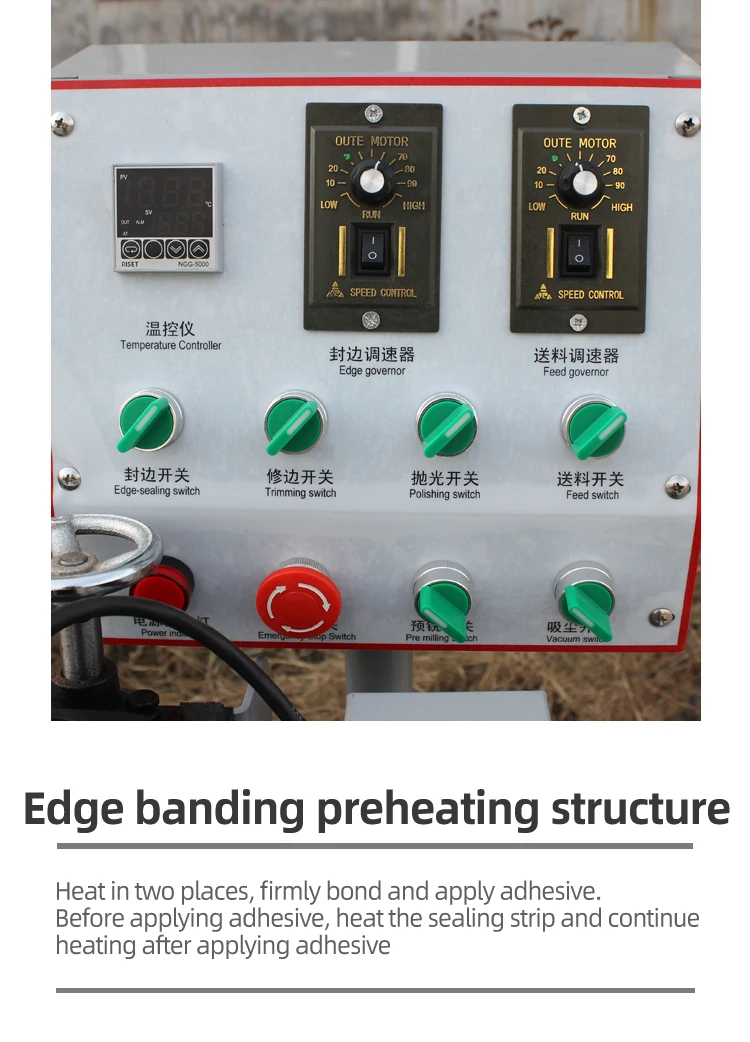
| Pre-milling Motor | 2.2 kW |
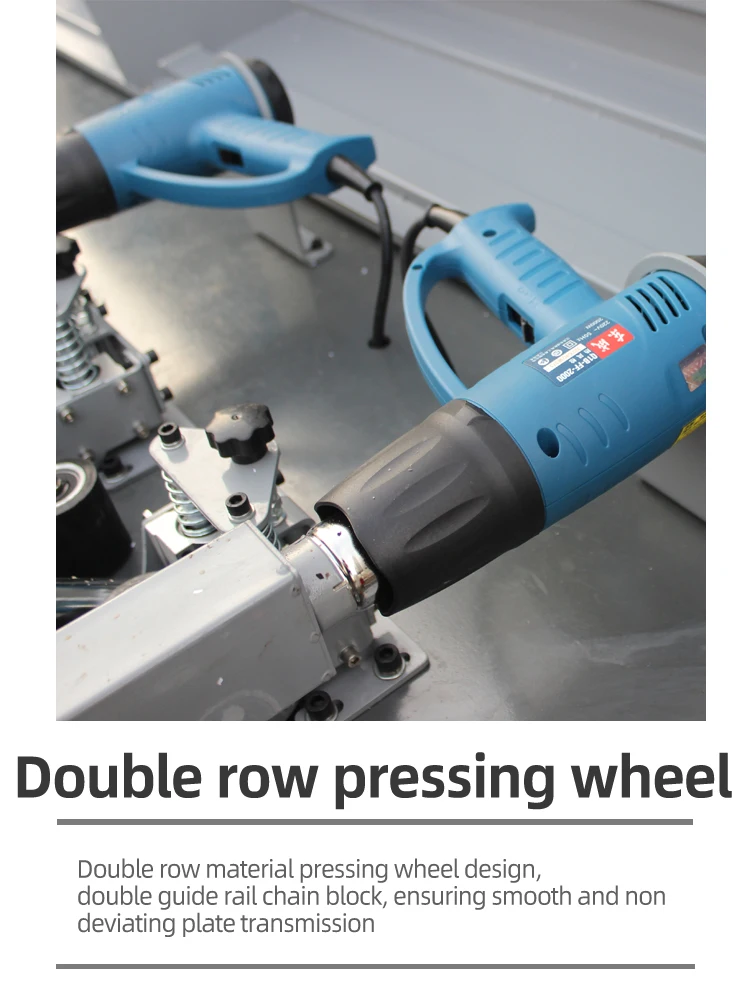
| Heating Power | 2.2 kW × 2 (double heat gun) |
| Edge Feed Power / Speed | 160 W / 0–12 m/min |
| Transmission Power / Speed | 180 W / 0–12 m/min |
| Trimming Power | 2.2 kW × 2 |
| Polishing Power | 0.4 kW × 2 |
| Vacuum Power | 550 W |
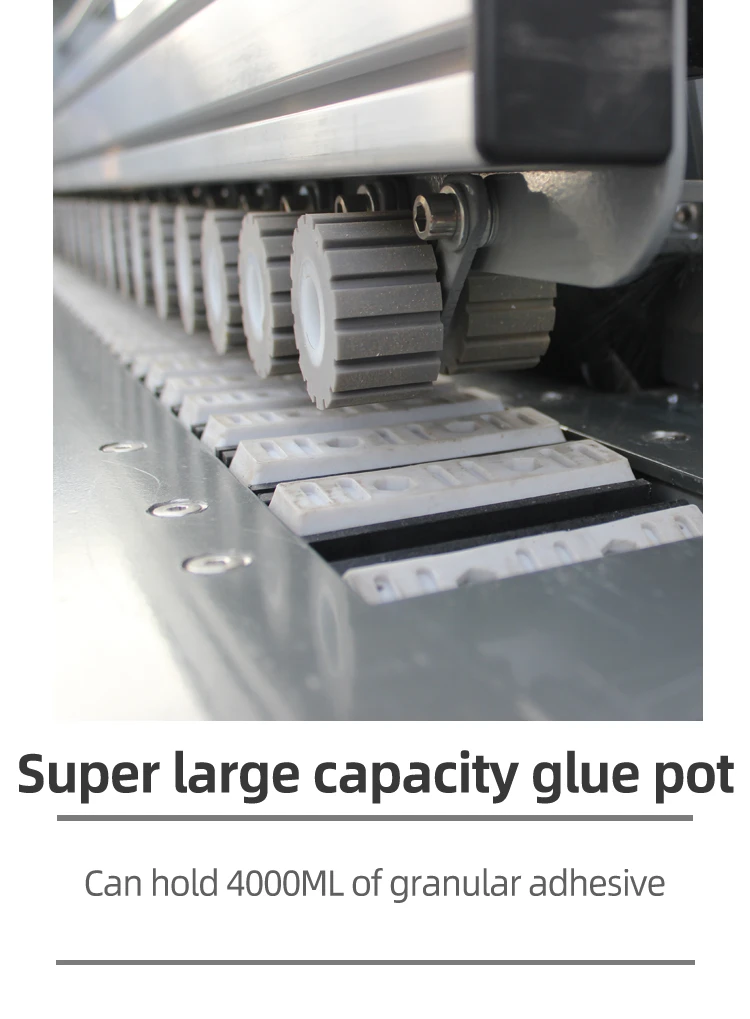
| Glue Pot Capacity | 4000 ml |
| Edge Banding Height | 0–50 mm |
| Edge Banding Thickness | 0.3–3 mm |
| Minimum Sheet Length | 300 mm |
| Minimum Sheet Width | 150 mm |
| Air Source Pressure | 0.5–0.7 MPa |
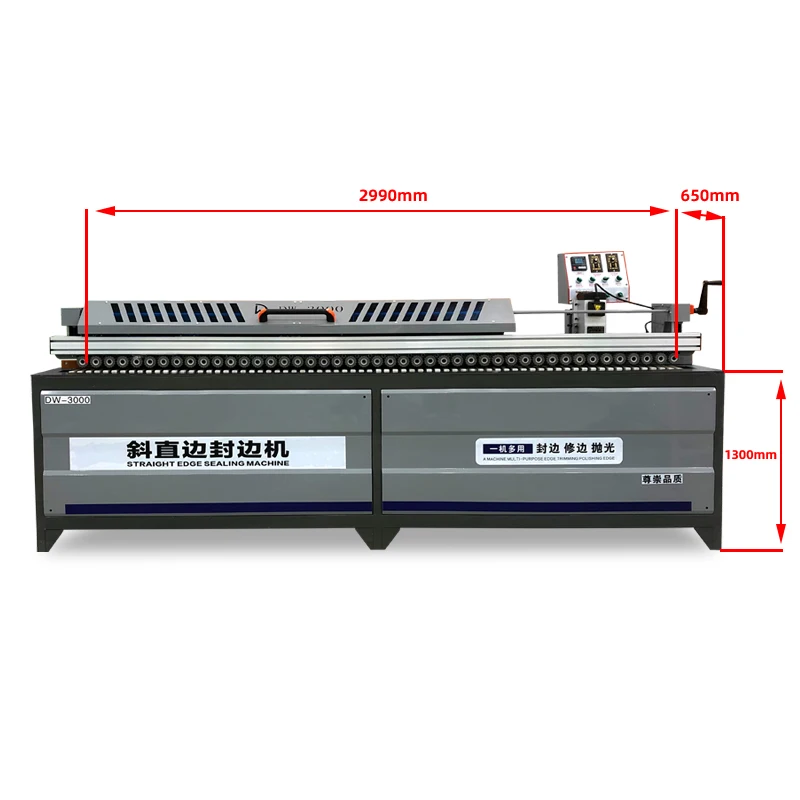
| Machine Dimensions | 2990 × 650 × 1300 mm |
| Machine Weight | 430 kg |
| Pressure Wheel Groups | 8 groups, oblique, adjustable 30–90° |
| Spindle Motors | 3 |
| Key Features | Pre-milling, 30–90° edge banding, trimming, scraping, polishing, high-power vacuuming, flexible edge scraper, double cylinder feeding belt |
Application Suitability
| Application | Material or Output |
|---|---|
| Cabinet door and carcass edge finishing | MDF and particleboard with PVC or melamine edge banding |
| Custom furniture bevel edge processing | Plywood and blockboard with 45° chamfer requirements |
| Wardrobe and storage unit panel edging | Melamine-faced chipboard, 0.3–3 mm banding thickness |
| Small-batch mixed-angle production runs | Panels requiring both straight and bevel edge work in one session |
Why Voltage Confirmation Must Precede the Purchase Order
A machine wired for the wrong frequency will never reach its rated feed speed, regardless of what the nameplate says.
I have watched buyers take delivery of edge banders only to discover the motor runs hot and the feed stalls at half speed because the local grid sits at 50 Hz while the machine was built for 60 Hz. The DW3000 is specified at 380V/415V, but export workshops span a wide range of local standards, and a mismatch here does not just reduce performance — it shortens motor life and voids the kind of tolerance claims that matter during panel assembly [NEED_CITE: voltage and frequency standards by export market]. Confirming your site’s exact supply before production begins avoids a problem that no amount of on-site adjustment can fix. As an edge banding machine manufacturer serving varied export grids, we formalise this check in writing before the build starts.
Where the Full Machine Range Pays Off in a Single Workshop
Buying one edge bander in isolation often leads to a second purchase twelve months later when production volume or panel mix changes. The DW3000 sits in a product family that runs from entry-level straight-edge units up to full-function pre-milling models, which means a workshop can move to higher throughput or add bevel capability without changing supplier or retraining operators. As an edge banding machine manufacturer offering this breadth, we see fewer compatibility headaches when buyers plan their next step early.
How the Double Heat Gun and Oblique Pressure Wheels Handle Mixed Substrates
Glue adhesion varies significantly between MDF, particleboard, and plywood because each substrate absorbs heat differently at the bonding interface. The DW3000 addresses this with a 2.2 kW × 2 double heat gun configuration that maintains consistent glue temperature across the entire banding path, while the 8 groups of oblique pressure wheels — adjustable anywhere between 30 and 90 degrees — press the edge band firmly against both straight and bevel profiles without requiring a tooling changeover [NEED_CITE: substrate thermal behaviour in hot-melt edge banding]. This reduces the visible glue line inconsistency that production managers flag when switching panel types mid-run.
Reading the Specs That Actually Determine Edge Quality
The pre-milling motor at 2.2 kW removes a thin layer from the panel edge before gluing, which matters because saw-cut edges on particleboard often carry micro-chips that create gaps under the banding. The trimming station, powered by 2.2 kW × 2, then cuts the overhang flush on both top and bottom in a single pass, while the flexible edge scraper cleans residual adhesive from the panel face. Edge feed speed ranges from 0 to 12 m/min, and matching this to your upstream panel saw output is critical — I once saw a workshop pair a high-speed edge bander with a sliding table saw that could not keep up, leaving the bander idle between boards and the line bottlenecked at the feed station. The 4000 ml glue pot capacity supports extended runs without interruption, and the 550 W vacuum system pulls trim waste away before it can interfere with the polishing stage. Together, these parameters determine whether a finished panel passes assembly inspection or gets rejected for visible edge defects.
What Happens When Throughput Matching Gets Skipped
A buyer once specified a single high-capacity edge bander for a line where the upstream saw and downstream drilling station operated at a different cycle, and the result was not higher output — it was intermittent starvation followed by batch pile-ups that damaged freshly banded edges. The DW3000’s variable feed speed gives you adjustment range, but it cannot compensate for a fundamental mismatch in station throughput across your production layout [NEED_CITE: production line throughput balancing principles]. Edge banding quality also suffers when operators run panels shorter than the 300 mm minimum, because the feed belt loses grip and the panel shifts during the pressure wheel stage, leaving uneven glue distribution.
Why Buyers Source This Model From Our Shandong Facility
The DW3000 carries our proprietary cutting mechanism patents, with precision-ground components verified through a four-stage QC process that covers incoming material, in-process assembly, finished product, and pre-shipment testing. Voltage and language customisation are standard options rather than special requests — control panels ship in Chinese and English, with Spanish and other languages available on configuration. Single-unit orders are accepted alongside production runs, and factory visits are open so you can witness the pre-shipment test on your own panel samples before the machine is crated. Every unit leaves with documentation traceable to its build record.
Documentation & Verification
- CE declaration of conformity matched to DW3000 model configuration
- ISO 9001 certificate covering manufacturing and QC process
- Machine specification sheet confirming your voltage and frequency
- Electrical schematic with wiring diagram in agreed language
- Factory test record on your specified panel thickness and material
- Operation and maintenance manual with spare parts list included
Installation, Commissioning & Support
- Requires a dedicated 380V/415V circuit rated for the 11 kW total draw
- Air supply must deliver 0.5–0.7 MPa clean dry air to the machine inlet
- 2990 mm length demands clear access on both sides for maintenance
- First-run commissioning includes feed speed calibration and glue pot temperature mapping
- Operator training covers pressure wheel angle adjustment across the 30–90° range
- Spare wear parts list identifies scraper blades and pressure wheel covers by part number
Preparing Your Enquiry
To move from general interest to a formal quotation on the DW3000, share the panel materials you run most often, the edge banding thickness range you need, and your local voltage and frequency. Let us know whether your operators require a specific control panel language and whether you want to send sample panels for a pre-shipment processing test.
Frequently Asked Questions
Q: How do I confirm the DW3000 voltage and plug match my workshop supply?
A: We ask for your local voltage, phase, and frequency before production begins and confirm in writing. Plug options include EU, USA, AU, and UK standards. If your grid falls outside the 380V/415V range, the motor and heating elements are configured to your specification so the machine arrives ready to connect without external transformers.
Q: Which panel materials and edge banding thicknesses does this machine handle?
A: The DW3000 processes MDF, particleboard, plywood, and solid wood panels with PVC, melamine, or veneer edge banding from 0.3 mm to 3 mm thick. The double heat gun maintains glue activation across these substrates, and the 8-group oblique pressure wheel system adjusts from 30 to 90 degrees to accommodate both bevel and straight profiles in the same production run.
Q: Can I visit the factory or send panels for a test run before ordering?
A: Factory visits are welcome at our Shandong facility, where you can observe the DW3000 running your own panel samples through the full pre-milling, banding, trimming, and polishing sequence. If travel is not practical, we run a sample processing test on materials you ship to us and share the finished panels and a test video before you confirm the order.
Q: What documents ship with the machine?
A: Each DW3000 ships with a CE declaration of conformity, ISO 9001 certificate copy, electrical schematic, operation manual in your chosen language, spare parts list, and packing photographs. The factory test record from your pre-shipment verification is included so you have a baseline reference for commissioning at your site.
Q: Where does the DW3000 sit in the product range, and what comes next as volume grows?
A: The DW3000 is a full-function model covering both bevel and straight edge processing with pre-milling. If your volume increases and you need higher feed speeds or additional stations such as corner rounding or buffing, the range extends upward within the same product family, so operator training and spare parts sourcing stay consistent as you scale.