
Description
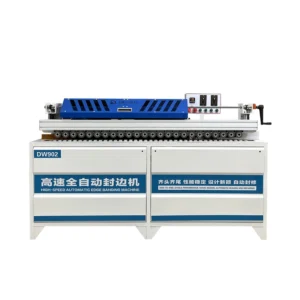
Voltage flexibility built in, not bolted on — the DW802 Automatic Edge Banding Machine ships with 220V or 380V wiring confirmed against your local grid, eliminating the arrival-day surprise of an unusable power supply.
Technical Specifications
| Parameter | Value |
|---|---|
| Model | DW802 |
| Product Type | Automatic Edge Banding Machine |
| Total Power | 4200W |
| Voltage | 220V / 380V / customization available |
| Frequency | 50Hz or 60Hz (to be confirmed per market) |
| Minimum Sheet Length | 25 cm |
| Minimum Sheet Width | 10 cm |
| Edge Banding Height | 0–50 mm |
| Edge Banding Thickness | 0.3–3 mm |
| Trimming Power | 800W × 2 |
| Polishing Power | 180W × 2 |
| Vacuum Power | 1200W |
| Edge Power | 140W |
| Transmission Power | 140W |
| Air Source Pressure | 0.4–0.8 MPa |
| Glue Pot Capacity | 4000 ml |
| Product Size | 130 × 60 × 95 cm |
| Product Weight | 135 kg |
| Control Panel Language | Chinese and English (Spanish or other languages customizable) |
| Plug Options | EU, USA, AU, UK |
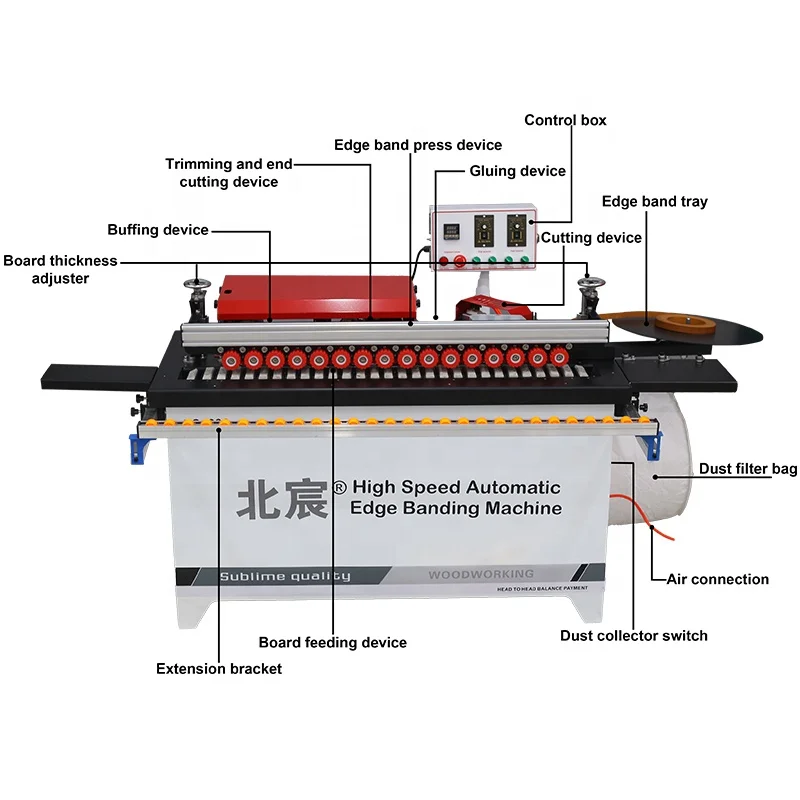
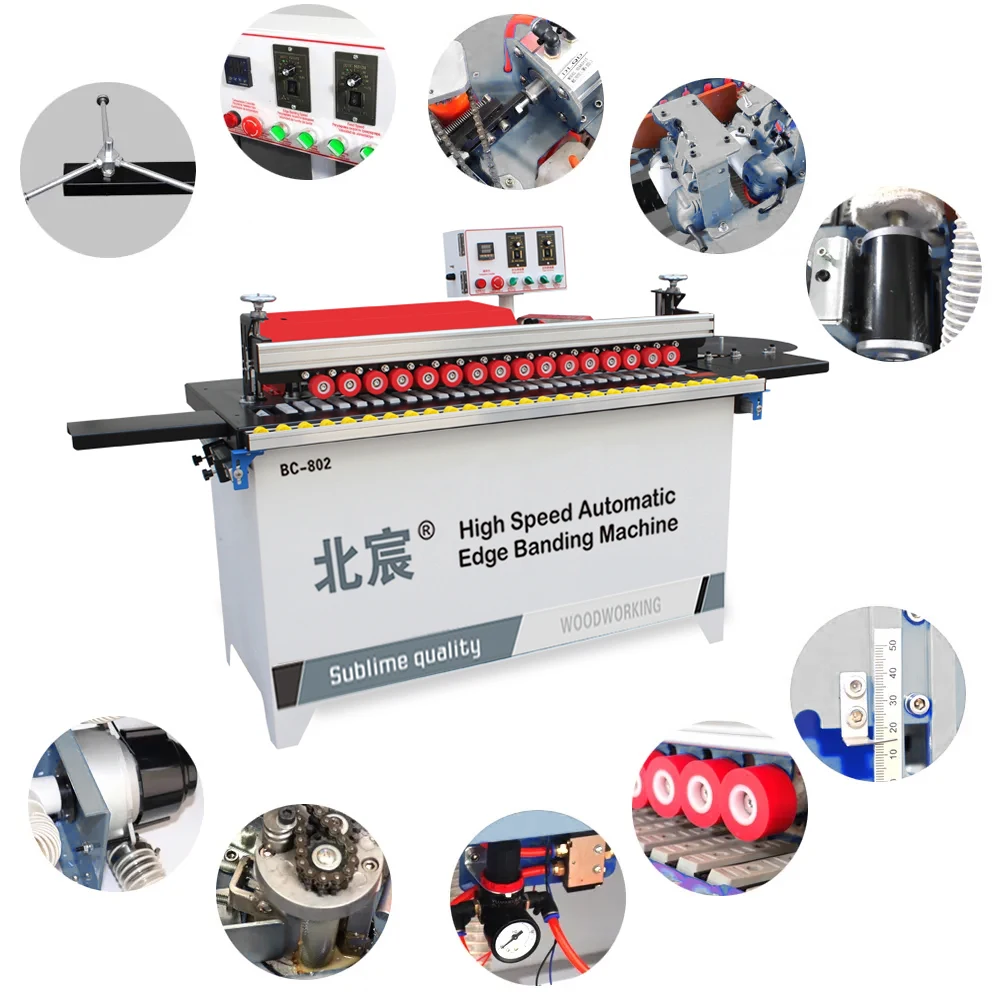
| Key Features | Integrated gluing, trimming, polishing, automatic head/tail cutting, vacuum system |
| Feed Speed | (basis to be confirmed) |
| Panel Thickness Range | (basis to be confirmed) |
| Tolerance | (basis to be confirmed) |
Application Suitability
| Application | Material or Output |
|---|---|
| Custom cabinet door and carcass production | MDF and particleboard with PVC or veneer edge banding |
| Home decoration panel edge sealing | Plywood and ecological board with 0.3–3 mm banding strips |
| Solid wood furniture edging | Solid wood panels requiring trimming and polishing |
| Small-batch joinery runs | Mixed substrate workshops cycling between MDF, plywood, and particleboard |
Why Voltage Must Be Settled Before Everything Else
Confirming your local voltage and frequency first avoids a machine that cannot power on the day it arrives.
I watched a workshop in a Southeast Asian market take delivery of a banding unit only to discover the local supply ran 60Hz while the machine was wired for 50Hz. The motor overheated within the first shift. Frequency mismatches and plug-type mismatches show up far more often than buyers expect, especially when quotations are exchanged without that detail locked down. The DW802 Automatic Edge Banding Machine manufacturer configuration process starts with your electrical environment — voltage, frequency, plug type — written into the specification sheet before production begins [NEED_CITE: voltage and frequency standards by export market]. That single confirmation removes what is statistically one of the most common commissioning failures across imported woodworking equipment.
Positioning the DW802 Within a Broader Machine Family
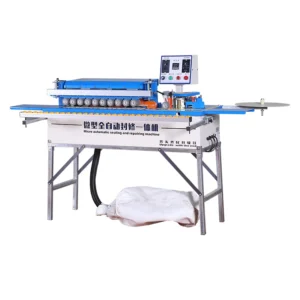
The DW802 occupies the compact, multi-function tier of an Automatic Edge Banding Machine family that extends from entry-level manual-feed models up to full pre-milling lines. Workshops evaluating this unit typically process small to mid-sized panels in custom furniture or home decoration runs, where the 25 cm minimum sheet length and 0–50 mm banding height cover standard cabinet components. The integrated vacuum, trimming, and polishing stations in a 130 cm footprint mean a single operator can run a complete edge-sealing pass without moving the workpiece between separate machines. For buyers mapping a phased investment, this model represents a step where throughput and automation increase without requiring a change in supplier relationship.
What the Compact Footprint Means for Workshop Layout
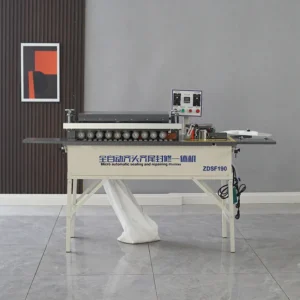
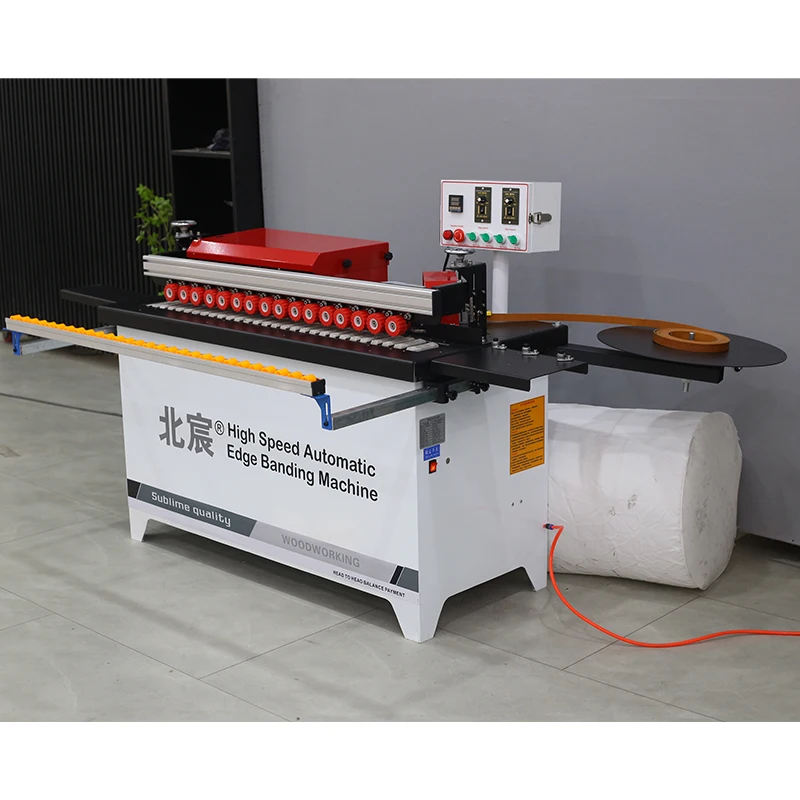
At 135 kg and 130 × 60 × 95 cm, the DW802 fits against a wall or between existing saw and boring stations in workshops where floor space is already allocated. The 4000 ml glue pot capacity supports continuous multi-panel runs before refill, which matters when a small cabinet shop batches twenty to thirty doors in a single morning session. Air supply requirements of 0.4–0.8 MPa align with standard workshop compressors, so no dedicated air system is needed. The point here is that a full catalogue review should account for how this machine physically and operationally fits beside the equipment you already own [NEED_CITE: CE machinery directive requirements for industrial equipment].
Reading the Specification Sheet Against Your Actual Substrates
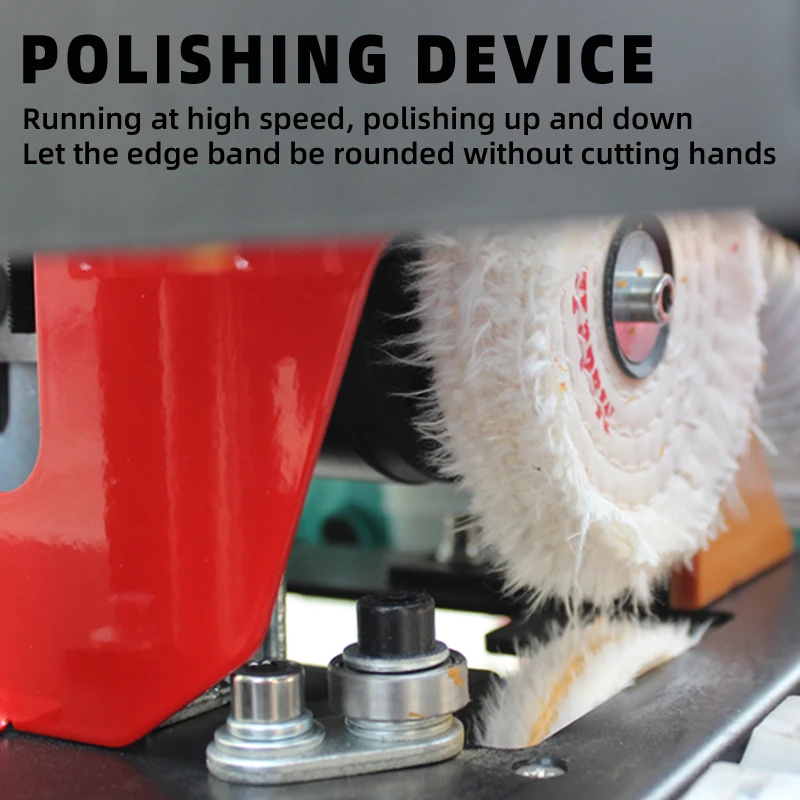
The 0.3–3 mm edge banding thickness range covers PVC, ABS, melamine, and thin veneer strips common in furniture production. Trimming runs through two 800W motors, which provides sufficient cutting force for rigid PVC and wood veneer alike, while the dual 180W polishing motors finish the edge to a level that depends more on banding material quality than on station power. Panel thickness range and feed speed remain to be confirmed with your specific substrate — MDF, particleboard, plywood, and solid wood boards all behave differently through the feed chain. Glue pot temperature control also varies by adhesive type, so confirming whether your production uses EVA or PUR hot melt shapes the final machine setup. Tolerance figures should be verified against sample panels before the order is finalized, because published tolerances only matter if they hold on your actual board material.
The Real Cost of Buying One Station at a Time
Piecemeal purchasing is how many small workshops start, adding a trimmer here and a polisher there. The problem surfaces when feed heights do not match between units, forcing operators to lift and reposition panels between each pass. Each transfer introduces alignment error and edge damage that compounds across a batch. The DW802 eliminates this by integrating gluing, trimming, polishing, head/tail cutting, and vacuum in a single feed path, meaning the panel enters once and exits finished. When evaluating any Automatic Edge Banding Machine for sale, the cost of mismatched upstream and downstream equipment often outweighs the savings of buying individual stations separately [NEED_CITE: industrial equipment compatibility standards for woodworking lines].
What Manufacturing Depth Actually Looks Like
Configuration recommendations are engineer-led, not selected from a dropdown, so the DW802 you receive is matched to your stated substrates and production volume. Voltage, plug type, and control panel language are confirmed on paper before production starts, not assumed at the packing stage. A four-stage quality check — incoming material, in-process, finished assembly, and pre-shipment — means the unit is tested against your specification before it leaves the factory floor. Factory visits and sample processing tests on your actual panel material are available so edge quality is verified in person, not promised in a brochure. The machine family extends upward to pre-milling and full-line configurations, so the relationship does not end at a single purchase.
Documentation & Verification
- Machine specification sheet with confirmed voltage, frequency, and plug type for your market
- Electrical schematic and wiring diagram matching the as-built configuration
- CE declaration of conformity covering the DW802 Automatic Edge Banding Machine
- ISO 9001 certificate covering the manufacturing quality management system
- Operation and maintenance manual provided in the agreed control panel language
- Factory test record documenting edge quality results on your specified substrate before dispatch
Installation, Commissioning & Support
- Requires a stable 220V or 380V dedicated circuit matching the confirmed power supply specification
- Arrives fully assembled — no on-site mechanical reassembly needed for the 130 × 60 × 95 cm frame
- Air compressor connection at 0.4–0.8 MPa must be verified before first startup
- Glue pot temperature and feed alignment calibrated to your substrate during commissioning guidance
- Spare parts list provided with the 4000 ml glue pot and trimming blades identified as primary wear items
- Multilingual control panel ensures operator training materials match the interface language
Before You Request a Quote
To match the right configuration, we need your actual panel materials and edge banding types, your local voltage and frequency, and whether your operators require a specific control panel language. If you are integrating the DW802 into an existing line, sharing your current equipment feed heights and workspace dimensions helps us confirm physical and operational compatibility. A sample panel test at the factory is always an option before order confirmation.
Frequently Asked Questions
Q: Where does the DW802 sit in the full edge banding range and what is the upgrade path?
A: The DW802 is a compact multi-function model integrating gluing, trimming, polishing, and vacuum. It suits custom furniture workshops processing standard panels. The product family extends upward to pre-milling and full-line configurations, so when your volume or edge quality requirements increase, you can move to a higher-tier machine within the same supplier ecosystem without relearning controls or service channels.
Q: How do I confirm voltage, frequency, and plug type before ordering?
A: Share your local electrical supply details — voltage, Hz, and socket type — during the inquiry stage. These are confirmed on the specification sheet and electrical schematic before production begins. The DW802 supports 220V and 380V configurations with EU, USA, AU, and UK plug options, or custom arrangements for markets outside those standards.
Q: Can the control panel language be customized for my operators?
A: Yes. The DW802 ships standard with Chinese and English interfaces, and can be configured to Spanish or other languages based on your operator requirements. Language confirmation happens during the specification stage so the correct firmware is loaded before the machine leaves the factory.
Q: What substrates and edge banding materials is the DW802 designed for?
A: The machine handles MDF, particleboard, plywood, ecological board, and solid wood panels with edge banding from 0.3 mm to 3 mm thickness, covering PVC, ABS, melamine, and veneer. Specific glue temperature and feed parameters should be confirmed against your actual material combination to ensure consistent edge quality.
Q: What documentation comes with the machine at shipment?
A: You receive a CE declaration of conformity, ISO 9001 certificate, machine specification sheet with confirmed electrical parameters, electrical schematic, operation and maintenance manual in the agreed language, spare parts list, packing photographs, and customs documentation support. Factory test records from pre-shipment verification are also included.