Description
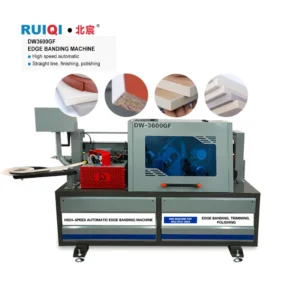
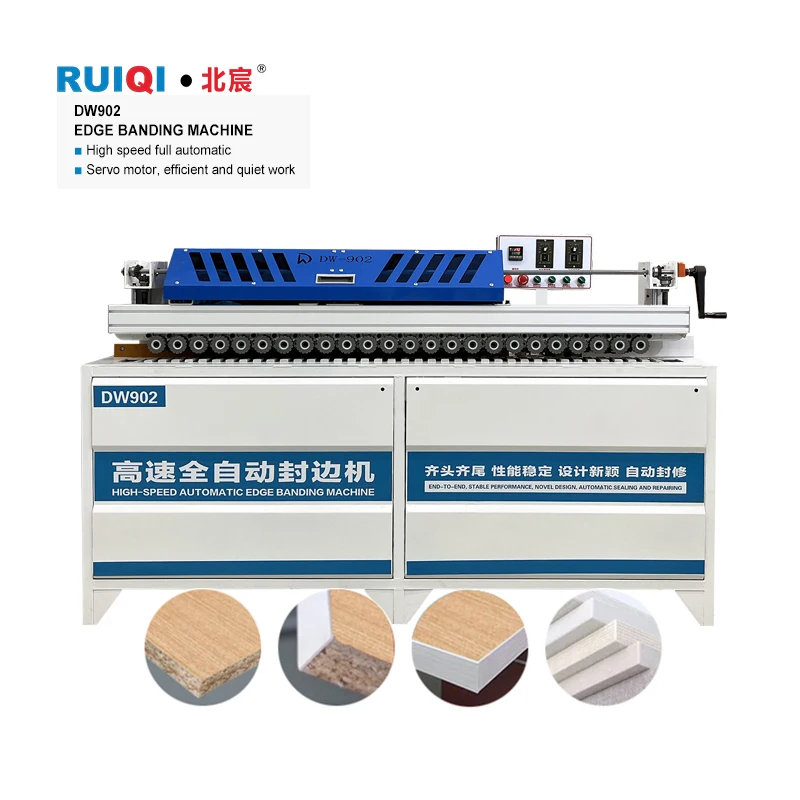
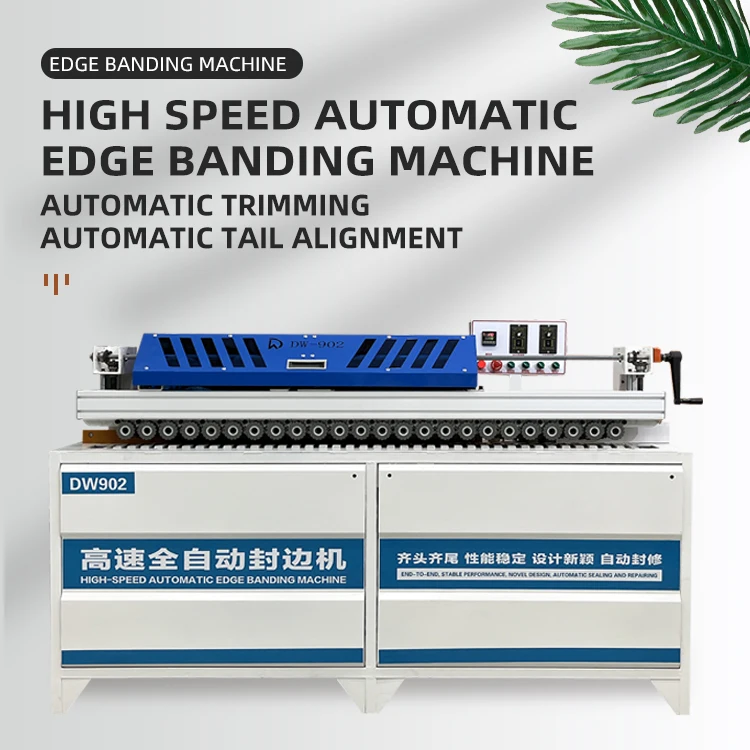
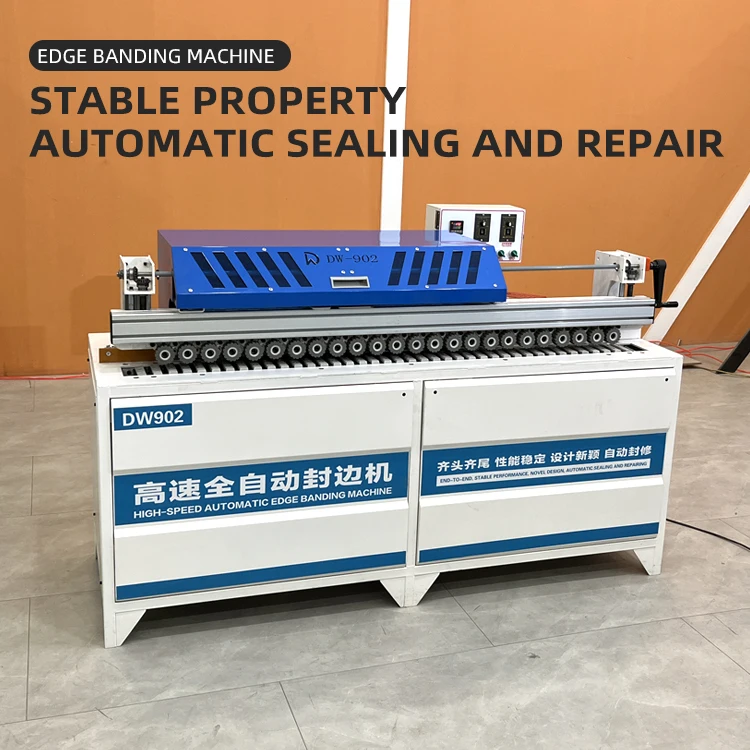
Integrated Multi-Station Machining — The DW902 combines edge banding, trimming, scraping, and polishing in a single automated pass, supported by in-house manufacturing with patented cutting mechanisms verified to ±0.02mm tolerance.
Technical Specifications
| Parameter | Value |
|---|---|
| Model | DW902 |
| Product Type | Automatic Edge Banding Machine |
| Total Power | 4000W |
| Voltage | 220V / 380V / customization available |
| Trimming Power | 800W × 2 at 24,000 r/min |
| Polishing Power | 380W × 2 |
| Vacuum Power | 550W |
| Edge Banding Thickness Range | 0.3–3 mm |
| Edge Banding Height | 5 cm |
| Minimum Sheet Length | 25 cm |
| Minimum Sheet Width | 10 cm |
| Glue Pot Capacity | 4000 ml |
| Air Source Pressure | 0.5–0.8 MPa |
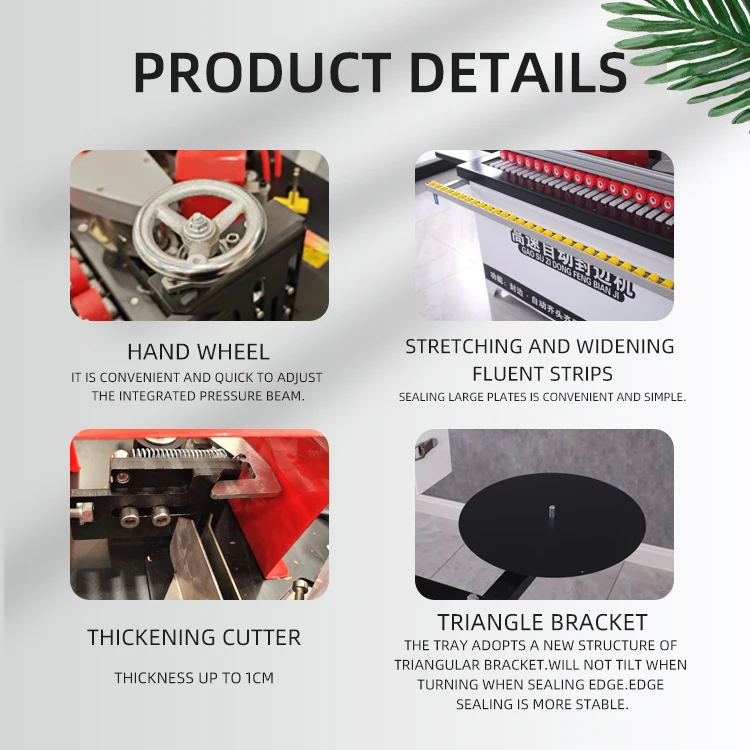
| Feeding System | Auxiliary slide plate, 4 groups of oblique pressure wheels, double row pressing wheels |
| Machine Type | Oblique and straight dual-purpose (90°) |
| Control System | PLC (source value — verify against manufacturer catalog) |
| Product Size | 175 × 87 × 112 cm |
| Product Weight | 240 kg |
| Key Features | Edge banding, trimming, polishing, automatic trimming, scraping, vacuuming |
Application Suitability
| Application | Material or Output |
|---|---|
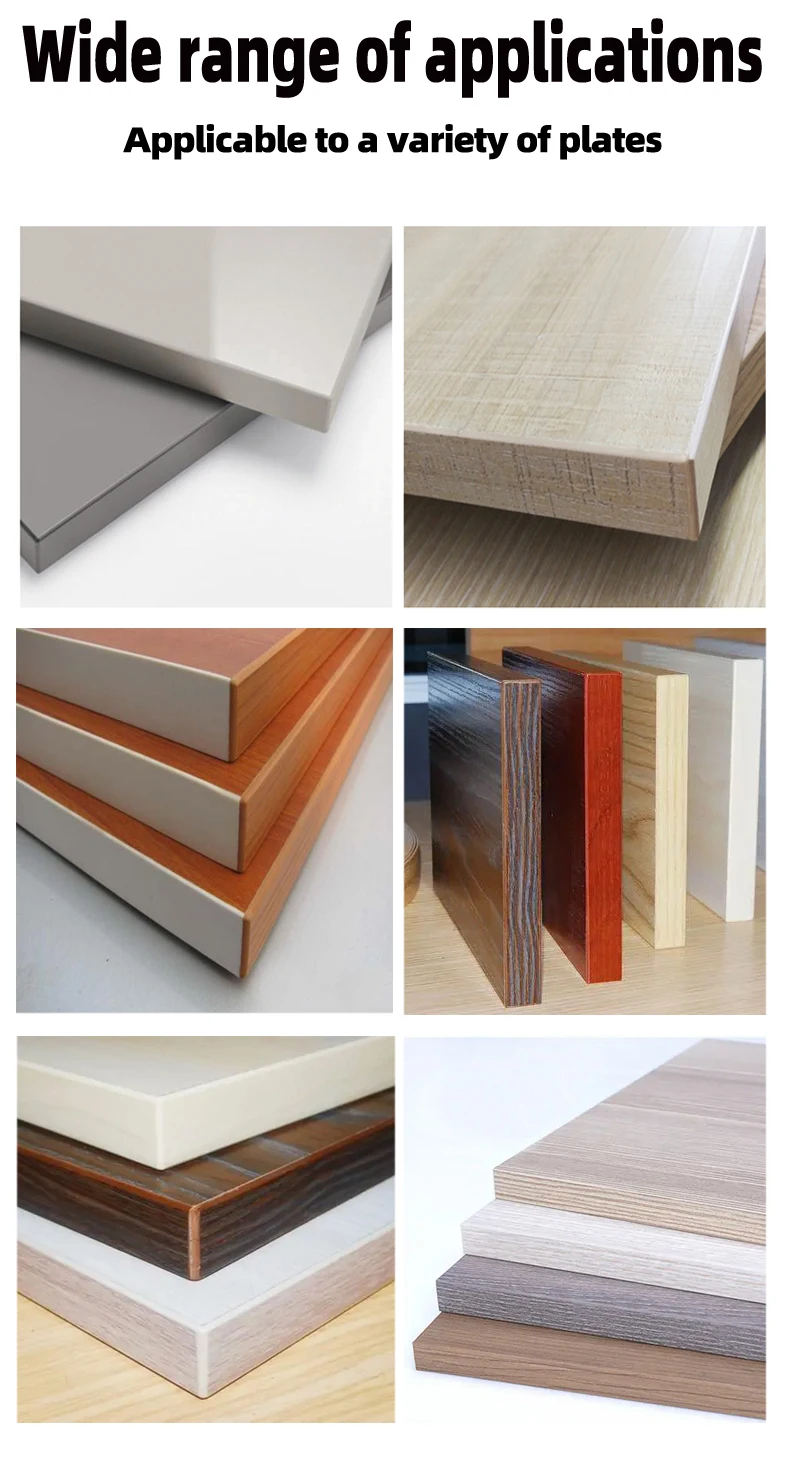
| Cabinet door and carcass edge finishing | Melamine-faced particleboard and MDF panels |
| Custom furniture panel processing | Plywood and ecological board with PVC edge banding |
| Workshop-scale joinery production | Solid wood boards requiring 90-degree edge treatment |
| Large-format furniture manufacturing | Laminated panels with veneer or PVC banding up to 3 mm |
Why the Voltage Question Comes Before the Machine Choice
An automatic edge banding machine manufacturer worth working with will confirm your local power supply before quoting anything. Getting this wrong means the machine arrives and sits idle while you source a transformer or rewire the workshop — a situation more common than most buyers expect.
In my years running technical sales across Shandong’s woodworking machinery sector, I have seen edge banders shipped at 380V/50Hz to workshops operating on 220V/60Hz single-phase supplies. The motor stalls under load, the glue pot never reaches temperature, and the trimming stations chatter through the edge tape leaving ragged burrs. The DW902 is configurable across voltage ranges, but the confirmation must happen at quotation stage — not after the crate is opened. [NEED_CITE: voltage and frequency standards by export market]
Where the DW902 Sits in the Ruiqi Catalogue
The DW902 occupies the mid-range tier within the full automatic edge banding machine manufacturer lineup, positioned between entry-level manual-feed units and full-function pre-milling models designed for high-volume panel processing plants. For a custom furniture factory producing several hundred panels per shift, this model covers the essential edge finishing sequence without the footprint or power demand of a pre-milling configuration. Workshops evaluating their first automated edge bander — or distributors building a regional model mix — should see the DW902 as the baseline from which higher-tier machines add upstream panel preparation and downstream buffing stages.
Scaling Without Changing Supplier
One advantage of surveying the complete Ruiqi range is understanding how machines connect across production stages. A joinery workshop may start with the DW902 for straight 90-degree work, then move to a pre-milling model when panel substrates demand scoring before the edge tape is applied. Because the control logic and glue pot architecture remain consistent across the family, operators trained on the DW902 transition to higher-tier machines with minimal re-learning. Distributors benefit from stocking adjacent models that share consumable formats and service procedures. [NEED_CITE: CE machinery directive requirements for industrial equipment]
Reading the Specification Sheet Against Your Actual Panels
The 0.3–3 mm edge banding thickness range covers most PVC and veneer tapes used in cabinet and furniture work, but the practical limit depends on your substrate density and glue temperature stability. Particleboard with a rough-cut edge absorbs more adhesive than MDF, so the 4000 ml glue pot capacity matters when running thicker boards at sustained volumes. The trimming stations at 24,000 r/min are adequate for clean flush cuts on PVC banding, though veneer over 1 mm thickness may benefit from the slower approach of a dedicated scraping pass — which the DW902 includes. The double row pressing wheels and four groups of oblique pressure wheels stabilise the tape during the critical bonding window, reducing the visible glue lines that plague inconsistent panel thicknesses. Tolerance at the trimming and scraping stages directly affects whether assembled carcass joints close cleanly downstream — a ±0.02mm verified tolerance means panel dimensions stay within the range your CNC drilling station expects.
The Cost of Skipping the Configuration Conversation
Buying an edge bander on catalogue specifications alone, without confirming how your actual panels behave through the feed system, leads to problems that only surface during production. I once worked with a melamine board processor who specified a high-speed model based on throughput claims, only to discover their panels had thickness variations that the pressure wheels could not compensate for — resulting in lifted edges and re-work on nearly every batch. The DW902’s auxiliary slide plate and adjustable oblique pressure wheels address this, but only if the configuration conversation happens before the order is placed. Mismatched feed heights between upstream saws and downstream boring stations create bottlenecks no single machine can solve. [NEED_CITE: woodworking machinery integration and line compatibility standards]
Why Procure This Model Through Ruiqi
The DW902 is built in-house with proprietary cutting mechanisms, not assembled from third-party sub-systems and rebadged — giving you direct access to the engineers who designed the trimming and scraping geometry. Voltage and control panel language are confirmed at quotation stage, so the machine arrives matched to your workshop’s power supply and your operator’s reading language. A four-stage QC process covers incoming material inspection, in-process checks, finished product verification, and pre-shipment testing with documented records. Factory visits are welcomed, and sample processing tests using your actual panel stock can be arranged before commitment. The full Ruiqi catalogue is available from one supplier, meaning your upgrade path from the DW902 to pre-milling or full-line configurations stays within a single relationship and parts ecosystem.
Documentation & Verification
- CE declaration of conformity issued for the DW902 automatic edge banding configuration
- ISO 9001 certificate covering manufacturing and quality management processes
- Machine specification sheet with electrical schematic and confirmed voltage rating
- Factory test record documenting performance on your specified panel thickness range
- Operation and maintenance manual provided in the agreed operator language
Installation, Commissioning & Support
- Requires a dedicated circuit matching the confirmed voltage and the 4000W total power draw
- Compressed air supply at 0.5–0.8 MPa needed for pneumatic pressure wheel and feed actuation
- Machine arrives assembled; allow clearance around the 175 × 87 cm footprint for panel infeed and offload
- First-run commissioning includes glue pot temperature calibration and trimming station alignment to your banding material
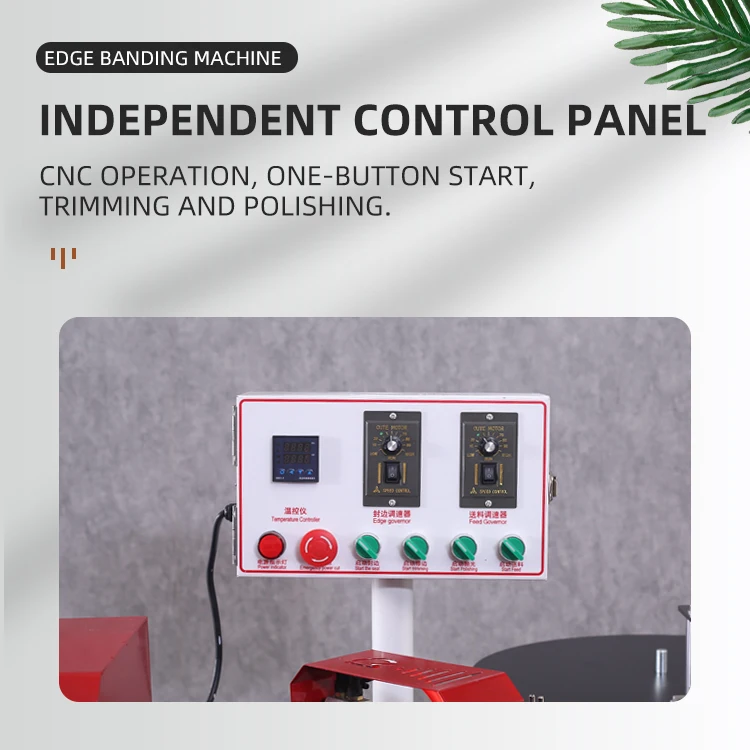
- PLC control panel configured to the agreed language before dispatch with guided parameter setup on arrival
- Spare parts list provided covering wear items for the double row pressing wheels and scraping blades
What to Include With Your Enquiry
Send your typical panel material and thickness range, the edge banding tape you intend to run, and your local voltage and frequency so the configuration can be confirmed at quotation stage. If you are evaluating the DW902 against other models in the range, include your daily panel volume and any existing upstream or downstream equipment so the recommendation accounts for line integration. Sample processing tests are available if you want to verify edge quality on your actual stock before placing the order.
Frequently Asked Questions
Q: How does the DW902 compare to other models in the Ruiqi edge banding range?
A: The DW902 sits in the mid-range tier, covering edge banding, trimming, scraping, and polishing in one pass for standard 90-degree panel work. Higher-tier models in the catalogue add pre-milling for scored substrates and additional buffing stations. Your production volume and panel material determine which tier fits — an engineer configuration proposal within 24 hours maps the right model to your workshop requirements.
Q: What voltage configurations are available and how is compatibility confirmed?
A: The DW902 is configurable from 220V to 380V with further customisation available. Voltage and frequency are confirmed during the quotation stage — not after ordering — and an electrical schematic is provided showing the exact wiring configuration for your local supply. This prevents the common failure of machines arriving unusable due to power mismatch.
Q: Can the control panel language be customised for local operators?
A: Yes. The PLC control panel is configured to the agreed language before dispatch, and the operation manual is provided in that same language. Confirming the operator language at quotation stage ensures the machine is ready for commissioning on arrival, rather than stalled by an interface the workshop team cannot read.
Q: Is a factory visit or sample test available before ordering?
A: Factory visits to the Shandong facility are welcomed, and sample processing tests using your actual panel stock and edge banding material can be arranged. This lets you verify edge quality, glue line visibility, and trimming accuracy on your specific substrates before committing to a production or distribution order.