Description
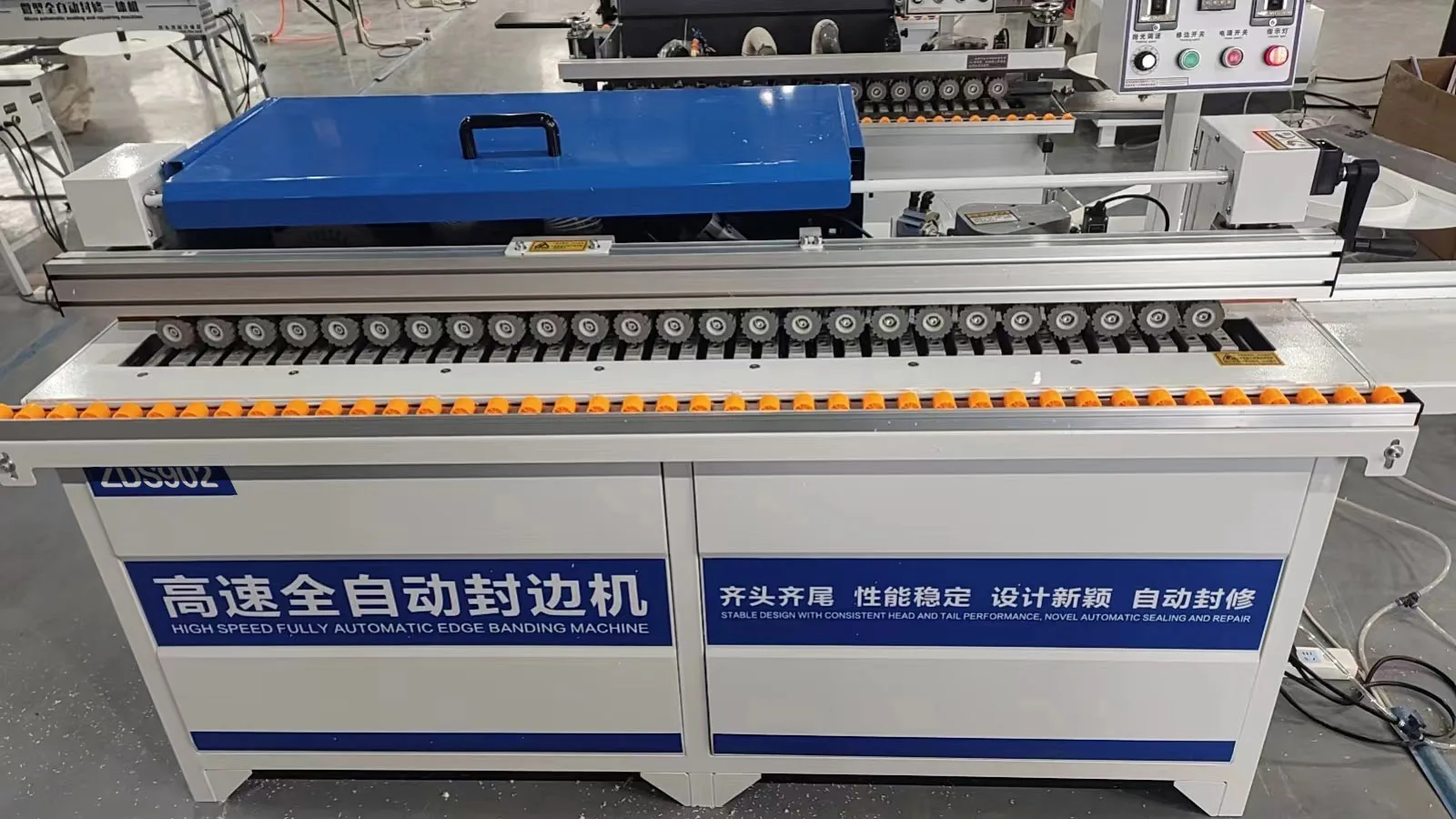
In-house manufacturing with patented cutting — every High-speed Fully Automatic Edge Banding Machine leaves our Shandong facility with tolerance verified on your panel thickness range before crating.
Technical Specifications
| Parameter | Value |
|---|---|
| Product Type | Automatic Edge Banding Machine |
| Total Power | 4200W |
| Voltage | 220V |
| Equipment Size | 207×60×122 cm |
| Weight | 245KG |
| Glue Pot Capacity | 4000 ml |
| Edge Band Height Range | 0–35 mm |
| Edge Band Thickness Range | 0.5–2.5 mm |
| Edge Strip Cutting | Pneumatically controlled |
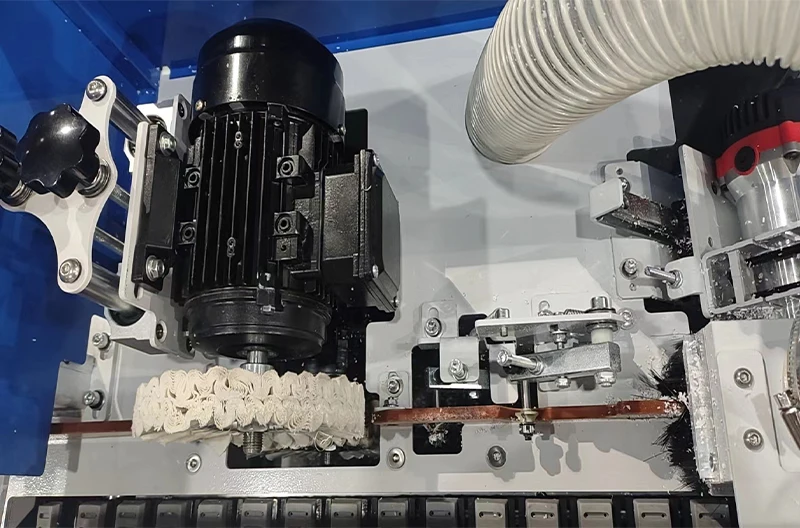
| Polishing Configuration | Up and down dual polishing motors |
| Trimming Configuration | Double high-speed trimming motors |
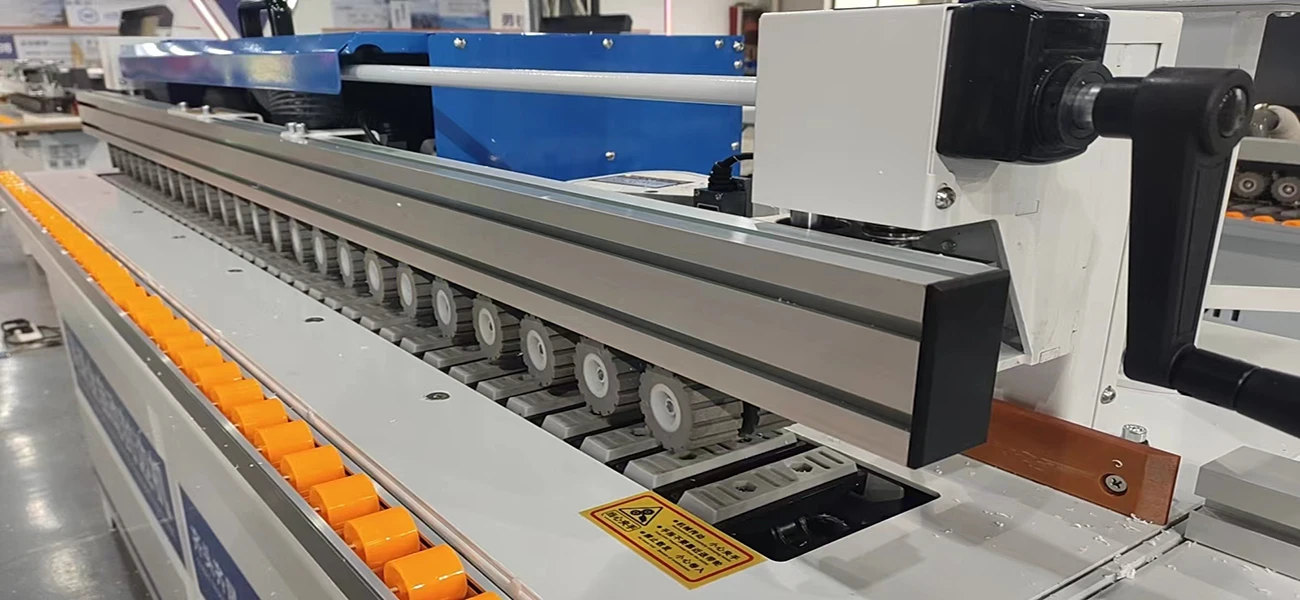
| Conveyor Belt | Silicone material, double rows of pressure wheels |
| Pressure Beam | Integrated, adjustable handle for board height |
| Temperature Control | Intelligent temperature control system |
| Panel Thickness Range | (basis to be confirmed) |
| Feed Speed | (basis to be confirmed) |
| Tolerance | (basis to be confirmed) |
Application Suitability
| Application | Material or Output |
|---|---|
| Cabinet door and carcass edge finishing | Melamine-faced particleboard and MDF |
| Custom wardrobe panel production | Plywood panels with PVC or veneer banding |
| Small to mid-scale furniture workshop runs | Pre-cut board stacks requiring linear edge banding |
| Office furniture component edging | Laminate and melamine boards up to 35 mm band height |
Why the Voltage Question Should Come Before the Price on Every Automatic Edge Banding Machine
Confirm local three-phase voltage and frequency before signing any purchase order.
I once specified a 380V edge bander for a cabinet factory in Vietnam, only to arrive on site and find the workshop running 220V three-phase. The transformer took weeks to source, the entire line sat idle, and the client nearly walked away from the project [NEED_CITE: voltage and frequency standards by export market]. Since that job, every contract I touch locks voltage and frequency into the technical annex before production starts. An Automatic Edge Banding Machine that cannot run on your existing supply is a crate of steel taking up floor space.
Complete Model Family for Workshop Scaling
Workshops often start with a single function and grow into full pre-milling configurations over time. This Automatic Edge Banding Machine sits within a product family that spans entry-level units through to multi-station lines, so a factory can expand capacity without switching suppliers or retraining operators on an unfamiliar control layout.
Matching Machine Tier to Your Daily Panel Volume
A joinery shop running a few hundred boards a week has different thermal and mechanical demands than a cabinet plant processing continuous shifts. The 4000 ml glue pot on this configuration supports extended production runs without frequent refill stops, while the intelligent temperature control maintains adhesive viscosity across varying ambient conditions — a factor often overlooked until glue lines become visible on lighter substrates [NEED_CITE: hot melt adhesive open time and substrate temperature interaction].
How Glue Pot, Trimming, and Feed Stability Interact on the Shop Floor
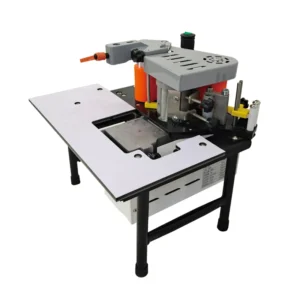
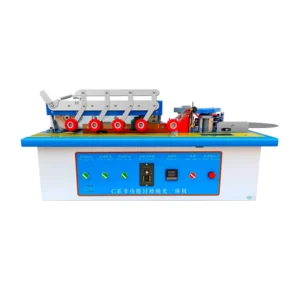
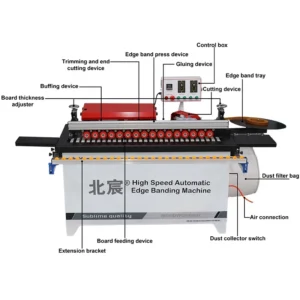
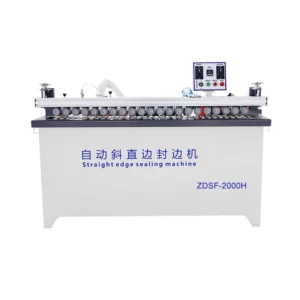
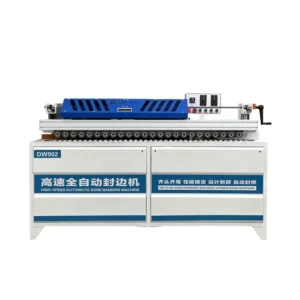
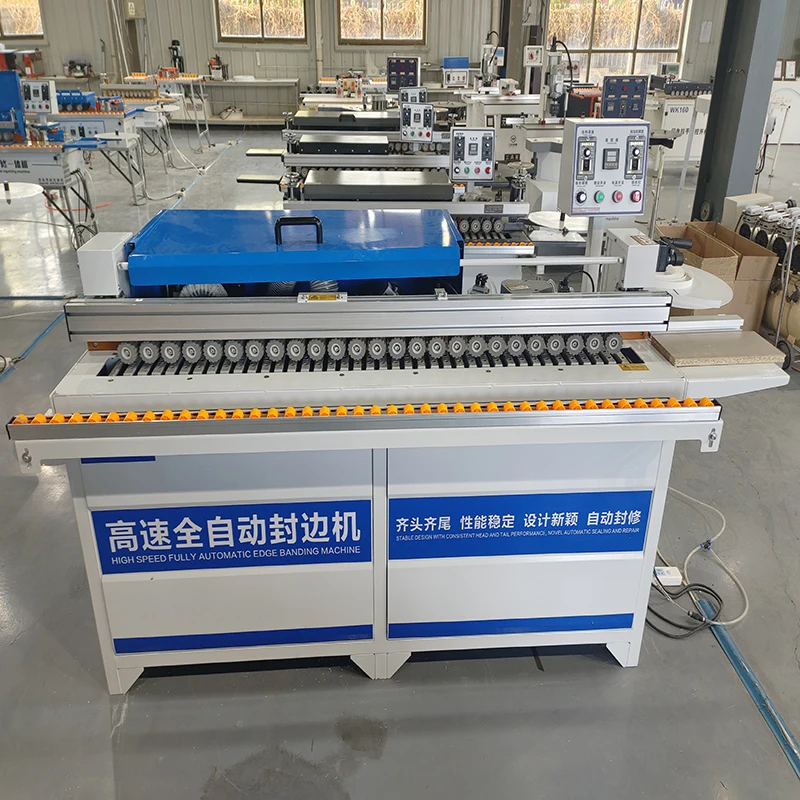
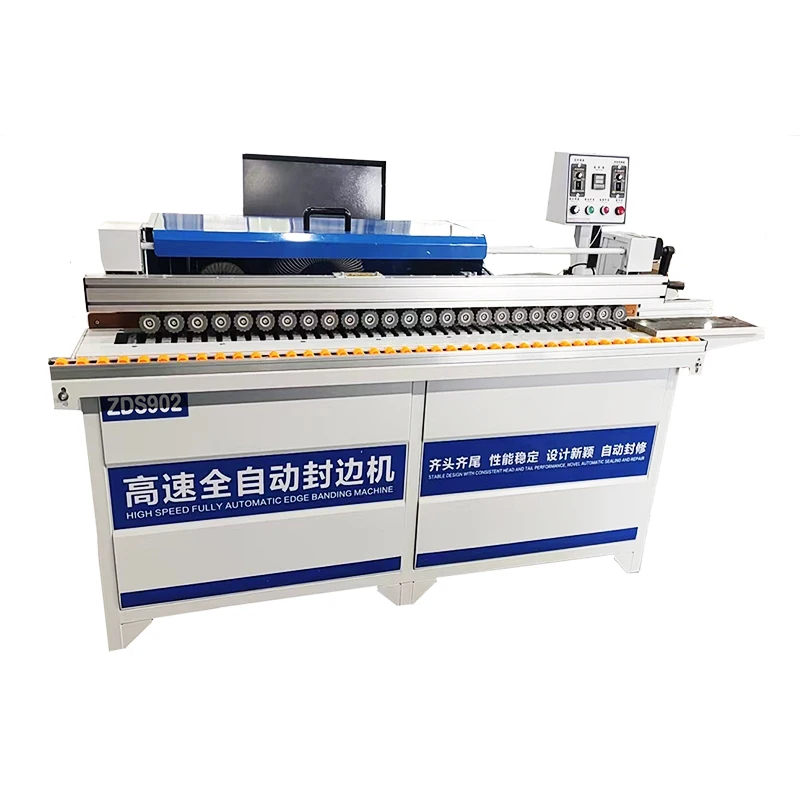
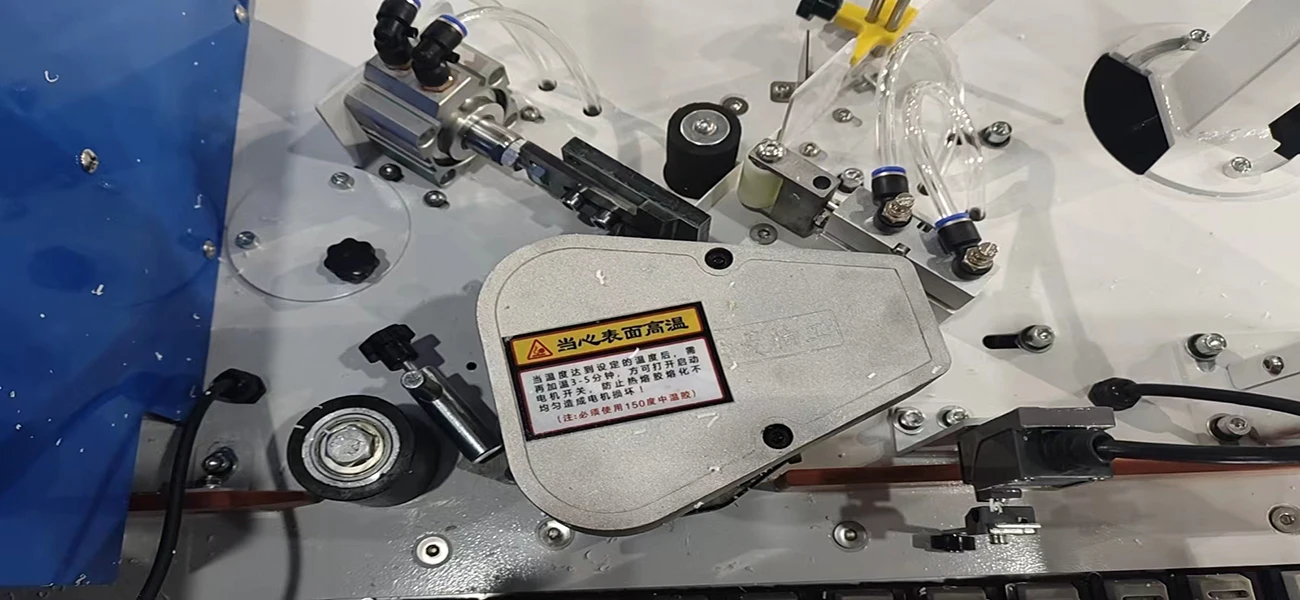
The double-sided gluing system applies adhesive to both the panel edge and the banding strip, which improves bond coverage on porous substrates like particleboard. The double high-speed trimming motors handle top and bottom trimming in a single pass, reducing the chance of edge chipping that a single-motor setup can leave on melamine faces. The silicone conveyor belt with double rows of pressure wheels keeps the panel flat against the fence throughout the feed path — critical when processing thinner MDF panels that tend to drift on lighter belt systems. The pneumatically controlled edge strip cutting device responds faster than manual cutoff, producing a cleaner band end before the trimming stations engage.
What Happens When Specification Gaps Surface After Delivery
Buying a single machine on spec sheet alone, without confirming panel thickness capacity or feed speed against your actual board mix, often leads to bottlenecks downstream. Panels that exit the edge bander with inconsistent trim quality force rework at the assembly bench, and the cost of that rework compounds across every cabinet in the batch [NEED_CITE: woodworking rework cost factors in panel furniture manufacturing]. I have watched factories blame the operator when the real issue was a machine tier mismatched to the production volume it was asked to handle.
Why Sourcing This Automatic Edge Banding Machine From One Manufacturer Matters
Voltage, language, and specification customization ship as standard rather than as costly afterthoughts. The four-stage QC process covers incoming material, in-process assembly, finished product, and pre-shipment verification — so the machine you receive matches the test record. Patented cutting mechanisms inside the trimming stations hold tolerance that is measured and documented, not simply claimed. An engineer reviews your factory scale and processing requirements before issuing a formal quotation, which reduces the risk of receiving equipment that does not fit your line. The full product family means your next machine upgrade stays within the same control logic and spare parts ecosystem.
Documentation & Verification
- CE declaration of conformity matched to the specific machine configuration shipped
- Machine specification sheet with electrical schematic and confirmed voltage for your site
- Factory test record run on your panel thickness and banding material before dispatch
- Operation and maintenance manual supplied in the operator’s agreed language
- Spare parts list with part numbers cross-referenced to the trimming and polishing assemblies
Installation, Commissioning & Support
- Equipment footprint of 207×60×122 cm requires a level concrete floor with clear feed and exit zones
- 4200W total power demands a dedicated circuit matching the confirmed 220V supply
- KD packing or assembled delivery depending on shipping route and site access constraints
- First-run parameter setting covers glue temperature, feed speed, and trimming depth on your boards
- Dual polishing motors and trimming motors inspected during operator training session
- Silicone conveyor belt tension and pressure wheel alignment checked at commissioning
Before You Request a Quotation
Send the panel materials you process most often — substrate type, thickness range, and the edge banding material you intend to use. Include your workshop’s existing voltage and frequency, along with the control panel language your operators require. If this machine will join an existing line, note the upstream saw and downstream boring equipment so feed heights and throughput can be matched during configuration.
Frequently Asked Questions
Q: How do I choose between entry-level and full-function edge banding models?
A: The choice depends on your daily panel volume, the variety of banding materials you run, and whether you need pre-milling for panel edge preparation. An engineer reviews your board mix and output targets before recommending a tier within the product family, ensuring the machine matches both current workload and realistic growth over the next production cycle.
Q: What voltage and frequency options are available for my country?
A: Voltage is configurable from 110V to 440V, and frequency is set to match your local grid standard. The confirmed voltage and frequency are written into the technical annex and reflected in the electrical schematic before production begins, eliminating transformer delays on site.
Q: How is edge banding tolerance verified before the machine ships?
A: Each machine undergoes pre-shipment testing where panels from your specified thickness range are edge-banded, trimmed, and polished. The resulting test pieces and measurement records are included with the shipment documentation so you can verify tolerance independently upon arrival.
Q: Can the control panel and manuals be provided in my operator’s language?
A: Multilingual control panels are available as a standard customization option. The operation and maintenance manual is produced in your agreed language before dispatch, which reduces commissioning delays and helps operators reach productive speed faster during the first week of operation.