
Description
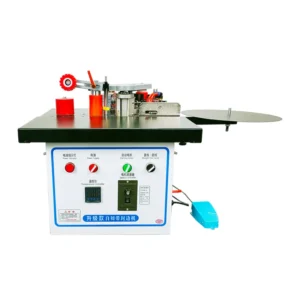
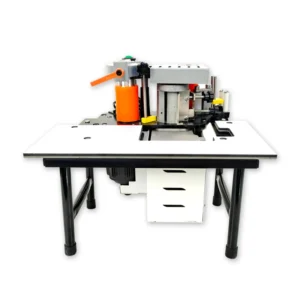
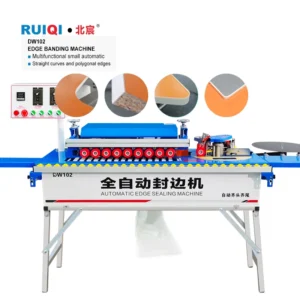
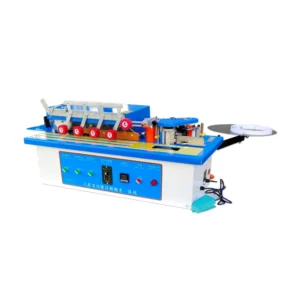
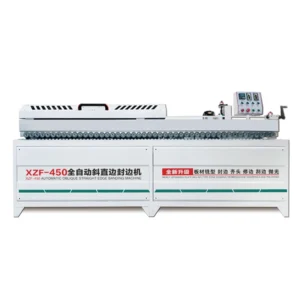
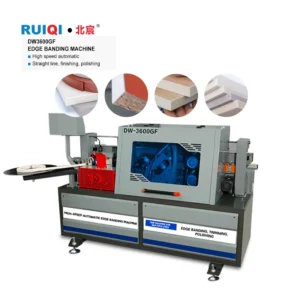
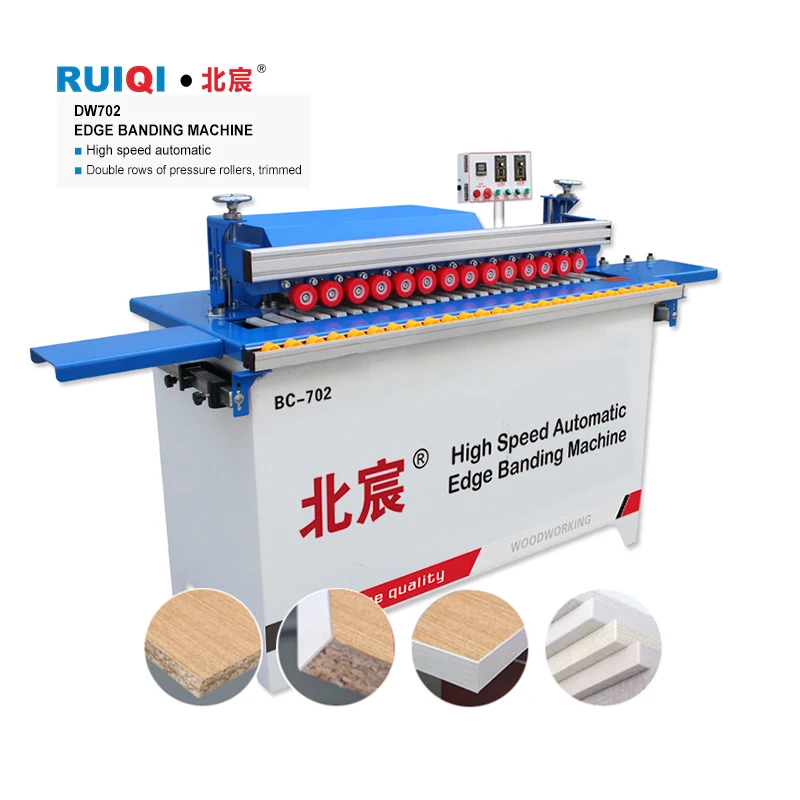
Precision-ground edge banding — The DW702 automatic edge banding machine sits within a complete catalogue ranging from workshop units to full-function pre-milling lines, enabling buyers to map the entire model spectrum before committing to a production tier.
Technical Specifications
| Parameter | Value |
|---|---|
| Model | DW702 |
| Product Type | Automatic Edge Banding Machine |
| Total Power | 3800W |
| Voltage & Frequency | 220V/380V/customization |
| Overall Dimensions (L×W×H) | 120×55×110 cm |
| Net Weight | 105 kg |
| Edge Banding Thickness Range | 0.3–3 mm |
| Edge Banding Height | 0–50 mm |
| Minimum Sheet Length | 25 cm |
| Minimum Sheet Width | 10 cm |
| Trimming Power | 800W×2 |
| Polishing Power | 180W×2 |
| Transmission Power | 140W |
| Vacuum Power | 1200W |
| Glue Pot Capacity | 1000 ml |
| Air Supply Requirement | 0.4–0.8 MPa |
| Standard Stations | Gluing, trimming, polishing, automatic head-and-tail cutting, vacuum |
| Control Panel Language | Chinese and English standard; Spanish or other languages customizable |
| Plug Options | EU, USA, AU, UK |
Application Suitability
| Application | Material or Output |
|---|---|
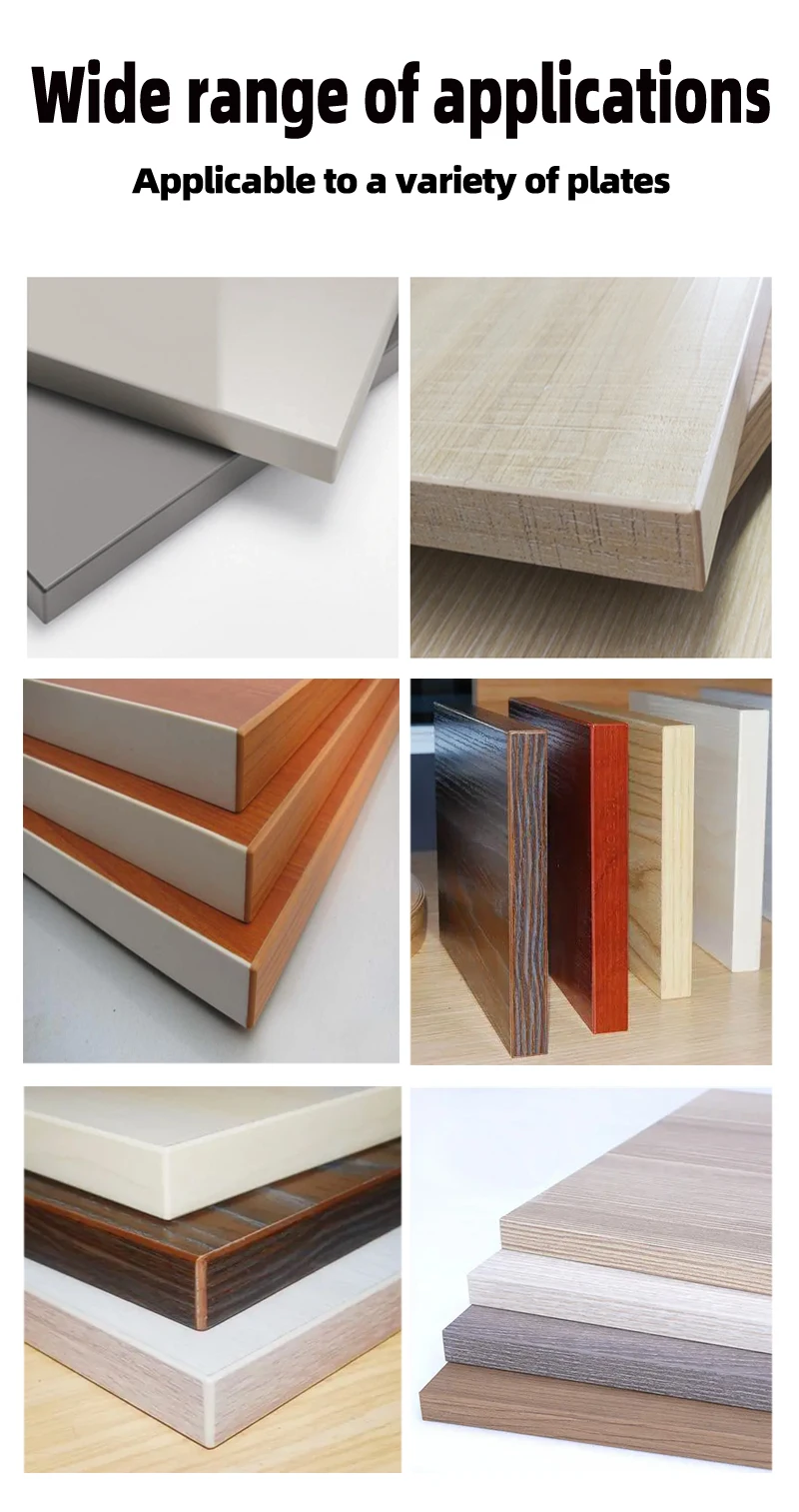
| Cabinet door edge finishing | MDF and particleboard with PVC or veneer banding |
| Furniture panel processing | Plywood and blockboard up to 50 mm edge height |
| Custom wardrobe production | Melamine-faced boards requiring clean trim lines |
| Polymer door manufacturing | Polymer substrates with compatible adhesive profiles |
| Small-to-medium batch runs | Panel components for furniture and cabinet assembly |
Why the Voltage Question Must Come Before the Machine Selection
Confirming local voltage and frequency before comparing models eliminates the most common commissioning failure in cross-border equipment purchases.
I once watched a fully automatic edge bander sit idle on a factory floor in Ho Chi Minh City for two full days. The machine was mechanically sound, but the control panel was locked in a language the local operators could not read, and the voltage configuration had never been formally confirmed against the facility’s supply. The edge banding machine manufacturer had shipped a working unit that was, for all practical purposes, a dead weight until the electrical and interface issues were resolved. These are not rare occurrences — they repeat across Southeast Asian workshops with predictable frequency [NEED_CITE: voltage and frequency standards by export market].
Surveying the complete product range first, rather than jumping to a single model, lets buyers identify which tier matches their panel mix, daily throughput, and electrical infrastructure before a purchase order is issued.
Mapping the DW702 Within the Full Edge Banding Machine Range
The DW702 occupies the compact automatic tier in the broader edge banding machine catalogue. It integrates gluing, trimming, polishing, and automatic head-and-tail cutting into a single 120 cm footprint, making it a logical choice for workshops that have outgrown manual edge banding but are not yet running the volume that justifies a multi-station pre-milling line. Buyers evaluating the full product family can position this model against entry-level units with fewer stations and higher-tier machines that add pre-milling, corner rounding, and scraping.
How Production Volume Determines Model Tier
A workshop processing a few dozen panels per day for custom cabinet jobs will find the DW702’s glue pot capacity and trimming stations adequate for steady output without excessive adhesive waste. Factories running continuous shifts across mixed panel materials, however, typically need the larger glue reservoirs and additional finishing stations found further up the catalogue. Matching the machine tier to realistic batch size prevents the familiar situation where an entry-level edge banding machine is pushed beyond its intended duty cycle, leading to premature wear on feed chains and trimming motors [NEED_CITE: equipment duty cycle and service interval expectations].
Spec Interpretation: What the Numbers Mean on the Shop Floor
The 0.3–3 mm edge banding thickness range covers the PVC, melamine, and thin veneer tapes most commonly used in MDF and particleboard furniture production. A 1000 ml glue pot is sized for intermittent batch work rather than continuous high-volume runs, meaning operators processing large panel batches will need to monitor adhesive levels and plan refill intervals. The dual 800W trimming motors provide sufficient cutting force for standard edge materials, while the 180W×2 polishing stations deliver the final surface finish that determines whether a panel passes visual inspection at assembly. Panel minimums of 25 cm length and 10 cm width define the smallest component this machine can handle — smaller offcuts from cabinet partitioning or drawer fronts may require manual edge treatment or a dedicated small-part edge bander further down the production line.
The Hidden Cost of Skipping the Catalogue Comparison
Workshops that purchase a single machine without reviewing the broader range often discover, months later, that their production volume has grown past the unit’s design envelope. Feed chain wear accelerates, trimming quality degrades, and glue adhesion becomes inconsistent as the machine runs beyond its intended shift pattern. Upgrading then means not only buying a new machine but also reconfiguring floor layout, rewiring power drops, and retraining operators on a different control interface. The cost of that disruption is rarely captured in the original equipment budget [NEED_CITE: hidden costs of premature equipment replacement in woodworking].
Why Source the Full Range From One Manufacturer
The DW702 is built on the same manufacturing platform as the higher-tier models in the catalogue, sharing component sourcing standards and precision-ground assemblies. Patented cutting mechanisms across the range deliver verified tolerance that can be checked against factory test records before shipment. Voltage customization from 220V to 380V and multilingual control panel options are standard across the product family, not special-order add-ons. The four-stage quality control process — incoming material, in-process, finished product, and pre-shipment verification — applies identically whether a buyer orders a single compact unit or a complete production line. Engineer-led configuration recommendations ensure the selected tier matches the buyer’s actual panel mix and output volume, backed by a formal quotation within 24 hours.
Documentation & Verification
- Machine specification sheet with confirmed voltage and frequency for the DW702
- Electrical schematic matching the ordered plug type and local supply standard
- Factory test record on your specified panel thickness range before dispatch
- CE declaration of conformity covering the edge banding machine product family
- Operation and maintenance manual in the agreed control panel language
- Spare parts list with part numbers for trimming blades, polishing wheels, and feed chain components
Installation, Commissioning & Support
- Requires a dedicated 220V or 380V circuit matching the ordered DW702 configuration
- 0.4–0.8 MPa compressed air supply must be connected before first startup
- Overall 120×55×110 cm footprint needs level flooring with clearance for sheet infeed
- Glue pot heating element and temperature settings calibrated during on-site commissioning
- Operator training covers multilingual control panel navigation and station sequencing
- Trimming and polishing consumables included in the initial spare parts package
Preparing Your Inquiry
To identify where the DW702 fits within your production setup, share the panel materials you process most frequently, the edge banding types and thicknesses you use, and your typical daily batch volume. Include your facility’s voltage and frequency specification, the control panel language your operators require, and whether existing upstream or downstream equipment imposes constraints on feed height or conveyor alignment. If you are evaluating multiple tiers in the catalogue, note your projected volume growth so the configuration recommendation accounts for your upgrade path.
Frequently Asked Questions
Q: How does the DW702 compare to other models in the full edge banding machine range?
A: The DW702 is a compact automatic tier integrating gluing, trimming, polishing, and head-and-tail cutting. Higher-tier models in the catalogue add pre-milling, corner rounding, and scraping stations for factories running larger volumes or demanding finer edge finishes. The full range lets buyers match their current output to the right station configuration without switching suppliers later.
Q: What voltage and frequency configurations are available across the product family?
A: Standard options include 220V and 380V, with custom configurations available for specific markets. Frequency must be confirmed alongside voltage to ensure motor and control compatibility. Plug types covering EU, USA, AU, and UK standards are offered, and the electrical schematic is updated to match the confirmed supply specification before production.
Q: Can the control panel language be customized, and is this standard across all tiers?
A: Chinese and English are standard on the DW702 and across the catalogue. Spanish and other languages are available as customization options. Confirming the required language before order placement prevents commissioning delays caused by operators unable to navigate station controls or fault codes on the shop floor.
Q: How do I determine which model tier matches my factory’s throughput and panel material mix?
A: Provide your daily panel volume, the substrate materials you process, and the edge banding types in use. The engineering team maps these inputs against station count, glue pot capacity, and feed speed across the catalogue to recommend the appropriate tier. This configuration recommendation is delivered as a formal quotation within 24 hours.
Q: What documentation is provided to verify specifications and certifications for each model?
A: Each order includes a machine specification sheet, electrical schematic with confirmed voltage, factory test record, CE declaration of conformity, operation manual in the agreed language, and a spare parts list. These documents are prepared against the exact model ordered, allowing buyers to verify tolerances and certifications before the machine leaves the factory.