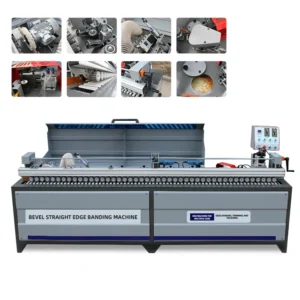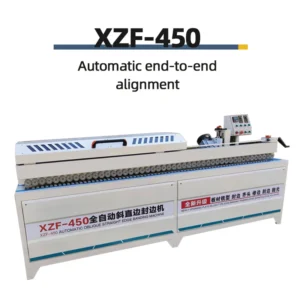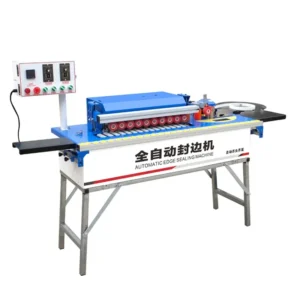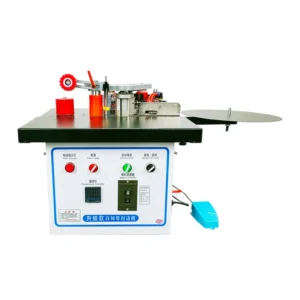
Description
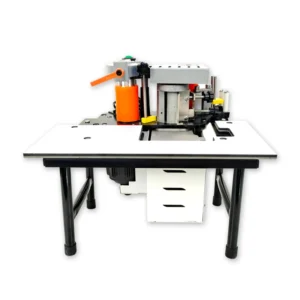
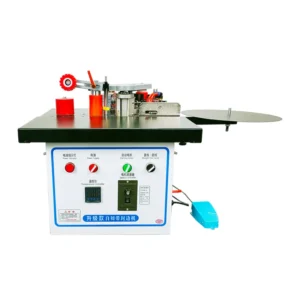
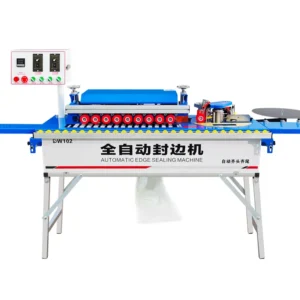
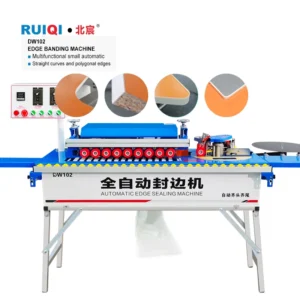
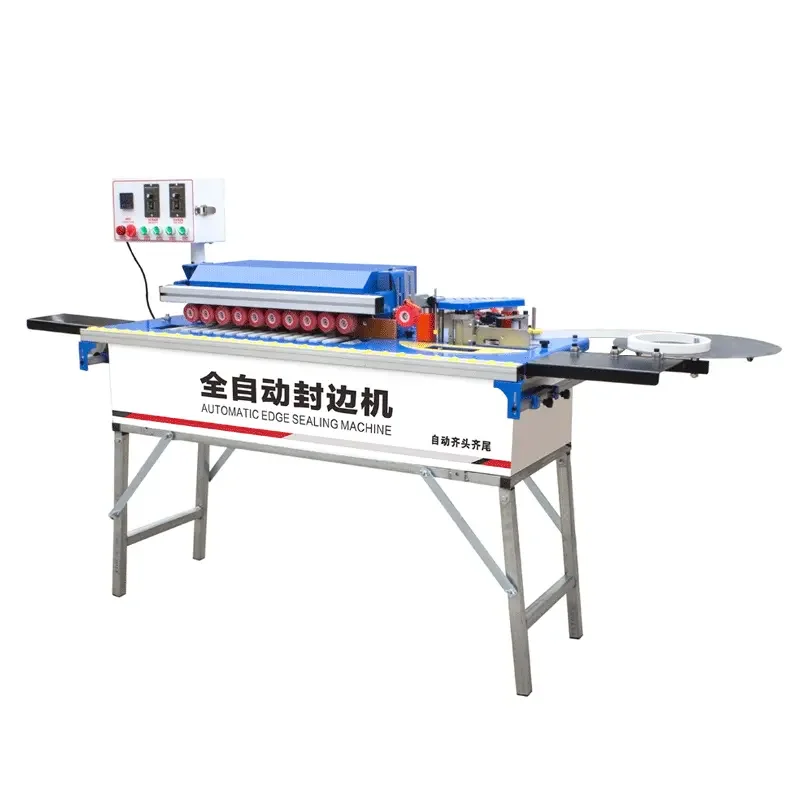
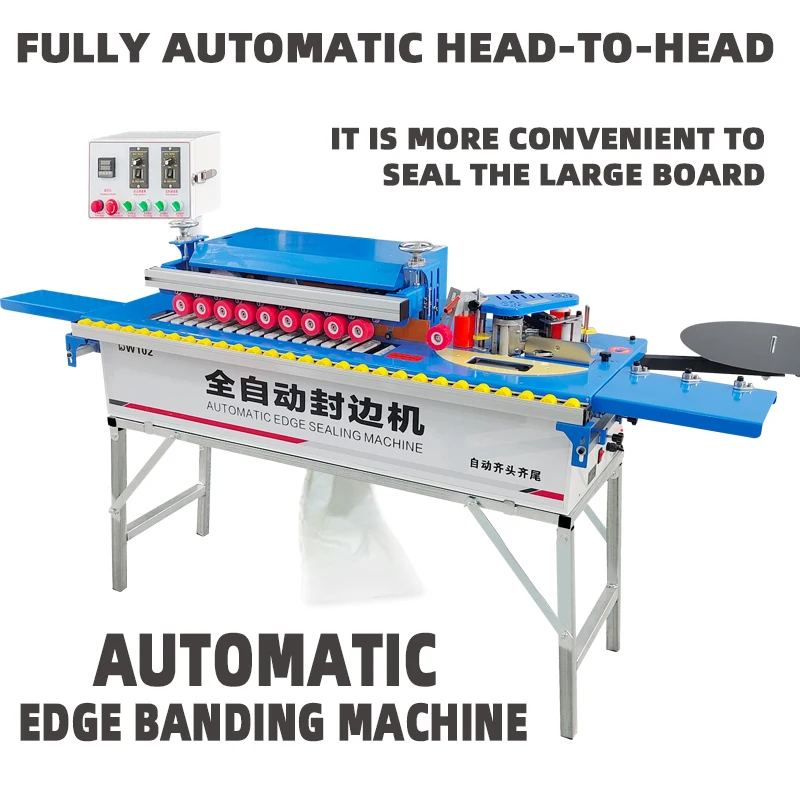
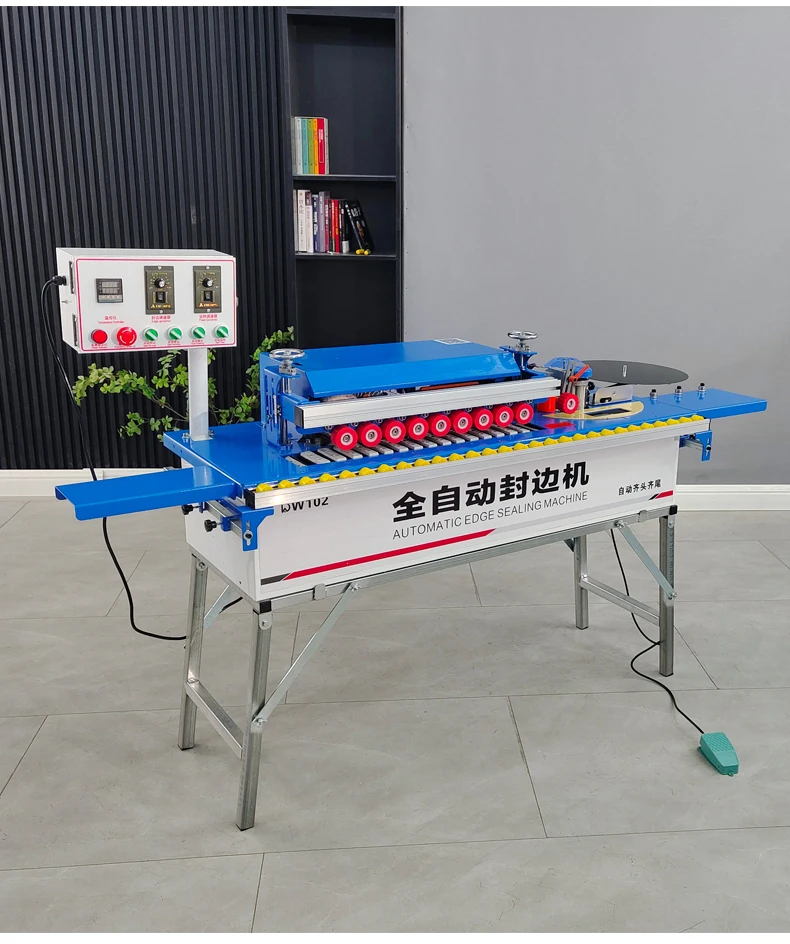
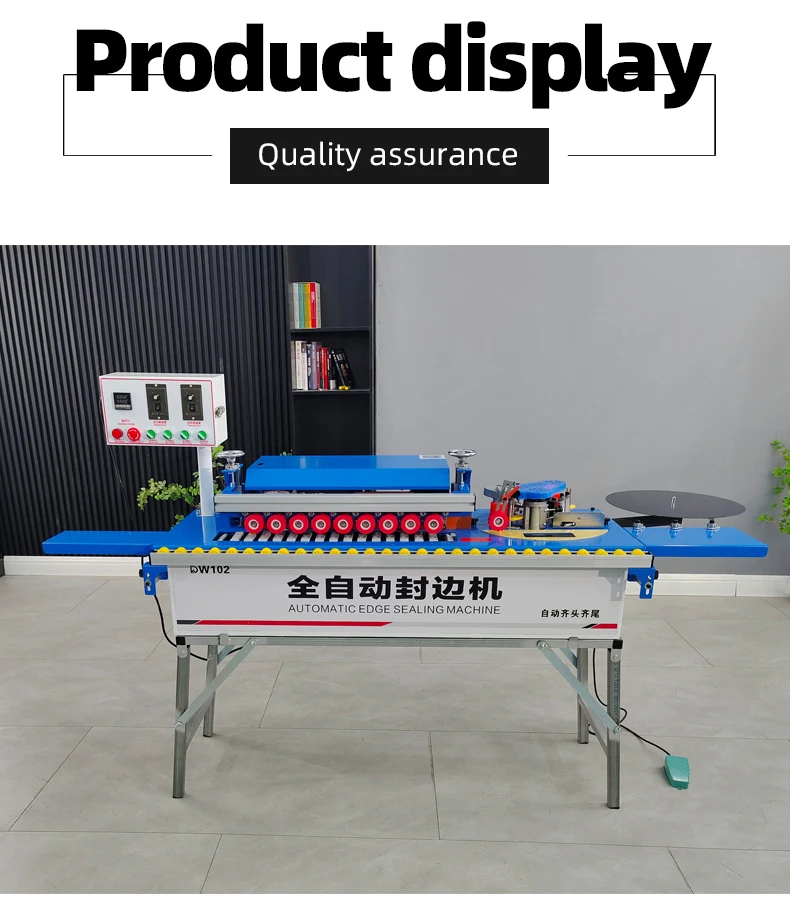
Compact dual-function banding — curved and straight capability with verified voltage matching ensures this entry-to-mid tier model fits your workshop’s electrical and spatial constraints before it leaves the factory.
Technical Specifications
| Parameter | Value |
|---|---|
| Model | DW102 |
| Product Type | Automatic Edge Banding Machine |
| Total Power | 3800W |
| Voltage | 220V/380V/customization (frequency to be confirmed) |
| Edge Banding Height | 0-50mm |
| Edge Banding Thickness | 0.3-3mm |
| Minimum Sheet Length | 250mm |
| Minimum Sheet Width | 50mm |
| Edge Trimming Power | 650W × 2 |
| Polishing Power | 180W × 2 |
| Transmission Power | 60W |
| Vacuum Power | 1200W |
| Air Source Pressure | 0.5-0.8 MPa |
| Glue Pot Capacity | 1000ml |
| Product Dimensions (L×W×H) | 128 × 47 × 69 cm |
| Net Weight | 75 kg |
| Key Features | Curved and straight edge banding, edge trimming, polishing, automatic head and tail cutting, integrated vacuum hold-down |
Application Suitability
| Application | Material or Output |
|---|---|
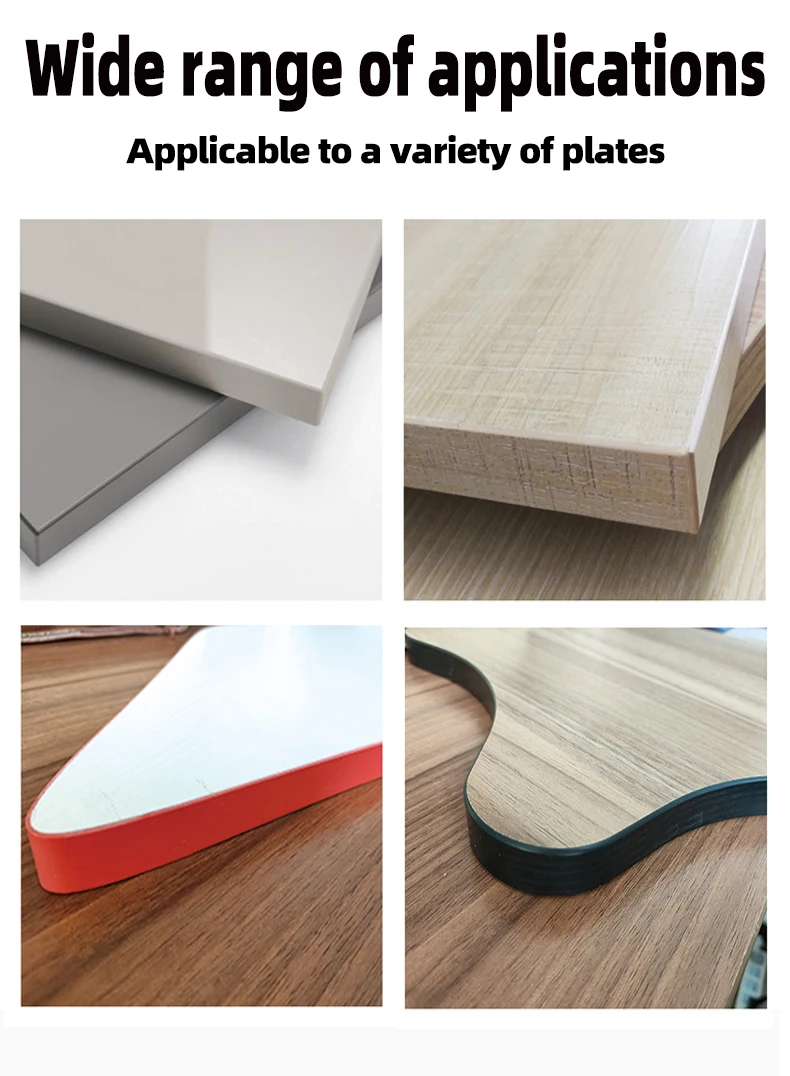
| Cabinet door edge finishing | MDF, particleboard, plywood with PVC edge banding |
| Custom furniture panel banding | Blockboard and wood panels up to 50mm thickness |
| Curved contour edge treatment | Polymer doors and shaped furniture components |
| Small-batch workshop production | Straight and curved panels above 250 × 50 mm |
Why Voltage Must Be Confirmed Before the Edge Banding Machine for Sale Ships
A machine built for 380V 50Hz will stall or burn its motor on a 220V 60Hz supply.
I once watched a small furniture shop in Peru wait nearly a month for a step-down transformer because nobody double-checked the local 220V 60Hz grid before dispatching a compact edge bander. The motor failed on the first day. That shop lost production time, paid for an extra transformer, and questioned every decision that led to that purchase. [NEED_CITE: voltage and frequency standards by export market] When sourcing an edge banding machine manufacturer, the first question should always be whether the electrical configuration matches the destination workshop — not the unit price.
Where the DW102 Sits in the Full Catalogue
The Ruiqi Wood range spans from single-function mini banders to full-function pre-milling production models. The DW102 occupies the compact tier with dual curved-and-straight capability, meaning a workshop that handles both flat panels and shaped components can consolidate two operations into one machine footprint. For buyers comparing tiers, this edge banding machine for sale covers standard PVC banding on panels up to 50mm thick without requiring the throughput capacity — or floor space — of a full-line unit.
Curved and Straight Banding Without Switching Stations
Many entry-level machines handle only straight edges, forcing workshops to either hand-trim curved components or invest in a second unit. The DW102 processes both geometries with automatic head and tail cutting, reducing the manual intervention that slows small-batch production. This matters for cabinet makers producing radiused doors or contoured shelving where every curved panel would otherwise queue for a dedicated operator. [NEED_CITE: edge banding process differences between straight and curved geometries]
Reading the Spec Sheet Against Real Panel Behaviour
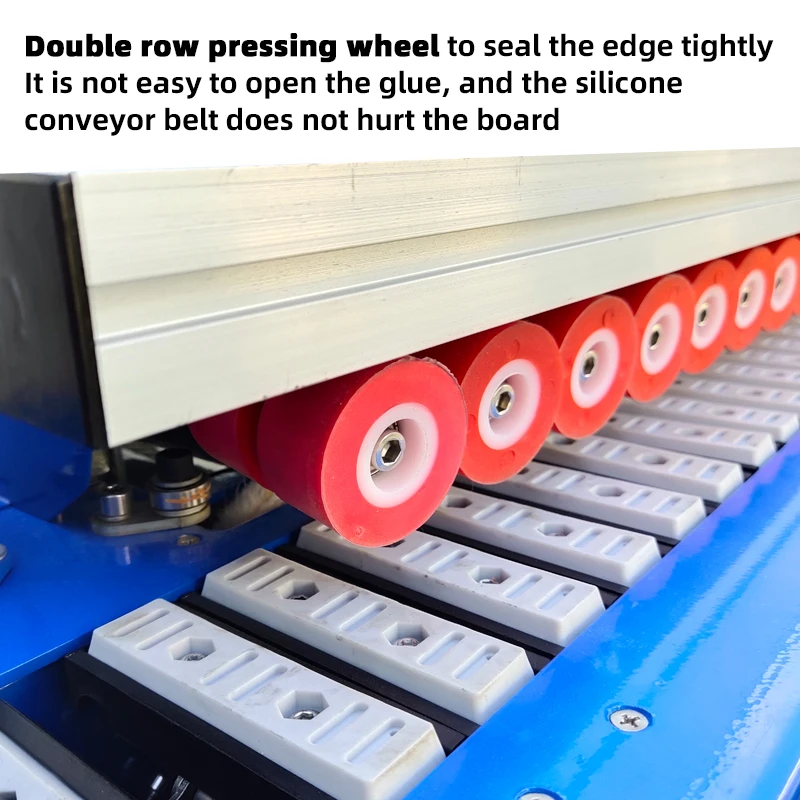
The 0.3–3mm banding thickness range covers standard PVC and thin veneer rolls used in most cabinet production, but thicker solid-wood lipping falls outside this machine’s design envelope. The 1200W vacuum hold-down stabilizes smaller workpieces down to 250 × 50 mm, which is relevant when banding narrow drawer sides or shelf strips that would slide on gravity-fed feeders. The 650W × 2 trimming motors deliver adequate cutting force for MDF and particleboard, though sustained high-volume trimming on abrasive substrates like melamine-faced chipboard may accelerate blade wear. The 1000ml glue pot suits batch production with intermittent reloading, whereas continuous full-shift operation would benefit from a larger capacity pot available on higher-tier models in the range.
The Hidden Cost of Skipping Frequency Verification
A 50Hz motor running on 60Hz supply spins faster than designed, overheating bearings within weeks. Conversely, a 60Hz motor on 50Hz runs slower, losing feed speed and leaving visible glue lines because the pressure roller cannot maintain contact at reduced torque. Neither failure appears during the factory acceptance test if the manufacturer only validates on their domestic grid. [NEED_CITE: CE machinery directive requirements for industrial equipment] The consequence is a machine that passes inspection, ships across an ocean, and fails within days of commissioning — turning what should have been a productivity gain into a month of downtime.
What Verifiable Manufacturing Depth Means for This Model
The DW102 is built in a facility with in-house precision grinding and four-stage quality control covering incoming material, in-process assembly, finished product, and pre-shipment verification. Custom voltage from 110V to 440V is configured at the order stage, not adapted with aftermarket transformers. Multilingual control panels ship in the operator’s working language, eliminating the stall that happens when a Spanish-speaking technician faces a Chinese-only interface. Engineer-led configuration ensures the quoted machine matches actual workshop requirements rather than a generic catalogue listing. Factory visits and sample processing tests on your specific panel substrate are available before commitment.
Documentation & Verification
- CE declaration of conformity matched to the DW102 export configuration
- ISO 9001 certificate covering manufacturing and quality management
- Machine specification sheet with confirmed voltage, frequency, and plug type
- Electrical schematic for local electrician pre-installation planning
- Factory test record demonstrating banding quality on your panel material
- Operation and maintenance manual in the agreed operator language
Installation, Commissioning & Support
- Floor space requirement of approximately 128 × 47 cm with clearance for panel infeed
- Dedicated electrical circuit matching confirmed voltage and frequency rating
- Fully assembled delivery — no on-site mechanical assembly required
- Air supply line at 0.5–0.8 MPa connected before first power-on
- Glue pot pre-heating and feed speed calibration during initial commissioning
- Spare trimming blades and polishing wheels included in first shipment
Configuring Your Inquiry Around Actual Production Needs
When requesting a quotation, specify your primary panel substrates, typical panel dimensions including the smallest piece you need to band, and your daily production volume in linear meters of edge. Include your workshop voltage, frequency, and plug standard so the edge banding machine manufacturer can confirm electrical compatibility before quoting. If you run both straight and curved components, indicate the approximate ratio between them and whether you currently handle curved edges manually or on a separate station.
Frequently Asked Questions
Q: How does the DW102 compare to full-function edge banding models in the Ruiqi Wood range?
A: The DW102 handles curved and straight banding with trimming and polishing on panels up to 50mm thick. Full-function models in the range add pre-milling, corner rounding, and scraping stations for higher throughput and finer edge finishes. The DW102 suits workshops below continuous production volumes where a compact footprint and dual-geometry capability matter more than line speed.
Q: What voltage and plug configurations are available, and how is local frequency confirmed?
A: The machine supports 220V, 380V, or custom voltage with EU, USA, AU, and UK plug options. Frequency must be stated at inquiry stage so the correct motor and transformer are installed at the factory. Production does not begin until voltage and frequency are written into the confirmed specification sheet.
Q: Can the control panel language be customized for operators?
A: Standard languages are Chinese and English, with other languages configurable at order. The control panel text, error messages, and parameter labels are set before shipment. Confirming operator language during inquiry prevents commissioning delays caused by unreadable interfaces on the shop floor.
Q: What is the minimum panel size, and how does it affect layout?
A: The minimum workpiece is 250mm long by 50mm wide, stabilized by the integrated 1200W vacuum hold-down. Workshops processing narrow drawer sides or small shelf brackets should ensure adequate infeed and outfeed space around the 128 × 47 cm machine footprint for safe handling of these smaller pieces.
Q: Is a sample processing test available before ordering?
A: Yes. You can send representative panel samples with your preferred PVC banding material for a factory processing test. The test record documents edge trimming quality, glue line visibility, and polishing finish on your specific substrate, allowing you to evaluate output before committing to production.