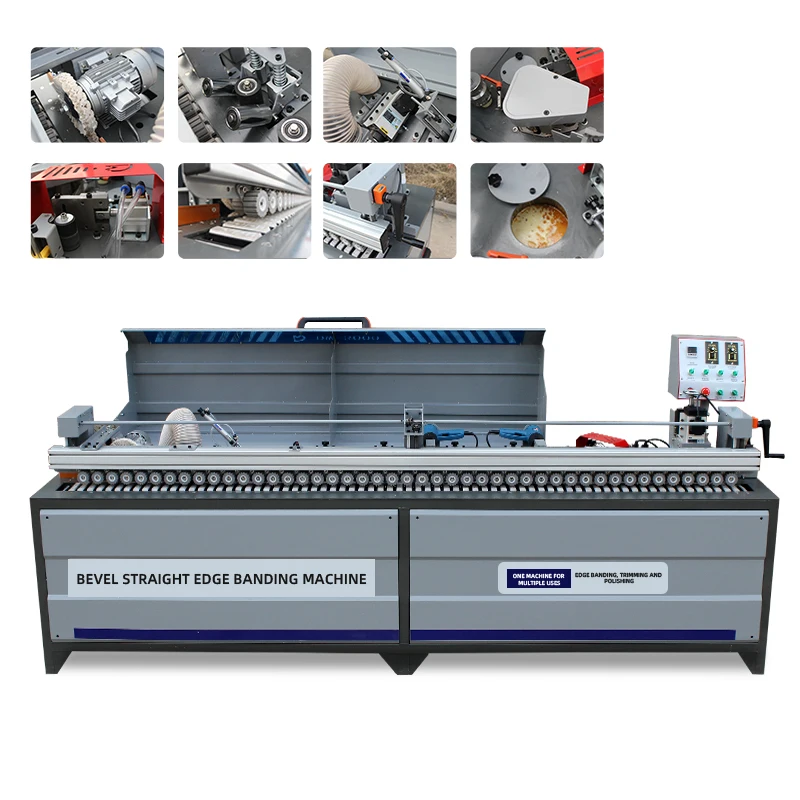
Description
Patented cutting mechanisms with verified tolerance — DW3000 achieves ±0.02mm edge precision through Ruiqi’s in-house spindle trimming configuration, tested on every substrate before dispatch.
Technical Specifications
| Parameter | Value |
|---|---|
| Model | DW3000 |
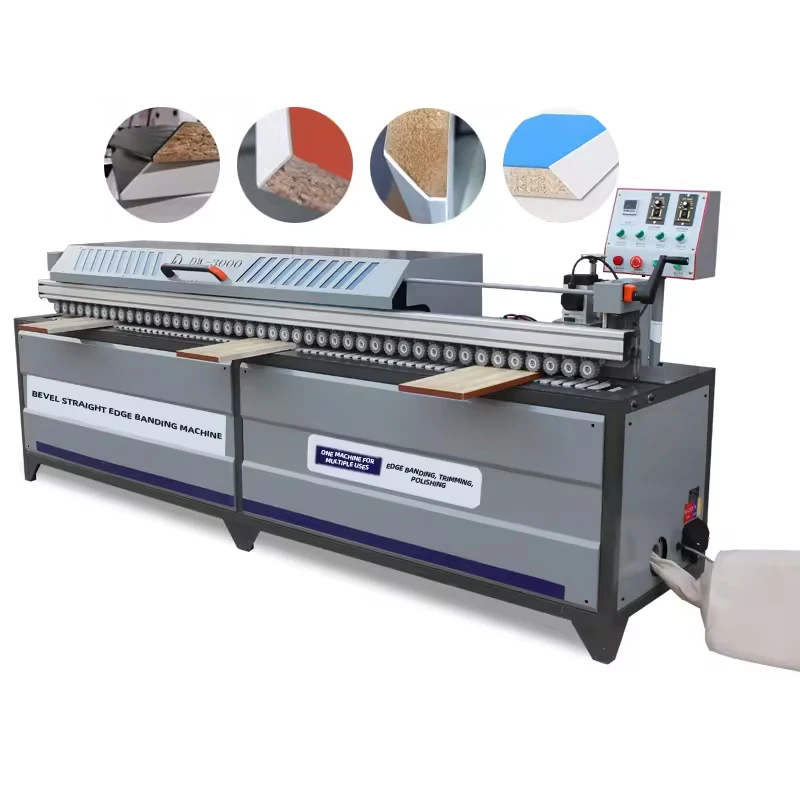
| Product Type | Automatic Straight and Bevel Edge Banding Machine |
| Total Power | 11 kW |
| Voltage | 380V / 415V (frequency to be confirmed per destination market) |
| Feed Speed | 0–12 m/min |
| Bevel Angle Range | 30°–90° |
| Edge Banding Thickness Range | 0.3–3 mm |
| Edge Banding Height Range | 0–50 mm |
| Minimum Panel Length | 300 mm |
| Minimum Panel Width | 150 mm |
| Pre-milling Motor | 2.2 kW |
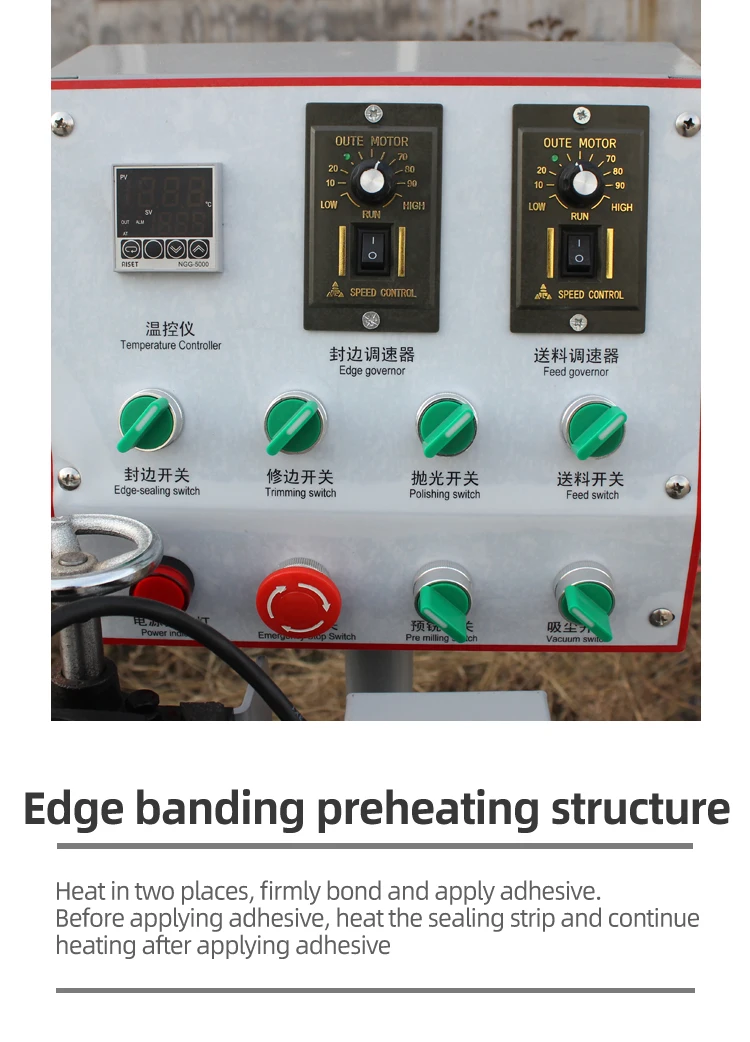
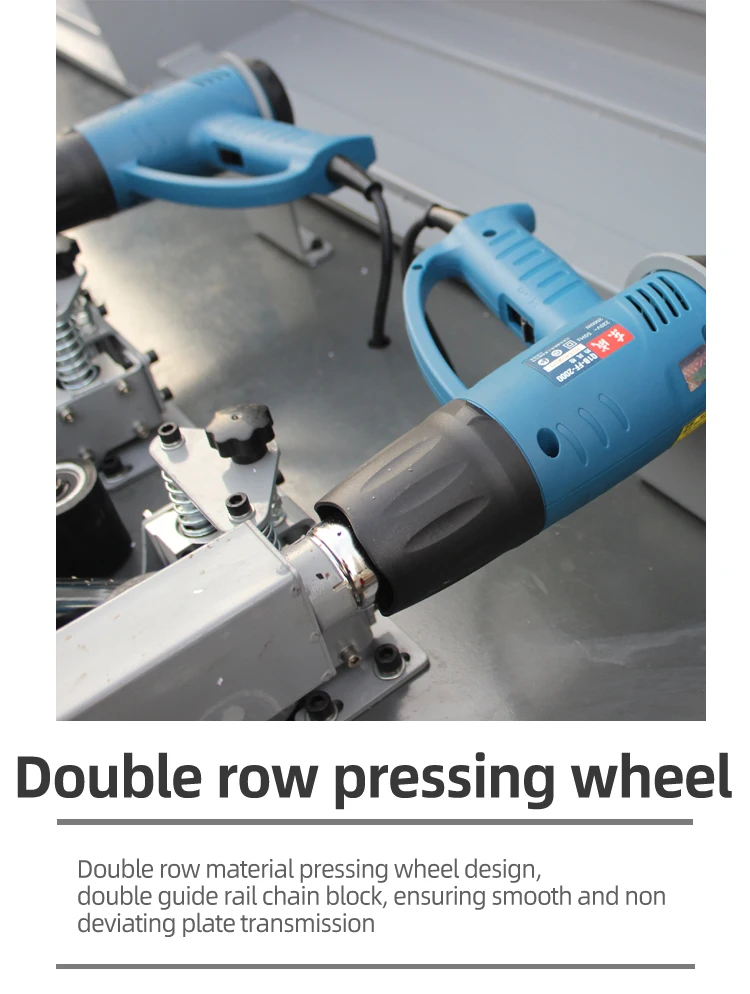
| Heating Power | 2.2 kW × 2 (double heat gun) |
| Trimming Motor | 2.2 kW × 2 (spindle trimming layout, 3 spindle motors total) |
| Polishing Motor | 0.4 kW × 2 |
| Vacuum Motor | 550 W |
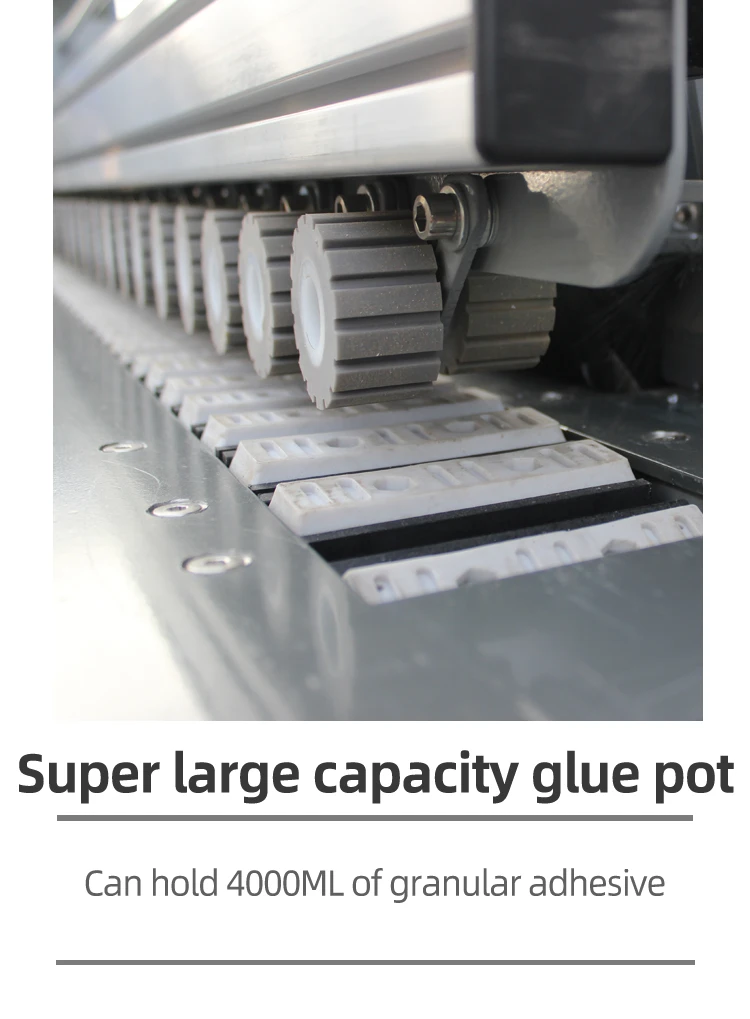
| Glue Pot Capacity | 4000 ml |
| Air Supply Requirement | 0.5–0.7 MPa |
| Edge Feed Power | 160 W |
| Transmission Power | 180 W |
| Pressure Wheel Groups | 8 adjustable groups for bevel profiling |
| Standard Functions | Pre-milling, 30–90° bevel banding, end trimming, edge trimming, scraping, polishing, vacuuming |
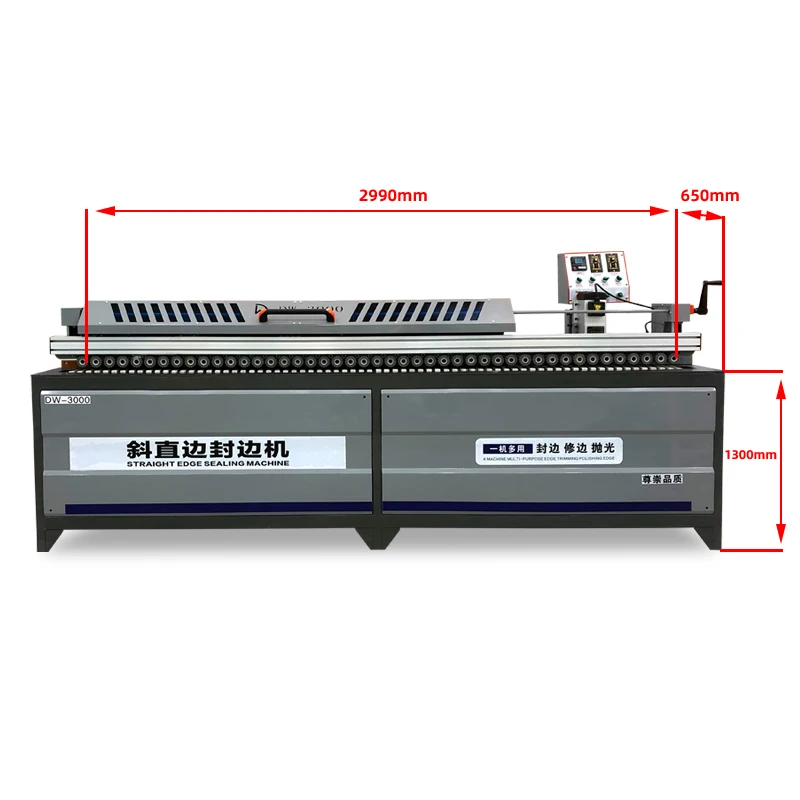
| Overall Dimensions (L×W×H) | 2990 × 650 × 1300 mm |
| Net Weight | 430 kg |
| Assembly State | Fully assembled |
| Language Options | Chinese / English (other languages customizable) |
| Standards | CE, ISO 9001 |
Application Suitability
| Application | Material or Output |
|---|---|
| Straight edge furniture panel banding | MDF, particleboard, plywood with PVC or ABS strips up to 3 mm |
| Bevel edge profile sealing (30°–90°) | Angled cabinet door edges, decorative furniture panels |
| Custom cabinet and wardrobe production | Solid wood panels and engineered boards with wood veneer banding |
| Slotting edge applications | Grooved panels requiring edge coverage before assembly |
| Small-to-medium batch panel processing | Workshops transitioning from manual edge finishing to automated output |
Why the Voltage Question Should Come Before the Price
A machine that cannot match your local grid is not a bargain — it is a three-week shutdown waiting to happen.
I watched a 380V unit get connected to a 415V supply in the Middle East. The transformer burned within minutes, and the customer’s production line sat idle while we arranged an international flight to rewire the cabinet. That edge banding machine manufacturer lesson cost everyone time and money. The DW3000 supports 380V and 415V configurations, but frequency — 50 Hz or 60 Hz — changes motor behavior and heating cycle timing. Confirming your site’s exact supply before the order is signed prevents a scenario where the machine physically arrives but electrically cannot run [NEED_CITE: voltage and frequency standards by export market].
Where the DW3000 Sits in the Ruiqi Range
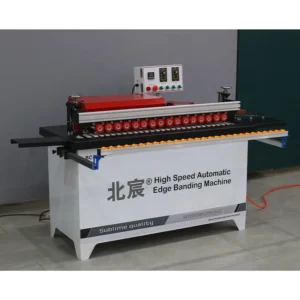
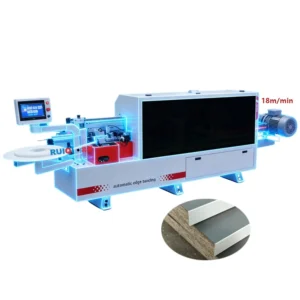
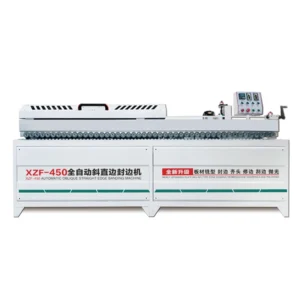
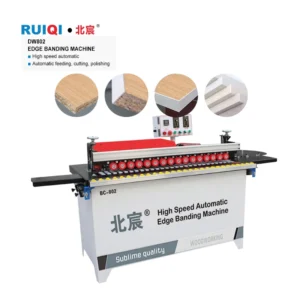
The DW3000 occupies the full-function tier of our edge banding machine catalog, positioned above entry-level straight-only models and below high-speed CNC-integrated lines. It combines pre-milling, bevel banding from 30° to 90°, spindle trimming, scraping, and polishing into a single pass. Workshops evaluating this model are typically running both straight and angled panel profiles and need one machine to handle both without swapping setups.
Bevel Pressure Control Across Varying Board Surfaces
Achieving a clean bevel edge on particleboard is fundamentally different from doing it on MDF. The substrate density changes how the glue penetrates and how the pressure wheels must engage. The DW3000 uses eight adjustable pressure wheel groups that allow the operator to dial in contact force for each bevel angle and material combination. This adjustability matters because a wheel setting that works for a 45° cut on plywood may leave visible glue lines on a softer particleboard edge [NEED_CITE: substrate density effect on edge adhesion quality].
Reading the Spec Sheet for Actual Production Impact
The 0–12 m/min feed speed range tells you the machine can slow down for thick 3 mm PVC on a bevel cut or speed up for thin 0.3 mm veneer on a straight run. The double heat gun arrangement at 2.2 kW each ensures the glue pot maintains activation temperature even when the feed speed increases, which is where single-gun setups start leaving cold spots on the bond line. The pre-milling station at 2.2 kW removes saw marks from the panel edge before the glue is applied, directly affecting whether the finished edge shows telegraphing under angled light. Three spindle motors — two dedicated to trimming — produce a cleaner cut than standard single-motor trimming, reducing the scraping station’s workload and extending scraper blade life. The 550 W vacuum motor captures trimming dust before it settles on the polishing wheels, which keeps the final surface free of embedded particles.
What Happens When the Configuration Is Wrong
Ordering a straight-only edge bander and later discovering your customer demands bevel-edged cabinet doors means either buying a second machine or turning away work. Equally costly is receiving a unit whose control panel language the operator cannot read — commissioning stalls until someone rewrites the interface or an expensive translator stands beside the machine for a week. I have seen these mismatches arrive at the factory door more times than I care to count, each one traceable to a missing question on the inquiry form [NEED_CITE: common commissioning delays in exported machinery].
Why Source This Model Through Ruiqi
The DW3000 is built in our Ningjin facility where the cutting mechanism patents originated, meaning the trimming precision is verified on the assembly floor, not claimed from a brochure. Voltage confirmation happens at the quotation stage with a signed electrical schematic, not at the loading dock. Language customization for the control panel is specified before production begins, so the operator sees familiar text on day one. Every unit runs a four-stage QC sequence including a pre-shipment test on your specified panel material and edge banding thickness. The full product family — from entry-level to full-function — lives under one roof, so a workshop scaling from the DW3000 to a higher-throughput model later does not need to qualify a new supplier.
Documentation & Verification
- Machine specification sheet listing all motor ratings, bevel angle range, and dimensional data
- Electrical schematic confirming voltage and frequency match for your facility’s grid supply
- Factory test record showing edge banding output on your specified panel substrate and banding material
- CE declaration of conformity and ISO 9001 certificate for customs clearance in regulated markets
- Operation and maintenance manual written in your agreed language with illustrated adjustment procedures
- Spare parts list with part numbers for trimming blades, scraper inserts, pressure wheels, and heating elements
Installation, Commissioning & Support
- Requires a level concrete floor capable of supporting 430 kg across the 2990 × 650 mm footprint
- Dedicated 380V or 415V circuit with correct frequency and phase rotation verified before connection
- Arrives fully assembled; only dust extraction ducting and air supply hose need on-site connection
- Initial parameter setup covers glue temperature, feed speed, and pressure wheel angles for your first panel type
- Operator training addresses bevel angle changeover procedure across the eight pressure wheel groups
- Recommended spare inventory includes trimming cutters, scraper blades, and polishing cloth wheels
Before You Request a Quote
To configure the DW3000 correctly for your workshop, share the panel materials you process most frequently — MDF, particleboard, plywood, or solid wood — along with the edge banding type and thickness range you run. Confirm your site voltage and frequency so the electrical cabinet is built to match. Let us know if you need the control panel in a language beyond Chinese or English, and whether you want a sample processing test on your own board stock before the machine ships.
Frequently Asked Questions
Q: How does the DW3000 compare to entry-level models in the Ruiqi edge banding range?
A: The DW3000 adds bevel capability from 30° to 90°, pre-milling, and a triple spindle motor layout that entry-level straight-only models do not include. It suits workshops running both straight and angled profiles in one cell. Entry-level models serve shops that process only straight edges at lower throughput and need a smaller footprint.
Q: What voltage configurations are available and how is frequency compatibility confirmed?
A: The DW3000 is configurable for 380V or 415V supply. Frequency — 50 Hz or 60 Hz — must be confirmed at quotation stage because it affects motor speed and heating cycle calibration. We issue an electrical schematic showing the exact configuration before production begins, and the buyer signs off on it.
Q: Can the control panel language be customized beyond Chinese and English?
A: Yes. Multilingual control panels are available as a customization option. The required language is specified during the quotation process and built into the interface before assembly. This prevents commissioning delays caused by operators unable to read the machine’s menu system or error messages.
Q: What panel materials and edge banding substrates are verified with the DW3000?
A: The machine processes MDF, particleboard, plywood, and solid wood panels with PVC, ABS, or wood veneer edge banding from 0.3 mm to 3 mm thickness. A factory test record using your specific material combination is produced before shipment to confirm edge quality meets your assembly requirements.
Q: How does the DW3000 fit within a full furniture production line?
A: The DW3000 handles the edge sealing station, sitting downstream of panel sizing saws and upstream of boring or drilling machines. Ruiqi supplies sliding table saws, multi-boring machines, and auxiliary equipment from the same facility, allowing throughput matching and phased line investment from a single edge banding machine manufacturer.