Description
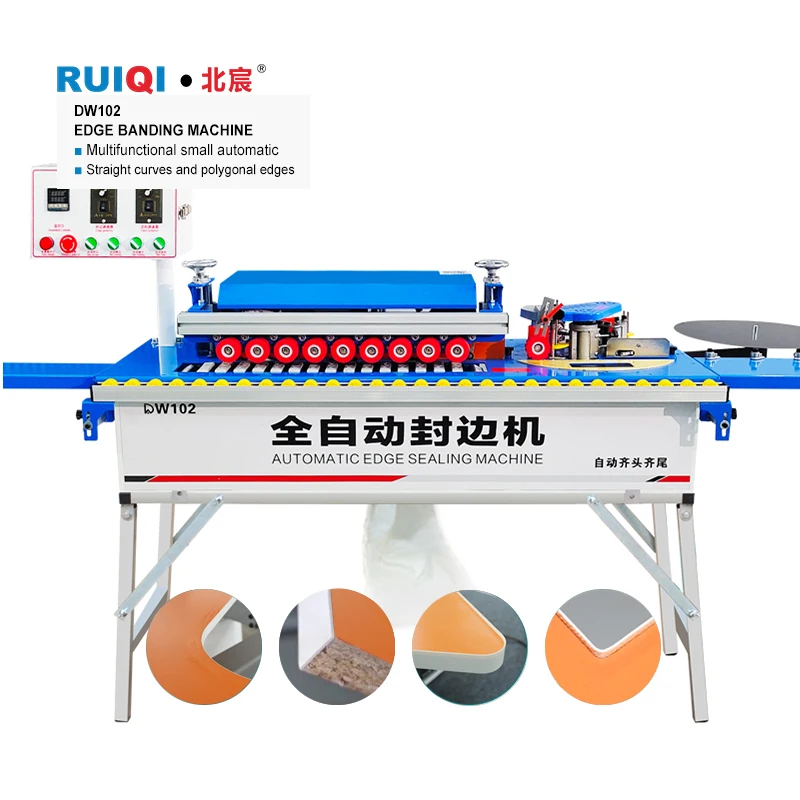
Voltage-Ready Configuration — The DW102 ships with confirmed 220V/380V compatibility and multilingual control panels so workshops avoid commissioning delays caused by electrical or language mismatches.
Technical Specifications
| Parameter | Value |
|---|---|
| Model | DW102 |
| Product Type | Mini Automatic Edge Banding Machine |
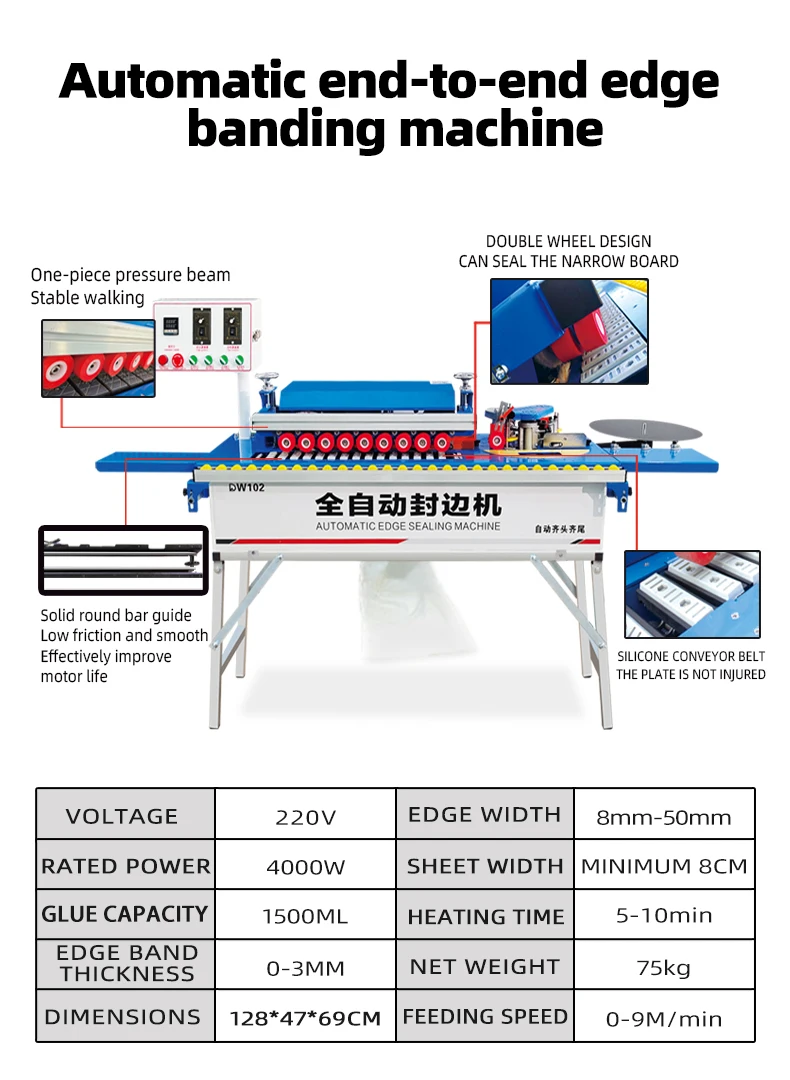
| Total Power | 3800W |
| Voltage | 220V / 380V (customization available) |
| Edge Banding Thickness | 0.3–3MM |
| Edge Banding Height | 0–50MM |
| Minimum Sheet Length | 25CM |
| Minimum Sheet Width | 5CM |
| Glue Pot Capacity | 1000ml |
| Air Source Pressure | 0.5–0.8Mpa |
| Trimming Power | 650W × 2 |
| Polishing Power | 180W × 2 |
| Vacuum Power | 1200W |
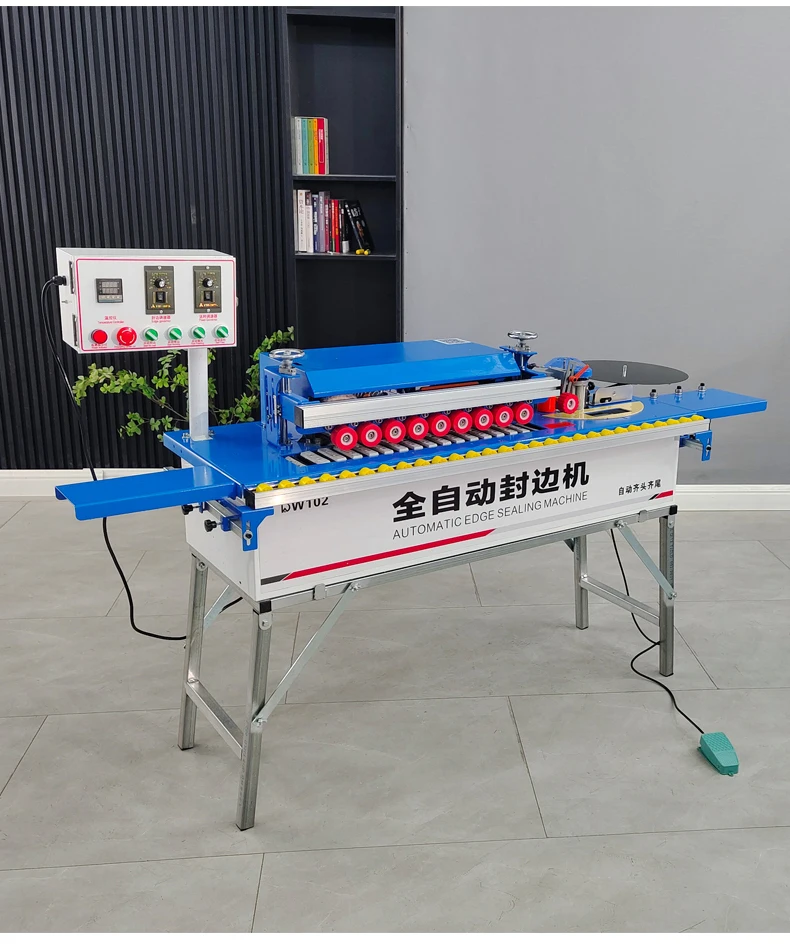
| Product Size | 128 × 47 × 69CM |
| Product Weight | 75KG |
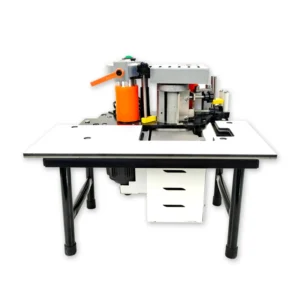
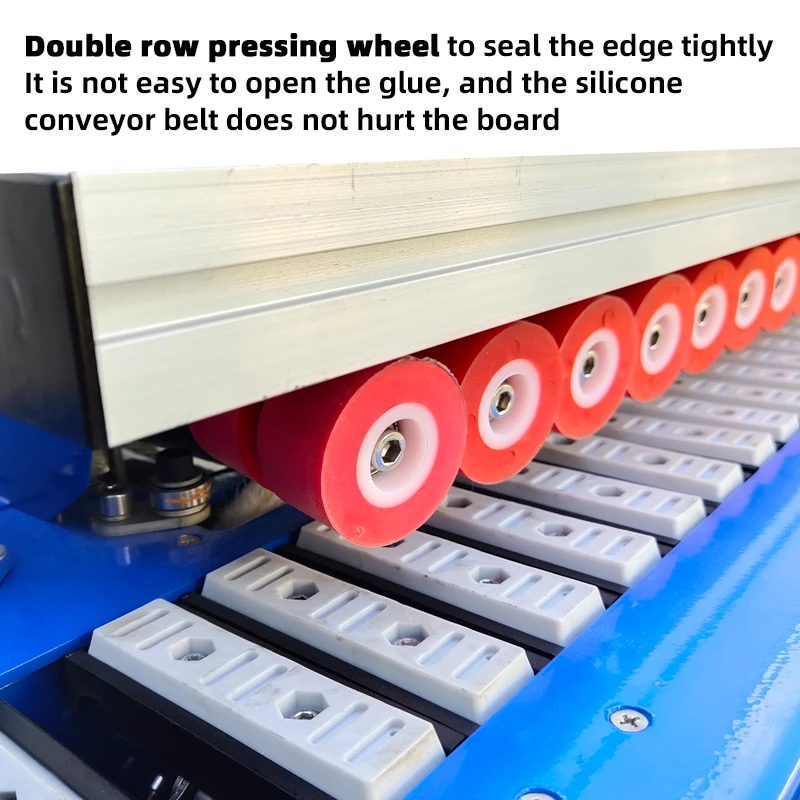
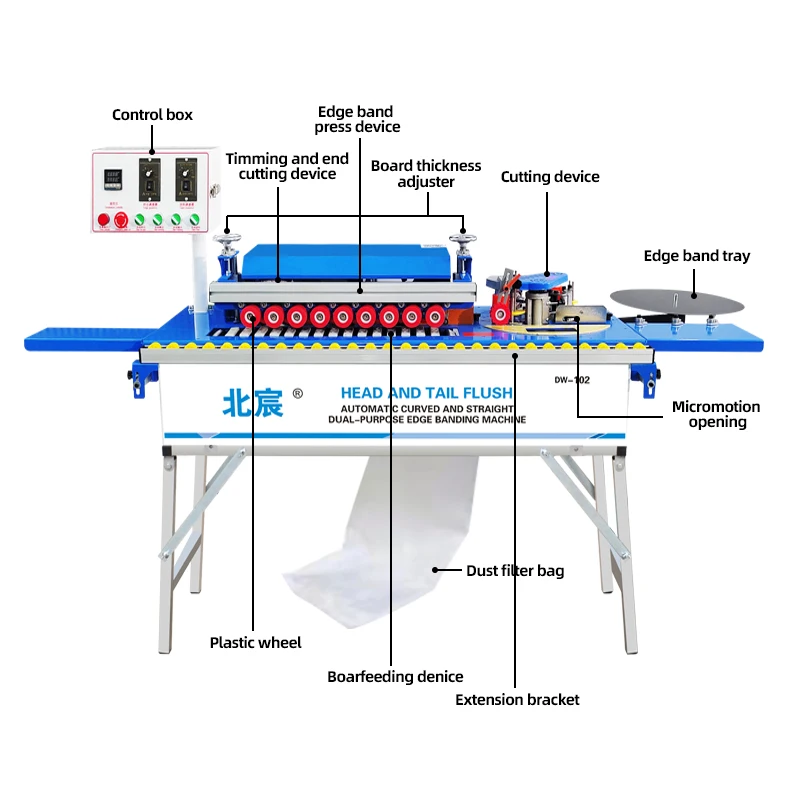
| Key Features | Curved and straight edge banding, edge trimming, polishing, automatic head and tail cutting, vacuum-assisted feeding |
| Language Options | Chinese, English (other languages customizable) |
| Plug Options | EU, USA, AU, UK |
Application Suitability
| Application | Material or Output |
|---|---|
| Cabinet door edge finishing | MDF and plywood panels with PVC edge banding |
| Custom furniture component edging | Particleboard and blockboard with 0.3–3MM banding |
| Small-batch polymer door profiles | Polymer substrates with curved and straight edge trimming |
| Satellite workshop backup edging | Wood panels requiring compact machine footprint |
| Joinery workshop automation entry | Medium density fiberboard transitioning from manual banding |
Why the Voltage Question Should Come Before the Price
A mini automatic edge banding machine manufacturer must confirm local voltage and frequency before quoting, not after the crate arrives.
I have watched entire workshop schedules stall because a machine arrived wired for a grid it could not connect to. In Southeast Asia alone, 220V and 380V coexist in the same industrial zone, sometimes in adjacent buildings. When a buyer focuses on unit cost first and electrical compatibility second, the machine sits idle while transformers are sourced or rewiring is arranged [NEED_CITE: voltage and frequency standards by export market]. The DW102 addresses this by listing voltage customization as a standard configuration option, meaning the conversation happens during the quotation phase rather than at the dock.
Positioning the DW102 Within the Full Edge Bander Catalogue
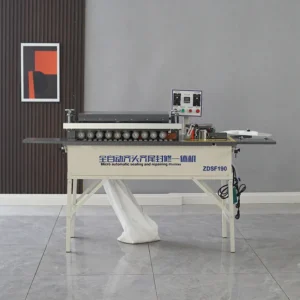
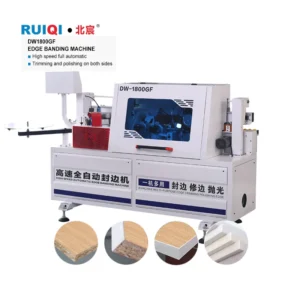
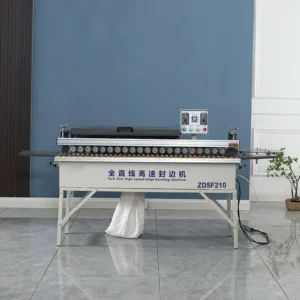
The DW102 occupies the compact tier of the edge banding lineup, designed for workshops that need full functionality — curved and straight banding, trimming, polishing — without the floor space or power draw of a production-scale unit. Its place in the range is transparent: when throughput demands grow, the same product family offers higher-capacity models, so a buyer can scale without switching to a mini automatic edge banding machine manufacturer they have not yet vetted.
How Compact Footprint Shapes Workshop Layout
At 128 × 47 × 69CM, this machine fits into corners and secondary bays that a full-size edge bander cannot occupy. Workshops running a main production line often place a compact unit nearby for rework, small custom orders, or sample runs. The 75KG weight means it can be repositioned as the floor plan evolves, a practical advantage for joinery shops still growing into their space [NEED_CITE: workshop layout considerations for panel processing equipment].
Reading the Spec Sheet Against Your Panel Inventory
The 0.3–3MM edge banding thickness range covers standard PVC and thin veneer materials common in cabinet and furniture production. The 0–50MM banding height accommodates typical panel thicknesses from thin MDF shelving to thicker blockboard carcass components. Trimming power at 650W per side provides adequate cutting force for clean edge removal on these substrates, while the dual 180W polishing motors finish the edge to a smooth profile. The 1000ml glue pot capacity supports continuous small-batch runs without frequent refills, and the vacuum-assisted feed at 1200W holds lighter panels firmly during transit through each station.
The Cost of Skipping Configuration Verification
When a workshop orders a machine without confirming plug type or control panel language, the consequences surface on day one of commissioning. Operators who cannot read the interface hesitate to adjust settings, leading to inconsistent glue application or incorrect trimming depth. A machine rated for 380V connected to a 220V circuit will run but may underperform at every station — weaker vacuum hold, slower feed, incomplete trimming [NEED_CITE: CE machinery directive requirements for industrial equipment]. These are not defects; they are configuration oversights that delay production and erode confidence in the equipment.
Why Sourcing This Model Here Makes Sense
The DW102 is built within a product family that spans entry-level to full-function pre-milling models, so configuration advice comes from engineers who understand where this machine sits and when a buyer should consider stepping up. Voltage, language, and plug specifications are confirmed before production, not assumed. A four-stage quality check covers incoming components through pre-shipment testing, and every unit ships with documentation matched to the destination market. Factory visits are welcomed for buyers who want to see the assembly floor before committing.
Documentation & Verification
- CE declaration of conformity covering the DW102 model and its electrical configuration
- ISO 9001 certificate verifying the quality management system behind production
- Machine specification sheet with confirmed voltage, frequency, and plug type for your market
- Electrical schematic showing wiring diagram and circuit protection details
- Factory test record documenting edge banding performance on your specified panel thickness range
- Operation and maintenance manual provided in the agreed language for your operators
Installation, Commissioning & Support
- Requires a dedicated circuit matching the confirmed 220V or 380V supply with appropriate breaker rating for the 3800W total draw
- Air compressor must deliver 0.5–0.8Mpa consistently to power the feed and trimming cylinders
- Machine arrives assembled; position on a level floor with clearance on the infeed and outfeed sides for panel handling
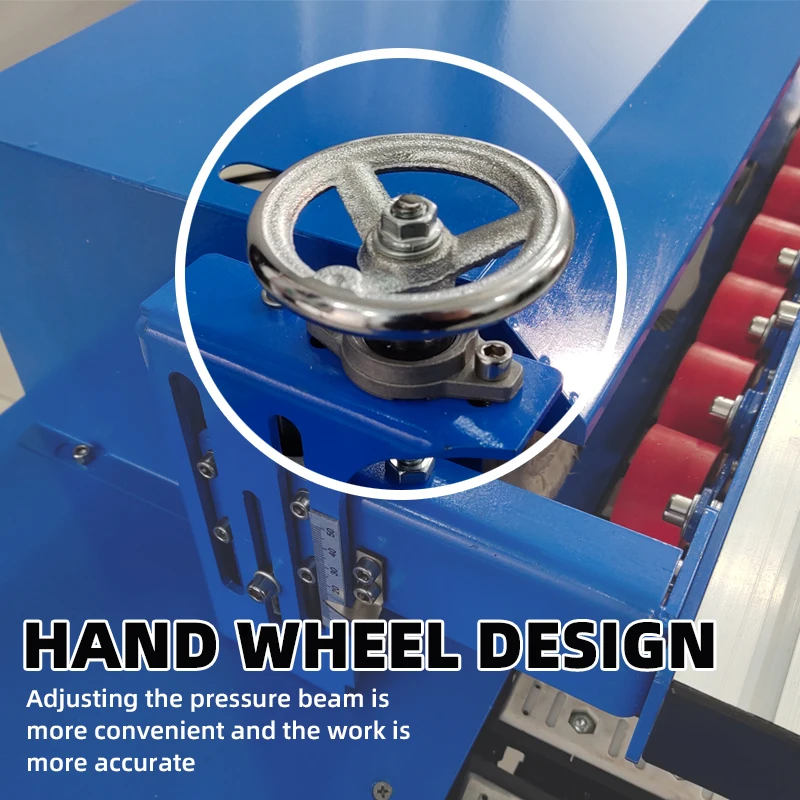
- First-run calibration includes adjusting trimming depth and polishing pressure for your specific edge banding material thickness
- Spare parts list included with consumable items identified for local sourcing or direct reorder
What to Include in Your Inquiry
Share the panel materials and edge banding types you work with most often, along with the typical sheet dimensions your operators handle daily. Specify your workshop voltage, frequency, and preferred plug standard so the electrical configuration is locked in before production. If your team speaks a language beyond Chinese or English for the control panel, note that early so the interface is built to match.
Frequently Asked Questions
Q: Where does the DW102 sit in the full edge banding model range, and when should I consider stepping up?
A: The DW102 is the compact tier, suited for workshops with limited space or lower daily volumes. If your operation consistently runs large panel batches across multiple shifts, a higher-tier model with pre-milling and additional trimming stations would better match that throughput. An engineer-led review of your daily volume helps determine the right fit.
Q: How do I confirm voltage, frequency, and plug type for my country before ordering?
A: Provide your local supply voltage, frequency, and plug standard during the inquiry stage. The DW102 supports 220V and 380V with customization, and plug options include EU, USA, AU, and UK types. Electrical configuration is confirmed and documented before production begins.
Q: What edge banding materials and thicknesses can the DW102 handle reliably?
A: The machine processes PVC edge banding from 0.3MM to 3MM thickness across a 0–50MM banding height. This covers standard applications on MDF, plywood, particleboard, and blockboard. Curved and straight banding are both supported within this material range.
Q: Can the control panel language be customized for my operators?
A: Standard options include Chinese and English. Additional languages are available as a customization — specify your requirement during the quotation phase so the interface is configured before the machine ships, avoiding commissioning delays caused by unreadable menus.
Q: What documentation ships with the machine, and is after-sales technical support available?
A: Each DW102 ships with a CE declaration, specification sheet, electrical schematic, factory test record, operation manual in the agreed language, and a spare parts list. Installation guidance and technical support are provided after delivery to assist with commissioning and ongoing operation.