Description
Engineer-Led Configuration — The DW3000 tier is recommended only after confirming your panel stock range and local voltage, preventing the costly mismatch that leaves machines sitting dead on workshop floors.
Technical Specifications
| Parameter | Value |
|---|---|
| Model | DW3000 |
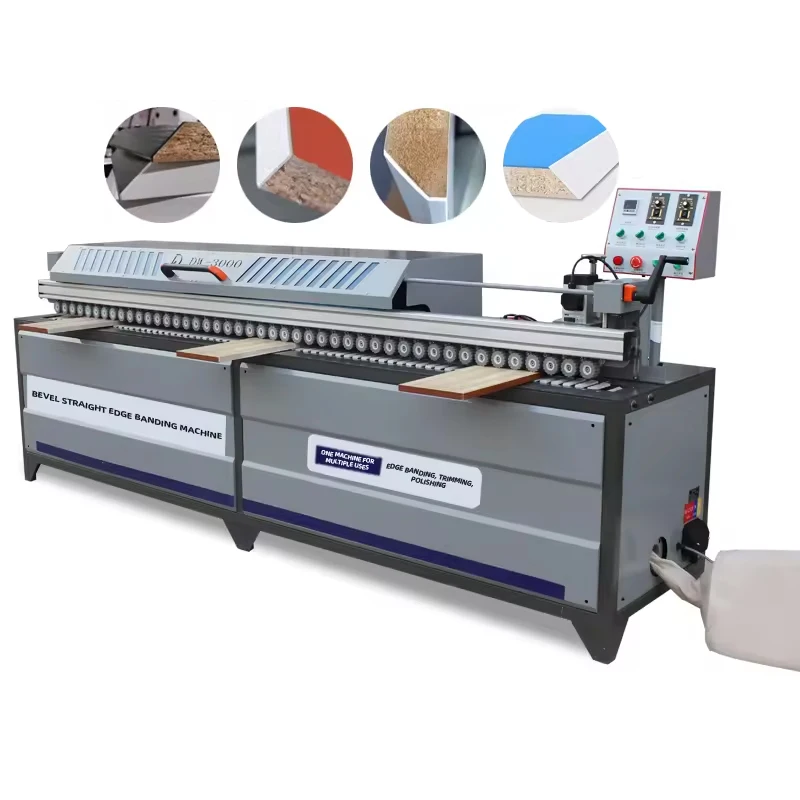
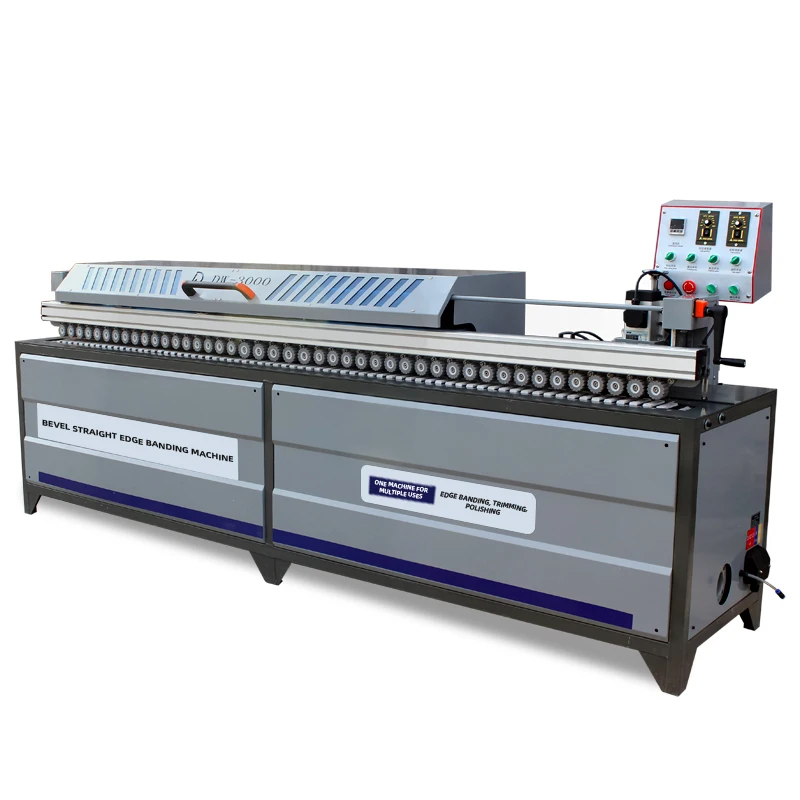
| Product Type | 45 Degree Oblique Straight Edge Banding Machine |
| Total Power | 11 kW |
| Voltage | 380V/415V (basis not stated in source — confirm frequency and exact regional standard) |
| Feed Speed | 0–12 m/min |
| Edge Banding Thickness | 0.3–3 mm |
| Edge Banding Height | 0–50 mm |
| Minimum Sheet Length | 30 cm |
| Minimum Sheet Width | 15 cm |
| Pre-milling Motor | 2.2 kW |
| Heating Power | 2.2 kW × 2 (double heat gun) |
| Trimming Power | 2.2 kW × 2 (3 spindle motors total) |
| Polishing Power | 0.4 kW × 2 |
| Vacuum Power | 550 W |
| Glue Pot Capacity | 4000 ml |
| Air Source Pressure | 0.5–0.7 MPa |
| Oblique Pressure Wheels | 8 groups, adjustable 30–90° |
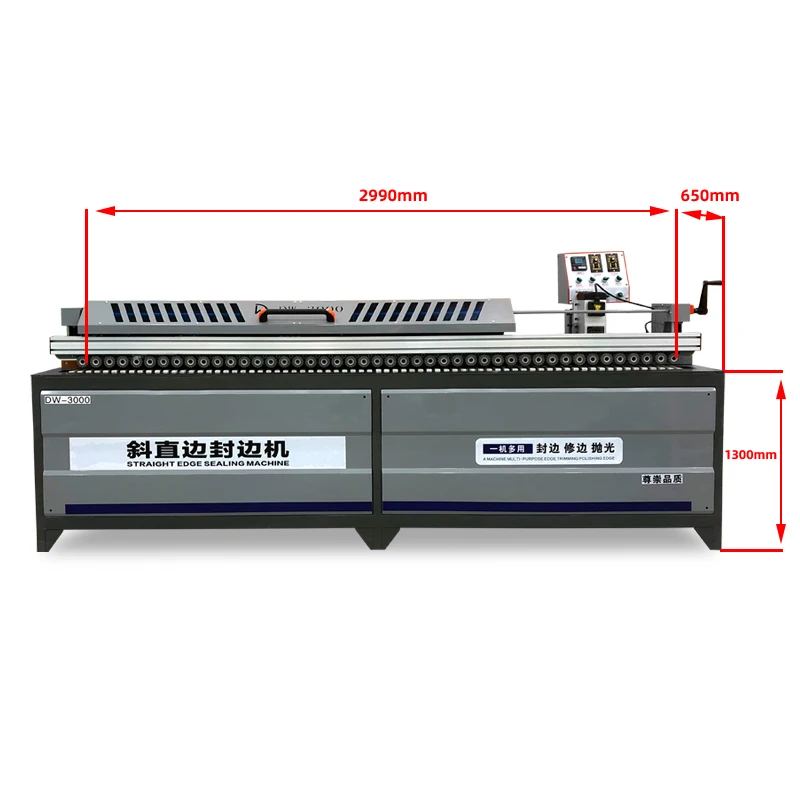
| Overall Dimensions | 299 × 65 × 130 cm |
| Net Weight | 430 kg |
| Control Panel Language | Chinese and English standard; customizable |
| Plug Options | EU, USA, AU, UK |
Application Suitability
| Application | Material or Output |
|---|---|
| Angled cabinet door edge banding | MDF and plywood with PVC or ABS banding |
| Straight-edge panel furniture production | Particleboard with melamine edge banding |
| Bevel-profile drawer fronts | Solid wood panels with veneer banding |
| Custom joinery with mixed edge profiles | MDF and plywood across 0.3–3 mm banding thickness |
Why the Voltage Question Should Come Before the Price
The DW3000 45 degree oblique straight edge banding machine for sale ships configured for your exact grid — or it does not ship at all.
I spent three weeks in a Lima workshop staring at a silent edge bander wired for 380V/50Hz while the shop only had 220V/60Hz available. The transformer eventually arrived, but the downtime cost the owner far more than a five-minute voltage confirmation would have. Every 45 degree oblique straight edge banding machine for sale should carry a signed voltage sheet before production begins, yet this step still gets skipped when orders are rushed [NEED_CITE: voltage and frequency standards by export market].
How the Ruiqi Range Covers Each Production Stage
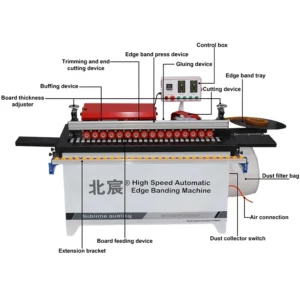
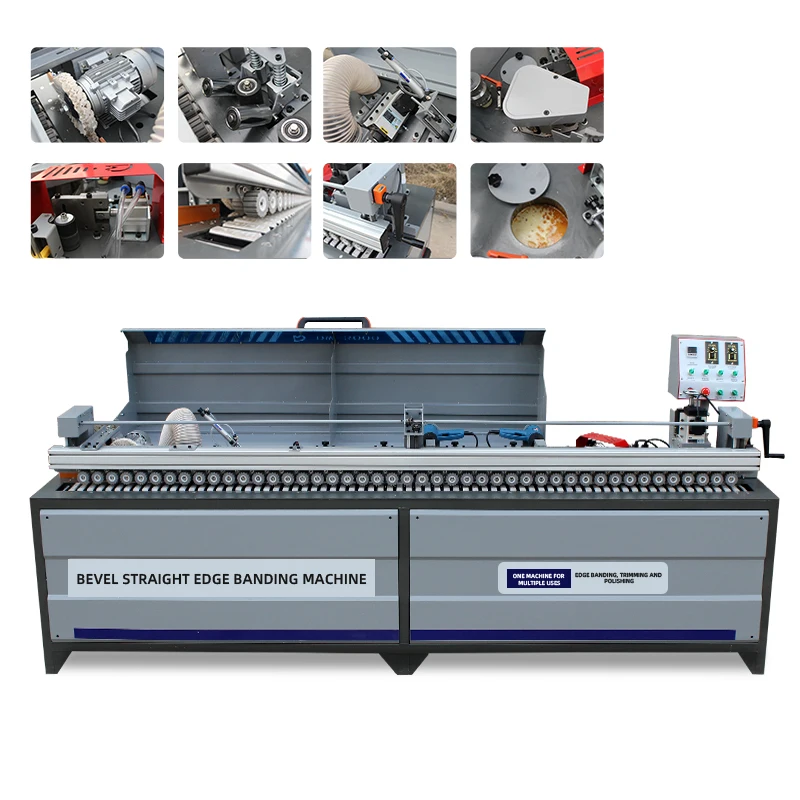
The DW3000 occupies the full-function tier of the Ruiqi edge banding catalogue. Entry-level models handle straight edges at lower feed speeds for small joinery shops. Mid-tier units add pre-milling and basic trimming for growing cabinet makers. The DW3000 brings 30–90° oblique pressure, double heat gun gluing, and spindle trimming into one frame, letting a workshop handle angled and straight profiles without buying a second machine.
Scaling Without Switching Suppliers
Workshops that start with a compact edge bander often outgrow it within a year. Because the DW3000 belongs to the same product family as the entry and mid-tier models, spare parts, control panel logic, and operator training carry over. A production manager upgrading from a basic unit already knows the interface, reducing commissioning time [NEED_CITE: operator training requirements for woodworking machinery upgrades].
Reading the Spec Sheet Against Your Production Reality
The 0–12 m/min feed speed range matters most when you run short panels near the 30 cm minimum length, where aggressive speeds cause feed chatter. The 8-group oblique pressure wheels adjust across 30–90°, which directly affects glue line consistency on bevel cuts — fewer wheel groups on cheaper machines leave uneven contact on steep angles. The 2.2 kW × 2 double heat gun design preheats banding material before it meets the glue pot, improving adhesion on dense substrates like high-thickness particleboard. Air source pressure at 0.5–0.7 MPa must be maintained at the machine inlet, not just at the compressor, or the pressure wheels lose contact force mid-cycle.
The Cost of Skipping Configuration Checks
Buying a 45 degree oblique straight edge banding machine for sale without confirming your panel thickness range against the 0–50 mm banding height limit means discovering the mismatch after delivery. Operators forced to run panels outside the designed range produce visible glue lines and banding lift, which downstream assembly then rejects. Matching feed speed to your actual panel length distribution prevents the edge chatter that ruins finish quality on short drawer components [NEED_CITE: edge banding defect causes in panel furniture manufacturing].
Why Sourcing This Tier Makes Sense
In-house manufacturing with patented cutting mechanisms means the DW3000 spindle trimming motors are built and tested under one roof, not assembled from third-party sub-contracts. Voltage, plug standard, and control panel language customization is treated as standard procedure, not a special request requiring weeks of negotiation. Four-stage quality control with pre-shipment verification catches wiring and pressure calibration issues before the crate closes. The 24-hour formal quotation includes engineer-led configuration, so the machine you receive matches the panel stock and power supply you actually have.
Documentation & Verification
- CE declaration of conformity applicable to the DW3000 edge banding platform
- Electrical schematic confirming your specific voltage and frequency before production
- Factory test record using your panel thickness and banding material
- Operation manual in your agreed language with illustrated fault-finding guide
- Spare parts list with OEM part numbers for pressure wheels and trimming spindles
Installation, Commissioning & Support
- 299 cm footprint requires minimum 400 cm clearance for panel infeed and outfeed
- 11 kW total power demands a dedicated circuit with correct breaker rating for your voltage
- Arrives fully assembled; connect power, air supply, and dust extraction before first run
- First-run calibration covers feed speed, glue temperature, and pressure wheel angle setting
- 4000 ml glue pot requires scheduled drain and clean at intervals based on adhesive type
- 8-group oblique pressure wheels need periodic contact surface inspection for wear
Getting the Configuration Right Before You Order
Share your panel substrate types, typical board dimensions, and the edge banding materials you run most often. Include your workshop voltage, frequency, and plug standard so the electrical configuration is locked before production starts. If you operate existing upstream saws or downstream boring machines, note their feed heights to confirm line compatibility.
Frequently Asked Questions
Q: Where does the DW3000 sit in the Ruiqi edge banding range?
A: The DW3000 is the full-function tier, combining 45-degree oblique and straight edge capability with pre-milling, double heat gun, spindle trimming, and flexible scraping. Entry-level models cover straight edges only, while mid-tier units add basic trimming. The DW3000 handles both angled and straight profiles in a single machine, suited to custom furniture factories producing mixed panel types.
Q: Can the DW3000 switch between straight and oblique edges without manual reconfiguration?
A: The 8 groups of oblique pressure wheels adjust continuously from 30 to 90 degrees. Operators set the angle on the handwheel for the current batch run. Switching between straight and bevel profiles within the same shift is practical, though each angle change requires a brief pressure and alignment check before resuming production feed speed.
Q: What voltage and plug options are available?
A: The standard configuration is 380V/415V, with plug options covering EU, USA, AU, and UK standards. Voltage and frequency must be confirmed against your local supply before production begins. The control panel language is customizable to Spanish, French, or other languages matching your operator team.
Q: How does the double heat gun improve edge banding quality?
A: Two 2.2 kW heating units preheat the banding material before it contacts the glue, improving adhesive compliance on dense substrates like thick particleboard and MDF. This reduces visible glue lines and banding lift that single-heater machines often leave on challenging panel surfaces, particularly in cooler workshop environments.
Q: What upstream and downstream equipment pairs with the DW3000?
A: A sliding table saw or panel saw feeds cut-to-size panels into the DW3000 infeed. Downstream, hinge boring and multi-boring machines complete the panel for assembly. Confirming feed height and throughput matching across stations prevents bottlenecks and panel damage during material transfer between machines.