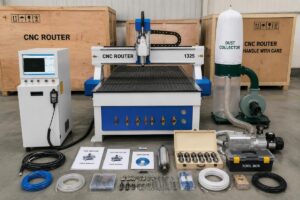
Navigate saw blade set pricing Ethiopia by focusing on total cost of ownership rather than just unit price. Avoid hidden expenses from downtime and emergency air freight that can triple costs. Select durable TCT blades with proper carbide grades to ensure consistent production efficiency in Addis Ababa workshops.
Saw Blade Set Price for Ethiopia: Factory Direct Wholesale
The lowest unit price on a saw blade is often the most expensive line item in your annual budget.
For procurement managers and workshop owners in Ethiopia, the fair market range for a high-quality industrial circular saw blade set suitable for MDF and melamine processing typically sits between mid-range import costs and premium European pricing, but the true value lies in the cost per cut rather than the sticker price. A reliable saw blade set pricing Ethiopia strategy must account for carbide grade, steel tensioning quality, and the logistical reality of Addis Ababa, where emergency air freight for failed blades can triple the initial savings of buying cheap alternatives. Buyers should prioritize total cost of ownership, focusing on durability against local dust conditions and compatibility with high-speed beam saws, rather than seeking the absolute lowest upfront cost.
I still remember the humidity in a cabinet factory just outside Addis Ababa. The owner had recently switched to a batch of unbranded blades to cut costs on his panel line. Within days, the edges of the melamine boards were chipping, and the machine operator was stopping every hour to clean resin buildup. When one blade finally cracked under tension, the entire production line halted. Waiting for a replacement meant paying for urgent air cargo, which cost several times more than the blade itself. That downtime didn’t just waste money; it damaged relationships with clients who were waiting for their furniture deliveries. This experience reinforced a critical lesson: in an import-heavy market like Ethiopia, reliability is not a luxury, it is a operational necessity. [NEED_CITE: impact of supply chain delays on manufacturing productivity in East Africa]
Understanding the nuances of saw blade set pricing Ethiopia requires looking beyond the invoice. It demands a deep dive into why prices vary, what hidden costs lurk behind cheap options, and how to select the right specification for your specific production needs.
Why Does Saw Blade Pricing Vary So Much in Ethiopia?
Price differences are driven by the quality of raw materials and manufacturing precision, not just brand reputation.
When you see two blades with the same diameter and tooth count but vastly different prices, the disparity usually comes from the steel body and the carbide tips. Cheap blades often use lower-grade steel that lacks proper tensioning, leading to vibration and premature wear. In contrast, premium blades use high-tensile steel bodies that remain stable at high rotational speeds, ensuring cleaner cuts and longer life. [NEED_CITE: metallurgical standards for industrial saw blade steel bodies]
The carbide tips are another major cost driver. High-quality tungsten carbide is expensive, and the brazing process that attaches these tips to the steel body requires precise temperature control. Poor brazing leads to tips falling off during cutting, which can damage the workpiece and the machine. In the Ethiopian market, where dust and heat can accelerate wear, the grade of carbide matters significantly. Standard grades may dull quickly when cutting high-density fiberboard (HDF), while premium micro-grain carbides maintain sharpness for much longer.
| Feature | Budget Import Blades | Premium Industrial Blades |
|---|---|---|
| Steel Body Quality | Basic carbon steel, prone to warping | High-tensile alloy steel, laser-cut for stability |
| Carbide Grade | Standard coarse grain | Micro-grain or sub-micron carbide |
| Brazing Quality | Manual or semi-auto, inconsistent | Automated furnace brazing, uniform strength |
| Coating | None or basic paint | Anti-stick non-stick coating (e.g., PTFE) |
| Resharpening Cycles | Limited, often not viable | Multiple cycles possible with minimal loss |
This table illustrates why saw blade set pricing Ethiopia is not a simple comparison of numbers. A blade that costs twice as much upfront may last four times longer and require half the resharpening frequency. For a busy workshop in Addis Ababa, this means less time spent changing blades and more time producing sellable goods. [NEED_CITE: technical datasheets on carbide wear resistance in woodworking applications]
What Are the Hidden Costs of Cheap Saw Blades?
Calculating the true cost involves factoring in downtime, material waste, and emergency logistics.
Many buyers focus solely on the purchase price, ignoring the operational expenses that accumulate over time. A cheap blade might save a few dollars initially, but if it causes poor edge quality on melamine-faced panels, the resulting waste can be substantial. In panel furniture production, edge quality is critical for subsequent edge banding. If the cut is rough or chipped, the edge bander cannot apply the tape properly, leading to rejected pieces. [NEED_CITE: industry standards for edge quality in panel processing]
Furthermore, the risk of unexpected failure is higher with low-quality blades. In Ethiopia, where local stock of specialized industrial parts may be limited, a broken blade often means waiting for imports. As I witnessed in Addis Ababa, emergency air freight can inflate the cost of a single blade to an unsustainable level. This logistical vulnerability makes reliability a key component of saw blade set pricing Ethiopia. Buyers must consider the availability of local support or the speed of supply from their manufacturer.
Another hidden cost is machine wear. A vibrating or unbalanced blade puts extra stress on the saw motor and bearings. Over time, this can lead to costly repairs or even premature machine failure. Investing in a well-balanced, high-precision blade protects your capital equipment, extending its service life and maintaining accuracy. [NEED_CITE: maintenance reports on spindle bearing failures due to tool imbalance]
Consider a startup workshop budgeting for its first year. Buying the cheapest blades might seem like a smart way to conserve cash. However, if those blades need replacing every month instead of every six months, the cumulative cost quickly surpasses the initial savings. Additionally, the labor time spent changing blades and adjusting the machine adds up. A higher-quality set, while more expensive upfront, offers a predictable replacement schedule and consistent performance, allowing for better production planning.
How to Choose the Right Blade Set for Your Production Line?
Match the tooth geometry and coating to your specific material and machine speed.
Selecting the right blade is not just about diameter; it is about optimizing the cut for your specific application. For MDF and particleboard, a blade with a high tooth count and a negative or zero hook angle is often preferred to prevent chipping on the laminate surface. For solid wood, a positive hook angle helps with efficient chip removal. Understanding these distinctions is crucial for getting the best value from your saw blade set pricing Ethiopia investment.
Tooth geometry plays a vital role in edge quality. Alternating Top Bevel (ATB) teeth are common for general woodworking, but for melamine and laminated boards, a Triple Chip Grind (TCG) or a specialized combination grind provides a cleaner cut. TCG teeth alternate between a flat-top raker tooth and a beveled chamfer tooth, which shears the material cleanly without tearing the delicate surface layer. [NEED_CITE: woodworking tool engineering principles for laminate cutting]
Coatings are another important factor. Non-stick coatings, such as PTFE or similar polymers, reduce friction and heat buildup. This is particularly useful in hot and dusty environments like those found in many Ethiopian workshops. The coating prevents resin and pitch from sticking to the blade, which keeps the cut clean and reduces the frequency of cleaning. It also helps dissipate heat, protecting the carbide tips from thermal shock.
When evaluating options, consider the kerf width. A thinner kerf removes less material, reducing waste and requiring less power from the motor. However, it must be balanced with stiffness to prevent deflection. For high-speed CNC routers or beam saws, a rigid body with a thin kerf is ideal. For older sliding table saws, a slightly thicker kerf might provide more stability.
At Ruiqi, we have seen how matching the right blade to the machine can transform production efficiency. Our panel saw lines are designed with optimized blade recommendations based on extensive testing data. This ensures that customers get the maximum lifespan from their tools, reducing the need for frequent replacements and minimizing downtime. By integrating blade selection into the overall machine setup, we help our clients achieve consistent quality and lower operational costs. [NEED_CITE: manufacturer technical guidelines for blade-machine compatibility]
What Should a Fair Price Include for Commercial Buyers?
Look for packages that offer warranty, technical support, and consistent quality assurance.
A fair price for saw blade set pricing Ethiopia should not just cover the physical product. It should include assurances of quality and support. Reputable manufacturers provide warranties that cover defects in materials and workmanship. This gives buyers peace of mind and indicates the manufacturer’s confidence in their product. Additionally, access to technical support is invaluable. Being able to consult with experts on blade selection, maintenance, and troubleshooting can prevent costly mistakes and extend the life of your tools.
Local support availability is another key consideration. While many blades are imported, having a supplier who understands the local market conditions and logistics can make a significant difference. They can offer advice on storage conditions to prevent rust, recommend sharpening services, and provide timely replacements. Some suppliers may even offer sharpening services or partner with local providers, creating a complete lifecycle solution for your blades.
Quality assurance is non-negotiable. Each blade should undergo rigorous testing before shipment to ensure balance, straightness, and sharpness. Certifications such as ISO 9001 indicate that the manufacturer follows standardized quality management processes. This consistency is crucial for commercial buyers who rely on predictable performance. [NEED_CITE: ISO 9001 standards for manufacturing quality management]
When negotiating prices, ask about volume discounts for larger orders. Buying a complete set of blades with varied tooth counts for different materials can be more cost-effective than purchasing individual blades as needed. This approach also ensures that you have the right tool for every job, improving overall workshop efficiency. Furthermore, inquire about the possibility of custom configurations. Some manufacturers can adjust parameters like hook angle or coating type to suit specific local materials or machine requirements.
Ultimately, the goal is to find a partner, not just a vendor. A supplier who invests in understanding your production needs and offers long-term support provides value that goes beyond the initial transaction. This relationship can lead to better pricing, priority service, and access to new technologies that can further enhance your productivity.
Conclusion
Smart procurement looks at total cost, not just the tag.
Choosing the right saw blades in Ethiopia requires balancing upfront cost with long-term reliability and operational efficiency. By understanding the factors that drive saw blade set pricing Ethiopia, buyers can avoid the hidden costs of cheap alternatives and invest in tools that deliver consistent performance. Focus on quality materials, appropriate tooth geometry, and reliable support to maximize your production output and minimize downtime.
Tags

Written by
author
Editor covering global sourcing, supplier verification, and industrial product knowledge. Content is compiled from manufacturer specifications, industry standards, and hands-on experience with international B2B buyers. Every article is fact-checked before publishing to help procurement professionals make informed decisions.
View all posts