Description
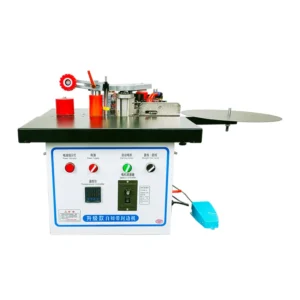
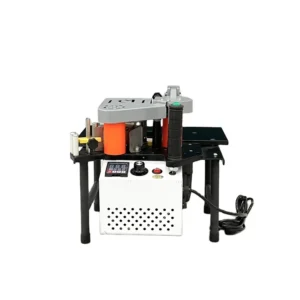
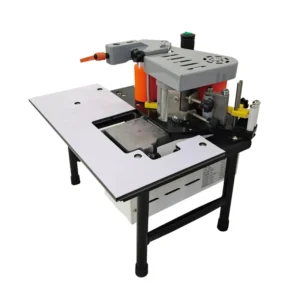
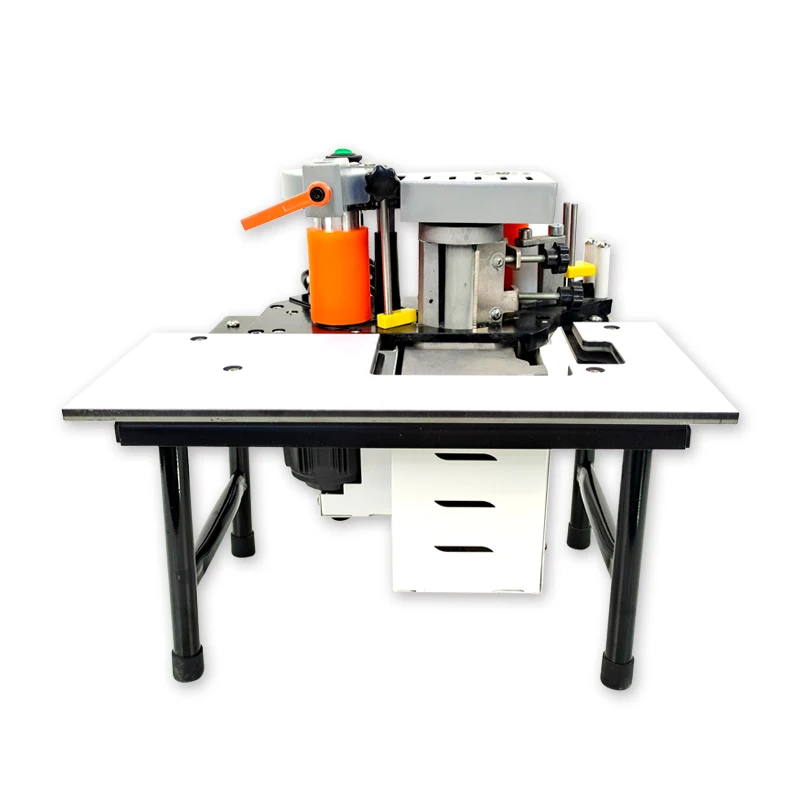
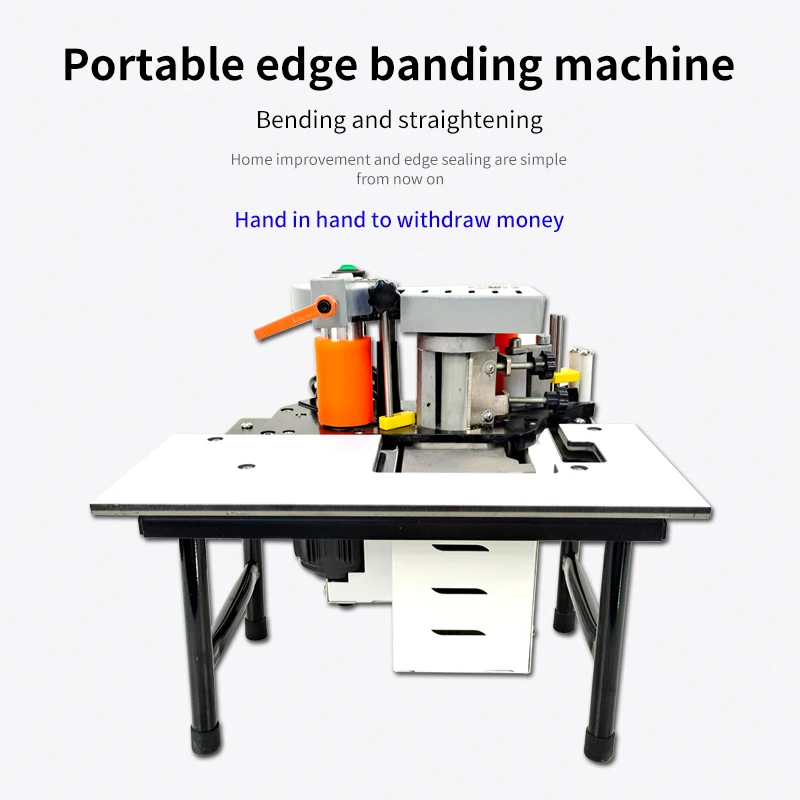
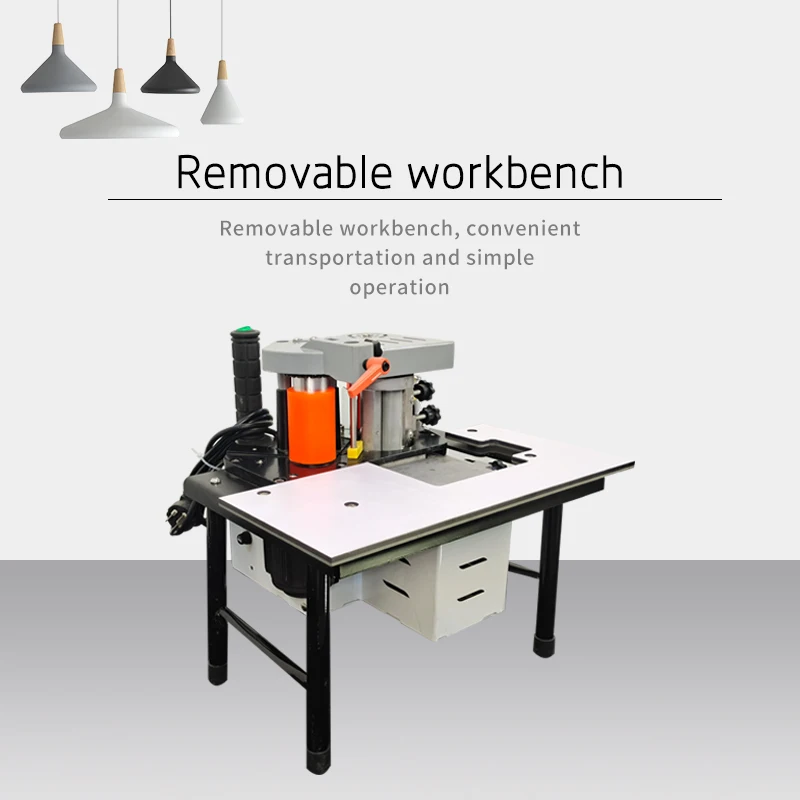
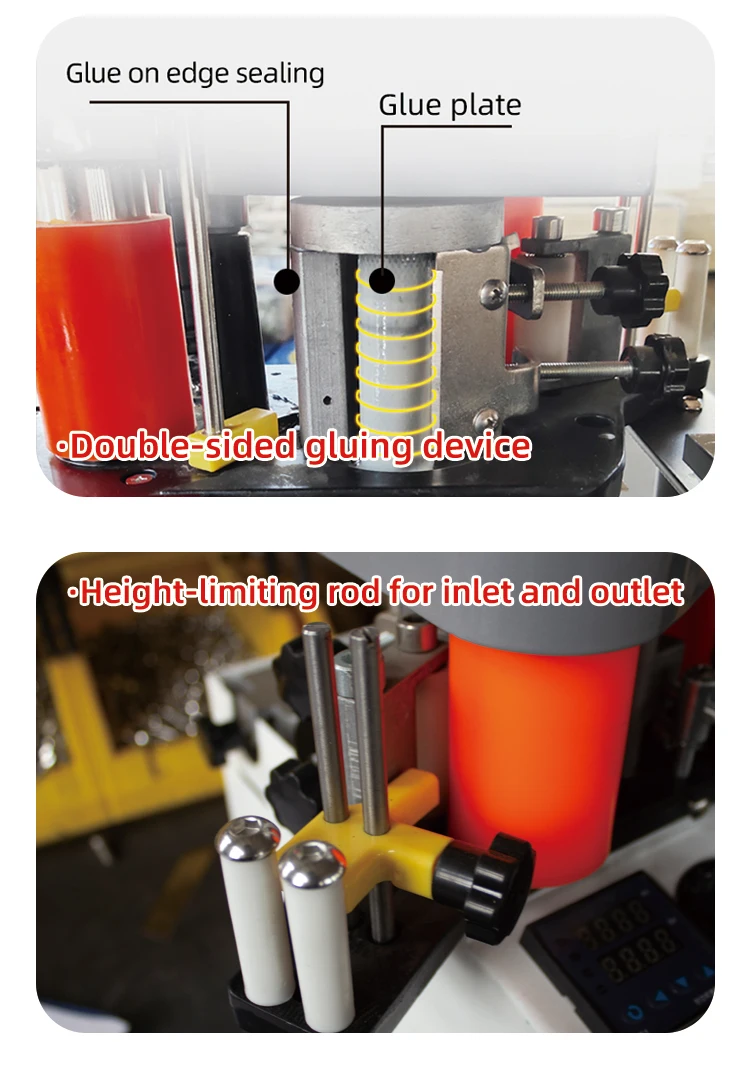
Compact Dual-Edge Capability — the ST-30 portable edge banding machine handles both straight and curved profiles within a single 12 kg unit, letting small workshops evaluate edge quality before scaling into a full automatic line.
Technical Specifications
| Parameter | Value |
|---|---|
| Model | ST-30 |
| Product Type | Portable Edge Banding Machine |
| Total Power | 1000W |
| Voltage | 220V / 380V / customization |
| Frequency | Confirm with manufacturer |
| Edge Banding Type | Curved and straight edge |
| Suitable Edge Banding Tape | ABS, PVC, Melamine, Veneer |
| Edge Banding Thickness | 0.3–3 mm |
| Edge Banding Height | 0–50 mm |
| Minimum Sheet Length | 25 cm |
| Minimum Sheet Width | 3 cm |
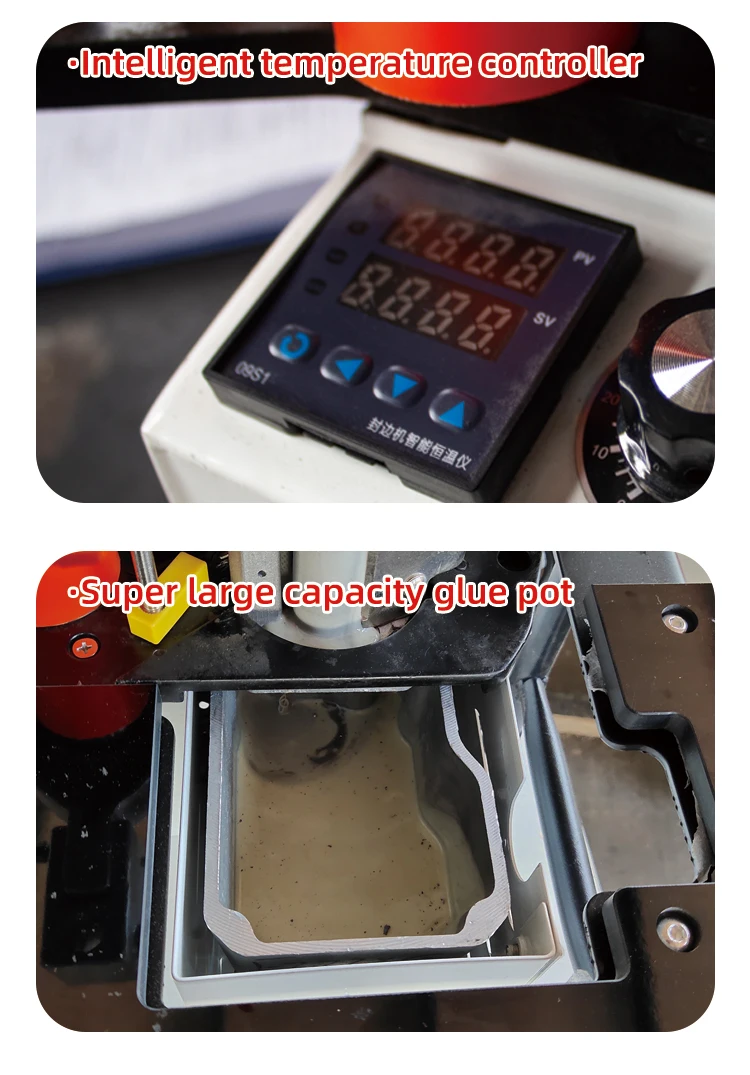
| Glue Pot Capacity | 1000 ml |
| Edge Power | 20W |
| Air Source Pressure | 0.5–0.8 MPa |
| Product Size (L×W×H) | 38 × 35 × 35 cm |
| Product Weight | 12 kg |
| Assembly State | Portable, single-unit operation |
| Language Options | Chinese, English; customizable to Spanish or other languages |
| Plug Options | EU, USA, AU, UK |
| Key Features | Dual curved/straight capability, voltage and plug customization, multilingual control panel options |
Application Suitability
| Application | Material or Output |
|---|---|
| Small-batch furniture panel edge banding | MDF, particleboard, plywood with ABS or PVC tape |
| On-site interior decoration fitting | Melamine-faced board and veneer edge banding on curved cabinet components |
| Joinery startup evaluation runs | Straight and curved edge samples on actual substrate before committing to a full automatic line |
| Repair and rework of damaged edges | Veneer and PVC tape on pre-assembled cabinet doors and drawer fronts |
Why the Voltage Question Must Come Before the Order
Confirming local voltage and frequency before placing an order prevents a machine from arriving unusable on the workshop floor.
In my experience installing lines across different African regions, I have seen portable edge banders shipped with a fixed 380V three-phase motor into workshops that only had single-phase 220V supply available. The result is a machine that sits idle while the buyer arranges a transformer or rewires the shop — delays that push back production schedules and sour the relationship before the first panel is edged. The ST-30 portable edge banding machine manufacturer offers voltage customization as a standard configuration step, meaning the buyer specifies the destination market’s electrical standard before the unit leaves the factory. Frequency mismatches are equally disruptive; a 60 Hz motor running on a 50 Hz supply loses torque and overheats under sustained load [NEED_CITE: voltage and frequency standards by export market]. Getting these two parameters right at the quotation stage is the single most effective way to avoid commissioning failures.
Dual Edge Profiles in a Footprint You Can Carry
Most entry-level edge banders handle straight edges only, forcing a workshop to buy a second unit or outsource curved components. The ST-30 covers both curved and straight profiles within the same portable chassis, which means a small furniture maker can edge a radius-cut cabinet door and a straight shelf panel in the same session without changing machines. This dual capability matters most during the prototyping phase, when a joinery startup is testing different panel shapes and does not yet know which profiles will dominate production.
Matching Glue Temperature to the Actual Substrate
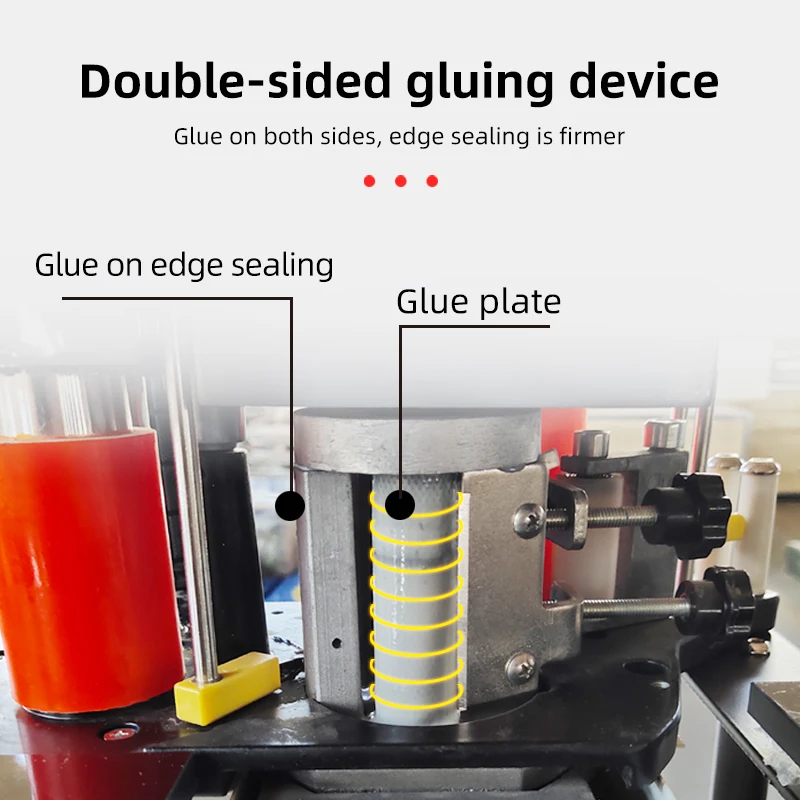
Running melamine tape on particleboard demands a different glue pot temperature than running veneer on plywood, and the gap between the two is enough to cause adhesion failure if the operator does not adjust. I always run a test piece on the customer’s actual board stock and write the temperature and feed parameters into the handover sheet. The 1000 ml glue pot on this portable edge banding machine holds enough adhesive for intermittent small-batch work, and it reaches working temperature within a typical warm-up window suited to a workshop that is not running continuous shifts.
What the Thickness and Height Range Means Downstream
The 0.3–3 mm edge banding thickness range covers the tapes most commonly used in furniture and interior fit-out: thin melamine for cost-sensitive carcass work, standard PVC for visible cabinet doors, and thicker ABS or veneer for premium surfaces. The 0–50 mm edge banding height accommodates most panel thicknesses encountered in casegoods and shelving. These two ranges together determine whether the edged panel can move directly to trimming and polishing or requires manual rework — a detail that directly affects assembly accuracy downstream [NEED_CITE: edge banding tolerance standards for furniture assembly].
The Hidden Cost of Skipping the Sample Test
Ordering a portable edge bander on spec alone, without running a sample on the actual board and tape combination used in production, leads to glue-line failures that only appear after the panels are assembled into finished cabinets. I have seen entire batches of wardrobe doors returned from site because the edge lifted under humidity — a problem that a ten-minute test with the customer’s own substrate would have revealed before the machine was loaded for shipping. The financial hit is not the tape or the glue; it is the labor of disassembly, re-edging, and rescheduling the installation crew [NEED_CITE: common causes of edge banding adhesion failure in humid climates].
Why Procurement Through This Channel Works
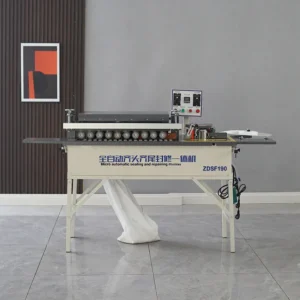
The ST-30 sits within a broader edge banding family that ranges from this portable unit up to full-function pre-milling automatic lines, so a workshop can scale without switching suppliers. Voltage, plug type, and control panel language are configured at the quotation stage rather than treated as afterthoughts. The four-stage quality control process covers incoming material, in-process assembly, finished product testing, and pre-shipment verification, with a factory test record generated on the buyer’s specified panel stock. An engineer reviews the buyer’s production scope and returns a formal configuration proposal, ensuring the portable unit is recommended only where it genuinely fits the workload rather than being sold into a volume it was never designed to sustain.
Documentation & Verification
- CE declaration of conformity matching the ST-30 portable unit configuration
- ISO 9001 certificate covering the manufacturing facility
- Electrical schematic with confirmed voltage, frequency, and plug type for destination market
- Factory test record run on buyer-specified panel thickness and edge tape before dispatch
- Operation and maintenance manual provided in the agreed language at time of order
- Spare parts list with recommended consumables for the first year of operation
Installation, Commissioning & Support
- Requires a stable workbench or dedicated stand to support the 38 × 35 × 35 cm footprint and 12 kg weight
- Power supply must match the confirmed voltage and include a dedicated circuit rated above the 1000W total load
- Air compressor connection needed at 0.5–0.8 MPa for the pneumatic feed and pressure components
- First-run parameter setting includes glue pot temperature calibration on the buyer’s actual board and tape stock
- Operator training covers tape loading, speed adjustment, and curved vs. straight edge setup procedures
- Consumable spare parts include glue pot seals, feed rollers, and trimming blades specific to this portable unit
What to Include in Your Inquiry
To receive an accurate configuration and quotation, share the panel substrates you work with most often, the edge tape materials and thicknesses you plan to use, and the electrical voltage and frequency standard at your facility. Let us know the control panel language your operators require and whether you need a sample test run on your own board stock before the unit ships.
Frequently Asked Questions
Q: How do I verify edge banding quality on my substrates before committing?
A: Request a sample test using your own panel material and edge tape. The factory runs the ST-30 on your substrate, records the glue temperature and feed parameters, and ships the test pieces for your inspection. This confirms adhesion and edge finish before you place a full order.
Q: Can the voltage and plug be customized for my country?
A: Yes. The ST-30 is available in 220V, 380V, or other voltages, with plug options for EU, USA, AU, and UK markets. Specify your local voltage and frequency during the inquiry stage so the motor and electrical components are matched before assembly begins.
Q: What languages are available for the control panel and manual?
A: Standard options include Chinese and English, with customization available for Spanish and other languages. Confirm the required language at quotation stage so the operation manual, control labels, and any digital interface are prepared in the correct version before dispatch.
Q: When should I choose this portable unit instead of a full automatic edge bander?
A: The ST-30 suits small workshops, on-site interior fit-out, and joinery startups evaluating edge quality before investing in a stationary line. If your daily panel volume requires continuous feed and automatic trimming, an engineer can recommend the appropriate full-function model from the same product family.