
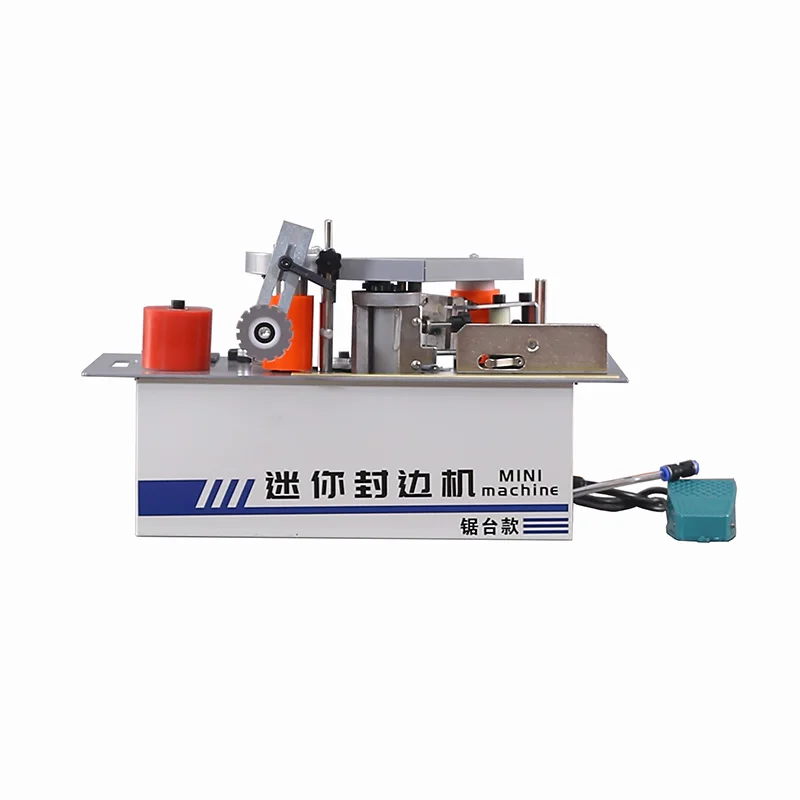
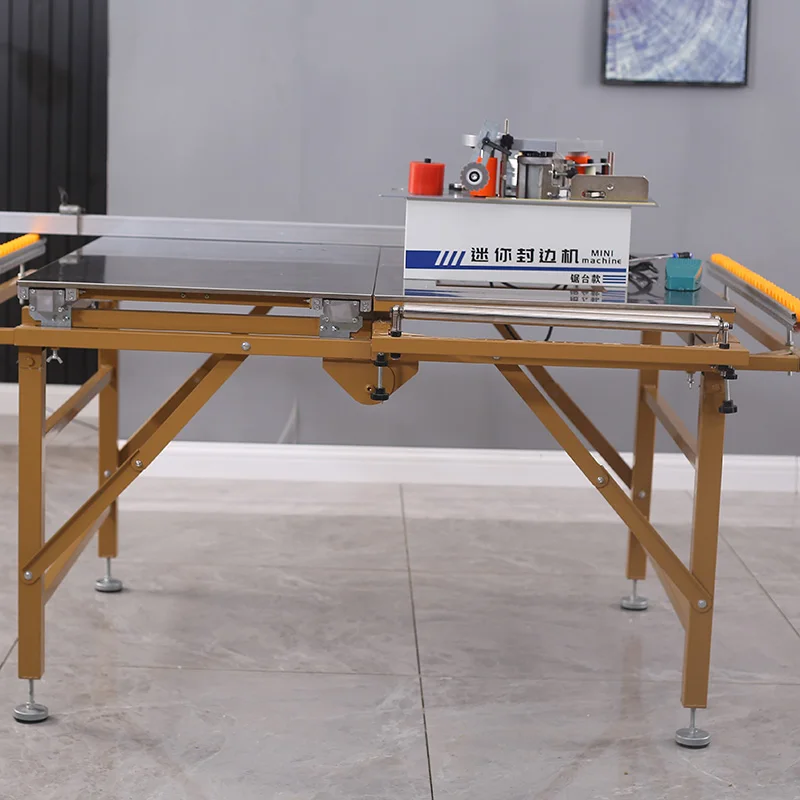
Description
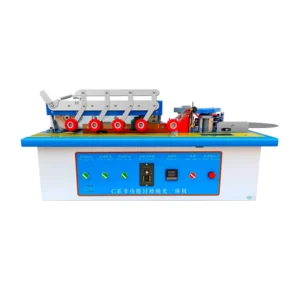
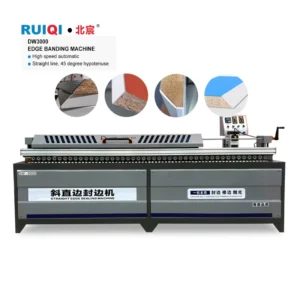
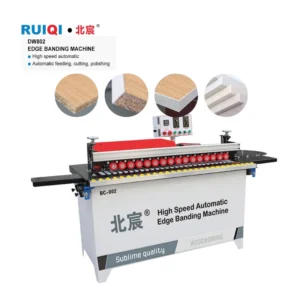
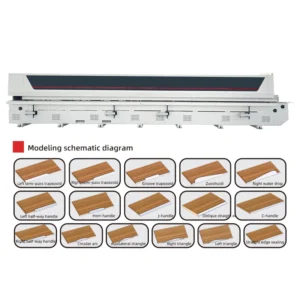
Complete Machine Range Visibility — from this portable edge bander through full-function pre-milling lines, every model tier is mapped so workshops can scale within one product family without switching suppliers.
Technical Specifications
| Parameter | Value |
|---|---|
| Product Type | Portable Edge Banding Machine |
| Voltage | 220V |
| Rated Power | 825W |
| Glue Pot Capacity | 1000 ml |
| Edge Banding Speed | 0-10 m/min |
| Heating Time | 5-10 min |
| Air Pressure Requirement | 0.4-0.6 MPa |
| Edge Pattern | Curves, straight lines, special shaped lines |
| Overall Dimensions | 50×30×27 cm |
| Net Weight | 13.5 kg |
| Control System | Manual operation |
| Assembly State | Portable / benchtop unit |
| Warranty | 1 year |
Application Suitability
| Application | Material or Output |
|---|---|
| Small-batch custom furniture | MDF, plywood, particleboard panels with curved or straight edges |
| On-site edge repair and finishing | Solid wood panels, PVC and veneer edge banding |
| Joinery workshop transition | Low-volume production runs on shaped and flat panel components |
| Prototyping and sample making | Mixed substrate edge testing before committing to line production |
Why "Portable" Doesn’t Mean "Universal" — Matching the Machine to Your Actual Material
Confirming your edge banding material before shipment prevents weeks of commissioning delays.
A portable edge banding machine for sale often arrives at a workshop with factory-default glue temperature and pressure settings calibrated for standard PVC. When the operator loads real wood veneer or melamine-impregnated paper, the bond either starves or overflows. I have seen this exact mismatch happen on a benchtop unit shipped to a small cabinet shop — they spent two weeks adjusting parameters that should have been set before the crate left the factory. The glue pot temperature, feed speed, and roller pressure all shift depending on whether you are running thin PVC, thick ABS, or natural veneer [NEED_CITE: edge banding material compatibility parameters].
Where This Benchtop Unit Sits in a Full Workshop Progression
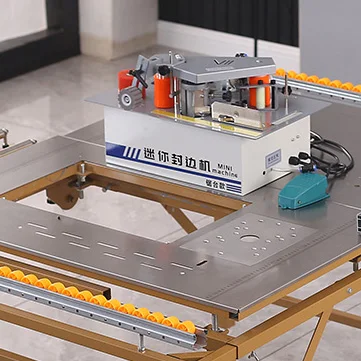
This portable edge bander occupies the entry point of a broader machine range. Workshops that handle ten or fifteen curved panels a week — custom arches, shaped cabinet doors, one-off furniture pieces — need a machine that handles variable edge geometry without the footprint of a full automatic line. A portable edge banding machine for sale at this tier gives those shops mechanised gluing and trimming while preserving bench space for other operations.
Knowing When to Move Up to an Automatic Edge Bander
The transition point is throughput and consistency demand. Once daily volume moves beyond small-batch curved work into repeat panel runs, the manual trimming step becomes a bottleneck. The full-function automatic models in the same catalogue handle pre-milling, multi-station trimming, scraping and buffing in a single pass. Because the portable unit and the automatic line share the same supplier ecosystem, upgrading later means staying within one technical support channel and one spare parts system rather than onboarding a second vendor [NEED_CITE: production line scaling stages for panel furniture].
Reading the Specs That Matter for Edge Quality
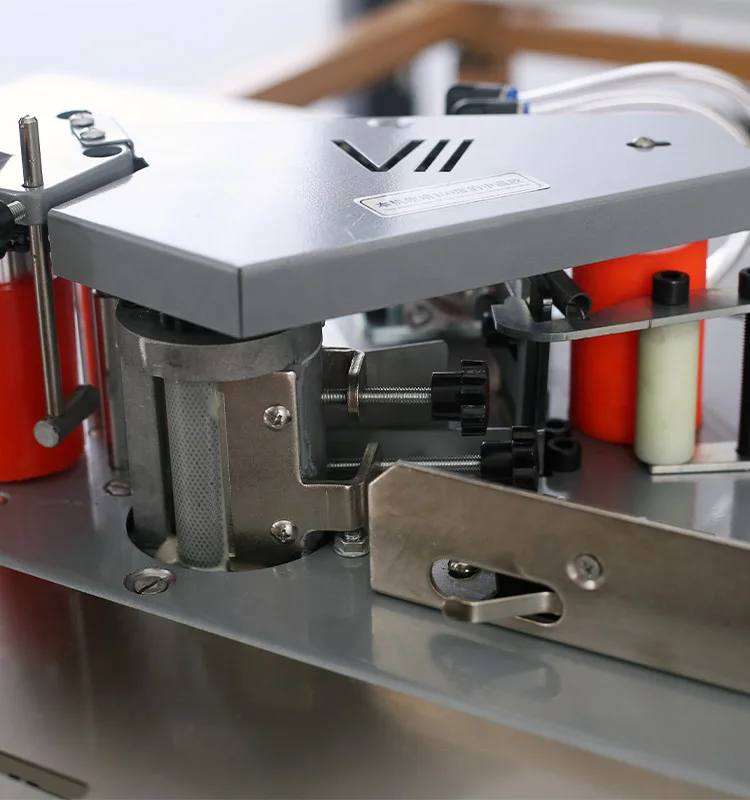
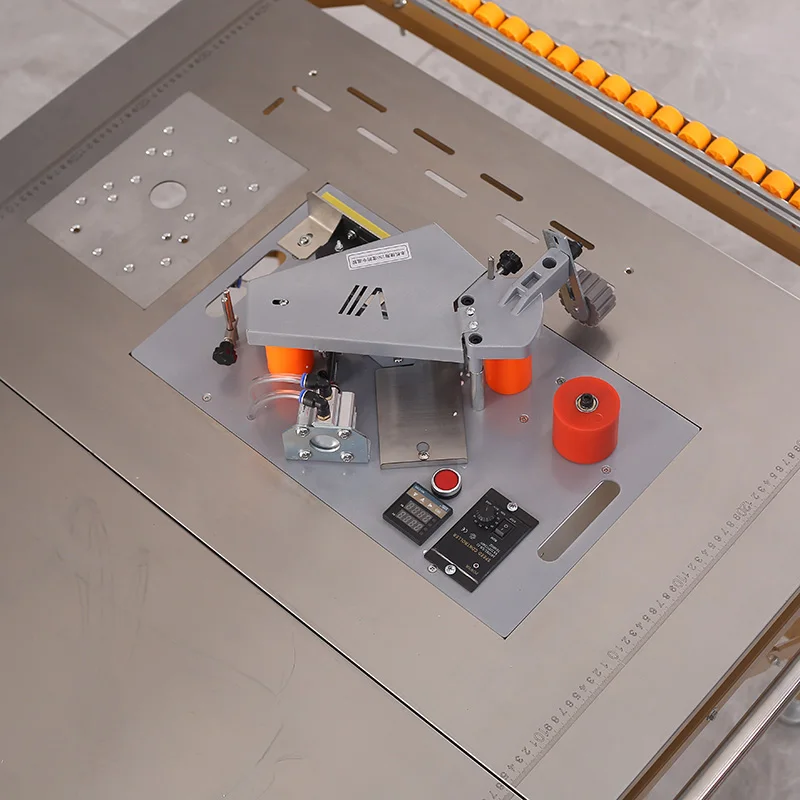
The 1000 ml glue pot capacity determines how long the machine can run before requiring a refill — at lower feed speeds on short curved components, this translates to a full morning of intermittent work. The 0-10 m/min variable feed speed lets the operator slow down on tight curves where the banding material needs more dwell time against the panel edge, then speed up on long straight runs. The 825W rated power and 220V single-phase supply mean the unit plugs into a standard workshop outlet without requiring a dedicated three-phase circuit or electrical panel modification. Air pressure at 0.4-0.6 MPa drives the pneumatic roller system that presses the banding against the substrate — insufficient compressor output will show up immediately as inconsistent bond lines on the panel edge.
The Cost of Skipping the Material Confirmation Step
When a workshop orders a portable edge banding machine for sale without specifying whether they run PVC, ABS, melamine, or wood veneer, the factory ships with baseline settings that may not match. The result is visible glue lines on some substrates, banding that peels at the radius of a curve, or adhesive that chars inside the pot because the temperature sits too high for thin material. These issues surface during commissioning rather than during the factory test, meaning the operator is troubleshooting alone with a manual in a language they may not fully read [NEED_CITE: commissioning failure causes in woodworking machinery imports].
What You Get When the Machine Ships From This Range
The portable unit is configured with the same voltage confirmation process applied to the full automatic lines — your local supply voltage and frequency are verified before the machine enters production. Customisation from 110V to 440V is available across the catalogue, so this benchtop model can be matched to your workshop electrical standard. The four-stage quality control process covers incoming material inspection, in-process assembly checks, finished product testing, and pre-shipment verification with your panel material. Engineer-led configuration recommendations ensure the portable unit is the correct tier for your current volume, with a documented path to the next model when throughput grows. Factory visits are supported for buyers who want to see the assembly line and run sample panels before committing to an order.
Documentation & Verification
- Electrical schematic confirming 220V wiring or your specified custom voltage
- Factory test record using your panel material and edge banding type
- Operation manual in your agreed language covering glue temperature adjustment
- Spare parts list identifying consumable rollers and glue pot components
- Packing photographs showing crating before dispatch
Installation, Commissioning & Support
- Benchtop placement requires a flat stable surface rated for 13.5 kg plus operator tooling
- Standard 220V single-phase outlet on a dedicated circuit matching 825W draw
- Compressor connection verified at 0.4-0.6 MPa before first glue application
- Initial glue temperature calibration run with your actual PVC or veneer material
- Pneumatic roller pressure adjustment demonstrated for both curve and straight feeds
- Consumable spare roller and scraper blade kit included for first-year maintenance
Preparing Your Enquiry
To configure this portable unit correctly, share the substrate types and thickness range you work with, the specific edge banding materials in your shop — whether PVC, ABS, melamine, or wood veneer — and your local voltage and frequency. If you are evaluating where this benchtop model fits against an automatic machine, include your typical weekly panel count and the mix of curved versus straight edges. Sample processing tests with your own materials can be arranged before shipment to verify bond quality and edge finish.
Frequently Asked Questions
Q: What panel thickness and edge banding materials does this portable unit handle?
A: The machine processes MDF, plywood, particleboard, and solid wood panels. It accepts PVC, ABS, melamine, and wood veneer edge banding. Panel thickness range and minimum curve radius depend on the specific banding material, so we confirm these parameters against your sample before building your unit. Request a specification sheet with your material details included.
Q: How does this model fit within the full edge bander range, and when should I upgrade?
A: This portable unit handles low-volume curved and straight edge work. When daily panel counts increase and consistent edge quality across repeat runs becomes critical, the catalogue includes automatic machines with pre-milling, multi-station trimming, and buffing. The upgrade path stays within one supplier and one support channel.
Q: Can voltage and control panel language be customised for my country?
A: Voltage is configurable from 110V to 440V to match your local electrical supply. Control documentation and operation manuals are produced in your specified language. We confirm voltage and frequency before production starts, so the machine arrives ready to connect without transformer adapters.
Q: What is the difference in edge quality between this portable unit and a full-function automatic edge bander?
A: The portable unit provides manual trimming after gluing, which works for small batches where the operator adjusts each panel. Automatic models perform pre-milling, trimming, scraping, and buffing in one pass, producing uniform edges across high-volume runs. The choice depends on your weekly panel count and tolerance requirements for downstream assembly.
Q: How do I arrange a factory visit or sample processing test before ordering?
A: Send your panel material and edge banding samples to the factory. We run a processing test on the portable unit with your materials, document the glue temperature and feed speed settings, and share the results before you confirm your order. Factory visits for in-person inspection are also available.