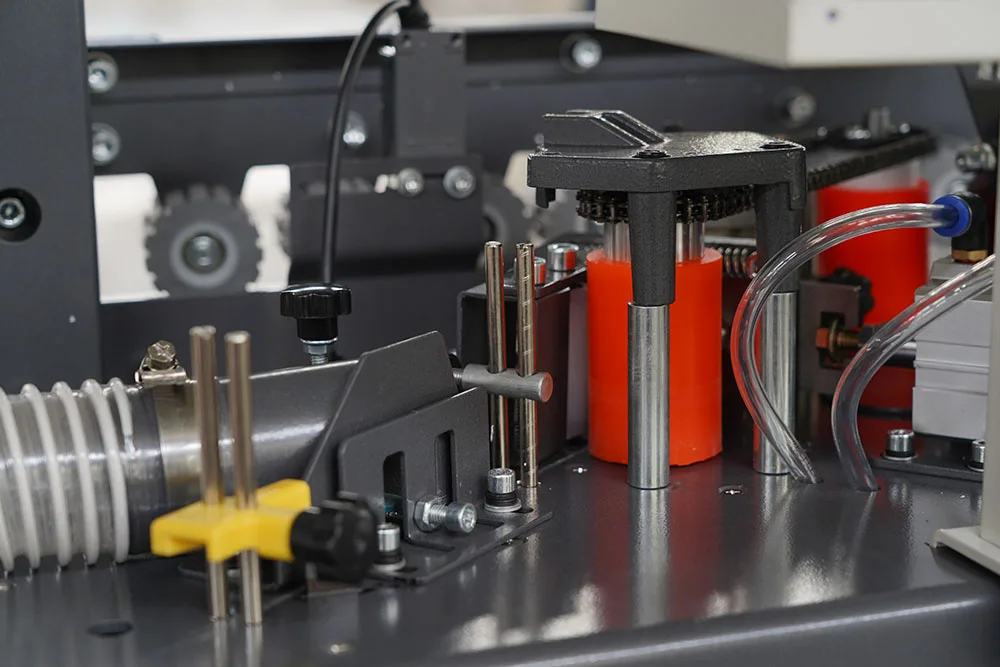
Description
The Complete Edge Banding Family Under One Roof
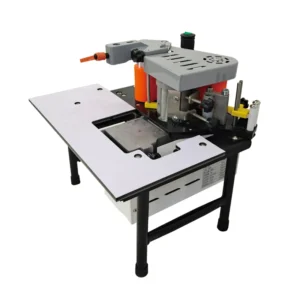
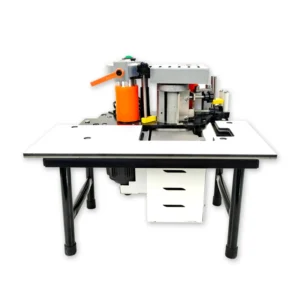
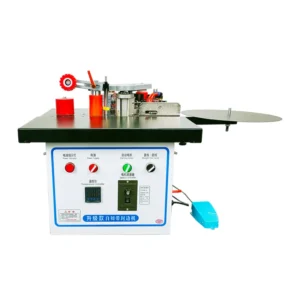
In-house manufacturing depth — Every edge banding model, from the compact WF-2000 to full-function pre-milling units, is built and verified on the same production floor in Ningjin, giving buyers a single point of accountability across the entire range.
Technical Specifications
| Parameter | Value |
|---|---|
| Model | WF-2000 (WF-2000H variant also available) |
| Overall Dimensions (L×W×H) | 2100×600×630 mm (WF-2000); 2100×600×1100 mm (WF-2000H) |
| Net Weight | 137 kg (WF-2000); 149 kg (WF-2000H) |
| Panel Thickness Range | 18–25 mm |
| Edge Strip Thickness | 1.2 mm |
| Rated Voltage | 220V (configurable for other markets on request) |
| Rated Power | 6.17 kW |
| Rated Air Pressure | 0.4–0.6 MPa |
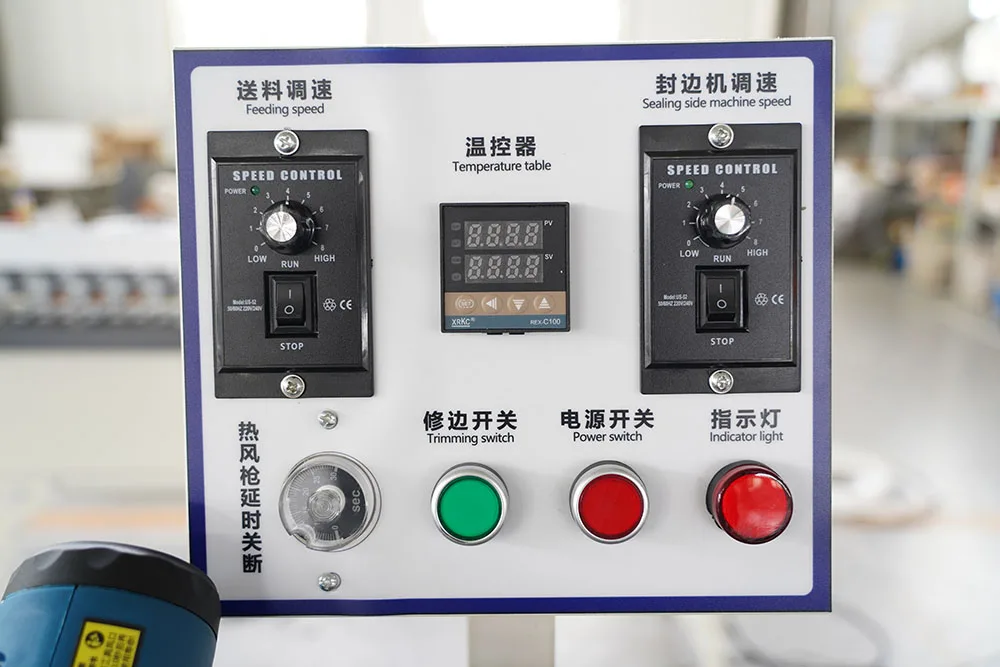
| Feed Speed | 0–14 m/min |
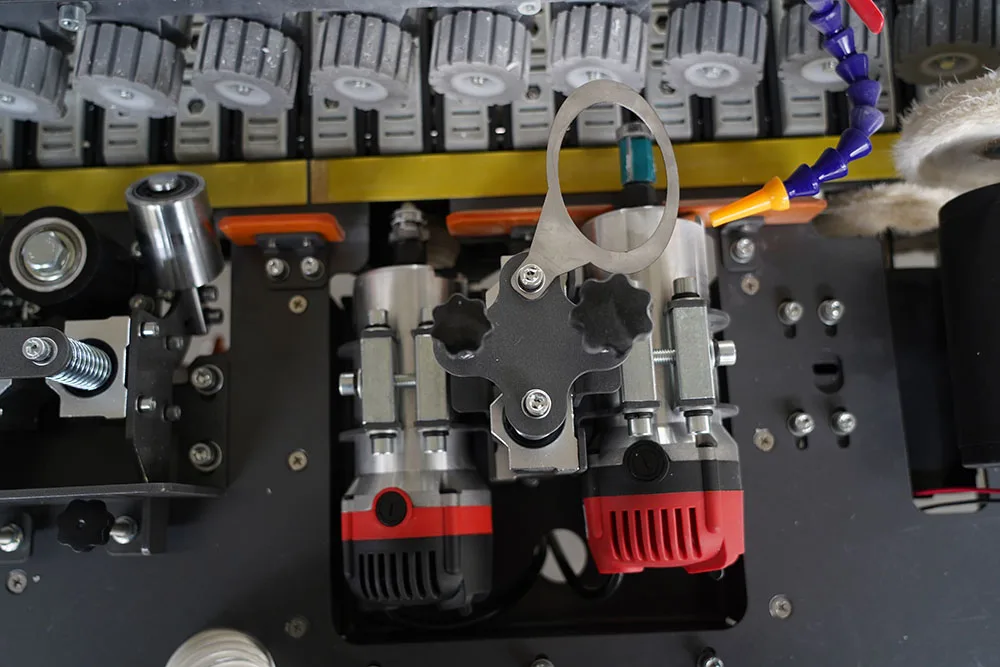
| Trimming Stations | Elastic profiling trimming |
| Gluing Method | Hot air heating throughout the process |
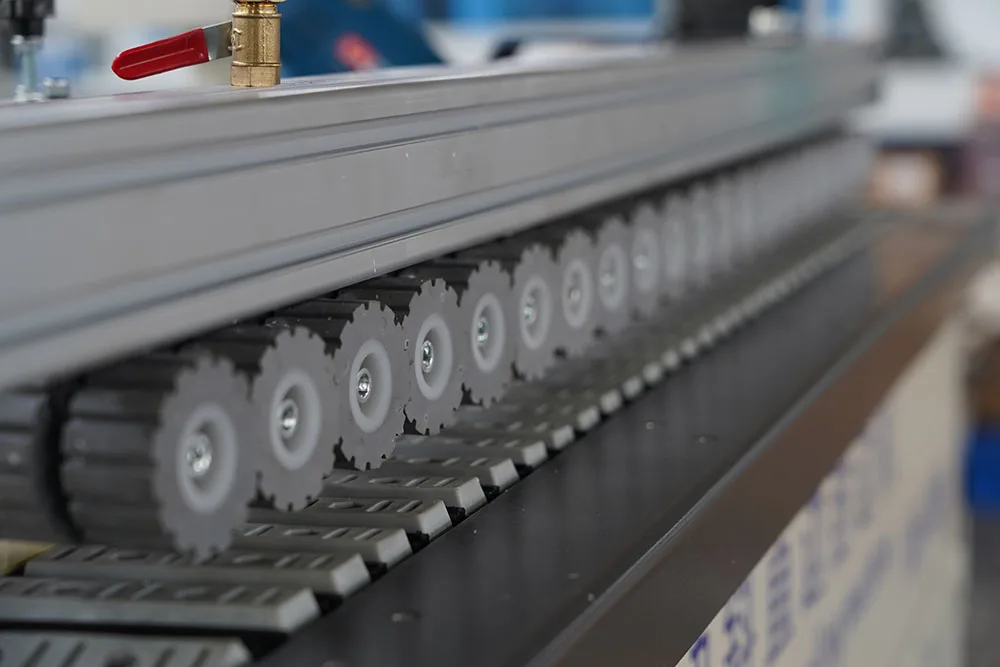
| Pressing System | 8 pressing rollers |
| Dust Extraction | Self-contained vacuum device |
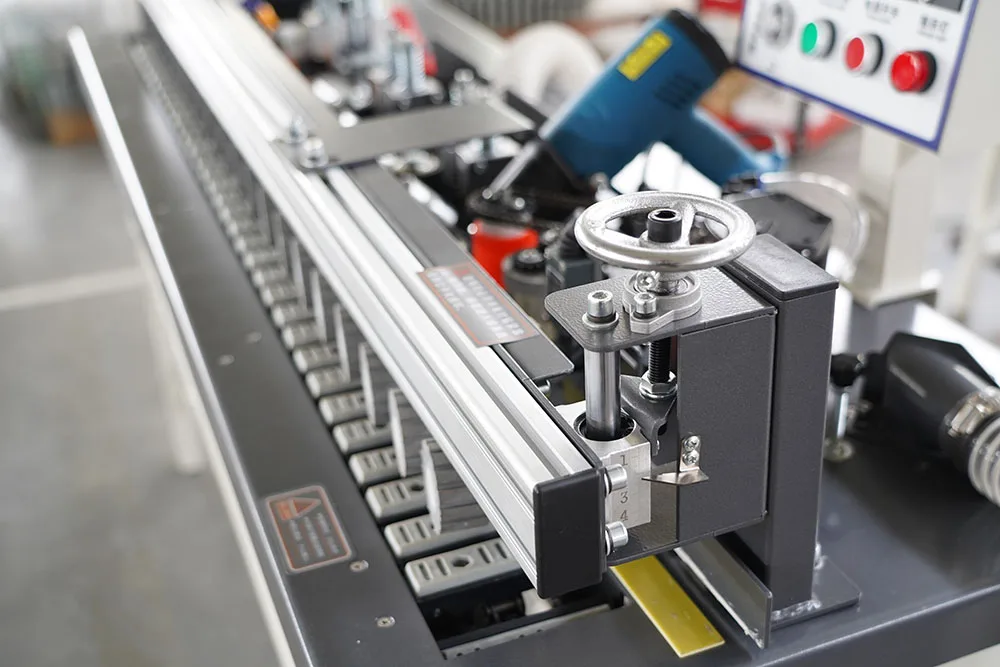
| Pressure Beam | Aluminum alloy, manually adjustable |
Application Suitability
| Application | Material or Output |
|---|---|
| Portable edge banding for on-site joinery | MDF, particleboard, and plywood panels in compact or mobile workshop environments |
| Straight and 45-degree slanted edge finishing | Custom furniture and cabinet components requiring angled edge strip application |
| Edge banding with integrated slotting | Panel components needing grooved edges for downstream assembly and hardware fitting |
| Low-volume production and prototyping | Small batches where a stationary full-size edge bander is not justified by throughput |
What a Portable Edge Bander Cannot Replace in a Growing Workshop
Matching the machine tier to actual production volume prevents premature wear and inconsistent edge quality.
When a workshop buys an entry-level portable edge bander to handle continuous production volumes, the machine was never engineered for that duty cycle. Bearings, heating elements, and pressing rollers degrade faster under sustained load, and edge adhesion begins to vary from panel to panel. A Portable Edge Banding Machine manufacturer typically designs compact units like the WF-2000 for intermittent use, on-site work, and short runs. [NEED_CITE: machine duty cycle classifications and recommended operating hours per shift] The mismatch rarely shows up in the first week — it surfaces after several hundred panels, when rework starts eating into margins and delivery schedules slip.
Mapping Each Model Tier to the Right Production Stage
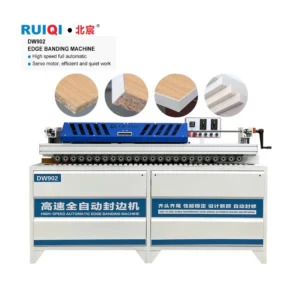
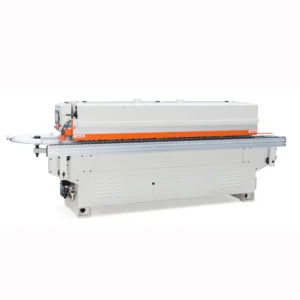
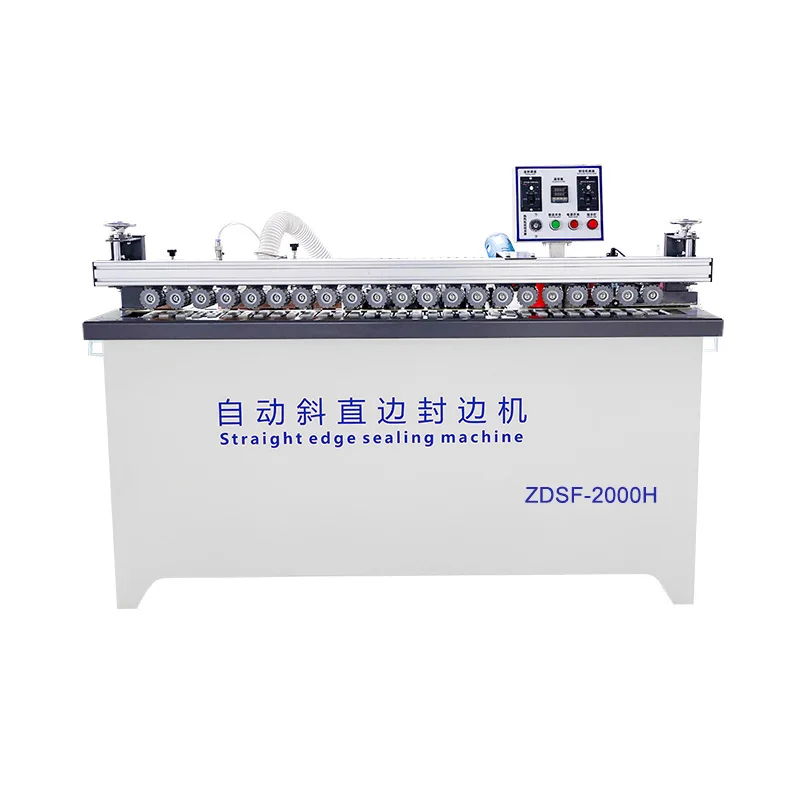
The edge banding range here is structured so that a workshop can identify exactly where each model sits. The WF-2000 occupies the portable tier — designed for joinery operations that need mobility, limited floor space, or occasional edge finishing alongside hand-work. As batch sizes grow and edge consistency becomes a downstream assembly requirement, the lineup extends through mid-range stationary models and up to full-function pre-milling edge banders. Each step up adds stations, feed speed, and automation without requiring the buyer to learn a new supplier’s support system.
Why the Range Matters More Than Any Single Model
A distributor evaluating this catalog sees a ladder, not a single product. The Portable Edge Banding Machine manufacturer offers configurations from 6 kW compact units to multi-station production machines, meaning a regional dealer can serve startup workshops and established panel processors from one source. [NEED_CITE: woodworking machinery import strategies for emerging markets] Voltage customization from 110V to 440V and multilingual control panels are available across the family, so a single purchase order can cover different end-markets without specification conflicts.
How Feed Speed, Pressing, and Gluing Shape Edge Quality
The 0–14 m/min feed speed range on the WF-2000 is deliberately low compared to stationary units — this is by design, not limitation. At controlled feed rates, the 8 pressing rollers maintain consistent contact pressure across the edge strip, which matters most on MDF and particleboard where substrate density varies. The hot air heating method keeps the adhesive at a stable working temperature throughout the gluing process, avoiding the cold spots that cause edge lift on thicker panels. The aluminum alloy pressure beam, manually adjustable for the 18–25 mm panel thickness range, provides a flat reference surface that directly affects how tightly the edge strip bonds to the panel edge. A portable edge banding machine manufacturer builds these parameters around the assumption that the operator will adjust settings per batch rather than relying on automated presets.
The Cost of Ordering a Single Machine Without Seeing the Lineup
Buying one portable unit today and then sourcing a stationary machine from a different manufacturer later creates compatibility headaches. Feed heights, edge strip thickness capacities, and maintenance part numbers diverge, and the second supplier has no record of the first machine’s configuration. [NEED_CITE: equipment compatibility issues in mixed-brand workshop setups] Operators trained on one control panel layout must relearn another, and spare parts inventory doubles. These are not dramatic failures — they are slow accumulations of inefficiency that only become visible when a workshop reviews its maintenance spend across two unrelated machine platforms.
What Manufacturing Depth Means for Your Order
Every model in this range is built in the same facility, which means the WF-2000 shares quality control processes with the production-grade units. The four-stage QC system — incoming material, in-process, finished product, and pre-shipment verification — applies regardless of whether you are ordering a single portable unit or a full line. Voltage confirmation happens before production starts, not after the machine is crated, which eliminates the scenario where a 220V machine arrives at a 380V site. The patented cutting mechanisms used on higher-tier models are developed on the same shop floor, so the portable tier benefits from the same engineering standards even where its station count is lower. Custom logo and private label options extend across the full catalog, not just the expensive models.
Documentation & Verification
- Machine specification sheet with confirmed tolerance and feed rate for the WF-2000 tier
- Electrical schematic and voltage confirmation document matched to your local grid supply
- Factory test record showing edge banding results on your specified panel thickness range
- Operation and maintenance manual provided in your agreed language before shipment
- Packing photographs and customs documentation support for your import process
Installation, Commissioning & Support
- Requires a dedicated 220V circuit rated for 6.17 kW continuous load with proper grounding
- Self-contained vacuum device means no external dust extraction ductwork needed at setup
- 0.4–0.6 MPa air supply required — confirm compressor capacity before first run
- Manual pressure beam adjustment calibrated to your 18–25 mm panel range during commissioning
- Hot air heating system verified on your edge strip material before handover
- Spare parts list covers pressing rollers, trimming blades, and heating elements specific to the WF-2000
Before You Request a Quote
To configure the right model from this range, share your panel material types and the thickness range you work with most often. Confirm your site voltage and frequency so the electrical system is built to match — this step alone prevents the most common commissioning delays. Let us know whether you need the portable unit as a standalone machine or as part of a phased line expansion, and specify the operator language for the control panel.
Frequently Asked Questions
Q: How do I decide between the WF-2000 portable model and a full-size stationary edge bander?
A: The decision comes down to daily panel volume and floor space. The WF-2000 suits workshops running short batches, on-site joinery, or operations where the machine needs to be moved between workstations. If your output requires continuous feed at higher speeds and multiple trimming stations, a stationary model from the same range would be configured for that duty cycle. An engineer-led review of your throughput will point to the right tier.
Q: Where does the WF-2000 fit in the overall edge banding lineup, and what does the upgrade path look like?
A: The WF-2000 sits at the portable end of a family that extends through mid-range and full-function pre-milling models. Upgrading later means staying within the same manufacturer ecosystem — same voltage confirmation process, same documentation standards, and compatible spare parts philosophy. You change the machine tier without changing your supplier relationship.
Q: Can the WF-2000 be configured for my local voltage and frequency?
A: Voltage is confirmed before production begins, not after. The standard rated voltage is 220V, but customization across a range from 110V to 440V is available as standard practice. You provide your local supply specification, and the electrical schematic is built to match, with a confirmation document included in the shipment documentation.
Q: What panel materials and edge strip types does this model handle compared to higher-tier machines?
A: The WF-2000 handles MDF, particleboard, and plywood within its 18–25 mm panel thickness range, with edge strip thickness up to 1.2 mm and hot air gluing. Higher-tier models in the range add pre-milling stations, wider panel thickness accommodation, and compatibility with additional edge banding materials. The portable model covers the materials most common in small workshop and custom furniture production.
Q: Is a factory visit or sample processing test possible before placing an order?
A: Factory visits are welcomed and can include a sample processing test on your own panel material and edge strip. This lets you verify edge adhesion quality, trimming accuracy, and feed behavior on the exact substrates you will run in production, rather than relying on specification sheets alone.