Description
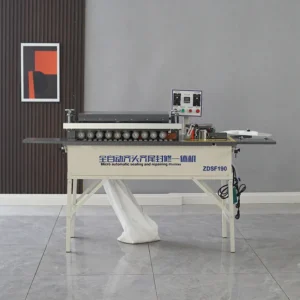
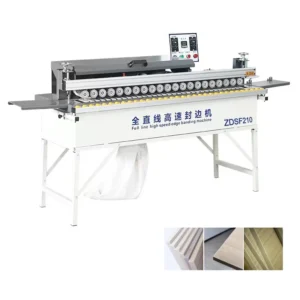
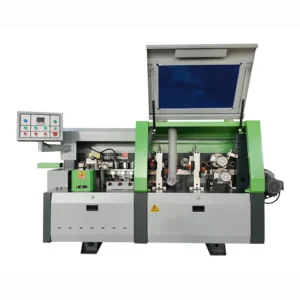
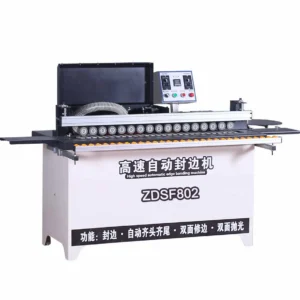
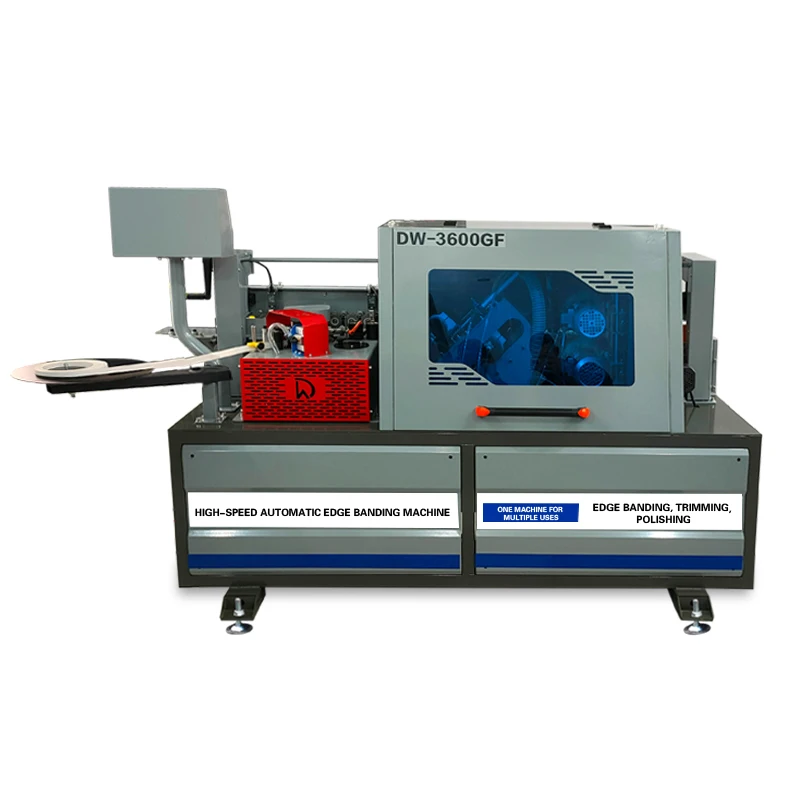
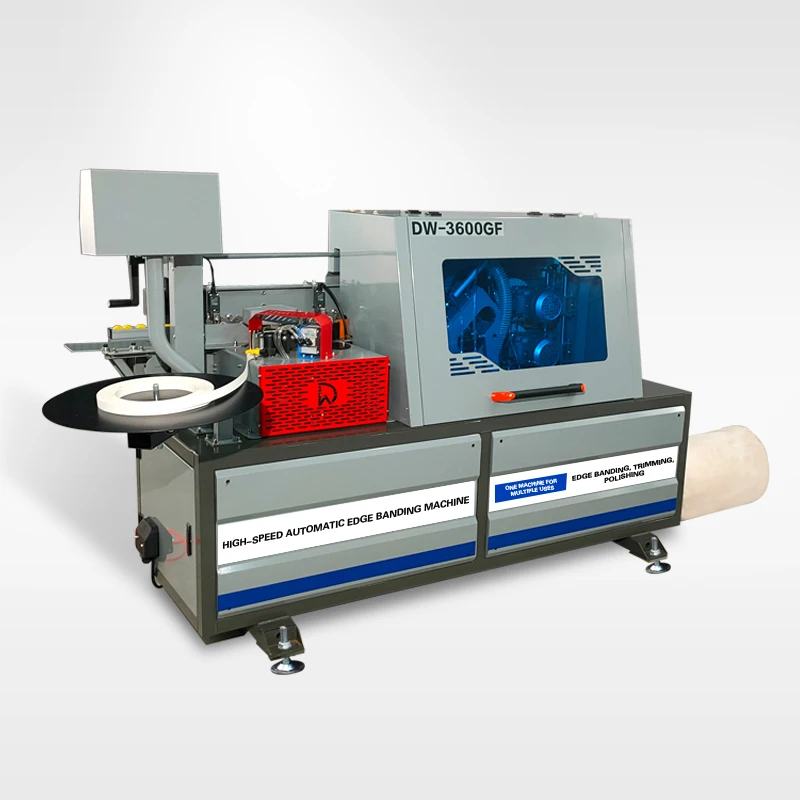
Patented cutting mechanisms — The DW3600 integrates Ruiqi’s proprietary trimming heads running at 24000 r/min, delivering verifiable edge finish across PVC and veneer banding within a single machine footprint.
Technical Specifications
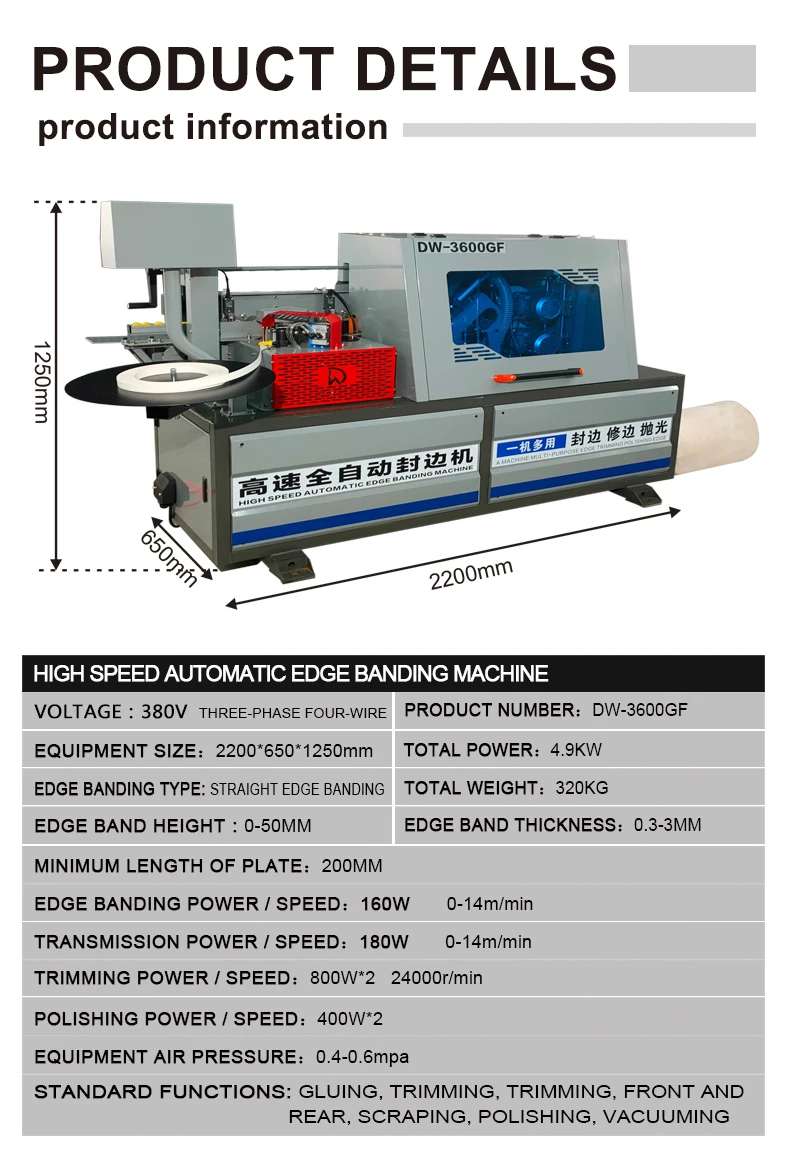
| Parameter | Value |
|---|---|
| Model | DW-3600GF |
| Product Type | High-speed Automatic Edge Banding Machine |
| Rated Power | 4.9 kW |
| Voltage & Frequency | 380V, three-phase four-wire (frequency not stated in source) |
| Overall Dimensions (L×W×H) | 2200 × 650 × 1250 mm |
| Net Weight | 320 kg |
| Edge Banding Type | Straight edge banding |
| Edge Band Height Range | 0–50 mm |
| Edge Band Thickness Range | 0.3–3 mm |
| Minimum Panel Length | 200 mm |
| Feed Speed | 0–14 m/min |
| Trimming Motor Power | 800 W × 2, 24000 r/min |
| Polishing Motor Power | 400 W × 2 |
| Air Supply Requirement | 0.4–0.6 MPa |
| Standard Functions | Gluing, trimming (front and rear), scraping, polishing, vacuuming |
| Language Options | Chinese and English standard; other languages customizable |
| Plug Options | EU, USA, AU, UK |
Application Suitability
| Application | Material or Output |
|---|---|
| Custom furniture panel edge banding | MDF, particleboard, plywood |
| Cabinet door and carcass finishing | PVC and veneer edge banding (0.3–3 mm) |
| Mid-volume panel processing workshops | Straight-edge automated finishing lines |
| Joinery workshops scaling from manual to automated | Solid wood panels and composite substrates |
Why the Voltage Question Should Come Before the Price
Electrical mismatch at arrival stalls commissioning for weeks, not days.
I once shipped an automatic edge banding machine for sale to a Middle East client without triple-checking their workshop frequency. The machine sat idle for three weeks waiting for a transformer while the installation crew burned through per-diem costs. That edge banding machine manufacturer lesson stuck: every DW3600 order now locks in voltage, phase configuration, and plug type before production begins. The 380V three-phase four-wire system here is standard, but frequency and local grid tolerance vary by market. Confirming these parameters upfront prevents the most common cause of delayed startup across export shipments [NEED_CITE: voltage and frequency standards by export market].
Where the DW3600 Fits in the Catalogue
The DW3600 sits between entry-level manual-feed banders and full-function pre-milling lines within Ruiqi’s edge banding range. It covers gluing through polishing in one pass, which positions it for workshops that have outgrown single-station machines but do not yet need pre-milling for heavy stock removal. This automatic edge banding machine for sale handles straight edges exclusively — no contour or soft-forming capability — making it a focused production tool rather than a general-purpose unit.
Multi-Station Workflow in a Compact Footprint
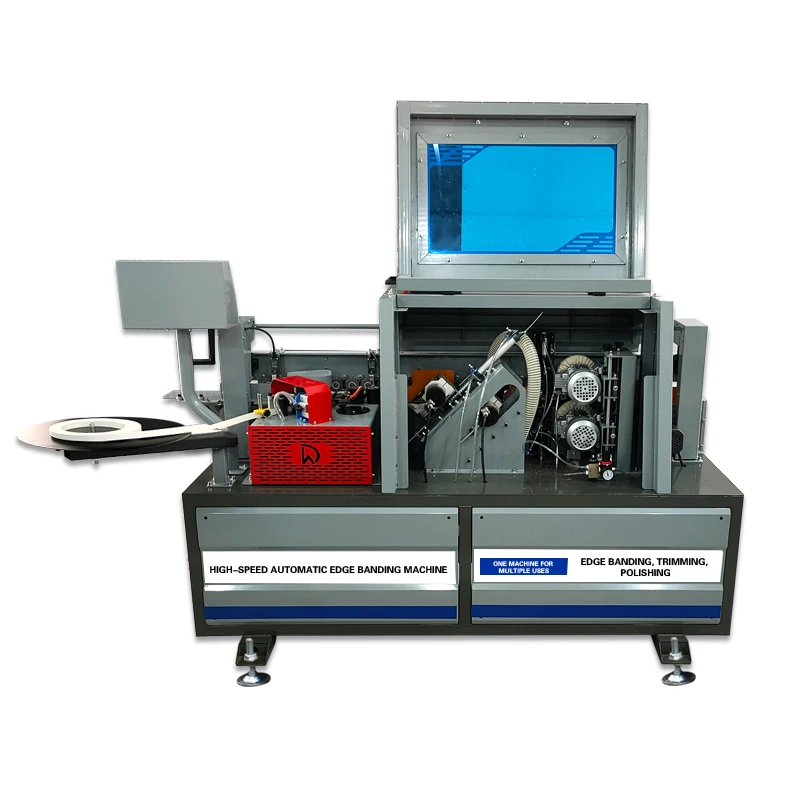
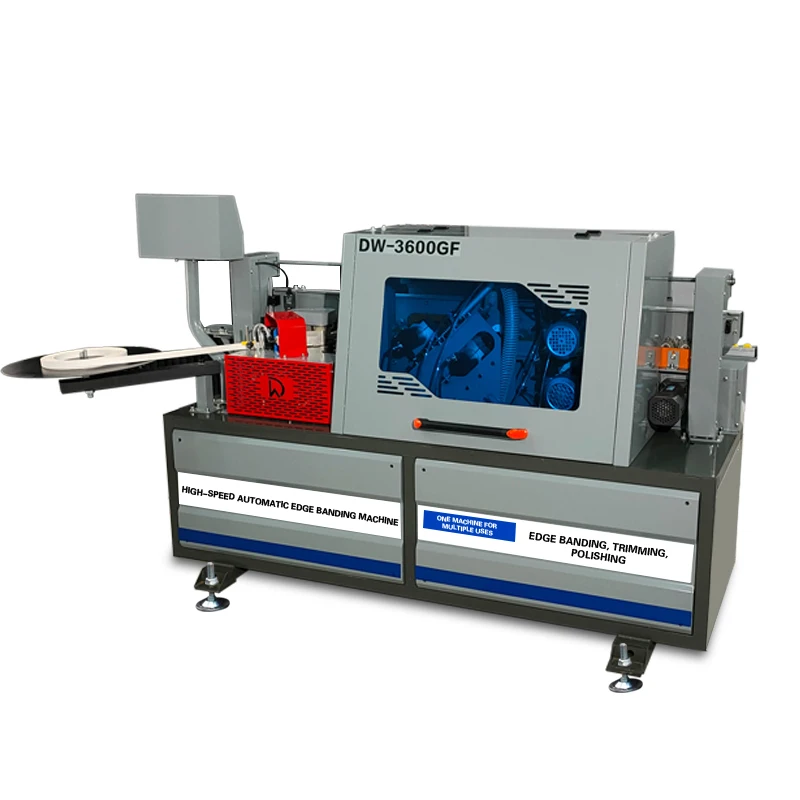
Six functions run sequentially within the 2200 × 650 × 1250 mm frame: gluing, front and rear trimming, scraping, polishing, and vacuuming. Workshops with limited floor space often cannot accommodate separate trimming and polishing stations. The DW3600 consolidates these into a single infeed-to-outfeed path, reducing material handling between operations. The 320 kg net weight means the machine can be repositioned with standard workshop equipment when production layout changes [NEED_CITE: CE machinery directive requirements for industrial equipment].
Feed Speed, Trimming RPM, and Edge Finish Quality
The 0–14 m/min feed speed range matches mid-volume production where operators need flexibility between careful feed on veneer banding and faster throughput on PVC. The dual 800 W trimming motors at 24000 r/min maintain cutting speed even at the upper feed range, which prevents tear-out on brittle PVC edges. The 0.3–3 mm band thickness range covers everything from thin veneer wraps to impact-resistant PVC used on worktops. Scraping and polishing stations downstream of trimming remove micro-serrations left by the trimming cutters, producing a finished edge ready for assembly without secondary hand-finishing. The 0.4–0.6 MPa air supply drives pneumatic actuators across all stations, and insufficient pressure causes inconsistent trimming depth.
The Cost of Skipping Configuration Verification
Workshops that specify an edge bander without matching feed speed to their actual panel mix often discover throughput bottlenecks only after installation. A machine rated for high feed speed on particleboard may struggle with veneer on MDF if the pressure roller and glue temperature are not adjusted for the substrate. Operators then slow the feed to compensate, which defeats the purpose of automated banding. Language barriers on the control panel compound the problem — if the operator cannot read fault codes, minor calibration drift goes uncorrected until edge quality degrades visibly [NEED_CITE: typical causes of edge banding adhesion failure on composite panels].
Why Procurement Teams Source This Range Here
Ruiqi maintains the full edge banding product family under one roof, so a workshop can move from the DW3600 to a pre-milling model without changing supplier or retraining operators on a different control interface. Voltage customization from 110V to 440V is built into the order process, not treated as an afterthought. The four-stage QC protocol includes pre-shipment verification against the buyer’s actual panel samples. Engineer-led configuration recommendations arrive with formal quotation within 24 hours, specifying exactly which stations and motor ratings match the stated production requirement. Factory visits allow buyers to witness test runs on their own materials before committing to production.
Documentation & Verification
- CE declaration of conformity for the DW3600 edge banding station
- ISO 9001 certificate covering manufacturing and assembly processes
- Machine specification sheet with full electrical schematic and voltage confirmation
- Factory test record on buyer’s panel thickness and banding material before dispatch
- Operation and maintenance manual in the agreed control panel language
- Spare parts list with part numbers for trimming cutters, polishing wheels, and pneumatic seals
Installation, Commissioning & Support
- Requires level concrete floor capable of supporting 320 kg concentrated load across the 2200 × 650 mm footprint
- Dedicated 380V three-phase circuit with isolation switch rated above 4.9 kW draw
- Arrives partially assembled; trimming and polishing heads require alignment calibration on site
- First-run parameter setting includes glue pot temperature, feed speed ramp, and trimming depth per band thickness
- Operator training covers control panel navigation, daily pneumatic filter drainage, and cutter change intervals
- Wear parts inventory recommendation based on actual weekly production hours submitted at order stage
Request a Configuration Proposal
Submit your primary panel substrates, typical edge banding material and thickness, daily linear meter target, and workshop voltage with frequency. Include existing upstream saw and downstream boring equipment so the DW3600 feed speed and panel handling height align with your line. Specify the control panel language your operators require.
Frequently Asked Questions
Q: Where does the DW3600 sit between entry-level and full-function pre-milling models?
A: The DW3600 covers straight-edge banding with gluing through polishing but does not include a pre-milling station for heavy stock removal. It suits workshops processing pre-cut panels with clean edges. Entry-level models omit scraping and polishing; full-function models add pre-milling for sized panels with saw marks.
Q: What panel materials and edge banding types does this model handle?
A: MDF, particleboard, plywood, and solid wood panels with straight edges. Banding materials include PVC and veneer in 0.3–3 mm thickness and up to 50 mm height. Contour or post-forming applications require a different model from the range.
Q: Can voltage, plug type, and control panel language be customized for my market?
A: Yes. Voltage is configurable from 110V to 440V, plug options include EU, USA, AU, and UK standards, and control panel language extends beyond the standard Chinese and English. These specifications are confirmed during the quotation stage before production.
Q: How does this model integrate with upstream saws and downstream boring machines?
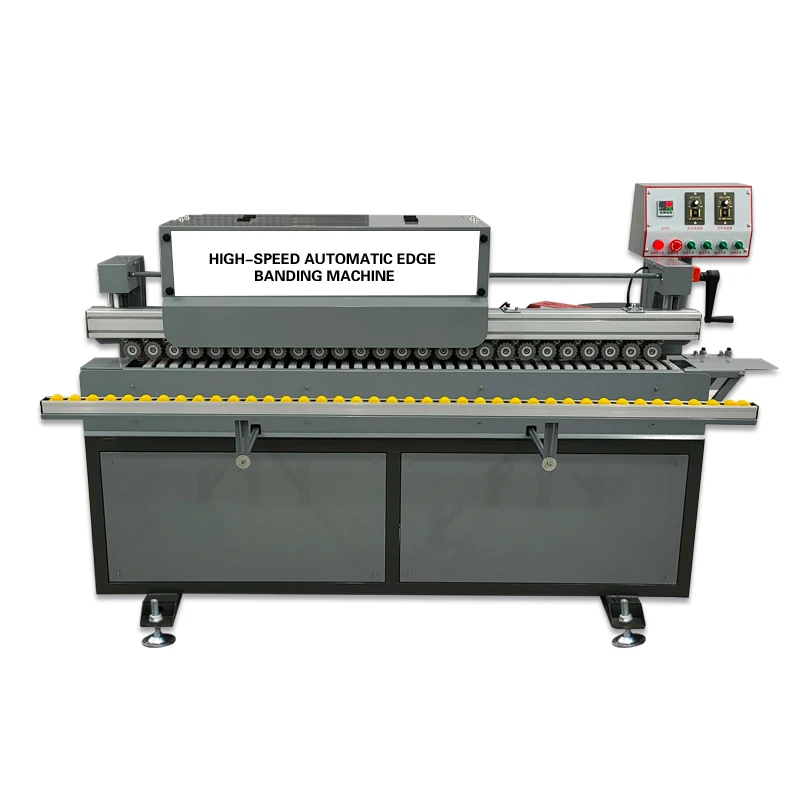
A: The 0–14 m/min feed speed and 200 mm minimum panel length align with standard panel saw output. Infeed and outfeed heights match typical roller conveyor systems. Throughput matching across stations is addressed during line configuration planning.
Q: Is a factory visit or sample processing test available before ordering?
A: Yes. Buyers can send representative panel samples for test runs demonstrating edge quality on their specific substrate and banding combination. Factory visits allow inspection of assembly and QC processes before shipment commitment.