Description
Voltage-Verified Portable Units — Every portable edge banding machine leaves our facility with a confirmed plug type, voltage, and frequency document matched to the buyer’s local grid, eliminating dead-on-arrival surprises.
Technical Specifications
| Parameter | Value |
|---|---|
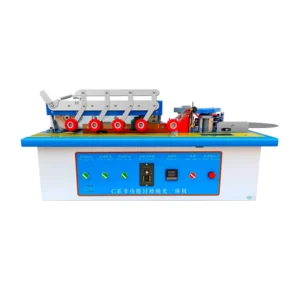
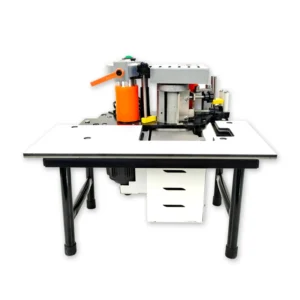
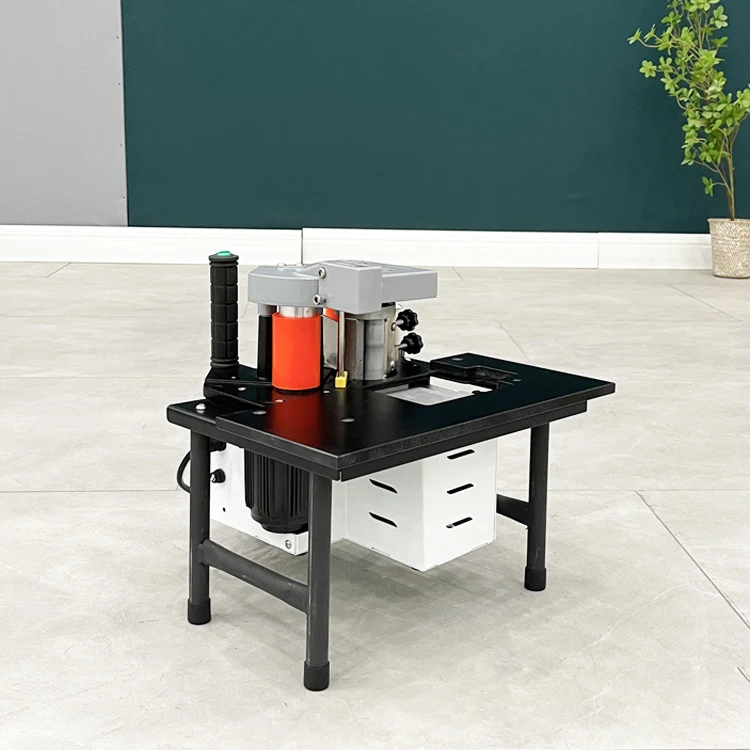
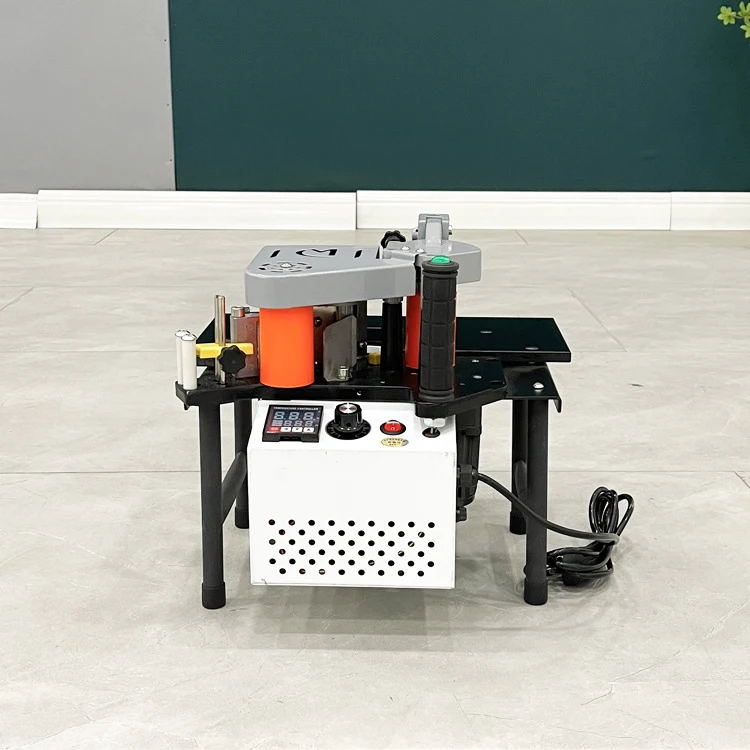
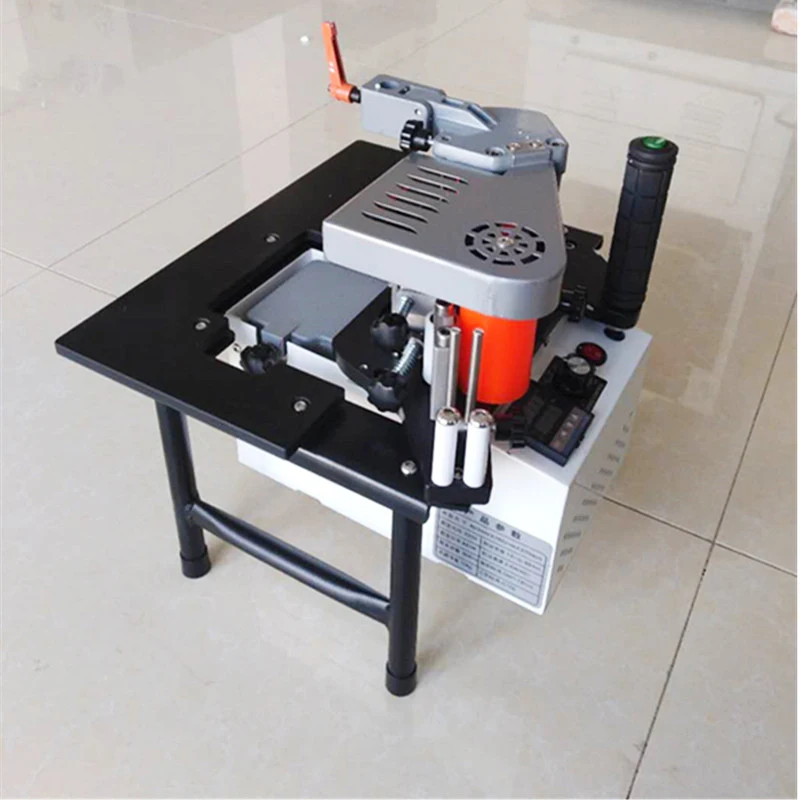
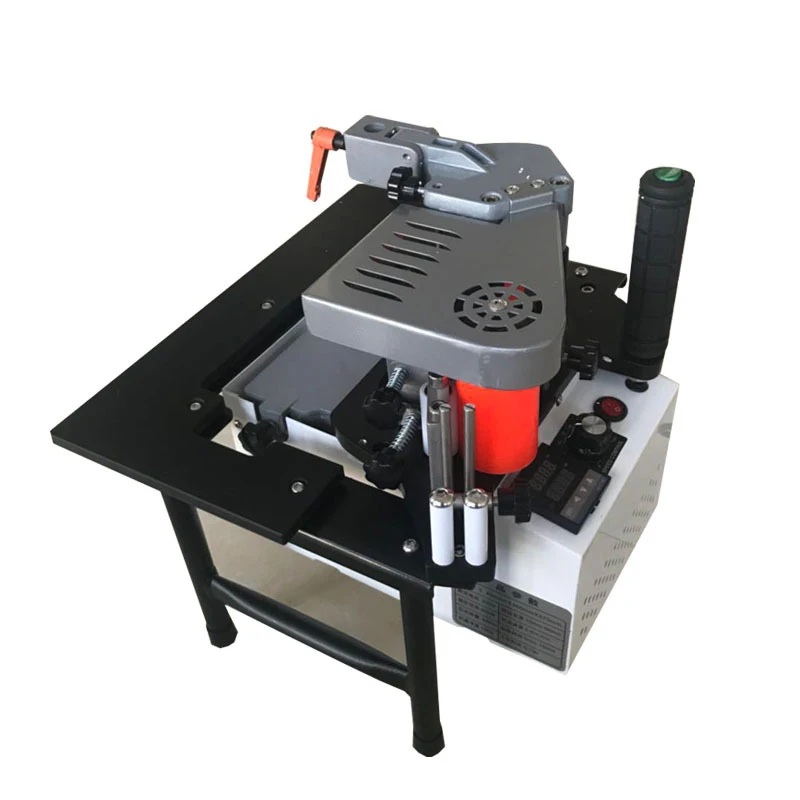
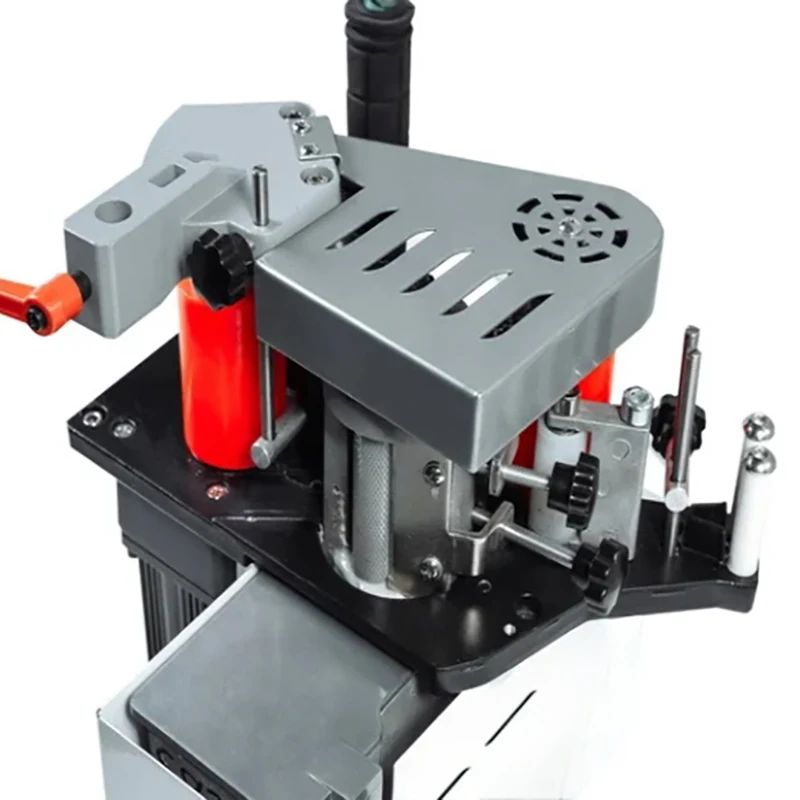
| Product Type | Portable Edge Banding Machine |
| Shape of Edge-banding Plates | Curved, straight, and irregular profiles |
| Edge Thickness Range | 0.3–3 mm |
| Edge Sealing Speed | 0–6 m/min (manual feed) |
| Panel Thickness Range | 7–60 mm |
| Gluing Method | Double-sided gluing |
| Glue Pot Volume | 1000 ml |
| Machine Net Weight | 14 kg |
| Plug Options | EU / AU / UK / USA / CN |
| Voltage & Frequency | Configurable per target market (confirmed before production) |
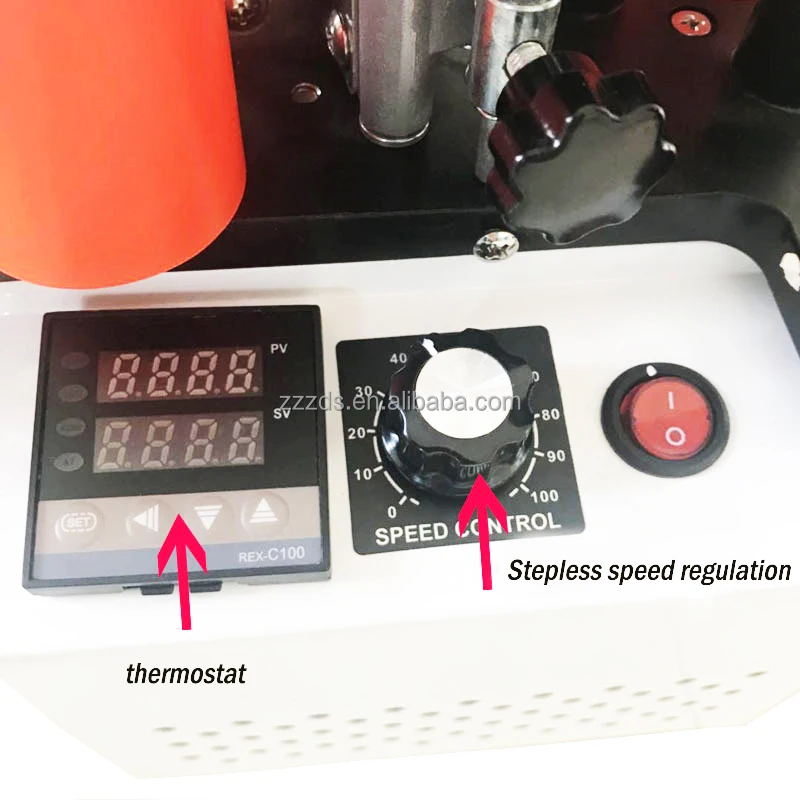
| Control Method | Hand-held manual operation |
| Logo Customization | OEM branding available |
| Warranty | 1 year |
Application Suitability
| Application | Material or Output |
|---|---|
| Curved cabinet door edge sealing | MDF and plywood with PVC banding |
| On-site furniture repair and touch-up | Particleboard and melamine-faced board |
| Small-batch custom joinery production | Solid wood panels with veneer edge banding |
| Supplementary edge work alongside automatic lines | Plywood shelving and partition panels |
| Startup workshop first mechanized edge sealing | MDF and particleboard with 0.3–3 mm banding |
Why the Voltage Question Must Come Before the Price Tag
A portable edge banding machine that arrives with the wrong plug or incompatible frequency is a 14 kg paperweight.
I have watched entire container loads of woodworking equipment sit idle on workshop floors because the buyer focused on feed speed and edge thickness but never confirmed whether their facility runs 50 Hz or 60 Hz. With a hand-held unit that relies on consistent glue pot temperature, a voltage mismatch does not just stall production — it causes adhesive to set unevenly, leaving visible glue lines on curved cabinet doors that no amount of hand-trimming will fix. We confirm your local voltage, frequency, and plug standard before the production order is released, so the machine powers on the day it arrives. [NEED_CITE: voltage and frequency standards by export market]
Where This Unit Fits in a Growing Workshop
This portable edge banding machine occupies the entry-level tier of a broader edge banding range that extends through semi-automatic and full-function pre-milling models. For a joinery startup handling curved chair legs or irregular-shaped shelving, a hand-held double-sided gluing unit removes the bottleneck of manual brush-and-clamp methods without requiring the floor space or power supply of a full automatic line. As order volumes grow and panel profiles standardize, the same supplier relationship supports a transition to conveyor-fed machines with trimming and buffing stations — no second vendor evaluation needed.
Curved and Irregular Edges That Automatic Lines Cannot Reach
Full-function automatic edge banders excel on straight runs of cabinet side panels, but they cannot wrap a 0.3 mm veneer strip around a radius curve or an S-shaped profile. This is precisely where a 14 kg hand-held unit earns its place on the workshop floor. The manual feed allows the operator to control pressure and speed along a contour, ensuring the double-sided adhesive bonds evenly on both the panel edge and the banding material. Workshops producing custom furniture with sculpted edges keep one of these units running alongside their main line for exactly this reason. [NEED_CITE: edge banding adhesion challenges on curved profiles]
Reading the Specs That Actually Matter on the Shop Floor
The 0.3–3 mm edge thickness range covers the majority of PVC and veneer banding materials used in cabinet and furniture production, meaning a single machine handles both thin decorative veneers and thicker protective PVC strips without retooling. The 7–60 mm panel thickness window accommodates everything from 9 mm MDF drawer sides up to thick solid wood worktops. The 1000 ml glue pot volume is sized for intermittent use — enough adhesive for a batch of curved components without the thermal degradation that occurs when a large pot sits heated for hours. Double-sided gluing applies adhesive to both the panel edge and the banding strip simultaneously, which is critical on porous substrates like particleboard where single-sided application leaves dry spots and weak bonds.
The Cost of Skipping Material and Glue Compatibility Checks
I once visited a custom cabinet shop where the owner bought a portable bander, tested it with PVC on sample day, then ran melamine paper banding in production. Melamine requires a higher glue temperature to activate properly, and the adhesive never achieved full bond strength — an entire run of wardrobe doors delaminated within weeks. The machine was not faulty; the wrong banding material was paired with a glue pot calibrated for a different substrate. When material and machine specs are discussed separately, these failures end up blamed on the equipment. [NEED_CITE: adhesive activation temperature requirements by banding material]
Why Buyers Source This Range From One Manufacturer
The portable unit is manufactured in the same facility as our automatic and full-function edge banders, so build quality expectations carry across the product family. Voltage and plug confirmation is treated as a standard pre-production step rather than an afterthought, with documentation provided before the machine ships. The four-stage quality control process — incoming material, in-process, finished product, and pre-shipment verification — applies equally to a 14 kg portable unit and a multi-station automatic line. OEM logo branding is available for distributors who want to present a unified product range under their own identity. Engineer-led configuration recommendations arrive with a formal quotation within 24 hours of receiving your panel material, edge profile, and production volume details.
Documentation & Verification
- Electrical schematic confirming your local voltage and frequency before dispatch
- Factory test record run on your specified panel thickness and banding material
- CE declaration of conformity included with every export shipment
- Operation manual in your operator’s language with banding material temperature guide
- Spare parts list with glue pot and heating element reorder codes
Installation, Commissioning & Support
- Hand-held 14 kg unit requires no floor anchoring — place on any stable workbench
- Plug-and-operate on confirmed voltage circuit; no dedicated three-phase supply needed
- Glue pot first heat-up cycle documented in manual with material-specific temperature settings
- Operator training covers feed pressure technique for curved versus straight profiles
- Replacement glue pots and heating elements available as stocked spare parts
What We Need to Configure Your Machine Correctly
To recommend the right voltage configuration and confirm material compatibility, share the panel substrates you work with most frequently, the banding materials in your current inventory, and your local mains voltage and frequency. If you run curved or irregular profiles regularly, note the minimum radius you typically seal. For distributors building a product mix, tell us which automatic models you already stock so we can position the portable unit as a complementary entry point.
Frequently Asked Questions
Q: How does this portable edge bander connect to the broader machine range as our workshop grows?
A: This portable unit sits at the entry level of our edge banding family. When your straight-run panel volume outgrows manual feed speed, you can move to our semi-automatic or full-function pre-milling models from the same manufacturer. Configuration history and material specs carry forward, so transition planning starts from documented baselines rather than a new vendor search.
Q: What voltage and plug options are available, and how is compatibility confirmed before we order?
A: Plug options cover EU, AU, UK, USA, and CN standards. Before production begins, we issue a written voltage and frequency confirmation document matched to your facility’s electrical supply. This eliminates the risk of receiving a machine that cannot power on locally — a problem I have seen stall workshops for weeks while transformers are sourced.
Q: Which panel materials and edge banding types does this portable unit handle effectively?
A: The machine seals MDF, particleboard, plywood, and solid wood panels using PVC and veneer banding from 0.3 to 3 mm thick. Melamine paper banding requires verifying glue pot temperature compatibility before production, as it demands higher activation heat than standard PVC. We confirm material pairing during the configuration stage to prevent adhesion failures.
Q: Can we visit the factory to test this portable unit alongside your automatic edge banders?
A: Factory visits are welcomed at any stage of evaluation. You can run your own panel samples and banding materials through the portable unit and compare output quality against our automatic models on the same production day. This side-by-side testing helps distributors understand where each model sits in a complete product offering.