
Description
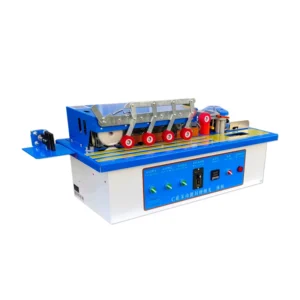
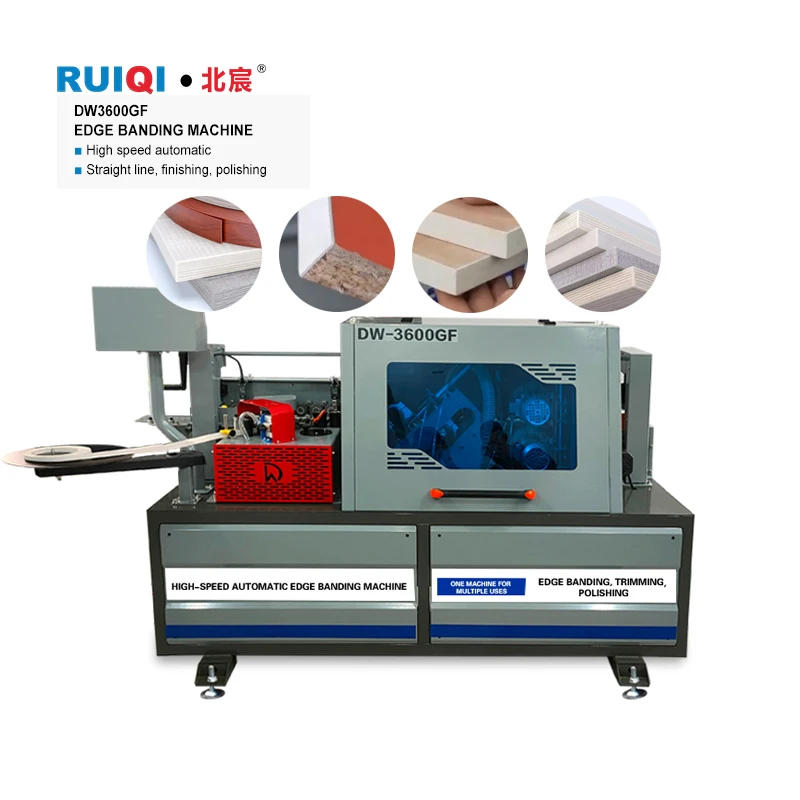
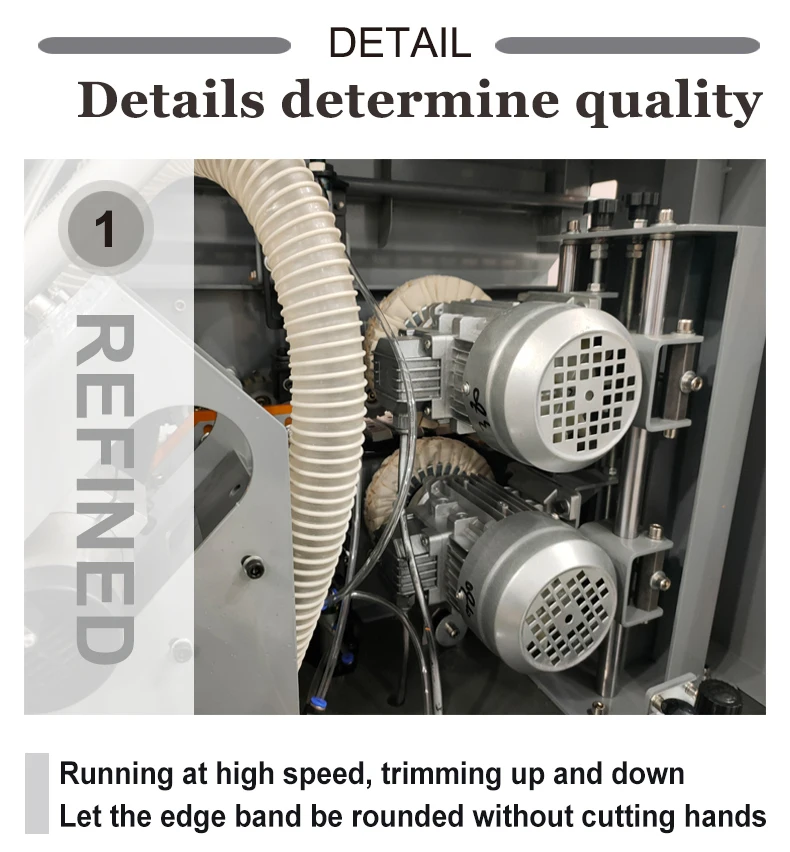
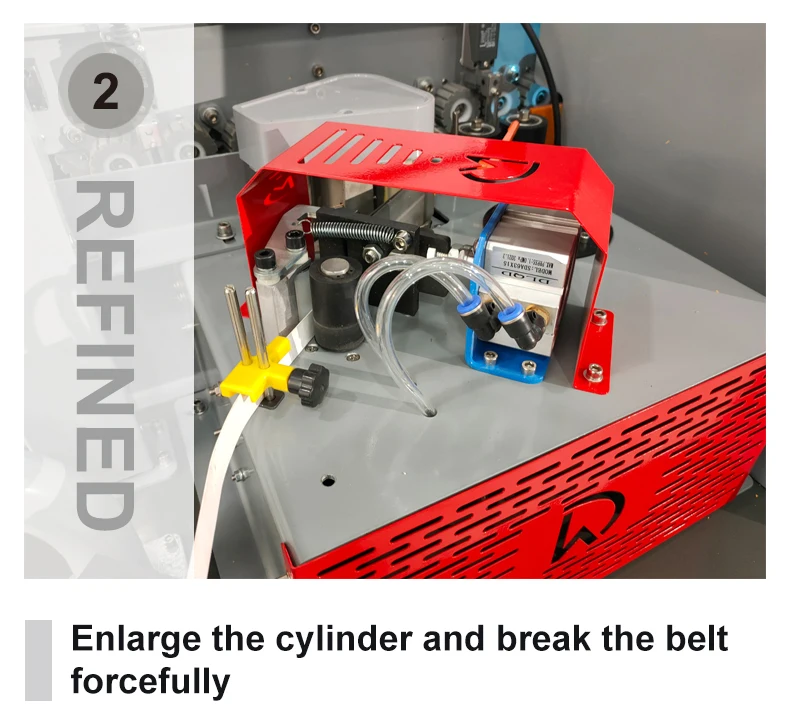
Patented Cutting Mechanism — The DW-3600GF edge bander uses an in-house developed trimming assembly that maintains consistent edge finish across MDF, plywood, and particleboard without requiring manual rework between material changes.
Technical Specifications
| Parameter | Value |
|---|---|
| Model | DW-3600GF |
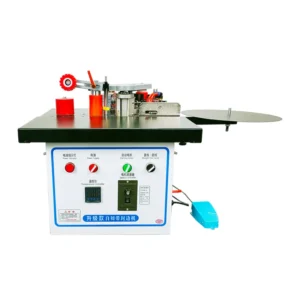
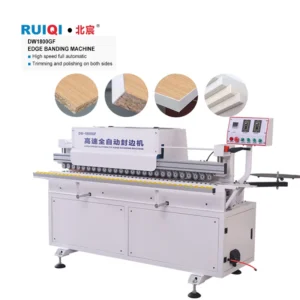
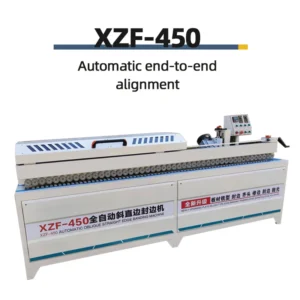
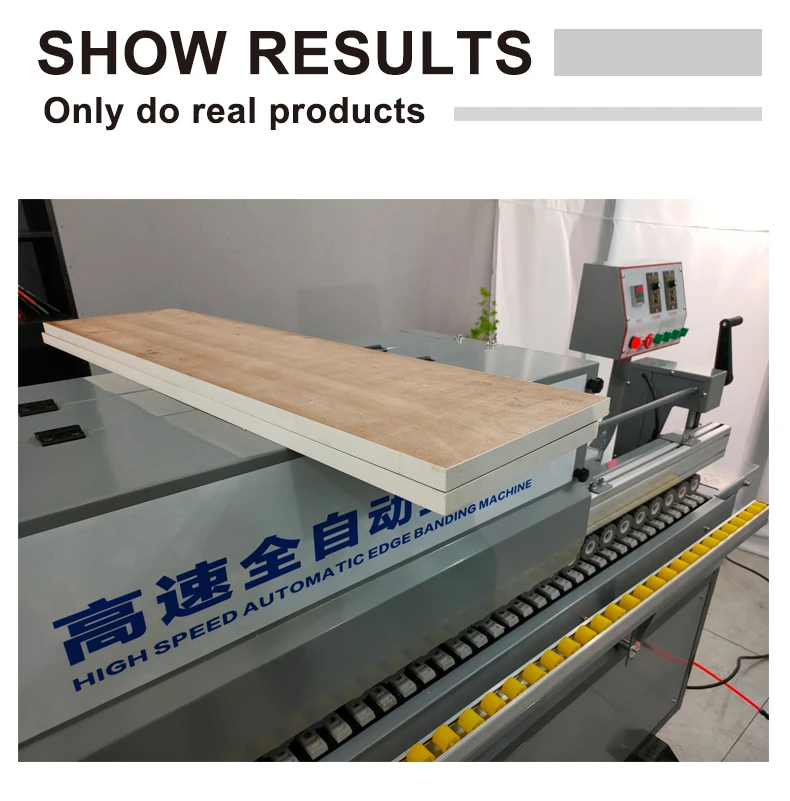
| Product Type | Full Automatic Edge Banding Machine |
| Voltage & Frequency | 380V Three-Phase Four-Wire |
| Total Power | 4.9 kW |
| Equipment Dimensions | 2200 × 650 × 1250 mm |
| Total Weight | 320 kg |
| Edge Banding Type | Straight Edge Banding |
| Edge Band Height Range | 0–50 mm |
| Edge Band Thickness Range | 0.3–3 mm |
| Minimum Plate Length | 200 mm |
| Feed Speed | 0–14 m/min (basis to be confirmed with manufacturer) |
| Trimming Motors | 800 W × 2, 24,000 r/min |
| Polishing Motors | 400 W × 2 |
| Required Air Pressure | 0.4–0.6 MPa |
| Standard Functions | Gluing, Trimming, Front & Rear Trimming, Scraping, Polishing, Vacuuming |
| Language Options | Chinese, English (customizable to Spanish or other languages) |
| Plug Options | EU, USA, AU, UK |
Application Suitability
| Application | Material or Output |
|---|---|
| Custom cabinet door edge finishing | MDF and melamine-faced particleboard with PVC edge banding |
| Wardrobe panel edge sealing | Plywood and blockboard with 0.3–3 mm veneer or ABS strips |
| Small-batch office furniture production | Laminated chipboard requiring straight edge banding on panels ≥200 mm |
| Workshop upgrading from manual banding | Transition to automated gluing, trimming, and polishing in one pass |
Why Visible Glue Lines Keep Coming Back on Certain Substrates
When a full automatic edge banding machine manufacturer quotes a unit without asking what boards you actually run, the first sign of trouble is a visible glue line on porous substrates. The root cause is usually mismatched air pressure and feed speed against the substrate density, not the machine itself. I once saw a workshop in Dongguan run density board all week with perfect results, then switch to a batch of high-moisture particleboard and spend days chasing inconsistent edge adhesion. The glue pot temperature and roller pressure need to align with the specific material porosity, and that conversation rarely happens at the quoting stage [NEED_CITE: substrate moisture content and edge adhesion failure correlation].
How the DW-3600GF Covers the Full Straight-Edge Workflow
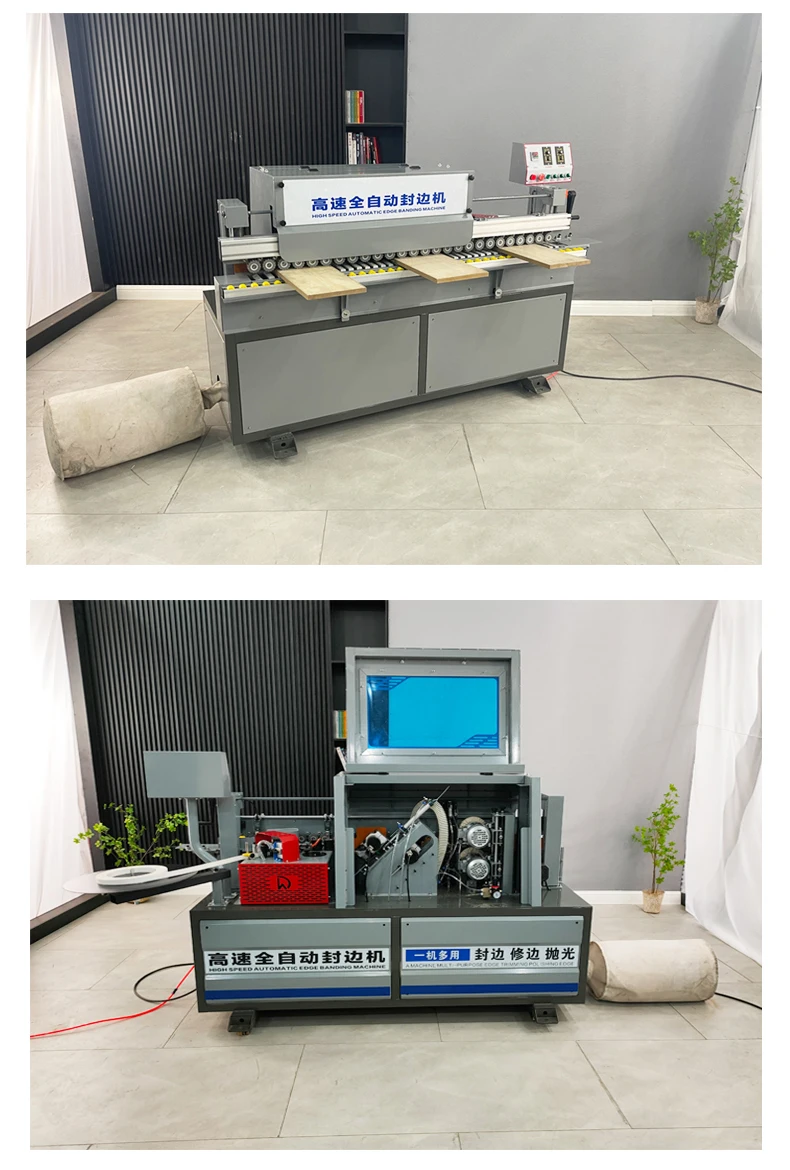
This full automatic edge banding machine runs gluing, rough trimming, fine trimming, scraping, polishing, and vacuuming in a single pass. For a small to mid-size custom furniture factory, that means one operator feeds panels and receives finished edges without moving the workpiece between stations. The 0.3–3 mm edge band thickness range covers most PVC and veneer strips used in cabinet and wardrobe production, which removes the need to stock multiple machines for different banding materials.
What the 320 kg Frame Weight Means for Daily Operation
A 320 kg chassis on a 2200 mm footprint gives this machine enough mass to resist vibration during trimming at 24,000 r/min. In smaller workshops where floor space is tight and machines sit close together, a lighter frame tends to transmit vibration into adjacent equipment and cause chatter marks on the trimmed edge. The four-wire 380V three-phase supply keeps the dual 800 W trimming motors and dual 400 W polishing motors running at stable torque, which matters when you are feeding panels back to back through a production run [NEED_CITE: three-phase power stability for continuous motor load in woodworking machinery].
Reading the Specs That Actually Affect Your Edge Quality
The 0.4–0.6 MPa air pressure requirement is where many installation problems surface. If your workshop compressor cannot hold steady pressure at that range, the glue roller will apply uneven adhesive, and the trimming pneumatic cylinders will stutter during the fine trim pass. The 200 mm minimum plate length tells you this machine handles small offcuts and narrow components — useful for drawer sides and shelf brackets — but anything shorter will need to be edge-banded manually or on a dedicated small-part feeder. The 0–50 mm edge band height covers standard 18 mm board stock with room to spare for thicker solid wood panels. Feed speed up to 14 m/min positions this unit for batch production rather than high-volume continuous lines, so matching it to your actual daily panel count prevents bottlenecks downstream.
What Happens When the Machine Arrives With the Wrong Voltage
Buying a full automatic edge banding machine without confirming local voltage and frequency is one of the most expensive mistakes I see in cross-border equipment purchases. A 380V three-phase machine plugged into a 220V single-phase outlet will not start, and rewiring the workshop to add a dedicated three-phase circuit can add weeks of delay and unplanned electrical contractor costs. The motor windings and control transformer are wound for a specific frequency, so even if the voltage is close, a 50 Hz motor on a 60 Hz supply runs at higher RPM and overheats prematurely. Always get the electrical schematic and voltage confirmation in writing before the machine ships [NEED_CITE: voltage and frequency standards by export market].
Why Buying This Machine From the Source Matters
The DW-3600GF comes from a facility that builds its own trimming mechanisms with proprietary patents, so replacement parts and technical questions go directly to the engineers who designed the assembly. The four-stage QC process — incoming material, in-process, finished product, and pre-shipment verification — means every unit gets tested on actual panel stock before crating. Voltage and plug customization from EU to AU to UK standards is handled at the order stage, not as an afterthought at the destination port. Language customization for the control panel and documentation means your operators read instructions in a language they work in daily. The machine range spans entry-level to full-function pre-milling models, so if your production volume grows, you can move up within the same product family without learning a new control system.
Documentation & Verification
- CE declaration of conformity for the DW-3600GF covering machinery directive compliance
- Factory test record run on your specified board thickness and edge band material before dispatch
- Electrical schematic with voltage and frequency confirmation matching your workshop supply
- Operation and maintenance manual produced in your agreed language with illustrated station diagrams
- Spare parts list with part numbers for trimming blades, glue rollers, and polishing wheels
Installation, Commissioning & Support
- Requires a dedicated 380V three-phase circuit rated for at least 4.9 kW continuous load
- Compressed air line delivering steady 0.4–0.6 MPa to the machine pneumatic manifold
- Floor space of approximately 2200 × 650 mm plus operator clearance on the feed side
- First-run commissioning includes trimming height calibration and glue roller pressure adjustment for your board stock
- Polishing wheel replacement schedule tied to edge band material type and daily run volume
- Pneumatic filter and lubricator maintenance at intervals specified in the operation manual
Before You Request a Quote
To match the right configuration to your workshop, share the board materials you run most often — MDF, particleboard, or plywood — along with typical panel dimensions and the edge band types you stock. Let us know your local voltage and frequency, preferred control panel language, and whether you need plug wiring to EU, USA, AU, or UK standard. If you are unsure about throughput requirements, describe your current daily panel count and we will advise whether this model fits or if a higher-tier unit in the same family is more appropriate.
Frequently Asked Questions
Q: How can I verify edge banding tolerance on my actual board material before placing an order?
A: We arrange a sample processing test using your specified panel stock and edge band material. The test record documents edge finish quality, trimming accuracy, and glue line visibility across multiple passes. You receive the results with photographs before confirming your order.
Q: What is the process for confirming voltage and frequency for my country?
A: During the quotation stage, we request your workshop supply specifications including voltage, phase, and frequency. The electrical schematic is then configured and confirmed in writing before production begins, ensuring the machine matches your local power infrastructure upon arrival.
Q: Can the control panel and manual be provided in Spanish or other languages?
A: Yes. The standard configuration includes Chinese and English, and we customize the control panel interface and printed documentation to Spanish or other agreed languages. This is confirmed during the specification review so operators can read all station labels and maintenance instructions in their working language.
Q: How do I know if this model suits my current volume or if I need a larger unit?
A: Share your daily panel count, board types, and edge band materials with our engineering team. We compare your throughput requirement against the feed speed range and station configuration, then recommend whether the DW-3600GF fits or if a higher-tier model in the same product family better matches your production targets.
Q: Is it possible to visit the factory and see the machine running before purchase?
A: Factory visits are welcomed. You can observe the assembly process, review the four-stage QC checkpoints, and watch a live test run on your chosen panel material. We coordinate the visit schedule around your travel plans and prepare sample stock matching your specifications in advance.