Description
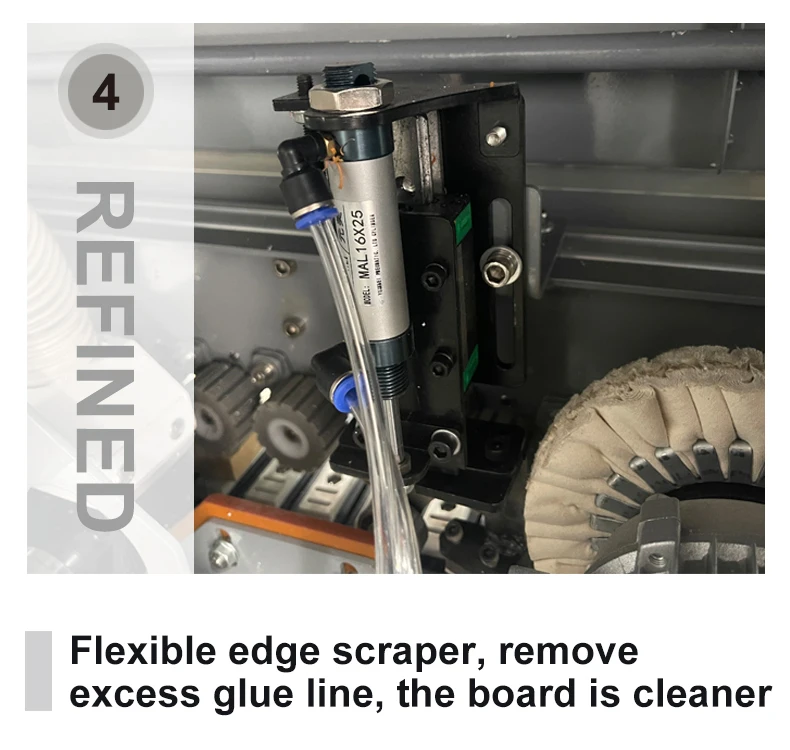
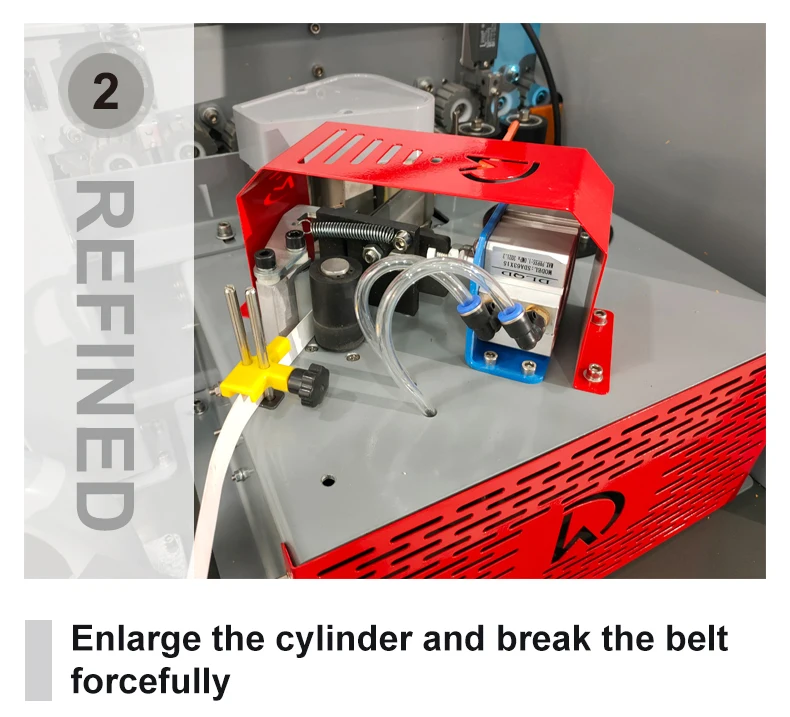
Precision-Ground Components — verified through a four-stage inspection process that catches tolerance drift before a machine like the DW3600 leaves the factory floor.
Technical Specifications
| Parameter | Value |
|---|---|
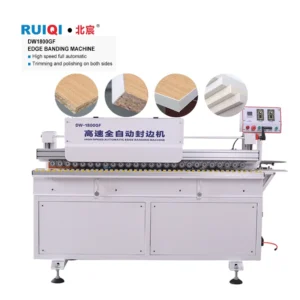
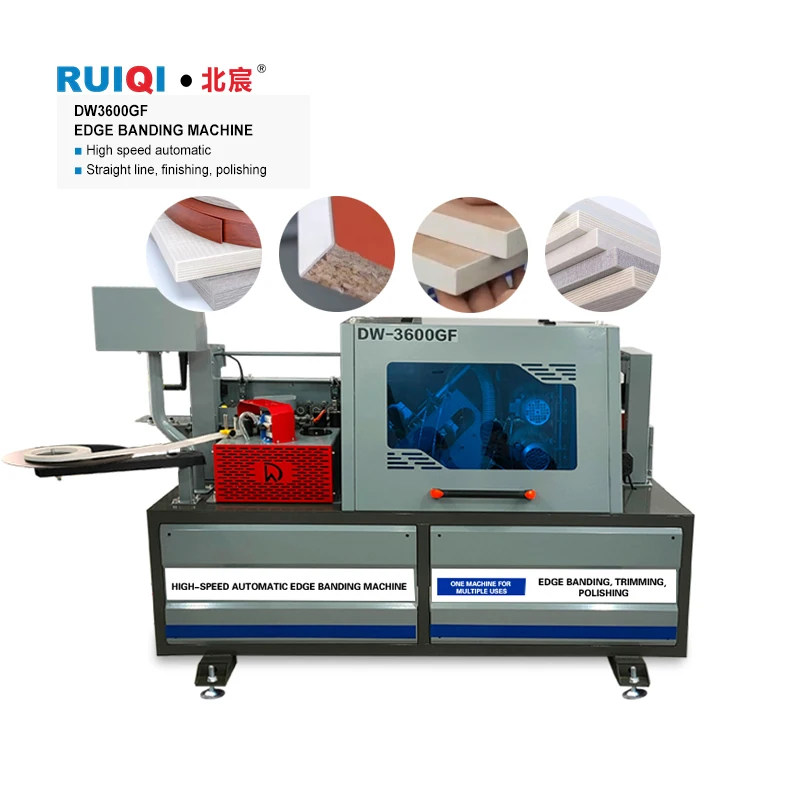
| Model | DW-3600GF |
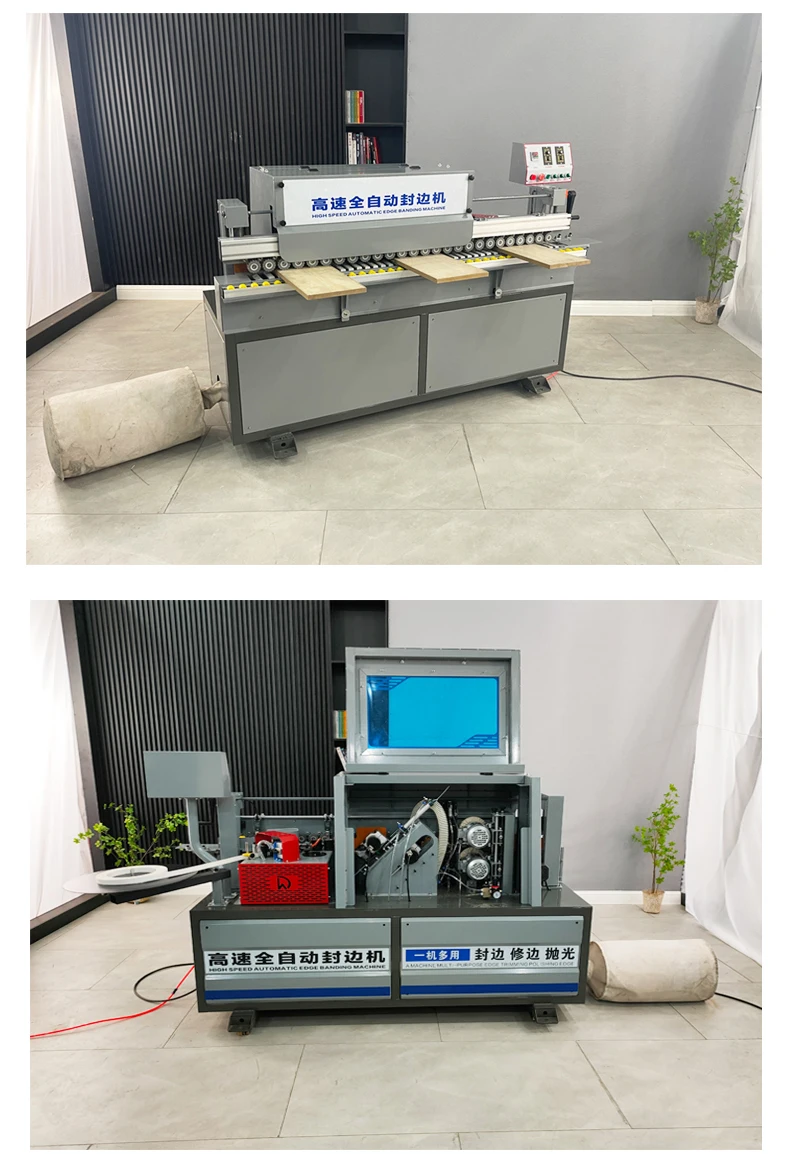
| Product Type | Automatic Edge Banding Machine |
| Voltage & Frequency | 380V Three-Phase Four-Wire |
| Total Power | 4.9 kW |
| Overall Dimensions (L×W×H) | 2200 × 650 × 1250 mm |
| Net Weight | 320 kg |
| Edge Banding Type | Straight Edge Banding |
| Edge Band Height Range | 0–50 mm |
| Edge Band Thickness Range | 0.3–3 mm |
| Minimum Panel Length | 200 mm |
| Feed Speed | 0–14 m/min (basis to be confirmed) |
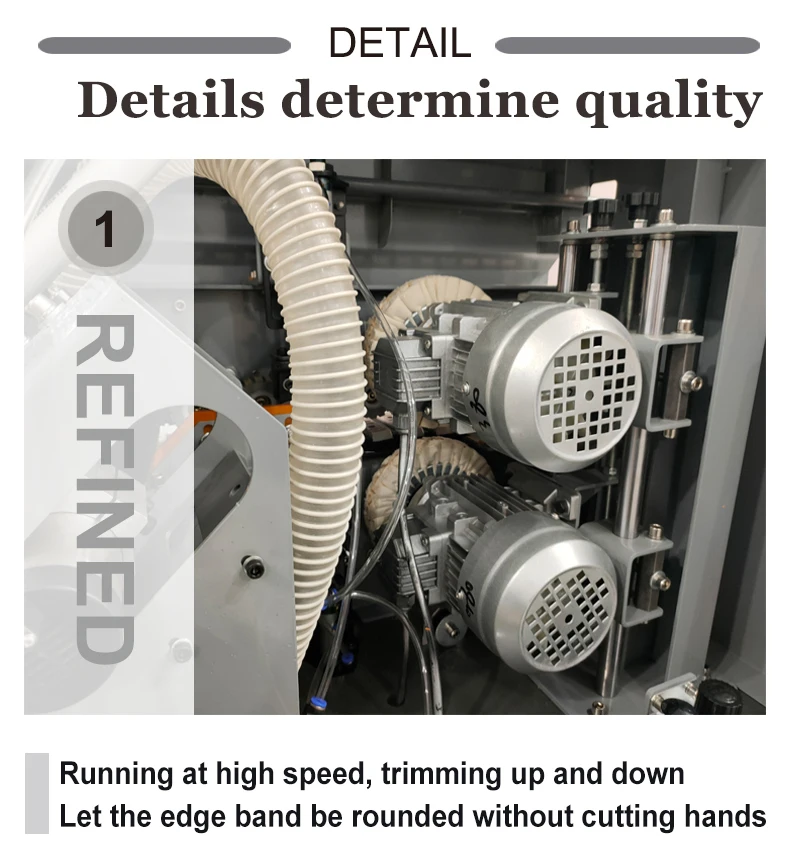
| Trimming Motor Power | 800 W × 2 |
| Trimming Motor Speed | 24,000 r/min |
| Polishing Motor Power | 400 W × 2 |
| Air Supply Requirement | 0.4–0.6 MPa |
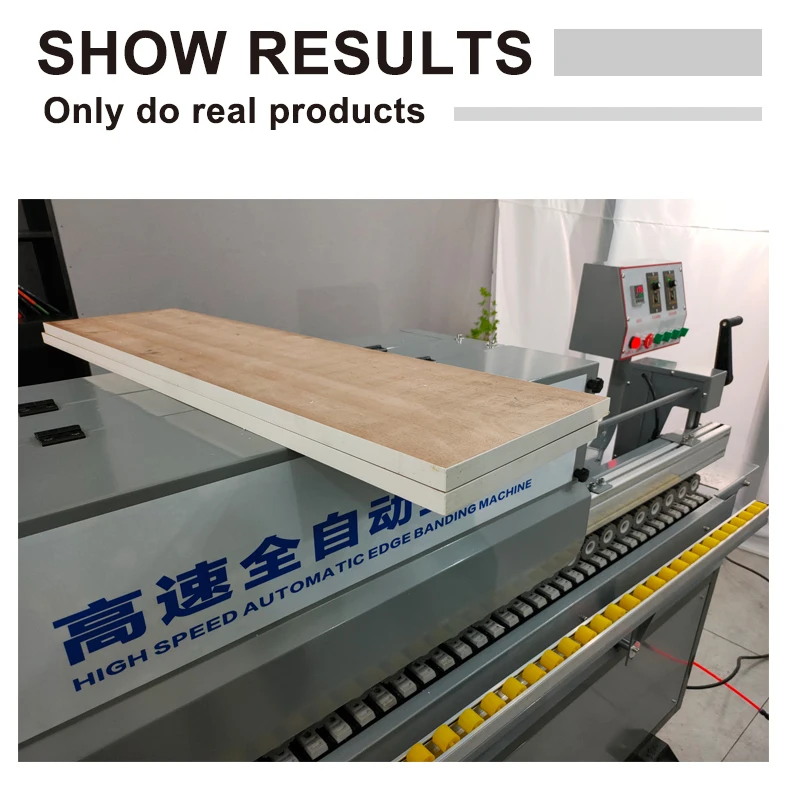
| Standard Functions | Gluing, Trimming, Front and Rear Trimming, Scraping, Polishing, Vacuuming |
| Control System | DSP |
| Assembly State | Fully assembled |
| Language Options | Chinese, English (other languages customizable) |
| Plug Options | EU, USA, AU, UK |
Application Suitability
| Application | Material or Output |
|---|---|
| Custom cabinet door edge finishing | MDF and melamine-faced particleboard with PVC banding 0.4–2 mm |
| Wardrobe panel straight edge banding | Plywood and blockboard with veneer or ABS edge band up to 3 mm |
| Small-batch furniture production runs | Chipboard and MDF panels from 200 mm minimum length |
| Workshop upgrading from manual banding | Entry-level automated edge finishing on standard wood-based substrates |
Why the Feed Speed Number Alone Cannot Tell You If the DW3600 Fits Your Line
A feed speed rating means nothing until you know what panel density and edge band material your operators will actually run.
I once watched a workshop in Sri Lanka buy a compact edge bander based entirely on a quoted metres-per-minute figure. When they switched from MDF to low-density particleboard for a cost-saving initiative, the glue adhesion dropped off and the trimming stations started leaving visible chatter marks on the softer substrate. The machine had not changed — the material had. Before anyone commits to an Automatic Edge Banding Machine manufacturer on paper specs alone, a sample panel test under real feed conditions should be non-negotiable [NEED_CITE: substrate density impact on edge band adhesion and trim quality].
Where the DW3600 Sits in a Growing Workshop
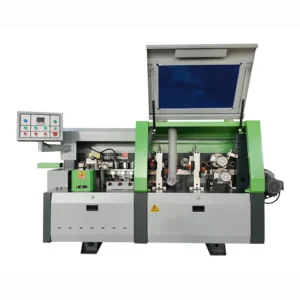
The DW3600 occupies the compact tier of the Ruiqi edge banding range, built for workshops that have outgrown manual banding but do not yet need a continuous-feed production line. Its 2200 × 650 mm footprint fits into tight shop floors where every square metre of material flow matters. For a cabinet maker running single-piece and small-batch orders, this tier provides the first step into automated gluing, trimming, scraping, and polishing in one pass.
How the Full Model Range Scales Beyond This Unit
When order volumes push past what a compact unit can handle in a single shift, the range extends into pre-milling models with additional trimming stations and higher feed speeds. The value of surveying the complete catalogue before purchasing is that you can map your current throughput against where your volume will be in two years. An Automatic Edge Banding Machine manufacturer that covers entry-level through full-function within one product family lets a workshop scale without re-qualifying a new supplier or retraining operators on an unfamiliar control platform [NEED_CITE: woodworking machinery scaling strategies for SME furniture producers].
Reading the Specs That Actually Affect Edge Quality
The 24,000 r/min trimming motor speed matters because higher RPM produces a cleaner shear cut on PVC and veneer banding — slower motors tend to tear rather than slice, leaving a rough edge that shows up under angled light. The 0.3–3 mm band thickness range covers most standard PVC, melamine, and thin veneer materials used in cabinet and furniture work, though heavier solid-wood lipping falls outside this machine’s design envelope. The DSP control system allows operators to store feed speed and trimming parameters by job, reducing setup errors when switching between panel types. Gluing, front and rear trimming, scraping, and polishing happen sequentially within the 2200 mm frame, so the panel exits finished on one pass without moving to a secondary station. The 0.4–0.6 MPa air supply requirement is standard for pneumatic pressure on the glue roller and trimming actuators, and workshops should verify compressor capacity before installation.
What Happens When the Machine Tier Does Not Match the Workload
I have seen workshops buy a compact bander for light duty and then push it through double-shift production within a year. The result is accelerated wear on trimming cutters, inconsistent glue bead temperature, and scraping stations that cannot keep up with the feed rate. The edge quality degrades gradually enough that operators adjust by slowing the feed — which then creates a bottleneck the buyer never planned for. Matching the machine tier to actual daily panel count is where an honest configuration conversation pays off [NEED_CITE: edge bander maintenance intervals under varying production loads].
Why Buyers Source This Range Through Ruiqi
In-house manufacturing with patented cutting mechanisms means the DW3600 is not a relabelled unit from a third-party assembler — component traceability stays within one factory. A full model range from compact to full-function within one product family means your next machine upgrade uses the same control logic and operator training. Voltage, plug type, and control panel language are confirmed before production starts, so the machine arrives wired for the local grid with an interface your operators can read. Four-stage quality control with pre-shipment verification catches assembly and tolerance issues before crating. Engineer-led configuration means the quotation you receive within 24 hours reflects your actual panel sizes, materials, and production volume rather than a generic list price.
Documentation & Verification
- CE declaration of conformity specific to the DW-3600GF configuration shipped
- Machine specification sheet confirming voltage, plug type, and language at order point
- Factory test record on your submitted panel and edge band samples before dispatch
- Electrical schematic matching the as-built wiring and 380V three-phase layout
- Operation and maintenance manual in English or the agreed operator language
Installation, Commissioning & Support
- Allow floor space exceeding 2200 × 650 mm for operator access and panel infeed clearance
- Confirm 380V three-phase four-wire supply on a dedicated circuit rated above 4.9 kW draw
- Machine ships fully assembled — position, level, connect power and 0.4–0.6 MPa air, then commission
- DSP control parameter setup calibrated to your panel thickness and band material during first run
- Trimming cutter and polishing wheel wear schedule documented in the supplied maintenance manual
What We Need to Recommend the Right Model
Tell us the panel materials you run most often — MDF, particleboard, plywood, or a mix — along with typical thickness and edge band type. Share your daily panel count and whether you anticipate volume growth that would push you into a higher tier. Let us know your local voltage and frequency so the electrical configuration is locked before production, and specify the control panel language your operators need.
Frequently Asked Questions
Q: Where does the DW3600 sit in the Ruiqi edge banding model range, and when should I consider stepping up?
A: The DW3600 is the compact tier, designed for workshops transitioning from manual banding or running small to medium batch volumes. When daily panel throughput consistently requires double shifts on this unit, or when you need pre-milling for panels with surface irregularities, stepping to a higher-tier model in the range becomes the practical move. Your production volume and panel condition determine the right tier.
Q: How do I confirm voltage, frequency, and plug type before ordering?
A: Share your workshop’s supply specification — voltage, phase, frequency, and plug standard — during the inquiry stage. The DW-3600GF ships configured for 380V three-phase four-wire with plug options including EU, USA, AU, and UK types. Confirming this before production avoids the situation where a machine arrives wired for a grid that does not match your local supply.
Q: Can the DSP control panel language be set to match my operators?
A: The standard options are Chinese and English, with additional languages customizable based on supplier capability. Specifying the required language at the quotation stage ensures the control interface is readable from day one, avoiding commissioning delays caused by operators navigating menus they cannot understand.
Q: What edge band materials and thicknesses is this machine built to handle?
A: The DW-3600GF handles PVC, melamine, and veneer edge banding in thicknesses from 0.3 mm to 3 mm with a band height range of 0–50 mm. This covers the majority of standard furniture and cabinet edge finishing applications. Heavier solid-wood lipping or specialty banding outside this range requires a different model configuration.
Q: What documentation ships with the machine, and can I see a sample spec sheet first?
A: Each unit ships with a CE declaration of conformity, specification sheet matching the as-built configuration, electrical schematic, operation manual in the agreed language, and a factory test record. Requesting a sample specification sheet during the inquiry stage allows you to verify dimensions, power requirements, and function sequence before committing to an order.