Description
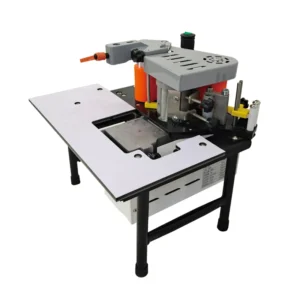
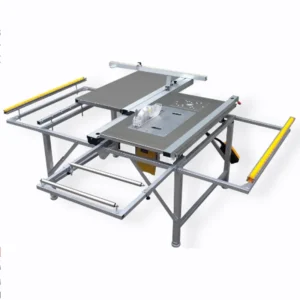
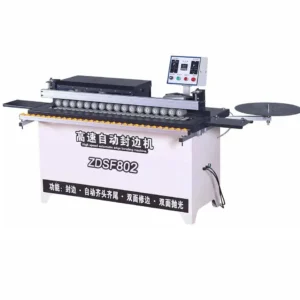
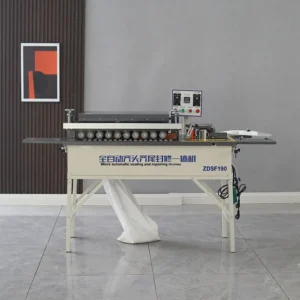
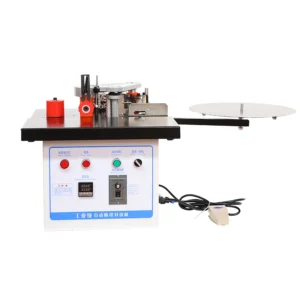
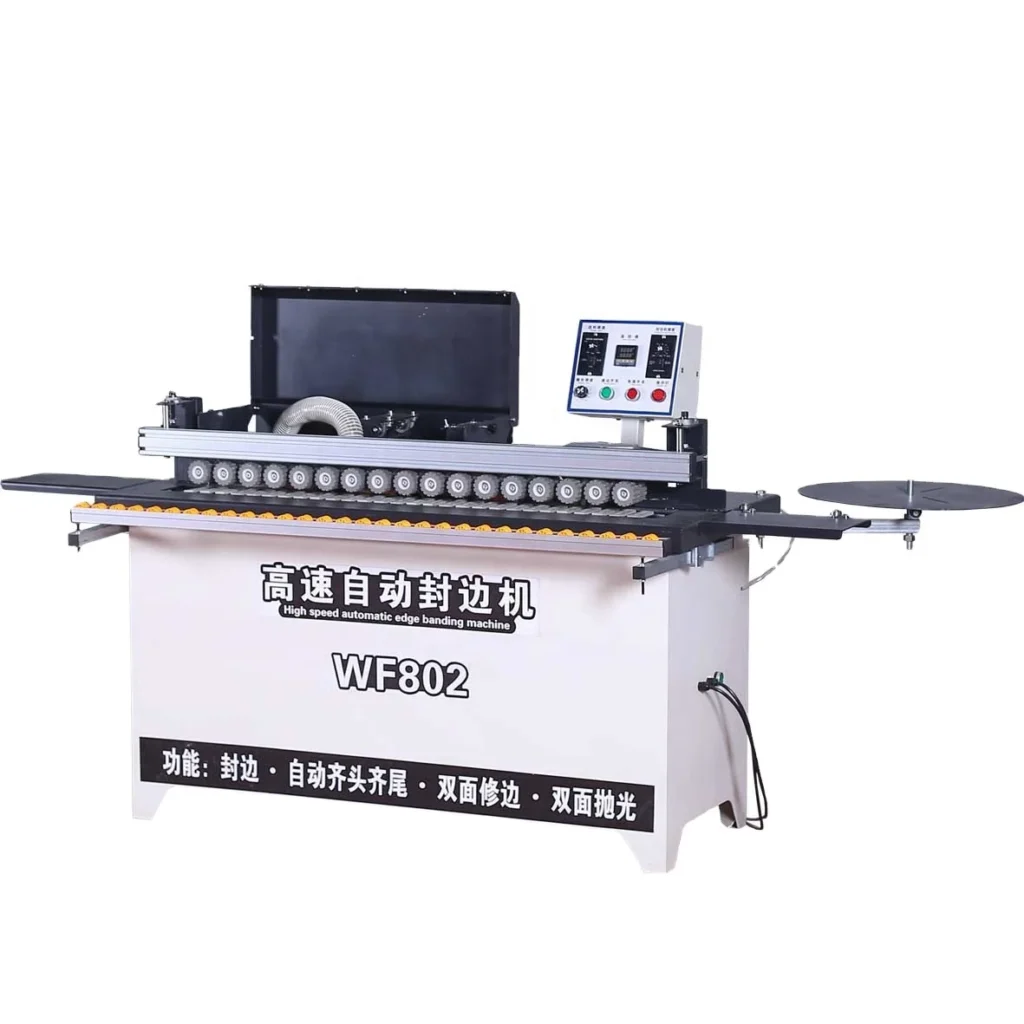
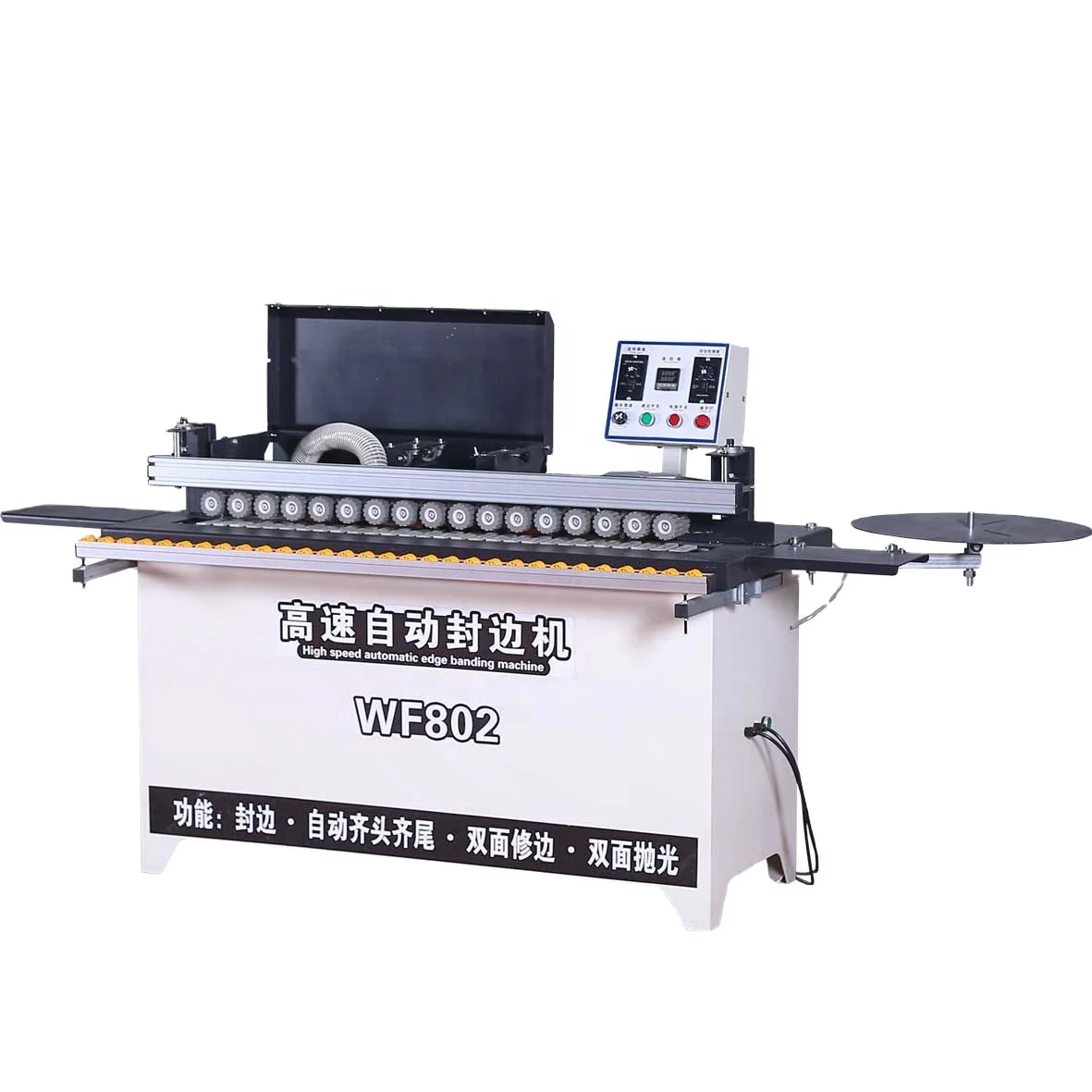
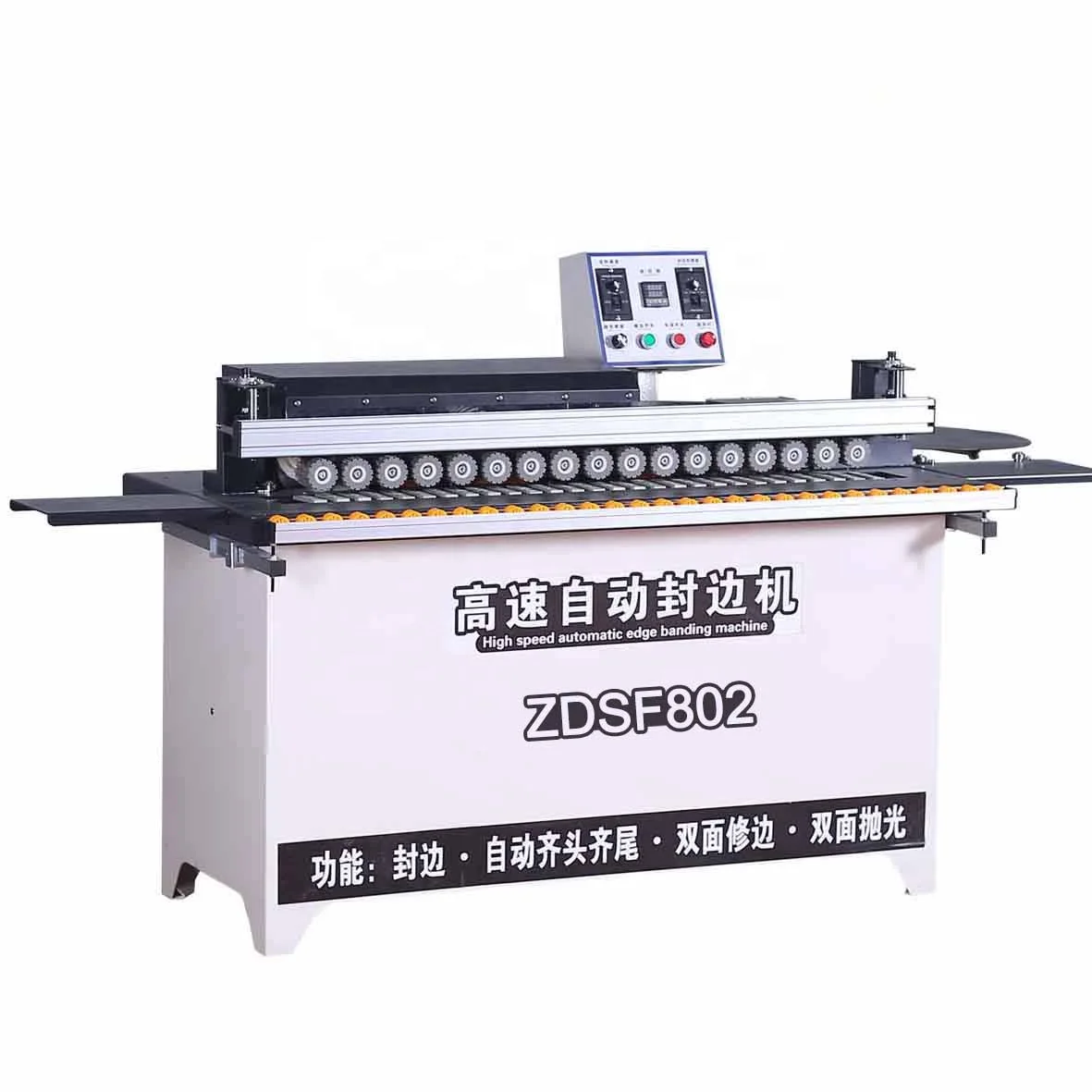
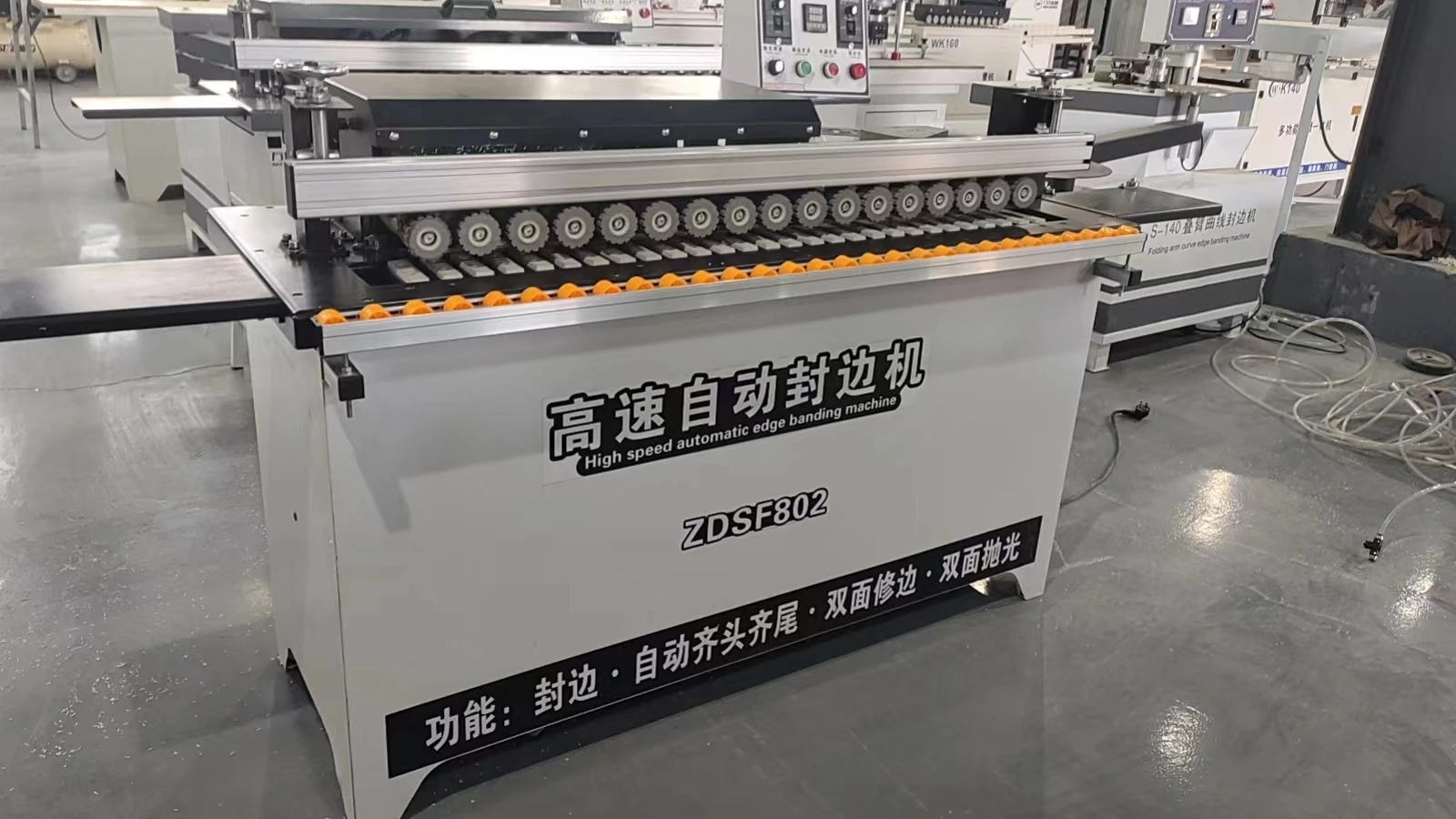
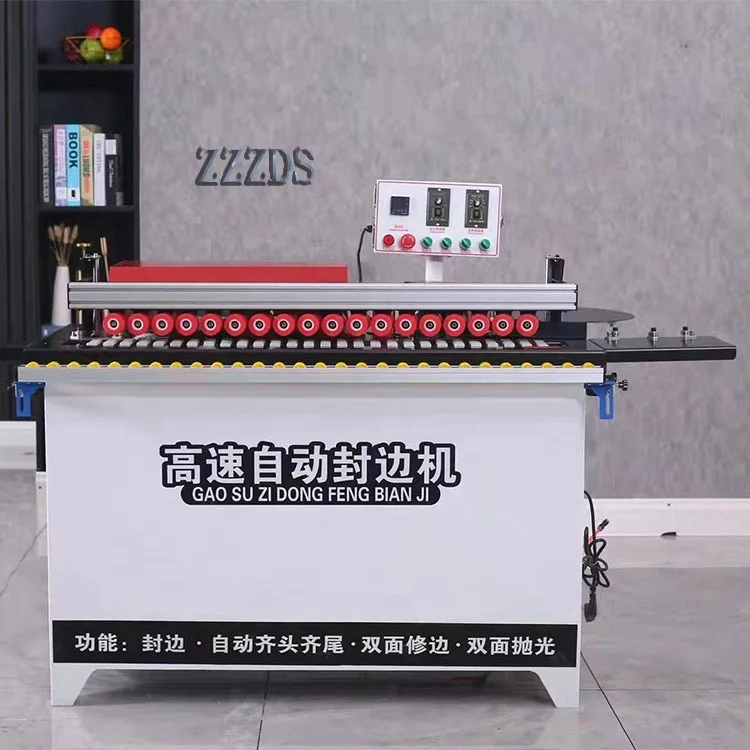
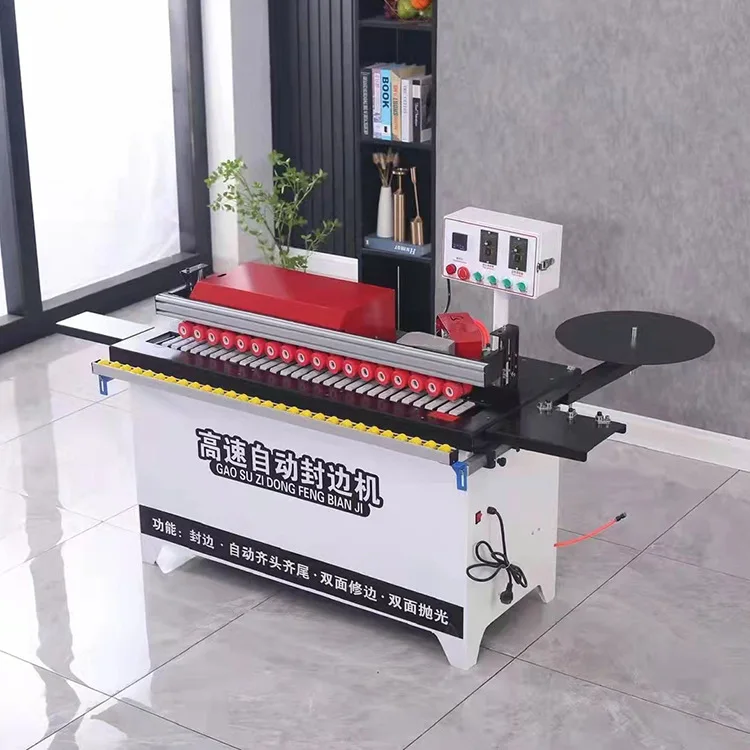
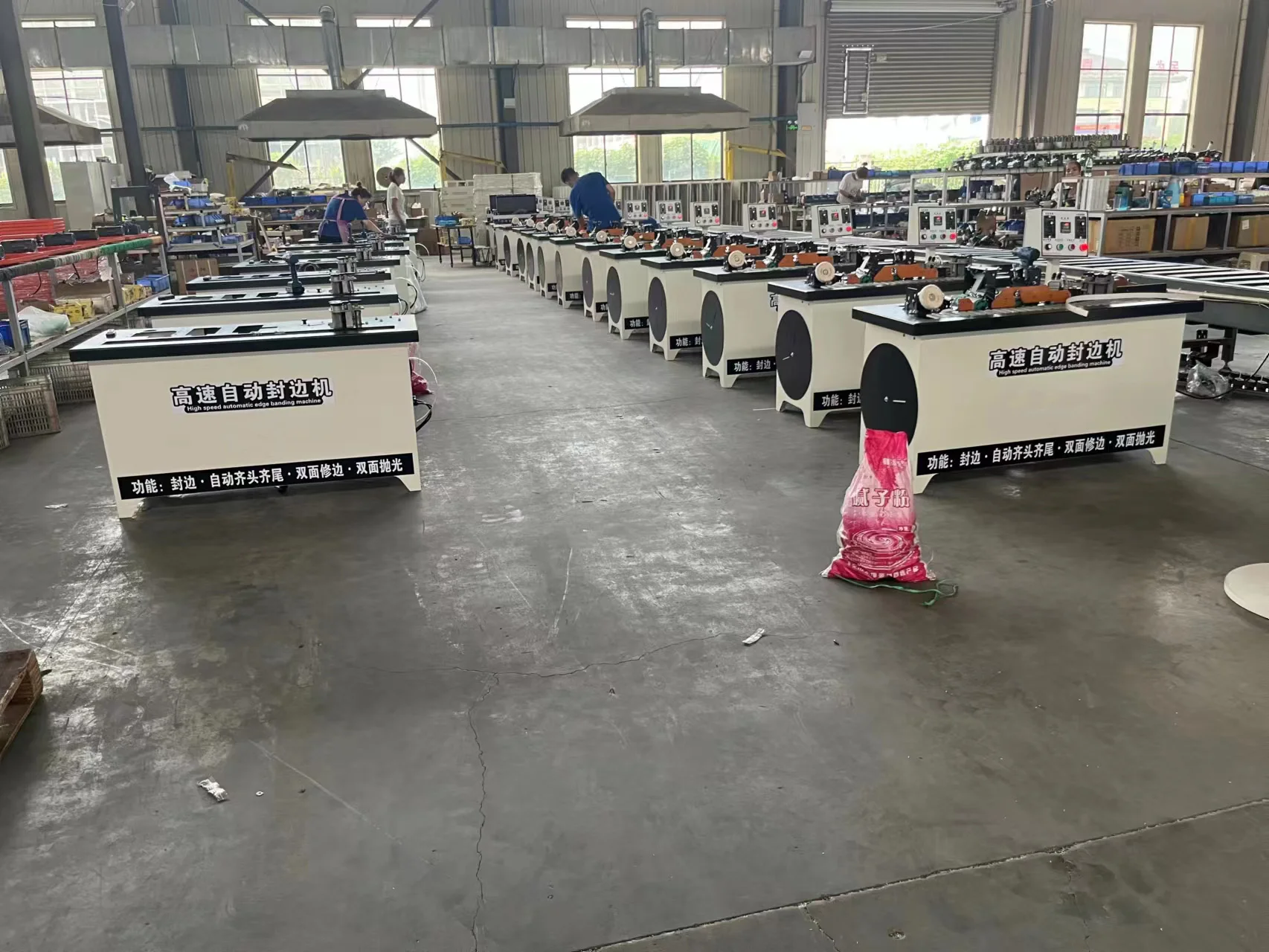
Full model range under one roof — from the compact Model 802 for small workshops to full-function pre-milling lines, all configurable within the same product family so your production can scale without switching suppliers.
Technical Specifications
| Parameter | Value |
|---|---|
| Product Type | Automatic PVC Edge Banding Machine |
| Rated Power | 4 kW |
| Voltage & Frequency | 220V (frequency to be confirmed: 50/60 Hz) |
| Control System | Digital display panel with independent switches |
| Overall Dimensions (L×W×H) | 130 × 65 × 75 cm |
| Net Weight | 150 kg |
| Feed Speed | 0–10 m/min |
| Panel Thickness Range | 10–50 mm |
| Edge Band Thickness Range | 0.5–2.5 mm |
| Edge Type | Straight line |
| Trimming Power | 800 W × 2 |
| Polishing Power | 180 W × 2 |
| Suction Power | 1200 W |
| Heating Power | 1000 W (5–10 min heat-up) |
| Glue Pot Capacity | 4000 ml |
| Rated Air Pressure | 0.4–0.6 MPa |
| Conveyor Belt | Silicone material, double rows of pressure wheels |
| Pressure Beam | One-piece integrated |
| Dust Collection | Built-in vacuum device |
| Trimming Stations | Upper and lower trimming, head and tail trimming |
| Polishing Stations | Upper and lower polishing motors |
| Assembly State | Fully assembled |
| Language Options | Available on request (to be confirmed) |
| Color Options | Available on request (to be confirmed) |
Application Suitability
| Application | Material or Output |
|---|---|
| Custom furniture panel edge banding | MDF, particleboard, plywood with PVC edge banding |
| Cabinet door and carcass sealing | Melamine-faced chipboard, MDF with 0.5–2.5 mm PVC |
| Small-to-medium batch production | Straight-line panels up to 50 mm thickness |
| Joinery workshop upgrade from manual sealing | Plywood and blockboard with PVC strip |
Why the Voltage Question Must Come Before the Price
Confirming local voltage and frequency before anything else prevents a machine from arriving unusable on the shop floor.
I once watched a 380V edge bander get wired into a 440V supply in the Middle East. The main board fried on first start-up, and the replacement took three weeks to arrive. That single oversight cost the buyer more in downtime than the machine was worth. With an automatic edge banding machine manufacturer, the conversation should always begin with your facility’s electrical supply [NEED_CITE: voltage and frequency standards by export market]. Single machines bought piecemeal often turn out incompatible not just in voltage but in feed height and throughput with the rest of the line.
Matching Model Tier to Your Daily Panel Volume
The Model 802 sits at the entry point of a broader family. Its 0–10 m/min feed speed and 4 kW rated power suit workshops running moderate daily volumes of MDF and particleboard. When your output grows, the same automatic edge banding machine manufacturer offers higher-tier models with faster feed rates and additional pre-milling stations — without forcing you to learn a new control system or retrain operators.
Planning a Line That Grows With You
Buying one machine in isolation risks a bottleneck the moment throughput increases. This product family is designed so stations can be added or replaced as volumes shift. The silicone conveyor belt and one-piece pressure beam on the Model 802 match the feed geometry of higher-tier units, meaning panels transition smoothly between machines. An engineer-led configuration review within 24 hours ensures your first purchase is never an orphan [NEED_CITE: production line balancing principles for panel furniture].
How Feed Speed, Trimming, and Glue Pot Capacity Shape Edge Quality
The 10–50 mm panel thickness range covers most cabinet and furniture substrates. Within that range, feed speed directly affects glue penetration and trimming accuracy: slower feeds on dense MDF allow the 1000 W heater to maintain stable melt temperature, while faster feeds on lighter particleboard demand precise upper and lower 800 W trimming motors to keep edges flush. The 4000 ml glue pot reduces refill interruptions during longer runs, keeping the EVA adhesive at consistent viscosity. Built-in vacuum collection at the trimming stations pulls dust away before it can settle on fresh glue lines — a detail that matters when panel surfaces go straight to assembly without secondary cleaning.
The Hidden Cost of Choosing the Wrong Configuration
Ordering an entry-level unit into a production volume it was never designed for leads to premature belt wear, inconsistent glue spread, and trimming motors that cannot keep up. Operators then compensate by slowing the feed, which defeats the purpose of automation. Worse, a control panel in a language the operator cannot read stalls commissioning entirely and forces expensive on-site retraining [NEED_CITE: operator error rates linked to unlabeled industrial controls].
Why Source This Automatic Edge Banding Machine Manufacturer
In-house patented cutting mechanisms deliver verified ±0.02 mm tolerance on full-function models. Voltage customization from 110 V to 440 V is standard, not an afterthought. A four-stage QC process — incoming material, in-process, finished product, and pre-shipment verification — catches faults before crating. Engineer-led configuration recommendations arrive within 24 hours, not weeks. Factory visits are welcomed so buyers can witness sample processing tests on their own panel stock.
Documentation & Verification
- CE declaration of conformity for the Model 802 product family
- Electrical schematic with voltage confirmation matched to your supply
- Factory test record on your panel thickness range before dispatch
- Operation and maintenance manual in the agreed language
- Spare parts list with OEM part numbers for reorder
Installation, Commissioning & Support
- 130 × 65 × 75 cm footprint fits standard workshop floors; verify clearance for infeed and outfeed tables
- 220 V supply requires a dedicated 20 A circuit; confirm 50 or 60 Hz before wiring
- Machine ships fully assembled — uncrate, level, and connect air supply at 0.4–0.6 MPa
- First run includes heater warm-up verification (5–10 min) and trimming motor alignment check
- Silicone conveyor belt and pressure wheels inspected for tracking before handover
Preparing Your Inquiry
Tell us the panel substrates you process daily, the edge band material and thickness you use most, and your facility’s confirmed voltage and frequency. If you have upstream saws or downstream boring machines already installed, share their feed heights so we can match throughput and avoid misalignment at transfer points.
Frequently Asked Questions
Q: Which model tier matches my production volume?
A: The Model 802 suits small-to-medium workshops running moderate daily volumes of straight-line panels. Higher-tier models in the same family add pre-milling and faster feed speeds for continuous production. An engineer reviews your daily panel count and recommends the right tier within 24 hours.
Q: How do I confirm voltage, frequency, and control panel language before ordering?
A: Share your facility’s exact supply specification and preferred operator language at inquiry stage. The electrical schematic is then matched to your grid, and the digital display panel is labeled accordingly. A voltage confirmation document accompanies every shipment.
Q: What edge banding materials and panel substrates does this machine handle?
A: The machine seals PVC edge banding from 0.5 to 2.5 mm onto MDF, particleboard, and plywood panels between 10 and 50 mm thick. The 1000 W heater and 4000 ml glue pot maintain stable EVA melt temperature across these materials.
Q: Can I visit the factory for a sample processing test?
A: Yes. Bring your own panel stock and edge band material, or request standard test pieces. The four-stage QC process includes a pre-shipment verification run, and factory visits let you witness trimming and polishing results firsthand.
Q: How does the Model 802 compare to higher-tier models in feed speed and tolerance?
A: The Model 802 runs at 0–10 m/min, suited to moderate volumes. Higher-tier models offer faster feed rates and additional trimming stations for tighter production schedules. Verified ±0.02 mm tolerance is achievable on full-function pre-milling models within the same family.