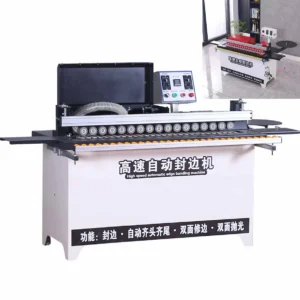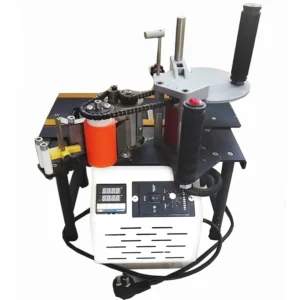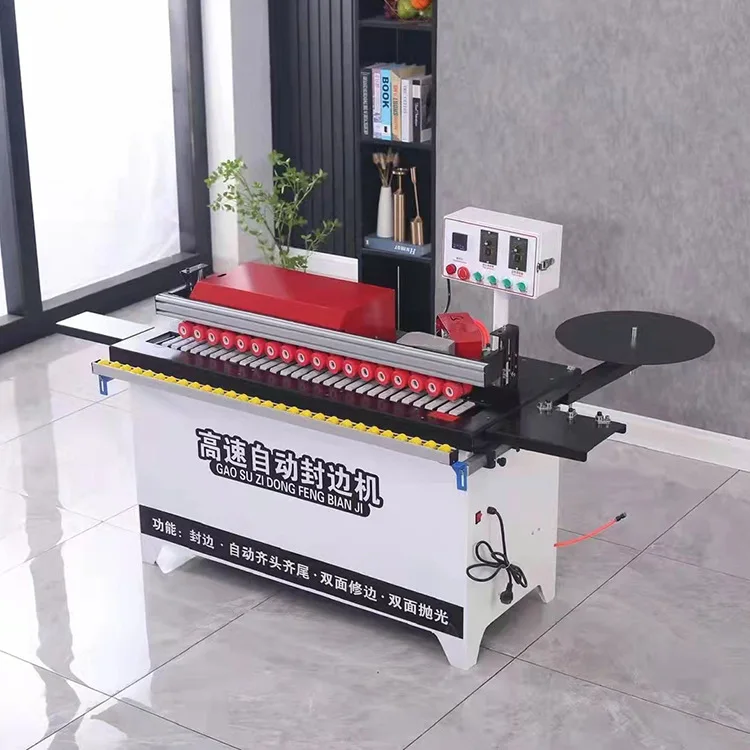
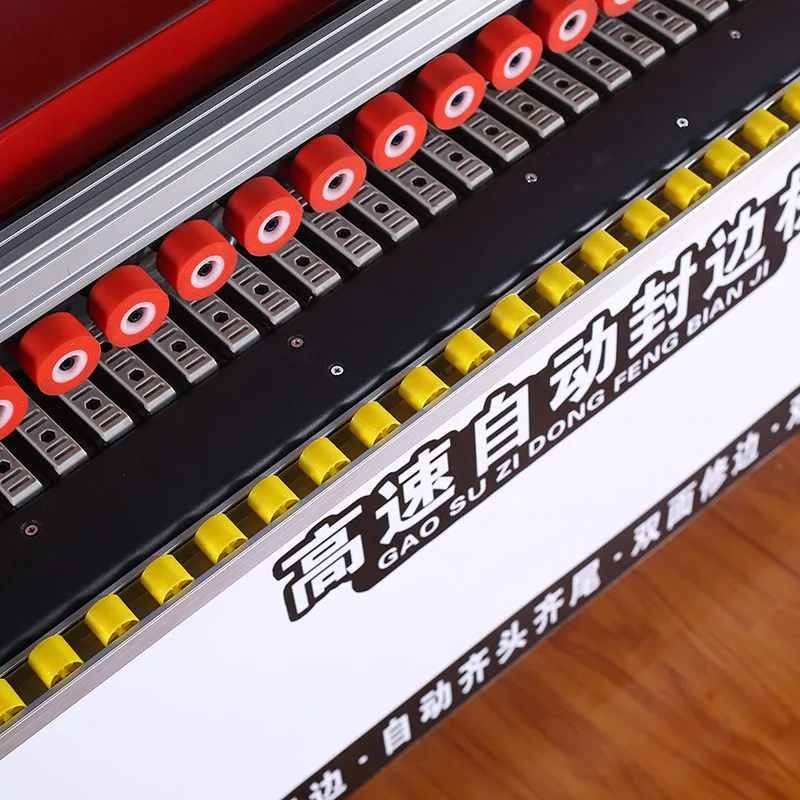
Description
Verified Tolerance Engineering — every unit undergoes four-stage inspection covering incoming material, in-process assembly, finished build, and pre-shipment electrical verification before leaving our Shandong facility.
Technical Specifications
| Parameter | Value |
|---|---|
| Product Type | Automatic Edge Banding Machine |
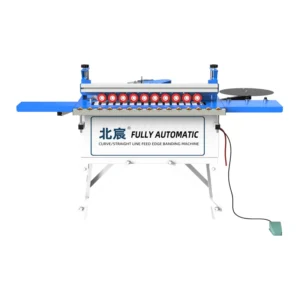
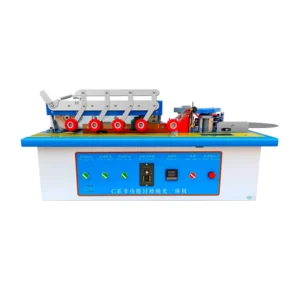
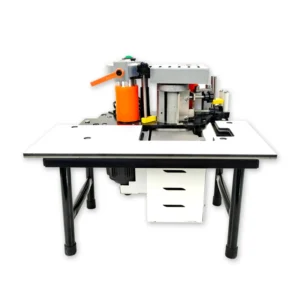
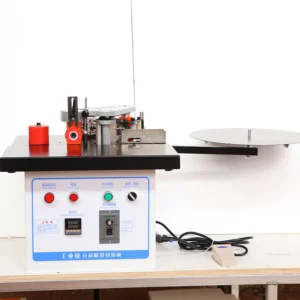
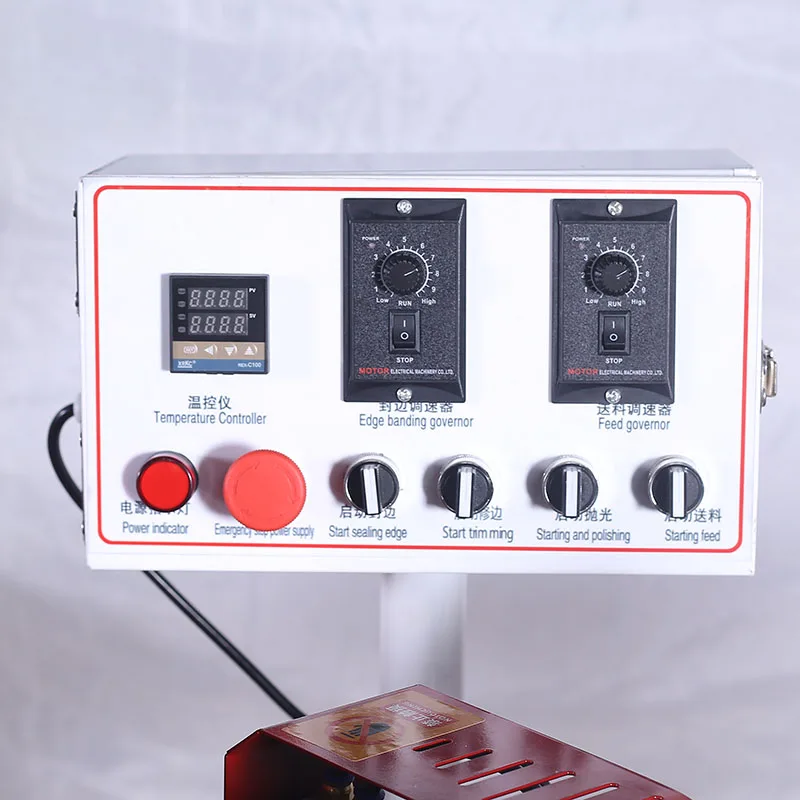
| Function Sequence | Automatic plate feeding, end cutting, upper and lower polishing, automatic head and tail trimming, integrated dust collector |
| Edge Banding Type | Straight line |
| Rated Voltage | 220V (configurable from 110V to 440V on request) |
| Rated Power | 4 kW |
| Feed Speed | 0–10 m/min |
| Conveyor Belt Speed | 0–10 m/min |
| Strip Thickness Range | 0.5–2.5 mm |
| Sheet Thickness Range | 10–50 mm |
| Trimming Power | 800 W × 2 (double high-speed motors, up and down) |
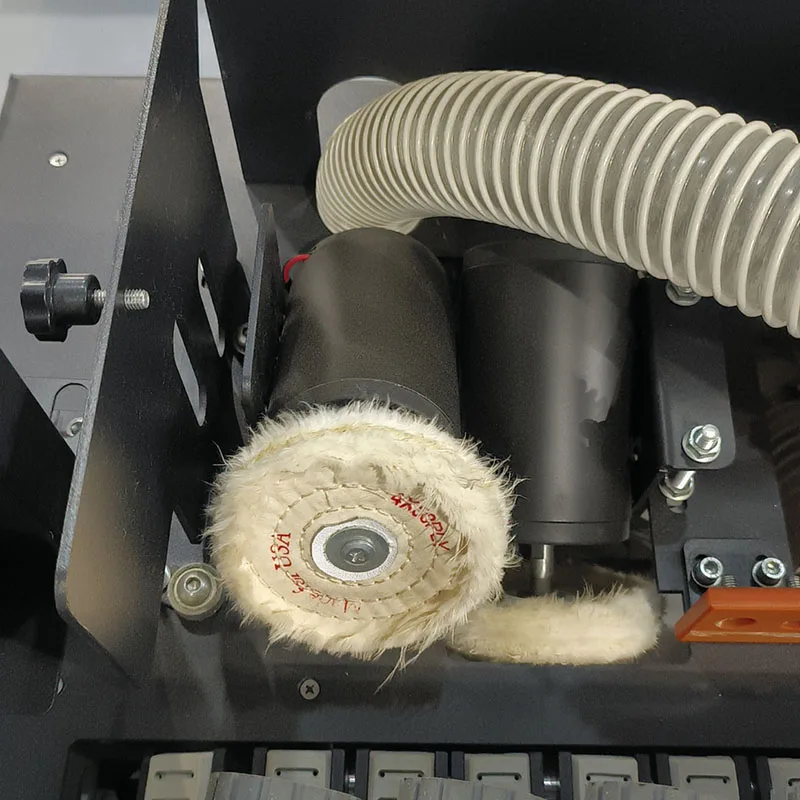
| Polishing Power | 180 W × 2 (up and down) |
| Suction Power | 1200 W |
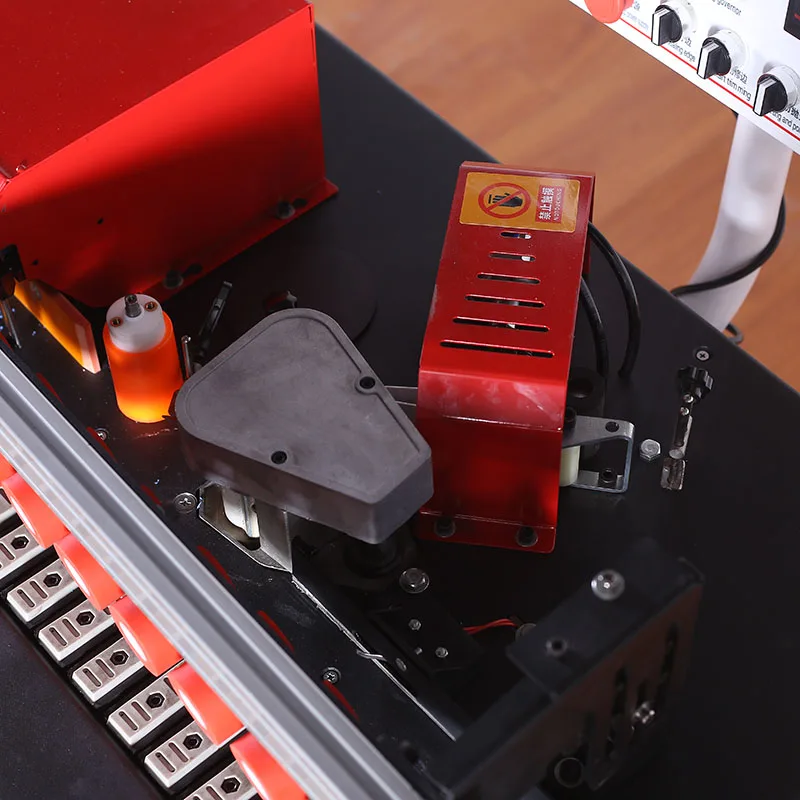
| Glue Pot Capacity | 4000 ml |
| Glue Heating Power | 1000 W (heat-up time 5–10 min) |
| Rated Air Pressure | 0.4–0.6 MPa |
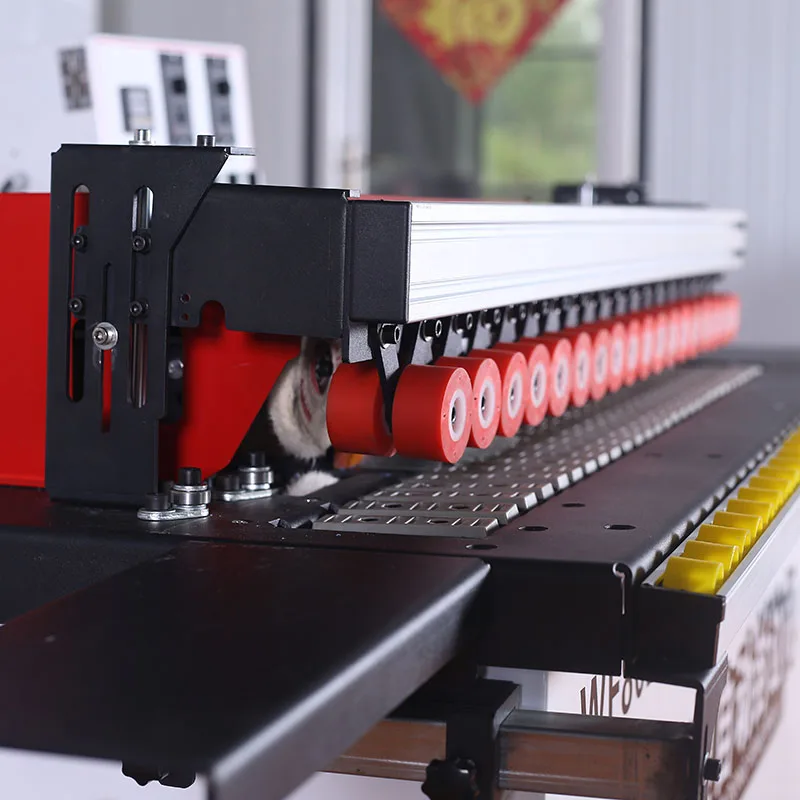
| Pressure Beam | One-piece construction, double rows of pressure wheels |
| Conveyor Belt Material | Silicone |
| Belt Breaking Method | Pneumatically controlled |
| Extension Support | Extendable fluent strips for large panels |
| Overall Dimensions | 130 × 65 × 75 cm (source value — verify against manufacturer catalog) |
| Machine Weight | 150 kg (source value — verify against manufacturer catalog) |
| Warranty | 1 year |
Application Suitability
| Application | Material or Output |
|---|---|
| Custom cabinet door and carcass edge sealing | MDF and particleboard with PVC edge banding |
| Plywood furniture component finishing | Plywood panels with veneer or PVC strips |
| Small-batch joinery production runs | Solid wood panels with thin veneer edging |
| Straight-line shelving and partition edging | Melamine-faced particleboard and MDF |
| Workshop scaling from manual to machine-assisted | Mixed board materials up to 50 mm thickness |
Why the Voltage Question Must Come Before the Quotation
Confirming local voltage and frequency in writing before production starts eliminates the most common cause of commissioning failure on imported woodworking equipment.
I once watched a fully automatic PVC edge bander sit idle on a South American factory floor for over three weeks. Panels were stacked to the ceiling. The machine had left our floor at 380V/50Hz, but the plant ran 440V/60Hz. A transformer eventually solved it, but the downtime cost far more than the machine’s freight. That lesson stays with me on every automatic edge banding machine for sale that crosses our loading dock. Electrical mismatch remains the single most preventable source of export failure [NEED_CITE: voltage and frequency standards by export market].
Mapping the Complete Machine Range to Your Production Stage
When a workshop buys equipment piecemeal from different suppliers, feed heights and throughput rates rarely align. The result is a bottleneck at the most expensive station. This full catalogue approach to automatic edge banding machine selection means every model in the series shares compatible conveyor geometry and control logic. A joinery shop starting with a compact entry-level unit can add a pre-milling station or a higher-speed model later without re-engineering the material flow between the panel saw and the boring machine.
How Model Tiers Address Different Panel Volumes
The entry tier handles straight-line PVC and veneer edging on standard panel thicknesses from 10 mm to 50 mm, suited for workshops processing smaller daily volumes or running short batches of custom components. Mid-range configurations add trimming and polishing stations that improve edge finish consistency across mixed substrates. Full-function models with pre-milling address chipboard and MDF edges that require surface preparation before glue application, ensuring the bond line remains invisible even under close inspection [NEED_CITE: substrate preparation requirements for edge adhesion].
Reading the Specs That Actually Matter
The 0–10 m/min feed speed range lets operators dial in slower speeds for thick veneer on delicate plywood, then increase pace for high-volume PVC runs on particleboard shelving. The double high-speed trimming motors at 800 W each handle both upper and lower edges in a single pass, removing the need for manual cleanup that slows downstream assembly. A 4000 ml glue pot capacity reduces refill interruptions during continuous production compared to smaller 1000 ml pots found on the most compact models in this family. Pneumatically controlled belt breaking ensures clean strip termination without stretching or tearing the edge material, particularly important when switching between 0.5 mm thin veneer and 2.5 mm rigid PVC within the same shift.
The Cost of Skipping Configuration Verification
Ordering an entry-level machine into a volume it was never designed to sustain leads to premature wear on the trimming motors and conveyor drive. Operators then compensate by slowing feed rates, which erodes the throughput advantage the purchase was supposed to deliver. Edge quality deteriorates as glue pot temperature fluctuates under continuous load, and visible glue lines appear on substrates that should have sealed cleanly. The fix usually involves buying a second, larger machine — doubling the footprint and creating a mismatch in the line that the original single-purchase approach was meant to avoid [NEED_CITE: consequences of undersized equipment in panel processing].
Why Source the Full Range from One Manufacturer
In-house manufacturing with patented cutting mechanisms means tolerance claims are verifiable on the shop floor, not just stated in a brochure. The complete product family — from entry-level to full-function pre-milling — lets a workshop scale capacity without introducing a second brand’s control system or spare parts inventory. Voltage customization from 110V to 440V and multilingual control panels are treated as standard configuration steps, not special requests. A four-stage QC protocol covering incoming material, in-process assembly, finished product, and pre-shipment electrical testing catches issues before they become commissioning problems overseas.
Documentation & Verification
- CE declaration of conformity covering machinery directive requirements for this equipment class
- ISO 9001 certificate confirming quality management system scope includes woodworking machinery
- Electrical schematic with confirmed voltage and frequency matching your facility’s supply
- Factory test record documenting edge finish quality on your specified panel thickness range
- Operation and maintenance manual written in the agreed language for your operators
- Spare parts list with part numbers matching the exact configuration shipped
Installation, Commissioning & Support
- Confirm dedicated circuit capacity for the 4 kW rated load plus compressor draw at 0.4–0.6 MPa
- Allow minimum clearance around the 130 × 65 cm footprint for panel infeed and extension support deployment
- Verify conveyor belt tracking and pressure wheel alignment after transport before first powered run
- Set glue pot temperature and feed speed parameters for your specific PVC or veneer strip thickness
- Schedule operator familiarization covering belt breaking pneumatics and trimming motor adjustment
- Stock consumable trimming cutters and polishing pads matched to your primary edge banding material
Preparing Your Inquiry
To configure the right model from this range, share the panel materials you process most frequently, the edge banding types and thicknesses in your typical orders, and your local voltage and frequency. Include the daily panel volume you expect to edge-band so that feed speed and glue pot capacity can be matched to your shift pattern. If you are planning a complete line rather than a single station, provide your existing saw and boring machine specifications so that throughput can be balanced across all stations.
Frequently Asked Questions
Q: How do I choose between entry-level and full-function models in this range?
A: The decision depends on your daily panel volume and the variety of substrates you seal. Entry-level units handle straight-line PVC and veneer on standard thicknesses, suited for smaller workshops. Full-function models add pre-milling for chipboard edges and additional trimming stations for higher throughput. Share your typical batch size and material mix so we can recommend the appropriate tier.
Q: Can multiple machines from this range work together on one production line?
A: Yes. Models within this product family share compatible conveyor heights and control logic, so a factory can run a compact unit for simple shelving edges and a full-function model for cabinet doors on the same line. The key is balancing feed speed and station throughput with your upstream panel saw and downstream boring equipment.
Q: How does the machine handle different substrates like MDF versus plywood?
A: MDF edges are more porous and absorb glue differently than plywood or particleboard. The adjustable glue pot temperature and feed speed let operators tune the bond for each material. Pneumatically controlled belt breaking prevents strip tearing on thin veneer, while double high-speed trimming motors ensure clean edges on denser substrates.
Q: What voltage options are available for international shipment?
A: Voltage is configurable from 110V to 440V to match your local supply. Frequency is confirmed at the quotation stage alongside voltage, and both values appear on the electrical schematic included in the documentation package. Written confirmation before production starts prevents the commissioning delays that voltage mismatch causes.
Q: Is it possible to start with one machine and expand to a full line later?
A: The product family is designed so that adding a second or third station does not require changing suppliers or re-engineering material flow. Extension supports, conveyor geometry, and control interfaces remain compatible across the range, allowing phased investment from a single automatic edge banding machine through to a complete panel processing line.