Description
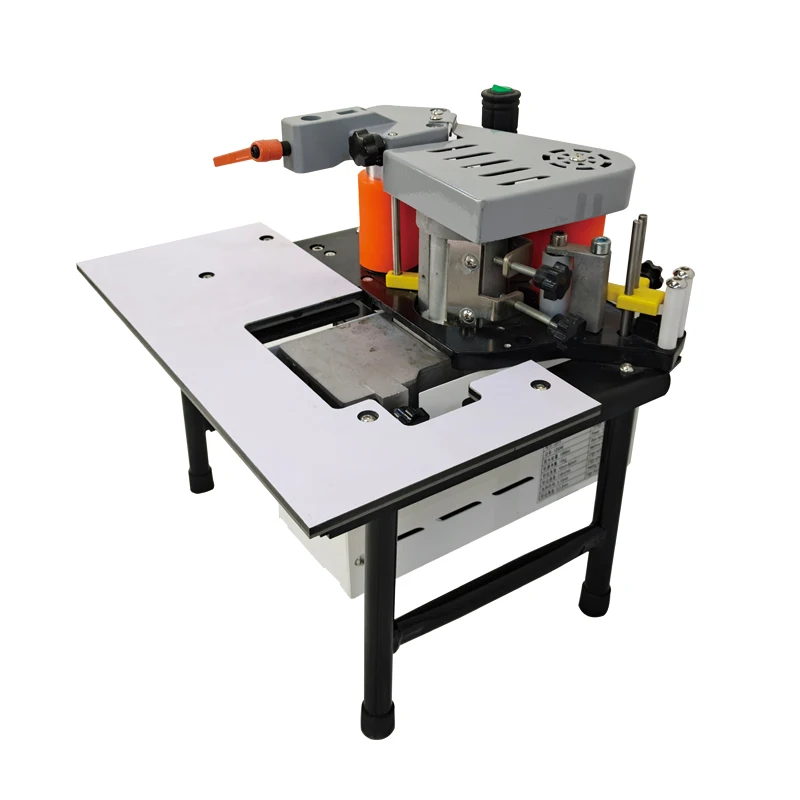
Verified Tolerance Mechanism — the ST-30 portable edge banding machine carries Ruiqi’s patented cutting mechanism and four-stage QC record, giving small workshops a verifiable entry point into the full catalogue range.
Technical Specifications
| Parameter | Value |
|---|---|
| Model | ST-30 |
| Product Type | Portable Edge Banding Machine |
| Total Power | 1000W |
| Voltage & Frequency | 220V / 380V / customization (frequency 50Hz/60Hz to be confirmed) |
| Edge Banding Height | 0–50 mm |
| Edge Banding Thickness | 0.3–3 mm |
| Minimum Sheet Length | 25 cm |
| Minimum Sheet Width | 3 cm |
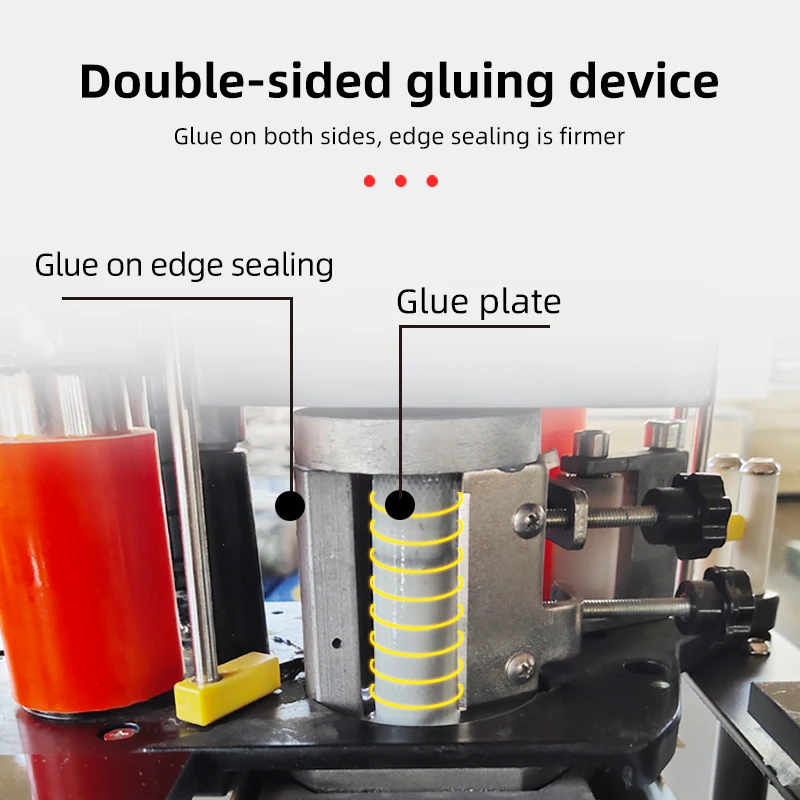
| Glue Pot Capacity | 1000 ml |
| Edge Trimming Power | 20W |
| Air Source Pressure | 0.5–0.8 MPa |
| Suitable Edge Banding Tape | ABS, PVC, Melamine, Veneer |
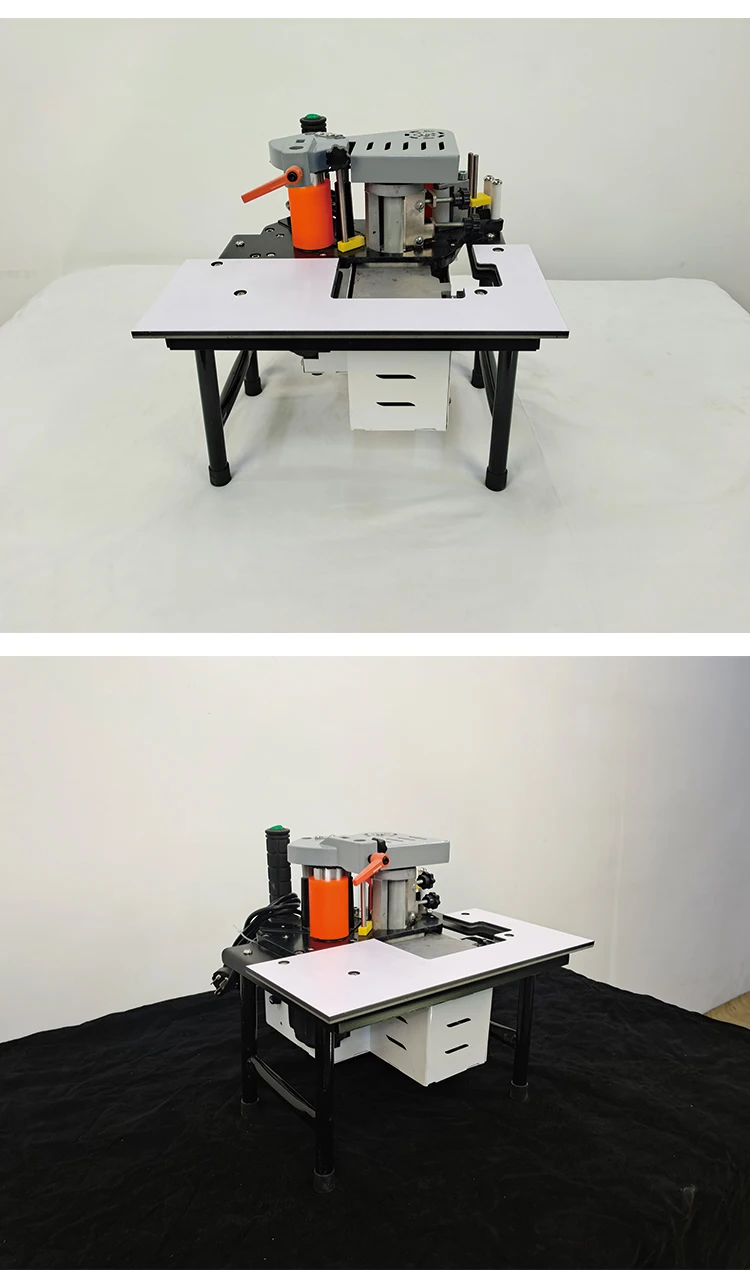
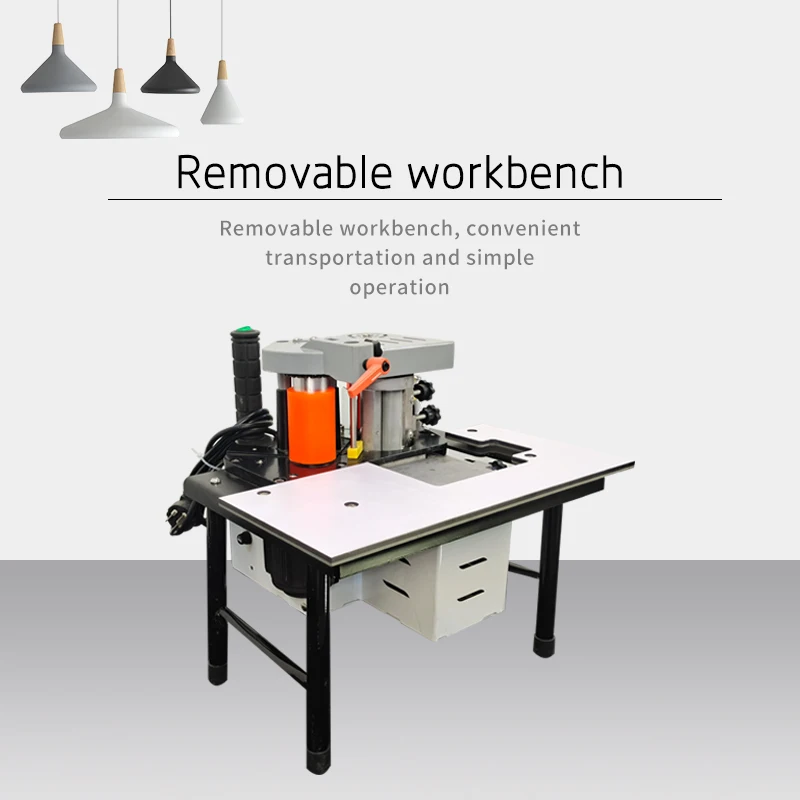
| Assembly State | Portable, benchtop operation |
| Product Size | 38 × 35 × 35 cm |
| Product Weight | 12 kg |
| Language Options | Chinese, English, Spanish, or other customizable languages |
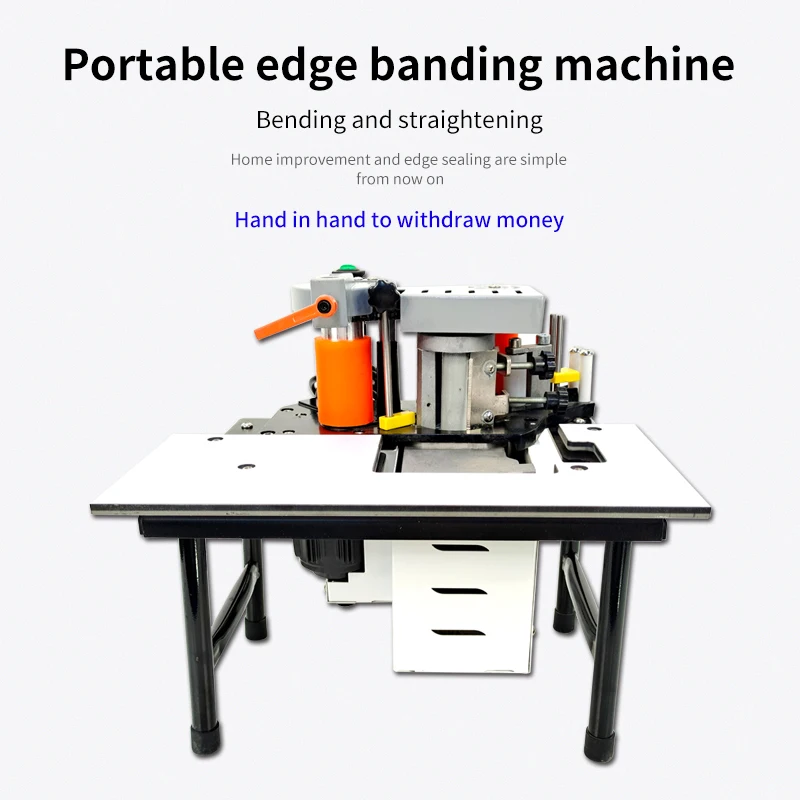
| Key Features | Curved and straight edge banding, multilingual control panel |
Application Suitability
| Application | Material or Output |
|---|---|
| Custom cabinet curved panel edging | Plywood and MDF with PVC or veneer tape |
| Small-batch furniture edge finishing | Particleboard and melamine-faced board |
| On-site joinery repair and touch-up | Solid wood panels with ABS or PVC banding |
| Supplementary curved-edge station for larger lines | Mixed substrates requiring non-linear profiles |
| Starter workshop edge banding | MDF and plywood for entry-level production volumes |
Why Voltage Confirmation Must Happen Before You Compare Portable Edge Banding Machine Options
A portable unit that arrives with the wrong voltage-frequency combination becomes dead weight on the workshop floor until a transformer or variable-frequency drive is sourced and installed.
I spent years in the Yangtze Delta equipment circle moving from after-sales repair into technical selection, and one case still sits with me. A Middle Eastern furniture plant ordered a portable edge banding machine rated at 380 V, but their site ran 440 V. The motor burned on first energization. Three weeks of downtime followed while a frequency converter was retrofitted, and the customer faced penalty charges for late order delivery. Since then I confirm local voltage standard and frequency on every single order before discussing configuration [NEED_CITE: voltage and frequency standards by export market]. The ST-30 is available with voltage configurable from 220 V to 380 V, and the factory will match the exact plug type and frequency the buyer’s market requires — but only if that conversation happens at inquiry stage.
Where the ST-30 Sits in the Full Edge Banding Range
The ST-30 occupies the compact, low-throughput end of Ruiqi’s edge banding family on ruiqiwood.com, where the catalogue spans from entry-level portable units to full-function pre-milling automatic lines. This positioning matters because a buyer surveying the range can see the upgrade path without changing supplier. When workshop volume grows beyond what a portable edge banding machine can sustain, the next model up in the same ecosystem handles higher feed speeds and additional trimming stations without requiring the operator to learn an entirely different control philosophy.
Curved Edges That Automatic Feed Machines Cannot Reach
Automatic through-feed edge banders excel at straight panels, but curved profiles — radius corners, shaped cabinet doors, contoured shelving — require a portable unit the operator can guide by hand. The ST-30 handles both straight and curved edge banding in one benchtop footprint, which means a small custom furniture factory can address the full scope of a project without outsourcing curved pieces to a third party. The 0.3–3 mm thickness range covers thin PVC through veneer, and the 1000 ml glue pot allows extended operation between refills [NEED_CITE: edge banding material compatibility standards for furniture production].
Reading the Numbers That Actually Matter
The 0–50 mm edge banding height range defines the panel thickness envelope the ST-30 can cover, from thin 3 mm MDF shelving up to 50 mm solid wood worktops. Feed is manual on a portable unit, so edge quality depends on operator consistency rather than motor-driven feed speed — this is acceptable at low volumes but becomes the limiting factor as order quantity climbs. The 0.5–0.8 MPa air source pressure requirement means a small compressor is mandatory; workshops already running pneumatic tools will integrate without additional investment. Glue pot temperature must match the edge tape material: PVC typically bonds at lower temperatures than veneer, and running veneer at PVC settings risks poor adhesion that only shows up when a customer pulls on the edge strip months after delivery. The 25 cm minimum sheet length and 3 cm minimum sheet width set the lower boundary — anything smaller must be edge-banded by hand or on a dedicated small-parts station.
The Hidden Cost of Buying a Portable Unit Without Checking the Spec Sheet
When a buyer sources a portable edge bander on price alone and skips the electrical schematic review, the machine may arrive with a plug that does not match the local socket standard or a motor wound for a frequency the local grid does not supply. The result is a unit that sits idle while a compatible transformer is ordered internationally. Operators who cannot read the control panel language stall commissioning further — what should be a same-day setup stretches into a multi-week delay [NEED_CITE: CE machinery directive requirements for industrial equipment]. On a portable edge banding machine, these issues are more common than on large automatic lines because buyers treat the purchase as minor and skip the specification confirmation step.
Why Source This Machine Through the Ruiqi Full Catalogue
Ruiqi maintains in-house manufacturing with patented cutting mechanisms, so the ST-30 is not a rebranded generic unit but part of a verified product family with traceable tolerance records. The four-stage QC process covers incoming material, in-process, finished product, and pre-shipment verification, and the factory test record is included with every shipment. Voltage customization from 220 V to 380 V with multilingual control panel options is standard, not an afterthought negotiated post-order. An engineer-led configuration recommendation arrives within 24 hours of inquiry, meaning the buyer gets a formal quotation that already accounts for local electrical standards. Factory visits are welcomed, so a distributor evaluating the manufacturing depth behind the ST-30 can inspect precision grinding and assembly before committing to a container order.
Documentation & Verification
- CE declaration of conformity covering the ST-30 portable edge banding unit
- Electrical schematic confirming matched voltage and frequency for destination market
- Factory test record on buyer’s specified edge tape material and panel thickness
- Operation and maintenance manual provided in the agreed operator language
- Spare parts list with part numbers for glue pot, trimming blade, and feed components
- Packing photographs documenting crating condition before container loading
Installation, Commissioning & Support
- Benchtop placement requires a stable workbench rated for at least 12 kg plus operational vibration
- Dedicated 220 V or 380 V circuit matching the confirmed frequency must be available at the workstation
- Unit ships fully assembled; operator mounts glue pot and connects air hose on arrival
- First-run glue temperature calibration performed on buyer’s actual PVC or veneer tape stock
- Multilingual control panel configured to operator language before dispatch to reduce setup time
- Spare trimming blades and glue pot seals included for initial maintenance cycle
What to Share When Requesting a Quotation
Provide your panel material types, the edge banding tape you plan to run, and the daily volume you expect the ST-30 to handle so the engineer can confirm whether this portable unit matches your throughput or whether a higher-tier model in the catalogue is more appropriate. Confirm your site voltage, frequency, and plug standard at inquiry stage. Note the language your operators need on the control panel so it is configured before shipment rather than reprogrammed on arrival.
Frequently Asked Questions
Q: What production volume is the ST-30 designed for, and when should I move to a full-function automatic edge bander?
A: The ST-30 suits low-volume custom work, curved-edge tasks, and supplementary use alongside a main line. When your straight-edge panel count grows to a level where manual feed speed becomes the bottleneck, the Ruiqi catalogue includes automatic models with higher feed rates and additional trimming stations that maintain the same control philosophy.
Q: How is voltage and plug type confirmed before shipment?
A: At inquiry stage you provide your site voltage, frequency, and plug standard. The factory issues an electrical schematic and voltage confirmation document with the formal quotation. The ST-30 is configurable from 220 V to 380 V, and the motor winding, plug, and control transformer are matched to your market before production begins.
Q: Can the control panel language be customized for my operators?
A: Yes. The ST-30 ships with control panel options in Chinese, English, Spanish, or other customizable languages. You specify the required language at order confirmation, and the panel is configured and tested in that language during pre-shipment verification so operators can begin work immediately on arrival.
Q: How does the ST-30 fit within the broader Ruiqi edge banding range?
A: It sits at the entry-level portable position in a product family that extends to full-function pre-milling automatic edge banders. A workshop can start with the ST-30 for curved and small-batch work and later add higher-throughput models from the same supplier, keeping spare parts sourcing and technical support within one relationship.
Q: What edge banding materials and thicknesses are compatible, and how is quality verified?
A: The ST-30 handles ABS, PVC, melamine, and veneer tape from 0.3 to 3 mm thickness. The factory runs a pre-shipment test using your specified tape and panel material, and the test record ships with the machine so you can verify glue line quality and trimming finish before the unit leaves the factory floor.