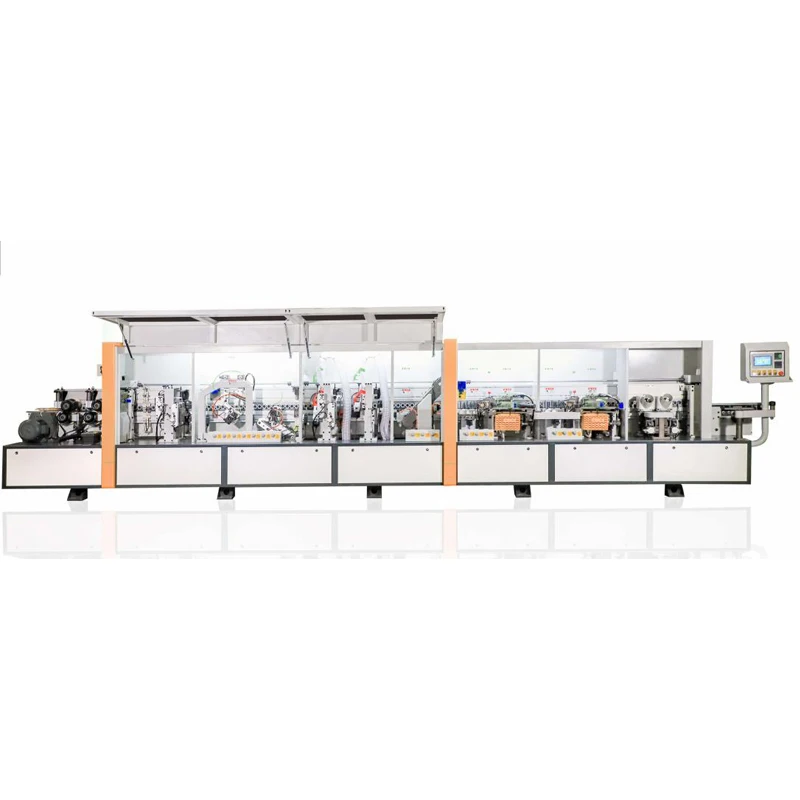
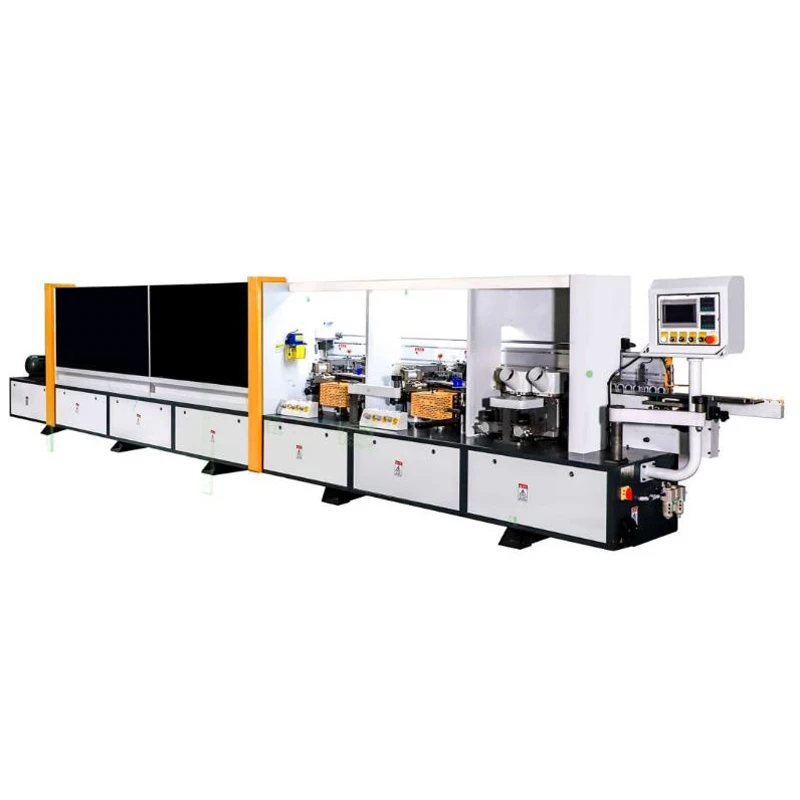
Description
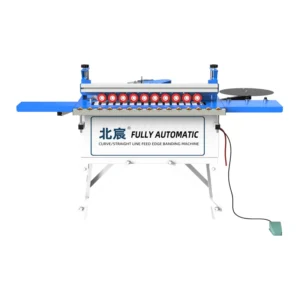
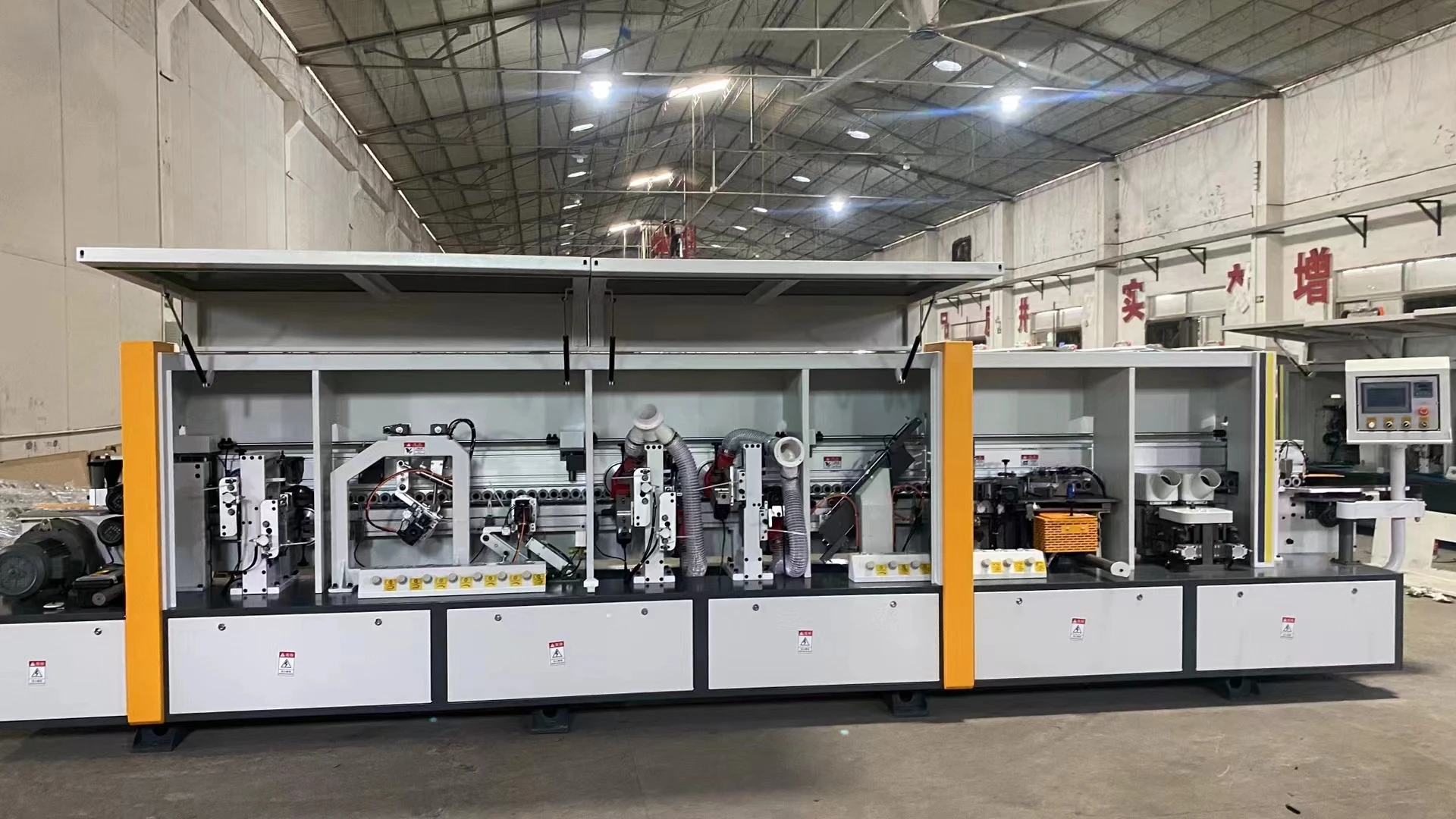
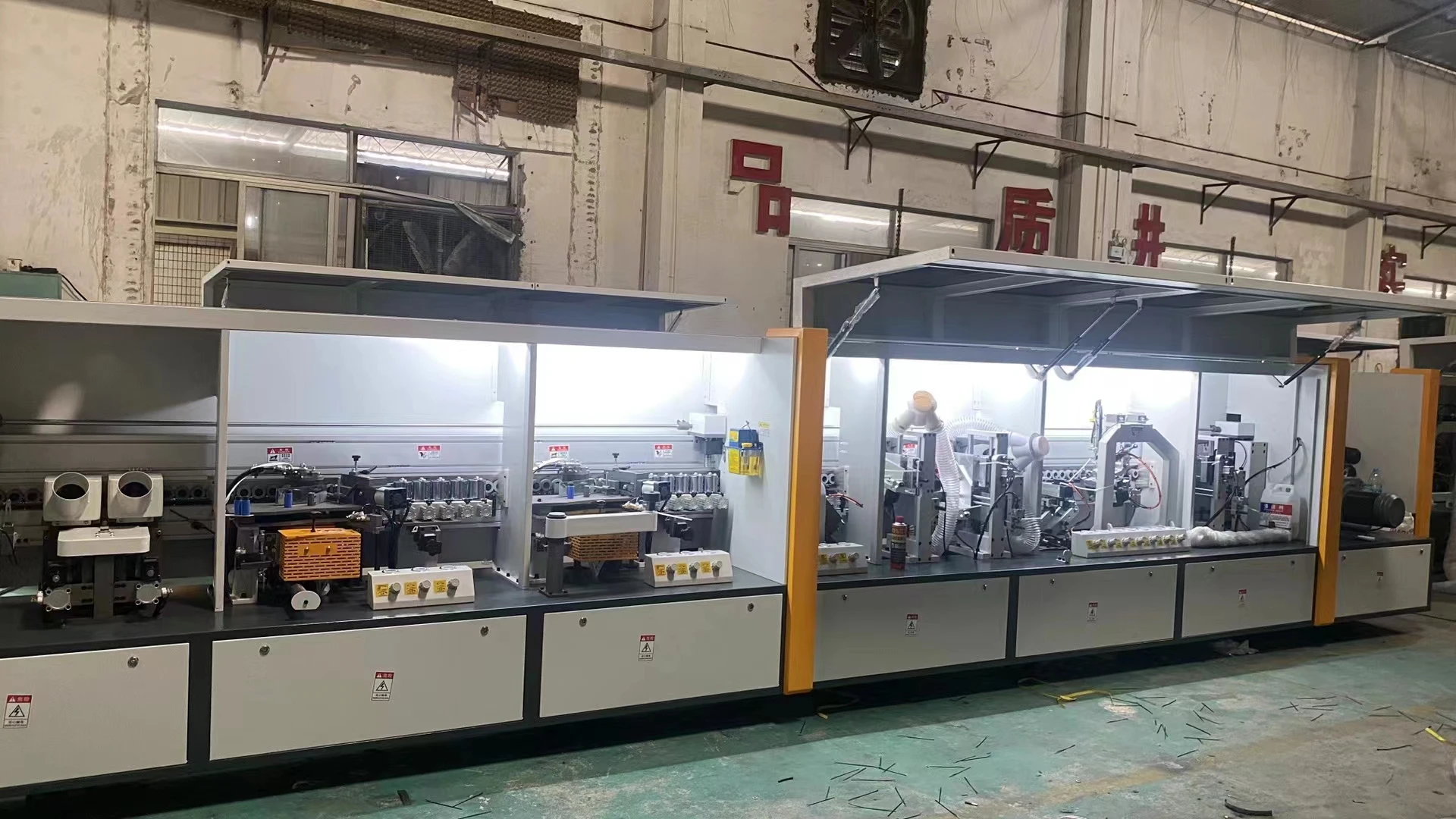
Precision-ground tolerance verification — every ZDS-468JJ undergoes four-stage inspection before dispatch, ensuring each trimming and buffing station meets spec before it reaches your floor.
Technical Specifications
| Parameter | Value |
|---|---|
| Model | ZDS-468JJ |
| Product Type | Automatic Edge Banding Machine |
| Rated Power | 18.5 kW |
| Voltage & Frequency | 380V-3HP (frequency configurable upon confirmation) |
| Control System | PLC control system |
| Overall Dimensions (L×W×H) | 8000×900×1600 mm |
| Net Weight | 2300 kg |
| Working Pressure | 0.6 MPa |
| Panel Thickness Range | 10–60 mm |
| Edge Band Thickness Range | 0.4–3 mm |
| Minimum Panel Size | 300×60 mm / 150×150 mm |
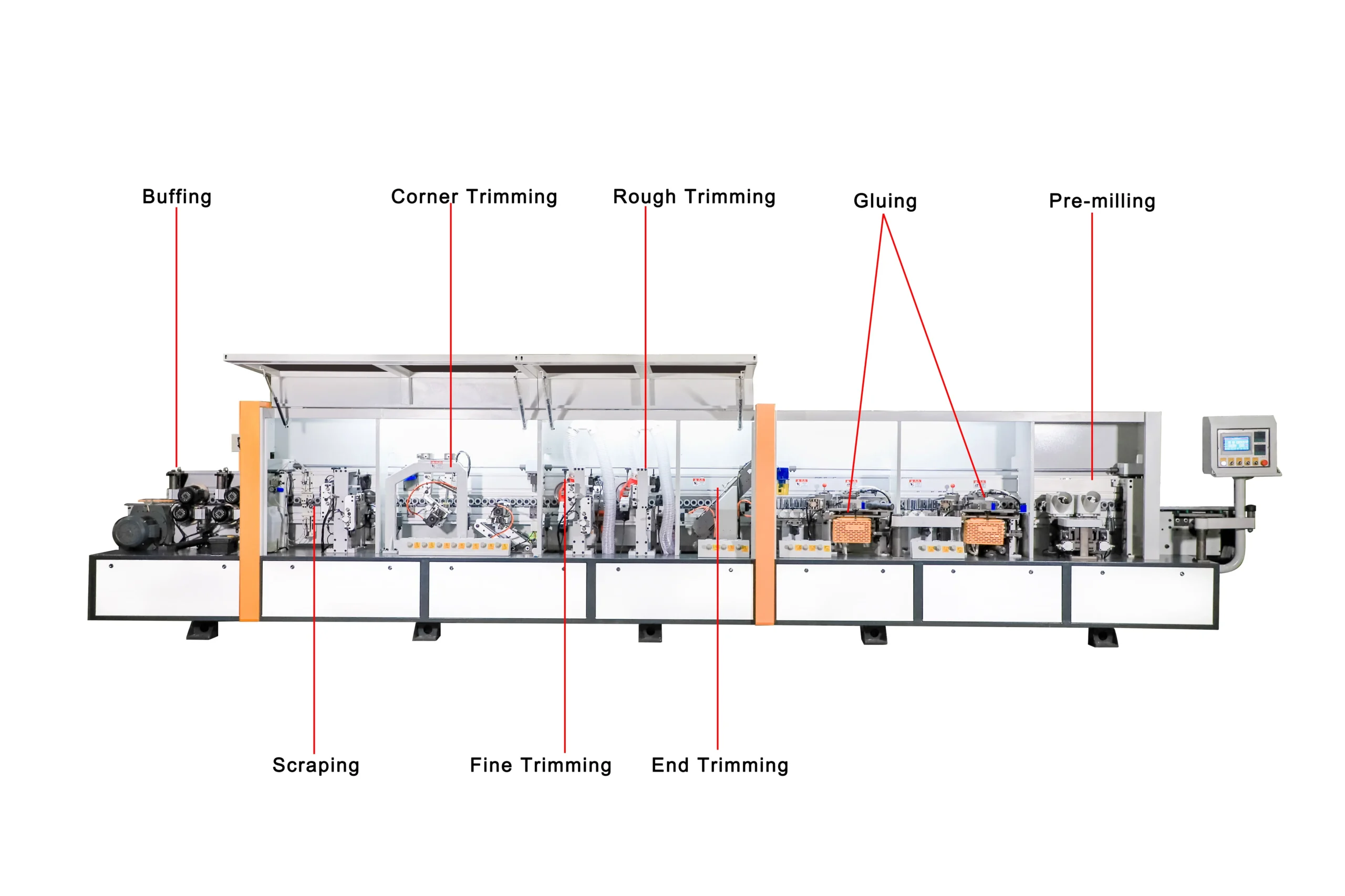
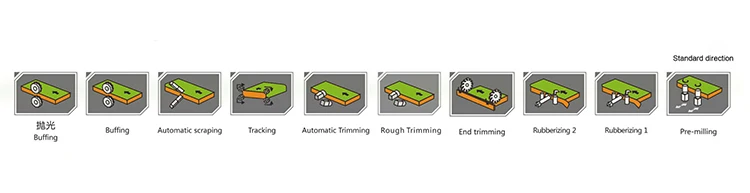
| Pre-milling Unit | Diamond cutters, 12000 rpm, 2×2.2 kW, max depth 2 mm |
| Gluing System | Double glue pot (dual color), optional PUR device |
| Pressing System | 6 sets of pressing roller wheels |
| End Trimming | Two high-frequency motors, 0.37 kW, 12000 rpm |
| Rough Trimming | 2 high-frequency motors, 0.75 kW, 12000 rpm, 2×6 teeth flat cutters |
| Fine Trimming | 2 high-frequency motors, 0.75 kW, 12000 rpm, 2×6 teeth R2 cutters |
| Corner Rounding | Four-motor profiling, 4 effects plus diamond corners |
| Scraping | Edge scraping with electro-pneumatic blowing |
| Buffing | Double buffing unit (upper and lower) |
| Narrow Plate Auxiliary | Included |
| Key Features | Optional slotting device, Quick Sol Unit, flexible edge scraping |
Application Suitability
| Application | Material or Output |
|---|---|
| Custom furniture panel edge banding | MDF, plywood, particleboard with PVC or veneer banding |
| Cabinet door and carcass production | Laminated and coated substrates requiring pre-milling |
| Panel processing plants | High-volume edge finishing on melamine-faced boards |
| Workshop scaling from manual to machine | Entry substrates including solid wood panels |
| Contract furniture manufacturing | Multi-material runs switching between PVC and veneer |
Why the Voltage Question Should Come Before the Price on Any Automatic Edge Banding Machine Manufacturer Order
A machine wired for the wrong supply is scrap metal on arrival — no amount of pre-milling precision matters if the VFD burns out during commissioning.
I learned this the hard way when a full-function edge bander shipped to a North American shop wired for 480V while the configuration sheet said 440V. The inverter failed on first power-up, and the customer stood idle for three weeks waiting for replacement components. [NEED_CITE: voltage and frequency standards by export market] That single mismatch cost more than the entire shipping budget. Every automatic edge banding machine manufacturer should demand a photo of your distribution panel before the order is signed — and if they do not ask, that silence should concern you more than any lead-time promise.
Where This Model Sits in a Scalable Product Family
The ZDS-468JJ occupies the full-function tier of a range that begins with compact edge banders for small joinery shops and extends to high-throughput lines for continuous production environments. A workshop processing custom cabinet runs can start with entry-level models and move to this automatic edge banding machine manufacturer specification without changing supplier or retraining operators on a different control philosophy. The PLC interface remains consistent across the range, so the learning curve between tiers stays minimal.
Pre-milling, Double Glue Pots, and What They Mean for Your Panel Output
Pre-milling with diamond cutters at 12000 rpm removes up to 2 mm of material from the panel edge before gluing, correcting saw blade imperfections that would otherwise telegraph through thin PVC banding. [NEED_CITE: edge quality standards for laminated panel furniture] The double glue pot allows operators to keep two adhesive colors loaded simultaneously — one for light substrates and one for dark — eliminating the downtime of draining and refilling between color changes. For shops running mixed batches of white melamine and walnut-grain boards in the same shift, this configuration keeps the line moving rather than stopping for glue swaps.
Reading the Specs That Actually Affect Downstream Assembly
Panel thickness range of 10–60 mm covers everything from thin drawer bottoms to thick worktops, but the minimum panel size of 300×60 mm defines the smallest offcut the machine can handle — critical for shops cutting nested components where narrow rails are common. The narrow plate auxiliary device stabilizes these thin pieces during feed, preventing the tilt that causes uneven glue application on strips below 80 mm wide. Corner rounding with four profiling motors produces radii and diamond-edge finishes in a single pass, so operators do not need to manually dress corners after the machine — a step that introduces inconsistency when different workers handle the task. The working pressure requirement of 0.6 MPa must be maintained at the point of use, meaning the compressor and air line sizing should account for pressure drop across the length of hose from the plant air supply.
The Hidden Cost of Skipping Configuration Verification
When feed height, working pressure, or voltage frequency are assumed rather than confirmed, the machine may run but produce inconsistent edge adhesion that only reveals itself during furniture assembly weeks later. [NEED_CITE: common causes of edge banding delamination in panel furniture] Panels that pass visual inspection at the banding station can fail when dowel holes are drilled near the edge, because the glue bond never achieved full contact on a substrate that was slightly out of the specified thickness window. Shops then blame the adhesive or the banding material, when the real issue traces back to a configuration conversation that never happened before the purchase order was signed.
Why Source This Machine Through This Channel
In-house manufacturing with patented cutting mechanisms means tolerance claims are verifiable through factory test records rather than marketing brochures. The four-stage QC process — incoming material, in-process, finished product, and pre-shipment — catches station misalignment before the crate is sealed. Voltage, language, and specification customization are standard rather than premium add-ons, so a buyer in a 415V market does not pay extra for a transformer-compatible configuration. Engineer-led configuration means a formal quotation arrives within 24 hours with each station selection justified against the stated production requirement, not padded with unrequested options. Factory visits are welcomed, allowing buyers to see the ZDS-468JJ run their actual panel stock before committing to a purchase order.
Documentation & Verification
- CE declaration of conformity covering the ZDS-468JJ and its electrical safety compliance
- Machine specification sheet confirming every station configuration and optional feature selected
- Electrical schematic with voltage and frequency matching your local supply confirmed by photo
- Factory test record documenting trimming and buffing output on your panel thickness range
- Operation and maintenance manual in your agreed language covering all functional stations
- Spare parts list with part numbers for consumable cutters, glue pot seals, and buffing wheels
Installation, Commissioning & Support
- Floor space of approximately 8000×900 mm plus operator clearance on three sides required
- Dedicated 380V three-phase circuit rated for 18.5 kW with confirmed frequency matching local grid
- Machine ships fully assembled; verify doorway and overhead clearance before delivery day
- First power-up includes PLC parameter setting for feed speed and station engagement sequence
- Operator training covers glue pot changeover, corner rounding profile selection, and scraper adjustment
- Spare diamond pre-milling cutters and R2 fine trimming blades included in initial parts kit
- Weekly lubrication schedule for pressing rollers and guide rails documented in the maintenance manual
What to Include in Your Inquiry
Provide your panel material types, thickness range, and edge banding materials so the station configuration matches your actual production mix rather than a generic default. Confirm your workshop supply voltage and frequency with a photo of your distribution panel — this single step prevents the most expensive category of commissioning failure. If you are integrating this machine with existing panel saws or boring machines upstream and downstream, share their feed heights and throughput expectations so the line configuration avoids bottleneck mismatches.
Frequently Asked Questions
Q: Where does the ZDS-468JJ sit within the full model range for different production volumes?
A: It is the full-function tier with pre-milling, double glue pot, four-motor corner rounding, and double buffing. Below it are mid-range models that omit pre-milling or reduce corner rounding to two motors. Above it, high-throughput configurations add faster feed speeds and automated return conveyors. The right tier depends on your daily panel volume and edge quality requirements.
Q: Which edge banding materials work with the pre-milling station?
A: PVC, ABS, melamine, and veneer banding from 0.4 to 3 mm thickness are all compatible. Pre-milling benefits each differently — it removes saw marks on particleboard before PVC application and prevents tear-out on veneered substrates. Diamond cutters at 12000 rpm handle coated boards without chipping the laminate surface.
Q: What optional features can be added or removed for specific needs?
A: The slotting device adds groove-cutting capability for panel connectors. The PUR device replaces standard EVA adhesive for moisture-resistant bonding in humid environments. The Quick Sol Unit provides dual pre-melt for faster glue readiness. Any of these can be omitted if your production does not require them.
Q: What voltage configurations are available for export markets?
A: Standard is 380V three-phase, but the machine can be configured for voltages from 110V to 440V with matching frequency. A photo of your distribution panel confirms the exact requirement before production begins, preventing inverter damage on arrival.