Description
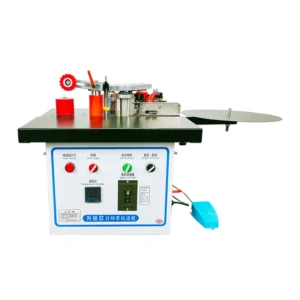
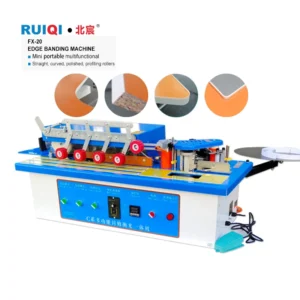
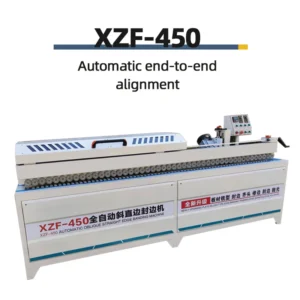
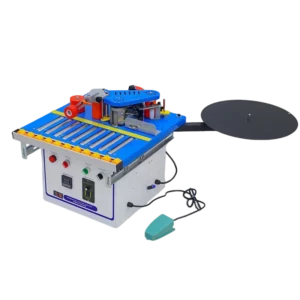
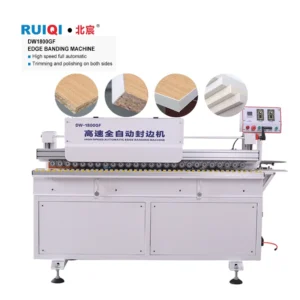
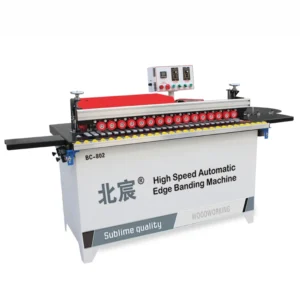
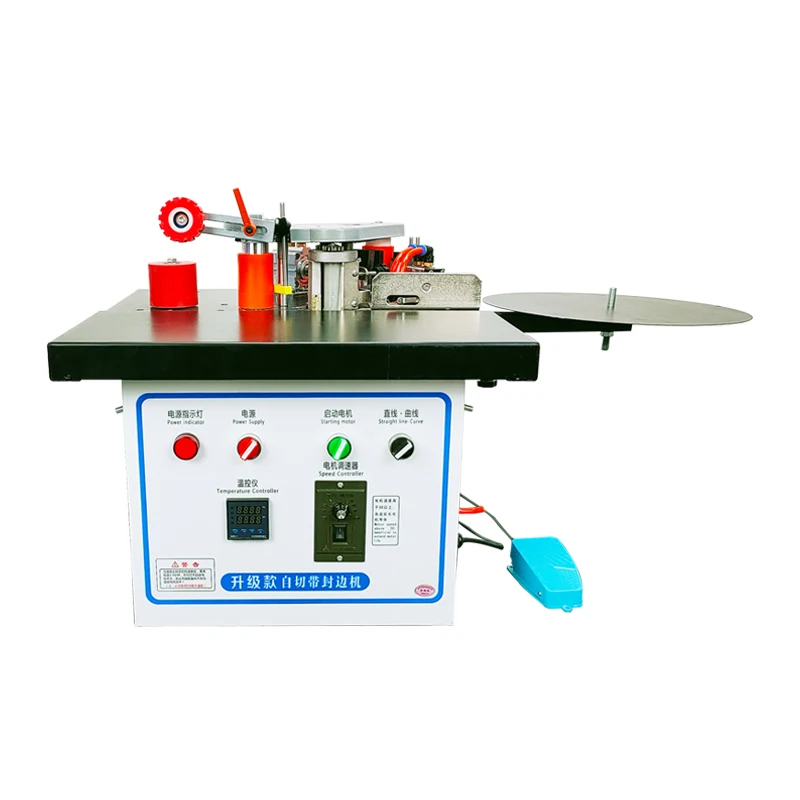
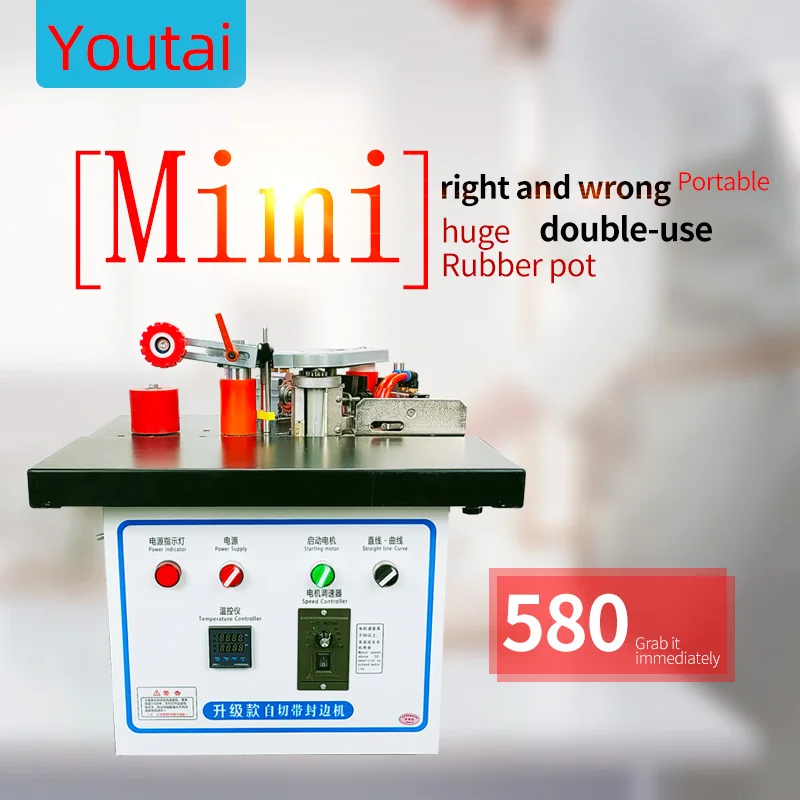
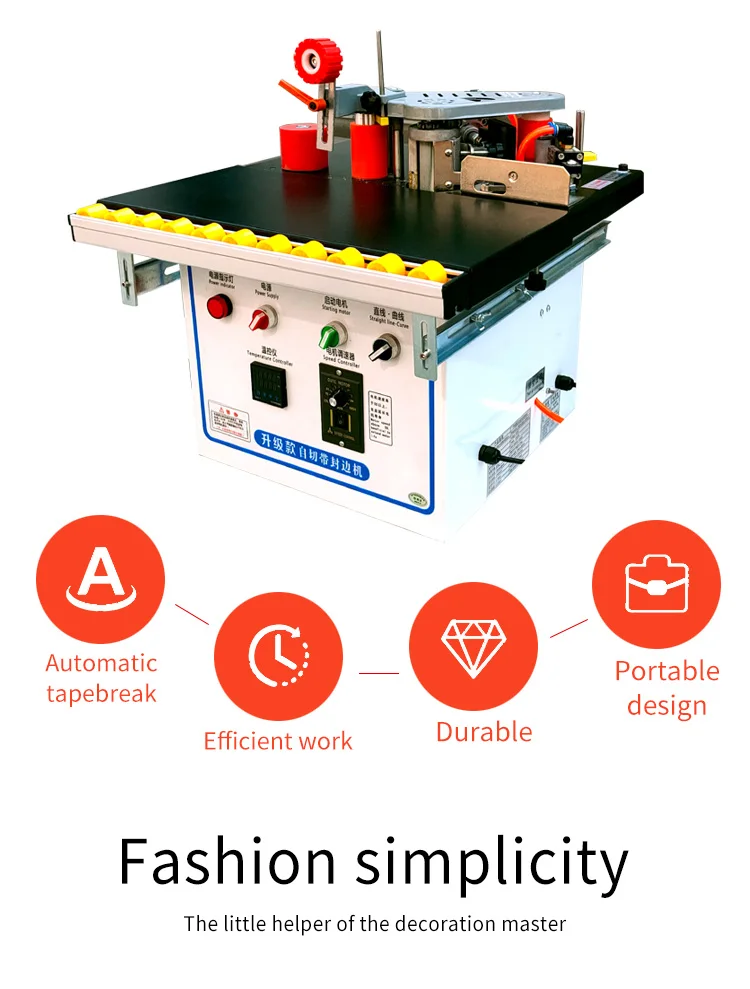
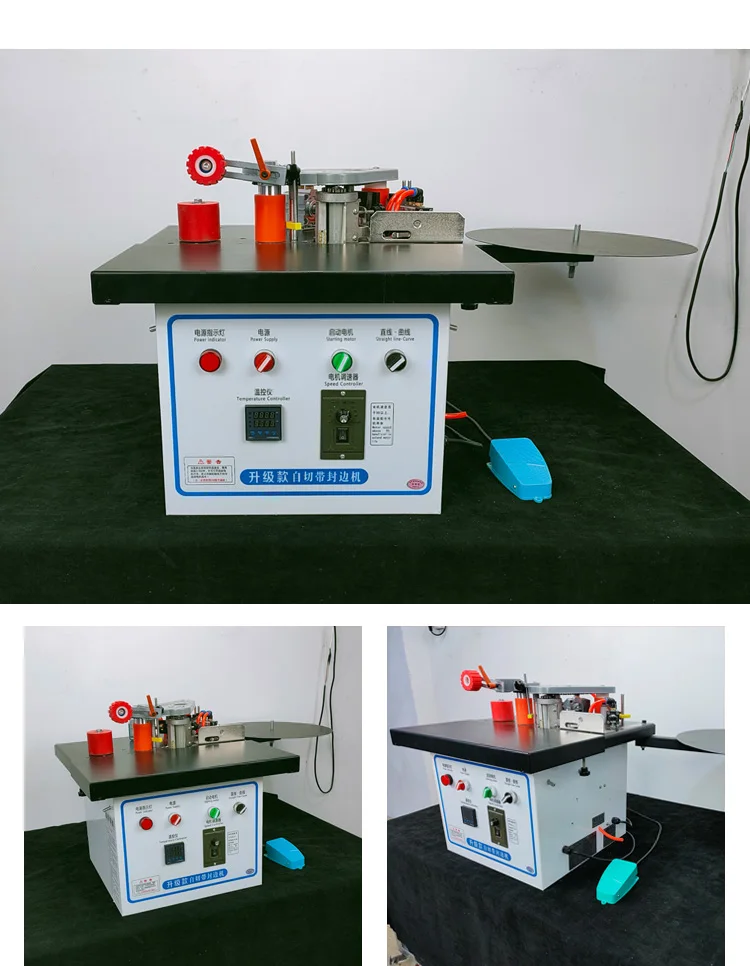
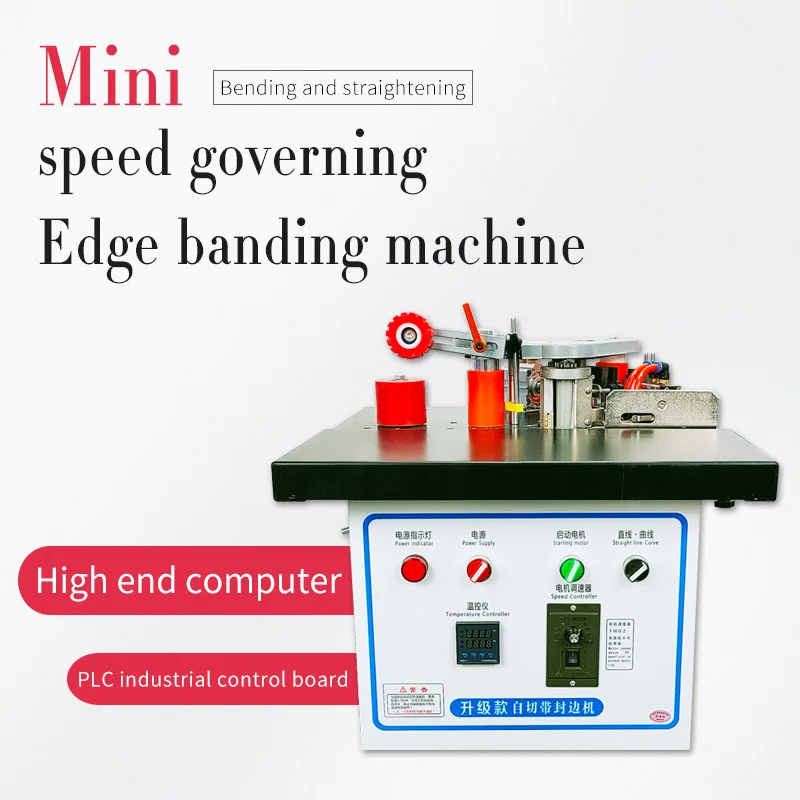
Compact Footprint, Full Catalogue Path — the ST-50 portable edge banding machine occupies the entry-level tier in Ruiqi Wood’s complete range, letting workshops start small and scale into automated lines from the same manufacturer.
Technical Specifications
| Parameter | Value |
|---|---|
| Model | ST-50 |
| Product Type | Portable Edge Banding Machine |
| Rated Power | 1000W |
| Voltage & Frequency | 220V / 380V / customization (frequency to be confirmed) |
| Edge Banding Mode | Curved and straight edge |
| Edge Banding Height | 0–50 mm |
| Edge Banding Thickness | 0.3–3 mm |
| Minimum Sheet Length | 25 cm |
| Minimum Sheet Width | 3 cm |
| Glue Pot Capacity | 1000 ml |
| Edge Trimming Power | 20W |
| Air Source Pressure | 0.5–0.8 MPa |
| Overall Dimensions (L×W×H) | 50 × 50 × 47 cm |
| Net Weight | 22 kg |
| Language Options | Chinese and English; customizable to Spanish, French, or other languages |
| Certification | CE and ISO 9001 referenced at factory level (model applicability to be confirmed) |
Application Suitability
| Application | Material or Output |
|---|---|
| Home decoration on-site edge repair | MDF, particleboard, plywood panels in residential installations |
| Small workshop custom furniture edging | Ecological board and solid wood board for low-volume cabinet runs |
| Prototype and rework edge sealing | PVC and veneer edge banding on sample panels before full-line production |
| Supplementary portable unit for larger shops | Curved and straight edge touch-ups alongside primary automatic edge banders |
Why "Portable" Should Not Mean "Unverified" in Your Line Plan
A portable edge banding machine earns its place only when its throughput ceiling, voltage match, and upgrade path are documented before purchase.
Buying a single compact unit without mapping it against your future automatic line often leads to mismatched feed heights and incompatible conveyor speeds once you expand. I have seen joinery shops invest in a Portable Edge Banding Machine manufacturer’s entry model, only to discover months later that its panel thickness range did not overlap with the automatic bander they added next [NEED_CITE: equipment integration standards for sequential woodworking machinery]. Confirming dimensional and electrical compatibility early avoids costly bench modifications and idle machines on the workshop floor.
Where the ST-50 Sits in the Complete Edge Banding Range
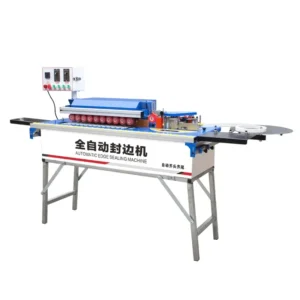
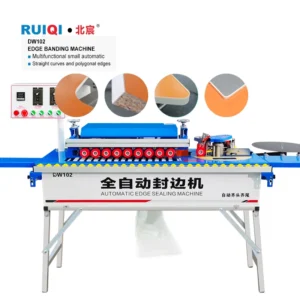
The ST-50 fills the hand-fed, portable slot in Ruiqi Wood’s full catalogue, sitting below semi-automatic and fully automatic models that handle higher feed speeds and wider panel dimensions. This positioning matters because it lets a workshop evaluate the entire product family on one factory tour, comparing the ST-50’s 0–50 mm banding height against the next tier’s capabilities. When volume grows, moving to a higher-tier Ruiqi model means the operator already understands the control logic and glue system behavior, shortening the learning curve.
Planning Your Workshop Layout Around a Portable Unit
Because the ST-50 measures 50 × 50 × 47 cm and weighs 22 kg, it can sit on a standard workbench without dedicated floor space or heavy-duty power circuits. This makes it practical for contractors who need edge sealing at installation sites as well as for workshops using it as a secondary station for rework and prototypes [NEED_CITE: portable woodworking equipment placement guidelines in small workshops]. Positioning the unit near the cutting area reduces panel handling distance and keeps the main production flow uninterrupted.
Reading the Specs That Actually Affect Edge Quality
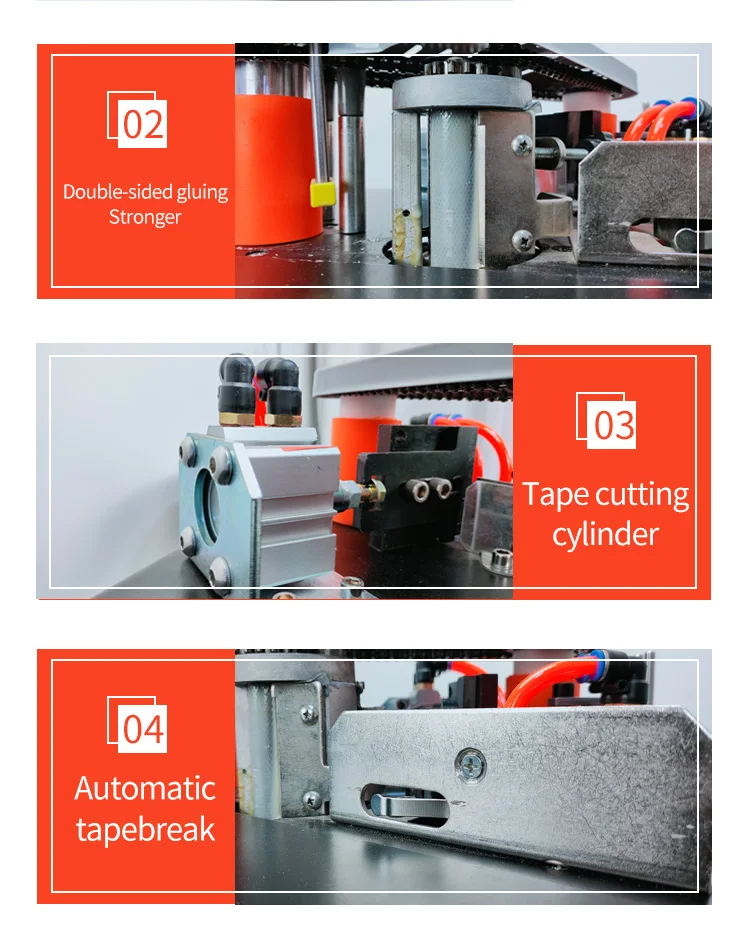
The 0.3–3 mm banding thickness range covers PVC, melamine, and thin veneer strips, which accounts for most custom furniture edging requirements. The 1000 ml glue pot capacity supports extended small-batch runs without frequent refills, reducing temperature fluctuation that can weaken adhesive bonding on porous substrates like particleboard. Edge trimming at 20W is sufficient for clean-up on the banding materials within the stated thickness range, though heavier stock would require stepping up to a dedicated trimming station on a higher-tier model. The 0.5–0.8 MPa air pressure requirement means any standard workshop compressor can supply the unit, avoiding the need for a separate pneumatic system.
What Happens When Voltage and Frequency Are Assumed
Sending a portable unit to a market with 60 Hz power while the machine was configured for 50 Hz can cause the glue pot heater and feed motor to behave outside their rated parameters, leading to inconsistent adhesive viscosity and uneven banding adhesion. I once visited a site where the operator blamed the glue brand for peeling edges, but the real cause was a frequency mismatch that altered the heating cycle [NEED_CITE: voltage and frequency standards by export market]. Requesting a voltage confirmation document before shipment eliminates this failure mode entirely.
Why Sourcing the Full Range from One Manufacturer Matters
Ruiqi Wood builds the ST-50 on the same factory floor as its automatic edge banders, which means component sourcing, precision grinding standards, and quality control procedures carry through the entire product family. The four-stage QC process — incoming material, in-process, finished product, and pre-shipment verification — applies to this portable model just as it does to full-line equipment. Voltage customization from 220V to 380V and multilingual control panels are available as standard configuration options rather than afterthought add-ons. An engineer reviews your panel material and banding type before issuing a formal quotation, ensuring the ST-50 is genuinely suited to your workload rather than simply the cheapest option in the catalogue.
Documentation & Verification
- Machine specification sheet confirming voltage, frequency, and plug type for your destination market
- Electrical schematic with voltage confirmation document signed off before crating
- Factory test record showing curved and straight edge sealing results on your specified panel material
- Operation and maintenance manual delivered in the operator’s required language
- Spare parts list matched to the ST-50 configuration you ordered
- Packing photographs provided before dispatch for your records
Installation, Commissioning & Support
- Bench mounting on a stable surface capable of supporting 22 kg plus operator handling loads
- Dedicated 220V or 380V circuit matching the confirmed frequency to prevent glue pot heater drift
- Air line connection to existing workshop compressor regulated to 0.5–0.8 MPa
- Initial glue temperature calibration on your specific PVC or veneer banding stock before production use
- Operator walkthrough of curved versus straight edge feed technique in the agreed manual language
- Replacement glue pot and edge trimming blade included in the first spare parts order
What to Share Before Requesting a Quotation
Tell us the panel materials you work with most often — MDF, particleboard, plywood, or solid wood — along with the edge banding type and thickness you plan to run. Confirm your local voltage, frequency, and plug standard so the electrical configuration is locked in before production begins. If you are evaluating the ST-50 as part of a broader line plan, share your current and projected daily panel volume so the engineering team can advise whether this portable tier or the next automatic model better matches your trajectory.
Frequently Asked Questions
Q: Where does the ST-50 sit in Ruiqi Wood’s full edge banding machine range and what is the upgrade path?
A: The ST-50 is the entry-level portable model, designed for hand-fed curved and straight edge sealing. Above it, the catalogue includes semi-automatic and fully automatic banders with higher feed speeds and wider panel capacity. Moving up within the same product family keeps control logic and consumable specifications familiar, reducing transition time when your volume grows.
Q: Which panel materials and edge banding types are compatible with this portable model?
A: The ST-50 handles MDF, particleboard, plywood, ecological board, and solid wood panels. Its 0.3–3 mm banding thickness range accommodates PVC, melamine, and thin veneer strips. For substrates with unusual porosity or surface coatings, sharing a sample with the factory before ordering allows glue temperature and feed rate to be pre-calibrated.
Q: How do I confirm voltage, frequency, and plug configuration for my market before ordering?
A: Provide your local supply voltage, frequency in Hz, and plug standard during the inquiry stage. The factory issues an electrical schematic and voltage confirmation document for your approval before production, ensuring the glue pot heater and motor are wound correctly for your grid conditions.
Q: What is the minimum and maximum panel size this machine can handle reliably?
A: The ST-50 accepts panels with a minimum length of 25 cm and a minimum width of 3 cm, with an edge banding height range of 0–50 mm. Panels significantly larger than typical cabinet components can be edged, but the hand-fed nature of the unit means very heavy sheets require operator support to maintain consistent feed pressure along the glue line.
Q: Can I visit the factory to see the ST-50 alongside higher-tier models for line-planning comparison?
A: Factory visits are welcomed at the Ningjin facility. You can run your own panel samples on the ST-50 and compare edge quality, feed technique, and footprint against semi-automatic and automatic models in the same product family, helping you make an informed decision about your current and future equipment tiers.