
Description
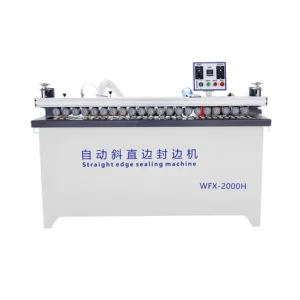
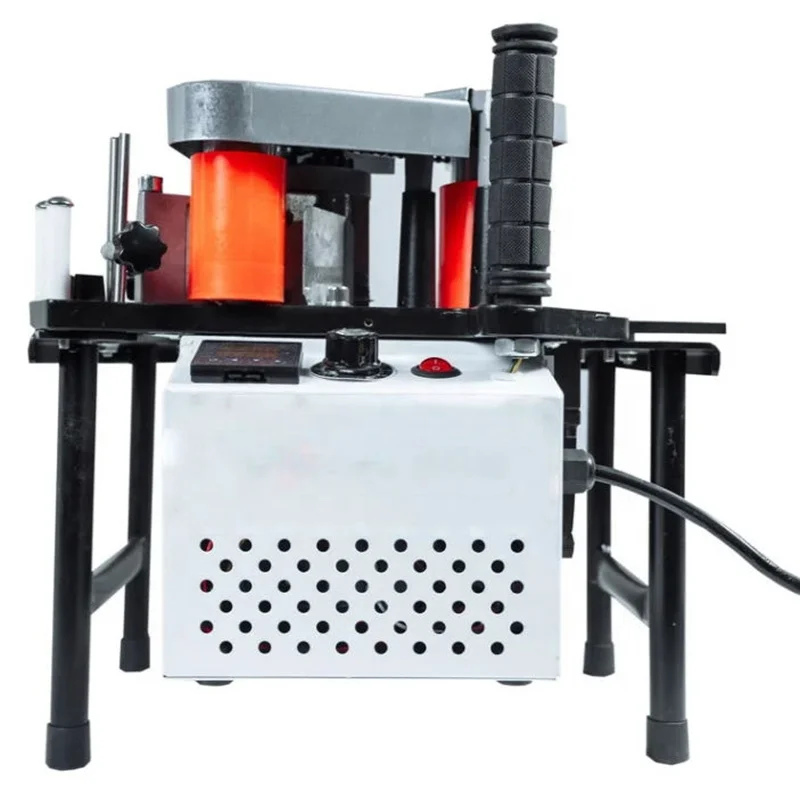
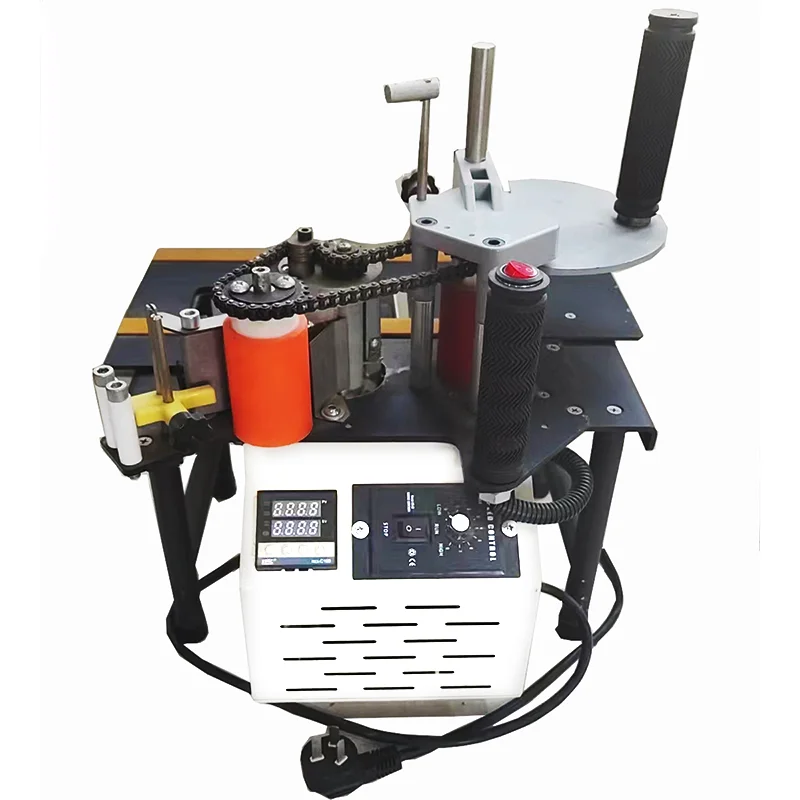
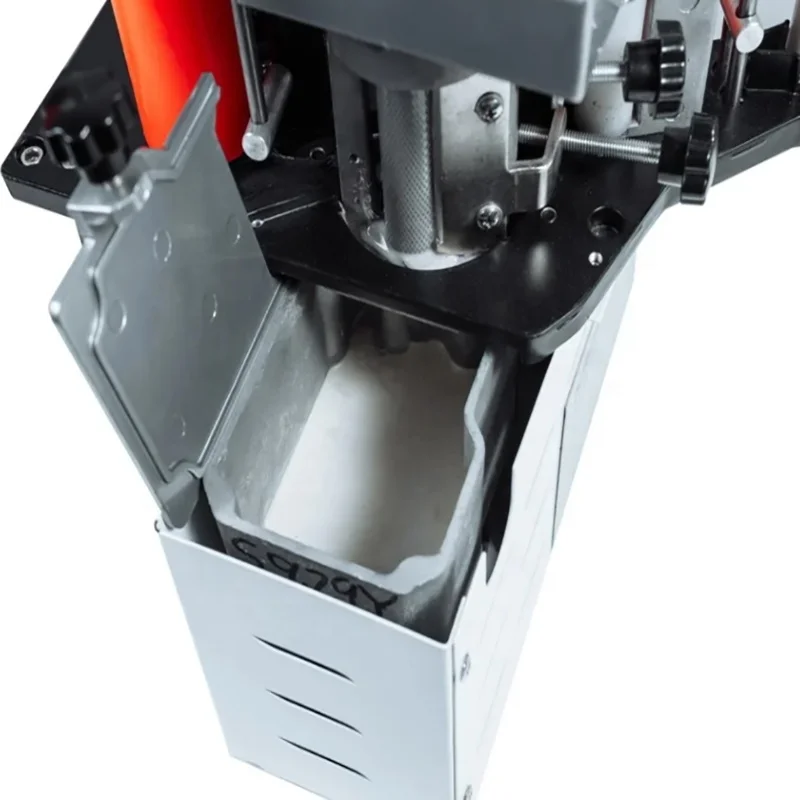
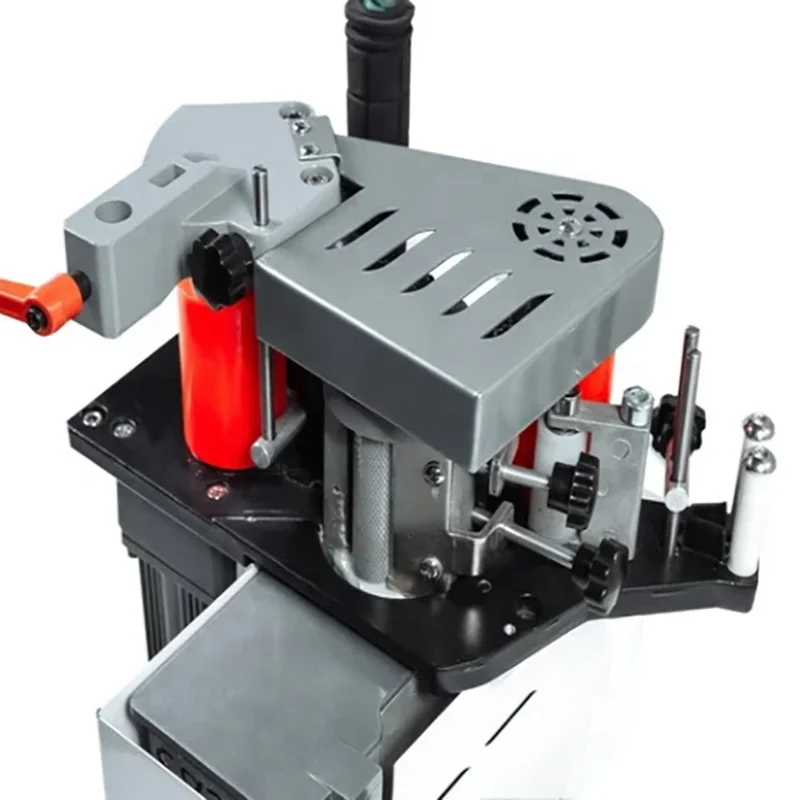
Compact Footprint — Double-sided gluing with a 1000ml pot delivers consistent adhesive coverage across straight, curved, and special-shaped profiles without requiring a dedicated machine for each geometry.
Technical Specifications
| Parameter | Value |
|---|---|
| Product Type | Portable Edge Banding Machine |
| Shape of Edge-Banding Plates | Curved, Straight and Special-shaped Sheet |
| Edge Thickness | 0.3–3mm |
| Edge Sealing Speed | 0–6 m/min |
| Edge Sealing Height | 7–60mm |
| Gluing Method | Double-sided gluing |
| Glue Pot Volume | 1000ml |
| Machine Weight | 14kg |
| Power Source | Mains electricity (voltage and frequency customizable, plug options include EU/AU/UK/USA/CN) |
Application Suitability
| Application | Material or Output |
|---|---|
| On-site furniture edge touch-up | MDF and plywood panels with PVC edge banding |
| Small-batch curved-edge cabinet doors | Solid wood panels with veneer edge banding |
| Joinery workshop prototyping | Particleboard with 0.3–3mm PVC or veneer stock |
| Custom furniture small-run production | Melamine-faced board with matching edge strips |
What "Portable" Really Means When You Need It on a Job Site
A 14kg edge bander only earns its place if the glue coverage holds up across the substrates you actually run.
Buyers often pick up a portable unit for curved-edge work or on-site corrections, then discover the glue pot runs dry mid-job or the feed cannot track a tight radius. The Portable Edge Banding Machine manufacturer you choose determines whether this tool stays in the van or gets shelved after the first week. A 1000ml double-sided gluing system addresses the volume problem, but the operator still needs to confirm that the edge thickness range and sealing height cover the panels heading to the site [NEED_CITE: common edge banding material thickness ranges in custom cabinetry].
Where This Portable Edge Bander Sits in the Full Ruiqi Range
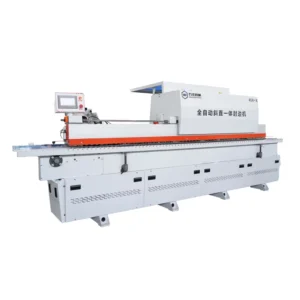
This model occupies the entry point of Ruiqi’s edge banding lineup, sitting below the automatic pre-milling machines in throughput but offering geometry flexibility those larger units cannot match. A workshop running a full-function automatic line for straight panels still needs a portable unit for curved cabinet doors, shaped shelving, and on-site corrections where hauling a 400kg machine is not an option. The Portable Edge Banding Machine manufacturer designed this unit so that a shop can start with portable edge banding and scale upward within the same supplier ecosystem.
Straight, Curved, and Special-Shaped on One Unit
Handling three profile types on a single portable machine reduces the equipment footprint in a small workshop and eliminates the redundancy of dedicated curved-edge and straight-edge units. The 7–60mm sealing height range covers the common panel thickness spectrum in custom furniture, from thin shelving stock to thicker cabinet carcase panels. Operators working with PVC and veneer edge banding between 0.3 and 3mm can switch between a tight-radius curved door profile and a straight cabinet side without changing machines [NEED_CITE: typical panel thickness specifications in custom cabinet manufacturing].
How Edge Sealing Speed and Glue Pot Volume Shape Your Daily Output
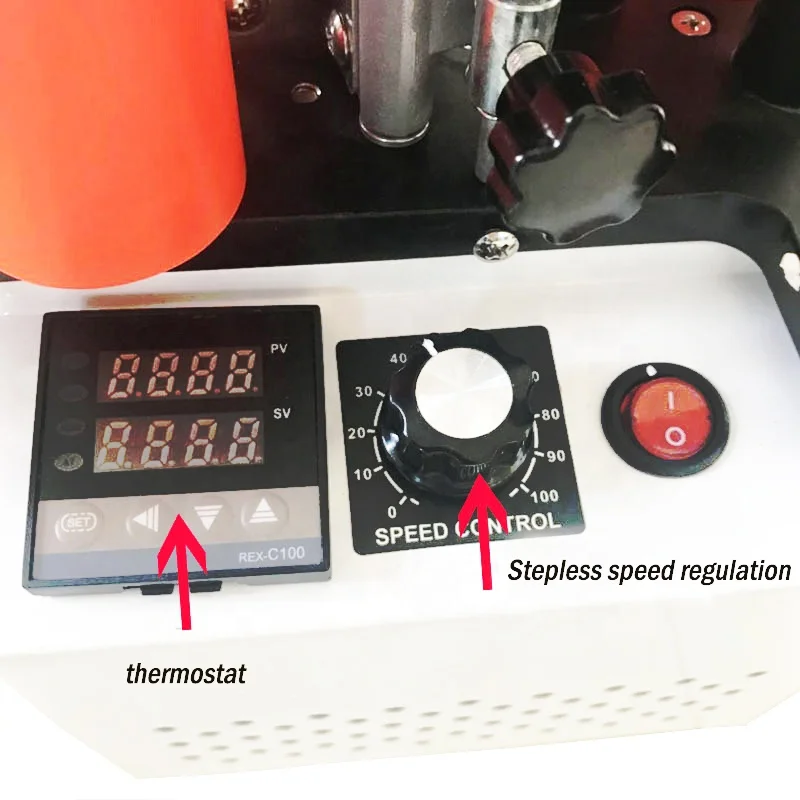
The 0–6 m/min sealing speed is adjustable, letting the operator slow down for tight curves where adhesive needs time to wet the substrate and speed up for long straight runs. At the upper end of that range, a 2400mm panel side takes roughly 24 seconds to edge, which sets a practical ceiling for small-batch throughput. The 1000ml glue pot volume means the operator can run a sustained batch before stopping to refill, a detail that matters when you are banding a full set of cabinet doors in one session. Double-sided gluing applies adhesive to both the panel edge and the banding strip, improving bond reliability on porous substrates like MDF where single-sided application can starve the joint.
What Happens When Voltage Is an Afterthought
A portable edge bander arriving at a workshop with the wrong voltage or plug type sits idle until an electrician fabricates an adapter or rewires the unit, delaying the project it was bought to support. This problem repeats across export markets because the voltage question gets buried under price negotiations and lead-time discussions. Confirming the destination market’s mains frequency and plug standard before the order is placed eliminates the downtime and protects the operator from electrical hazards associated with improvised adapters [NEED_CITE: voltage and frequency standards by export market].
Why Sourcing the Full Range from One Manufacturer Matters
Ruiqi’s catalogue spans from this portable unit to full-function pre-milling automatic edge banders, so a workshop can map its growth path before committing to the first purchase. In-house manufacturing with patented cutting mechanisms means the tolerance claims on larger models carry through the entire product family. Voltage and plug customization across the range removes the electrical mismatch risk that plagues piecemeal sourcing. Four-stage quality control with pre-shipment verification catches configuration errors before the crate leaves the factory. Engineer-led configuration recommendations with formal quotation within a 24-hour window let buyers compare models on actual production requirements rather than catalogue descriptions.
Documentation & Verification
- CE declaration of conformity covering the portable edge bander’s electrical safety and machinery directive compliance
- Machine specification sheet detailing edge thickness range, sealing height, and glue pot volume
- Electrical schematic with voltage and frequency confirmation matched to the destination market
- Factory test record using buyer-supplied panel samples before dispatch
- Operation and maintenance manual in the agreed language with spare parts cross-reference
Installation, Commissioning & Support
- Requires a single standard mains outlet matching the confirmed voltage and plug type; no dedicated circuit needed for the 14kg portable unit
- Arrives fully assembled — operator loads glue into the 1000ml pot and performs a test run on scrap before production use
- First-run parameter setting covers feed speed adjustment for the specific edge banding material and thickness in use
- Spare parts list includes consumable items such as replacement glue pots and banding feed rollers with part numbers
- Daily maintenance involves clearing adhesive residue from the glue pot and checking the feed roller tension after each shift
What We Need to Configure This Machine for Your Workshop
Share the panel materials you work with most often — MDF, plywood, particleboard, or solid wood — along with the edge banding stock type and thickness range. Confirm the mains voltage and frequency at the destination facility so the unit ships with the correct electrical configuration and plug. If you are running an existing automatic edge banding line, let us know the model and feed height so we can verify this portable unit complements your current throughput rather than duplicating it.
Frequently Asked Questions
Q: How does this portable model compare to Ruiqi’s automatic edge banding machines in throughput and edge quality?
A: The portable unit handles straight, curved, and special-shaped profiles at 0–6 m/min, suited for small batches and on-site work. Automatic models run at higher feed speeds with additional trimming and buffing stations for production-volume straight-edge work. Edge quality on the portable depends on operator technique, while automatic machines deliver consistent results through mechanized finishing stages.
Q: What voltage and frequency options are available, and how is the correct configuration confirmed before shipment?
A: Plug options include EU, AU, UK, USA, and CN standards, with voltage and frequency configurable for the destination market. The correct configuration is confirmed during the specification review stage before production. An electrical schematic accompanies the shipment showing the exact wiring for verification on arrival.
Q: Which edge banding materials and thicknesses is this machine designed to handle?
A: The machine processes PVC and veneer edge banding from 0.3 to 3mm thickness across a 7–60mm sealing height range. Double-sided gluing supports both porous substrates like MDF and smoother surfaces like melamine-faced board. Confirm specific material compatibility if you plan to run specialty banding such as ABS or acrylic.
Q: Can this portable unit serve as a starting point before upgrading to a full Ruiqi production line?
A: Yes. The portable edge bander occupies the entry tier of Ruiqi’s range, and workshops commonly add automatic edge banding machines and panel saws as volume grows. Because the entire product family shares the same manufacturer, feed heights and control interfaces remain compatible across upgrades.