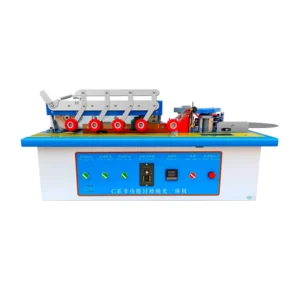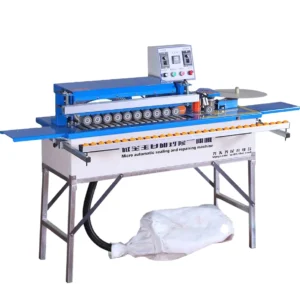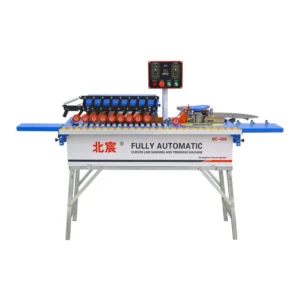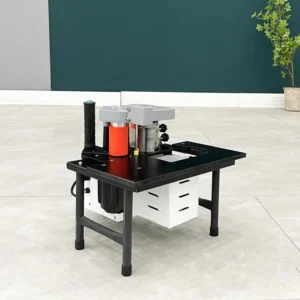
Description
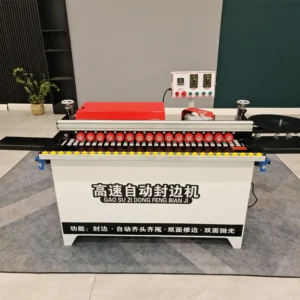
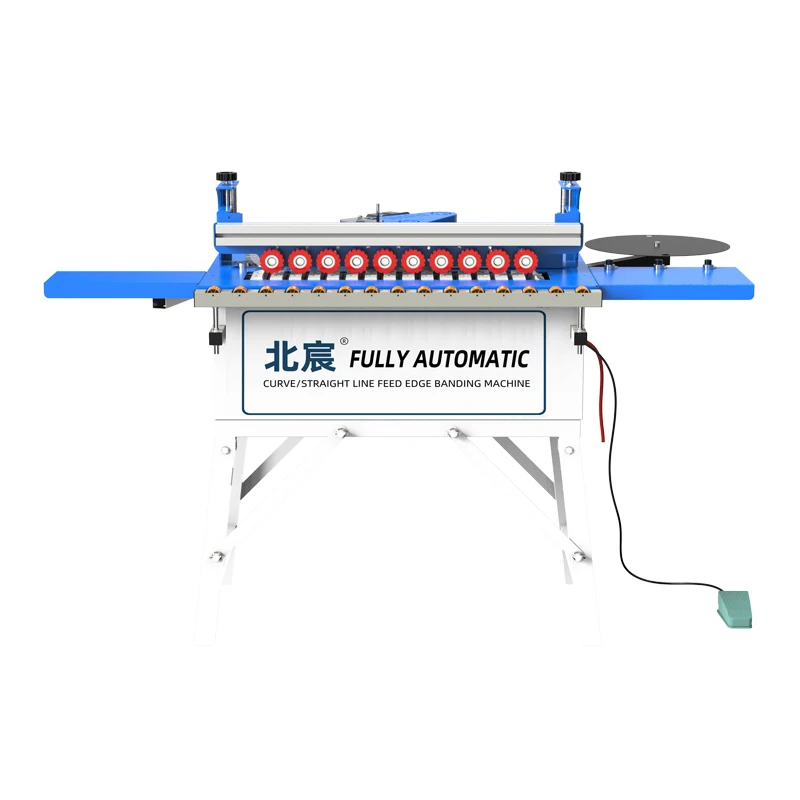
Precision Tolerance Verified — Every DW770 Automatic Mini Edge Banding Machine is built on a production floor where proprietary cutting mechanisms hold ±0.02mm, a figure confirmed through four-stage QC before any unit ships.
Technical Specifications
| Parameter | Value |
|---|---|
| Model | DW770 |
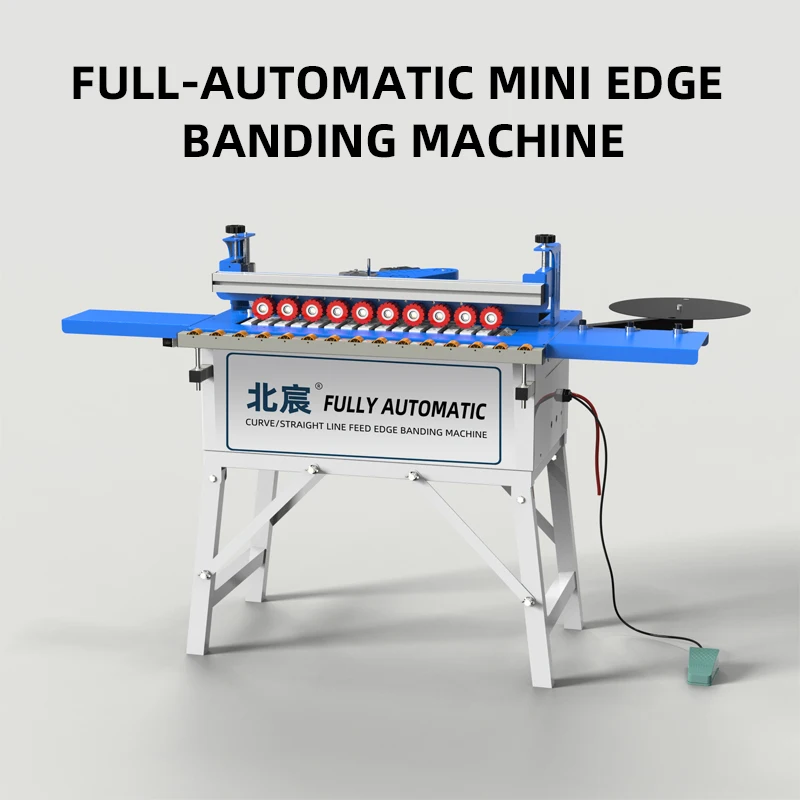
| Product Type | Automatic Mini Edge Banding Machine |
| Total Power | 1200W |
| Operating Voltage | 220V (configurable from 110V to 440V) |
| Edge Banding Height Range | 0–50mm |
| Edge Banding Thickness Range | 0.3–3mm |
| Minimum Sheet Length | 25cm |
| Minimum Sheet Width | 3cm |
| Tape Feeding Mode | Fully automatic tape feeding |
| Glue Pot Capacity | 1000ml |
| Edge Trimming Power | 20W |
| Air Source Pressure | 0.5–0.8 MPa |
| Machine Dimensions | 77 × 49 × 45 cm |
| Machine Weight | 51 kg |
| Edge Profiles | Curved and straight |
| Language Options | Chinese, English standard; additional languages configurable |
| Plug Options | EU, USA, AU, UK |
| Certification | CE |
Application Suitability
| Application | Material or Output |
|---|---|
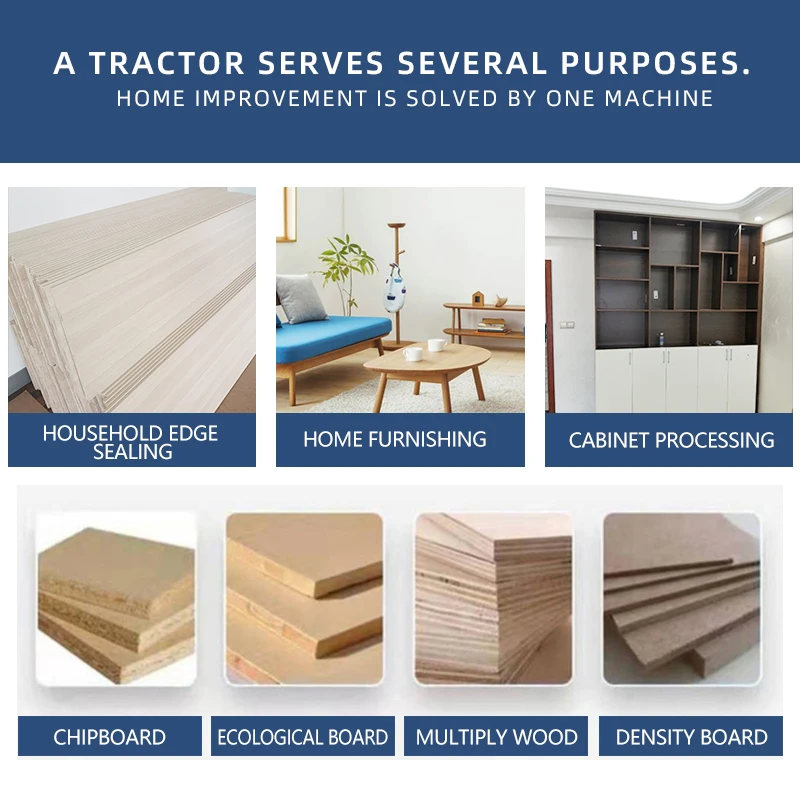
| Custom cabinet door edge sealing | MDF and plywood with PVC or veneer banding |
| Small-batch furniture panel finishing | Particleboard and melamine-faced panels |
| On-site building decoration trim work | Solid wood panels with curved profiles |
| Joinery workshop curved edge processing | Plywood substrates with 0.3–3mm banding material |
What Happens When the Control Panel Speaks the Wrong Language
When an edge banding machine arrives with a control interface the operator cannot read, commissioning stalls — not because the machine is defective, but because a basic configuration step was missed. Language and voltage confirmation must happen before production starts, not after the crate is opened.
I once watched a furniture workshop in North America lose two full production days because the touch screen defaulted to a language the operator did not recognize. The machine itself ran fine; the bottleneck was a menu screen. Every DW770 Automatic Mini Edge Banding Machine we build ships with the operator’s language preloaded and verified against a pre-shipment checklist. Voltage settings receive the same treatment — confirmed in writing against the buyer’s local grid standard before the machine enters assembly [NEED_CITE: voltage and frequency standards by export market].
Where the Mini Format Earns Its Place
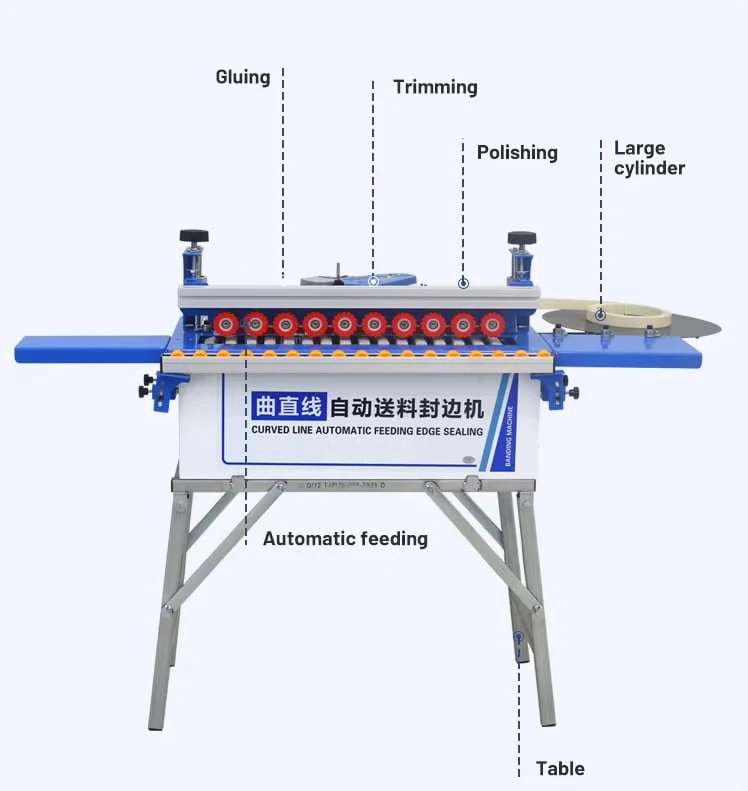
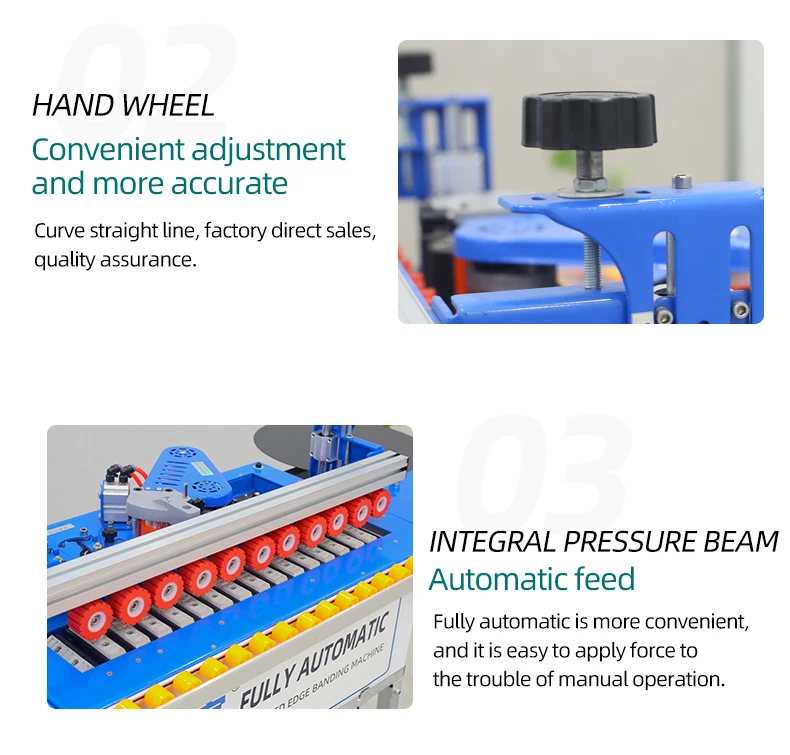
The DW770 sits at the smallest viable step in an automated edge banding workflow. For a joinery workshop moving away from hand-applied banding, this unit covers both curved and straight edges in a single pass-through, eliminating the need for separate jigs or manual trimming stations. The 51 kg footprint means it can sit on a standard workshop bench without dedicated floor anchoring.
This is not a high-throughput production unit. It is designed for workshops where panel volumes are measured in dozens per day rather than hundreds, and where the ability to switch between a curved cabinet side and a straight shelf panel without retooling matters more than feed speed.
Scaling Without Changing Suppliers
A workshop that starts with a DW770 and later needs higher throughput can step up to a full-function pre-milling model within the same product family. The edge banding material compatibility, glue chemistry, and operator training carry over, so the transition does not require relearning a new control system. This continuity matters when a small custom furniture maker lands a contract that doubles monthly panel volume [NEED_CITE: typical production scaling challenges in small woodworking shops].
Reading the Specs That Actually Affect Edge Quality
The 0.3–3mm banding thickness range covers the PVC and veneer materials most commonly used in furniture and cabinet work. Thinner banding below 0.3mm tends to wrinkle through automated feed systems, while material above 3mm requires heavier trimming mechanisms than a mini-format machine is built to carry.
Edge height coverage from 0 to 50mm determines which panel thicknesses the DW770 can handle cleanly. A standard 18mm MDF cabinet panel falls well within this range, as do thicker plywood substrates used in shelving. The 1000ml glue pot capacity supports continuous runs appropriate to this machine’s throughput class — large enough to avoid frequent refills during a batch, but not so large that adhesive degrades from prolonged heating.
Air source pressure of 0.5–0.8 MPa drives the pressure rollers that seat the banding against the panel edge. Consistent pressure across curved sections is where edge quality separates acceptable work from visible glue lines, and this range matches standard workshop compressors without requiring a dedicated air supply.
The Hidden Cost of a Single-Station Mindset
Buying a mini edge bander as if it were a production-line unit leads to predictable disappointment. When daily volume exceeds what the DW770 was engineered for, the glue pot cannot recover temperature between panels, and banding adhesion weakens on later pieces in the batch. The result is not a machine failure — it is a mismatch between equipment class and workload [NEED_CITE: equipment sizing errors in small-scale furniture manufacturing].
Workshops that recognize this threshold early can plan a step up to a higher-capacity model before edge quality complaints reach their customers.
Why Procurement Teams Source This Range Here
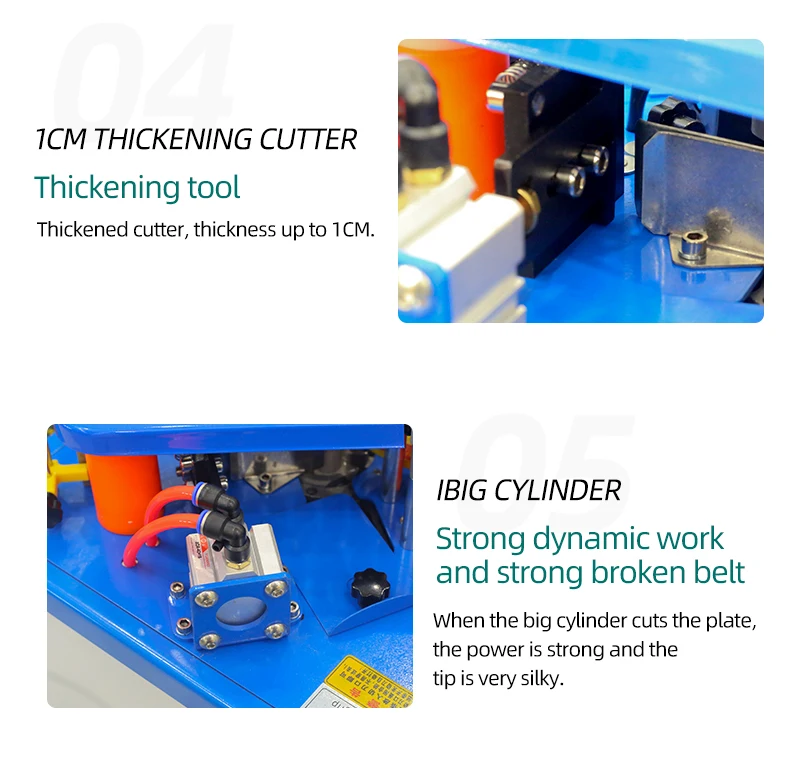
In-house manufacturing with patented cutting mechanisms means the trimming stations on every Automatic Mini Edge Banding Machine are built to the same tolerance standard as the full-size models, not sourced from third-party component suppliers.
Voltage and plug configuration are confirmed per order, so a DW770 shipping to a 110V market arrives wired correctly rather than requiring on-site electrical rework. Multilingual control panels are set before dispatch based on the operator’s working language.
Four-stage QC covers incoming material inspection through pre-shipment verification, with factory test records documenting how the specific unit performed on the buyer’s panel thickness range. Engineer-led configuration recommendations arrive as a formal quotation, matching the machine to the workshop’s actual panel mix and daily volume.
Documentation & Verification
- CE declaration of conformity covering the DW770 electrical and mechanical safety requirements
- Factory test record run on your specified panel thickness and edge banding material before dispatch
- Electrical schematic with confirmed voltage and plug type matching your local grid standard
- Operation and maintenance manual written in the operator’s agreed language at time of order
- Spare parts list with part numbers for glue pot elements, trimming blades, and pressure rollers
Installation, Commissioning & Support
- Requires a stable bench surface rated for 51 kg with clearance for the 77 × 49 cm footprint on all sides
- 220V dedicated circuit recommended; confirm local voltage and frequency before order placement
- Arrives fully assembled; connect air supply at 0.5–0.8 MPa and power on for initial calibration
- First-run parameter setting covers glue temperature, feed rate, and trimming depth for your banding material
- Operator training covers curved-to-straight transitions and glue pot refill intervals during production batches
What We Need to Configure Your DW770
To prepare an accurate quotation and configuration recommendation, share your primary panel substrates and their thickness range, the edge banding materials you run most often, and your typical daily panel count. Include your facility’s voltage and frequency so the electrical system is built to match, and note the language your operators need on the control panel.
Frequently Asked Questions
Q: What production volume is the DW770 designed for, and when should I step up to a larger model?
A: The DW770 is built for joinery workshops and small custom furniture makers running panel batches measured in dozens per day. If your daily volume consistently requires continuous edge banding through full production shifts, an engineer-led review will identify the right step-up model within the same product family, preserving material compatibility and operator familiarity.
Q: Can the voltage and plug type be configured for my country’s electrical standards?
A: Voltage is configurable across a wide range to match your local grid, and plug options include EU, USA, AU, and UK standards. The specific voltage and frequency are confirmed in writing before the machine enters assembly, ensuring the unit arrives ready to connect without on-site electrical modification or adapter workarounds.
Q: Is the control panel available in my language, and can I see it before ordering?
A: Chinese and English are standard, with additional languages configurable per order. The language setting is confirmed during the quotation stage and verified during pre-shipment testing. Factory visits are welcomed, so you can evaluate the interface hands-on before committing to an order.
Q: What edge banding materials and thicknesses does the DW770 handle?
A: The machine processes PVC and veneer edge banding in thicknesses from 0.3mm to 3mm, covering the materials standard in furniture and cabinet production. Edge height coverage from 0 to 50mm accommodates typical MDF, plywood, and particleboard panel thicknesses used in custom woodworking.
Q: How do I arrange a factory visit or request a sample processing test?
A: Factory visits are open for hands-on evaluation of the DW770 and the broader Automatic Mini Edge Banding Machine range. Sample processing tests can be run on your own panel materials to verify edge quality, glue adhesion, and trimming accuracy before you place an order.