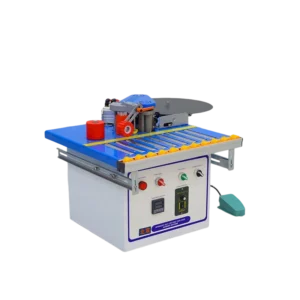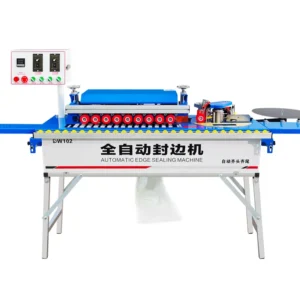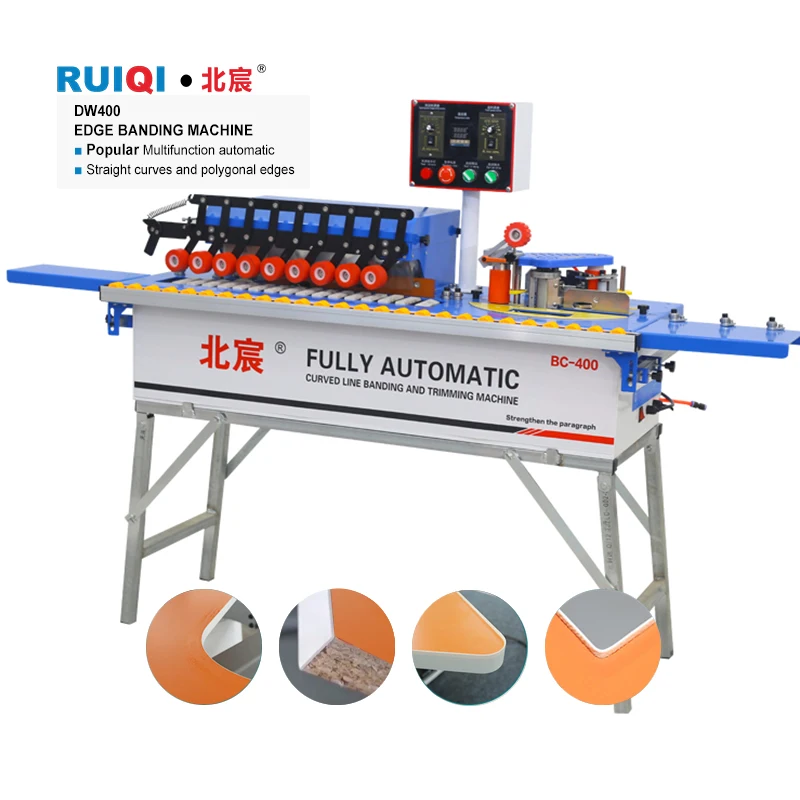
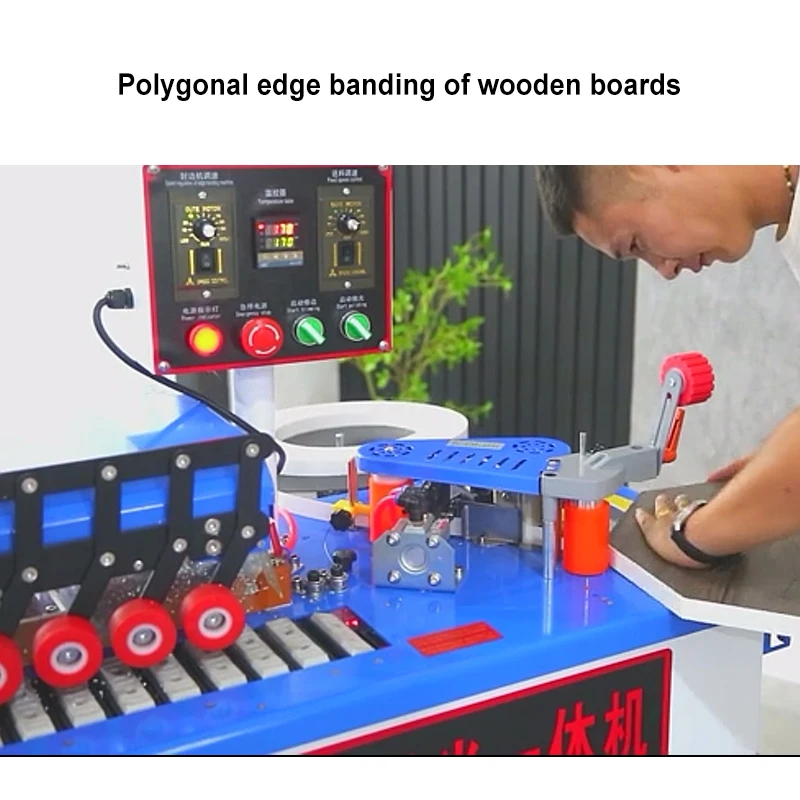
Description
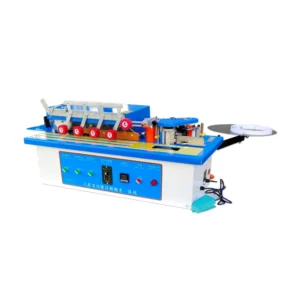
Verified Tolerance Range — DW400 Desktop Automatic Edge Banding Machine delivers ±0.02mm precision across 0.3-3mm PVC and veneer banding within a compact footprint.
Technical Specifications
| Parameter | Value |
|---|---|
| Model | DW400 |
| Product Type | Desktop Automatic Edge Banding Machine |
| Total Power | 3800W |
| Voltage & Frequency | 220V/380V/customization (frequency 50Hz/60Hz to be confirmed) |
| Edge Banding Thickness | 0.3-3MM |
| Edge Banding Height | 0-50MM |
| Minimum Sheet Length | 25CM |
| Minimum Sheet Width | 10CM |
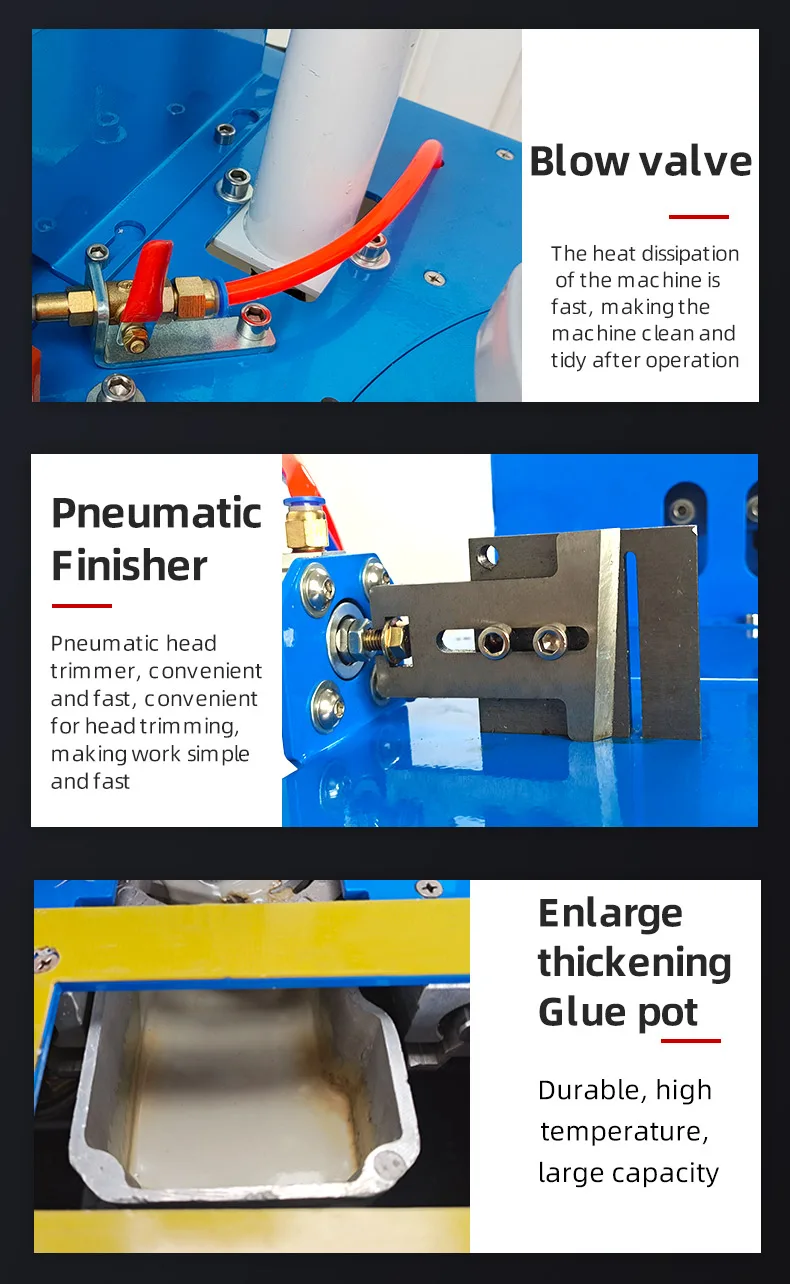
| Glue Pot Capacity | 1000ml |
| Trimming Power | 650W*2 |
| Polishing Power | 180W*2 |
| Vacuum Power | 1200W |
| Air Source Pressure | 0.5-0.8Mpa |
| Product Size | 1164769CM |
| Product Weight | 70KG |
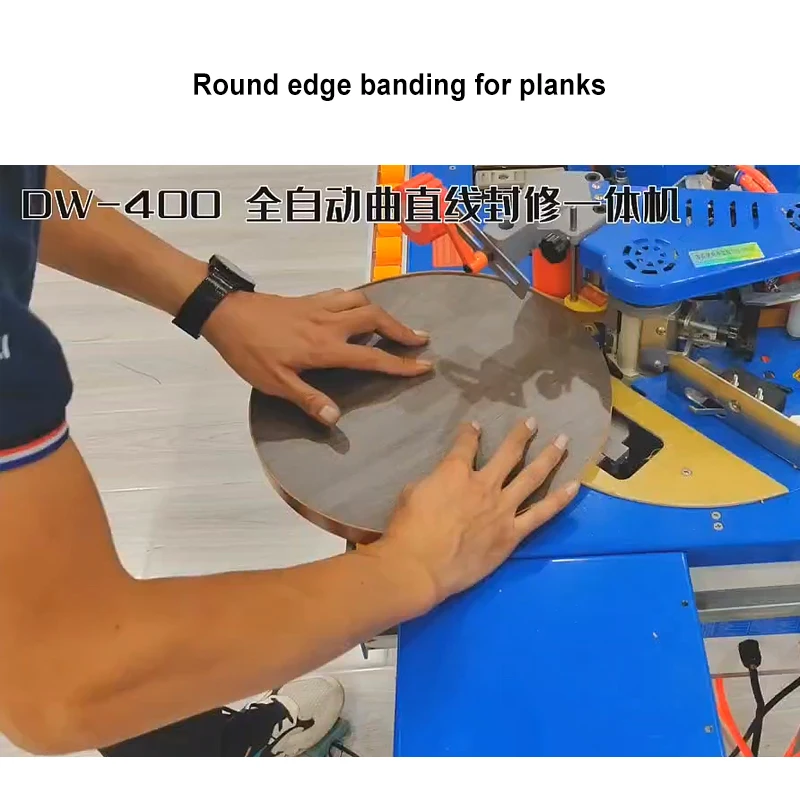
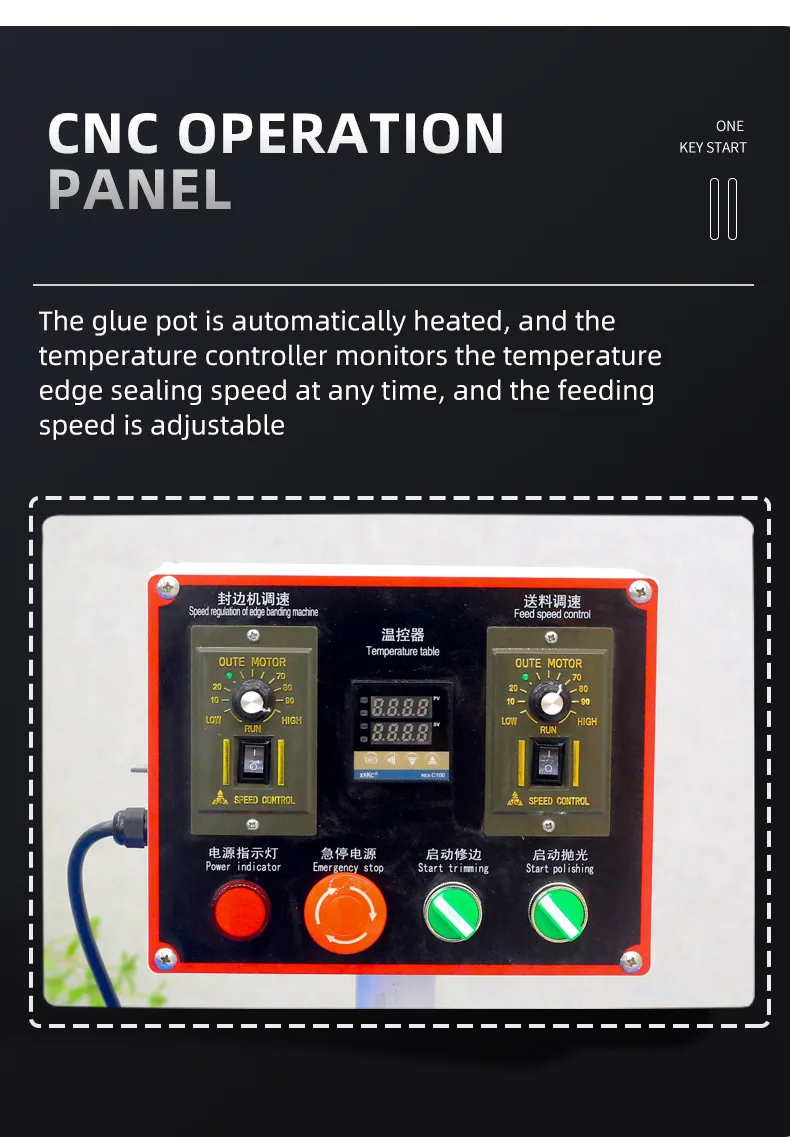
| Key Features | Straight edge banding, trimming, polishing, multilingual control panel |
Application Suitability
| Application | Material or Output |
|---|---|
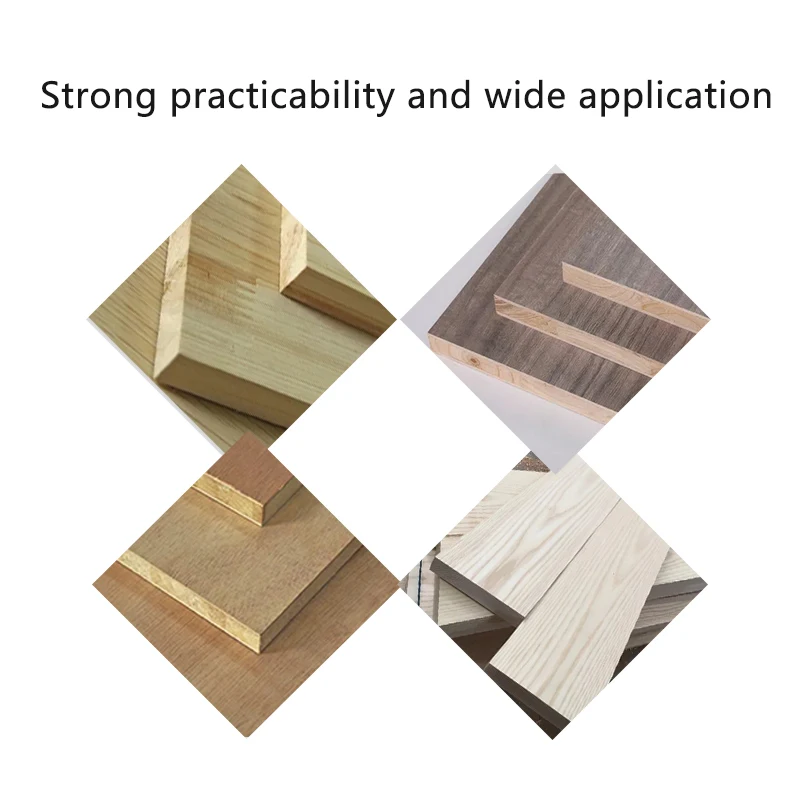
| Custom Furniture Manufacturing | Medium density fiberboard (MDF), blockboard, wood panels |
| Cabinet Making | Particleboard, plywood, polymer doors |
| Small Batch Production | Straight edge trimming, chamfering, finishing, scraping |
| Workshop Automation | Double-sided adhesive tape cutting, edge bonding, pressing |
Why the Voltage Question Should Come Before the Price
Confirming local voltage and frequency before production prevents unusable equipment on arrival.
I’ve seen edge banding machine manufacturer shipments sit idle for weeks because the destination workshop couldn’t match the factory’s default electrical configuration. One unit shipped to the Middle East required a complete variable frequency drive swap after arrival, delaying the entire production line. The DW400 supports voltage customization from 220V to 380V, but frequency compatibility (50Hz vs 60Hz) must be verified against your local grid standards before the order enters production [NEED_CITE: voltage and frequency standards by export market].
Scaling Edge Banding Capability Without Changing Suppliers
The DW400 sits within a complete product family spanning entry-level desktop configurations to full-function pre-milling models. This means your workshop can start with this compact unit handling straight edge banding, trimming, and polishing, then add higher-tier models as production volume grows. The edge banding machine manufacturer maintains consistent control panel interfaces and spare parts compatibility across the range, so operators trained on the DW400 can transition to larger models without retraining.
Compact Footprint, Complete Function Set
Despite its 1164769CM dimensions and 70KG weight, this automatic edge banding machine delivers integrated banding, trimming, and polishing in a single pass. The 1000ml glue pot capacity handles extended production runs without constant refilling, while the 0.3-3mm edge banding thickness range covers both PVC and veneer materials [NEED_CITE: edge banding material specifications for furniture production]. For workshops with limited floor space or those processing smaller panel formats (minimum 25CM length, 10CM width), this configuration eliminates the need for separate trimming and polishing stations.
Power Distribution and Edge Quality
The DW400 allocates 650W to each trimming motor and 180W to each polishing motor, ensuring sufficient cutting force for consistent edge removal across different substrate densities. The 1200W vacuum power maintains dust extraction during operation, preventing adhesive contamination on finished surfaces. Edge banding thickness from 0.3mm to 3mm allows you to match banding material to panel thickness and end-use requirements—thinner veneer for visible furniture edges, thicker PVC for high-wear cabinet interiors. The 0.5-0.8Mpa air source pressure requirement means you’ll need a dedicated compressor line; confirm your workshop’s air supply can maintain this pressure continuously during production runs.
What Happens When Specifications Don’t Match Reality
Tolerance claims mean little if you can’t verify them before the machine leaves the factory. Panels that pass visual inspection may still fail during assembly if edge banding creates dimensional variation beyond your hardware tolerances. Similarly, control panels in languages your operators cannot read will stall commissioning until translation or replacement arrives. The DW400’s multilingual control panel customization option prevents this bottleneck, but you must specify the required language during the quotation stage, not after shipment [NEED_CITE: CE machinery directive requirements for industrial equipment].
Manufacturing Depth and Configuration Support
The edge banding machine manufacturer operates a 10,000㎡ facility with 60 engineers and 800+ skilled workers, producing machines with proprietary cutting mechanism patents achieving verified tolerance. Four-stage quality control covers incoming material inspection, in-process verification, finished product testing, and pre-shipment validation. Engineer-led configuration recommendations arrive within 24 hours of inquiry, including voltage confirmation and specification matching to your panel materials. Factory visits are welcomed for buyers who want to witness production and testing protocols firsthand.
Documentation & Verification
- CE declaration of conformity for export documentation and customs clearance
- ISO 9001 certificate demonstrating quality management system compliance
- Machine specification sheet with electrical schematic and voltage confirmation for your local grid
- Factory test record on your specified panel thickness range and edge banding material before dispatch
- Operation and maintenance manual in agreed language plus complete spare parts list
Installation, Commissioning & Support
- Requires dedicated 220V or 380V circuit matching confirmed frequency (50Hz/60Hz) and 3800W total power draw
- 0.5-0.8Mpa compressed air supply with dedicated line to maintain consistent pressure during operation
- Arrives fully assembled; position on level floor with clearance for panel feed and operator access
- First commissioning includes voltage verification, air pressure calibration, and test runs with your panel materials
- Multilingual control panel in specified language prevents operator confusion during initial training and daily use
- Spare parts list includes trimming cutters, polishing wheels, and glue pot components with replacement intervals
Moving Forward With Your Configuration
Provide your primary panel materials (MDF, particleboard, plywood), typical panel dimensions, and daily production volume to determine if the DW400’s minimum sheet size and processing speed match your requirements. Confirm your workshop’s voltage and frequency specifications so the electrical system can be configured before production begins. Specify the control panel language your operators need and whether you require edge banding materials beyond the standard 0.3-3mm PVC and veneer range.
Frequently Asked Questions
Q: What panel materials and thickness ranges can the DW400 handle compared to higher-tier models?
A: The DW400 processes MDF, blockboard, particleboard, plywood, and polymer doors with straight edge banding from 0.3-3mm thickness. Higher-tier models in the range add pre-milling stations for panel edge preparation and handle larger minimum sheet dimensions. If your production includes curved edges or requires pre-milling for substrate preparation, the manufacturer can recommend the appropriate tier based on your specific panel specifications and edge quality requirements.
Q: How is voltage confirmed for destination country before production?
A: During the quotation stage, you provide your workshop’s voltage and frequency specifications. The electrical team configures the DW400’s power system (220V, 380V, or custom) and documents this on the specification sheet. Before shipment, a pre-shipment test verifies the electrical system matches your confirmed requirements. This prevents the situation where machines arrive unusable due to incompatible local grid standards.
Q: What is the upgrade path from DW400 to full-function models as volume grows?
A: The DW400 fits within a product family that scales from desktop configurations to full-function pre-milling edge banders. As your production volume increases, you can add higher-tier models while maintaining consistent control interfaces and spare parts compatibility. The manufacturer provides configuration recommendations based on your throughput requirements, panel specifications, and edge quality standards, allowing phased investment rather than replacing your initial equipment.
Q: How is edge banding tolerance verified before shipment?
A: The factory conducts a four-stage quality control process including pre-shipment testing with your specified panel materials and edge banding thickness. A factory test record documents the tolerance verification results. You can request sample processing tests or arrange a factory visit to witness testing protocols before your machine ships, ensuring the edge quality meets your assembly requirements.
Q: What spare parts and technical support are available after installation?
A: The DW400 ships with a complete spare parts list including trimming cutters, polishing wheels, and glue pot components. Operation and maintenance manuals in your specified language cover replacement intervals and troubleshooting. The manufacturer provides installation guidance and after-sales support, with technical assistance available for fault diagnosis once your machine is operational in the destination country.