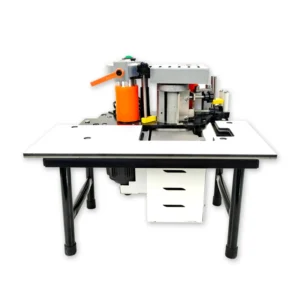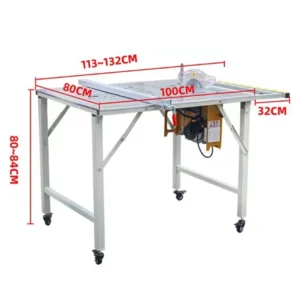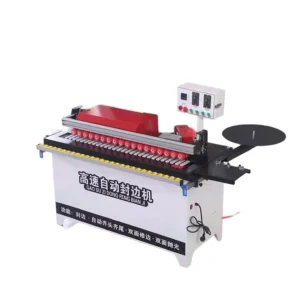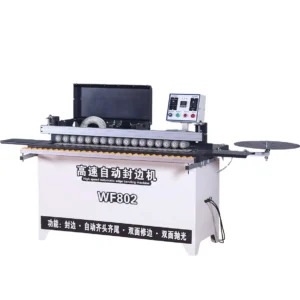


Description
Voltage-Verified Before Dispatch — every portable edge banding unit ships with confirmed electrical schematics matching your workshop’s local supply, eliminating the dead-on-arrival failures that plague cross-border machinery purchases.
Technical Specifications
| Parameter | Value |
|---|---|
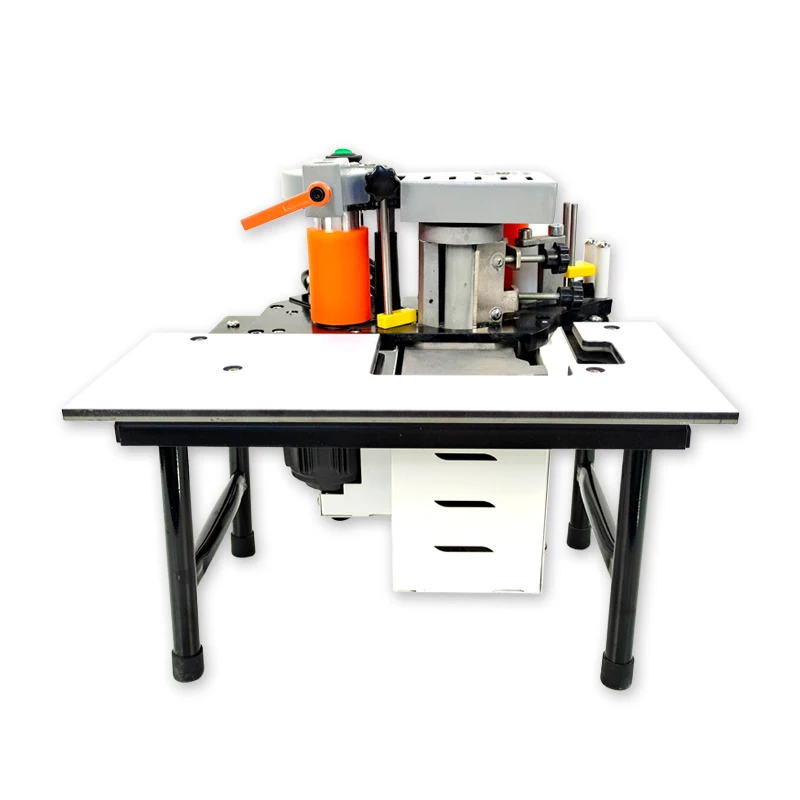
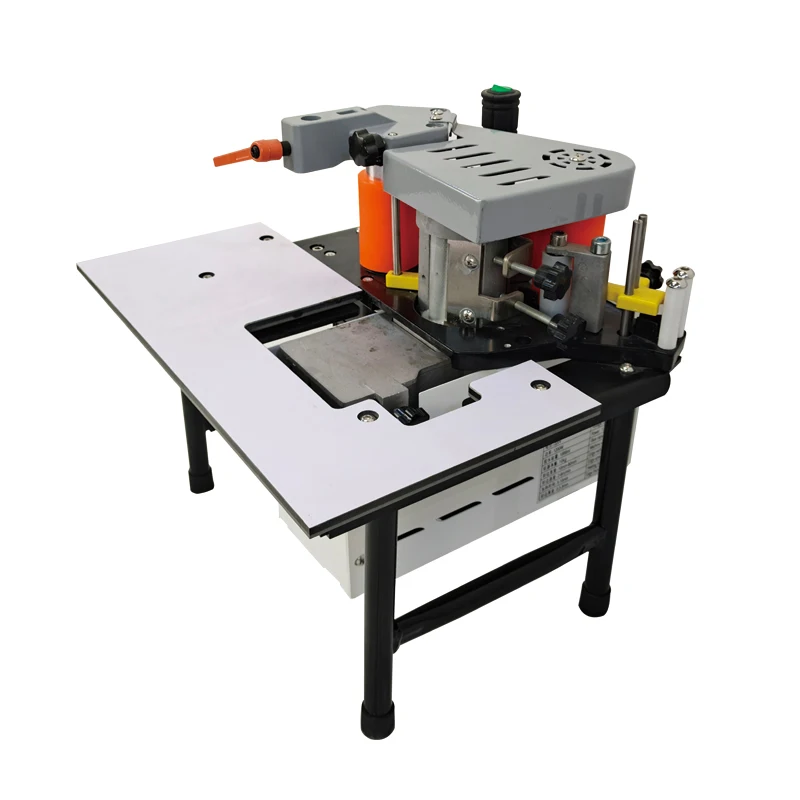
| Product Type | Portable Edge Banding Machine |
| Total Power | 1000W |
| Voltage & Frequency | 220V / 380V / Customization available |
| Edge Banding Height Range | 0–50 mm |
| Edge Banding Thickness Range | 0.3–3 mm |
| Minimum Sheet Length | 25 cm |
| Minimum Sheet Width | 3 cm |
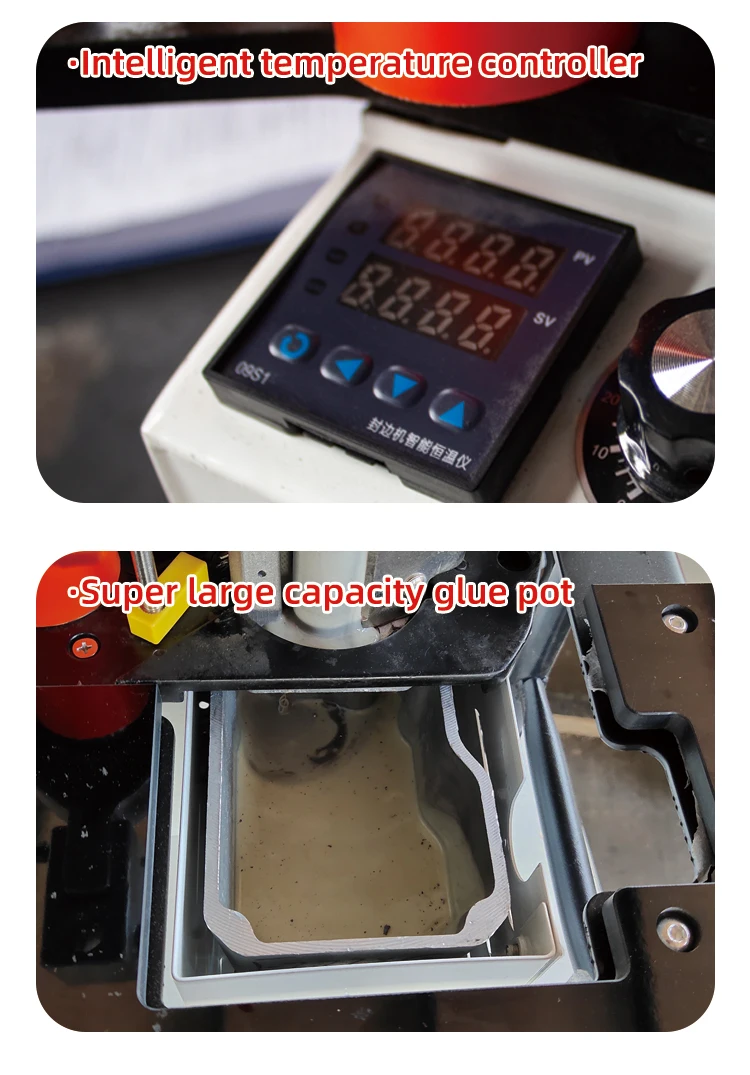
| Glue Pot Capacity | 1000 ml |
| Air Source Pressure | 0.5–0.8 MPa |
| Edge Trimming Power | 20W |
| Product Dimensions | 38 × 35 × 35 cm |
| Product Weight | 12 kg |
| Assembly State | Portable |
| Control Panel Language | Chinese, English, Spanish, or other customization |
Application Suitability
| Application | Material or Output |
|---|---|
| Custom furniture panel edging | MDF, particleboard, and plywood with ABS or PVC |
| Curved cabinet door profiles | PVC and melamine banding on shaped edges |
| On-site interior fit-out finishing | Veneer and ABS on installed joinery components |
| Small-batch wardrobe production | Straight and curved melamine-edged panels |
| Prototype and sample preparation | Mixed banding materials across varying thicknesses |
Why the Voltage Question Must Precede the Portable Edge Banding Machine for Sale Selection
A machine wired for the wrong frequency will overheat its glue pot and motor within the first shift.
I remember a workshop in the Gulf region that received a 380V unit when their three-phase supply ran at a different frequency standard. The motor ran, but the glue temperature never stabilized, leaving visible glue lines on every curved edge they attempted. Sorting voltage compatibility before comparing features prevents this kind of silent failure [NEED_CITE: voltage and frequency standards by export market]. A portable edge banding machine for sale at a competitive price is worthless if it cannot safely connect to your panel board on day one.
Where This Portable Model Sits in a Broader Machine Range
Workshops do not jump straight to a six-station automatic line. Many begin with a portable edge banding machine that handles both straight and curved profiles, then add dedicated stations as throughput grows. This model covers ABS, PVC, melamine, and veneer from 0.3 mm to 3 mm thick — the same material range that larger automatic machines process. The difference is feed method: here the operator guides the unit along the panel edge rather than feeding panels through a conveyor. For joinery shops producing fewer than fifty edged panels per day, that manual feed rate is acceptable and keeps capital outlay low.
Mapping Portable Capability to Your Current Production Stage
A small custom furniture maker producing wardrobe doors and cabinet carcasses typically alternates between straight panel edges and curved radius corners. Running both profiles on a single portable unit avoids the need for two separate machines on a crowded shop floor. Interior contractors who edge-band installed shelving on-site also benefit from the 12 kg weight and compact footprint — the unit moves between job locations without freight logistics [NEED_CITE: portable machinery transport and site-use regulations]. When volume eventually outpaces what a hand-guided machine can deliver, the same material knowledge and banding inventory transfers directly to an automatic edge bander in the product family.
How Core Specifications Shape Daily Output
The 0.3–3 mm banding thickness range determines which edging materials you can run without swapping glue formulations. Thinner veneer at 0.3 mm requires lower glue pot temperatures and lighter pressure, while rigid ABS at 3 mm demands the opposite settings. The 1000 ml glue pot capacity is sized for intermittent use — enough for a full morning of edging before a refill is needed, but not so large that adhesive degrades from prolonged heating. The 0–50 mm banding height accommodates standard 18 mm furniture board as well as thicker worktop panels. Air source pressure between 0.5 and 0.8 MPa must be maintained with a small compressor; below this range, the trimming cutter loses consistency and leaves ragged edges on curved profiles.
The Hidden Cost of Skipping the Material Sample Test
I once specified a curve-capable bander for a Middle East client without requesting their actual PVC stock. On commissioning day, the folding arm could not press the material into the concave radius — the strip was two millimeters thicker than the datasheet claimed, and every curved edge showed a visible gap. The fix required a different pressure roller profile and a glue temperature adjustment, both of which delayed production. Requesting a physical sample of your banding material before finalizing the configuration avoids this mismatch entirely [NEED_CITE: material thickness variance in PVC edge banding supply chains]. The portable edge banding machine for sale listing may state 0.3–3 mm, but real-world stock often drifts outside nominal tolerances.
Why Procurement Through This Range Makes Sense
The full catalogue across ruiqiwood.com spans entry-level portable units through full-function pre-milling automatic edge banders, so your workshop can scale within one supplier ecosystem rather than re-qualifying a new vendor at each growth stage. Voltage customization from 220V to 380V is confirmed before production, not assumed after the fact. Multilingual control panels mean your operators read instructions in their working language rather than guessing at translated icons. A four-stage quality check covers incoming components, in-process assembly, finished-product testing, and a pre-shipment verification run on your specified panel thickness. Engineer-led configuration recommendations arrive as a formal quotation within one business day, giving you documented specs to compare against alternatives.
Documentation & Verification
- Machine specification sheet listing confirmed voltage, frequency, and plug type for your facility
- Electrical schematic showing wiring diagram and circuit protection ratings
- Factory test record demonstrating edge banding on your specified material thickness range
- Operation and maintenance manual written in your agreed control panel language
- CE declaration of conformity documentation for import clearance where required
Installation, Commissioning & Support
- Requires a stable bench surface near a dedicated 220V or 380V circuit matching confirmed specifications
- Air compressor rated to sustain 0.5–0.8 MPa must be positioned within hose reach of the unit
- Glue pot filled with appropriate adhesive formulation for your banding material before first power-on
- Initial test run performed on scrap panels matching your production board thickness and edge profile
- Spare glue pot heater element and replacement trimming blades included in the initial parts kit
- Periodic glue pot cleaning scheduled to prevent adhesive carbon buildup that affects bond consistency
Starting the Configuration Conversation
Share your primary banding material type, the thickness range you work with most often, and whether your panels include curved profiles or are exclusively straight-edged. Confirm your workshop voltage and frequency so the electrical configuration matches before production begins. If you operate across multiple job sites, note whether the unit will remain stationary or move between locations regularly.
Frequently Asked Questions
Q: How do I confirm the voltage and frequency will match my workshop supply?
A: Before order confirmation, you provide your local voltage, phase, and frequency details. The electrical configuration is then set during assembly, and an electrical schematic is included with the shipment so your electrician can verify the connection. This step prevents the common failure of machines arriving wired for a different regional standard [NEED_CITE: regional voltage and frequency requirements for industrial machinery exports].
Q: What edge banding materials and thicknesses does this portable model handle?
A: The unit processes ABS, PVC, melamine, and veneer banding from 0.3 mm to 3 mm thick on both straight and curved edges. For material at the thicker end of that range, we recommend sending a physical sample so we can verify pressure roller contact and glue adhesion before the machine ships.
Q: Can the control interface be provided in a language my operators understand?
A: Yes. Control panel language options include Chinese, English, and Spanish as standard, with other languages available on request. The operation manual is also produced in your chosen language, ensuring operators can reference troubleshooting steps without translation delays.
Q: How does this portable unit fit into a broader edge banding machine lineup?
A: This portable model serves as the entry point within a complete range that extends to full-function automatic edge banders with pre-milling, corner rounding, and buffing stations. Workshops typically start here for low-volume or on-site work, then add automatic models as throughput requirements increase, keeping the same supplier for spare parts compatibility and consistent technical support.