Description
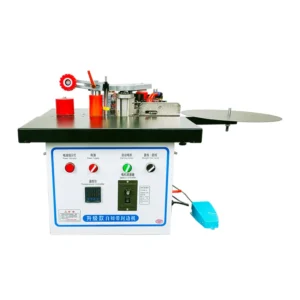
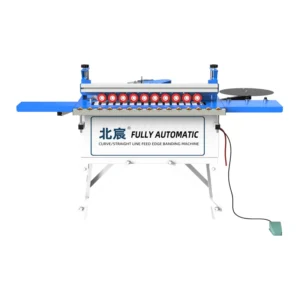
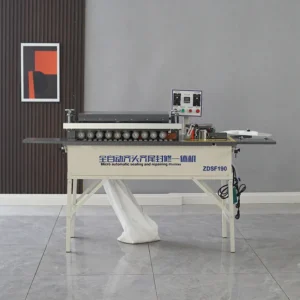
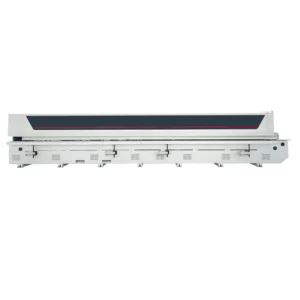
Full Catalogue Clarity — the DW3000 occupies a defined position in our edge banding range, with voltage and language options confirmed before order to prevent installation mismatches on arrival.
Technical Specifications
| Parameter | Value |
|---|---|
| Model | DW3000 |
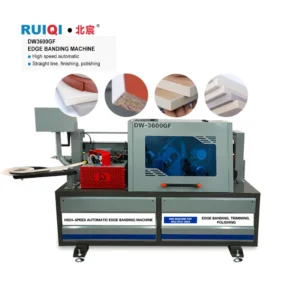
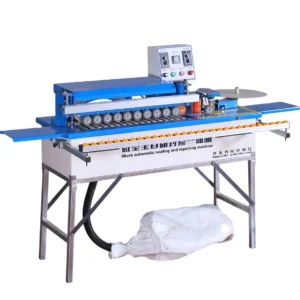
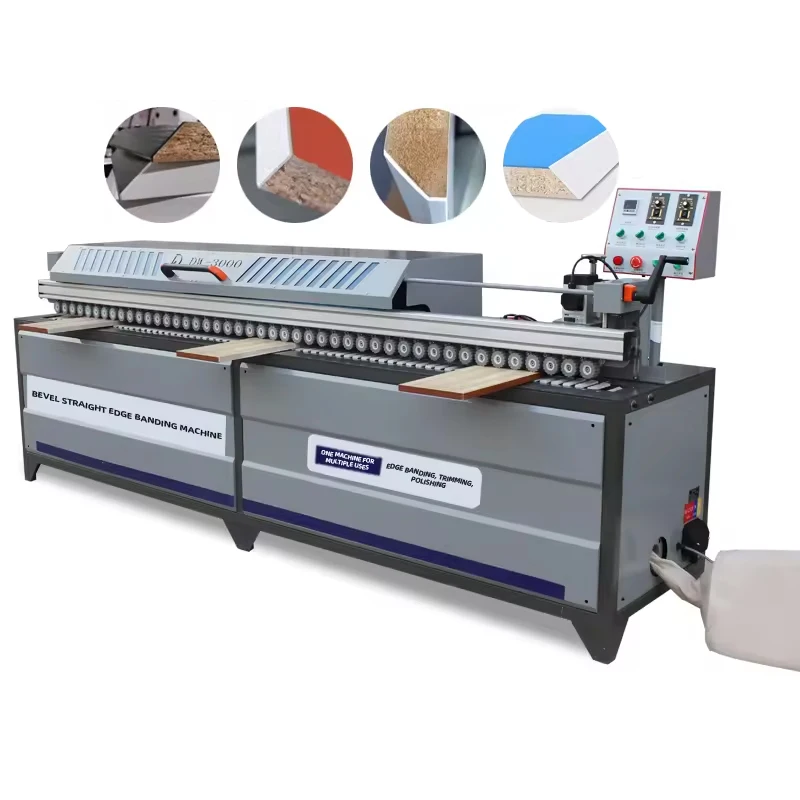
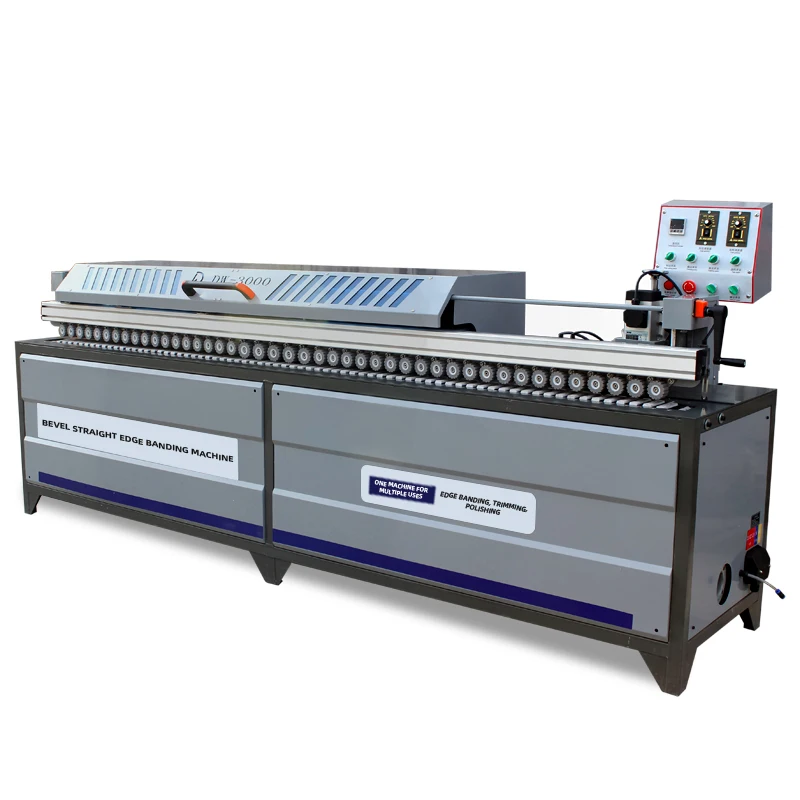
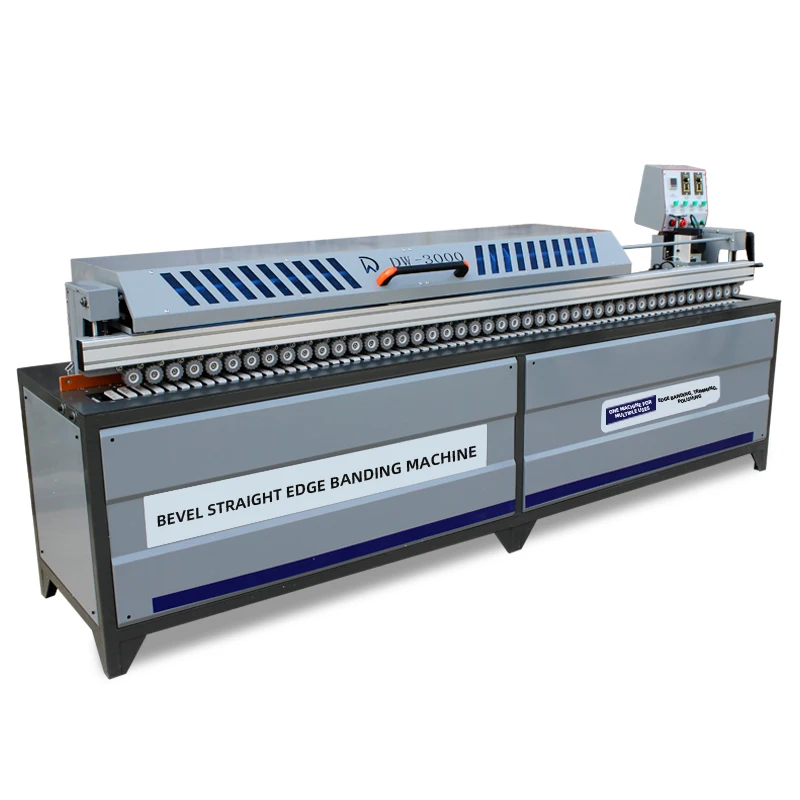
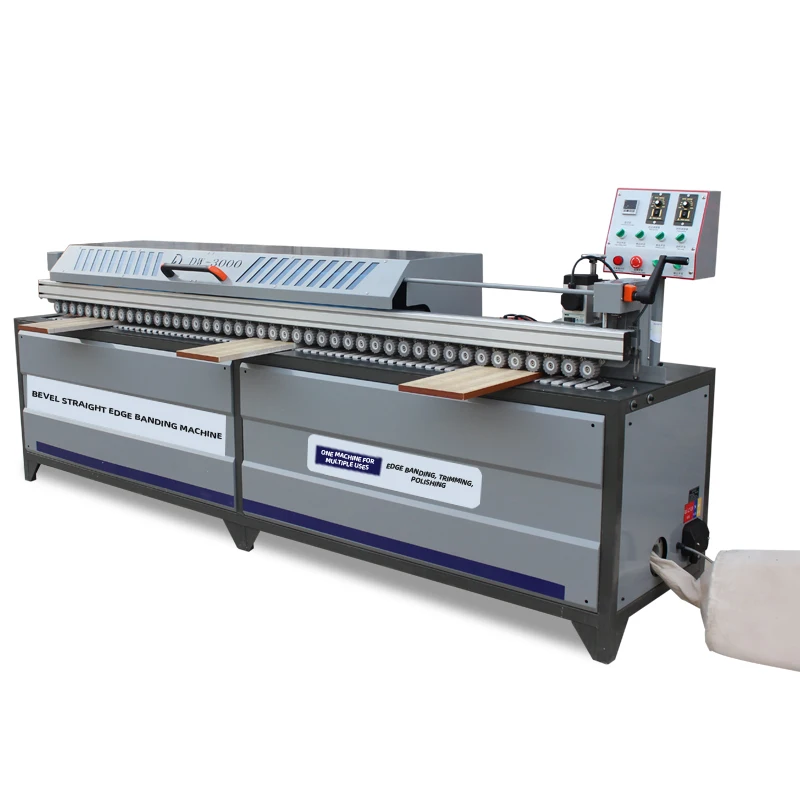
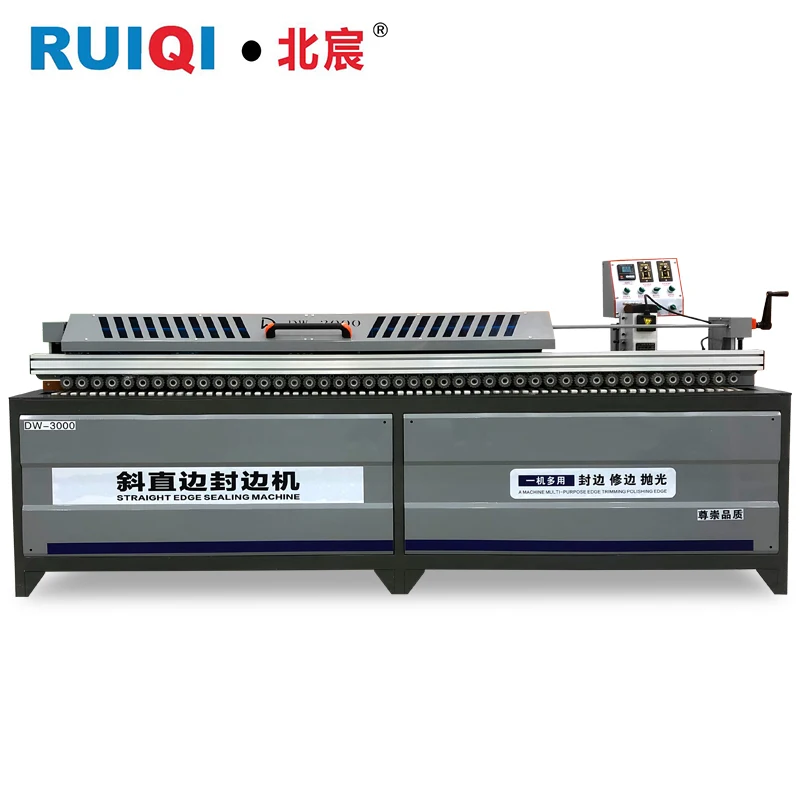
| Product Type | Fully Automatic 45 Degree Oblique Straight Edge Banding Machine |
| Total Installed Power | 11 kW |
| Voltage | 380V / 415V (frequency and phase to be confirmed per destination) |
| Feed Speed | 0–12 m/min (basis not stated in source) |
| Edge Banding Thickness Range | 0.3–3 mm |
| Edge Banding Height | 0–50 mm |
| Minimum Sheet Dimensions | 300 mm (L) × 150 mm (W) |
| Pre-milling Motor | 2.2 kW |
| Heating System | 2.2 kW × 2 (double heat gun design) |
| Trimming Configuration | 2.2 kW × 2 (3 spindle motors total) |
| Polishing Configuration | 0.4 kW × 2 (industrial-grade motors) |
| Vacuum Extraction | 550 W |
| Glue Pot Capacity | 4000 ml |
| Oblique Pressure Wheels | 8 groups, adjustable 30–90 degrees |
| Feeding System | Double cylinder feeding belt |
| Air Source Pressure | 0.5–0.7 MPa |
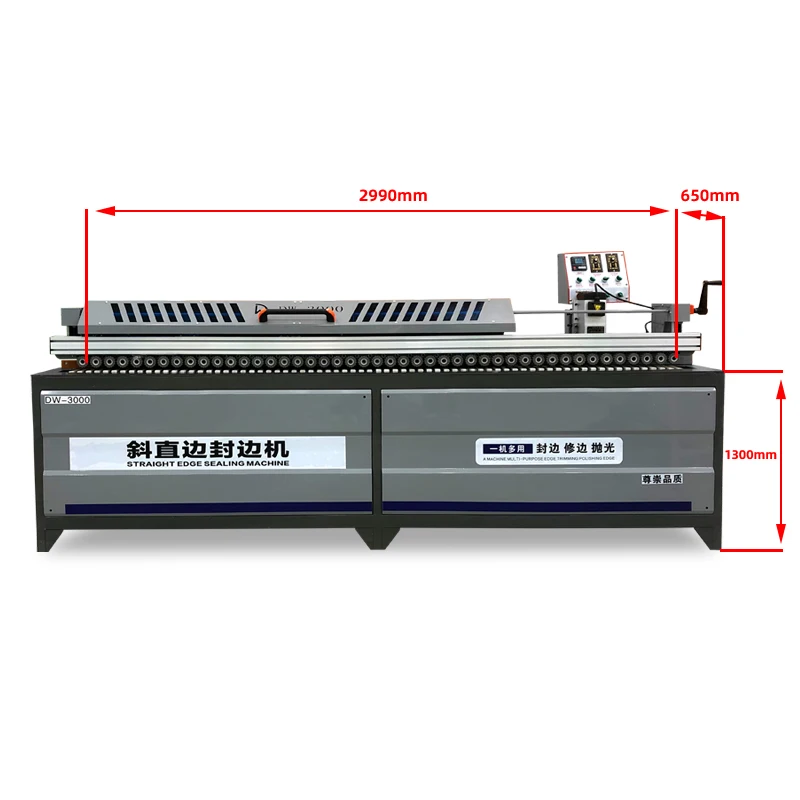
| Machine Dimensions | 2990 × 650 × 1300 mm |
| Machine Weight | 430 kg |
| Control Panel Languages | Chinese and English standard; other languages configurable |
| Plug Options | EU, USA, AU, UK |
| Delivery State | Fully assembled |
Application Suitability
| Application | Material or Output |
|---|---|
| Custom cabinet door production | MDF and plywood panels with PVC edge banding |
| Wardrobe and shelving panel processing | Particleboard with melamine and veneer banding |
| Oblique edge furniture components | Solid wood panels requiring 45-degree bevel banding |
| Mixed straight and angled edge profiles | Boards needing both 90-degree and oblique finishes in one pass |
| Mid-volume workshop output | Panels from 150 mm width upward through standard cabinet sizes |
Why the Voltage Question Must Come Before the Machine Price
Specifying local voltage and frequency at the inquiry stage prevents a machine that physically cannot run on arrival.
A buyer in a region with 415V/50Hz supply once received a 45 degree oblique straight edge banding machine manufacturer unit wired for 380V/60Hz. The motors ran, but at incorrect speed, causing inconsistent feed rates and uneven glue activation. The machine was not defective — it was simply built for a different grid [NEED_CITE: voltage and frequency standards by export market]. The cost of rewinding motors or replacing variable frequency drives on-site exceeded what a two-minute conversation during the quotation stage would have prevented. Every order should begin with a confirmed electrical schematic matching the destination facility.
Where the DW3000 Sits in the Full Edge Bander Range
Our catalogue spans entry-level straight-only machines for small joinery shops through to full-function pre-milling lines with tracking and scraping stations. The DW3000 occupies the mid-to-upper tier, combining both 45-degree oblique and 90-degree straight banding in a single chassis. Workshops that have outgrown basic straight banders but do not yet need a six-station automated line find this model fills the gap without requiring a supplier change later.
Scaling From Straight-Only to Combined Oblique Capability
Furniture makers producing only flat panel carcasses often start with a straight edge bander. Once designs incorporate beveled edges for visible panels or decorative fronts, the options are either adding a second dedicated oblique machine or moving to a combined unit. The 45 degree oblique straight edge banding machine manufacturer range includes both paths. The DW3000 addresses this transition directly — its 8-group pressure wheel system adjusts across the full 30-to-90-degree range, so a single operator handles both profiles without machine changeover [NEED_CITE: CE machinery directive requirements for industrial equipment].
Reading the Specifications Against Production Reality
The pre-milling motor at 2.2 kW removes a thin layer from the panel edge before banding, correcting minor saw marks that would otherwise telegraph through thin PVC or veneer. This matters most on particleboard, where tear-out from the panel saw is common. The double heat gun design delivers consistent thermal activation across the full 0.3–3 mm banding thickness range — thin veneer requires lower, more controlled heat than 3 mm PVC, and two independently managed heating elements allow that adjustment. Three spindle trimming motors mean the rough trim and fine finish trim operate on dedicated spindles rather than sharing one, reducing vibration transfer between stages and improving edge consistency on the finished panel.
The Cost of Underspecifying at the Configuration Stage
Buying a single machine without mapping it against upstream and downstream equipment creates bottlenecks that only appear once production starts. A panel saw cutting faster than the bander can feed creates a queue; a bander feeding faster than the boring machine can process creates the same problem one station later. These mismatches are not solved by running the faster machine slower — they represent sunk capital operating below capacity. Buyers who specify the DW3000 as part of a line review catch these throughput gaps before the order is placed [NEED_CITE: production line throughput matching principles].
What This Purchase Process Looks Like in Practice
In-house manufacturing means the DW3000 is built, tested, and verified under one roof rather than assembled from third-party sub-assemblies with unclear provenance. The patented cutting mechanisms are produced and ground on-site, with tolerance verified at each stage of the four-point QC protocol. Voltage and control panel language are confirmed as line items on the formal quotation — not assumed. Factory visits allow direct comparison between the DW3000 and adjacent models on the production floor, so the decision is made against physical machines rather than a brochure. Engineer-led configuration proposals arrive within 24 hours of a complete inquiry, including electrical schematics matched to the buyer’s facility.
Documentation & Verification
- CE declaration of conformity covering the DW3000 mechanical and electrical safety requirements
- Machine specification sheet listing confirmed voltage, frequency, and plug type per destination
- Electrical schematic with circuit diagram for local electrician installation and future fault diagnosis
- Factory test record showing edge banding results on the buyer’s specified panel thickness and material
- Operation and maintenance manual in the agreed control panel language, with illustrated spare parts list
- ISO 9001 certificate available for download alongside the quotation package
Installation, Commissioning & Support
- The 11 kW total power draw requires a dedicated circuit with correct breaker rating and phase balance verification before connection
- Machine footprint of 2990 × 650 mm requires level flooring with clearance for the full 1300 mm height plus panel infeed space
- Delivered fully assembled — no on-site mechanical build required, only electrical connection and air supply hookup at 0.5–0.7 MPa
- First-run commissioning includes feed speed calibration across the 0–12 m/min range and heat gun temperature mapping to the buyer’s banding material
- Operator training covers glue pot refill procedure for the 4000 ml capacity and pressure wheel angle adjustment across the 30–90 degree range
- Spare parts list provided with part numbers matching the 3 spindle motors, polishing motors, and pressure wheel assemblies
What to Include in Your First Inquiry
To receive a configuration proposal that matches your facility, include the panel materials you process most frequently and their typical thickness range. Specify your local voltage, phase, and frequency so the electrical schematic can be prepared correctly. Note whether your operators read Chinese, English, or require another language on the control interface. If you are evaluating the DW3000 alongside other models in our catalogue, mention your current or planned upstream panel saw and downstream boring equipment so throughput alignment can be assessed.
Frequently Asked Questions
Q: How does the DW3000 compare to entry-level and full-function models in the same product family?
A: Entry-level models handle straight banding only, with fewer trimming and finishing stations. The DW3000 adds 45-degree oblique capability, pre-milling, and three dedicated spindle motors. Full-function models in the range add further stations such as corner rounding and tracking. The catalogue page shows where each model sits so you can match the machine to your current production stage and foreseeable upgrade path.
Q: What voltage configurations are available, and how is local frequency confirmed before shipment?
A: The DW3000 supports 380V and 415V configurations. Your local frequency — 50Hz or 60Hz — must be stated at inquiry stage because it affects motor speed and feed rate calibration. The formal quotation includes an electrical schematic confirming the exact voltage, frequency, and plug type for your facility before production begins.
Q: Can the control panel language be customized beyond Chinese and English?
A: Yes. Chinese and English ship as standard. Spanish and other languages are configurable as part of the order specification. The agreed language appears as a confirmed line item on the quotation and is verified during the pre-shipment test before the machine leaves the factory.
Q: What upstream and downstream equipment pairs with the DW3000 for a complete production line?
A: A panel saw or sliding table saw feeds cut panels to the DW3000 for edge banding. Downstream, a hinge boring or multi-boring machine processes the banded panels for hardware installation. The catalogue includes models at each stage, and line configuration reviews ensure feed speeds and panel dimensions align across all stations.
Q: How is the tolerance verified, and what test records ship with the machine?
A: Each DW3000 undergoes four-stage quality control including a pre-shipment test run on panel material matching your specification. The factory test record documents edge banding results — including trim quality and finish — on your confirmed panel thickness and banding material. This record ships with the machine and is available for review before dispatch.