Description
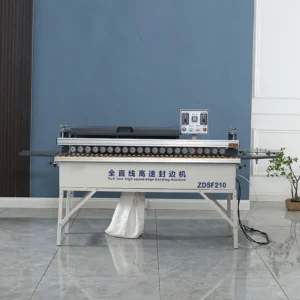
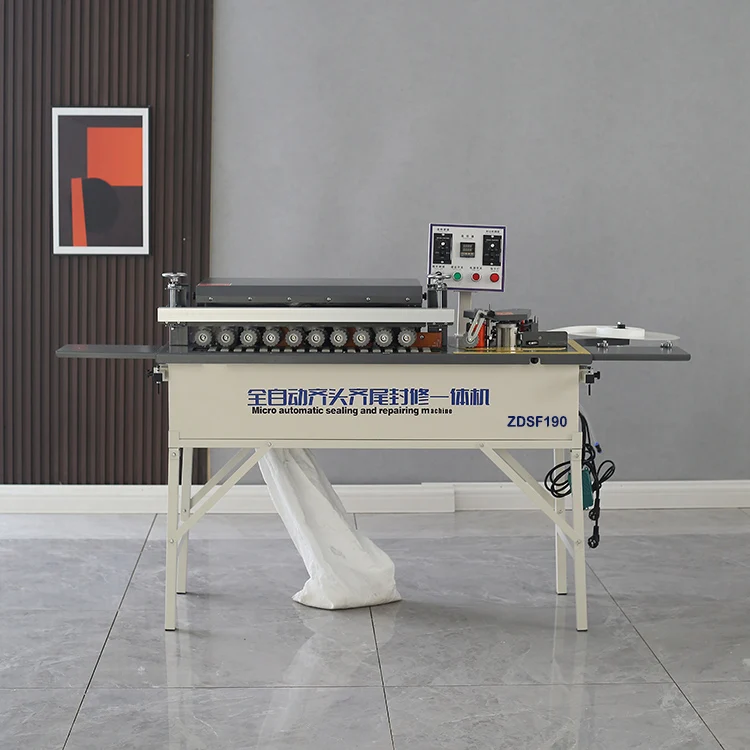
In-House Manufacturing with Verified Tolerances — ZDSF190 curved and straight edge banding units leave our assembly floor only after four-stage QC verification, ensuring every dual-purpose machine meets documented specifications before crating.
Technical Specifications
| Parameter | Value |
|---|---|
| Model | ZDSF190 |
| Product Type | Curved and Straight Dual-purpose Edge Banding Machine |
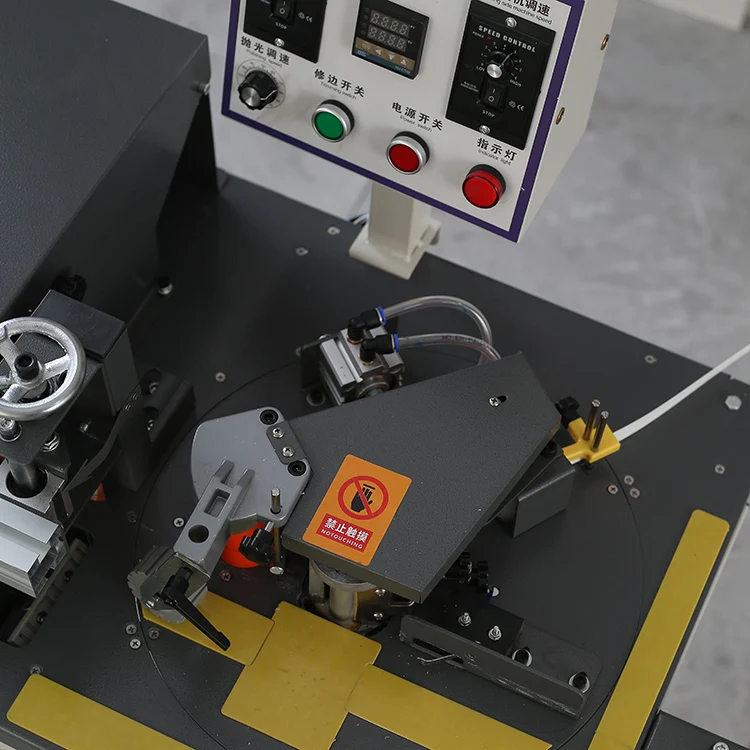
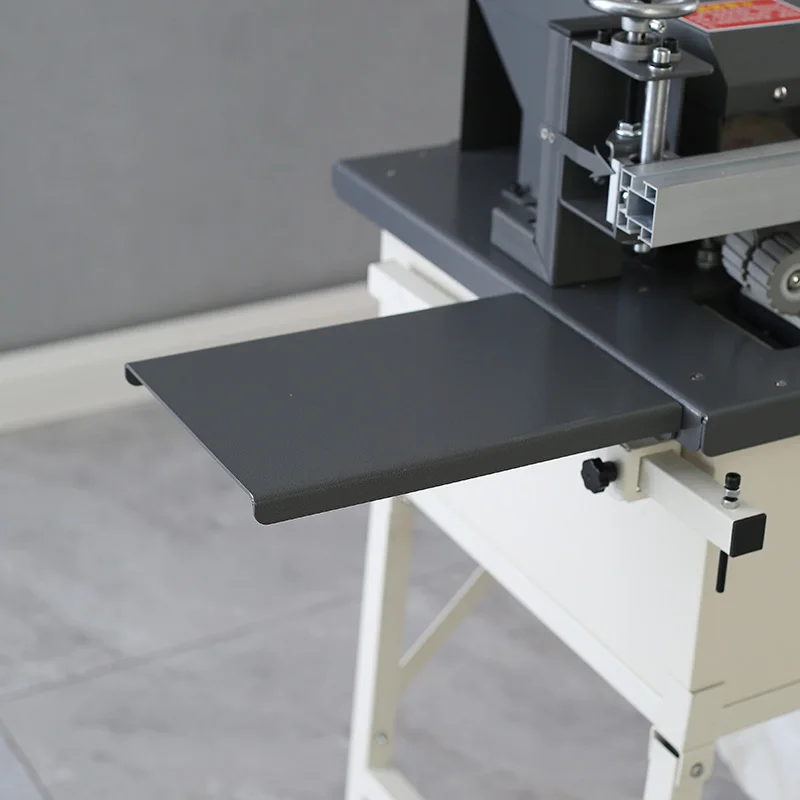
| Function | Automatic plate feeding, automatic belt breaking, double-sided gluing, upper and lower trimming, polishing, curved and straight edge banding, large diameter surrounding vacuum |
| Voltage & Frequency | 220V 50Hz (configurable 110V–440V on request) |
| Rated Power | 4 kW |
| Suction Power | 1200 W |
| Heating Power | 800 W |
| Trimming Power | 800 W × 2 |
| Polishing Power | 180 W × 2 |
| Belt Power | 25 W |
| Transmission Power | 120 W |
| Rated Air Pressure | 0.4–0.6 MPa |
| Feed Speed | 0–14 m/min |
| Sheet Thickness Range | 10–50 mm |
| Strip Thickness Range | 0.5–2.5 mm |
| Glue Capacity | 1000 ml |
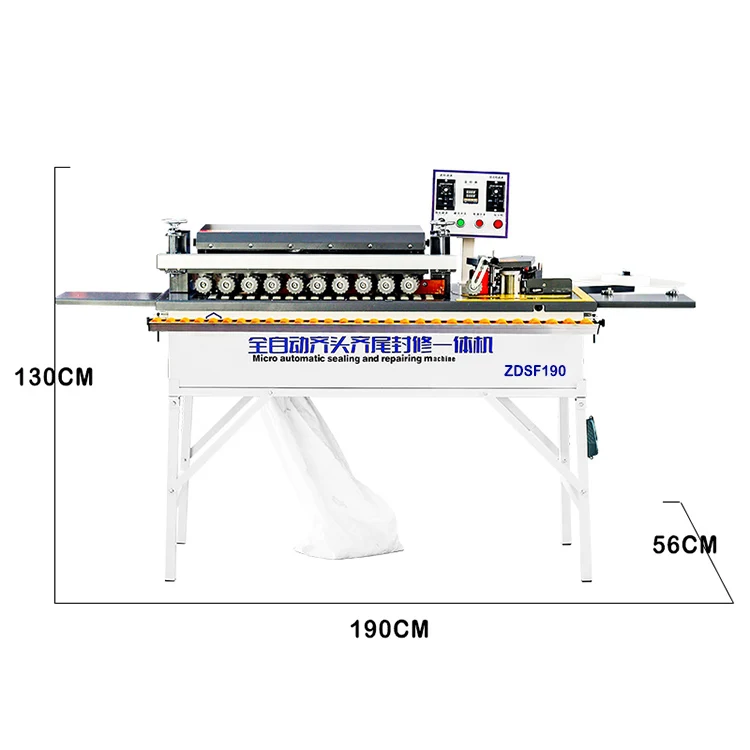
| Overall Dimensions | 1900 × 560 × 1300 mm |
| Net Weight | 120 kg |
| Control Panel | Multi-function button operation |
| Pressure Beam | Adjustable aluminum alloy |
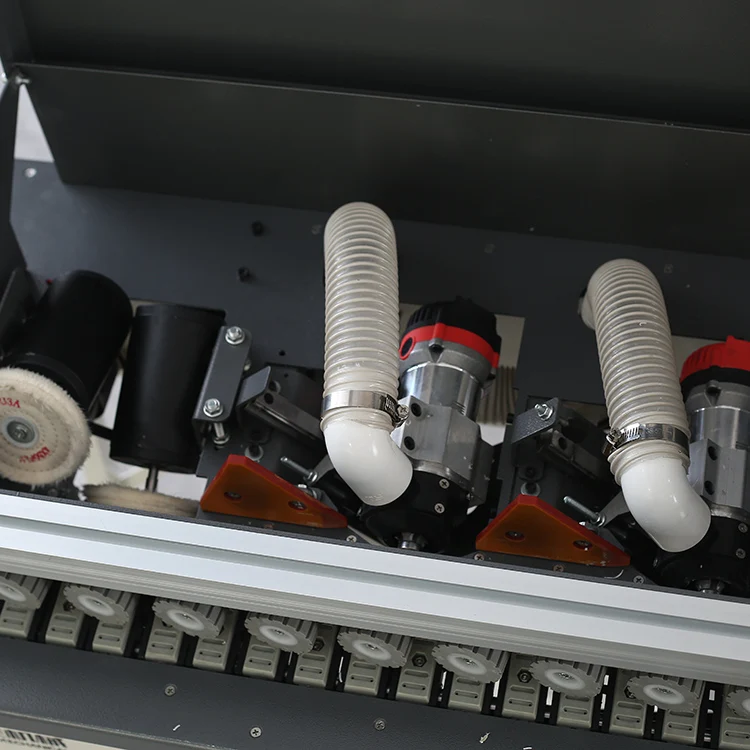
| Trimming Cutter | 4-edge arc-shaped alloy cutter head |
| Dust Collection | Dual large-diameter vacuum, collection effect up to 99% |
| Transmission | Crawler with steel rod slide rails |
| Assembly State | KD packing, assembly required with user manual or video teaching |
Application Suitability
| Application | Material or Output |
|---|---|
| Custom cabinet panel edge finishing | MDF, plywood, and particleboard with PVC or veneer strips |
| Curved furniture component edging | Solid wood panels and shaped MDF with 0.5–2.5 mm banding |
| Small-batch mixed production runs | Alternating straight and curved boards within a single shift |
| Joinery workshop mechanization | Transitioning from manual edge gluing to automated feed and trim |
Why the Voltage Question Must Come Before the Machine Price
Confirming local voltage and frequency before placing an order prevents weeks of downtime at the installation site.
I spent years doing on-site commissioning across West Africa and South Asia, and the most frustrating delays were never about the machines themselves. They were about power. One curved and straight edge banding machine manufacturer shipped a unit rated for 380V to a workshop running 415V three-phase. The variable frequency drive tripped on overvoltage protection the moment the operator hit start. The facility stood idle while the owner sourced a step-down transformer locally, which took over three weeks. [NEED_CITE: voltage and frequency standards by export market]. That kind of stall cascades through an entire production schedule, and the machine vendor is often unreachable by the time the problem surfaces. With the ZDSF190, the standard configuration is 220V 50Hz, but voltage can be configured from 110V to 440V during the ordering process, which means the conversation about your site’s electrical supply needs to happen at the quotation stage, not the packing stage.
Mapping the Full Edge Banding Range
The ZDSF190 occupies the compact dual-purpose tier of the Ruiqi edge banding lineup. Workshops that produce both flat cabinet panels and curved furniture components often face a difficult choice: invest in a dedicated straight-line machine plus a separate manual or semi-automatic curved unit, or find a single platform that covers both geometries. This curved and straight edge banding machine manufacturer designed the ZDSF190 to handle both profiles on one frame, which reduces floor space requirements and eliminates the throughput mismatch that occurs when two machines operate at different feed rates. For a small-to-mid-size joinery operation, that consolidation directly affects how you schedule daily production runs.
Where This Model Fits in a Scaling Workshop
Entry-level workshops typically start with manual edge gluing and a handheld router for trimming. Moving to a mechanized unit like the ZDSF190 introduces automatic plate feeding, double-sided gluing, and integrated trimming and polishing into a single pass. The adjustable aluminum alloy pressure beam and crawler transmission on steel rod slide rails provide feed stability that manual setups cannot match consistently. [NEED_CITE: CE machinery directive requirements for industrial equipment]. As production volume grows and the panel mix shifts toward longer straight runs, the workshop can step up to a full-function pre-milling model within the same product family without changing the supplier relationship or retraining operators on an unfamiliar control system.
What the Numbers Mean on the Shop Floor
The 10–50 mm sheet thickness range determines which panel stock you can process without swapping out feed components. Panels outside this range require either a different machine class or custom pressure beam adjustments that affect feed consistency. The 0.5–2.5 mm strip thickness range covers standard PVC edge banding and thin wood veneer, which accounts for the majority of custom furniture applications. Feed speed from 0 to 14 m/min is adjustable, allowing operators to slow down for tight curves where glue open time and trim accuracy matter more, then increase speed for long straight cabinet sides. The 4-edge arc-shaped alloy cutter head on the trimming station is specifically shaped to follow curved profiles cleanly, reducing the secondary sanding that flat trimmer blades leave on radiused edges.
The Hidden Cost of Choosing the Wrong Configuration
A machine that arrives with a control panel in a language the operator cannot read sits unconfigured while the workshop owner hunts for translation help. A unit quoted without confirming the compressed air supply specification may underperform at the glue roller because the workshop’s compressor cannot sustain 0.4–0.6 MPa continuously. [NEED_CITE: common causes of edge banding machine commissioning failures]. When individual machines are purchased piecemeal from different suppliers, feed height mismatches and throughput imbalances emerge only after everything is bolted to the floor. The ZDSF190 is designed to integrate into the Ruiqi product family, so upstream saws and downstream boring machines share compatible feed heights and panel handling dimensions.
Why Source This Machine from Ruiqi
The ZDSF190 is built on our assembly line with precision-ground components inspected across a four-stage QC process covering incoming material, in-process assembly, finished product, and pre-shipment verification. Our proprietary cutting mechanism patents achieve verified tolerances that you can check on the panels you receive, not just on a spec sheet. Voltage, control panel language, and branding are configurable as standard, so the machine arrives ready for your operators and your market. An engineer-led configuration recommendation with a formal quotation is provided within 24 hours of receiving your production requirements. Factory visits are welcomed, and we encourage buyers to witness test runs on their own panel stock before shipment.
Documentation & Verification
- CE declaration of conformity matching the ZDSF190 configuration destined for your import market
- Machine specification sheet confirming voltage, frequency, and full power breakdown for your site electrical plan
- Electrical schematic and voltage confirmation document cross-referenced against your local grid parameters
- Factory test record on your panel thickness range and edge strip material before dispatch
- Operation and maintenance manual supplied in the agreed language with spare parts list included
- Packing photographs and customs documentation support for smooth freight clearance
Installation, Commissioning & Support
- The ZDSF190 ships in KD packing, requiring on-site assembly guided by the included manual or video instructions
- A dedicated 220V 50Hz circuit rated for at least 4 kW is required, with configurable voltage available for non-standard grids
- The 0.4–0.6 MPa air pressure requirement means verifying your compressor capacity before the machine arrives
- First commissioning includes setting the adjustable aluminum alloy pressure beam to match your most common sheet thickness
- The 1900 × 560 × 1300 mm footprint requires clear access on both sides for curved panel loading and trim waste removal
- Dual large-diameter vacuum ports should connect to a dust collection system rated for at least 1200 W suction
Preparing Your Inquiry
To receive an accurate configuration proposal for the ZDSF190, provide the panel materials you work with most frequently, the edge strip types and thicknesses you run, and the voltage and frequency available at your facility. Let us know the control panel language your operators require and whether you need the machine configured to integrate with existing upstream or downstream equipment in your line. If you want to evaluate edge quality before committing, we can arrange sample processing tests on your own panel stock.
Frequently Asked Questions
Q: How does the ZDSF190 compare to other models across the full Ruiqi edge banding range?
A: The ZDSF190 sits in the compact dual-purpose tier, handling both curved and straight edges on a single frame. Higher-tier models add pre-milling stations and faster feed rates for high-volume straight-line production. The ZDSF190 is positioned for workshops needing flexible geometry handling without running two separate machines. Your engineer can recommend the right tier based on your daily panel mix.
Q: What voltage and frequency configurations are available beyond the standard 220V/50Hz?
A: The ZDSF190 can be configured for voltages from 110V to 440V to match your local grid. Voltage and frequency must be confirmed at the quotation stage so that motors, transformers, and the variable frequency drive are matched to your site before production begins. Providing a copy of your facility’s electrical supply specification eliminates mismatches.
Q: Can this machine be configured as part of a larger production line?
A: Yes. The ZDSF190 integrates with upstream panel saws and downstream boring machines within the Ruiqi product family. Feed height and panel throughput are matched across stations so that boards move between machines without manual repositioning. Your line layout is planned based on your workshop dimensions and target output.
Q: What customization options exist for the control panel and branding?
A: Control panel language, voltage specification, and OEM logo placement are all configurable. The multi-function button operation panel can be supplied with labeling in the language your operators read. Private label and custom branding options are available for distributors reselling the equipment in their regional markets.
Q: How does curved versus straight edge banding tolerance compare on this dual-purpose unit?
A: The 4-edge arc-shaped alloy cutter head is designed to follow curved profiles while maintaining trim consistency comparable to straight-line passes. Tolerance is verified during the factory test record stage using your specified panel material. Curved sections typically require slower feed speeds, which the adjustable 0–14 m/min range accommodates.