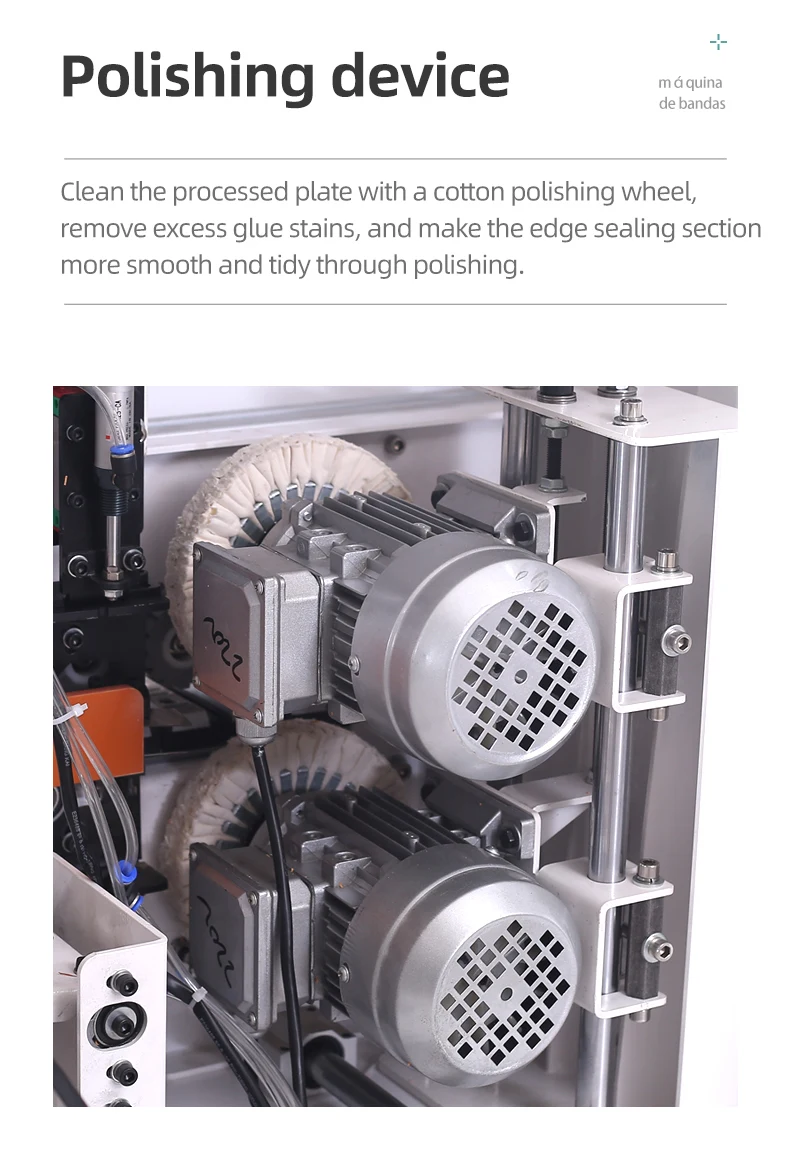
Description
Engineer-led configuration — DW1800 parameters verified against your panel thickness range and local voltage before the quotation is finalized.
Technical Specifications
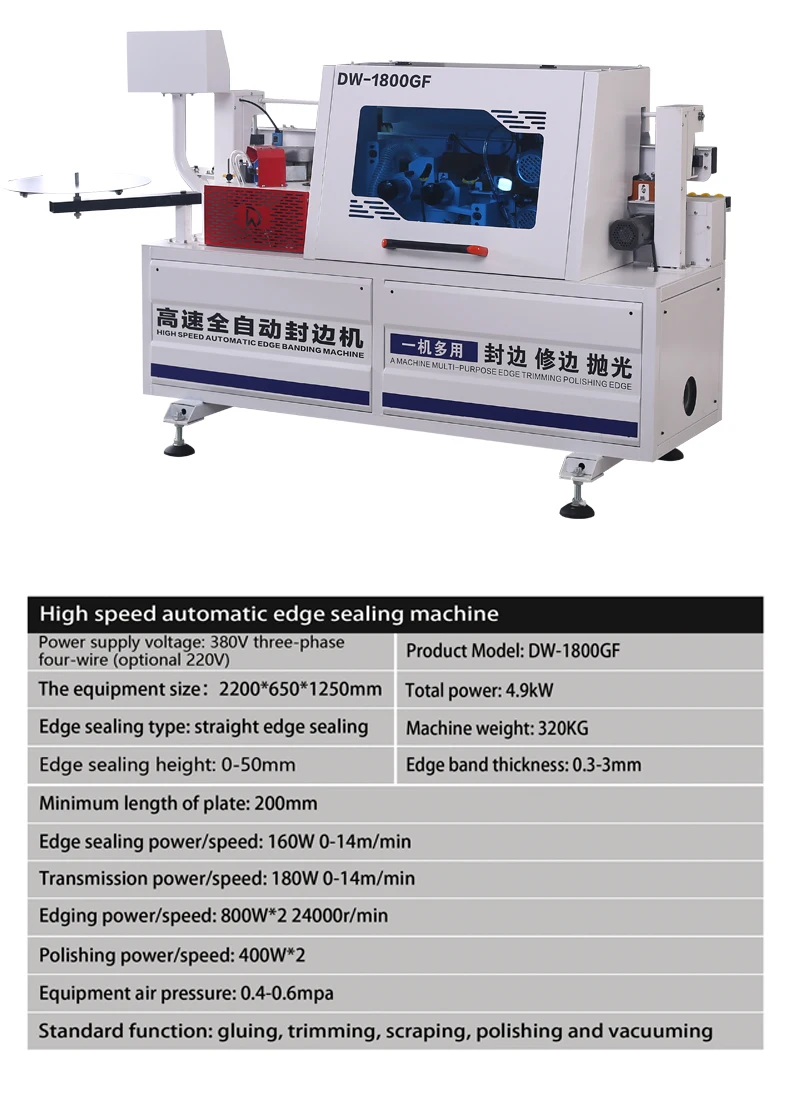
| Parameter | Value |
|---|---|
| Model | DW1800 |
| Product Type | Automatic Edge Banding Machine |
| Total Power | 4.9 kW |
| Voltage Options | 380V / 220V / 415V |
| Feed Speed | 0–14 m/min |
| Edge Banding Thickness | 0.3–3 mm |
| Edge Banding Height | 0–50 mm |
| Minimum Sheet Length | 200 mm |
| Minimum Sheet Width | 100 mm |
| Trimming Power and Speed | 800 W × 2, 24000 r/min |
| Vacuum Power | 550 W |
| Polishing Power | 380 W × 2 |
| Transmission Power | 180 W |
| Glue Pot Capacity | 4000 ml |
| Air Source Pressure | 0.4–0.6 MPa |
| Overall Dimensions | 220 × 65 × 125 cm |
| Net Weight | 320 kg |
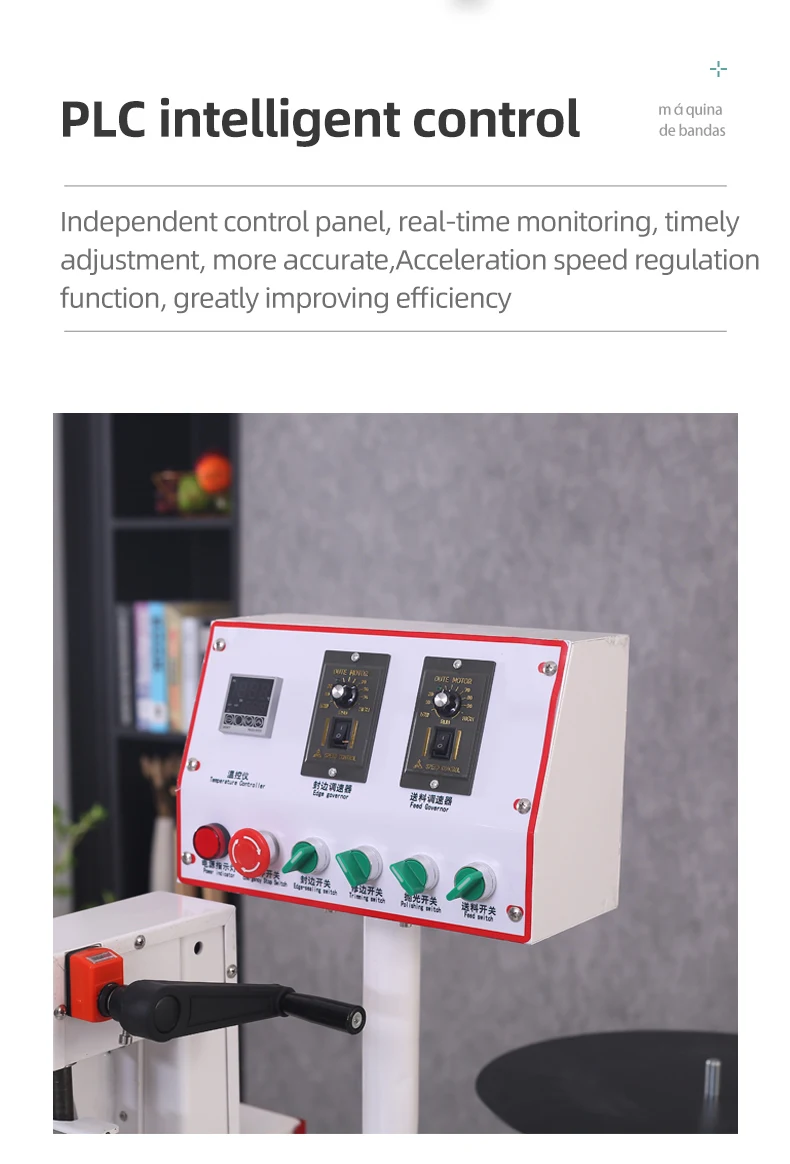
| Control Panel Language | Chinese and English standard; other languages configurable |
| Plug Options | EU, USA, AU, UK |
| Key Features | Double-sided gluing, top and bottom trimming, front and rear alignment, flexible edge scraping, top and bottom polishing, dust extraction |
Application Suitability
| Application | Material or Output |
|---|---|
| Cabinet door edge banding | MDF and particleboard with PVC or melamine edging |
| Table top and shelving production | Plywood and ABB boards up to 50 mm edge height |
| Custom furniture panel finishing | Solid wood panels and organic glass plates |
| Small-batch joinery output | Mixed substrate runs requiring frequent thickness changeover |
Why Voltage Confirmation Must Precede Every Edge Bander Order
A machine wired for the wrong frequency will burn out its trimming motors within weeks, not years.
I used to take the midnight calls when a brand-new automatic edge banding machine manufacturer shipment arrived at a workshop and the breaker tripped on first start. The nameplate said 380V 50Hz; the local grid was running 415V 60Hz. The trimming spindles drew excess current, overheated, and the bearings seized before the first panel cleared the polishing station. [NEED_CITE: voltage and frequency standards by export market] The fix was never a simple transformer swap — it meant rewinding motors and replacing contactors while the whole line stood idle.
What the DW1800 Covers in a Single Pass
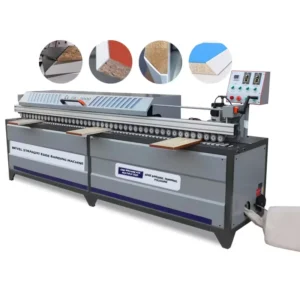
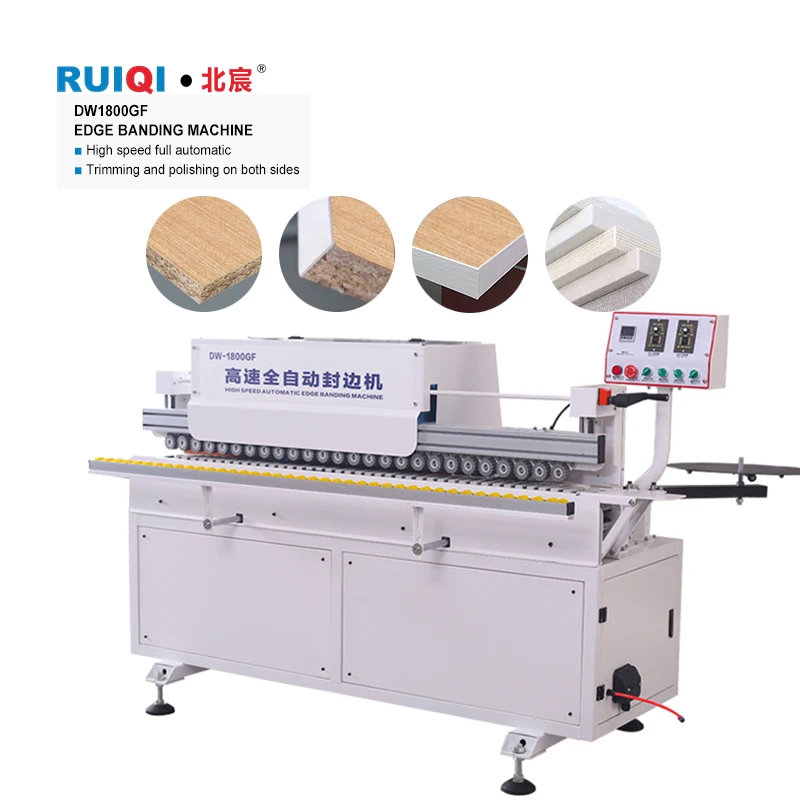
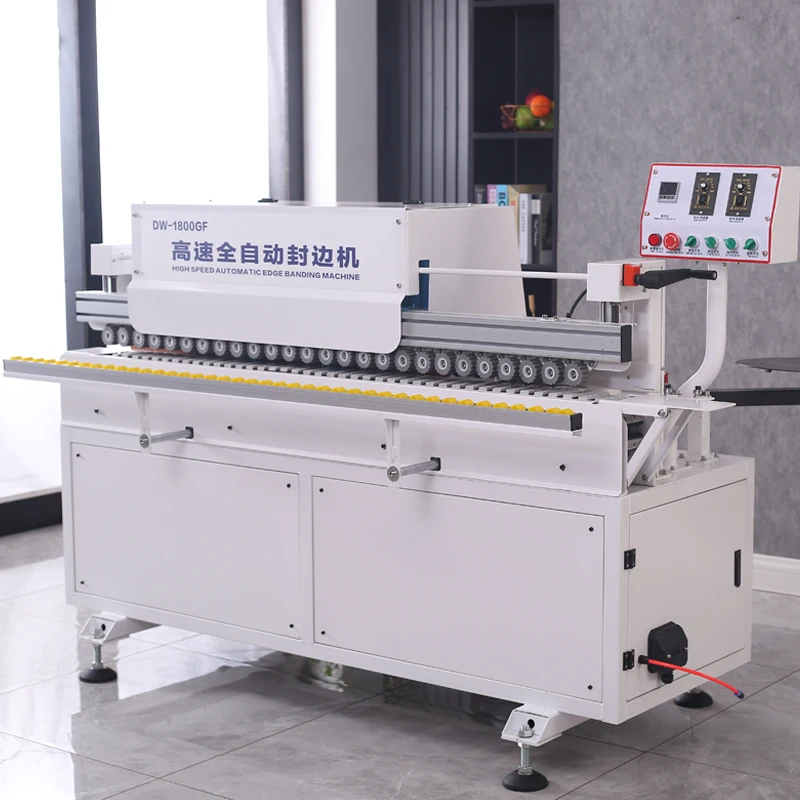
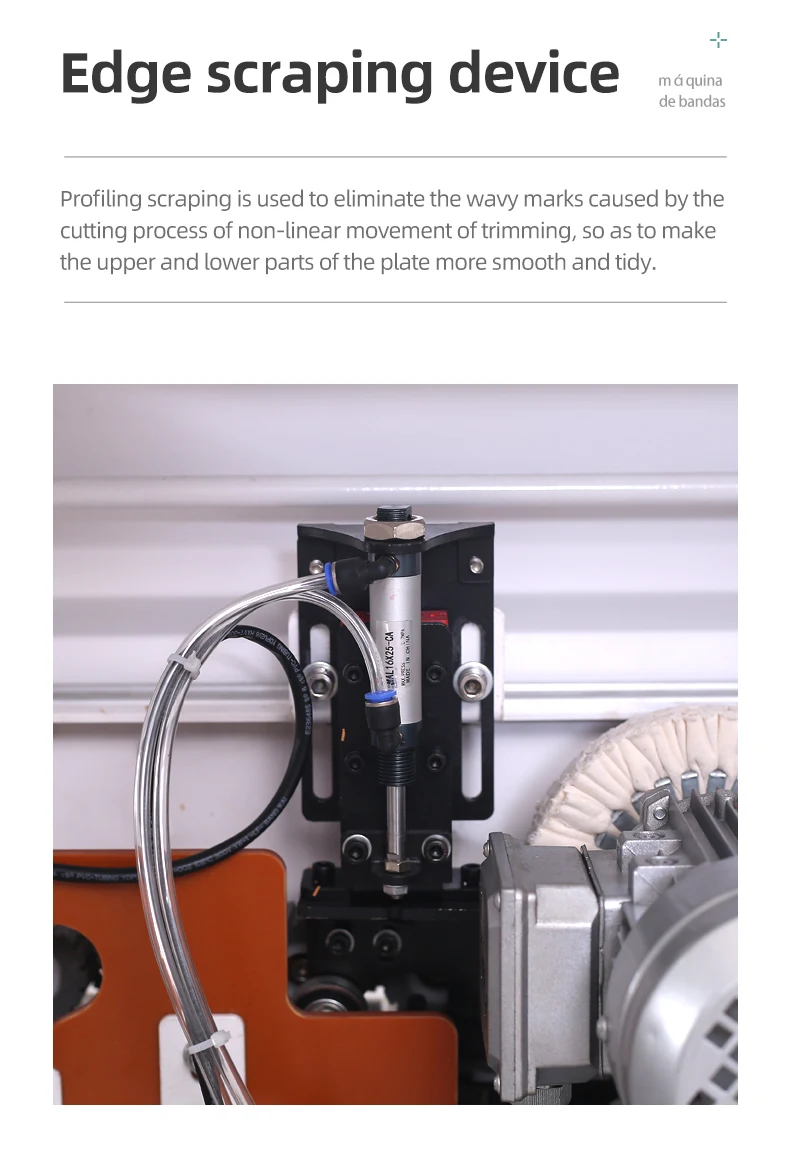
This automatic edge banding machine manufacturer configuration puts gluing, trimming, tracking, scraping, and polishing on one bed. Double-sided glue application lays adhesive on both the panel edge and the banding strip, which matters when you run porous particleboard next to dense MDF on the same shift. The tracking unit rounds all four corners automatically, so operators are not hand-finishing ends with a file between cycles.
Where Moderate Feed Speed Becomes an Advantage
Running at up to 14 m/min keeps the glue open time predictable and lets a two-person crew keep pace without stacking unfinished panels on the floor. For workshops moving from manual clamping to their first automatic edge banding machine manufacturer unit, this speed window leaves room to dial in pressure and temperature before pushing throughput higher. [NEED_CITE: CE machinery directive requirements for industrial equipment]
Reading the Specs That Actually Affect Edge Quality
The 24000 r/min trimming spindles at 800 W each cut cleanly through PVC up to 3 mm thick without chipping the substrate face. Lower spindle speeds tend to tear rather than shear, leaving a visible step line that the polishing wheels cannot hide. The 4000 ml glue pot holds enough adhesive for sustained runs on standard 0.4 mm PVC, and the double-sided system reduces starved joints on rough-sawn particleboard edges. Guide rail construction from extruded aluminum alloy with a roll-ball differential structure keeps the panel square to the trimming heads, which is what prevents the tapered edge you only notice when cabinet carcases refuse to close flush. Air consumption at 0.4–0.6 MPa is typical for the pressure regulators feeding the tracking and scraping cylinders; undersized compressors cause the scraper to stutter mid-pass.
The Cost of Skipping the Spare Parts Conversation
I have watched a furniture line lose three days because a scraper blade wore through on a Friday afternoon and no replacement was on the shelf. The automatic edge banding machine manufacturer had included a spares list in the manual, but nobody cross-referenced it against local supplier stock before the machine shipped. Trimming cutters, scraper blades, and polishing wheels are consumables, not warranty items. [NEED_CITE: typical wear part replacement intervals for edge banding machines] When the quotation does not itemize these, the first reorder becomes an air-freight emergency.
What This Manufacturer Puts Behind the DW1800
In-house manufacturing with patented cutting mechanisms means replacement trimming assemblies come from the same factory that built the machine, not a third-party catalog. Voltage and language customization is treated as standard order configuration, not a special request that adds weeks to lead time. A four-stage QC process runs incoming material checks, in-process assembly verification, finished product testing, and pre-shipment inspection on every unit. Engineer-led configuration means you receive a formal quotation with confirmed specifications rather than a generic price list. Factory visits are open to buyers who want to see the DW1800 running their own panel stock before signing off.
Documentation & Verification
- CE declaration of conformity covering the DW1800 trimming and polishing assemblies
- ISO 9001 certificate for the manufacturing facility producing this unit
- Machine specification sheet with your confirmed voltage and frequency printed
- Electrical schematic matching the plug type and control panel language you specified
- Factory test record run on your panel material and edge banding thickness before dispatch
- Operation and maintenance manual in the agreed language with illustrated spare parts list
Installation, Commissioning & Support
- Requires a dedicated 380V or 220V circuit rated for the 4.9 kW total draw with proper earthing
- Overall footprint of 220 × 65 cm fits most small workshop bays; allow clearance on the infeed side
- Arrives fully assembled — position, level, connect air at 0.4–0.6 MPa, and power on
- First-run commissioning includes glue temperature calibration for your specific PVC or melamine stock
- Trimming and polishing parameters set to your panel thickness range during initial setup
- Spare scraper blades and polishing wheels identified and cross-checked against local availability
What to Include With Your Inquiry
Send your typical panel material, thickness range, and the edge banding type you run most often. Confirm your facility voltage, phase, and frequency so the motor and transformer specification is locked before production. Note the control panel language your operators read and the plug standard your electricians stock.
Frequently Asked Questions
Q: How is voltage and frequency confirmed for my local power supply before shipment?
A: The engineer configuration proposal includes a voltage and frequency confirmation step where you provide your facility supply details. The DW1800 is then built with motors, transformers, and contactors matched to that specification, and the electrical schematic in the documentation package reflects exactly what was installed.
Q: Can the control panel be supplied in a language other than Chinese and English?
A: Yes. Spanish and other languages are configurable at the order stage. You specify the operator language during the quotation review, and the control panel labels, screen text, and operation manual are all produced in that language before dispatch.
Q: What is the minimum and maximum panel size this machine can process?
A: The DW1800 accepts sheets from 200 mm in length and 100 mm in width, with edge banding height from 0 to 50 mm and banding thickness from 0.3 to 3 mm. Panels outside these ranges may require a different model configuration from the same product family.
Q: Which edge banding materials and thicknesses are compatible with the DW1800?
A: The machine handles PVC, melamine, and veneer edge banding from 0.3 to 3 mm thick. The double-sided gluing system and adjustable glue pot temperature accommodate the different adhesion requirements across these materials on MDF, particleboard, plywood, and solid wood substrates.
Q: Can I visit the factory or request a sample processing test before placing an order?
A: Factory visits are welcome, and you can send your own panel stock for a sample processing test on the DW1800. The test record, including edge quality photographs and measured trimming results, is included in the pre-shipment documentation package.