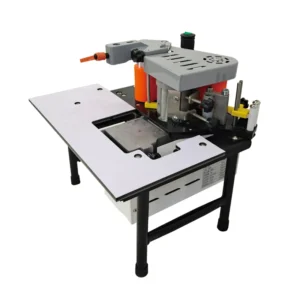
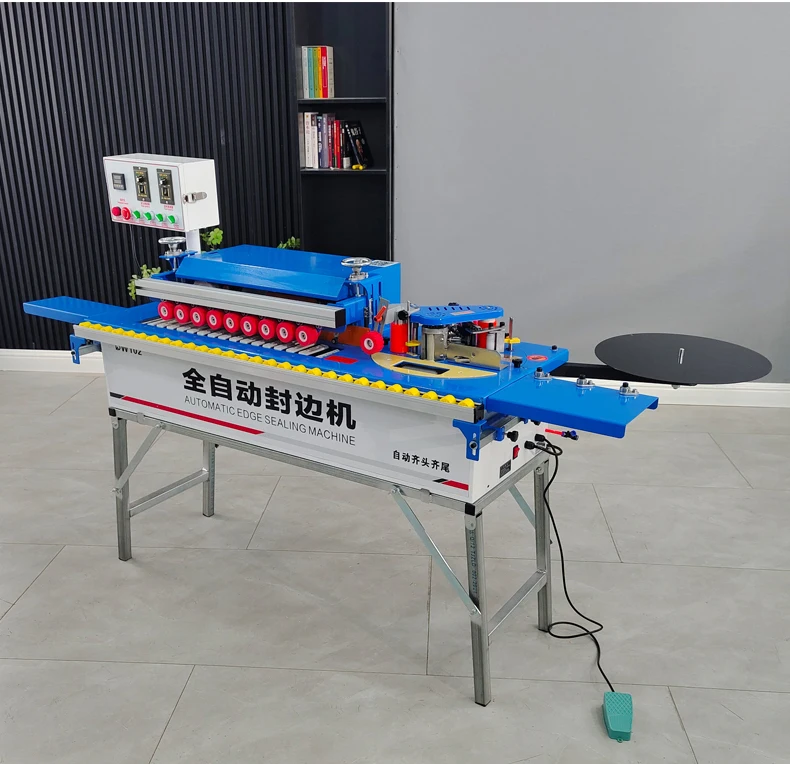
Description
Four-stage QC with pre-shipment verification — every DW102 semi-automatic edge bander runs test panels on your specified substrate before it leaves the factory, not after it arrives at your workshop.
Technical Specifications
| Parameter | Value |
|---|---|
| Model | DW102 |
| Product Type | Semi-Automatic Edge Bander |
| Total Power | 3800W |
| Voltage | 220V/380V/customization |
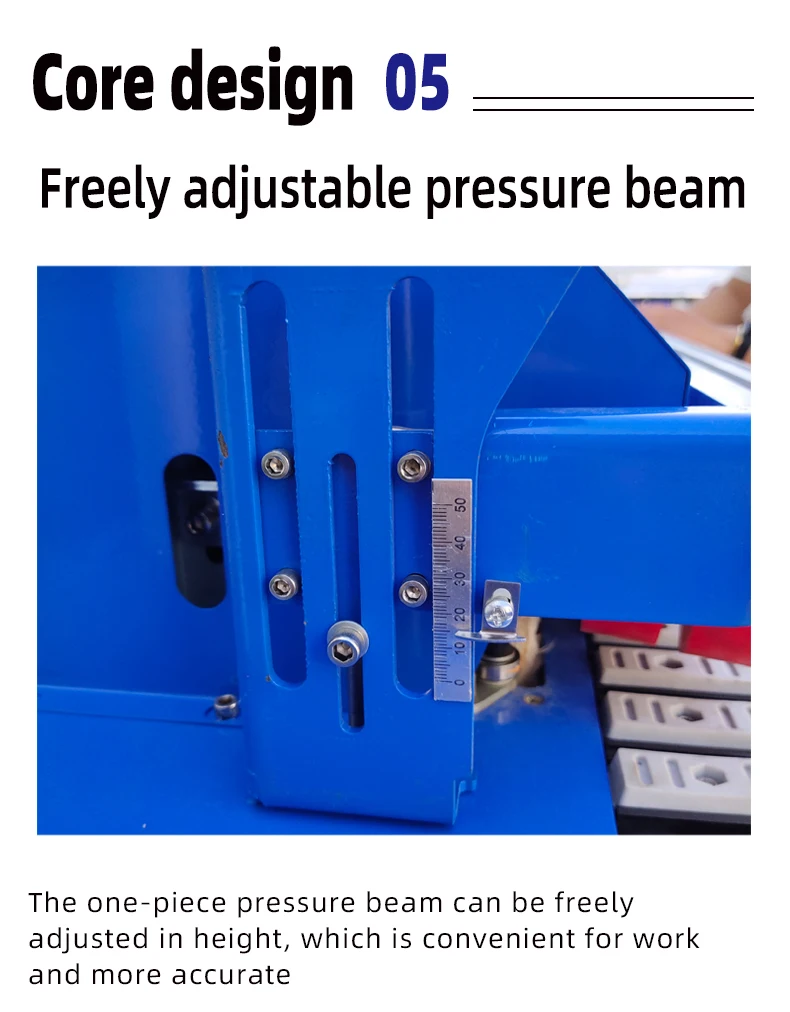
| Edge Banding Height | 0-50mm |
| Edge Banding Thickness | 0.3-3mm |
| Minimum Sheet Length | 25cm |
| Minimum Sheet Width | 5cm |
| Glue Pot Capacity | 1000ml |
| Trimming Power | 650W × 2 |
| Polishing Power | 180W × 2 |
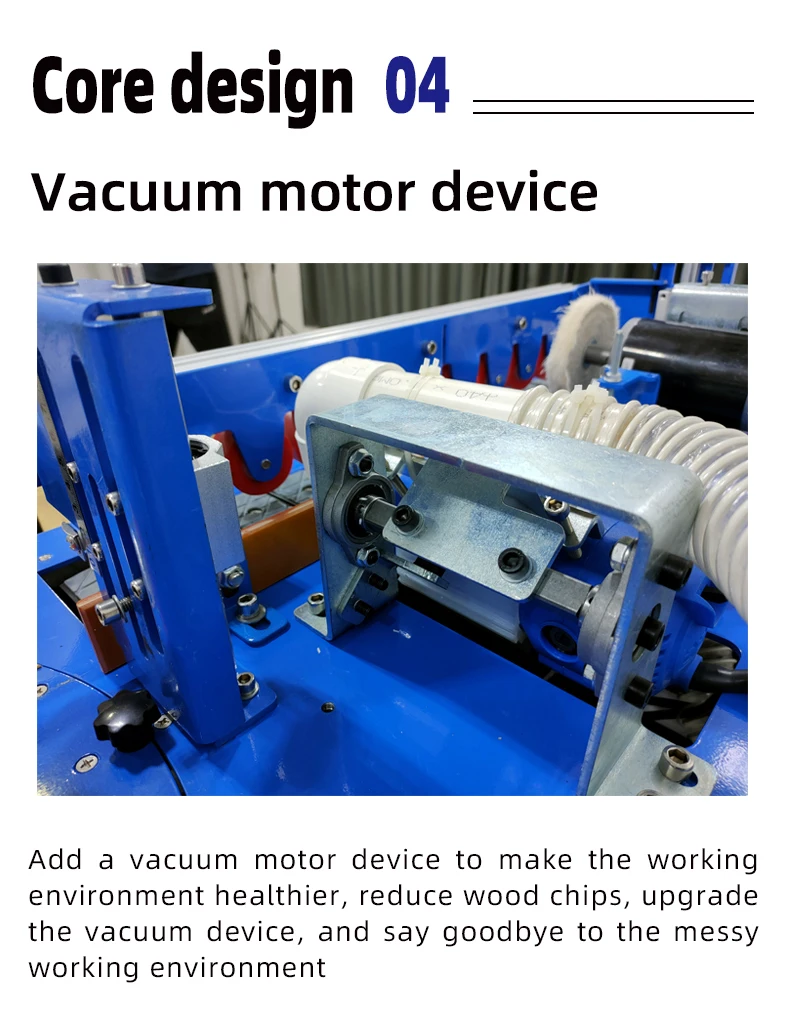
| Vacuum Power | 1200W |
| Transmission Power | 60W |
| Edge Power | 20W |
| Air Source Pressure | 0.5-0.8 MPa |
| Product Size | 128 × 47 × 69 cm |
| Product Weight | 75 kg |
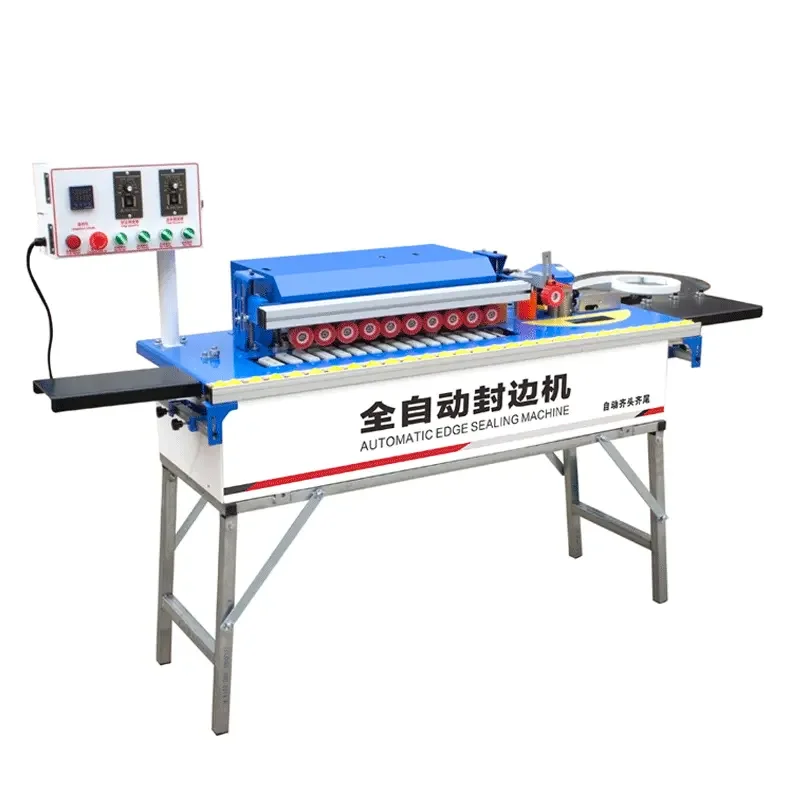
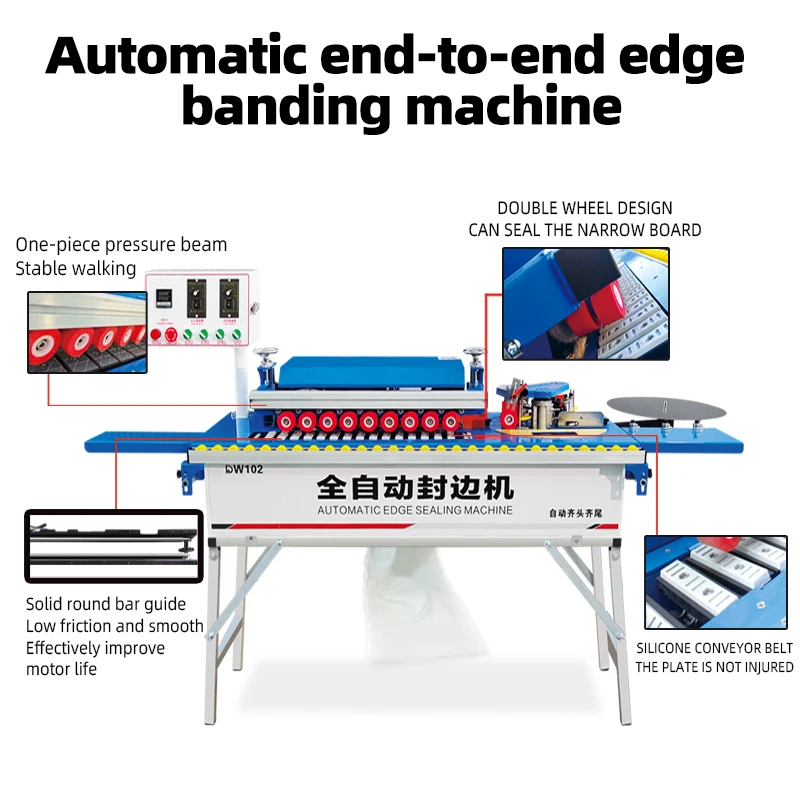
| Standard Features | Curved and straight edge banding, edge trimming, polishing, automatic head and tail cutting, integrated vacuum |
Application Suitability
| Application | Material or Output |
|---|---|
| Custom cabinet door edging | MDF and particleboard with PVC or melamine strip |
| Workshop-scale furniture production | Plywood panels with veneer or ABS banding |
| Curved contour finishing | Shaped blockboard and MDF components |
| Small-batch joinery components | Solid wood panels up to 50mm edge height |
| Polymer door frame edging | Polymer composite substrates with matching strip |
Why Glue Lines Keep Lifting on Your MDF Panels
A Semi-Automatic Edge Bander manufacturer who skips substrate-specific testing is selling you a machine, not a solution.
The glue line fails because the pre-mill depth and feed rate were never set for your actual panel material.
I have watched workshops in Kampala and Nairobi lose weeks of PVC strip because someone configured the machine for particleboard and then ran MDF all day. The trim pass kept catching the edge, lifting the banding just enough to fail visual inspection. Three weeks of wasted material before the settings were corrected. [NEED_CITE: substrate density differences affecting adhesive bonding in edge banding]. The DW102 handles both curved and straight profiles, but only if the glue temperature and feed speed match what you are actually feeding through it.
Mapping the DW102 Range to Your Workshop Scale
This model sits at the entry point of semi-automatic edge banding, designed for operations moving beyond hand-held tools but not yet requiring fully automated feed systems. The 1000ml glue pot supports continuous small-batch runs, meaning a cabinet maker processing varied orders through the day can keep the machine running without stopping for frequent refills. A Semi-Automatic Edge Bander manufacturer should confirm whether your daily volume aligns with this capacity before you commit.
Voltage Compatibility Before the Machine Ships
One of the most common failures in imported woodworking equipment arrives in the crate: a machine wired for a voltage that does not exist in the buyer’s facility. The DW102 ships configurable across 220V and 380V, with custom configurations available for markets outside those standards. [NEED_CITE: industrial voltage and frequency standards by export destination]. Confirming your local supply with the Semi-Automatic Edge Bander manufacturer before production begins prevents a machine that sits idle until an electrician rewires it or a transformer is sourced locally.
Reading the Specs That Matter for Edge Quality
The dual trimming motors at 650W each provide the torque needed to cut cleanly through PVC and veneer banding up to 3mm thick without chipping the substrate edge. Trimming power directly determines whether the cut leaves a clean line or tears the material on the exit side. The integrated vacuum at 1200W captures dust and trim waste at the source, keeping the work surface clear so the operator can see the feed path and the banding alignment. Air source pressure between 0.5 and 0.8 MPa drives the pneumatic clamping and cutting mechanisms — insufficient pressure causes incomplete head and tail cuts, while excess pressure accelerates seal wear. The 0-50mm edge height range covers standard panel thicknesses for cabinet and furniture work, and the 0.3-3mm banding thickness range accommodates everything from thin PVC to thicker ABS or wood veneer strips.
The Cost of Buying a Machine Not Configured for Your Material
When edge banding equipment arrives without factory testing on your specific panel stock, the first week of production becomes your commissioning phase. Operators waste strip material while adjusting feed rate and temperature by trial and error. Panels that fail edge adhesion get scrapped or sent back for re-work, and customers receive deliveries late. [NEED_CITE: material waste and re-work costs in untested edge banding setups]. A Semi-Automatic Edge Bander manufacturer who tests your substrate before shipping eliminates that costly learning period on your shop floor.
Why Source This DW102 Through This Channel
In-house manufacturing with proprietary cutting mechanisms means the trimming accuracy is built into the machine, not adjusted after assembly. The full product family allows your workshop to scale from this semi-automatic unit to higher-throughput models within the same supplier relationship, keeping spare parts and service knowledge consistent. Voltage, control panel language, and specification customization are handled as standard configuration steps, not afterthoughts. The four-stage quality control process includes pre-shipment verification on test panels, so you see edge quality results before the machine is crated. Engineer-led configuration recommendations ensure the DW102 is matched to your panel types and daily volume rather than sold as a generic unit.
Documentation & Verification
- CE declaration of conformity covering the DW102 edge banding and trimming functions
- Electrical schematic confirming your specified voltage and circuit requirements before dispatch
- Factory test record on your panel thickness and banding material combination before shipment
- Operation manual translated into your operator’s working language with maintenance schedules
- Spare parts list with part numbers for trimming blades, polishing wheels, and vacuum filters
Installation, Commissioning & Support
- Dedicated 3800W circuit with correct amperage rating for the DW102 total power draw at your confirmed voltage
- Compressed air supply delivering 0.5-0.8 MPa with a clean, dry line connected to the pneumatic system
- Level work surface accommodating the 128 × 47 cm footprint with operator clearance on the feed side
- Initial glue pot temperature calibration for your specific banding thickness between 0.3mm and 3mm
- Trimming motor alignment verification on your panel stock to confirm clean cuts at both head and tail ends
- Polishing wheel pressure adjustment tuned to your chosen edge material for a consistent finish
Configuring the Right DW102 for Your Production
To specify the correct machine setup, share your primary panel substrates, the edge banding materials you run most often, and your facility voltage and frequency. If you process curved profiles regularly, note the minimum radius your typical components require. Let us know whether your operators need the control interface in a specific language.
Frequently Asked Questions
Q: What panel thickness range does the DW102 handle effectively?
A: The machine processes panels requiring edge banding heights from 0 to 50mm, covering standard MDF, plywood, and particleboard stock used in cabinet and furniture production. Banding thickness from 0.3mm to 3mm is supported, which includes most PVC, ABS, and veneer strips. Confirm your specific panel and strip combination during the quotation stage.
Q: How do I confirm voltage compatibility before shipment?
A: The DW102 supports 220V, 380V, and custom voltage configurations. Provide your facility supply specifications during inquiry so the electrical system is built to match. An electrical schematic is supplied for your electrician to verify before the machine ships, preventing costly rewiring or transformer purchases after arrival.
Q: Can the control panel be customized to my operator’s language?
A: Multilingual control panels are available as a standard customization option. Specify the required language during the configuration stage so the interface labels and any digital readouts match what your operators can read. This prevents commissioning delays caused by unreadable controls.
Q: What edge banding materials work best with this machine?
A: The DW102 handles PVC, ABS, melamine, and wood veneer strips within the 0.3-3mm thickness range. Adhesive temperature and feed speed settings vary by material type, so factory testing on your specific banding stock ensures clean trimming and polishing results from the first production run.
Q: How does curved edge processing differ from straight edge on this model?
A: The DW102 is designed for both curved and straight edge banding within the same unit. Curved processing requires the operator to guide the panel along the contour while the machine applies glue, feeds the banding, and performs trimming. The minimum sheet dimensions of 25cm length and 5cm width apply to both modes.