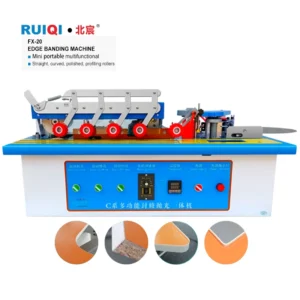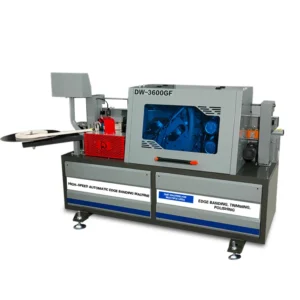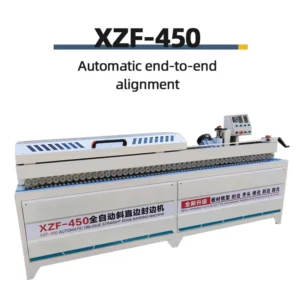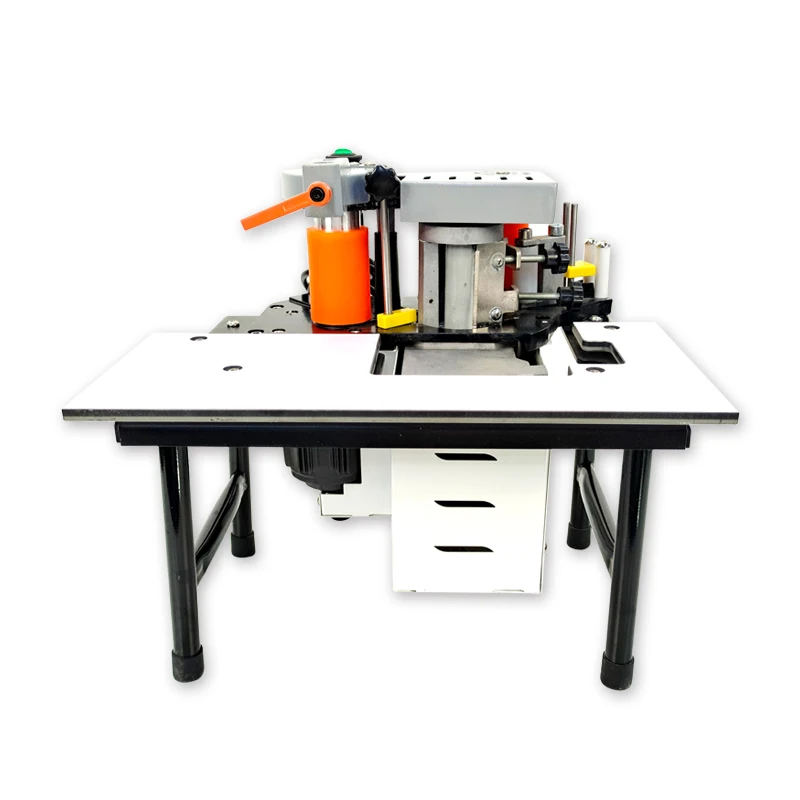

Description
Voltage-Verified Dispatch — Every ST-30 portable edge banding machine leaves the facility with a confirmed electrical schematic and wiring photo matched to the buyer’s local supply, preventing the arrival-unusable scenarios that stall workshops for weeks.
Technical Specifications
| Parameter | Value |
|---|---|
| Model | ST-30 |
| Product Type | Portable Edge Banding Machine |
| Rated Power | 1000W |
| Voltage & Frequency | 220V / 380V / customization available |
| Control System | Manual operation |
| Overall Dimensions (L×W×H) | 38×35×35 cm |
| Net Weight | 12 kg |
| Edge Banding Height Range | 0–50 mm |
| Edge Banding Thickness Range | 0.3–3 mm |
| Minimum Sheet Length | 25 cm |
| Minimum Sheet Width | 3 cm |
| Tape Compatibility | ABS, PVC, Melamine, Veneer |
| Edge Type | Straight and curved |
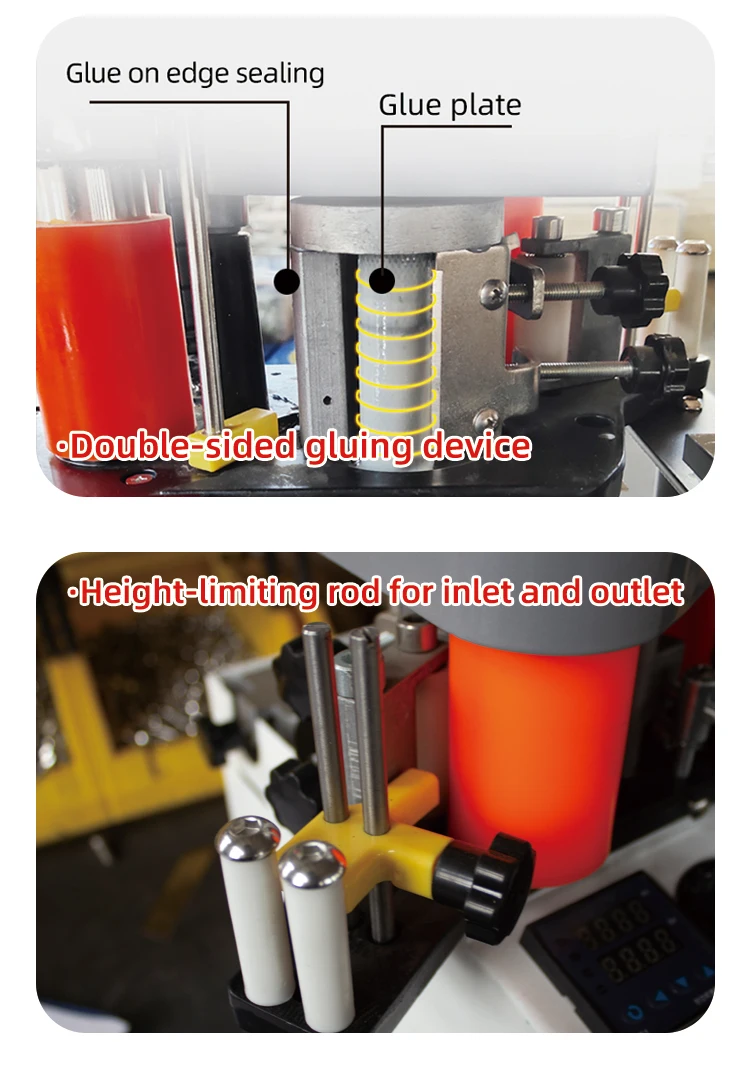
| Glue Pot Capacity | 1000 ml |
| Air Source Pressure | 0.5–0.8 MPa |
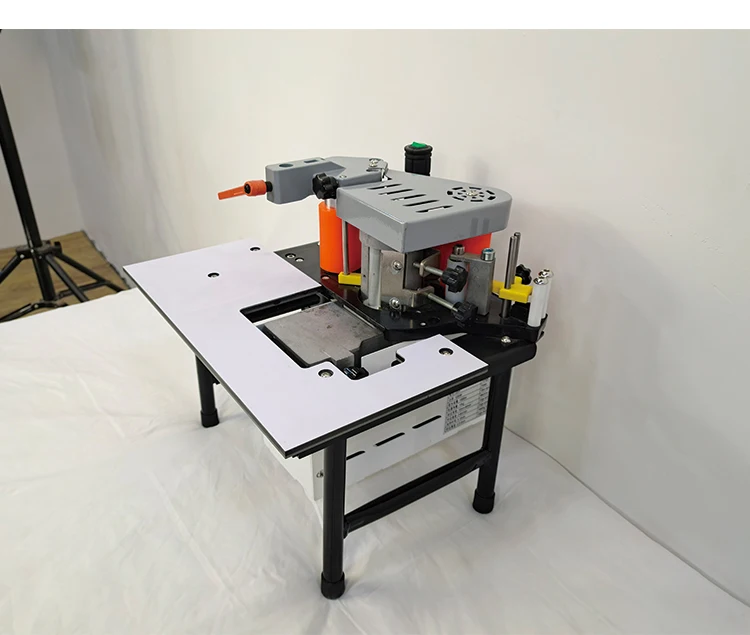
| Assembly State | Portable / tabletop |
| Language Options | Chinese, English (other languages customizable) |
| Certification | CE, ISO 9001 (per company profile) |
Application Suitability
| Application | Material or Output |
|---|---|
| Custom cabinet edge finishing | MDF and plywood panels with PVC or ABS tape on straight and curved profiles |
| Small-batch furniture production | Particleboard shelving and carcass components with melamine edge banding |
| On-site interior fit-out | Solid wood trim and decorative panels with veneer tape on curved edges |
| Joinery workshop prototyping | Mixed substrate samples requiring quick edge banding without full-line setup |
Why the Voltage Question Should Come Before the Price
Confirming your site’s voltage and frequency before ordering a Portable Edge Banding Machine manufacturer prevents the machine from sitting idle while you source a transformer.
I worked on a shipment last year where a Southeast Asian customer ordered a compact edge bander for curved panel work. The voltage was never verified during the quoting stage. The machine arrived configured for 440V three-phase, but their workshop only had 220V single-phase supply. A transformer took three weeks to arrive, and the entire commissioning schedule slipped. That single oversight cost more downtime than the machine itself was worth. Since then, the procedure here is straightforward: the workshop photographs the existing electrical panel, we video-call to confirm wiring configuration, and the schematic is signed off before the unit ships [NEED_CITE: voltage and frequency standards by export market]. A Portable Edge Banding Machine manufacturer that skips this step is leaving your production schedule to chance.
Where a 12 kg Unit Fits on the Workshop Floor
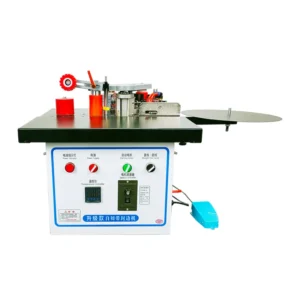
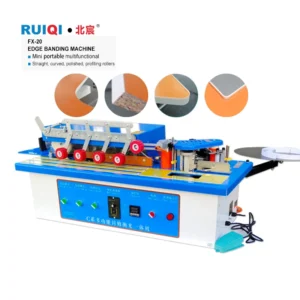
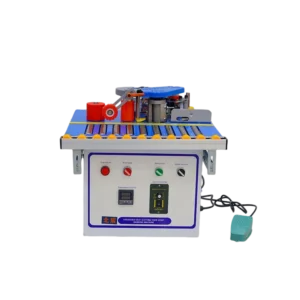
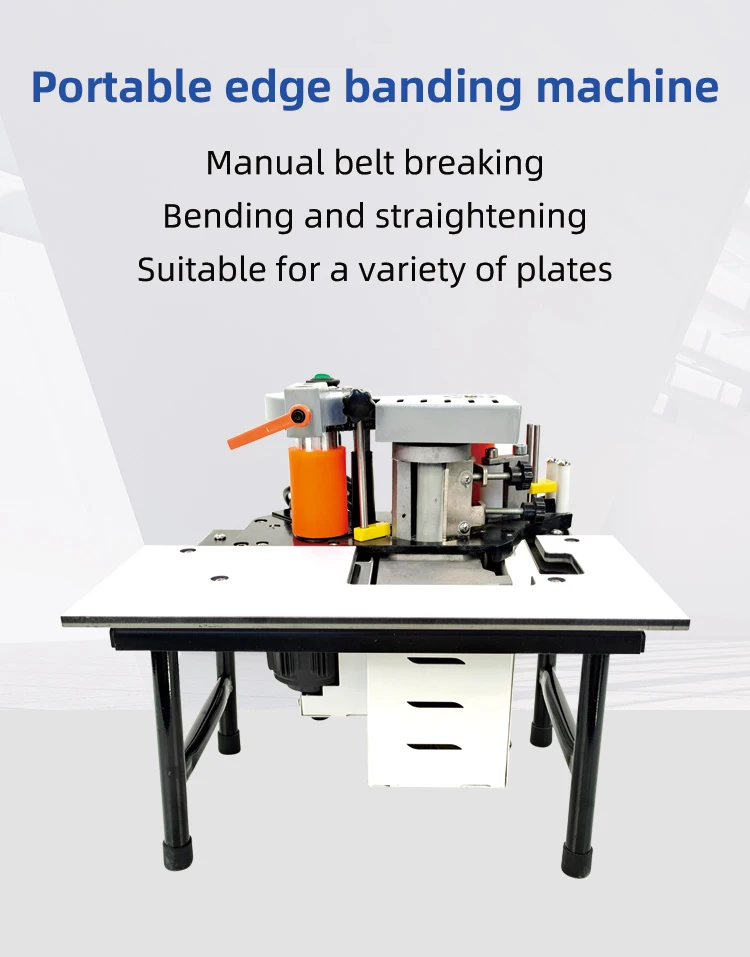
The ST-30 occupies a niche that full-size automatic edge banders cannot fill. At 38×35×35 cm, it sits on a benchtop or rolls out for on-site fit-out jobs where dragging a 400 kg machine through a doorway is not an option. Workshops handling occasional curved-edge pieces — arched cabinet doors, rounded shelf fronts, custom reception desks — find that this Portable Edge Banding Machine manufacturer offering bridges the gap between hand-applied tape and committing to a full automatic line.
Manual operation means the operator controls feed speed and pressure by feel, which suits low-volume work where each piece may differ in profile and radius. The glue pot holds 1000 ml, enough for a sustained session of small panels without constant refilling.
Matching Tape Material to Your Substrate
Edge banding tape selection determines whether the finished edge survives daily use or peels within months. The ST-30 accepts ABS, PVC, melamine, and veneer tape from 0.3 mm to 3 mm thick, covering the range most small workshops encounter. ABS provides impact resistance for high-traffic furniture edges, while PVC suits general cabinetry where cost matters. Melamine tape pairs well with melamine-faced particleboard for colour-matched edges, and veneer delivers a genuine wood finish for visible surfaces on solid wood or plywood assemblies [NEED_CITE: edge banding material selection for wood panel substrates].
The 50 mm maximum banding height accommodates standard panel thicknesses from 16 mm to 25 mm, and the unit handles workpieces as small as 25 cm long and 3 cm wide — dimensions that would jam the feed mechanism of a larger automatic machine.
Reading the Specs That Actually Matter on the Shop Floor
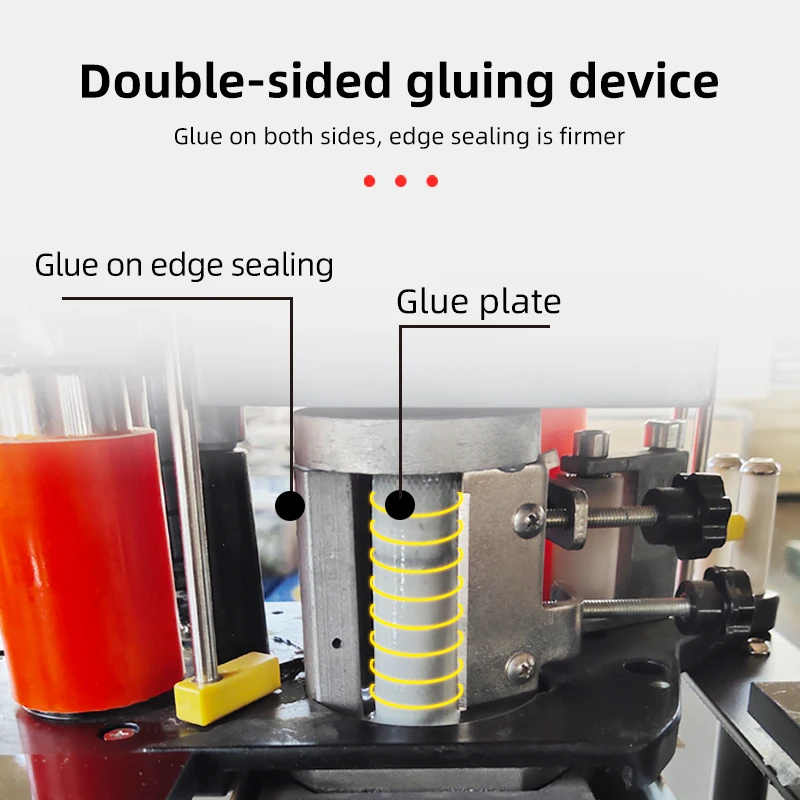
The 0.5–0.8 MPa air source pressure requirement tells you this unit needs a compressor connection even though it is manual. This air pressure drives the glue roller contact and tape tensioning, so inconsistent compressor output shows up directly as uneven glue lines on the finished edge. Shops running multiple pneumatic tools on a single undersized compressor often see this problem first on their smallest machines.
The 1000W rated power draw means the glue pot heater and motor together stay within the capacity of a standard single-phase outlet, which matters when you are plugging into a temporary site supply rather than a dedicated workshop circuit. A Portable Edge Banding Machine manufacturer should confirm whether your available circuit can sustain this draw alongside other tools already running.
The minimum sheet dimensions — 25 cm length and 3 cm width — define the smallest offcut you can edge-band reliably. Below these sizes, the workpiece lacks the surface area for stable manual guidance through the glue and tape station.
What Happens When the Portable Unit Was Never the Right Choice
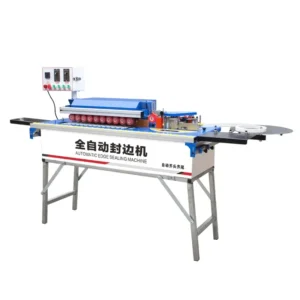
Buying a portable machine for production volumes it was not designed for is one of the most common mistakes in small workshop equipment procurement. The ST-30 handles occasional curved and straight edge work, but a shop running hundreds of linear metres of edge banding per day will exhaust the operator long before the machine fails. Manual feed means inconsistent speed, which produces varying glue bead thickness along longer runs.
When visible glue lines start appearing on some substrates but not others, the cause is often uneven pressure during manual feeding rather than a machine defect. Recognising when to step up to an automatic edge bander — one with motorised feed and fixed pressure rollers — prevents quality complaints from reaching your customers [NEED_CITE: common causes of visible glue lines in manual edge banding].
Why Procurement Teams Source This Range Here
In-house manufacturing with patented cutting mechanisms means the edge trimming quality on this portable unit traces back to tooling developed on the same production floor, not outsourced components bolted together.
The full range from entry-level portable to full-function automatic sits within one product family, so a workshop can add an ST-30 now and scale to a larger automatic model later without switching suppliers or relearning a different control philosophy.
Voltage, language, and specification customization is handled as standard procedure, not a special request. The electrical schematic and wiring confirmation happen before production starts, not as an afterthought during packing.
Four-stage quality control with pre-shipment verification means the unit is tested on actual panel material matching your specification before it leaves the facility, with a factory test record included in the documentation package.
An engineer reviews your factory layout and processing requirements to recommend whether the ST-30 covers your needs or whether a different model in the range is the correct starting point.
Documentation & Verification
- CE declaration of conformity covering portable edge banding equipment for import clearance
- Electrical schematic and voltage confirmation matched to your site supply before dispatch
- Factory test record showing edge banding results on your specified panel thickness range
- Operation and maintenance manual supplied in Chinese, English, or your agreed language
- Spare parts list with identified wear components for glue pot and feed mechanism
Installation, Commissioning & Support
- Tabletop placement on any stable bench within the 38×35×35 cm footprint, no foundation required
- Dedicated 220V or 380V circuit confirmed via pre-shipment wiring photo and video verification
- Portable assembly arrives fully built; connect air supply at 0.5–0.8 MPa and power on
- First-run glue temperature and roller pressure set by operator on your specific tape material
- 1000 ml glue pot capacity allows extended sessions before refill interruption
- Replacement glue rollers and trimming blades identified in the spare parts documentation
What to Include with Your Inquiry
To receive an accurate configuration for the ST-30, share your primary panel substrate and thickness range, the edge banding tape material you plan to run, and whether your work is predominantly straight, curved, or mixed. Confirm your workshop voltage and phase supply so the electrical configuration is locked before production. If you are evaluating this unit alongside a larger automatic model, describe your daily linear metre volume and we can recommend where each machine fits in your workflow.
Frequently Asked Questions
Q: How do I confirm my workshop voltage matches the ST-30 before placing an order?
A: Photograph your electrical panel and any existing machinery nameplates, then share these during the quotation stage. The engineering team cross-references your local supply standard — including frequency — and sends a wiring schematic for your electrician to sign off before the machine enters production. This prevents transformer delays after arrival.
Q: Can the control interface be supplied in a language other than Chinese or English?
A: Yes. The manual operation interface on the ST-30 is straightforward, but any instructional markings and the operation manual can be produced in your preferred language. Confirm this during the specification review so the documentation package matches your operator’s requirements before dispatch.
Q: When should I choose this portable unit instead of a full automatic edge bander?
A: The ST-30 suits workshops handling occasional curved edges, low-volume custom pieces, or on-site fit-out work where portability matters. If your daily output involves hundreds of linear metres on standard straight panels, an automatic machine with motorised feed and fixed pressure stations delivers more consistent quality at production volume.
Q: Which tape material works best for melamine-faced particleboard cabinet components?
A: Melamine tape provides the closest colour match to melamine-faced particleboard and bonds well with standard hot-melt adhesives. PVC tape is a cost-effective alternative where exact colour matching is less critical. The ST-30 handles both materials within its 0.3–3 mm thickness range on panels up to 50 mm edge height.