Description
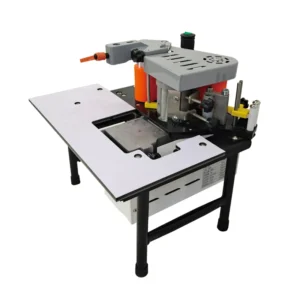
Voltage Customization as Standard — the FX-20 ships with confirmed 220V/380V settings and a language-matched control panel so it powers up correctly on arrival, eliminating the most common commissioning delay in small edge banding equipment.
Technical Specifications
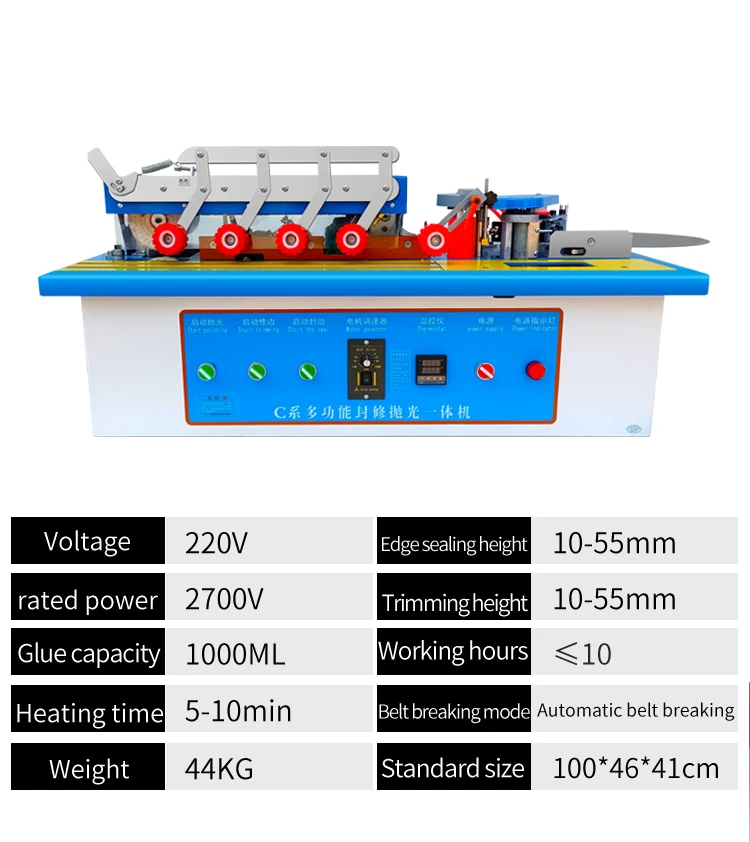
| Parameter | Value |
|---|---|
| Model | FX-20 |
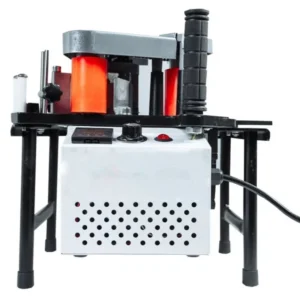
| Product Type | Small Mini Edge Banding Machine |
| Total Power | 2500W |
| Edge Power | 20W |
| Trimming Power | 650W × 2 |
| Polishing Power | 180W × 2 |
| Voltage | 220V / 380V / Customizable |
| Air Source Pressure | 0.5–0.8 MPa |
| Glue Pot Capacity | 1000 ml |
| Edge Banding Height | 0–50 mm |
| Edge Banding Thickness | 0.3–3 mm |
| Minimum Sheet Length | 25 cm |
| Minimum Sheet Width | 10 cm |
| Product Size | 100 × 46 × 41 cm |
| Product Weight | 44 kg |
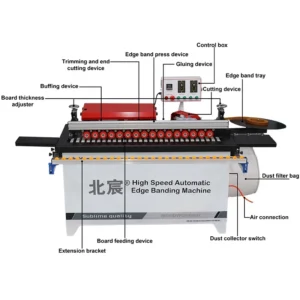
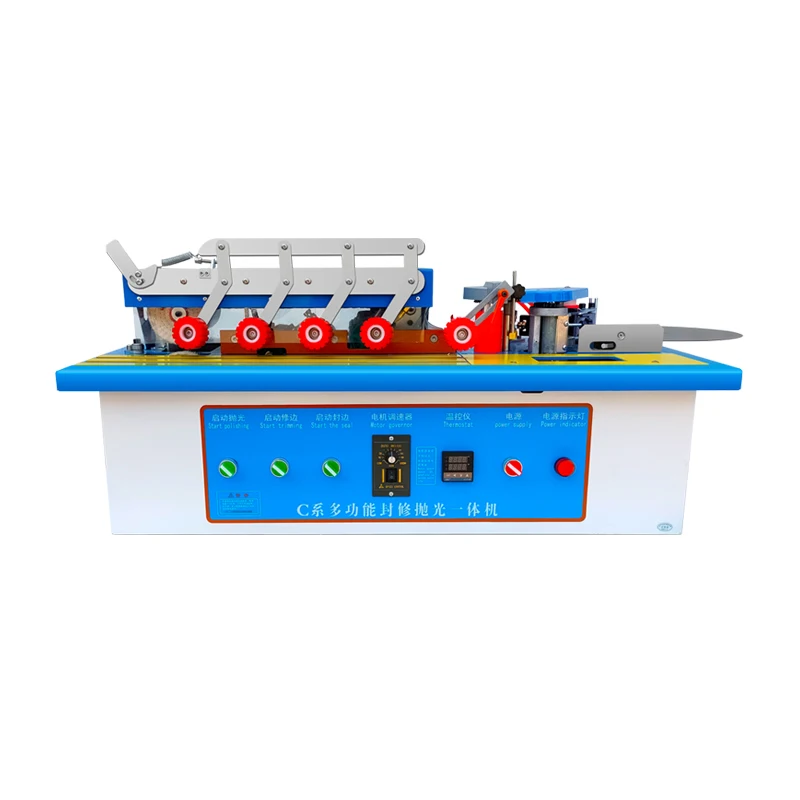
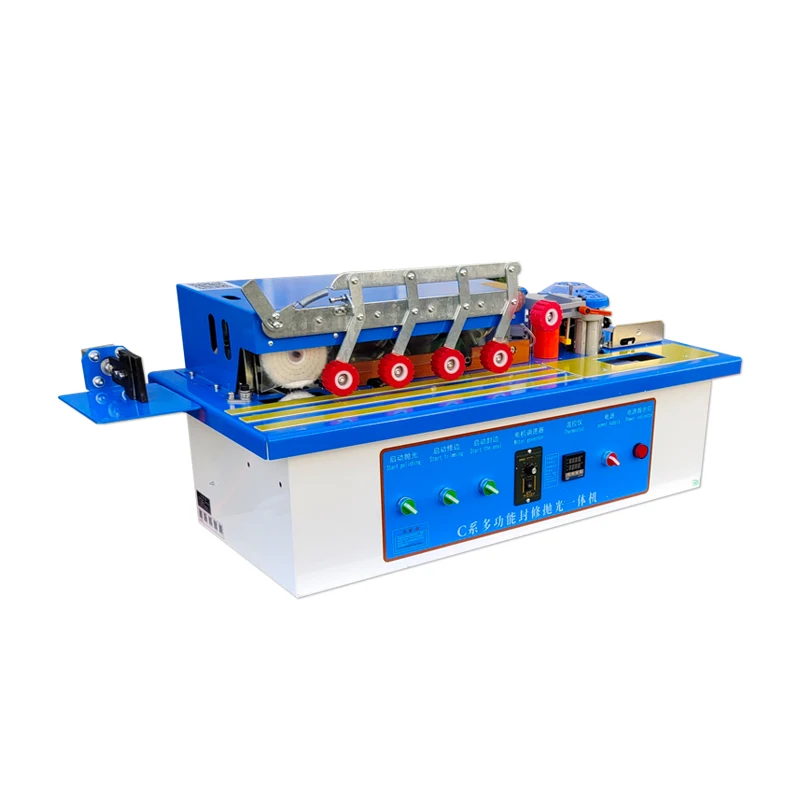
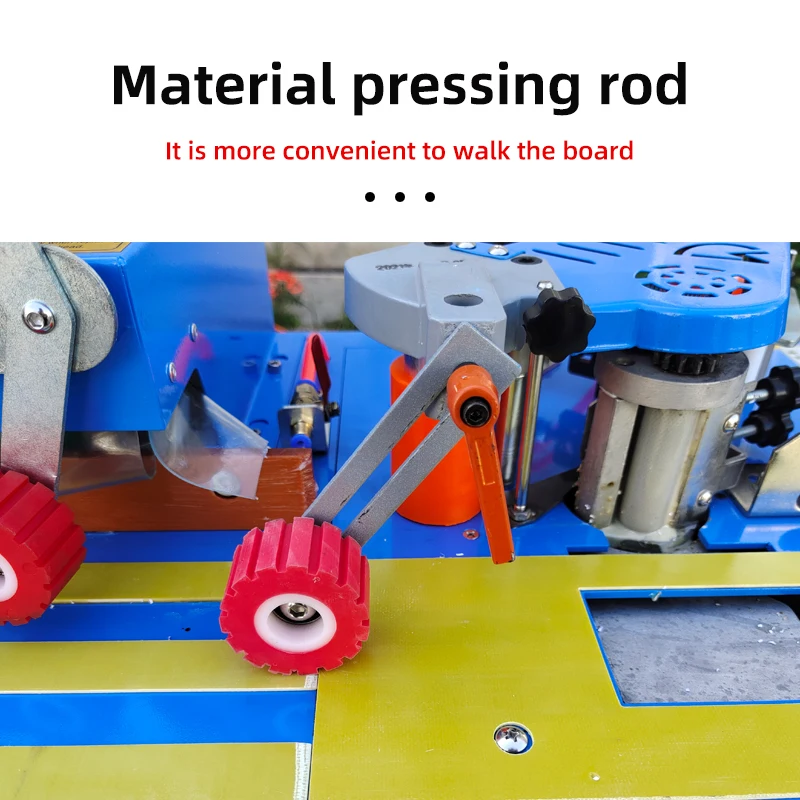
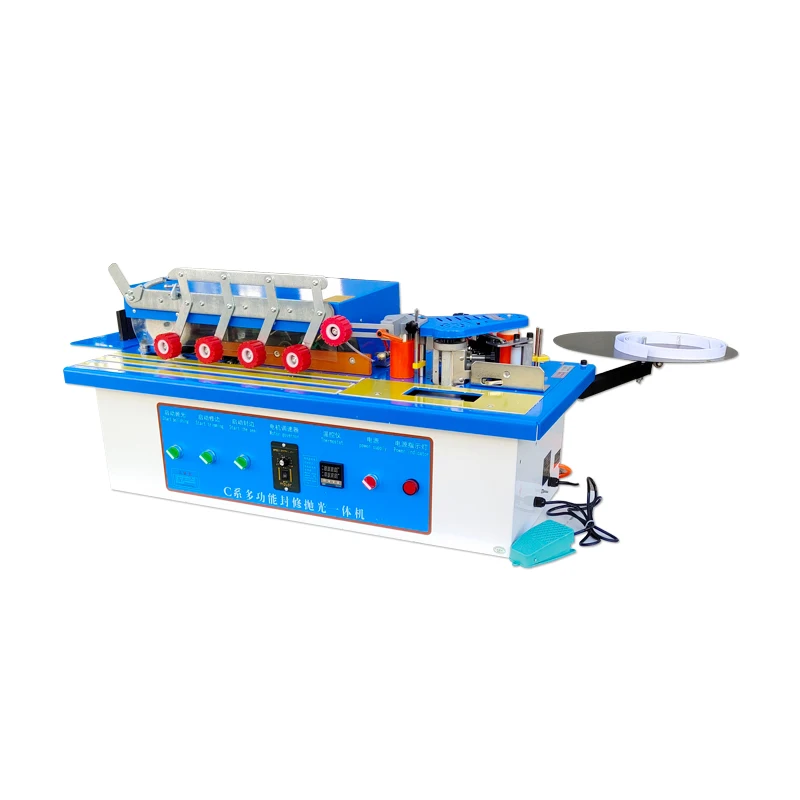
| Standard Features | Curved and straight edge banding, trimming, polishing, manual push plate |
| Control Panel Language | Chinese, English; customizable to Spanish or other languages |
| Plug Options | EU, USA, AU, UK |
| Transmission Power | (basis to be confirmed) |
| Vacuum Power | (basis to be confirmed) |
Application Suitability
| Application | Material or Output |
|---|---|
| Custom cabinet door edge sealing | MDF and particleboard panels with PVC or melamine edge banding |
| Small workshop furniture production | Plywood and ecological board with 0.3–3 mm veneer or PVC strips |
| Home decoration joinery | Solid wood panels requiring curved and straight edge profiles |
| Low-volume batch processing | Mixed panel materials in repair and retrofit environments |
Why the Voltage Question Must Come Before the Quotation
Every FX-20 leaves the factory with a documented voltage confirmation sheet matched to your local electrical standard.
Years ago on an assembly floor in Shandong, I watched a small edge banding machine for sale get shipped overseas without anyone double-checking whether the customer’s workshop ran 220V single-phase or 380V three-phase. The machine arrived, the main breaker tripped immediately, and the customer waited nearly a month for a replacement transformer. That failure had nothing to do with build quality — it was a communication gap at the quotation stage [NEED_CITE: voltage and frequency standards by export market]. With the FX-20, voltage and plug type are locked down before the order is confirmed, and the electrical schematic travels with the machine so the local electrician can verify the connection on day one.
Where the FX-20 Fits in the Ruiqi Edge Banding Range
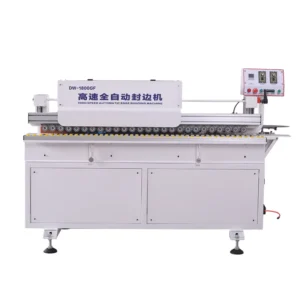
The FX-20 is the entry point of the complete edge banding family offered by this edge banding machine manufacturer. It covers curved and straight edge sealing with integrated trimming and polishing — a full finishing cycle in one compact unit. For a workshop that processes a few dozen panels a day across MDF, plywood, and particleboard, it removes the bottleneck of hand-applied edge banding without demanding the floor space or power supply of a full-production line model.
Scaling Without Changing Supplier
As volume grows, the product family extends to pre-milling and multi-station machines that handle higher feed speeds and thicker panels. The advantage of starting with an FX-20 is familiarity: the control logic, glue pot behavior, and maintenance routines carry forward when you eventually move up the range. Workshops that bought piecemeal from different suppliers often discover their machines are incompatible in feed height or throughput, creating material-flow problems that cost more than the original equipment savings [NEED_CITE: CE machinery directive requirements for industrial equipment].
Reading the Specs That Actually Matter
The trimming stations at 650W × 2 provide enough torque to cleanly remove overhanging PVC and melamine banding on panels up to 50 mm thick, which directly affects how tightly cabinet components fit during assembly. The glue pot at 1000 ml capacity suits intermittent use rather than continuous production — operators processing large batches should plan glue refill intervals accordingly. Edge banding thickness from 0.3 to 3 mm covers the most common veneer, PVC, and ABS strips used in furniture and joinery work. Air source pressure between 0.5 and 0.8 MPa drives the pneumatic trimming and polishing actuators; a workshop compressor must sustain that range under continuous draw, not just at peak. The manual push plate means feed speed is operator-controlled, giving flexibility on curved profiles while placing the responsibility for consistent feed rate on the operator rather than a motorized feed system.
What Happens When the Wrong Tier Gets the Wrong Workload
Pushing an entry-level machine beyond its design intent is a recurring problem in small furniture workshops. When daily panel counts climb well past the intermittent-use range, the glue pot cycles more frequently than its thermal recovery allows, and edge adhesion becomes inconsistent across the batch. Operators compensate by slowing down or reheating, which introduces its own variability. The downstream effect shows up at assembly: panels with visible glue lines or partially trimmed edges reject at the fitting stage, and the workshop blames the machine rather than the mismatch [NEED_CITE: common edge banding failure modes in small workshops]. The FX-20 documentation is transparent about which production volume it serves, so buyers can match the tier to their actual output from the start.
What This Edge Banding Machine Manufacturer Builds Into Every FX-20
In-house manufacturing means the cutting and trimming mechanisms are produced and inspected under one roof, not assembled from sourced sub-assemblies. Voltage customization from 220V to 380V with region-specific plugs is confirmed at the quotation stage rather than treated as an afterthought. A four-stage quality control process covers incoming material, in-process checks, finished-product testing, and pre-shipment verification. Engineer-led configuration review ensures the FX-20 is recommended only where its capacity matches the buyer’s actual panel mix and volume. Control panel language is set to the operator’s working language before the machine is crated.
Documentation & Verification
- Machine specification sheet with confirmed voltage and frequency for your local grid
- Electrical schematic and voltage confirmation document included in the shipping package
- Operation and maintenance manual in your agreed language
- Factory test record on your specified panel thickness and edge banding material
- CE declaration of conformity and ISO 9001 certificate
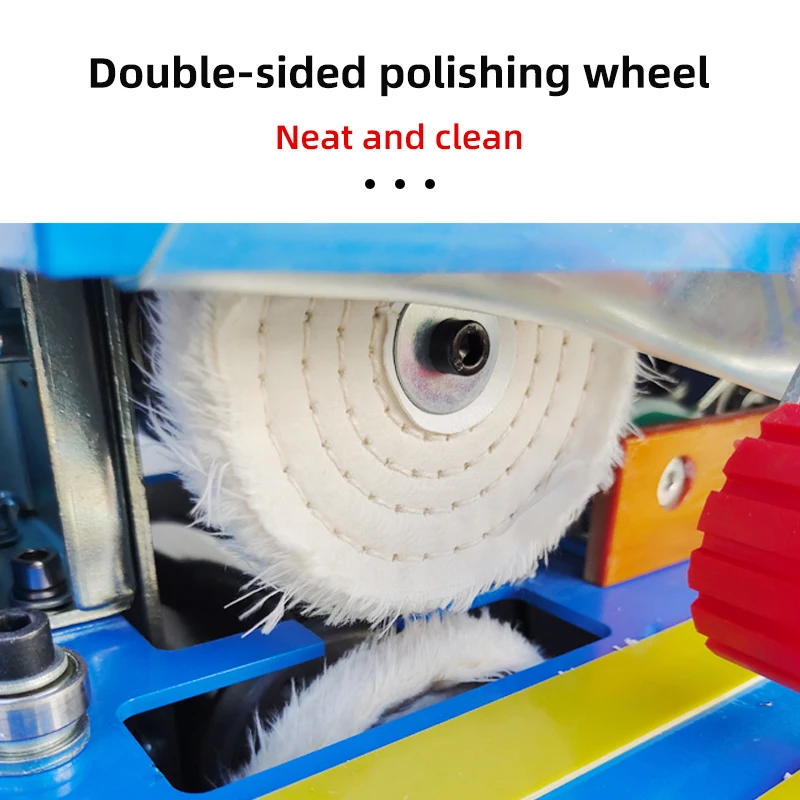
- Spare parts list with part numbers for trimming blades and polishing wheels
Installation, Commissioning & Support
- Requires a level floor surface supporting 44 kg within a 100 × 46 cm footprint
- Dedicated circuit matching confirmed voltage (220V single-phase or 380V) with proper grounding
- Arrives fully assembled; connect air supply at 0.5–0.8 MPa and power to begin commissioning
- Glue pot initial heat-up and temperature stabilization verified before first production run
- Trimming and polishing station alignment checked against your actual panel stock
- Spare trimming blades and polishing wheels included for initial operation period
What to Include With Your Inquiry
Send your typical panel material types and thicknesses, the edge banding strip material and thickness range you work with, and your daily panel count so the FX-20 can be evaluated against the right production tier. Include your local voltage and frequency, preferred plug type, and the language your operators read — these are confirmed before the order proceeds. If you are evaluating the full Ruiqi range, note which upstream and downstream equipment you already run so line compatibility can be assessed.
Frequently Asked Questions
Q: Where does the FX-20 sit in the Ruiqi edge banding range, and when should I consider a higher-tier model?
A: The FX-20 is the entry-level model covering curved and straight edge sealing with trimming and polishing for low-to-medium daily volumes. If your workshop processes panels continuously throughout the day or requires motorized feed at fixed speeds, a higher-tier model in the range will serve that workload more reliably. The product family shares common maintenance logic, so transitioning later is straightforward.
Q: How do I confirm the correct voltage and plug type for my country before ordering?
A: Voltage (220V or 380V), frequency, and plug type (EU, USA, AU, or UK) are confirmed during the quotation stage. An electrical schematic and voltage confirmation document ship with the machine so your local electrician can verify the connection before powering up. Custom voltage configurations outside standard options are also available.
Q: What panel materials and edge banding thicknesses can this machine handle?
A: The FX-20 processes MDF, particleboard, plywood, ecological board, and solid wood panels. It accepts edge banding from 0.3 to 3 mm thick, covering standard PVC, melamine, veneer, and ABS strips. The glue pot and trimming stations are calibrated across that thickness range for consistent adhesion and clean edge finishing.
Q: Can the control panel language be customized to my operator’s language?
A: Yes. Standard options include Chinese and English, with customization available for Spanish and other languages. The agreed language is set during order confirmation so the control panel is ready for your operator at commissioning, avoiding delays caused by unreadable interface text.
Q: What documentation and certificates are included with the machine at shipment?
A: Each FX-20 ships with a CE declaration of conformity, ISO 9001 certificate, machine specification sheet, electrical schematic with voltage confirmation, factory test record, operation and maintenance manual in the agreed language, and a spare parts list. These documents support customs clearance and local compliance verification.