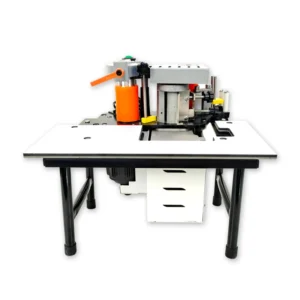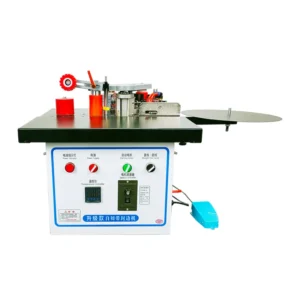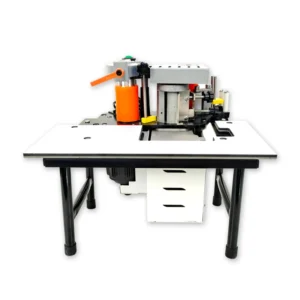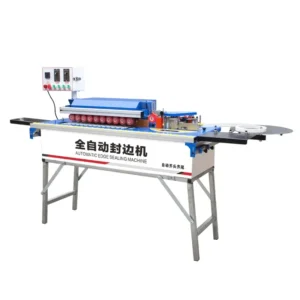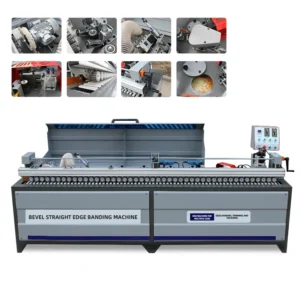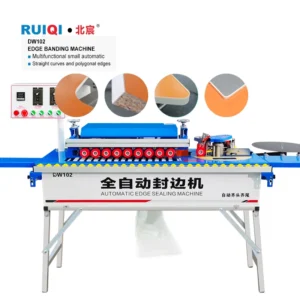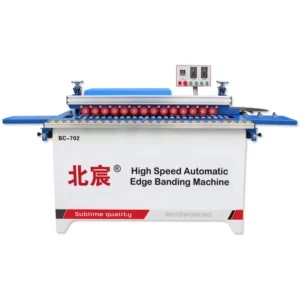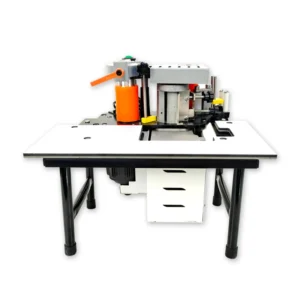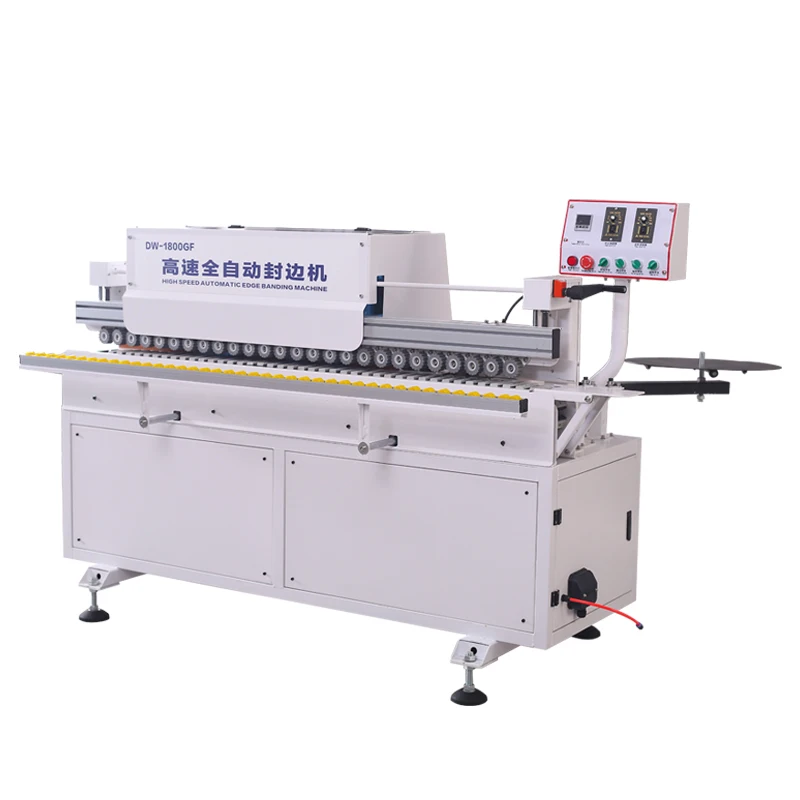
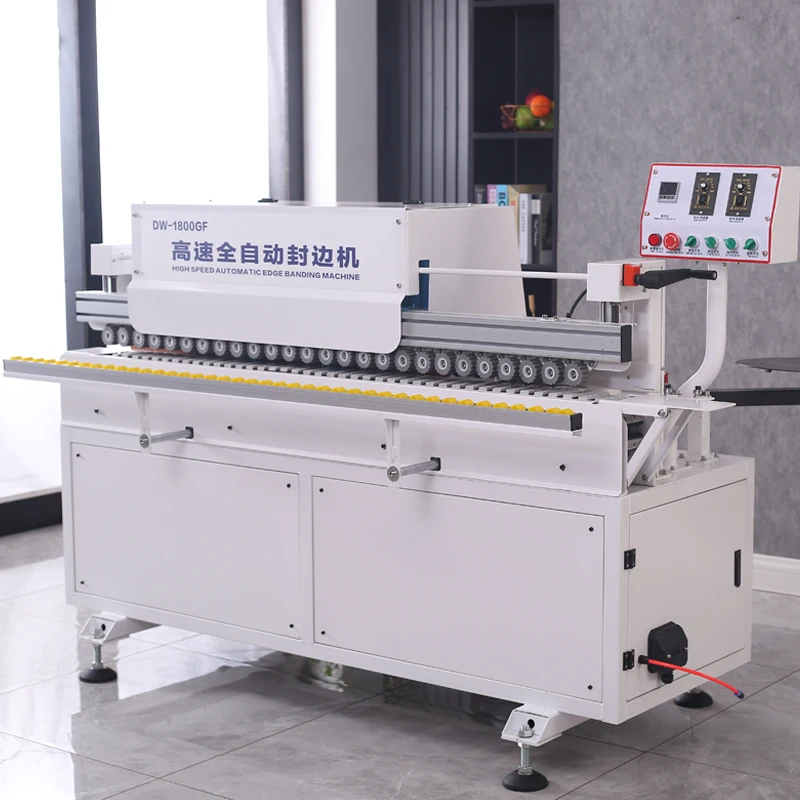
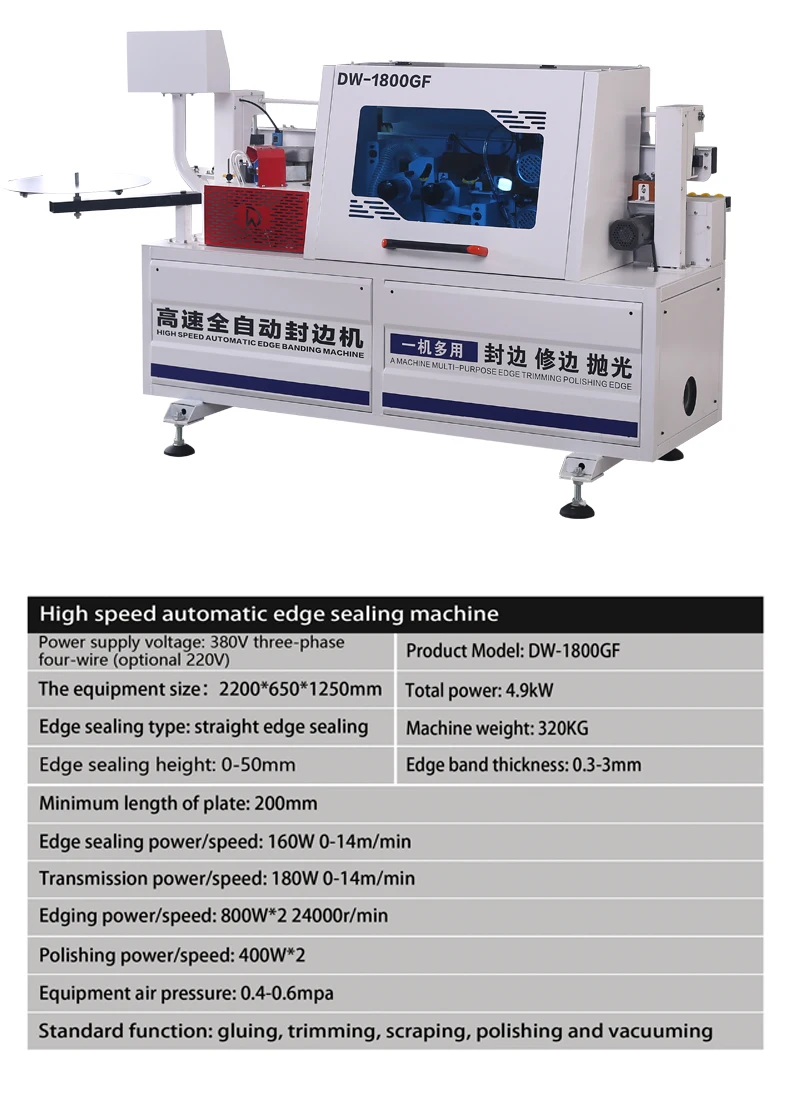
Description
Configurable Voltage Range — each DW1800 automatic edge banding machine ships with electrical schematics confirming the exact 380V, 220V, or 415V setup before it leaves the factory floor.
Technical Specifications
| Parameter | Value |
|---|---|
| Model | DW1800 |
| Product Type | Automatic Edge Banding Machine |
| Total Power | 4.9 kW |
| Voltage Options | 380V / 220V / 415V |
| Feed Speed | 0–14 m/min |
| Edge Banding Thickness | 0.3–3 mm |
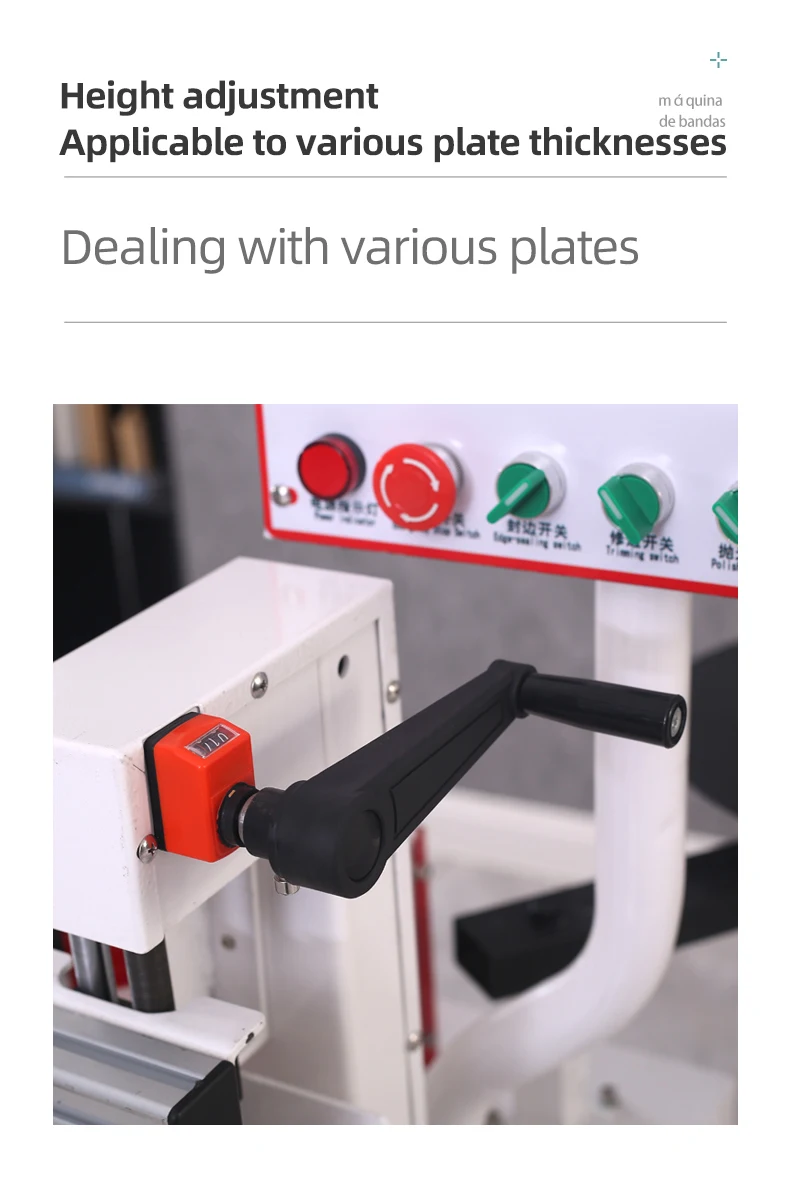
| Edge Banding Height | 0–50 mm |
| Minimum Sheet Length | 200 mm |
| Minimum Sheet Width | 100 mm |
| Glue Pot Capacity | 4000 ml |
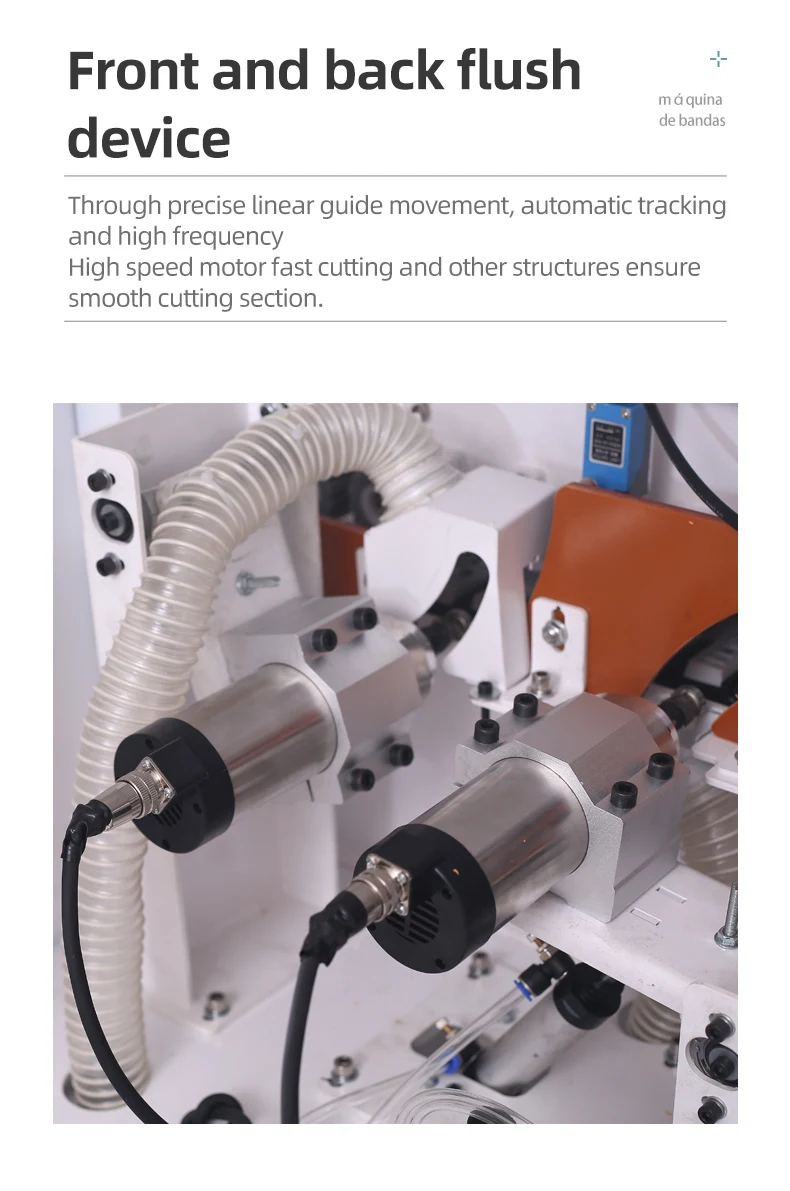
| Trimming Power / Speed | 800 W × 2, 24000 r/min |
| Polishing Power | 380 W × 2 |
| Air Source Pressure | 0.4–0.6 MPa |
| Overall Dimensions (L×W×H) | 220 × 65 × 125 cm |
| Net Weight | 320 kg |
| Control Panel Languages | Chinese, English (customizable) |
| Plug Options | EU, USA, AU, UK |
| Key Features | Double-sided gluing, top and bottom trimming, top and bottom polishing, front and rear alignment, flexible edge scraping, integrated dust suction |
Application Suitability
| Application | Material or Output |
|---|---|
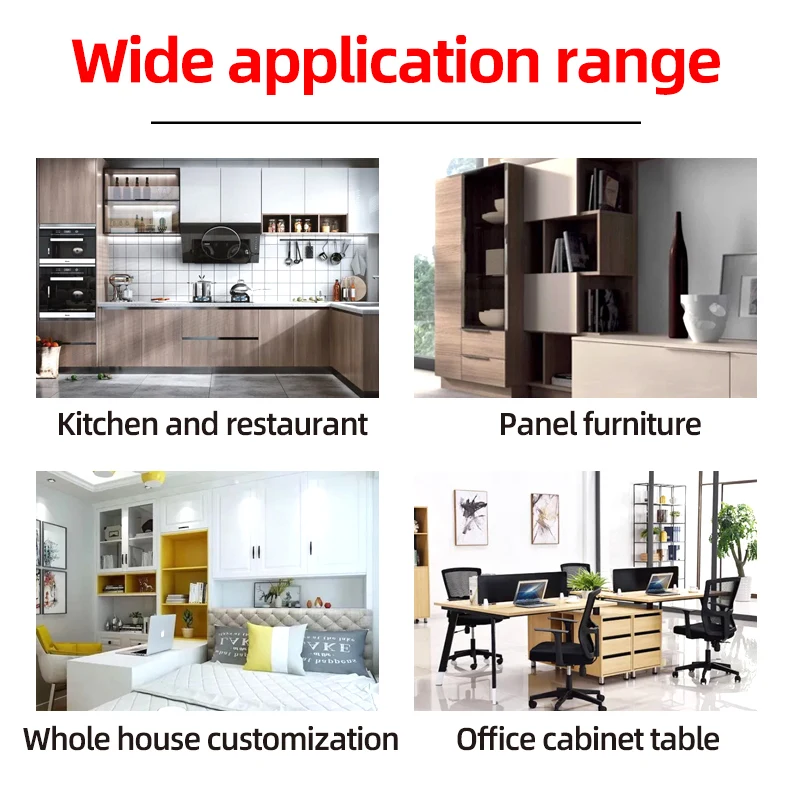
| Custom cabinet door production | MDF and particleboard with PVC or melamine edge banding |
| Wardrobe panel edge finishing | Plywood panels with veneer or ABS edge strips |
| Office furniture component banding | Laminated chipboard with 0.3–3 mm PVC banding |
| Small-batch joinery work | Solid wood panels and organic glass plates |
| Retail fixture manufacturing | Medium-density fibreboard with decorative edge profiles |
Why the Voltage Question Should Come Before the Price on Any Automatic Edge Banding Machine Manufacturer Shortlist
A machine wired for 380V three-phase will not run on a 220V single-phase workshop supply, no matter how good the price looked on paper.
I spent years on the assembly floor watching machines come back with burnt contactors because someone skipped the voltage confirmation step. An automatic edge banding machine manufacturer worth working with will ask for your local voltage and frequency before quoting, not after. The DW1800 is available in 380V, 220V, and 415V configurations, and every unit ships with an electrical schematic confirming the match. Skipping this check means the machine arrives, the electrician opens the panel, and production stalls for weeks while replacement transformers are sourced. [NEED_CITE: voltage and frequency standards by export market]
Full Automatic Cycle Across Seven Working Stations
The DW1800 runs panels through gluing, end cutting, rough trimming, fine trimming, profile tracking, scraping, and polishing in a single continuous pass. This automatic edge banding machine manufacturer designs each station to operate independently, so if one function needs adjustment the others continue unaffected. For a workshop moving from manual edge banding, this means the operator loads a panel at one end and receives a finished, trimmed, and polished piece at the other.
Glue Application Engineered for Variable Substrates
The 4000 ml glue pot with double-sided application applies adhesive to both the panel edge and the banding strip simultaneously. This matters because porous substrates like low-density particleboard absorb glue faster than MDF, and a single-sided system often leaves starved joints on those materials. The DW1800 maintains consistent glue temperature across the pot volume, reducing the cold-start failures that cause banding to peel during cabinet assembly. [NEED_CITE: adhesive bonding behaviour on porous wood-based panels]
Feed Speed, Trimming RPM, and What They Mean for Edge Quality
The variable feed speed from 0 to 14 m/min lets the operator match throughput to material behaviour — slower feeds for thin veneer that can chip at high speed, faster feeds for robust PVC banding on standard MDF panels. The dual 800 W trimming motors running at 24000 r/min produce clean cuts without tearout on melamine-faced boards, which is where lower-speed trimmers typically leave visible chips along the edge. The 0.3–3 mm banding thickness range covers the majority of PVC, ABS, and veneer strips used in custom furniture production. Dust extraction through the integrated suction port keeps trimming debris off the polishing wheels, which directly affects the final surface finish on light-coloured banding materials.
What Happens When Configuration Gets Skipped
A customer once ordered an edge bander for his cabinet workshop without telling us his primary material was low-density particleboard instead of the MDF we tested with. The glue temperature that worked perfectly on our test panels left cold joints on his lighter boards, and an entire batch of cabinet doors came back with peeling edge banding. When specifications are assumed rather than confirmed, the machine itself is not at fault — the configuration simply never matched the job it was asked to do. [NEED_CITE: substrate density variation in commercial particleboard grades]
Why Procurement Teams Specify This Machine
The DW1800 is part of a complete edge banding product family, so a workshop can start with this unit and add complementary machines later without changing supplier or retraining operators on a different control interface. Voltage, plug type, and control panel language are confirmed at quotation stage rather than treated as afterthoughts. Every unit passes through four quality checkpoints — incoming material, in-process assembly, finished product, and pre-shipment verification — before crating. The factory welcomes on-site visits and panel sample testing before order confirmation. OEM branding and private label application are available for distributors specifying their own market identity.
Documentation & Verification
- CE declaration of conformity issued for each DW1800 unit
- ISO 9001 quality management certificate available on request
- Electrical schematic confirming your specified voltage before shipment
- Factory test record using your panel thickness and banding material
- Operation and maintenance manual in your operator’s agreed language
- Spare parts list matching the exact DW1800 configuration shipped
Installation, Commissioning & Support
- Requires a dedicated circuit matching the confirmed 380V, 220V, or 415V supply specification
- Allocate floor space for the 220 × 65 × 125 cm footprint plus operator clearance on both ends
- 320 kg net weight allows positioning with standard workshop pallet jack equipment
- Connect air supply at 0.4–0.6 MPa to the integrated pneumatic system before first run
- Initial commissioning includes feed speed calibration and trimming alignment on your actual panels
- Spare trimming cutters and polishing wheels included in the first-ship parts kit
Preparing Your Inquiry
To move from general interest to a confirmed configuration, share the panel materials you process most frequently and their typical thickness range. Your local voltage and frequency, preferred control panel language, and the edge banding materials you use daily will let us quote a machine that arrives ready to run. If you are integrating the DW1800 into an existing line, note the upstream saw and downstream boring equipment so feed height and throughput can be matched.
Frequently Asked Questions
Q: What voltage and plug configuration will the DW1800 ship with for my market?
A: The machine is configurable for 380V, 220V, or 415V operation and ships with EU, USA, AU, or UK plugs depending on your region. Your exact voltage, phase, and frequency are confirmed during quotation and documented on the electrical schematic included with shipment. This prevents the commissioning delays that occur when machines arrive with incompatible wiring.
Q: Can the control panel be customized to my operator’s language?
A: Standard language options include Chinese and English, with customization available for Spanish and other languages. This is confirmed at the quotation stage so the control labels, error messages, and parameter screens all display in a language your operators can read. It eliminates the setup delays caused by unreadable interface panels on arrival.
Q: How do I verify edge banding tolerance before accepting delivery?
A: Every DW1800 undergoes a pre-shipment factory test using your specified panel material and banding thickness. The test record documents the trimming finish, glue adhesion, and polishing quality achieved on those exact materials. You receive this record with your shipping documentation, so acceptance is based on verified output rather than catalogue claims.
Q: What panel materials and edge banding thicknesses does this model handle?
A: The DW1800 processes MDF, particleboard, plywood, PVC panels, organic glass plates, and solid wood panels. It accepts edge banding from 0.3 to 3 mm thick, covering standard PVC, ABS, melamine, and veneer strips. Panel heights up to 50 mm are accommodated within the feed system.