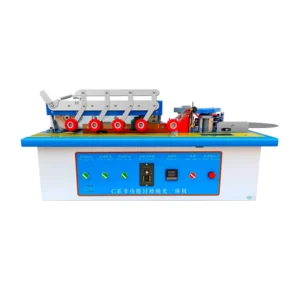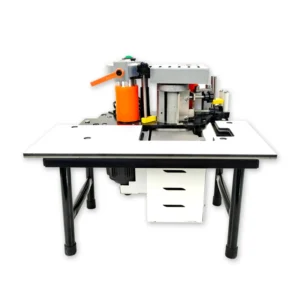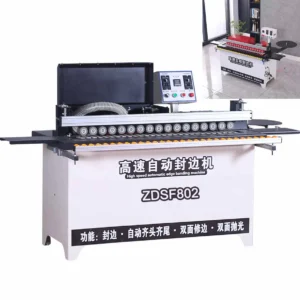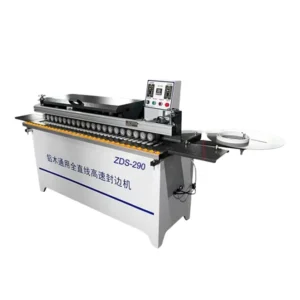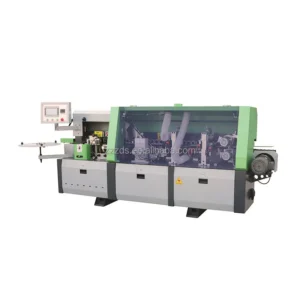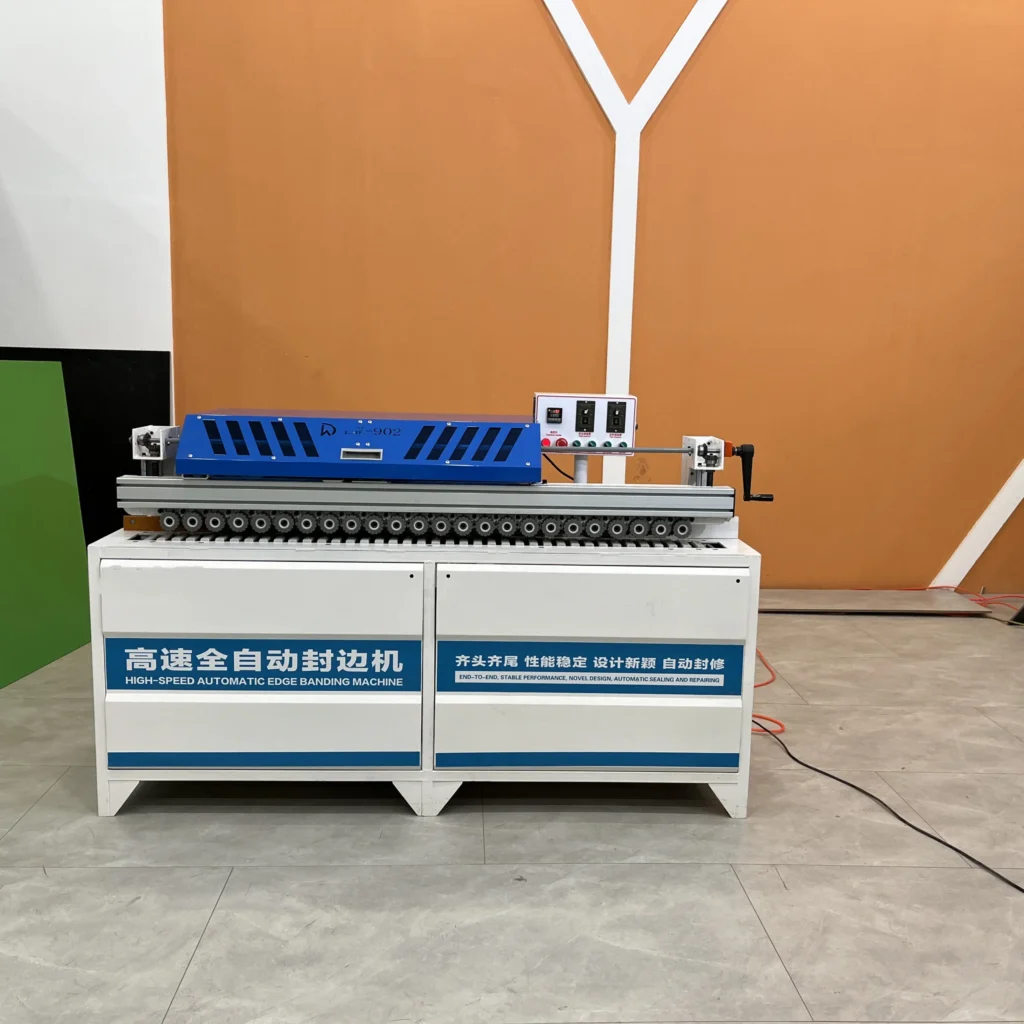
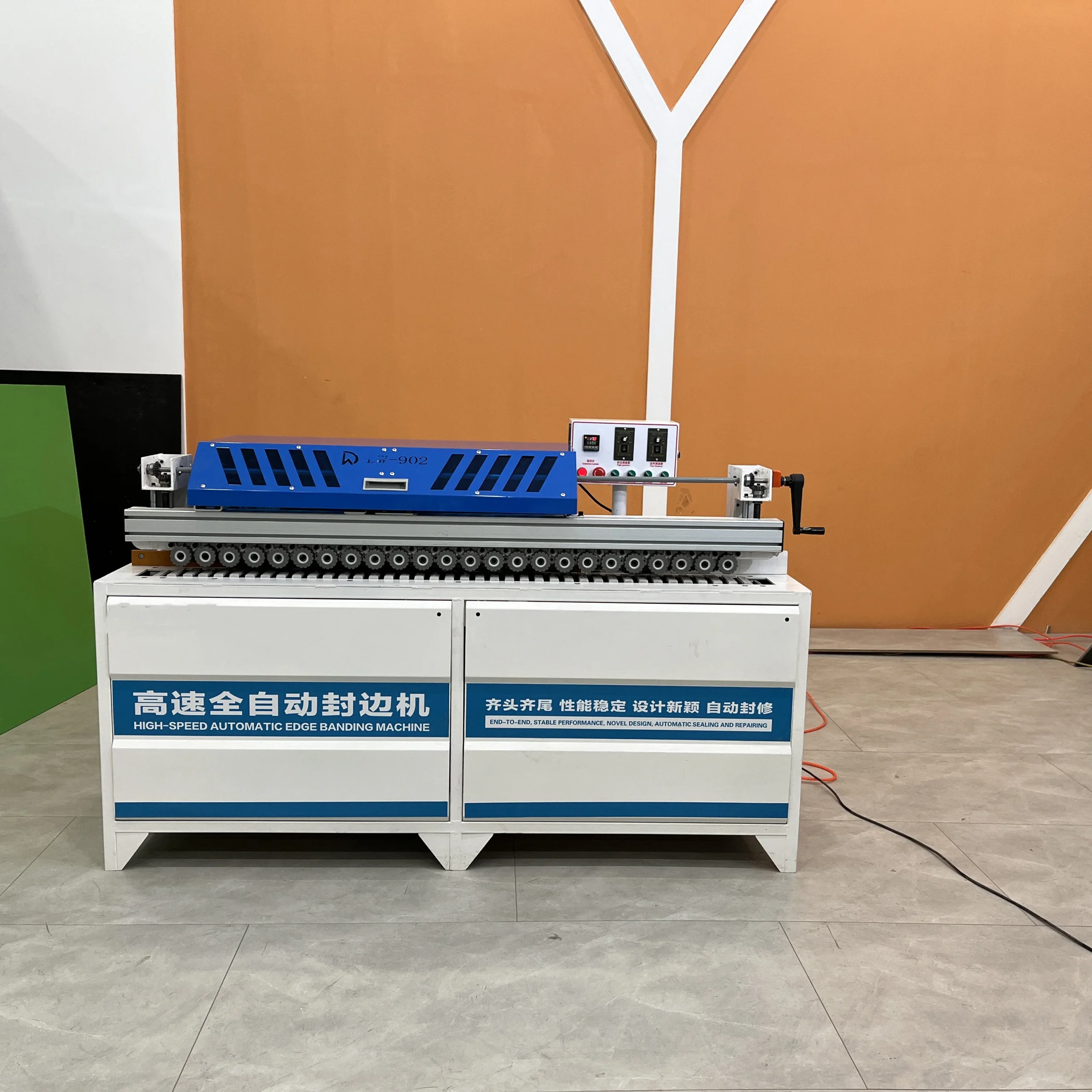
Description
Engineer-Led Configuration — Every Automatic Edge Banding Machine is matched to your panel range and output stage by technical staff, with a formal proposal delivered within 24 hours of inquiry.
Technical Specifications
| Parameter | Value |
|---|---|
| Product Type | Automatic Edge Banding Machine |
| Voltage | 220V (confirm frequency and phase with manufacturer) |
| Total Power | 3300W |
| Overall Dimensions (L×W×H) | 175×60×112 cm |
| Net Weight | 240KG |
| Edge Band Height Range | 0–50 mm |
| Edge Band Thickness Range | 0.3–3 mm |
| Glue Pot Capacity | 4000 ml |
| Gluing Method | Double-sided gluing |
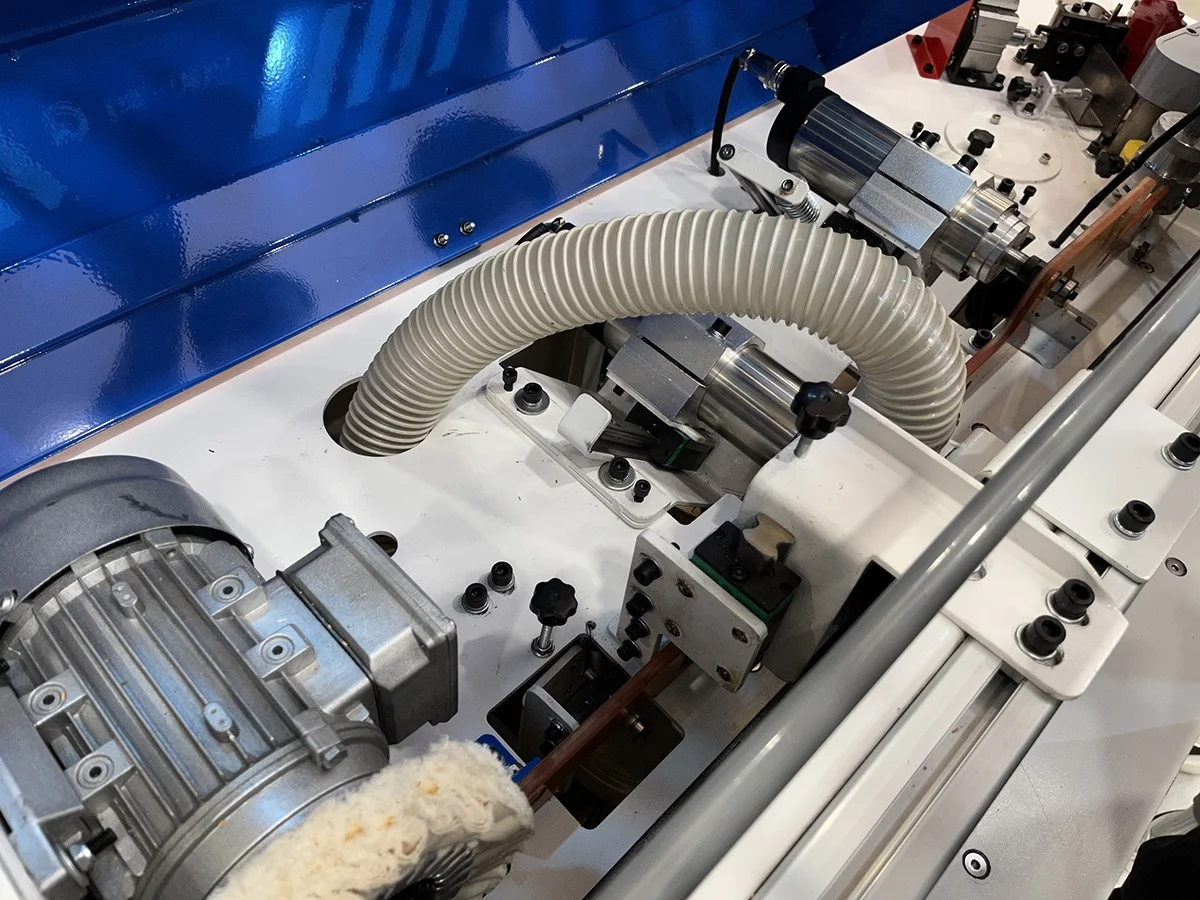
| Trimming Stations | Double high-speed trimming motors (up and down) |
| Polishing Stations | Up and down two polishing motors |
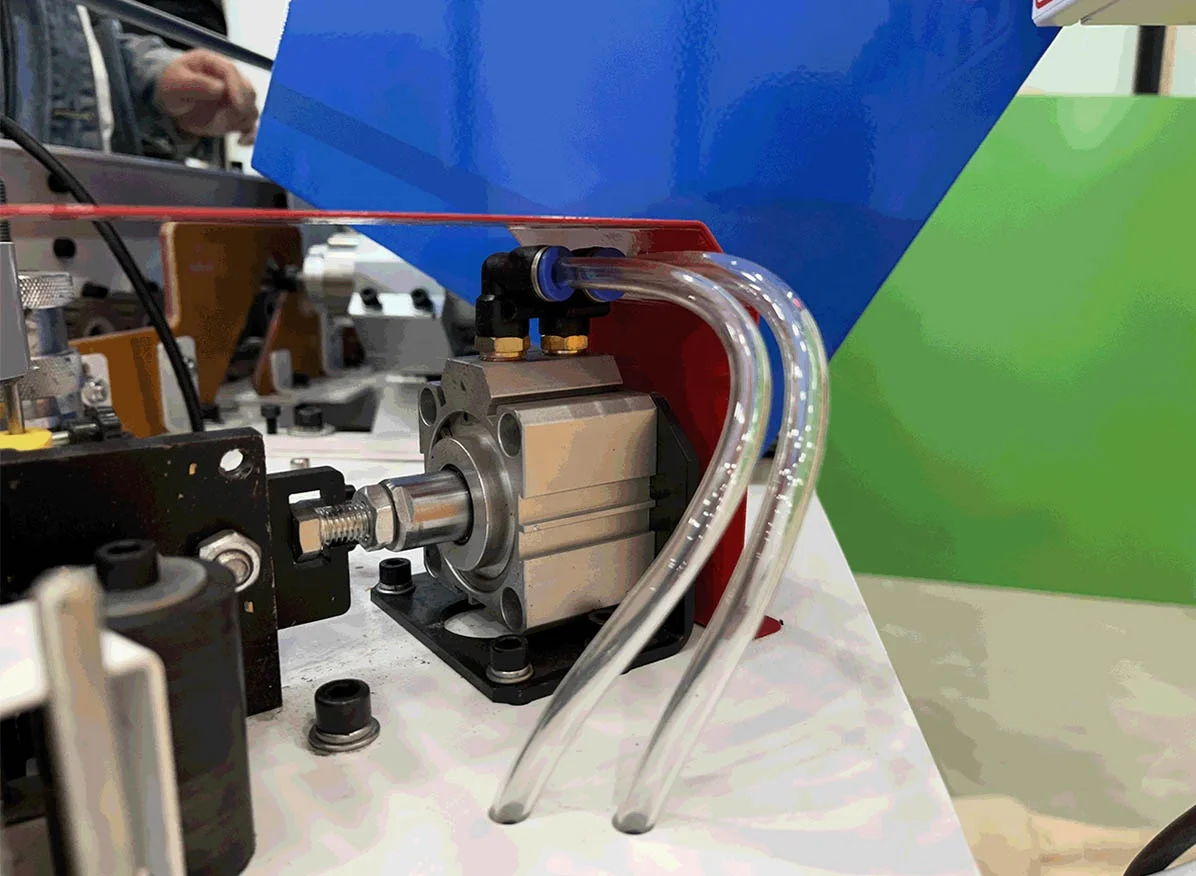
| Edge Strip Cutting | Pneumatically controlled |
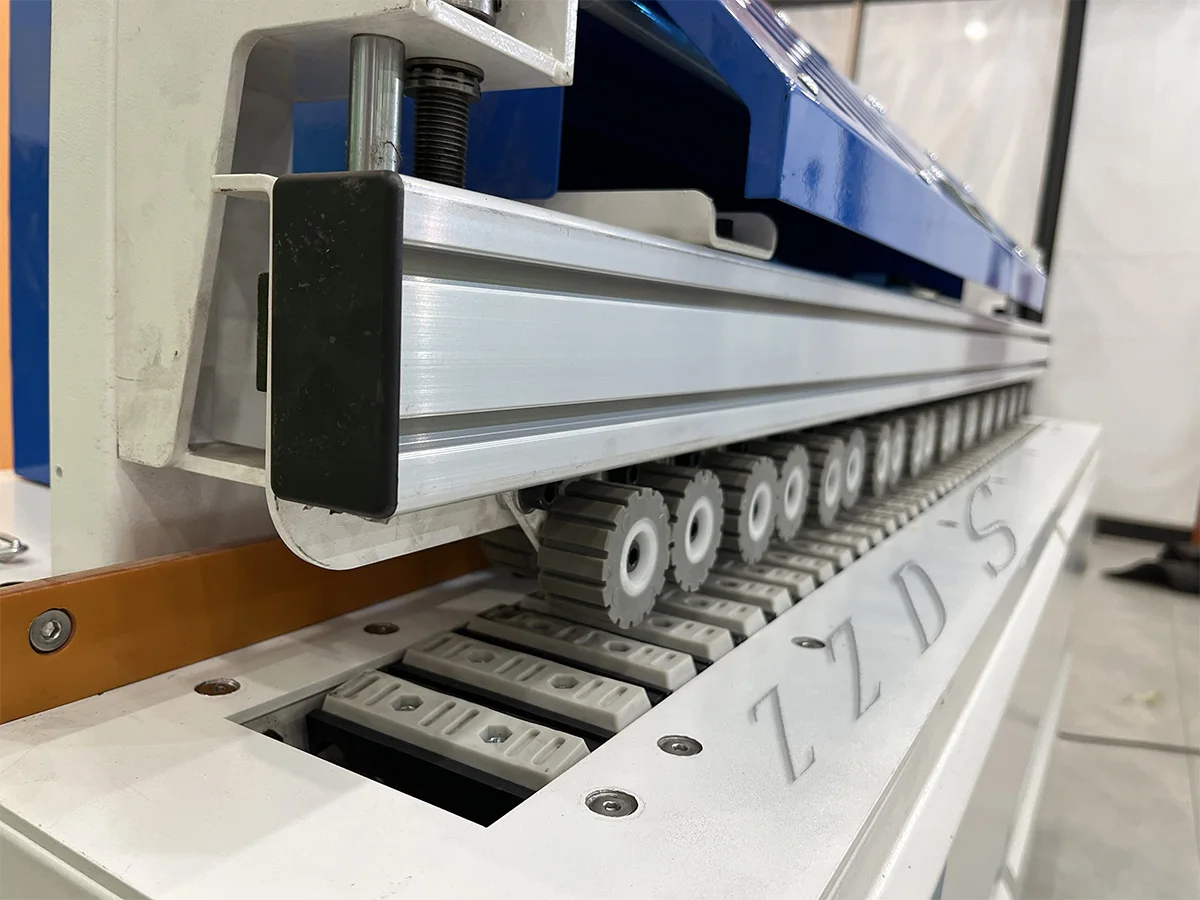
| Conveyor Belt Material | Silicone |
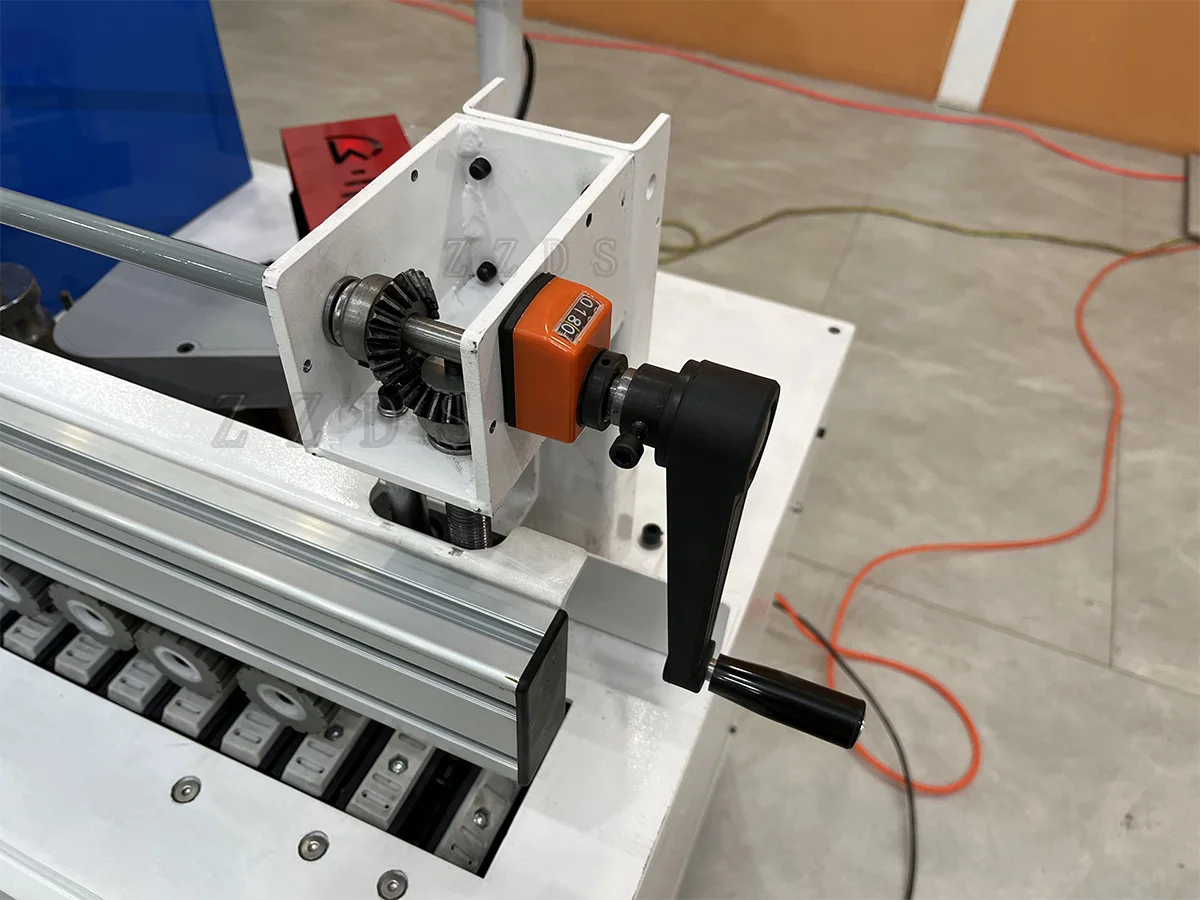
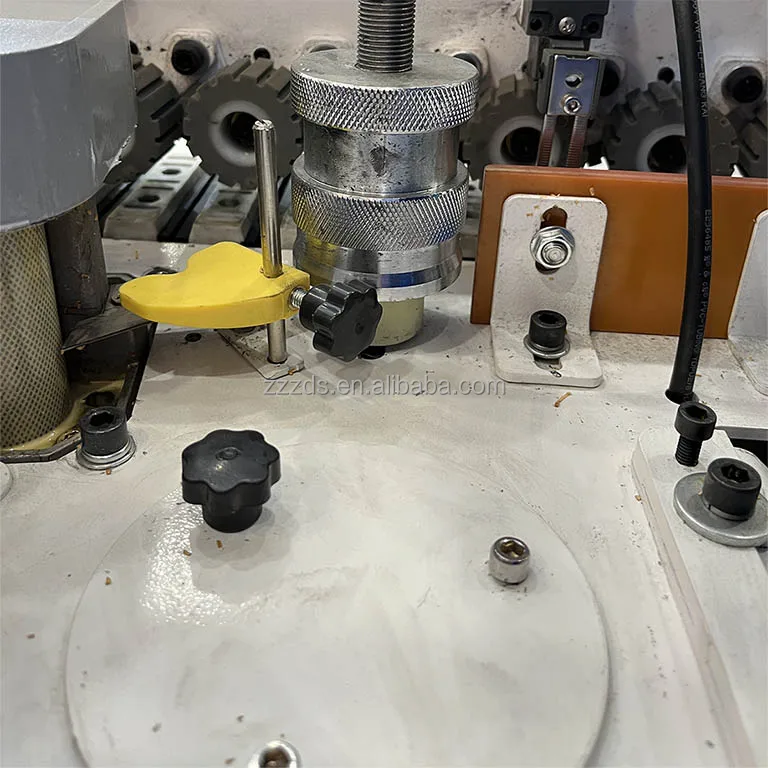
| Pressure System | Integrated pressure beam, double rows of pressure wheels, adjustable height via handle |
| Temperature Control | Intelligent temperature control |
| Feed Speed | (basis to be confirmed) |
| Panel Thickness Range | (basis to be confirmed) |
| Control System | (basis to be confirmed) |
| Certification | CE, ISO 9001 (basis to be confirmed) |
| Warranty | One year |
Application Suitability
| Application | Material or Output |
|---|---|
| Custom cabinet door edge finishing | MDF and particleboard with PVC banding |
| Wardrobe side panel edging | Plywood panels with ABS edge strips |
| Office furniture worktop banding | Laminated particleboard with 0.3–3 mm PVC |
| Small batch joinery components | Solid wood panels with veneer edge banding |
| Retail fixture shelf edging | MDF boards with melamine-faced PVC strips |
What "Compatible with All Edge Materials" Leaves Out in an Automatic Edge Banding Machine
The glue temperature must match the edge band material, not just the substrate.
I spent three days in a Kuala Lumpur cabinet factory watching batch after batch delaminate. The edge bander had been tested at the factory with PVC strips, but the customer was running ABS on melamine-faced particleboard. ABS melts at a different temperature window, and the glue pot was set for PVC. Every panel that came off the line had a clean-looking edge that peeled away under thumb pressure. Nobody caught it until assembly, when the vibration from the hinge boring station shook the banding loose. An Automatic Edge Banding Machine with intelligent temperature control can handle both materials, but only if the operator knows which profile to select [NEED_CITE: thermal profiles for PVC versus ABS edge banding adhesives]. Without that awareness, the machine will produce parts that look acceptable at the inspection table and fail two days later on the assembly bench.
Sizing the Machine Family to Your Production Stage
A workshop making fifty cabinet carcasses a week does not need a pre-milling station, but it does need consistent glue application and clean trimming. The entry tier of this Automatic Edge Banding Machine family covers that scope with double-sided gluing, pneumatic edge strip cutting, and dual high-speed trimming motors — enough to produce furniture-grade edges without the complexity of a full CNC-controlled line. As volume grows and panel variety increases, the next tier adds pre-milling to correct saw cut imperfections before banding, which matters when you are feeding panels from a sliding table saw rather than a beam saw with a scoring blade.
Matching Throughput Across a Multi-Station Workshop
Edge banding is never the only machine on the floor. If your panel saw cuts sixty panels an hour and your edge bander can only process thirty, the bottleneck moves to the banding station and panels stack up waiting. The silicone conveyor belt and double-row pressure wheel system on this machine range maintains stable feed without surface marring, which matters when you are feeding pre-finished melamine boards. An Automatic Edge Banding Machine must keep pace with upstream cutting and downstream boring, or the line stalls. When a workshop plans an expansion, matching the feed speed of each station prevents idle time at the most expensive machine in the cell [NEED_CITE: production line balancing for panel furniture workshops].
Reading the Specification Sheet Against Your Actual Panels
The 0.3–3 mm edge band thickness range covers the PVC and ABS strips used in most cabinet and furniture production, but it sits at the boundary for veneer banding which can run thinner. The 4000 ml glue pot capacity is sufficient for sustained runs without frequent refills, reducing the temperature fluctuation that comes from adding cold glue to a hot pot mid-shift. Double-sided gluing applies adhesive to both the panel edge and the strip back, which is critical when banding MDF — a substrate that absorbs glue rapidly on the porous cut face. The integrated pressure beam with adjustable height via handle means changeovers between 18 mm shelf boards and 40 mm worktop panels take seconds rather than requiring a tool change, keeping the Automatic Edge Banding Machine productive across mixed batches.
The Cost of Buying a Single Machine Without Considering the Line
I have seen woodworking shops purchase an edge bander based on a single spec — usually feed speed or price — and then discover it cannot handle the panel thickness their saw produces. The machine arrives, the operator loads an 18 mm particleboard shelf panel, and the pressure beam does not have enough travel to clamp it properly. The banding slides during trimming and the edge comes off uneven. In another case, a buyer specified a machine without confirming the local voltage and the motor burned out on the first day because the frequency was 60 Hz instead of the 50 Hz the motor was wound for [NEED_CITE: voltage and frequency standards by export market]. These are not defects — they are specification mismatches that could have been caught with a proper configuration conversation before the order was placed.
Why Source This Machine Family Here
The cutting mechanism on this Automatic Edge Banding Machine range is built on proprietary designs with verified tolerance, so the trimming output is measurable on a dial indicator rather than claimed in a brochure. The lineup spans from compact entry units to full-function pre-milling models within one product family, which means a workshop can add capacity later without learning a new control system or re-negotiating spare parts with a different supplier. Voltage, control panel language, and electrical configuration are confirmed before production, so the machine that arrives on your floor matches your workshop’s supply and your operator’s reading language. Every unit passes a four-stage quality check covering incoming material, in-process assembly, finished product inspection, and a pre-shipment verification run with documented results.
Documentation & Verification
- CE declaration of conformity covering the edge banding machine safety requirements
- ISO 9001 certificate for the manufacturing quality management system
- Machine specification sheet with confirmed voltage, frequency, and electrical schematic
- Factory test record on your panel thickness and edge band material before dispatch
- Operation and maintenance manual in the buyer’s agreed language
- Packing photographs and customs documentation support for shipment
Installation, Commissioning & Support
- 175×60×112 cm footprint requires a clear floor area with level concrete and anchor points
- 3300W total power draw needs a dedicated circuit matching the confirmed voltage and phase
- Machine arrives partially assembled with pressure beam and conveyor belt pre-installed
- First-run commissioning includes glue pot temperature profiling for the specified PVC or ABS material
- Operator training covers pressure beam height adjustment and trimming motor replacement
- Silicone conveyor belt and pressure wheel spares included in the initial parts package
Preparing Your Inquiry
To receive an accurate configuration proposal, share the panel materials you process most often — MDF, particleboard, plywood — along with the edge band type and thickness. Confirm your local voltage and frequency, the control panel language your operators read, and whether you are integrating this Automatic Edge Banding Machine into an existing line or building a new cell. If you have specific tolerance requirements for downstream assembly, include those so the proposal references the right model tier.
Frequently Asked Questions
Q: How do I choose the right edge banding model tier for my production volume?
A: The entry tier handles small batch custom cabinet work with double-sided gluing and basic trimming. As your daily panel count grows and you run mixed thicknesses, a mid-tier model with pre-milling corrects saw marks before banding. Full-function models add contour trimming and multiple polishing stations for high-volume furniture lines running continuously.
Q: How do I confirm voltage and frequency compatibility before ordering?
A: Provide your workshop supply specifications — voltage, phase, and frequency — during the inquiry stage. The manufacturer confirms the motor winding and electrical schematic match your local grid before production begins. A formal voltage confirmation document is included with the order paperwork and the machine specification sheet.
Q: What does verified tolerance mean for my panel assembly quality?
A: Trimming tolerance on this machine family is verified against a dial indicator during factory testing, not estimated. When edge banding sits flush within tolerance, cabinet carcasses assemble without gaps and hinge boring registers correctly. The factory test record documents actual measured values on your specified panel thickness before the machine ships.
Q: Which models handle both PVC and ABS edge banding materials?
A: The intelligent temperature control system across the range accommodates both PVC and ABS, which require different glue pot temperature windows. ABS needs a higher melt temperature than standard PVC. Confirming your primary edge band material during configuration ensures the correct adhesive profile is set and verified during the pre-shipment factory test run.