Description
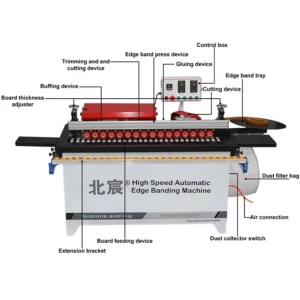
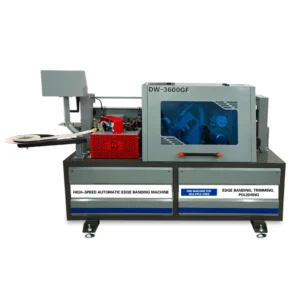
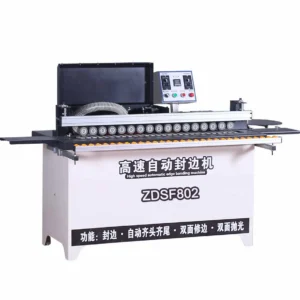
Verified Machine Range Positioning — The ZDS290 occupies a defined tier within a complete edge banding machine family, allowing workshops to map this unit against entry-level and full-function pre-milling options before committing to a configuration.
Technical Specifications
| Parameter | Value |
|---|---|
| Model | ZDS290 |
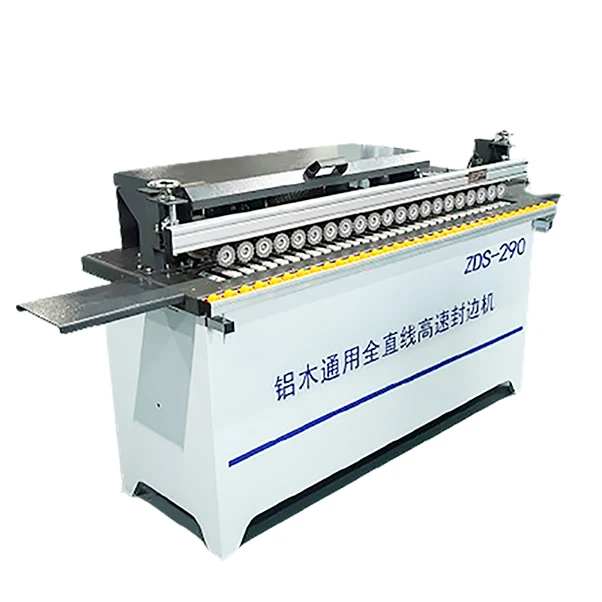
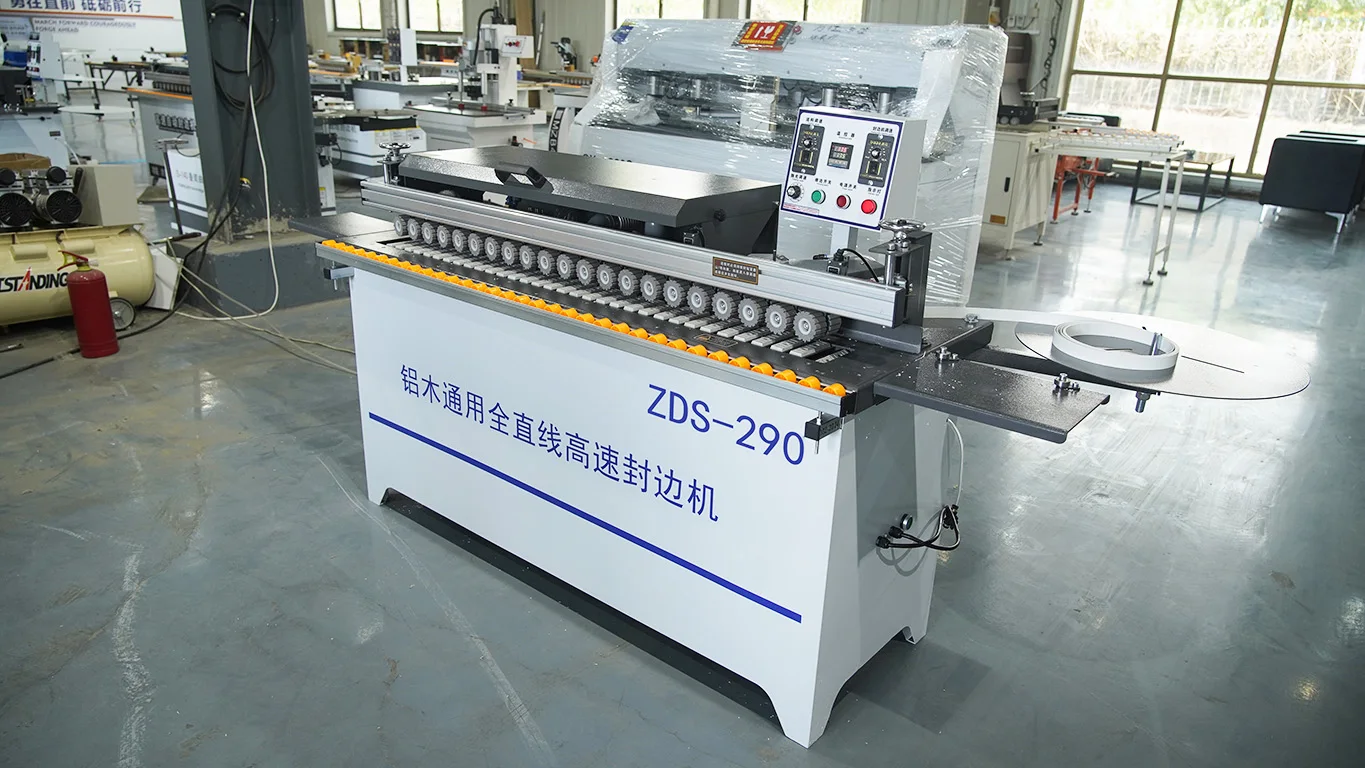
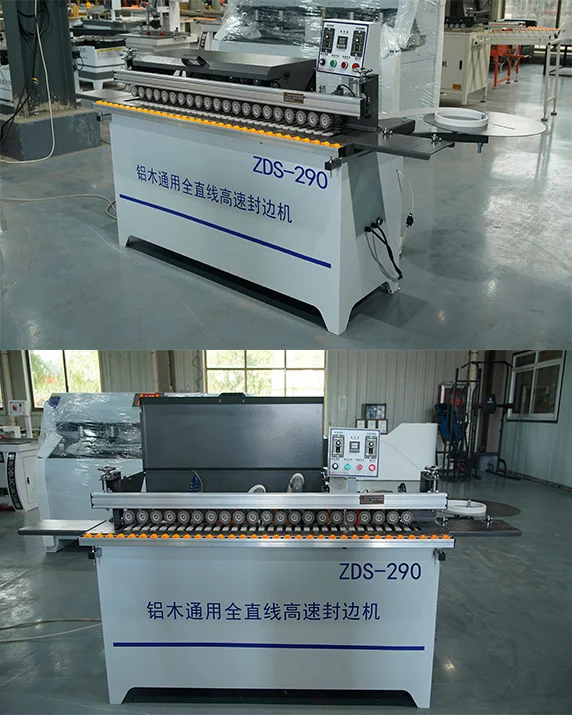
| Product Type | Aluminum-Wood Universal Full Linear High-Speed Edge Banding Machine |
| Rated Voltage | 220V (configurable from 110V to 440V) |
| Rated Power | 4165W |
| Conveying Power | 180W |
| Edge Banding Speed | 6m/min (basis to be confirmed) |
| Rated Air Pressure | 0.6–0.8MPa |
| Strip Thickness Range | 0.5–2.5mm |
| Panel Thickness Range | 10–50mm |
| Glue Pot Capacity | 1000ml |
| Glue Pot Heating Power | 800W |
| Glue Pot Heating Time | 5–10min |
| Trimming Power | 800W × 2 |
| Polishing Power | 180W × 2 |
| Vacuuming Power | 1200W |
| Machine Size | 150 × 57 × 96cm |
| Pressure Beam | Integrated thickened aluminum alloy |
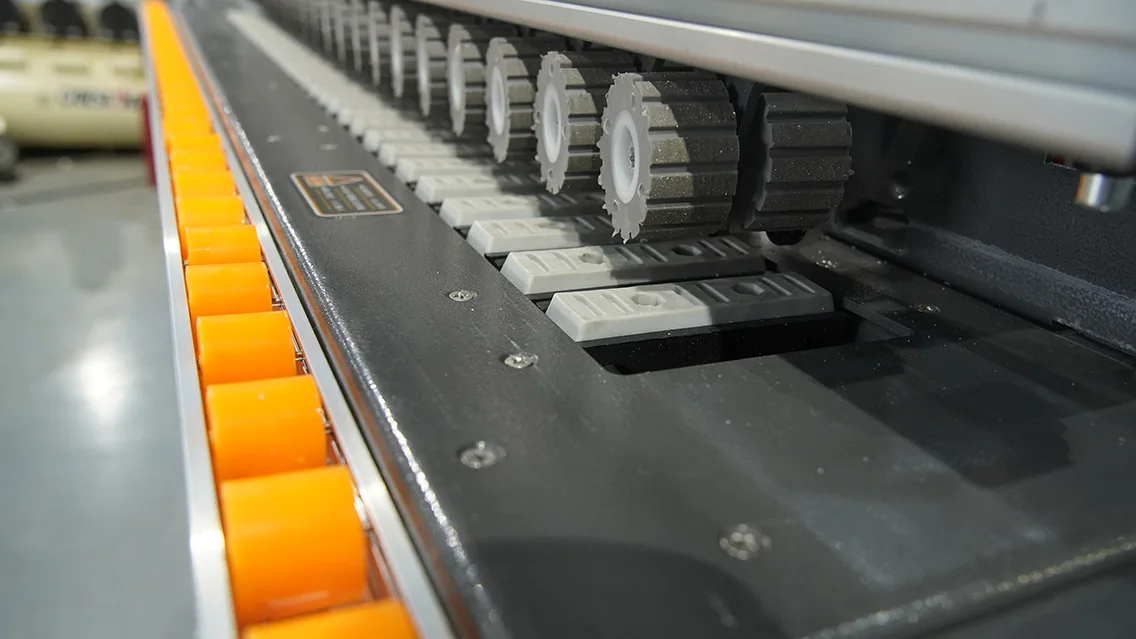
| Pressure Wheel | Double-row inclined |
| Board Thickness Display | Digital display |
| Pressure Beam Height Adjustment | Hand-crank wheel |
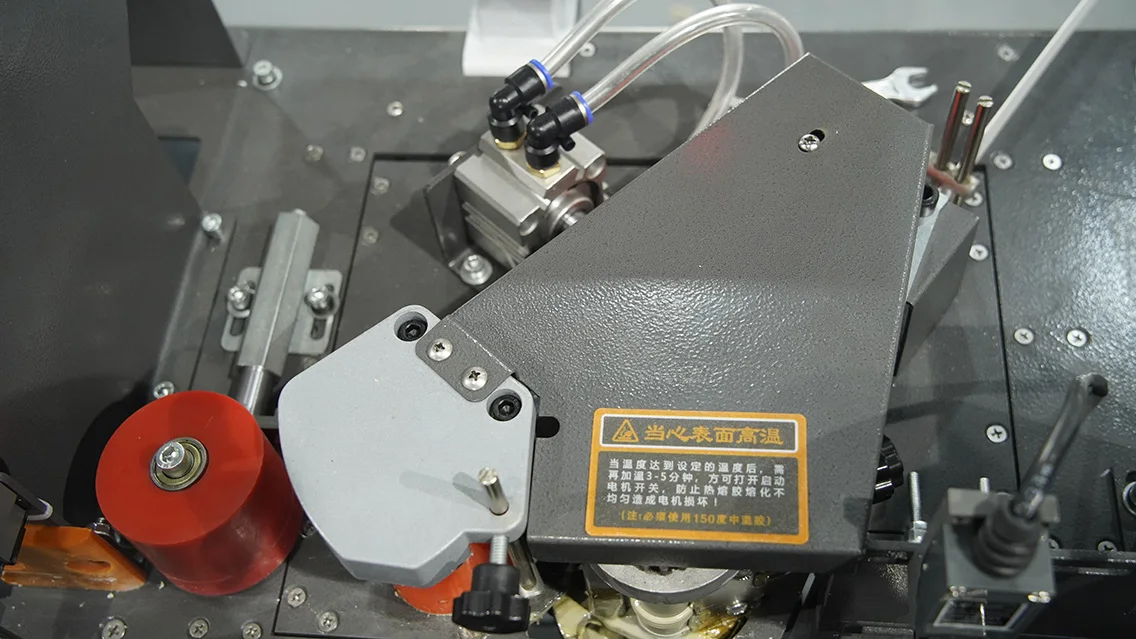
| Glue Wheel Design | Concave-convex (imitation glue pot) |
| Secondary Processing | Secondary scraping and cleaning included |
| Standards | CE, ISO 9001 |
Application Suitability
| Application | Material or Output |
|---|---|
| Custom furniture panel edge banding | MDF, melamine board with PVC edge banding |
| Cabinet door and carcass production | Plywood and particleboard panels |
| Small-to-medium workshop panel processing | Solid wood panels with veneer edge banding |
| Joinery workshop output | Board stock requiring consistent edge finish |
Why the Feed Speed Question Matters Before the Quote
Selecting an Aluminum-Wood Universal Edge Banding Machine manufacturer without confirming how feed speed interacts with your actual strip thickness is how workshops end up with visible glue lines on half their daily output.
Feed speed and glue pot recovery must be evaluated together, not in isolation.
I once configured a machine for a cabinet shop that ran 0.8mm PVC all day. The feed speed looked adequate on paper. Then they switched to 2mm acrylic for a premium line, and the glue pot could not recover temperature fast enough between panels. The edge started lifting within the first half-meter of strip. That shop lost an entire batch before tracing it back to thermal recovery, not the feed mechanism itself [NEED_CITE: thermal recovery rates in edge banding glue pots at varying ambient temperatures]. Machines in this class vary considerably in how they handle that transition.
Where This Model Sits in the Catalogue
The ZDS290 is positioned for workshops that have moved past manual edge application but are not yet running continuous production volumes. It covers the essential trimming, polishing, and cleaning stations without adding pre-milling or profiling units that only justify their cost at higher throughput. For a buyer surveying the full machine range, this unit defines the baseline from which additional stations become necessary.
Scaling Without Switching Suppliers
When a cabinet maker adds a new panel material or takes on larger contracts, the question becomes whether the current edge bander can absorb the change or whether a higher-tier model is required. Because the ZDS290 belongs to a unified product family, a workshop can review the next tier up — adding pre-milling or corner rounding — without re-evaluating the entire supplier relationship [NEED_CITE: edge banding station progression across production tiers]. The decision stays within one catalogue and one set of spare parts logistics.
Reading the Specification Sheet Against Your Panels
The 10–50mm panel thickness range covers most furniture board stock, but the practical limit depends on how often you change thickness during a shift. The digital board thickness display and hand-crank pressure beam adjustment make changeovers straightforward, though frequent switches between 18mm and 40mm stock will add setup time. The concave-convex glue wheel design improves glue distribution across the 0.5–2.5mm strip range, which matters when a single machine must handle both thin PVC and thicker veneer banding in the same week.
The Cost of Skipping the Substrate Conversation
Workshops that purchase based on feed speed alone often discover problems only when panels fail assembly downstream. Tolerance that looks acceptable on a test piece may compound across a full kitchen run, leaving edge gaps that reject at the customer’s site. I have seen edge banders of this class sent to markets where the voltage frequency differed from the glue pot heater rating, and the machine never reached stable temperature. That failure mode is invisible during a factory demo [NEED_CITE: voltage frequency mismatch effects on resistive heating elements in industrial machinery].
What Supports a Confident Purchase Decision
The factory test record documents edge quality on your specific panel thickness and strip material before the machine leaves the production floor. Configuration recommendations from engineers are provided within 24 hours of inquiry, based on your actual board stock and daily volume rather than a generic catalogue page. Voltage, frequency, and control panel language are confirmed in writing before production begins. Pre-shipment verification includes photographic evidence of the machine running your specified material. Spare parts lists and maintenance manuals arrive in the language your operators will actually read.
Documentation & Verification
- CE declaration of conformity covering the ZDS290 electrical and mechanical safety requirements
- ISO 9001 certificate validating the manufacturing quality management system
- Factory test record on your panel thickness range and strip material before dispatch
- Electrical schematic confirming voltage and frequency configuration for your market
- Operation and maintenance manual in the agreed language for your operator team
- Spare parts list with part numbers for consumable and wear components
Installation, Commissioning & Support
- Requires a dedicated 220V circuit rated for the 4165W total load with appropriate breaker sizing
- Machine footprint of 150 × 57cm needs clear access on both sides for panel feeding and trimming maintenance
- Compressed air supply must maintain 0.6–0.8MPa at the machine inlet for consistent pressure wheel operation
- Glue pot requires 5–10 minutes heating time before first panel; operators should verify temperature stability
- Digital thickness display calibration should be checked against actual board stock during commissioning
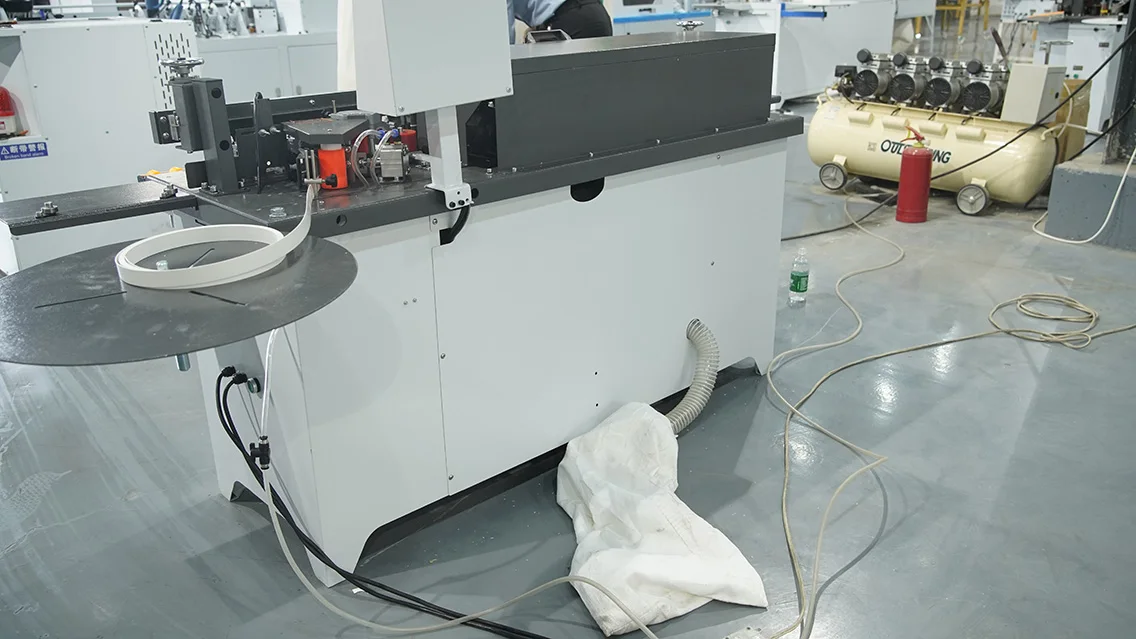
- Dust extraction port connects to workshop central system or standalone 1200W vacuum unit
What We Need to Quote Accurately
To recommend the correct configuration from the catalogue, share your primary panel material, the strip thickness range you run most often, and your local voltage and frequency. If you process multiple board thicknesses in a single shift, note how frequently changeovers occur. Let us know the control panel language your operators require and whether you need a sample processing test on your own material before confirming the order.
Frequently Asked Questions
Q: Where does the ZDS290 sit in the model range, and when should I consider a higher-tier model?
A: The ZDS290 covers essential edge banding, trimming, polishing, and cleaning for workshops running standard PVC and veneer strips on MDF and plywood. If your production includes thick acrylic banding, requires pre-milling for panel sizing accuracy, or runs continuous high-volume shifts, a full-function model with additional stations becomes the more appropriate choice within the same catalogue.
Q: How is edge banding quality verified across different panel substrates before shipment?
A: Each machine undergoes a factory test using the buyer’s specified panel material and strip thickness. The test record documents glue coverage, trimming accuracy, and final edge finish. Pre-shipment verification includes photographic evidence. Buyers may also request a sample processing test or visit the factory to observe their material running on the machine.
Q: What voltage, frequency, and control panel language options are available?
A: Voltage is configurable from 110V to 440V to match local supply standards. Frequency is confirmed during the quotation stage to ensure glue pot heating elements and motors are correctly rated. Control panel language is specified by the buyer and documented before production begins, so operators can read all interface labels at commissioning.
Q: What documentation and spare parts support comes with the machine at shipment?
A: The shipment includes a CE declaration of conformity, ISO 9001 certificate, machine specification sheet, electrical schematic with confirmed voltage, factory test record, operation manual in the agreed language, spare parts list with part numbers, and packing photographs. Customs documentation support is also provided to facilitate import clearance at your port.