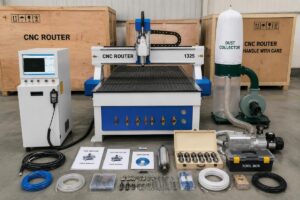
Secure your factory-direct purchase with our Panel Saw Import Checklist Spain, ensuring strict CE compliance and correct 230V/400V 50Hz electrical configuration. Avoid costly customs delays and motor damage by verifying essential documentation and technical specs before shipment for smooth operations.
Panel Saw Import Sourcing Checklist for Spain: Factory Direct Wholesale
CE marking is not a sticker; it is a technical file.
Importing a panel saw to Spain requires strict adherence to EU CE standards, specifically EN 1870-1 for safety and EN 60204-1 for electrical equipment. The machine must be configured for 230V single-phase or 400V three-phase at 50Hz, with a PLC interface available in Spanish or English to prevent operator errors. A comprehensive Panel Saw Import Checklist Spain ensures that voltage adaptation, blade arbor compatibility, and declaration of conformity documents are verified before shipment, avoiding customs delays and operational downtime.
Sourcing directly from manufacturers offers significant cost advantages, but it shifts the burden of compliance verification onto the buyer. Without a rigorous pre-shipment inspection protocol, minor mismatches in frequency or documentation can halt production lines for weeks. This guide breaks down the critical technical and legal checkpoints required for a smooth import process.
Why Is CE Compliance Non-Negotiable for Spanish Imports?
A missing Declaration of Conformity is a customs stop, not just a paperwork error.
Many buyers assume that a CE logo printed on the machine nameplate is sufficient for market access in Spain. This is a dangerous misconception. Under the EU Machinery Directive, the CE mark signifies that the manufacturer has compiled a full technical construction file, performed a risk assessment, and ensured compliance with all applicable harmonized standards. Customs authorities in Spanish ports such as Valencia or Barcelona frequently request the actual Declaration of Conformity and the technical file summary during clearance checks. [NEED_CITE: EU Machinery Directive compliance requirements for third-country imports]
Without these documents, the shipment may be held in bonded warehouses, incurring daily storage fees and demurrage charges. More critically, operating a non-compliant machine exposes the factory owner to severe liability in case of workplace accidents. Insurance providers often void policies if the equipment lacks valid CE certification traceable to a recognized notified body or self-declaration with proper technical backing.
When evaluating a Panel Saw Import Checklist Spain, prioritize suppliers who can provide the specific standard references used in their design. For panel saws, this primarily includes EN 1870-1 for circular saws and EN 60204-1 for the electrical safety of machinery. A reliable manufacturer will include these certificates in the shipping dossier, not just send them via email after payment.
The complexity of CE compliance lies in the integration of safety components. Emergency stop circuits, blade guards, and anti-kickback devices must meet specific performance levels. A factory-direct supplier should demonstrate how these systems are tested during assembly. If a vendor cannot explain their risk assessment process for these safety features, they likely lack the engineering depth to support long-term operations in the European market.
What Electrical Specs Must Match Spain’s Grid?
Frequency mismatch causes motor overheating, not just slow startup.
Spain operates on a 230V single-phase and 400V three-phase grid at 50Hz. A common failure point for imported woodworking machinery is the assumption that motors rated for 60Hz markets will function adequately on 50Hz power. While a 60Hz motor can physically run on 50Hz, the reduced frequency leads to a decrease in rotational speed and a significant increase in magnetic flux, causing the motor to overheat and lose torque. [NEED_CITE: Impact of frequency mismatch on induction motor performance]
For a panel saw, torque is critical during heavy cuts in dense materials like MDF or melamine-faced particleboard. An under-torqued motor may stall or burn out prematurely, leading to costly repairs and production halts. Therefore, verifying the motor nameplate for 50Hz compatibility is a non-negotiable step in any Panel Saw Import Checklist Spain.
| Electrical Parameter | Spain Standard | Common Export Mismatch | Risk Level |
|---|---|---|---|
| Voltage (3-Phase) | 400V | 380V or 415V | Moderate (Adjustable) |
| Frequency | 50Hz | 60Hz | High (Motor Damage) |
| Phase Configuration | 3-Phase + Neutral | 3-Phase Only | Low (Wiring Issue) |
| Control Voltage | 24V DC | 110V AC | Medium (Component Failure) |
Beyond the main drive motor, check the control circuit voltage. Many Asian-manufactured machines use 110V AC for control relays and PLCs, which is incompatible with European standards without a transformer. Ensure the supplier configures the control system for 24V DC or 230V AC as per local norms. This simplifies future maintenance and spare parts sourcing within Spain.
A practical tip is to request a video of the machine running on a 50Hz power source during the pre-shipment inspection. Verify that the blade speed matches the specified RPM for 50Hz operation. If the supplier cannot provide this proof, consider it a red flag. Proper voltage adaptation is not just about plugging in the machine; it is about ensuring the entire electrical ecosystem, from the main breaker to the smallest sensor, is rated for the local grid.
How to Verify Factory-Direct Quality Before Shipment?
Visual inspection misses internal precision; test cuts reveal truth.
Buying factory-direct eliminates middleman margins but removes the buffer of local quality control. To mitigate this risk, the buyer must enforce a strict pre-shipment verification protocol. This goes beyond checking for scratches on the paintwork. It involves validating the mechanical precision and software functionality that determine the saw’s cutting quality.
One critical area often overlooked is the blade arbor size. European standard panel saw blades typically use a 30mm bore, while many Asian manufacturers default to 25.4mm or 20mm arbors. Using adapters can introduce runout, affecting cut quality and safety. Confirm the arbor diameter matches your existing blade inventory or plan for immediate replacement. [NEED_CITE: Standard panel saw blade bore sizes in European markets]
Another frequent issue is the PLC interface language. Operators in Spanish factories need clear, localized instructions. A machine with a Chinese-only or English-only interface can lead to programming errors, incorrect cut lists, and safety violations. Request that the supplier installs a Spanish or multilingual firmware version before shipping. This small customization significantly reduces the learning curve and operational risks.
| Inspection Point | Verification Method | Acceptance Criteria |
|---|---|---|
| Table Flatness | Dial indicator measurement | Deviation within tolerance |
| Blade Alignment | Test cut on plywood | No burn marks, square edges |
| PLC Language | Interface navigation | Spanish/English available |
| Safety Guards | Manual activation test | Immediate motor stop |
Reputable manufacturers, such as those with established export records, often perform 100% pre-shipment testing. They should provide a detailed test report including photos of the test cuts and video evidence of the safety features in action. This level of transparency is a hallmark of a reliable partner in the Panel Saw Import Checklist Spain process.
Focus on the linear guides and bearings. These components determine the smoothness of the sliding table movement. Ask the supplier about the brand and grade of these components. While specific brand names may vary, the requirement for high-precision, sealed bearings is universal. Poor-quality guides will wear out quickly under heavy use, leading to wobble and inaccurate cuts.
Which Documentation Prevents Customs Delays?
Incomplete paperwork turns days into weeks at the port.
Customs clearance in Spain is bureaucratic and strict. Missing or inconsistent documentation can result in shipments being held for physical inspection, which adds time and cost. The key is to ensure that all documents match exactly, from the commercial invoice to the bill of lading and the certificate of origin.
The most critical document for machinery is the CE Declaration of Conformity. This must be signed by an authorized representative of the manufacturer and reference the specific model and serial number of the machine. It should also list the harmonized standards applied, such as EN 1870-1. Without this, the machine cannot be legally placed on the market in Spain.
| Document Type | Purpose | Common Error |
|---|---|---|
| Commercial Invoice | Value declaration | Incorrect HS code |
| Packing List | Content verification | Missing serial numbers |
| Bill of Lading | Title transfer | Consignee details mismatch |
| CE Declaration | Legal compliance | Missing standard references |
| Certificate of Origin | Tariff determination | Incorrect issuer |
Ensure the HS code on the invoice is correct for panel saws. An incorrect code can lead to higher duty rates or additional scrutiny. The packing list should detail every component, including spare parts and tools, to avoid discrepancies during customs inspection. Serial numbers on the documents must match those on the machine nameplates.
Work with your freight forwarder early in the process. Provide them with draft copies of all documents for review before the final versions are issued. This proactive step can catch errors that might otherwise cause delays. A well-prepared Panel Saw Import Checklist Spain includes a column for document verification, ensuring nothing is left to chance.
What After-Sales Support Should You Expect?
Remote diagnostics save trips, but spare parts availability saves days.
Factory-direct purchases often raise concerns about after-sales support. However, modern woodworking machinery is increasingly equipped with remote diagnostic capabilities. Suppliers should offer video-based installation guidance and remote troubleshooting via internet connection. This allows engineers to diagnose software or electrical issues without traveling to Spain.
Spare parts availability is another critical factor. Ask the supplier about their stock levels for common wear items such as belts, bearings, and sensors. A reliable manufacturer will have a structured spare parts supply chain and can ship critical components quickly. Some suppliers even include a basic spare parts kit with the initial shipment, which is a valuable addition for immediate maintenance needs.
Language support is essential for effective communication. Ensure that the supplier has technical staff who can communicate in English or Spanish. Misunderstandings in technical discussions can lead to incorrect repairs or prolonged downtime. Clear communication channels are as important as the machine itself.
Evaluate the warranty terms carefully. A standard 12-month warranty on core components is common, but understand what is covered and what is excluded. Wear parts are typically not covered, but structural components and electrical systems should be. Clarify the process for claiming warranty service, including who bears the cost of shipping replacement parts.
Integrating these support expectations into your Panel Saw Import Checklist Spain ensures that you are not just buying a machine, but a long-term production asset. The right supplier acts as a partner, providing the technical backbone needed for sustained operations.
Conclusion
Compliance and compatibility are the foundations of successful importing.
Importing a panel saw to Spain demands more than just finding the lowest price. It requires a disciplined approach to CE compliance, electrical configuration, and documentation. By following a detailed Panel Saw Import Checklist Spain, buyers can avoid the pitfalls of voltage mismatches, customs delays, and operational inefficiencies. Factory-direct sourcing offers value, but only when paired with rigorous pre-shipment verification and clear after-sales support structures.

Written by
author
Editor covering global sourcing, supplier verification, and industrial product knowledge. Content is compiled from manufacturer specifications, industry standards, and hands-on experience with international B2B buyers. Every article is fact-checked before publishing to help procurement professionals make informed decisions.
View all posts