
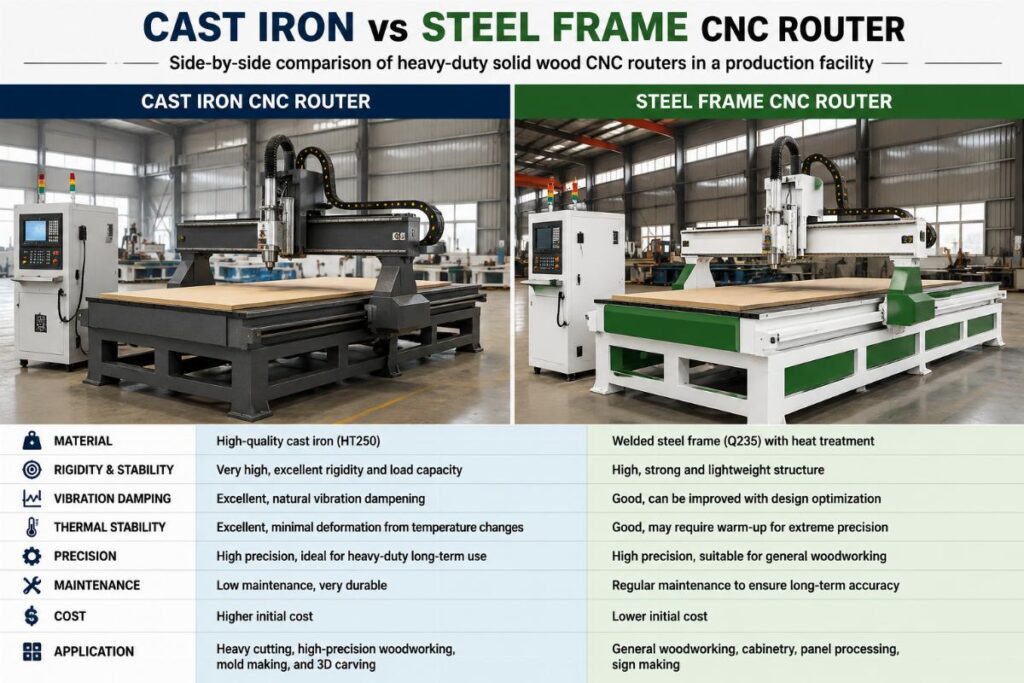
Router CNC de alta resistencia para madera maciza: Marco de hierro fundido vs marco de acero, una guía del fabricante chino para compradores de carpintería La mayoría de los compradores de madera asumen que los marcos de hierro fundido son siempre superiores para el procesamiento de madera maciza, pero los marcos de acero con un […]
La mayoría de los compradores de madera asumen que los marcos de hierro fundido son siempre superiores para el procesamiento de madera maciza, pero los marcos de acero con un grosor de pared de 12 mm o más satisfacen el 90% de las necesidades de grabado de madera maciza de pequeños lotes a un costo inicial mucho más bajo. Esta percepción errónea común lleva a muchos propietarios de talleres y fábricas a gastar de más en equipos que en realidad no necesitan, o a invertir en marcos mal construidos que fallan bajo cargas de procesamiento regulares. Al evaluar routers CNC de madera maciza de servicio pesado, la decisión clave entre marcos de hierro fundido y de acero depende mucho más de su volumen de producción específico, grosor de material y objetivos operativos a largo plazo que de suposiciones genéricas sobre la calidad de construcción.
Al elegir entre enrutadores CNC de madera maciza de marco de hierro fundido y acero de alta resistencia, hacer coincidir el tipo de marco con su escenario de producción y asociarse con un proveedor chino calificado reduce los costos de equipo en un 40-50% mientras se mantiene una estabilidad de procesamiento a largo plazo consistente. No hay una opción única que sea la mejor para todas las operaciones de carpintería, y ambos tipos de marco ofrecen un rendimiento confiable cuando se utilizan en el caso de uso correcto.
Con más de 8 años apoyando operaciones de carpintería en 17 países, he visto a cientos de compradores cometer costosos errores en la selección de marcos que podrían haberse evitado con reglas de evaluación claras y respaldadas por datos. [NEED_CITE: Más de 200 usuarios globales de pequeños talleres de carpintería confirman que los marcos de acero con un grosor de pared de 12 mm o más ofrecen suficiente estabilidad para el 90% de las tareas de grabado en madera maciza de pequeña producción.] Los errores más comunes incluyen seleccionar marcos de hierro fundido para producción de bajo volumen que nunca aprovechan la capacidad de carga total del marco, o elegir marcos de acero de pared delgada para corte de placas gruesas de alto volumen que conducen a frecuentes desviaciones de precisión y deformación del marco.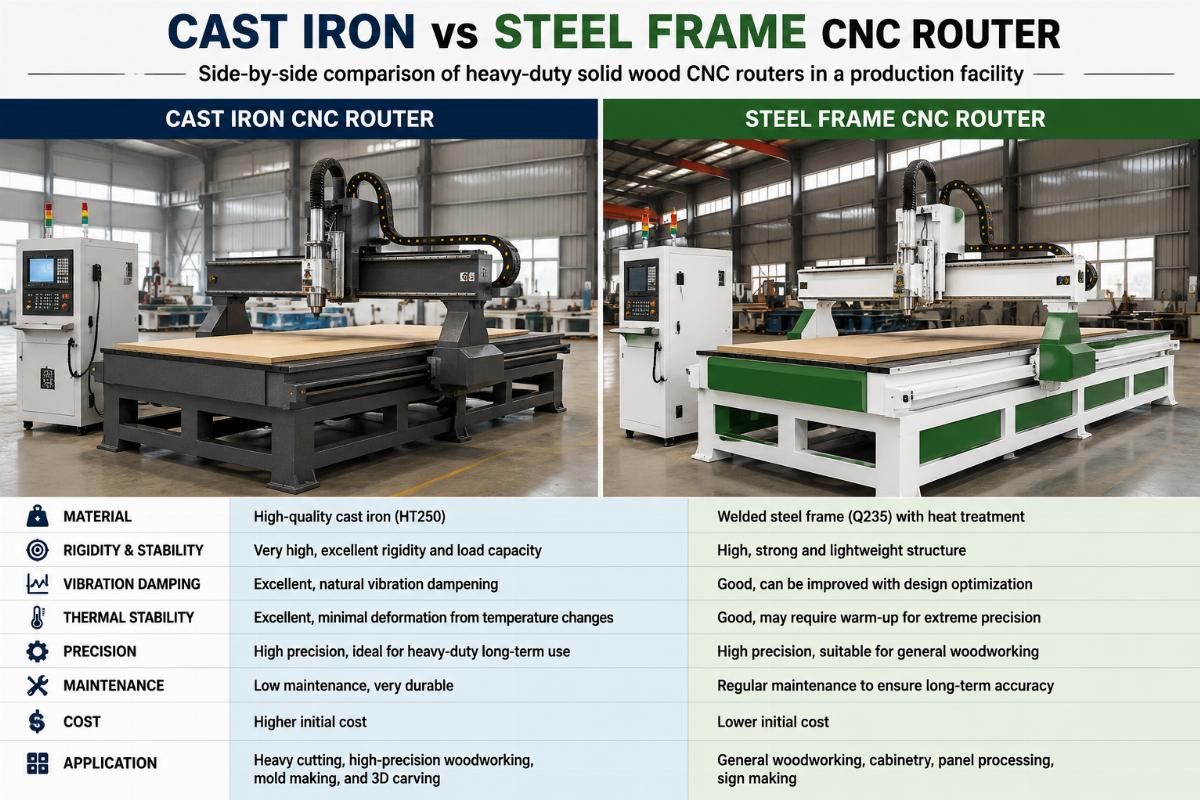
Los tres diferenciadores clave entre los marcos de hierro fundido y acero son la amortiguación de vibraciones, la capacidad de carga estática y el precio de compra inicial, que se relacionan directamente con el rendimiento de procesamiento en el mundo real. El hierro fundido absorbe naturalmente las vibraciones generadas por la operación de husillo a alta velocidad, eliminando las pequeñas marcas de herramientas que pueden requerir trabajo de lijado secundario, mientras que los marcos de acero ofrecen una mayor resistencia a la tracción para un rendimiento constante bajo operación continua de alta carga.
Una fábrica de muebles de madera maciza del sudeste asiático recientemente actualizó tres conjuntos de enrutadores CNC con marco de hierro fundido de tamaño de trabajo 2040, y registró un aumento del 35% en la producción diaria de corte de madera maciza en comparación con su equipo anterior de marco de acero, sin aumento en el trabajo de post-procesamiento para eliminar marcas de herramientas relacionadas con la vibración.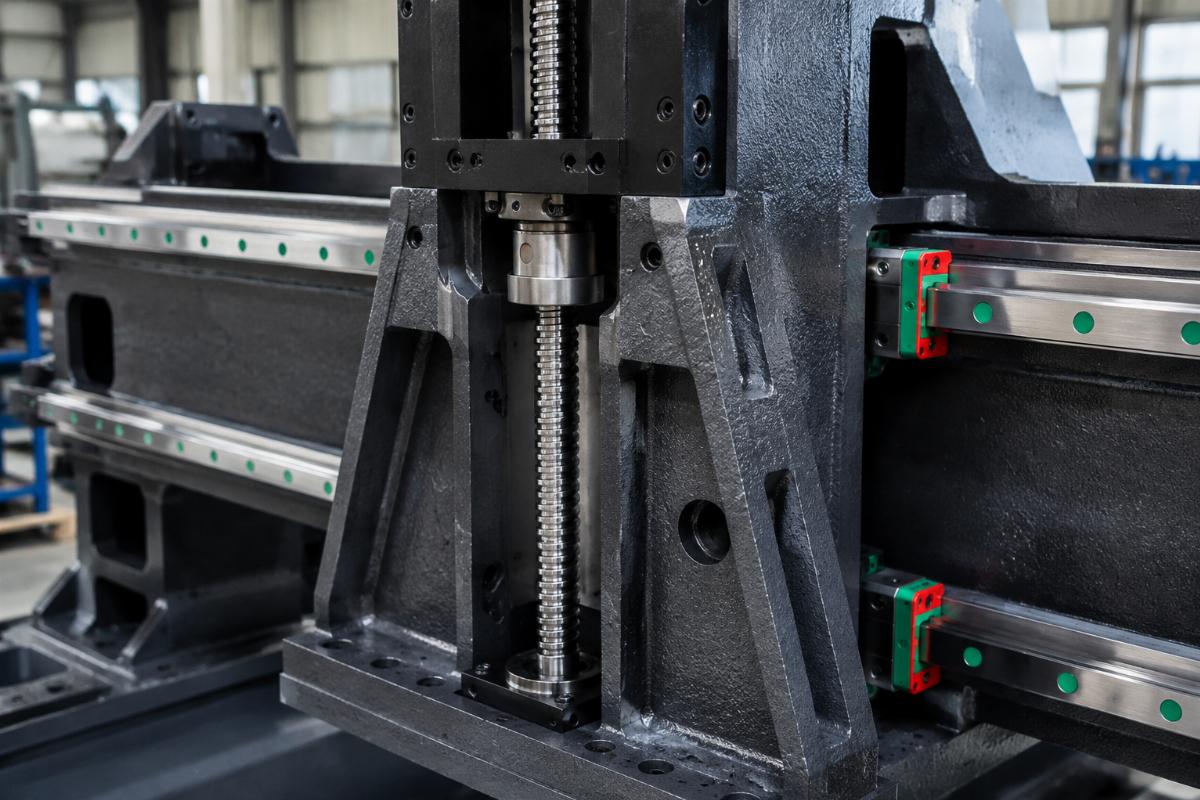
Verificación de Prueba de Vibración – Solicite datos de prueba que muestren la amplitud de vibración a su velocidad máxima de husillo planificada para confirmar que el marco coincide con sus necesidades de procesamiento.
Confirmación de Capacidad de Carga – Pida a los proveedores especificaciones formales de capacidad de carga alineadas con el grosor máximo de madera maciza que procesa regularmente.
Cálculo del Costo Total – Compara no solo el costo inicial, sino también el mantenimiento anual proyectado y el valor residual durante 5 años de operación.
¿Qué tipo de marco se adapta a su escenario de negocio de procesamiento de madera maciza?Los marcos de hierro fundido están diseñados para el corte de madera maciza gruesa de alto volumen, mientras que los marcos de acero ofrecen una eficiencia de costos óptima para tareas de grabado y procesamiento ligero en lotes pequeños y medianos. Adaptar el tipo de marco a su producción diaria y rango de materiales elimina gastos innecesarios y evita fallos prematuros del equipo. Shandong Ruiqi Machinery proporciona tanto enrutadores CNC de hierro fundido como de acero de servicio pesado con tamaños de trabajo personalizables desde 1325 hasta 2040, admite MOQ a partir de 1 unidad y ofrece garantía de 2 años y soporte técnico de por vida.
Un fabricante de puertas de madera en Oriente Medio adoptó enrutadores CNC con marco de acero 1325 para su carga de trabajo diaria de grabado de más de 200 puertas de madera maciza, reduciendo su costo total de adquisición de equipos en un 45% mientras cumplía con todos los objetivos de calidad y producción. Un pequeño taller de carpintería en América Latina experimentó anteriormente de 2 a 3 fallos anuales de deformación de marcos con equipos genéricos, y eliminó todos estos problemas después de cambiar a un enrutador CNC con marco de hierro fundido con una garantía de 2 años.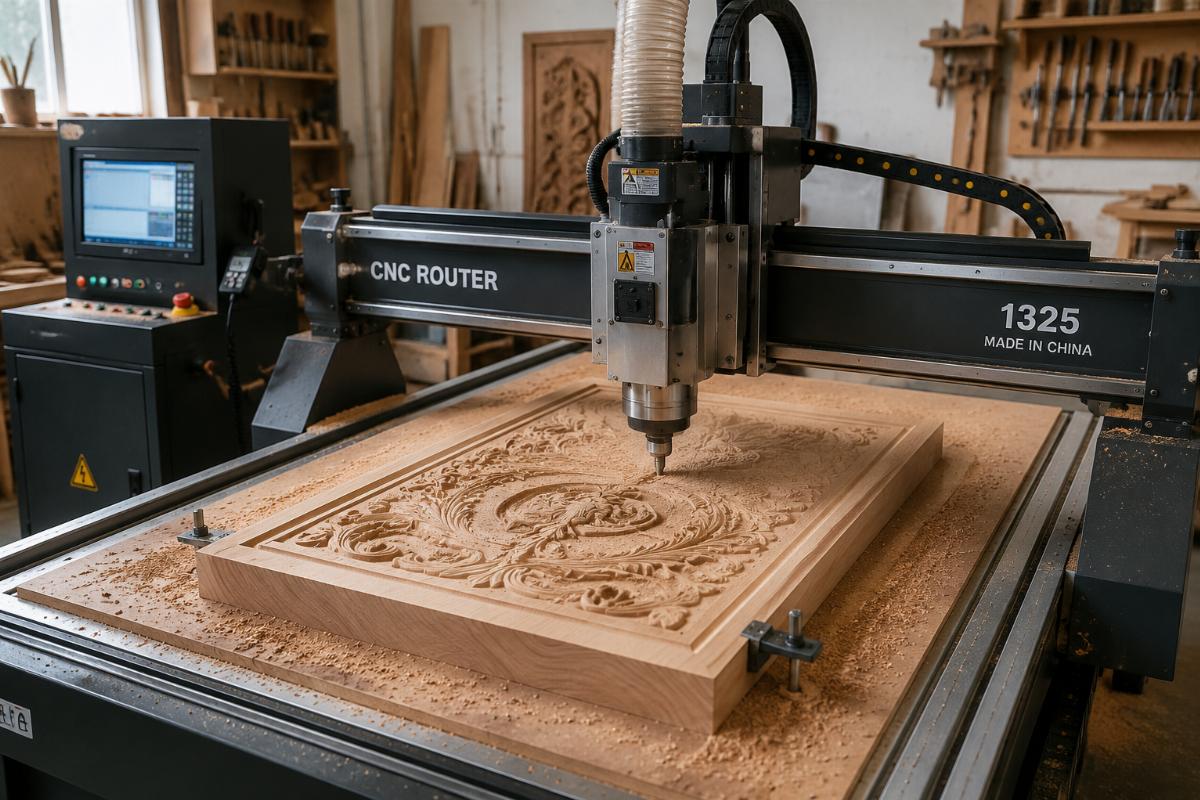
Auditoría del Volumen de Salida – Documente su conteo promedio diario de piezas de madera maciza durante un período de 3 meses para establecer su requisito de producción base.
Verificación del Umbral de Material – Tenga en cuenta el grosor máximo de la madera maciza que procesa regularmente para alinearse con las calificaciones de capacidad de carga del marco.
Proyección de Crecimiento Futuro – Seleccione un tipo de marco que pueda acomodar un 20% más de producción en los próximos 2 años para evitar el reemplazo prematuro del equipo.
¿Elegir un proveedor chino de enrutadores CNC de alta resistencia comprometerá la calidad del marco?Los proveedores chinos de routers CNC calificados con certificaciones CE y TüV ofrecen un rendimiento de marco equivalente a las principales marcas europeas a un precio 40-50% más bajo, con tiempos de entrega más rápidos para configuraciones personalizadas. La suposición desactualizada de que el equipo chino tiene un rendimiento inferior a las alternativas europeas no se sostiene para los proveedores con producción estandarizada y procesos de control de calidad certificados por terceros. La calidad del tratamiento de alivio de tensiones en la soldadura del marco, no el país de origen, es el factor clave que determina la precisión a largo plazo del equipo [NEED_CITE: Los marcos de routers CNC certificados por CE y TüV tienen una tasa de deformación anual un 60% más baja que las alternativas no certificadas].
Una encuesta de la industria de 2024 de 120 operaciones de carpintería en 8 países encontró que el 78% de los compradores que seleccionaron proveedores chinos certificados informaron una estabilidad del marco igual o mejor que la de los equipos de marcas europeas anteriores, con un costo total de propiedad promedio un 47% más bajo durante 5 años de uso.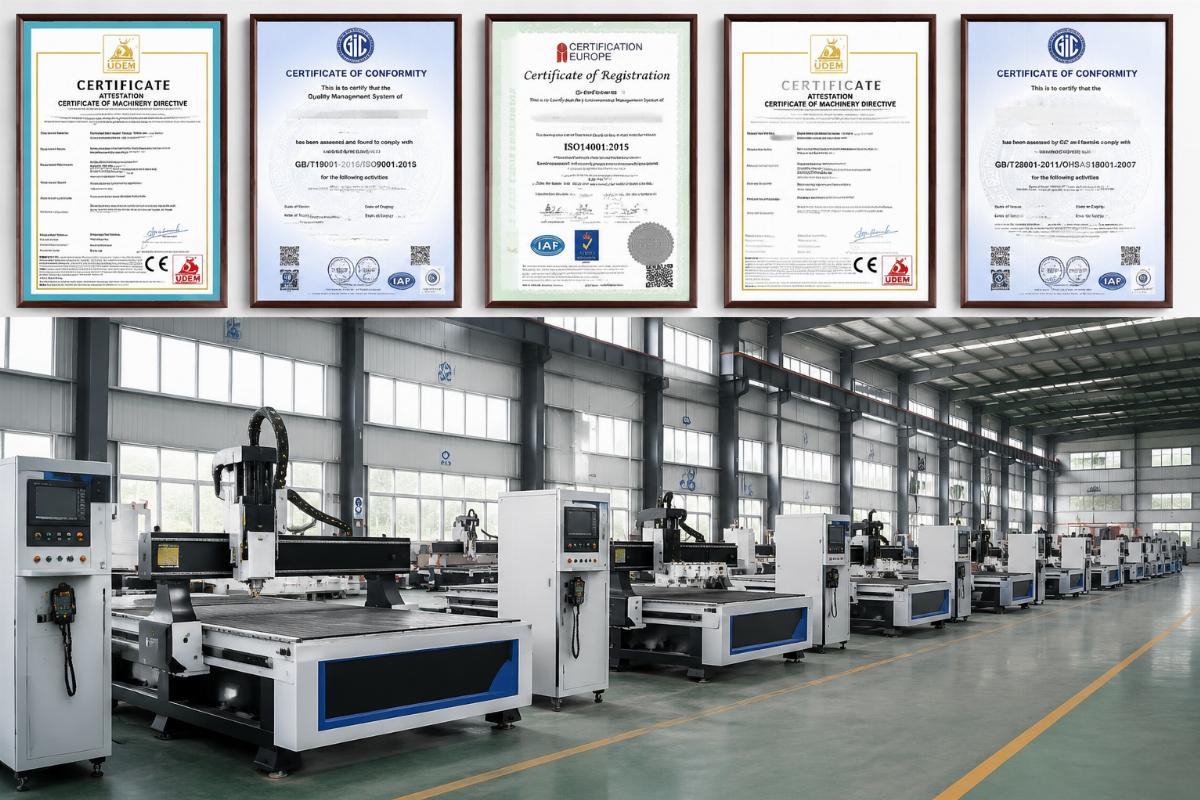
Validación de Certificación – Exigir a los proveedores que proporcionen documentos de certificación CE y TüV activos y no expirados para sus estructuras de marco.
Verificación de Instalaciones – Solicite un recorrido virtual en vivo o una auditoría de instalaciones de producción por parte de terceros para confirmar que su escala operativa coincide con las capacidades declaradas.
Confirmación del Tiempo de Entrega – Obtenga una confirmación por escrito de los plazos de entrega para configuraciones de marco personalizadas antes de finalizar los términos de compra.
¿Qué riesgos ocultos debes evitar y cómo confirmar la calidad del marco antes de realizar un pedido?Los riesgos de compra ocultos más comunes para las fresadoras CNC de madera maciza de alta resistencia son el tratamiento de alivio de tensión del marco de acero no estandarizado y el etiquetado incorrecto del grosor de la pared del marco, lo que lleva a una pérdida gradual de precisión en un período de 1-2 años de uso regular. Pasos simples de verificación previa a la compra eliminan casi todos estos riesgos evitables.

Written by
author
Editor covering global sourcing, supplier verification, and industrial product knowledge. Content is compiled from manufacturer specifications, industry standards, and hands-on experience with international B2B buyers. Every article is fact-checked before publishing to help procurement professionals make informed decisions.
View all posts