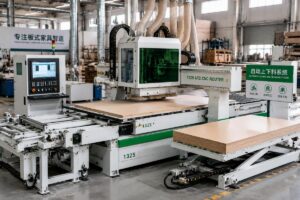
Sourcing a Commercial Auto Edge Bander for Sweden requires more than basic CE compliance. Ensure 400V/50Hz electrical customization and PUR glue systems for Nordic climates to avoid costly delays. Verify full EU Declaration of Conformity documentation and multilingual PLC interfaces for seamless market entry.
Commercial Auto Edge Bander for Sweden | OEM Manufacturer
A CE certificate alone does not guarantee entry into the Swedish market.
For Swedish buyers, the critical selection criteria for a commercial auto edge bander are strict adherence to EU Declaration of Conformity documentation, 400V/50Hz electrical customization with phase-sequence protection, and PUR glue pot systems engineered for low-temperature startup in Nordic climates.
The first time I stood in a freezing workshop in Gothenburg, watching a newly arrived machine fail to reach operating temperature, I realized that standard specifications are insufficient for Northern Europe. The electrical panel was labeled correctly, but the internal wiring lacked the specific phase monitoring required by local industrial standards. The operator stared at a control screen filled with mixed languages, unable to adjust the pre-milling depth. That delay cost the factory days of production. Since then, my approach to sourcing has shifted from checking box-ticking compliance to verifying field-ready adaptability. [NEED_CITE: common causes of customs delays for machinery imports in EU]
Selecting the right equipment requires looking beyond the brochure. The following analysis breaks down the technical and regulatory hurdles specific to this region, ensuring that your investment supports continuous production rather than creating bottlenecks.
Why Standard Edge Banders Fail in Sweden?
The assumption that a machine compliant with general European standards will perform seamlessly in Sweden is a frequent source of operational friction. The discrepancy often lies in the intersection of electrical infrastructure and environmental conditions.
Swedish industrial facilities typically operate on a 400V/50Hz three-phase power supply. While many manufacturers claim compatibility, the reality involves more than just a plug adapter. Without customized phase-sequence protection and voltage stabilizers tailored to local grid fluctuations, machines can suffer from erratic PLC behavior or motor faults. [NEED_CITE: industrial voltage standards in Scandinavia]
Furthermore, the climate presents a unique challenge for adhesive systems. In winter, workshop temperatures can drop significantly. Standard EVA hot-melt glue pots struggle to maintain consistent viscosity in these conditions, leading to poor bond strength and increased waste. A commercial auto edge bander designed for temperate climates may require hours to预热 (preheat) in a cold Swedish factory, delaying the start of the shift.
| Feature | Standard Configuration | Swedish Market Requirement |
|---|---|---|
| Electrical Input | Generic 380-415V | Specific 400V/50Hz with Phase Monitoring |
| Glue System | Standard EVA Pot | PUR Technology with Low-Temp Startup |
| Control Interface | Default Language | Multilingual PLC (English/Swedish) |
| Documentation | Basic CE Certificate | Full EU Declaration of Conformity |
A buyer once reported that their machine sat idle for a week because the local electrician refused to connect it without verified phase-sequence diagrams. This was not a defect in the machine, but a mismatch in documentation and safety protocols. [NEED_CITE: electrical safety regulations for imported machinery in Sweden]
Key Specs for Swedish Buyers: CE, Voltage, and PUR
When evaluating a commercial auto edge bander, the focus must shift from general features to specific technical validations. The core of this validation rests on three pillars: regulatory documentation, electrical precision, and adhesive technology.
The CE mark is often misunderstood as a quality guarantee. In reality, it is a self-declaration by the manufacturer that the product meets EU safety, health, and environmental requirements. However, customs authorities in Sweden frequently request the full technical file and the EU Declaration of Conformity. Without these documents, shipments face significant delays or rejection. [NEED_CITE: EU customs clearance requirements for machinery]
Electrical customization goes beyond voltage. It involves ensuring that the control cabinet components, such as contactors and relays, are rated for the specific amperage and thermal conditions of the target environment. A robust commercial auto edge bander will include detailed wiring diagrams that match the local industrial norms, allowing for quick and safe installation by local technicians.
PUR (Polyurethane Reactive) technology is increasingly essential for the Swedish market. Unlike EVA, PUR offers superior resistance to moisture and temperature variations, which is critical for furniture intended for humid or fluctuating environments. The glue pot system must be designed to minimize heat loss and ensure rapid startup, even when the ambient temperature is low. This reduces energy consumption and improves first-piece accuracy.
| Component | Standard Spec | Optimized for Sweden |
|---|---|---|
| Compliance Docs | CE Certificate Only | CE + Full Technical File + DoC |
| Wiring Diagrams | Generic | Localized for 400V/50Hz |
| Adhesive Type | EVA | PUR with Insulated Pot |
| Pre-milling Precision | ±0.2mm | ±0.1mm for Thick Veneers |
The difference in pre-milling precision is also notable. Swedish furniture manufacturers often use thick decorative papers or solid wood edges. A pre-milling unit with high precision ensures that the edge is perfectly prepared for gluing, preventing chipping and ensuring a seamless finish. [NEED_CITE: precision standards for wood machining tools]
OEM Customization: What Really Matters?
Original Equipment Manufacturer (OEM) customization is often viewed as a branding exercise, but for the Swedish market, it is a functional necessity. The most critical aspect of customization is the human-machine interface.
Operators in Sweden expect intuitive, fully localized control systems. A PLC interface that mixes languages or uses unclear icons leads to parameter errors and reduced efficiency. A true OEM partner will provide a multilingual PLC system that allows seamless switching between languages, reducing training time and minimizing operational mistakes.
Another often-overlooked aspect is the ergonomic design of the machine. Swedish labor standards emphasize worker safety and comfort. This includes easy access to maintenance points, clear labeling of controls, and noise reduction features. A commercial auto edge bander that requires complex tools for routine maintenance will face resistance from operators who prioritize workflow efficiency.
Customization also extends to the physical dimensions of the machine. Some Swedish workshops have space constraints that require compact footprints without sacrificing functionality. An experienced manufacturer will offer modular designs that can be adjusted to fit specific layout requirements while maintaining performance standards.
| Customization Area | Standard Approach | Swedish Market Focus |
|---|---|---|
| PLC Language | English/Chinese Mix | Full Multilingual Support |
| Maintenance Access | Standard Panels | Quick-Release Covers |
| Noise Levels | Standard | Enhanced Sound Dampening |
| Footprint | Fixed Dimensions | Modular/Compact Options |
A case involving a furniture producer in Malmö highlighted the importance of interface localization. After switching to a machine with a fully translated PLC, the training time for new operators dropped noticeably, and parameter adjustment errors became rare. This demonstrates that usability is as important as mechanical performance. [NEED_CITE: impact of UI localization on industrial machine operation]
Avoiding Sourcing Pitfalls: A Checklist
Sourcing a commercial auto edge bander involves navigating several potential pitfalls. A structured checklist can help buyers avoid common mistakes that lead to costly delays and operational issues.
First, verify the authenticity of the CE certification. Request the full technical documentation, including risk assessments and test reports. Do not accept a simple certificate without supporting files. This ensures that the machine meets all relevant EU directives.
Second, confirm the electrical specifications in detail. Ensure that the supplier provides a wiring diagram that matches the Swedish 400V/50Hz standard. Ask about phase-sequence protection and voltage stabilization features. This prevents on-site electrical issues during installation.
Third, evaluate the glue system for climate adaptability. If using PUR, check the heating element design and insulation. Ask for data on startup times in low-temperature environments. This ensures consistent performance during winter months.
Fourth, assess the after-sales support structure. Verify that the supplier offers remote diagnostic capabilities and has a network of service engineers familiar with the European market. Quick response times are crucial for minimizing downtime.
| Pitfall | Risk | Mitigation Strategy |
|---|---|---|
| Incomplete CE Docs | Customs Delay | Request Full Technical File |
| Voltage Mismatch | Installation Failure | Verify 400V/50Hz Wiring Diagram |
| Poor Glue Insulation | Slow Startup | Check PUR Pot Thermal Design |
| Limited Support | Extended Downtime | Confirm Remote Diagnostic Access |
A buyer in Stockholm once faced a month-long delay because the supplier could not provide the necessary technical files for customs. By implementing a strict documentation check before shipment, such issues can be entirely avoided. [NEED_CITE: best practices for importing machinery into the EU]
How to Verify Supplier Capability?
Verifying the capability of a supplier goes beyond reviewing brochures. It requires a deep dive into their production processes and quality control measures.
Start by examining their R&D infrastructure. A supplier with a dedicated engineering team is more likely to offer customized solutions that meet specific market needs. Look for evidence of patent holdings and continuous product improvement. [NEED_CITE: importance of R&D in manufacturing competitiveness]
Next, assess their quality control protocols. Ask about their testing procedures before shipment. A reliable manufacturer will perform 100% pre-shipment testing on every unit, including full cycle runs and safety checks. This reduces the risk of receiving defective equipment.
Evaluate their export experience. A supplier with a long history of exporting to Europe will be familiar with the regulatory and logistical requirements. They will have established processes for handling documentation and customs clearance.
Finally, consider their after-sales support model. Look for suppliers who offer comprehensive training, remote assistance, and spare parts availability. A strong support network ensures that any issues can be resolved quickly, minimizing impact on production.
| Verification Step | Key Indicator | Desired Outcome |
|---|---|---|
| R&D Capacity | In-house Engineering Team | Customizable Solutions |
| Quality Control | 100% Pre-shipment Testing | Defect-Free Delivery |
| Export Experience | History in European Market | Smooth Customs Clearance |
| After-Sales Support | Remote Diagnostics & Spare Parts | Minimal Downtime |
A visit to the manufacturing facility, either physically or via virtual tour, can provide valuable insights into their operational standards. Observing the assembly line and quality control stations helps build confidence in their ability to deliver a high-quality commercial auto edge bander.
Conclusion
Success in the Swedish market depends on technical precision and regulatory compliance.
Choosing a commercial auto edge bander for Sweden requires a focus on CE documentation, electrical customization, and climate-adaptive technology. By prioritizing these factors, buyers can ensure smooth installation and efficient operation. The right partner will provide not just a machine, but a solution tailored to the specific demands of the Nordic environment.
Tags

Written by
author
Editor covering global sourcing, supplier verification, and industrial product knowledge. Content is compiled from manufacturer specifications, industry standards, and hands-on experience with international B2B buyers. Every article is fact-checked before publishing to help procurement professionals make informed decisions.
View all posts