Description
Precision-Ground Fuselage Construction — the ZDS280D frame uses 14 mm high-strength steel plate with high-temperature quenching to resist deformation under continuous panel feed loads.
Technical Specifications
| Parameter | Value |
|---|---|
| Model | ZDS280D |
| Product Type | Automatic Edge Banding Machine |
| Main Function | Gluing, End trimming, Fine trimming, Scraping, Buffing |
| Working Pressure | 0.6–0.8 MPa |
| Panel Thickness Range | 10–55 mm |
| Edge Thickness Range | 0.4–3 mm |
| Conveyor Belt Speed | 15 m/min |
| Min. Panel Width | 60 mm |
| Min. Panel Length | 150 mm |
| Voltage | 380V-3HP |
| Rated Power | 7.5 kW |
| Weight | 700 kg |
| Overall Dimensions | 3100 × 700 × 1400 mm |
| Fuselage Material | 14 mm national standard high-strength steel plate, frame-type structure, high-temperature quenching |
| Guide Rail Material | HT260 |
| Conveying Motor | Taiwan brand, thermal protection system |
| Head Guide Rail | Taiwan brand |
| Pneumatic System | German Festo or Taiwan AirTAC cylinder and safety valve, AirTAC magnetic switch |
| Electrical Components | Delixi / Chint air switches and contactors, Japanese Omron travel switches |
| Control Panel | Standard configuration, multilingual options available on request |
Application Suitability
| Application | Material or Output |
|---|---|
| Custom cabinet door edge finishing | MDF and particleboard with PVC edge banding |
| Wardrobe panel edge sealing | Plywood panels up to 55 mm thickness |
| Shelving and carcass banding | Melamine-faced chipboard with 0.4–3 mm edges |
| Joinery workshop production | Solid wood panels with veneer edge material |
| Small-batch furniture runs | Mixed panel substrates in sequential feed |
Why Voltage Confirmation Belongs Before the Purchase Order
A machine wired for the wrong frequency will run, but it will not run right — and the fault rarely shows up until the first production shift.
Over the years I have watched edge banders arrive at overseas workshops only to sit idle while electricians rewire motor circuits or replace transformers. The ZDS280D ships at 380V-3HP as standard, which covers most three-phase industrial grids in Asia and parts of Europe. Yet buyers in regions running 220V three-phase or 440V/60Hz often discover the mismatch only after the crate is opened. As an Automatic Edge Banding Machine manufacturer, we now confirm voltage and frequency on every quotation before production begins. [NEED_CITE: voltage and frequency standards by export market]
The conveyor motor on this unit carries thermal protection, but thermal relays calibrated for 50Hz behave differently on 60Hz supply — the motor spins faster, the feed rate drifts, and the glue application thickness changes without the operator realizing why. This is not a defect; it is a configuration gap that a two-minute conversation before ordering would have prevented.
Where the ZDS280D Sits in the Full Machine Range
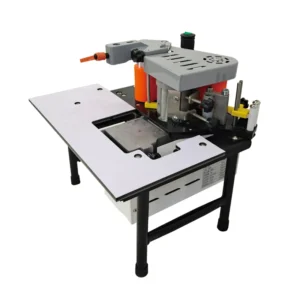
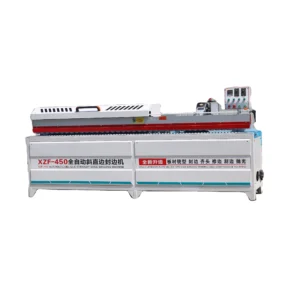
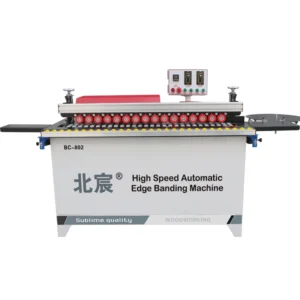
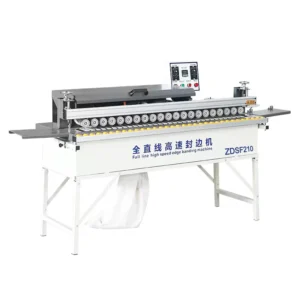
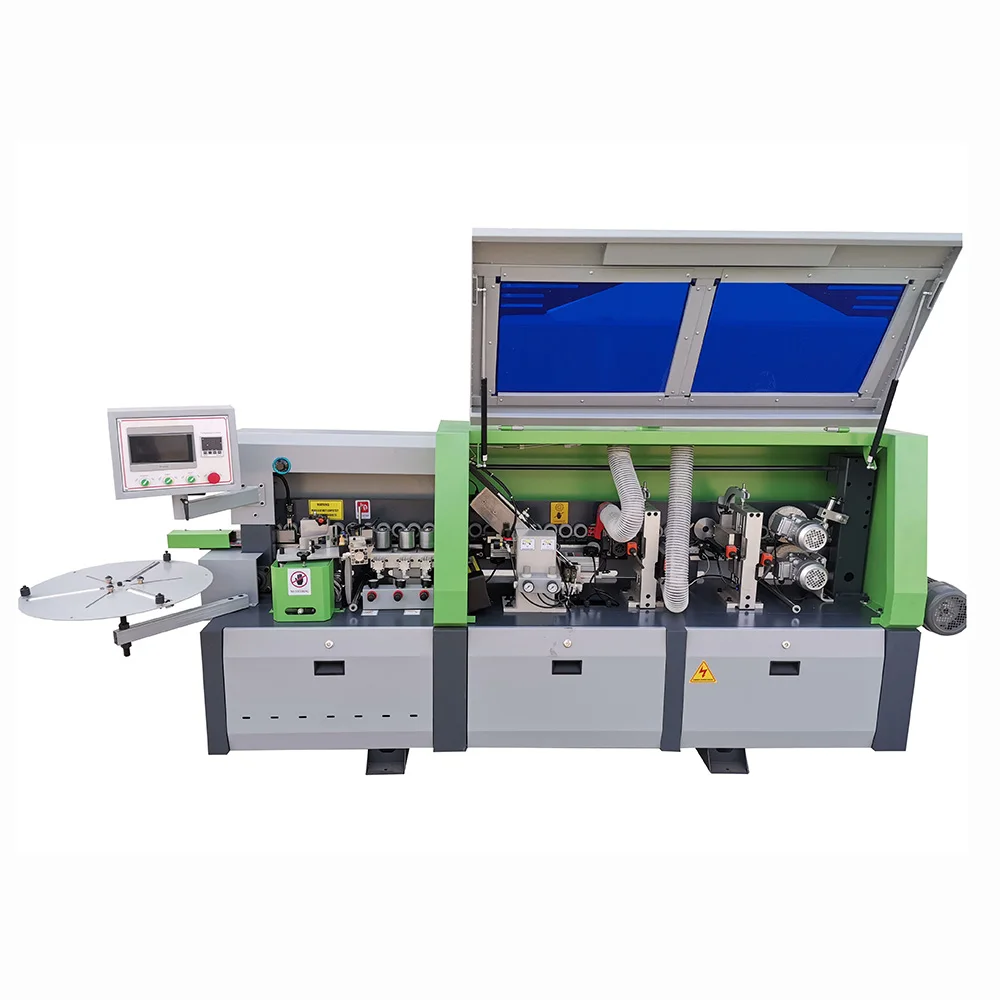
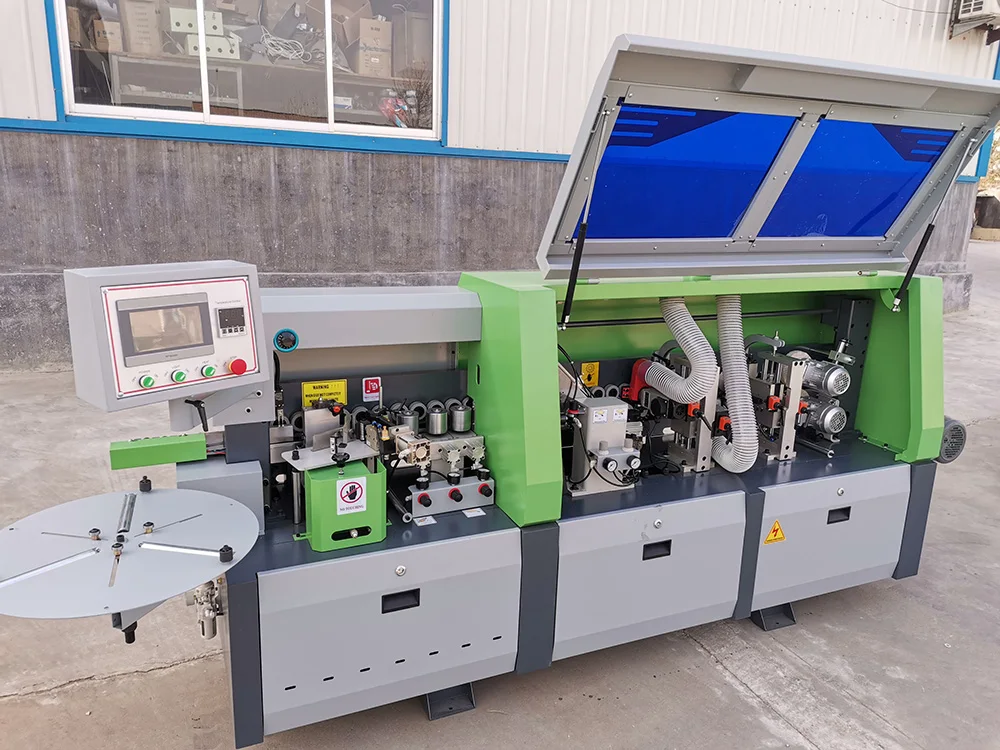
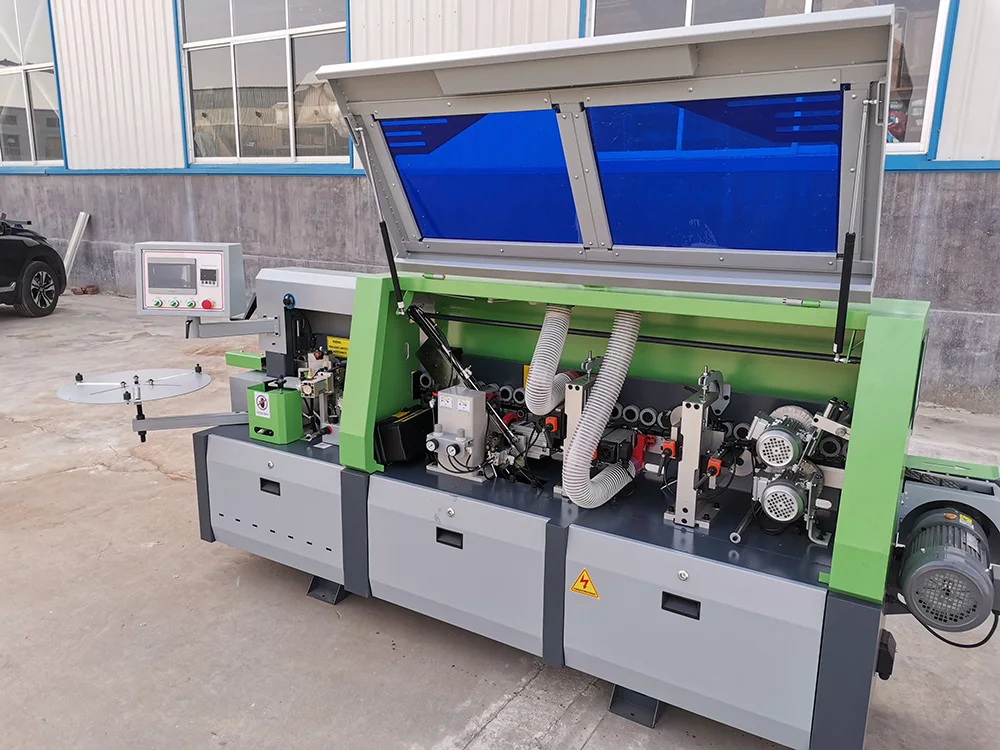
The edge banding lineup spans from entry-level single-function units up through full-function pre-milling configurations with six or more working stations. The ZDS280D occupies the mid-range position with five integrated stations — gluing, end trimming, fine trimming, scraping, and buffing — delivered in one continuous pass. For a buyer surveying the complete catalogue, this model represents the point where automated trimming replaces hand-scraping and manual buffing, yet the footprint and power draw remain within reach of workshops still growing their panel throughput.
Scaling Without Changing Supplier
A joinery shop that starts with a basic edge bander often outgrows it within a year, then faces the friction of learning a new control layout, sourcing different spare parts, and recalibrating downstream equipment. Because the ZDS280D shares the same product family architecture as the higher-specification pre-milling models, operators moving up the range encounter familiar pneumatic logic, the same Festo or AirTAC cylinder standards, and control panels available in the language already used on the shop floor. The upgrade path stays within one supplier ecosystem, keeping spare-part inventories and maintenance procedures consistent. [NEED_CITE: CE machinery directive requirements for industrial equipment]
Reading the Specifications Against Your Production Reality
The 10–55 mm panel thickness range covers the vast majority of furniture-grade boards — standard 18 mm particleboard for cabinet carcasses, 25 mm MDF for shelving, and thicker panels for worktops or door blanks. The 15 m/min conveyor speed is a fixed rate, meaning throughput depends on panel length and the spacing between boards on the belt. For a typical 600 mm cabinet side panel, this translates into a steady rhythm that suits batch production without demanding high-volume infeed logistics.
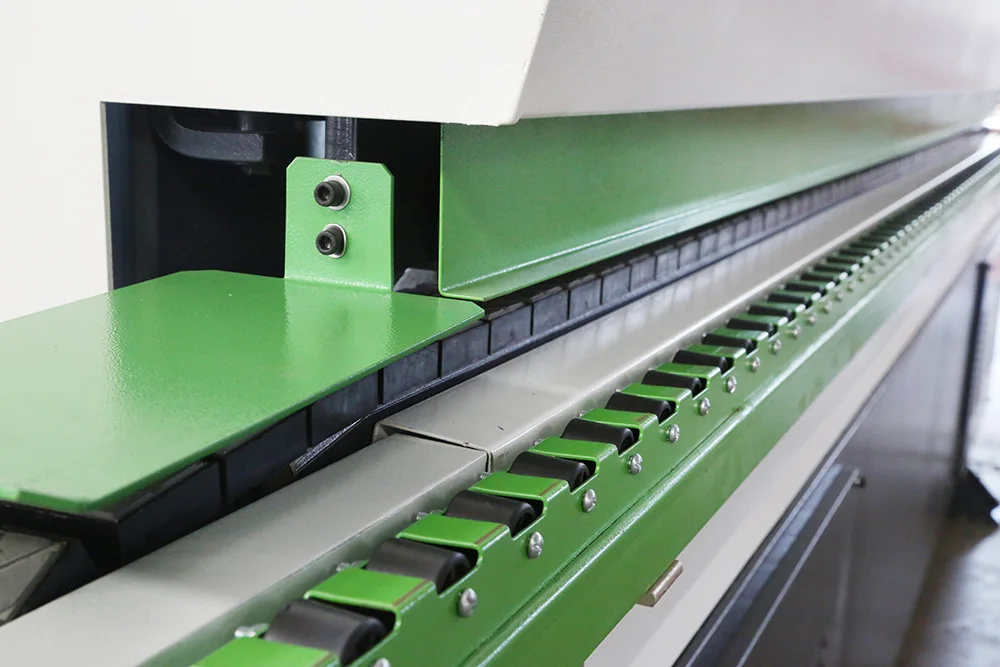
The HT260 guide rail material is a grey cast iron grade chosen for vibration damping. On a 3,100 mm long machine body, any chatter in the rail transfers directly into the trimming heads and produces visible witness marks on the edge. Cast iron absorbs those micro-vibrations far better than extruded aluminum sections, which matters when the fine trimming station is holding a ±0.02 mm tolerance across a full shift.
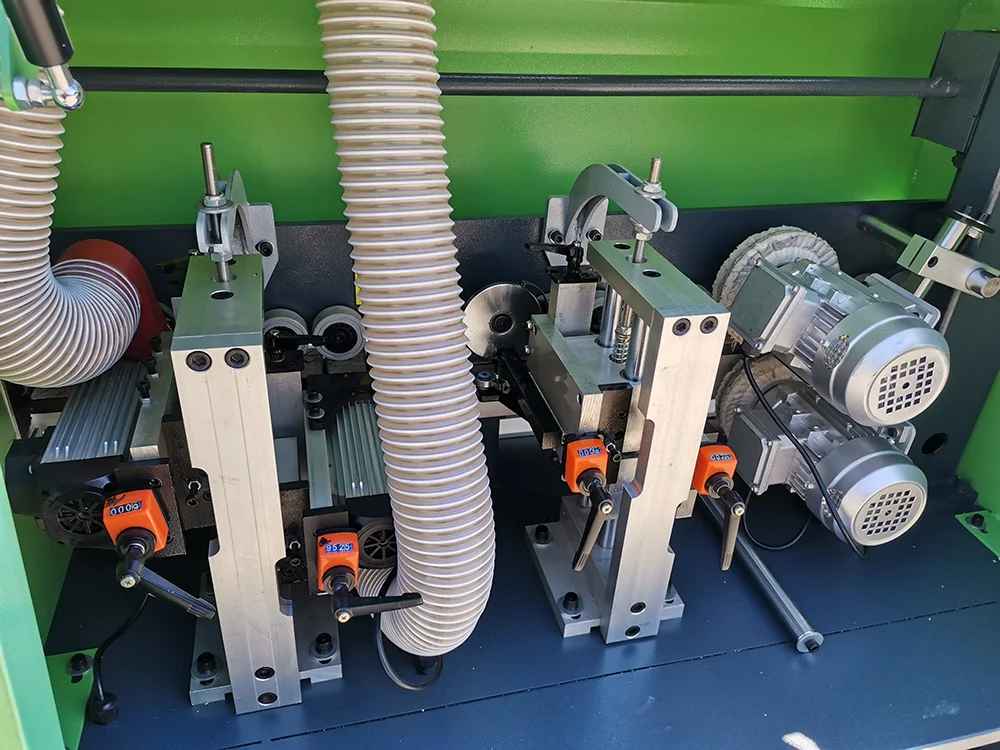
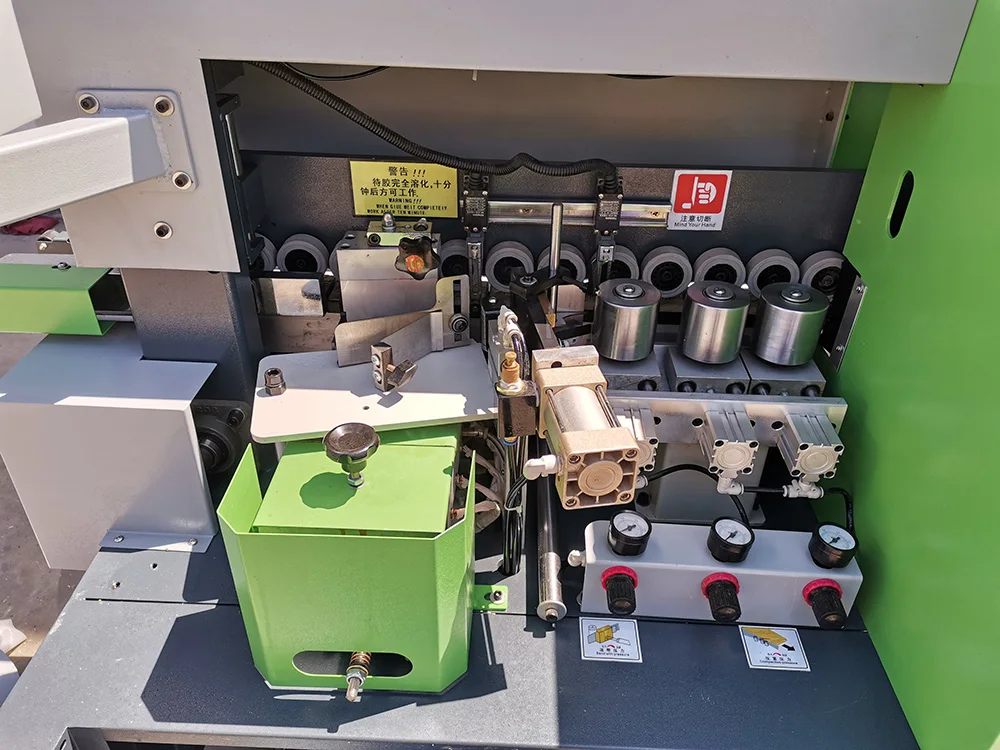
Five working stations mean the panel exits the machine with a finished edge — no separate scraping bench, no hand-held buffer. The end trimming station squares the leading and trailing overhang, the fine trimmer follows the profile, the scraper removes the knife marks left by the trimmers, and the buffing wheel polishes the edge to a clean finish. This station count defines where the ZDS280D sits above entry-level models that leave scraping and buffing as manual post-operations.
The Hidden Cost of Underspecifying the Line
I have seen workshops buy a mid-range bander like this one, then feed it boards from a sliding table saw that leaves chip-out on the cut edge. The edge banding machine seals the band over a rough substrate, and the visible glue line or lifted edge only appears after assembly. The fault is not in the bander — it is in the upstream cut quality that nobody checked. When panels fail downstream assembly because the edge tolerance drifts, the instinct is to blame the banding station, but the root cause often sits two machines earlier in the line. [NEED_CITE: common causes of edge banding adhesion failure on particleboard]
Pairing the ZDS280D with a precision panel saw that delivers a clean scoring cut, and confirming that the dust extraction at each station is sized for continuous chip removal, prevents most of these false-diagnosis breakdowns. A workshop that specs the full line together — saw, bander, boring machine — avoids the feed-height and throughput mismatches that arise when machines are bought piecemeal from different sources.
What Manufacturing Depth Means for This Model
The fuselage is welded from 14 mm steel plate and put through high-temperature quenching, a stress-relief cycle that prevents the frame from warping after months of vibration and thermal cycling from the glue pot.
Every unit passes through four inspection stages — incoming material check, in-process assembly verification, finished-product functional test, and pre-shipment run with the buyer’s specified panel and edge material. The factory test record ships with the machine so the buyer can confirm edge quality before the crate is sealed.
Voltage customization from 110V to 440V is handled at the wiring stage, not through an external transformer, keeping the cabinet clean and the electrical schematic accurate for the destination market.
Component sourcing is traceable: Festo or AirTAC pneumatics, Omron travel switches, Delixi or Chint contactors. Spare parts are standard industrial items available through regional distributors, not proprietary parts locked to one supplier.
The full catalogue approach means the ZDS280D can be ordered alongside sliding table saws, boring machines, and auxiliary equipment from the same factory, with a single packing list and one set of customs documents.
Documentation & Verification
- CE declaration of conformity covering the ZDS280D mechanical and electrical safety requirements
- Machine specification sheet with confirmed voltage, frequency, and control language for your market
- Factory test record run on your specified panel thickness and edge banding material before dispatch
- Electrical schematic listing every component brand and part number for local service teams
- Operation and maintenance manual translated into the agreed language with illustrated adjustment procedures
- Spare parts list with OEM part numbers matching standard industrial supply channels
Installation, Commissioning & Support
- Requires a level concrete floor with anchor points matching the 3,100 × 700 mm footprint and 700 kg static load
- Dedicated 380V three-phase circuit with breaker sized for the 7.5 kW rated power plus startup surge
- Machine ships fully assembled; only dust extraction ducting and compressed air hose need connection on arrival
- First-run commissioning includes glue pot temperature calibration against your specific PVC or veneer edge material
- Operator training covers station adjustment for the full 10–55 mm panel thickness range and 0.4–3 mm edge thickness
- Daily maintenance checklist focuses on guide rail lubrication, scraper blade inspection, and buffing wheel replacement intervals
What to Include with Your Inquiry
To size the ZDS280D correctly against your production line, we need to know the panel substrates and edge materials you run most often, the local three-phase voltage and frequency at the installation site, and whether the control panel language should match existing equipment on your floor. If you already operate upstream saws or downstream boring stations, share their feed height and throughput so we can confirm compatibility across the line.
Frequently Asked Questions
Q: How does the ZDS280D compare to entry-level and full-function pre-milling models in the range?
A: The ZDS280D delivers five stations — gluing through buffing — in one pass, placing it above entry-level units that skip scraping or buffing and require manual finishing. Full-function pre-milling models add a pre-milling station before gluing to correct saw-cut imperfections on the panel edge, which matters when substrate quality varies. For workshops running consistent panel cuts, the ZDS280D covers the complete edge finishing sequence without the added station cost.
Q: What voltage and frequency configurations are available for different export markets?
A: The standard configuration is 380V-3HP at 50Hz, but the wiring can be built for voltages from 110V to 440V and 50Hz or 60Hz depending on the destination grid. Voltage and frequency are confirmed during the quotation stage so the motor, contactors, and thermal protection are all matched to local supply before the machine enters assembly.
Q: Which edge banding materials and panel substrates are compatible with this model?
A: The ZDS280D handles PVC and veneer edge banding in thicknesses from 0.4 to 3 mm, applied to MDF, plywood, particleboard, and solid wood panels within the 10–55 mm thickness range. Glue pot temperature and pressure wheel settings are adjusted during commissioning to match the specific combination of substrate and edge material used in your production.
Q: What upstream and downstream equipment pairs well with this edge bander?
A: A precision sliding table saw or panel saw upstream ensures the clean cut edge that the ZDS280D needs for consistent glue adhesion. Downstream, a hinge boring or multi-boring machine completes the panel for assembly. Matching feed heights and throughput rates across all stations prevents bottlenecks, which is why we recommend specifying the full line together rather than buying machines piecemeal.
Q: Can the control panel language and electrical specifications be customized per order?
A: Yes. The control panel is available in multiple languages to match the operators who will run the machine daily. Electrical components — contactors, breakers, travel switches — are sourced from brands with regional distribution, so your local service team can replace parts without waiting for overseas shipments.