Description
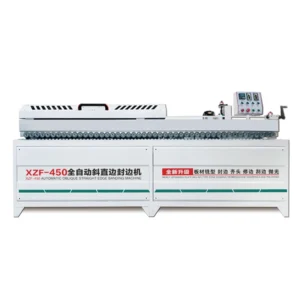
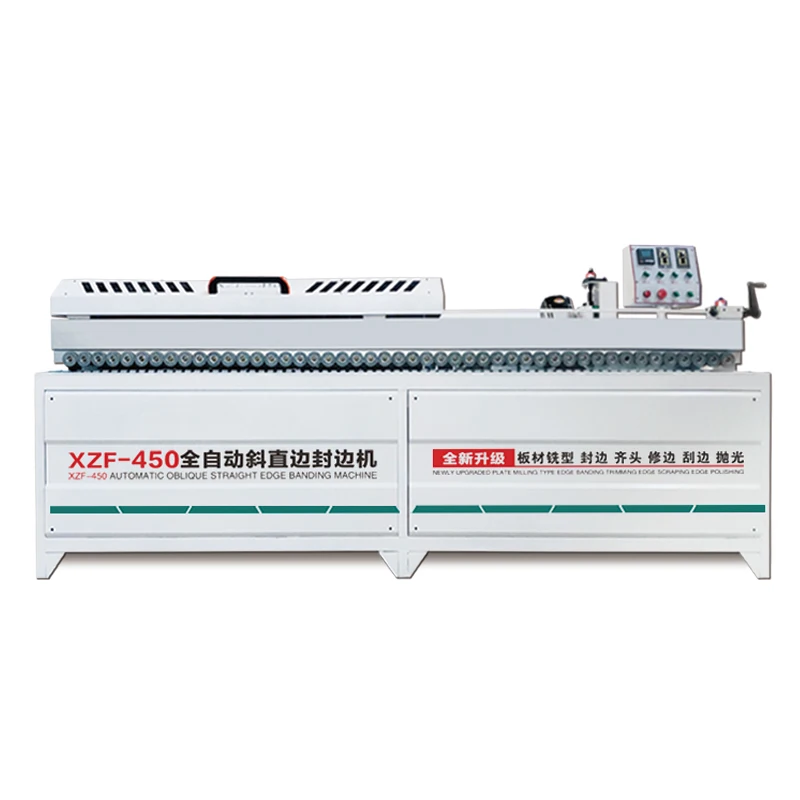
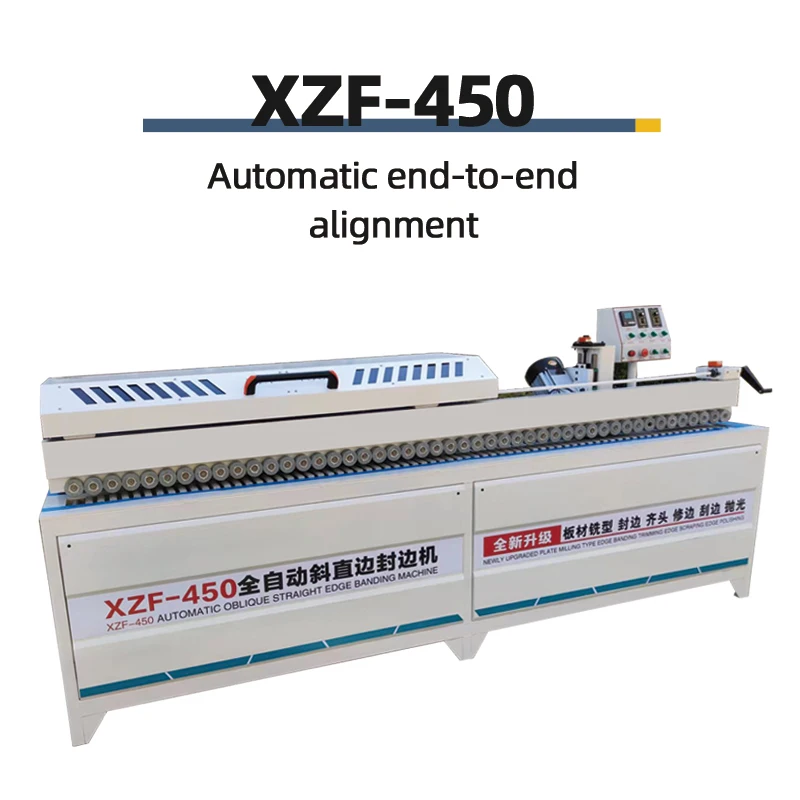
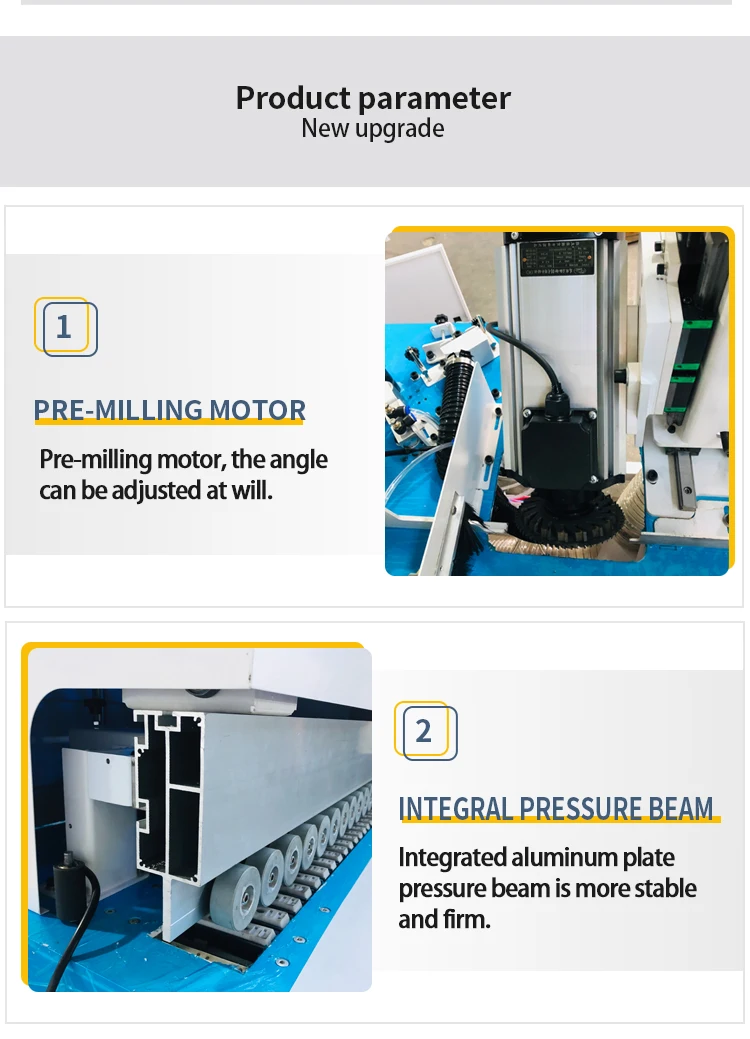
Pre-milling precision across substrates — the XZF450’s 4 kW pre-milling station addresses panel edge variation before the glue is even applied, reducing visible glue lines on MDF and particleboard.
Technical Specifications
| Parameter | Value |
|---|---|
| Model | XZF-450 |
| Product Type | Edge Banding Machine |
| Total Power | 9.5 kW |
| Voltage | 380V / 415V (frequency to confirm per destination) |
| Pre-milling Motor | 4 kW |
| Trimming Motor | 2.2 kW × 2 |
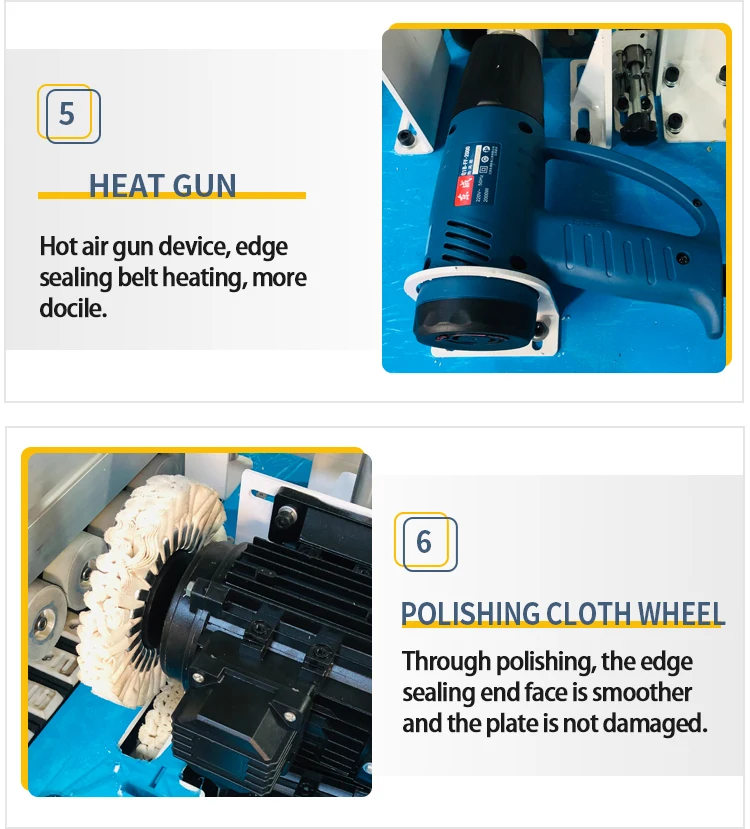
| Polishing Motor | 0.4 kW × 2 |
| Feed Speed | 0–12 m/min |
| Edge Banding Thickness | 0.3–3 mm |
| Edge Banding Height | 0–50 mm |
| Minimum Sheet Length | 30 cm |
| Minimum Sheet Width | 15 cm |
| Glue Pot Capacity | 4000 ml |
| Air Source Pressure | 0.5–0.7 MPa |
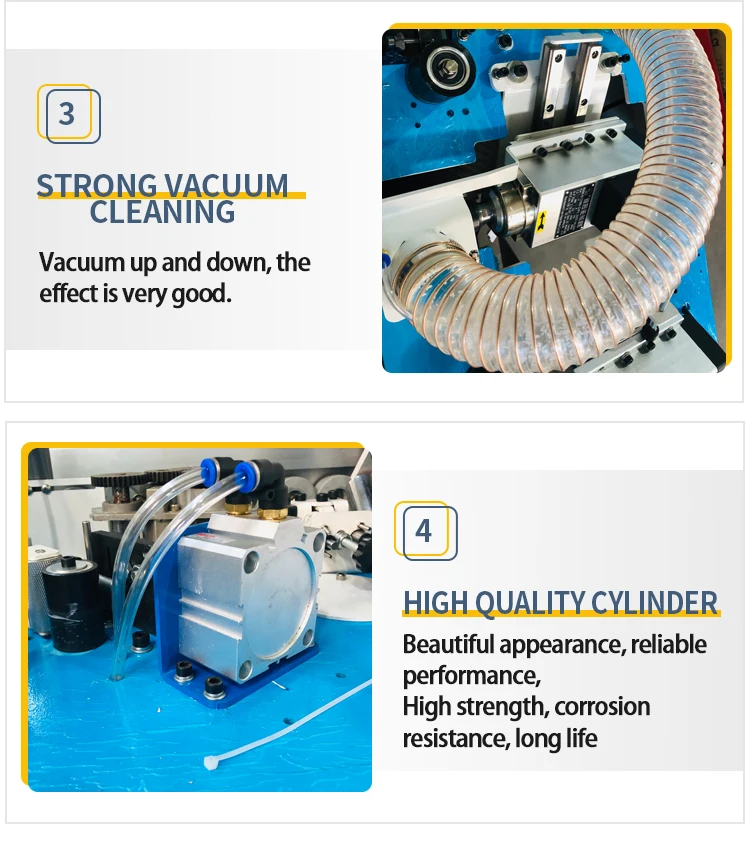
| Vacuum Power | 550 W |
| Overall Dimensions (L×W×H) | 300 × 65 × 135 cm |
| Net Weight | 430 kg |
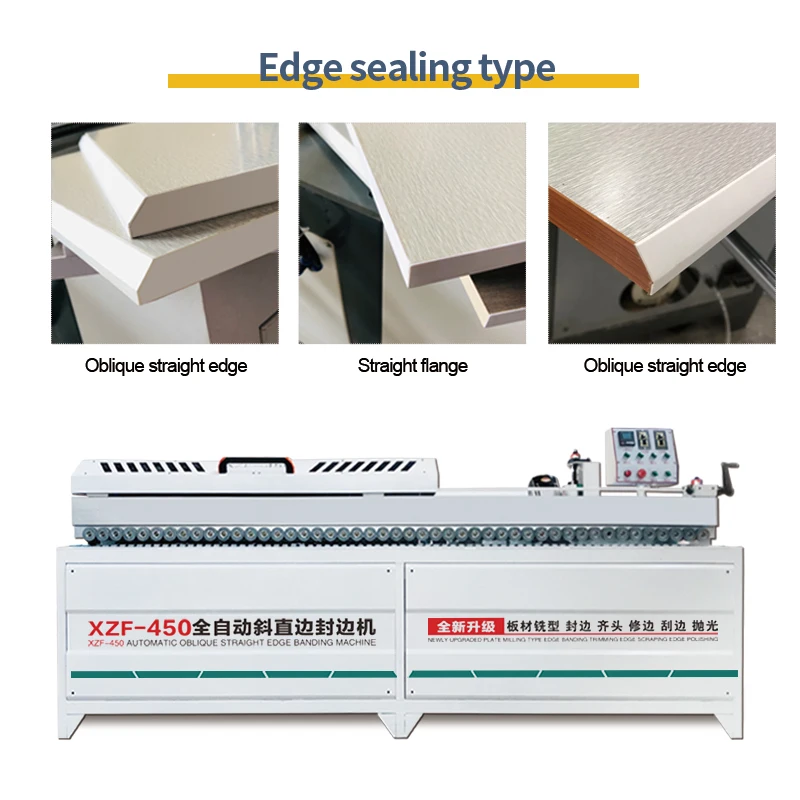
| Key Features | Pre-milling, 30/45/60° edge banding, end trimming, rough trimming, fine trimming, scraping, polishing, dust extraction |
| Language Options | Chinese, English (other languages configurable) |
| Plug Options | EU, USA, AU, UK |
Application Suitability
| Application | Material or Output |
|---|---|
| Cabinet door and carcass edge banding | MDF, melamine-faced board, plywood |
| Custom furniture panel processing | Particleboard, blockboard |
| Polymer door edge finishing | PVC and polymer substrates |
| Solid wood furniture components | Solid wood board with veneer edge banding |
| Bevel-edge decorative panels | 30°, 45°, and 60° angled edge profiles |
Why the Voltage Question Must Come Before the Quotation
An edge banding machine for sale is only useful if it powers on when it arrives. Confirming your facility’s voltage and frequency before the order locks in the correct transformer, contactor, and motor winding specification.
I once configured an edge bander for a Middle East workshop, finalized the mechanical spec, and shipped without verifying whether their supply was 50 Hz or 60 Hz. The control transformer saturated at the wrong frequency, tripped the breaker on start-up, and the crew sat idle for three weeks waiting for a replacement part. The machine was mechanically perfect and electrically incompatible [NEED_CITE: voltage and frequency standards by export market]. That is not a failure of engineering — it is a failure of process. The XZF450 is available configured for 380V or 415V, but the frequency — and the plug format, control transformer rating, and motor nameplate — all depend on the destination grid.
Mapping the Model Tier to Your Production Stage
This edge banding machine for sale sits within a broader family that runs from compact entry-level units up to high-throughput lines. The XZF450 occupies the full-function tier: pre-milling through polishing in a single pass, with seven working stations on one frame. If your workshop is processing several hundred panels per shift across multiple board types, this tier eliminates the need to route panels through separate trimming or scraping stations.
The catalogue on this site lays out where each model fits, so you can compare the XZF450 against both simpler and more automated options without switching supplier.
How the Seven-Station Sequence Affects Downstream Assembly
Each station on the XZF450 solves a specific defect class. Pre-milling squares the panel edge before glue application, which matters most on particleboard where saw cuts leave tear-out. End trimming cleans the leading and trailing overhang. Rough and fine trimming remove the bulk and then finish the top and bottom edge banding flush. Scraping takes off the micro-ridge left by the trimming cutters, and polishing brings the edge to a consistent sheen [NEED_CITE: edge banding process stages and defect prevention in panel furniture].
Skipping any of these stages on a full-function build leaves a defect that your assembly department will find when panels go together — typically as misaligned dowel holes or visible gaps at corner joints.
What the Core Specifications Mean on the Shop Floor
The 4 kW pre-milling motor is sized for continuous cuts through MDF and particleboard at the full 0–50 mm banding height range. A smaller motor would struggle on dense MDF at higher feed rates, producing chatter marks that telegraph through the edge band. The 0–12 m/min feed speed range gives you flexibility: slower feed for difficult substrates like textured melamine, faster feed for standard PVC banding on particleboard carcass panels.
The 4000 ml glue pot capacity supports sustained runs without stopping to refill — a practical concern when you are banding cabinet components in batch lots. Air source pressure at 0.5–0.7 MPa drives the pneumatic actuators on the trimming and scraping stations; inconsistent air supply causes uneven trimming depth. The 0.3–3 mm banding thickness range covers standard PVC, ABS, melamine, and real wood veneer edging [NEED_CITE: edge banding material compatibility with trimming station tooling].
The Cost of Configuring on Price Alone
When buyers select an edge banding machine for sale based purely on the lowest quote, the missing items surface after installation. A machine without pre-milling will show glue lines on MDF within the first week of production. Undersized trimming motors leave burnish marks on hard PVC that your finishing team cannot buff out. A control panel in a language your operators cannot read stalls commissioning and forces you to rely on a single bilingual supervisor for every parameter adjustment.
These are not hypothetical outcomes — they are the most common complaints we hear from workshops replacing their first machine [NEED_CITE: common edge banding machine replacement reasons in small-to-medium furniture factories]. The configuration step exists to prevent all of them.
What In-House Manufacturing Means for Your Order
Every XZF450 is built in the same facility where the patented cutting mechanisms are developed, meaning tolerance claims of ±0.02 mm are verifiable at pre-shipment inspection, not just printed in a brochure. The voltage, plug format, and control panel language are confirmed against your electrical schematic before production begins, not guessed from a country name.
You can visit the factory to run your own panel stock through the machine and inspect the edge quality before the crate is closed. The four-stage QC process covers incoming material inspection, in-process checks during assembly, finished product testing, and a final pre-shipment verification with photographs. Engineer-led configuration recommendations arrive as a formal quotation within 24 hours of your inquiry.
Documentation & Verification
- Machine specification sheet listing all seven station motor ratings and feed speed range
- Electrical schematic confirming voltage, frequency, and plug type for your facility
- Factory test record on your specified panel material and banding thickness before dispatch
- Operation and maintenance manual in the language your operators actually read
- CE declaration of conformity and packing photographs for customs clearance
- Spare parts list with consumable cutter and scraper blade part numbers
Installation, Commissioning & Support
- 300 × 65 cm footprint requires a level concrete floor with clearance for panel infeed at both ends
- 9.5 kW total load needs a dedicated 3-phase circuit rated above the machine’s draw
- Arrives fully assembled — position, level, connect air at 0.5–0.7 MPa and power to run
- First commissioning includes setting trimming depth and scraping offset for your banding material
- Feed speed calibration at 0–12 m/min verified against your panel length and throughput target
- Spare trimming cutters and scraper blades identified from the included parts list for reorder
Before You Request a Quote
To match the right configuration to your workshop, share the panel materials you process most often, the edge banding thickness and type you run, and your local voltage and frequency. If you are planning a production line rather than a standalone purchase, let us know the upstream saw and downstream boring equipment so the feed height and throughput are compatible.
Frequently Asked Questions
Q: Where does the XZF450 sit in the full edge banding machine range?
A: The XZF450 is the full-function tier with seven stations from pre-milling through polishing. Simpler models in the catalogue drop stations like pre-milling or scraping for workshops with lighter duty cycles or straight-edge-only work. If your output involves multiple board materials and bevel edges, this tier prevents rework downstream.
Q: What panel materials and banding thicknesses does it handle?
A: The XZF450 processes MDF, melamine board, plywood, particleboard, blockboard, and solid wood panels with PVC, ABS, melamine, or veneer edge banding from 0.3 to 3 mm thick. The pre-milling station is particularly important for particleboard and MDF, where saw-cut edges need squaring before glue application.
Q: What voltage and frequency details must I confirm before shipment?
A: Provide your facility’s supply voltage and frequency — the XZF450 is configurable for 380V or 415V, but the transformer, contactors, and motor windings must match both values. Plug format is selected from EU, USA, AU, or UK options. Confirming these before production prevents an unusable machine on arrival.
Q: Can the control panel language be customized?
A: Standard options are Chinese and English, but the control panel can be configured in other languages for operators who cannot read either. This is confirmed during the specification step so the HMI is loaded with the correct language file before the machine ships.