
Description
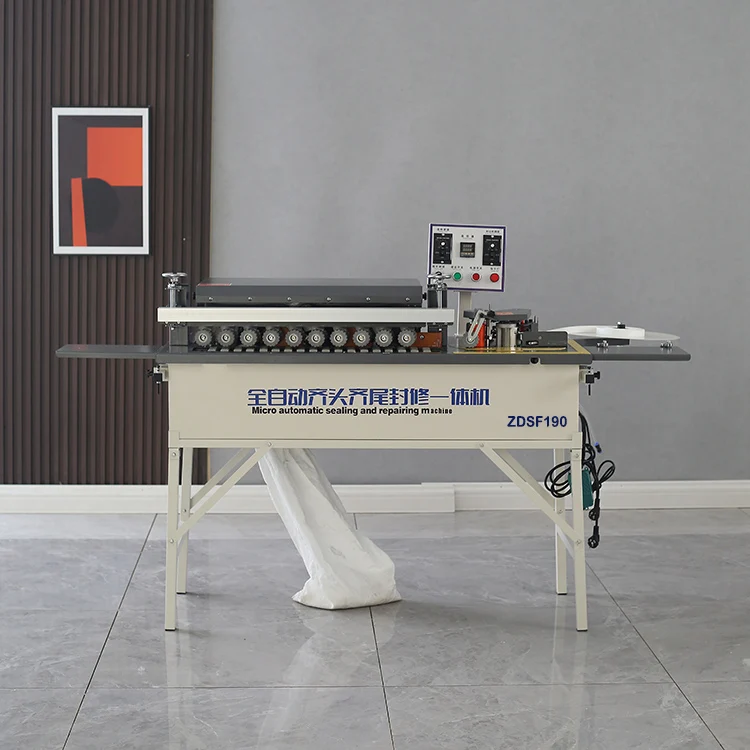
In-house manufacturing with patented cutting mechanisms — verified ±0.02mm tolerance documented per unit, supporting a full model range from compact to full-function pre-milling edge banders for panel furniture workshops.
Technical Specifications
| Parameter | Value |
|---|---|
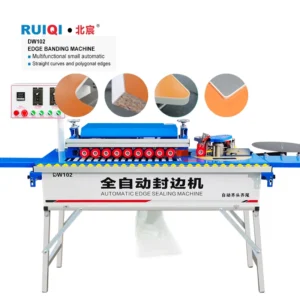
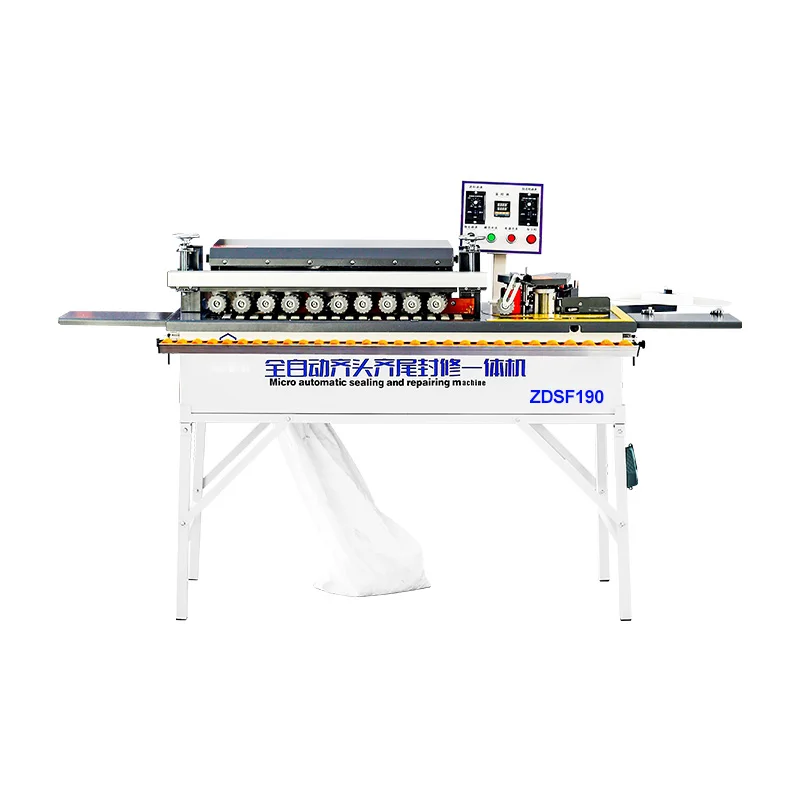
| Product Type | Automatic Edge Banding Machine |
| Type | Edge Banding Machine (Gluing, Rough Trimming, Scraping) |
| Feed Speed | 14 m/min |
| Voltage & Frequency | 220V / 50Hz |
| Total Power | 4 kW |
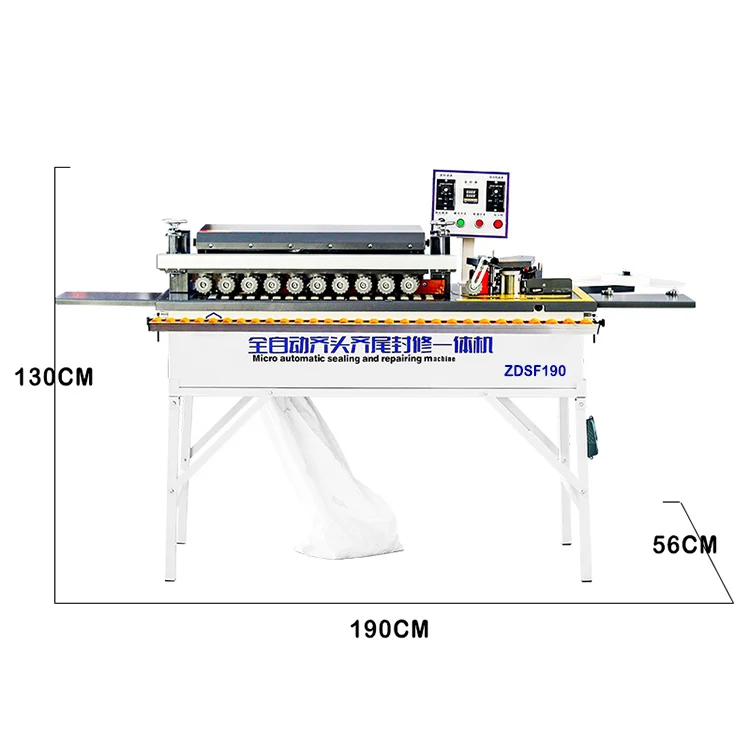
| Overall Dimensions (L×W×H) | 1900 × 560 × 1300 mm |
| Net Weight | 120 kg |
| Panel Width Range | 300 mm |
| Host Height | 630 mm |
| Trimming Motor | 800 W × 2 |
| Belt Feeding Motor | 25 W |
| Plate Feeding Motor | 60 W |
| Core Components | Bearing, Motor, Pump, Gear, PLC, Gearbox, Pressure Vessel, Engine |
| Warranty | 1 Year |
| Video Outgoing-Inspection | Provided |
Application Suitability
| Application | Material or Output |
|---|---|
| Plywood panel edge finishing | Plywood sheets with PVC or melamine edge banding |
| Custom furniture component banding | MDF and particleboard panels for cabinet and wardrobe production |
| Small workshop panel processing | Solid wood panels and veneer edge banding in joinery environments |
| Home-scale board edging | Narrow boards and shelving panels up to 300 mm width |
Why the Voltage Question Should Come Before the Price
A machine quoted without confirming local voltage and frequency arrives unusable on the workshop floor.
I watched a buyer in the Middle East take delivery of an edge bander only to find the motor wound for a grid that did not match his facility. The machine sat idle for weeks while a transformer was sourced locally, delaying his entire production schedule. This Woodworking Edge Bander for sale supports voltage configurations from 110V to 440V, but only when the buyer states the exact supply before the order is finalized. [NEED_CITE: voltage and frequency standards by export market]
Catalogue Breadth Without Supplier Fragmentation
A workshop moving from manual edging to machine-assisted production rarely knows its eventual throughput requirement on day one. Starting with an Edge Banding Machine manufacturer that covers entry-level compact units and full-function pre-milling models within a single product family means the next machine up the range shares control logic, spare part families, and operator familiarity. The 14 m/min feed speed on this model suits small-to-medium panel runs, while higher-tier models in the same catalogue address production-scale throughput without forcing a supplier change.
Matching Machine Tier to Daily Panel Volume
The most frequent mismatch we see is an entry-level machine pushed into sustained production volumes it was never engineered to handle. Bearings wear prematurely, the glue pot struggles to maintain temperature across continuous shifts, and edge finish quality drifts. Selecting from a unified range means the Edge Banding Machine manufacturer can recommend a tier based on your actual daily panel count and substrate mix, not just the budget line on an inquiry form. [NEED_CITE: bearing load cycles and duty rating in woodworking machinery]
Reading the Spec Sheet Against Your Production Reality
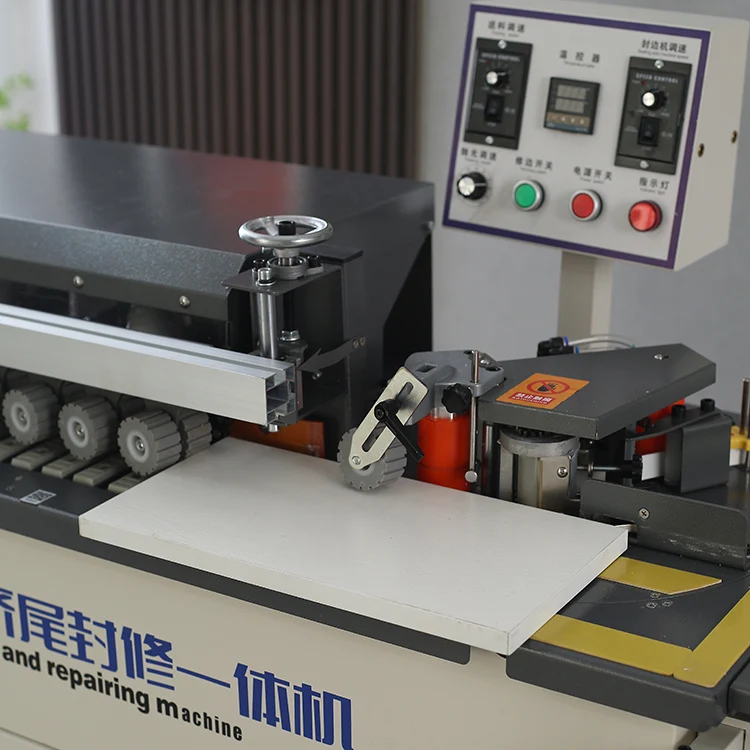
Feed speed at 14 m/min defines how many linear meters of panel edge you can process per shift, but the real constraint often comes from panel thickness range and trimming motor capacity. The dual 800 W trimming motors on this Automatic Edge Banding Machine handle rough trimming and scraping in a single pass, which directly affects edge cleanliness on plywood and particleboard where fiber tear-out is common. A panel width range of 300 mm makes this unit practical for cabinet components and shelving, though wider panels require stepping up to a larger model in the range. Host height at 630 mm positions the feed table at a comfortable working position for standing operators without requiring a raised platform.
The Hidden Cost of Choosing the Wrong Configuration
When a compact edge bander is pushed beyond its designed duty cycle, the symptoms appear gradually — slightly visible glue lines on denser substrates, trimming motors overheating during long runs, feed belt wear accelerating beyond the maintenance schedule. Buyers often blame the machine rather than the mismatch between the model tier and the actual production volume. The cost shows up as rework, rejected panels, and unplanned downtime rather than a single obvious failure. [NEED_CITE: duty cycle classification for light industrial woodworking equipment]
Why Source From This Manufacturing Base
In-house manufacturing with proprietary cutting mechanisms means tolerance claims are backed by factory test records, not third-party assertions. The four-stage QC process — incoming material, in-process, finished product, and pre-shipment verification — applies to every unit regardless of model tier. Voltage, control panel language, and specification customization are handled as standard order parameters rather than special requests. An engineer reviews each inquiry against the buyer’s stated factory scale and processing requirement before issuing a configuration proposal, reducing the chance of a model-substrate mismatch reaching the shipping container.
Documentation & Verification
- CE declaration of conformity covering this edge banding machine model and its safety components
- Machine specification sheet listing verified tolerance, motor ratings, and dimensional data per unit
- Electrical schematic confirming voltage and frequency matched to your local grid supply
- Factory test record on your specified panel material and thickness range before dispatch
- Operation and maintenance manual produced in the language agreed at order confirmation
- Spare parts list identifying consumables and wear items with part numbers for reordering
Installation, Commissioning & Support
- 4 kW total power draw requires a dedicated 220V circuit with appropriate breaker sizing at your facility
- Compact 1900 × 560 mm footprint fits standard workshop doorways without disassembly of surrounding equipment
- KD packing for select spare parts keeps shipping dimensions manageable for single-unit ocean freight
- PLC-based control system configured with your chosen language before dispatch to accelerate first-day commissioning
- Dual 800 W trimming motors calibrated during pre-shipment testing on your specified panel substrate
- Video outgoing inspection provided so you can verify machine function before the crate leaves the factory floor
Preparing Your Inquiry
Tell us your primary panel substrate — MDF, plywood, or particleboard — along with the edge banding material you plan to run, whether PVC, melamine, or veneer. Confirm your local voltage and frequency at the point of connection, not the national standard, as industrial parks sometimes have dedicated transformers. State your expected daily linear meter output so we can match this model or recommend a higher tier from the same product family.
Frequently Asked Questions
Q: How do I determine which model tier fits my daily panel volume?
A: Share your average daily linear meters of edge banding and the substrate mix you process. An engineer reviews this against each model’s duty rating and recommends a tier from the unified range. This prevents placing an entry-level unit into sustained production it was not designed for, and leaves a clear upgrade path within the same product family as your volume grows.
Q: What voltage and frequency options are available before I place an order?
A: Configurations from 110V to 440V are available as standard customization. You provide the exact voltage and frequency at your facility’s connection point, and the electrical schematic is confirmed before production begins. This ensures the machine powers up correctly on arrival without requiring a local transformer or rewiring after delivery.
Q: How is edge banding tolerance verified before the machine ships?
A: Each unit undergoes a four-stage QC process with pre-shipment verification. The factory test record documents actual measured tolerance on your specified panel material, not a generic claim. Video outgoing inspection is provided so you can visually confirm edge finish quality on your substrate before the machine leaves the factory.
Q: Can I scale to a higher-capacity model later without retraining operators?
A: The full model range shares common control logic and PLC interface architecture across tiers. Operators trained on this compact unit transition to higher-throughput models within the same product family without learning an entirely new control system, reducing commissioning time when you expand capacity.
Q: What documentation accompanies each machine at shipment?
A: You receive a CE declaration, machine specification sheet, confirmed electrical schematic, factory test record, operation manual in your agreed language, and a spare parts list with part numbers. Customs documentation support is included to smooth clearance at your destination port.